Friday Night Cocktails: Pineapples, Delicious Drinks and an intriguing mystery

“The nights are getting warm”, to quote Thin Lizzy. No fruit captures the gathering tropical vibe so well as the pineapple for the basis of a really refreshing cocktail. [1]. According to Wikipedia:

The pineapple[2][3] (Ananas comosus) is a tropical plant with an edible fruit; it is the most economically significant plant in the family Bromeliaceae.[4] The pineapple is indigenous to South America, where it has been cultivated for many centuries. The introduction of the pineapple to Europe in the 17th century made it a significant cultural icon of luxury. Since the 1820s, pineapple has been commercially grown in greenhouses and many tropical plantations.

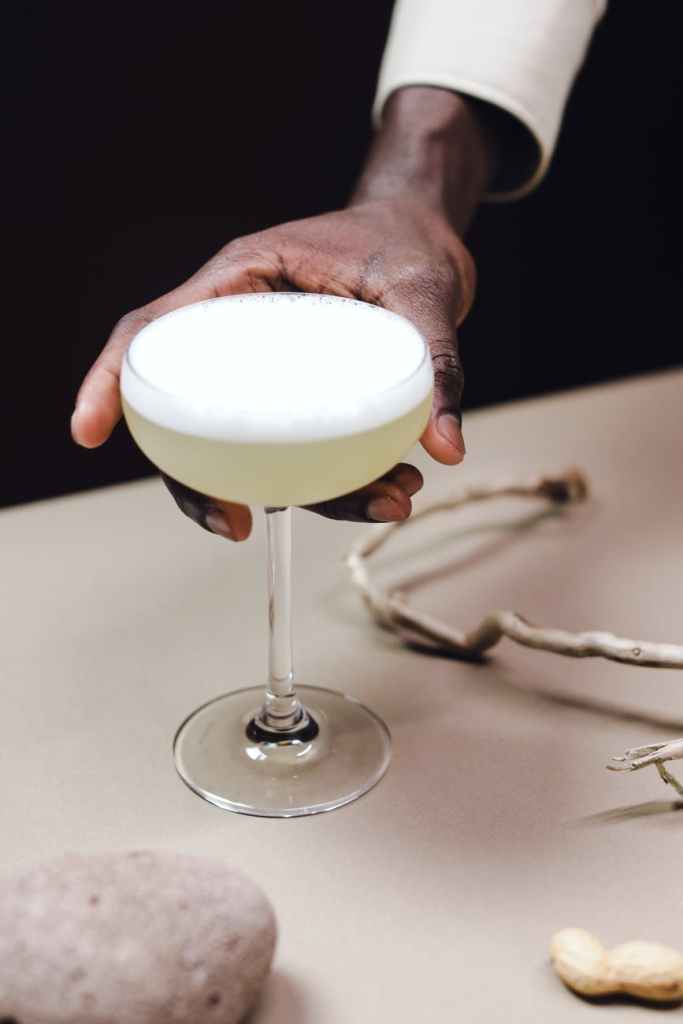
Well, you can drink the juice raw- we guess it’s probably pretty good for you in moderation. But how much more creative to mix it with a few extra ingredients, such as rum for example, to make a really sophisticated cocktail which you can enjoy beside summerhouse or pool! We’ve got three for you this week, all based upon The Ultimate Cocktail Book by Hamlyn.[2] Followed by an intriguing mystery upon which you may wish to speculate as you sip one of the recipes below

The Piña Colada You knew this would be in there, didn’t you? Always a great standby. Hamlyn tell us to take a generous quantity of cracked ice, 1 measure of white rum, 2 measures of coconut cream and 2 of pineapple juice. Shake in a mixer and pour, con hielo, into a large glass and decorate with cherry, orange slice and a large chunk of pineapple. Try not to drop the latter down your best Dorothy Perkins cocktail frock, ladies!

Planter’s Cocktail No problems with that tricky Spanish ñ, ladies and gentleman. The pineapple here acts as chunky fruit to give some extra welly and annoy the posh people at the next table as you scoff it after the drink. Into your favourite shaker add four large ice cubes, 1 measure of dark rum, 1/2 measure orange juice, 1/2 lemon juice 2 dashes of the old Angostura bitters and a teaspoon of powdered sugar. Shake until that shaker’s got a frost like Lake Lagoda and pour into a long glass. Super decoration basically involves as many chunks of pineapple, banana and orange spirals you can squeeze in/around. How’s that for tropical?

Havana Zombie “havana-vana-vana-vana. With Rihanna” or something like that goes the old song. It may be one of the last holdouts for Communism, but they sure know how to mix a cocktail for all those bourgeoise tourists who bring in the foreign exchange! Take 4-5 ice cubes , the juice of a single lime, 5 tablespoonsful of pineapple juice , 1 teaspoon of sugar syrup, 1 measure of white rum, one of golden rum (we think Captain Morgan do one) and one measure of dark rum. This time put into a mixing glass, and stir, don’t shake. Now pour into a real glass. The rum blends are quite intriguing if you get it right, and aren’t too drunk to taste properly any more.

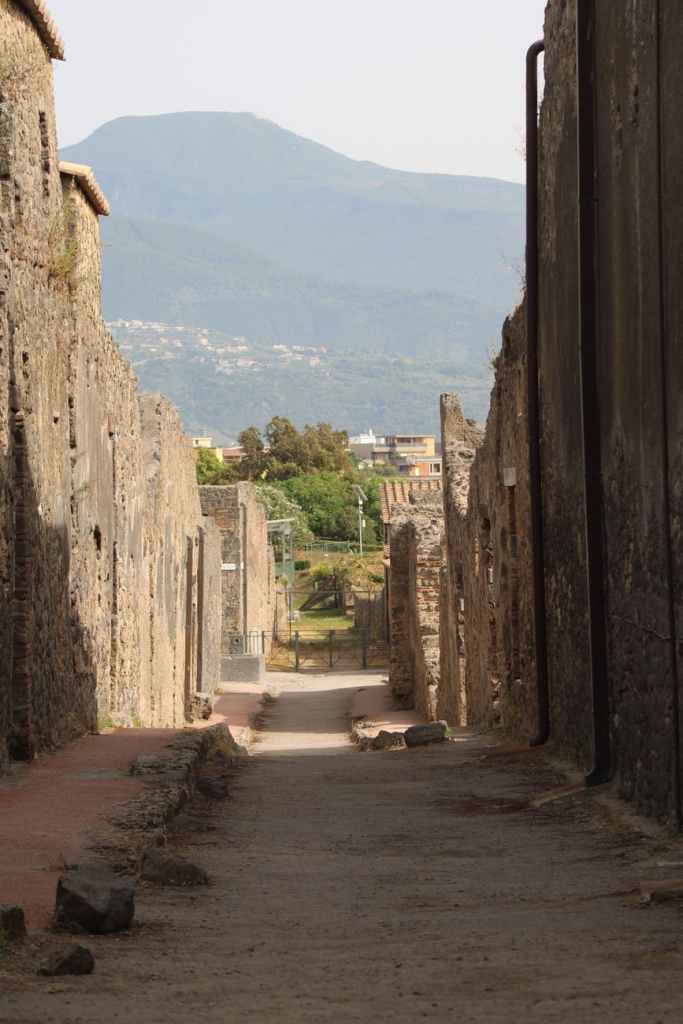
And now a pineapple mystery: Anyone with a little cultural education will know that the ruins of Pompeii, the old Roman town in Southern Italy represent one of our best insights into everyday life in the Graeco-Roman world. So it is intriguing to see a picture from there which appears to depict a pineapple! Be advised: the pineapple is strictly a new world fruit and so before Columbus could not in any way have appeared in the Mediterranean. Is there an outside chance of trade contacts across the vast Atlantic in Roman times? Although the likely answer is no, look at the link we have provided, and as ever, judge for yourselves.[3] The Roman section, obviously!

Have a good weekend.

[1] https://en.wikipedia.org/wiki/Pineapple

[2] The Ultimate Cocktail Book Hamlyn 2002

[3] https://en.wikipedia.org/wiki/Pre-Columbian_transoceanic_contact_theories#Claims_of_travel_in_Roman_times

#cocktails #pineapple #pre-columban trade

British Crises: a sly, wry word from Alfred Duggan

The fall of a yet another short-lived British Prime Minister in the midst of deeply unstable and ambiguous relations with Europe reminds us of how curiously we have been here before. At least, you would if you read the novels The Little Emperors and Conscience of the King by Alfred Duggan, both written in 1951.

Duggan, scion of Irish-Argentinian stock moved in the highest Tory circles of the old British Empire in its last generation. After Oxford, dissipating a fortune, and honourable service in World War II, he settled down to marriage and the production of short, easily readable novels about real, but slightly less well covered periods of history. Not so much Henry VIII or Augustus as people like the outrageously gay Emperor Elagabalus, the pious but devious Edward the Confessor or cunning Count Bohemond of the First Crusade. Nowhere are his insights and talent better shown than in the Diptych of novels which cover the obscure and tragic period of the fifth century as settled, prosperous Roman Britain descended into anarchy and economic collapse. The Little Emperors tells the story of a pompous civil servant in Londinium who watches the rise and fall of a string of short lived Emperors who try to manage the breakaway of Britain from the Empire. None succeed; and he flees to the barbarians, convinced that his Rome and his world are truly lost.

Conscience of the King takes up the story two generations later. It tells of the ruthless sociopath Cerdic, who after a some life as Romano-British Aristocrat also deserts to the Barbarians, this time the Anglo Saxons, where he makes himself the first King of Wessex (and incidentally founds the royal line which leads to our present monarch, Elizabeth II) Lying in his royal hut at the end of a long life, he cannot forget that he was once an educated man, and on the side of civilisation. He has survived, but everything else has gone wrong. Why? And he makes this reflection:

I was born into a world where the Roman order seemed destined to last forever, all the more because we had got rid of the drain in money and troops caused by our previous rulers to succour or overthrow the central government in Italy. We seemed to have taken the best things in European Civilization, and rejected the tyrannous central organization of the Empire

But you cannot choose the best out of two worlds in that way. We light-heartedly broke with the Emperor, thinking that all the honestiores of Britain would then become little Emperors on their own. Too late we discovered that Rome really gave us something in return for the gold that left the province and that it was something we could not replace from our own resources

The pound sinks, as does investment. Inflation rises, choking all hope of economic progress. Strikes abound, and may lead to further disintegration. The next Emperor must finally resolve our ancient equivocation over Europe. Or their reign will be shorter even than this one’s.

Thanks to Mr Lindsay Charlton of Kent for the idea for this post

#alfred duggan #roman britain #wessex #london #roman empire #brexit #united kingdom

Scottish Independence: Give the whole UK a vote

We don’t know if overseas readers have noticed, but these islands have recently seen a resurgence in the question of a new Scottish Independence Referendum.[1] Scots First Minister, and avowed nationalist Nicola Sturgeon has determined to apply to the UK High Court to see if such a transcendental step is legally possible.

And transcendental it will be, at least for the people of the UK. Imagine if it is successful: borders will be set up. Armed forces, health services, broadcasters, entirely broken up and redistributed. Who gets to keep the Nuclear Deterrence force? The National Debt? All those funny little islands in far off places like the British Virgin Islands.?

Advocates of Independence say it’s all about national self determination, in this case for Scotland. But there is another nation that has a right to determine its future: the United Kingdom. Do the people of the United Kingdom want to see these profound changes? What do the people of Wales think, or care, about a hard border between England and Scotland? But surely they have a right to vote too. The principle of every nation voting on its future is an important one: if it is right for Scotland, then it is right for the UK too.

[1] https://www.theguardian.com/commentisfree/2022/jul/05/united-kingdom-british-federation-celtic

#scotland #england #northern ireland #wales #independence #referendum #nationalism #united kingdom

How to stop immigration:2-the causes

The second part of our series on this crucial issue

The migration of peoples has become the dominant political and social issue of the early decades of our century, and is likely to remain so for decades. We ‘ll look later at how immigration has worked out (for example in nations such as the US and Australia) Today: why do they do it?

There’s a vast reading-base on the subject, and we’ve chosen this link [1] purely because of its brevity. People migrate to look for better conditions. There is movement and settlement among richer nations; but the overwhelming bulk of immigrants come from poorer countries, and it’s in search of work. Money, in fact. Just as loose capital is attracted to new ventures in search of higher returns, so this human capital invests itself, often at great personal risk. The rewards are often much lower too. The fact that transport and communications have become so much faster in the last hundred years has made the phenomenon more acute. But the fact remains: people move, like ions in an electric field from the negative (poverty, oppression) to the positive (freedom, prosperity). Capitalism in action in its rawest, most basic sense.

We will also look at attempts to control this movement. We think in the long run all will be futile, except one: level the field. Reduce poverty, improve education and services in poor countries, and the incentive to move will largely disappear. We will also be looking at how that can be done too. The results may surprise.

[1]https://www.lirs.org/causes-of-immigration/

#immigration #emigration #migration #capitalism #labour

Friday Night Cocktails: Sparkling Rose

Until about 1989 we always thought that sparkling wines were yellow and rose ones were still. Apart from Mateus Rose, of course, but that didn’t really count, did it? So we remember the sight of our first pink champagne style bubbly with something of the same emotion we had that night(it was in Stratford on Avon) “Wow! Do they really make that stuff?” Since when Sparkling Roses have gone from strength to strength in our cellar, and indeed the cellars of all the Board of Directors and Senior Managers here at LSS. Meanwhile, we ploughed on with the still ones too-from dry Provences to fruity Californians, all perfect for warm summer evenings.

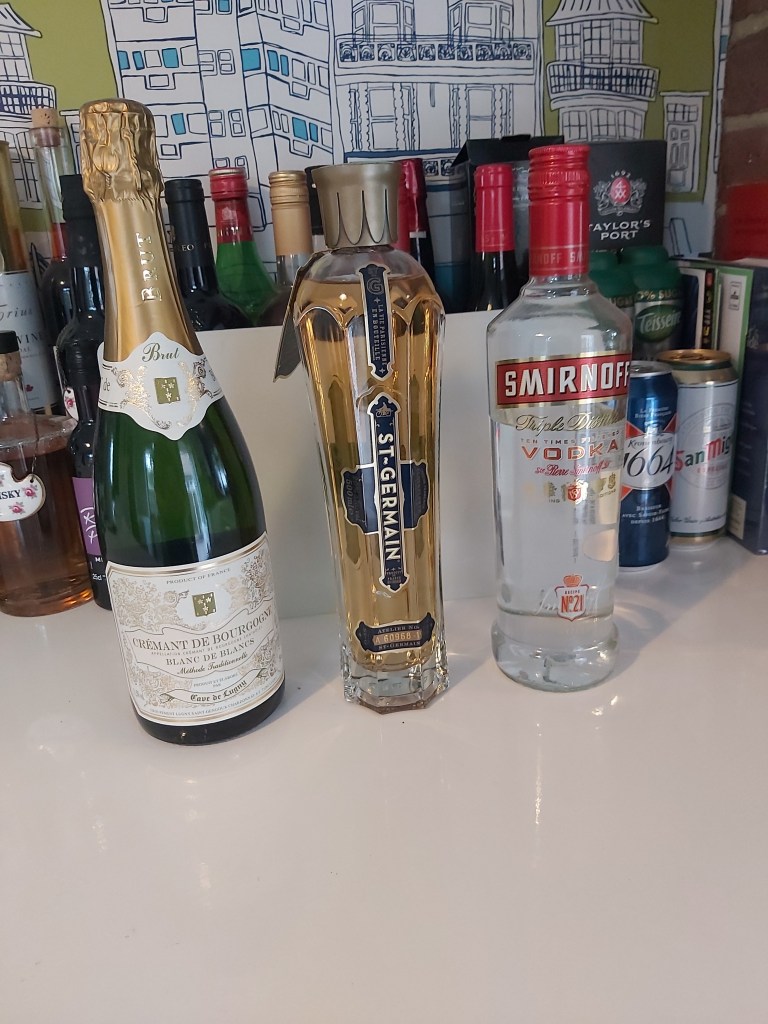
But did you know that you can make cocktails from them too? To help you to an evening of creative joy, our researchers, bless ’em, have come up with this marvellous list of cocktails which you can make, ever so easily, using the sparkling pink stuff. Read it to find out about The French 75, Granita, St Germain and many more. Happy Drinking!

https://www.brit.co/rose-cocktail-recipes/

Weekly Round Up: Darwin, Biology, Ecology, Justice, unreason twice

There were so many amazing ones came across this week, that it was hard to choose!

Was Darwin Wrong? Well not exactly; but every theory needs revision now and then. If the writer of this one is even half right, then something pretty big is going on in Biology. But read it just to learn about the Senegalese Birchir, which seems to pack 10 million years of evolution into ten weeks!

https://www.theguardian.com/science/2022/jun/28/do-we-need-a-new-theory-of-evolution?CMP=Share_iOSApp_Other

Why are Trump fans afraid? Fear of being found wrong seems to be the key. This piece in The Atlantic is a masterly insight into the human condition

https://www.theatlantic.com/newsletters/archive/2022/06/what-are-trump-supporters-so-afraid-of/661346/?utm_source=apple_news

we thank Mr Peter Seymour for this story

CRISPR at Ten Whatever the petty political squabbles of today, future generations will look back to say “this was when they invented CRISPR- and it was going to be BIG!” New York Times via Nature Briefings cover this one

It’s been ten years since microbiologist Emmanuelle Charpentier and biochemist Jennifer Doudna published the research that paved the way for CRISPR–Cas9 gene editing. In 2020, they shared the chemistry Nobel for the work. An overview of the technique’s past, present and future looks at how it has transformed the life sciences.The New York Times | 10 min read
Reference: Science paper

Supreme Court shows its true colours And they are Republican Red, or at least that’s how it seems to us foreigners. This is the second one in a week. On a completely unrelated matter, here’s a word game: choose from these words; Vindictive, spiteful, ignorant, prejudiced, gloating, selfish, wilful, cruel, capricious, ancient, petty-minded, stupid, partisan, deceitful, complacent, and downright nasty. How many can you apply to a decision which has been in the news this week?

the US Supreme Court has prohibited the Environmental Protection Agency (EPA) from crafting broad regulations to drive the country’s power industry away from coal and towards cleaner energy sources such as wind and solar. The court’s ruling could make it much harder for the administration of President Joe Biden — and its successors — to curb greenhouse gases as promised under the 2015 Paris climate agreement. And that spells bad news for the planet, because the United States is both one of the largest emitters of greenhouse gases in the world and a crucial player in the countries tackling global warming.Nature | 6 min read

Old Skool debate In England, Private schools (confusingly known as “Public Schools”) boast that their superiority is due to the fact that they run like businesses. But how many other businesses get charity status tax breaks? asks The Conversation:

https://theconversation.com/the-public-cost-of-private-schools-rising-fees-and-luxury-facilities-raise-questions-about-charitable-status-182060?utm_

More Unreason: Flat earthers Why do people believe palpable untruths? Flat earthers are now just one case among many. Here the Conversation tries to understand a little more odf the emotional roots of bizarre beliefs

https://theconversation.com/i-watched-hundreds-of-flat-earth-videos-to-learn-how-conspiracy-theories-spread-and-what-it-could-mean-for-fighting-disinformation-184589?utm_

That’s quite a reading list! We’ll close with this nice video of some Tiger cubs(hope it clicks OK) and wish you all a happy weekend

#tiger #conspiracy theory #EPA #supreme court #CRISPR #evolution #donald trump

Economics: Crisis, Crash or Catastrophe? Nouriel Roubini tells all

So, who is Nouriel Roubini?

Well for one thing, he’s Emeritus Professor of Economics at The Stern School of Business at New York University, so he knows a bit about things. But his real claim to fame is that he was one of the few people to see the crash of 2007 coming beforehand, as t’were.

I see. And should we be getting a little gloomy again?

No! If he’s right, this time we should be absolutely hand-wringing, tie-chewing, nail-biting, eye-rollingly terrified. He sees the current inflation producing the most enormous dinosaur-sized crash since that old asteroid struck back in 65million years BC, as he explains here in the Guardian [1]

I thought all this inflation whatsit was just a blip?

Opinion was divided. But now it’s hardening up to say it’s here to stay, especially due to supply factors like the Ukraine war, Covid recovery, climate change and so on.

But surely the big boys at the top have got it all under control?

Weelllll……..they have been putting up interest rates to cut off the supply of money, But that only leads to a shrinking economy. Already we are seeing bubbles popping just about all over the place, like cryptos and the property market. But if the equity markets crash this time, the Good Professor thinks it could be by 50%, which is kind of like, unprecedented.

Gosh! And what will Central Banks do then?

They will abandon their hawkish stance, loosen interest rates, and produce more inflation, leading in turn to………

Higher interest rates?

Exactly! And so we get utterly stuck in the dreaded cycle of stagflation, with no obvious way out, because the world is much more indebted than it was in the 1970s.

How so?

Ever since Thatcher-Reagan reforms of the 1980s, the world has been awash with cheap credit and borrowing, a problem which only got worse after 2008. Basically, there’s nothing left in the kitty.

So, like the dinosaurs, we’re doomed?

Well, some dinosaurs survived. Smaller ones. Like sparrows and seagulls for example .

So the best thing to do is?

Get ready for a diet of crusts of bread

[1]https://www.theguardian.com/business/2022/jun/30/stagflationary-debt-crisis-us-recession

#economics #nouriel roubini #inflation #interest rates

Why have McCartney and chums survived?

Unless you live entirely in the world of politics and economics, in which case you’re a little boring, you can’t fail to have noticed that last week’s entertainment news was dominated by some very familiar acts indeed. Paul McCartney (b1942) headlined Glastonbury. The equally venerable Diana Ross was there too. While the surviving Rolling Stones were selling out in London, albeit with a line up much changed from their early years. Even we can remember these performers topping the popular musical hit parade charts in 1964. We’ll leave you to add your own memories in the space below, but we calculate that as being 58 years.

Fifty eight years! The same distance going backwards from 1964 takes you to 1906. How many megastars from 1906 would be selling out tours in 1964? How many were even remembered. And how many today? Our researchers came up with a rather short list of names from 1906, including Dan Leno, Little Tich and Vesta Tilley. The brevity alone suggests that Edwardian artistes had little staying power or much to say to future generations. Or is that patronising-is there a different reason?

McCartney and his peers were children of the first true global markets. When musicians, using new recording and distribution technologies like film and vinyl could build huge global followings across many countries. Such technologies were in their infancies in the Edwardian period. so American or Chinese fans were unlikely to be exposed to Little Tich in any great numbers. Some performers like Stan Laurel and Charlie Chaplin did indeed make it on both sides of the Atlantic, but this was largely due to the maturing film technologies of the decades after Edward VII. They paved the way for the first true international stars like Laurence Olivier and Humphrey Bogart.

It’s not McCartney and co aren’t talented-they are. But it’s also likely that they were born at the right time, and knew how to use their opportunities. A fortunate combination indeed.

#globalisation #technology #entertainment #paul mccartney #rolling stones #diana ross #glastonbury

Friday Night Cocktails: A Dapper Guide to Limoncello

Italy has given the world many great things. The Roman Empire. Virgil. The Renaissance. Petrarch. Pasta. Primitivo. Inspector Montalbano. But up there with the best is Limoncello, the delicious drink that is the basis for so many great cocktails.

And what a site our researchers have found for you to explore it! It’s called The Bespoke Unit, describing itself as ” A guide to the dapper life” How about that as a summary of the philosophy of LSS and its myriad readership!

https://bespokeunit.com/spirits/limoncello/

On Limoncello alone they wax as lyrical as any Dante or Camilleri. Apparently, Limoncello is

“…… is essentially a liqueur that is made by macerating lemon peels in neutral grain spirit alcohol for several weeks. The peels are removed and the alcohol is diluted with water and sugar.”

That said, they go on to range of delicious ideas, including aperitifs, substitutes and variations based on other fruits grown in the warm groves of sunny Italy. But time is limited, so we will pick their list of ten cocktails, which includes the Limoncello Gin Cocktail, the Amalfi Mule, the Limoncello Sorbet and the Good Luck Charm. Happy Mixing

https://bespokeunit.com/spirits/limoncello/cocktails/#1

#limoncello #cocktails

Weekly Round Up: Petulance, Mangroves, Russians, Mastodons and DNA

interesting ones from this week

Ad Feminem attack A sure sign that someone is losing an argument is when they resort to aggressive abuse and name calling. An example is the woman Marjorie Taylor Greene who came up against the far more intelligent and better informed Siobhan Kennedy of Channel 4 news. Daily Mail:

https://www.dailymail.co.uk/news/article-10946189/British-journalist-told-country-Republican-politician-Siobhan-Kennedy.html

Mangroves against global warming * Sometimes a simple and cheap use of Nature can be the most effective way to combat global warming as this pioneering project from Karachi shows. Time

https://time.com/6189898/mangrove-trees-pakistan-climate/

A Japanese Warning to Vladimir Putin* The intro to this piece from the Atlantic says it all, Be careful what you wish for, Vlad baby!

“The Russo-Japanese War led not just to an immediate revolution, but to deeper and longer-lasting change years later.”

https://www.theatlantic.com/ideas/archive/2022/06/russia-war-ukraine-japan/661312/?utm_source=apple_news

At this point we are going to interrupt the Blog and shout “BUY THE ATLANTIC!” It is beyond all possible praise

Elephant’s Memory It’s always fascinating when a fossil seems to realise the actual life and death of a particular animal at a particular time. From Nature

Chemical signatures inscribed in an ancient tusk tell a mastodon’s life story — from his adolescent years to his premature death around 13,200 years ago. Researchers matched the chemical signatures in the tusks of an American mastodon (Mammut americanum) with those from his home range in what is now Indiana. They found that, as an adult, he travelled to mastodon mating grounds every year in the spring and summer. It was there, at 34 years of age, that he met his end, probably from a skull puncture during a battle with another bull.The New York Times | 4 min read & Nature Research Highlight | 1 min read (Nature paywall)
Reference: PNAS paper

DNA code re writes One thing all other scientists learn-when the DNA boys ride into town, they are going to shake things up. Here they are in the field of Evolutionary biology The Conversation

* we thank Mr Peter Seymour for these stories

#marjorie taylor greene #siobhan kennedy #dna #evolution #mastodon #global warming ‘#climate change