
Our showcase today is an article by Shivali Best of the Mail, who reports that this September has seen a disquietingly fast opening of the ozone “hole” over the Antarctic. [1] It’s disturbing for two reasons. One, obviously: the ozone layer is what protects us all from ultra-violet radiation, which would otherwise cause skin cancers and many other inconvenient forms of disease. Secondly, closing the hole in the ozone layer since is one of the few successful examples of collective action we can point to . So what’s going on?
Shivali adduces two statements which art first sight seem to contradict each other. Firstly, the sudden depletion of ozone is probably due to a sudden cooling at high altitude over the extreme Antarctic. The increase in stratospheric clouds begins to thin the ozone which overlies them, by processes which you can read about in the article. The second, quite rightly, is that August 2026 was the hottest month ever recorded. To quote Shivali
The average temperature last month was 16.96°C….. even higher than the previous record holder, July 2023, which had an average temperature of 16.95°C …..
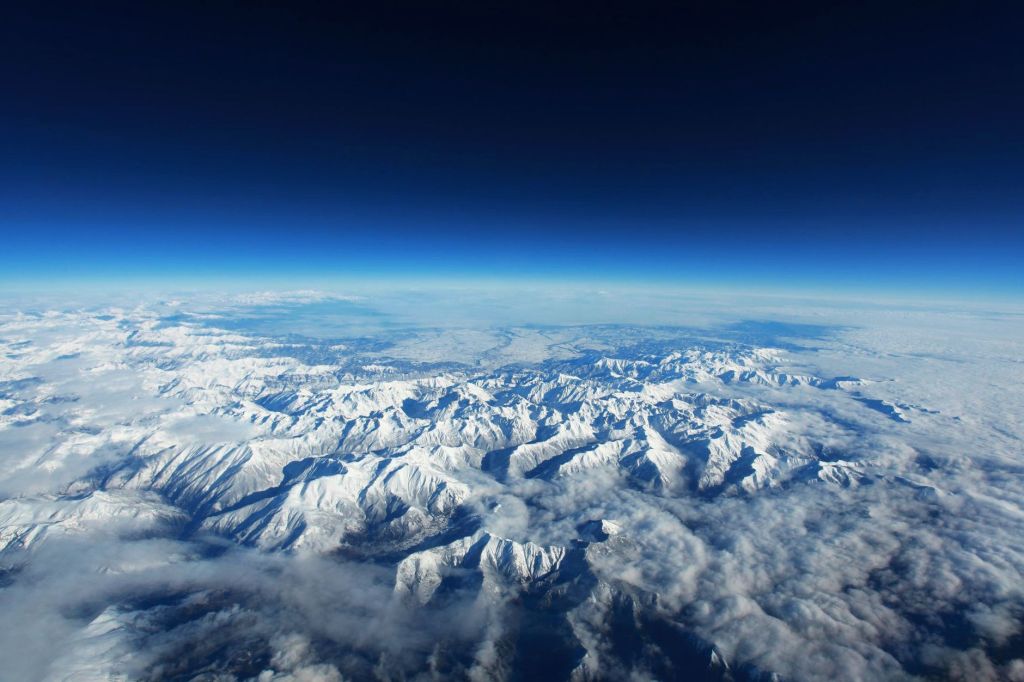
So: is it getting hotter, or colder? Depends where. Essentially, greenhouse gases heat up the Troposphere, that thick dense lower layer of the atmosphere where we all live. This actually acts like a blanket, wrapping in the heat on the surface, while stopping it rising up into the stratosphere. The result is a cooling at higher altitudes-which would exactly cause the Ozone effects which have been observed.[2] [3]
Somewhere this week some of you will meet a strongly opinionated person who has skimmed the headlines, absorbed them uncritically, bounded to conclusions, and declared to you: “ De Antartic is gettin’ cooler, mate! That PROVES there’s no such fing as global warmin!” Now you know why they’re wrong.
[2]Chabrillat et al. (2025), Modelling stratospheric composition for the Copernicus Atmosphere Monitoring Service Geoscientific Model Development (Copernicus Publications
[3]WMO Scientific Assessment of Ozone Depletion (2022
#global warming #ozone layer #stratosphere #troposphere #cliamte change #fossil fuels #antarctic #ocean


