
Brexit: how two Rights made a wrong

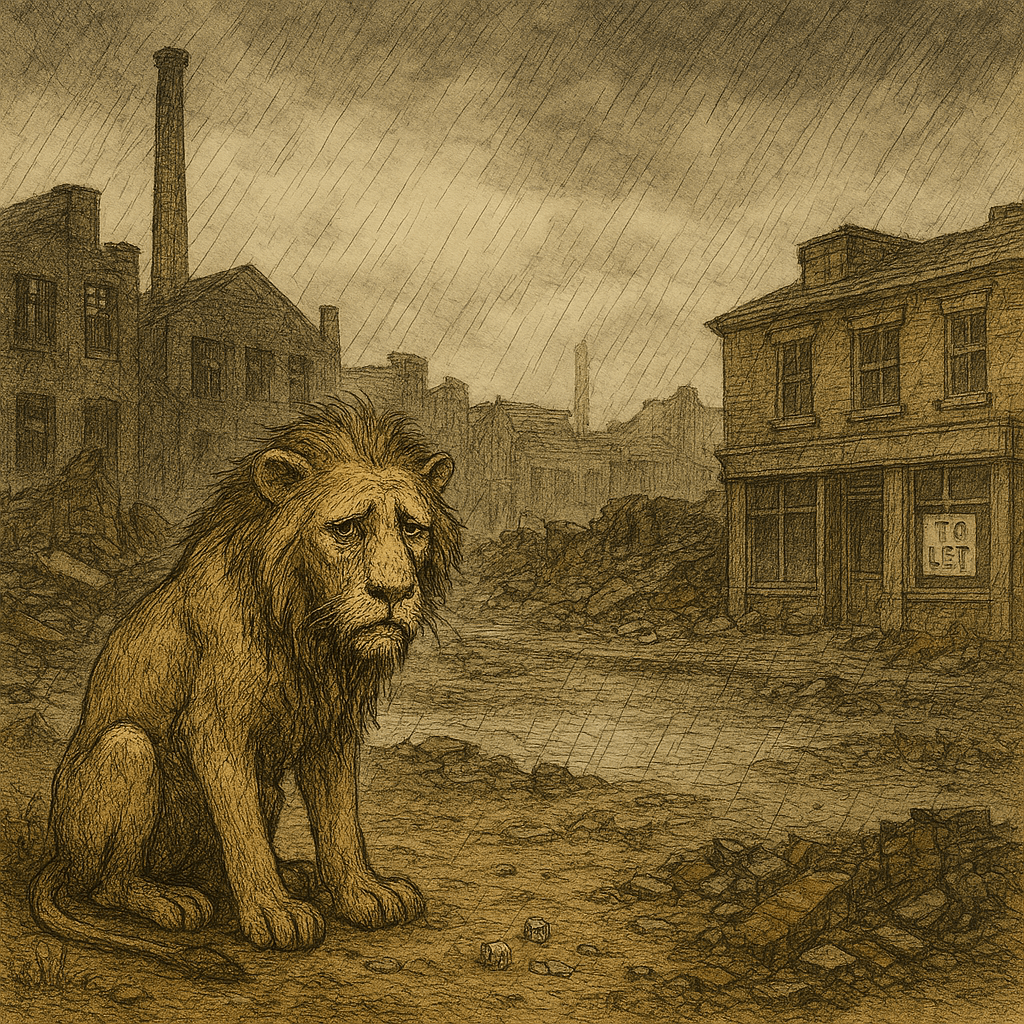
Brexit could have worked. Read those words slowly, from an honest Remainer. Because as some of us always knew, there were pragmatic arguments from the other side, which we feared greatly, because they were exceedingly strong. So how is that most successful political project in recent British History now seems to have fallen so flat? Why, ten years on, do the memories of Brexit feel far from triumphant?  We repeat, so that no one gets us wrong: Brexit could have worked. And this is why we think it didn’t.

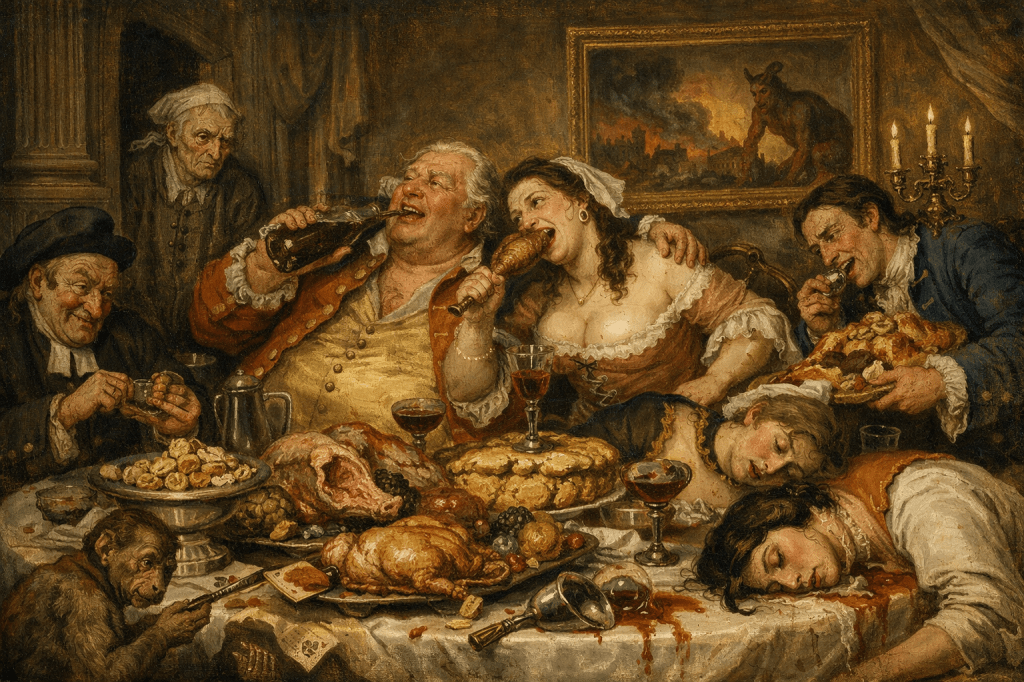
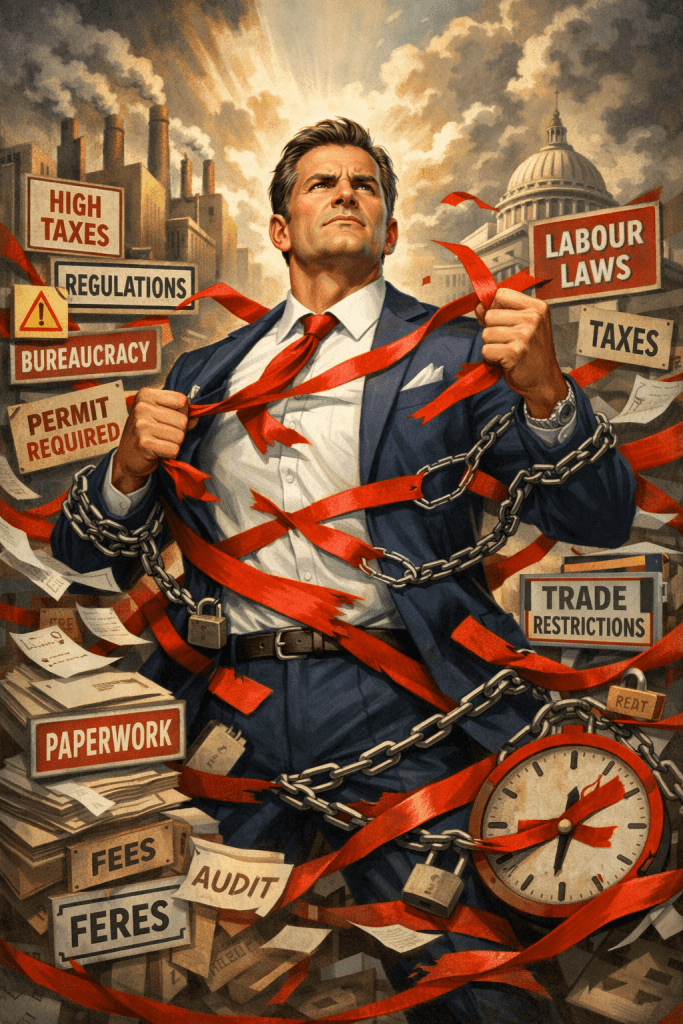
The overarching problem was that the Leave coalition was built from two groups who wanted entirely different futures.  Both were impeccably Right Wing. Both were possessed a vision of a  future that could well have worked.  But both pressed the same “Brexit “ button for opposite reasons. Because they belonged to two quite different right-wing tribes.  One tribe, The Free‑marketeers dreamed of a Britain unshackled from Brussels, a nimble “Singapore‑on‑Thames”: low taxes, light regulation, capital flowing freely, goods moving frictionlessly, and a labour market kept competitive by high mobility. Their model required openness — to investment, to trade, and, crucially, to people. What can be more red tape than Immigration controls? But it might have been very, very prosperous.

The other half of the coalition wanted the exact reverse. The Nationalists imagined their Brexit as a chance to pull up the drawbridge: to instigate tighter immigration rules, more insulation from global competition, to achieve a more interventionist state protecting industries and communities. Some were driven by economic insecurity, some by cultural anxiety, and yes — some by outright hostility to outsiders, seeing Brexit as a way to begin a purge of “foreigners” from public life. Their model required barriers, buffers, and a powerful State willing to police identity as much as borders. It was a vision of national retreat, not global acceleration. But it might have been very, very stable.

These two projects could not coexist beyond Brexit day. You cannot believe in the free movement of capital and goods while fleeing, like a child at bathtime, from the free movement of labour. Markets do not work that way. Block labour and capital simply moves instead; block people and goods compensate; block both and you get the stagnation we now inhabit. Brexit tried to fuse two rights — the right to globalise and the right to barricade — and produced a wrong. A decade later, the contradiction still sits at the heart of British politics, unresolved and unresolvable, because the country cannot be both fortress and freeport at the same time. Deep, deep down, the question is not about Europe, nor taxes nor even immigration rules: all are details  It is What do you want to be going forwards?

‘I feel entirely vindicated’: three Guardian columnists debate Brexit and its legacy | Aditya Chakrabortty, Polly Toynbee and Simon Jenkins | The GuardianThe Economic Impact of Brexit | NBER

#brexit #united kingdom #european union #economics #history #nationalism #free markets

Should we blame Alan Greenspan for everything that’s gone wrong?

As historians of the future pick through the rubble of America’s decline and fall after its supreme triumph in 1991, they will ask one plaintive question: “How was such a winning position thrown away so decisively — and so quickly?” There will be plenty of blame to go around, plenty of suspects against whom fingers will be pointed. But one name keeps coming up again and again: Alan Greenspan, Chairman of the Federal Reserve of the United States from 1987 to 2006.

Today, the case for the prosecution against “ol’ Al” is made loudly, cogently, and with devastating clarity by Robert Reich, US Secretary of Labor under Clinton and now a professor at Berkeley.

We really think you should read this [1] — especially if you have a home, a family, a community, and, most pertinently of all, a job where the salary has not risen significantly in twenty years or so. But for those pressed for time, Reich summarises what he sees as Greenspan’s masterpiece of misjudgement thus:

“If any single person was responsible for the financial crisis of 2008, it was Greenspan… the worst collapse since 1929… resulted from the deregulation of Wall Street that Greenspan advocated.”

“He pushed Clinton and Congress to repeal the Glass–Steagall Act, which since the 1930s had separated investment banking from commercial banking, thereby preventing banks from gambling with personal savings. He also argued vigorously against regulating derivatives — essentially financial bets on financial bets — that later proved to be weapons of mass financial destruction.”

Yet we ask: is the culprit really Greenspan? Or is it actually ourselves?

Greenspan was widely regarded by critics as an enthusiastic advocate of the ultra‑rich and the values they espouse: hierarchy, conspicuous consumption, obsessive individualism. Whether these are virtues or vices is a matter of debate — but they were adopted enthusiastically by wide sections of the population for decades, making the task of Greenspan and his Wall Street fellow‑travellers infinitely easier.

For the ultimate illusion they peddled was Common Sense: it makes sense to reduce the deficit, for what is a nation but a giant household? Well, it is a bit — but mostly it isn’t. So things like infrastructure, research, and health go into the “nice‑but‑we‑can’t‑afford‑it” ledger too many times, and slowly but surely decline acquires a momentous, unstoppable hegemony of its own.

So don’t just blame Greenspan — blame ourselves for buying into a system that puts that sort of man into that sort of job. And hope that future societies develop much more judicious HR policies.

[1] RIP Alan Greenspan: you were charming, powerful and wrong | Robert Reich | The Guardian

#business #economics #united states of America #alan greenspan #robert reich #finance #markets

Vaccines: it’s a question of Anthropology not Biology: Gillian Tett knows why

 Why doesn’t evidence cut through? Why do reason and learning so often fail? They’re themes that have haunted this blog since its inception way back in the COVID‑19 days of 2020. Aren’t we supposed to be the heirs of the Renaissance, the Enlightenment, and all that? Maybe part of the answer lies in this story about the UK and Japan, and their startlingly different experiences with their respective HPV vaccination programmes, as detailed in this excellent Conversation article by Professor Justin Stebbing of Anglia Ruskin University [1].

On the face of it, vaccines are a winner: the biology is clearly understood, they save lives, and they have eliminated numerous diseases [2]. Which explains the success of the UK rollout of the HPV vaccine: Justin has a barrage of juicy statistics, but in his words the NHS now feels able to publish a plan to eliminate cervical cancer as a public health problem in England by 2040. Compare that with Japan, where following a reasonable start, the HPV vaccine campaign collapsed into desuetude. There were media stories, the government lost its nerve: the result is” that among girls born in certain years, coverage fell from around 70% to below 1%, and it remained at that level for years“. And Justin explains the dreary consequences at some length.

So why can’t we understand the difference between the two countries? In the end, vaccine hesitancy has very little to do with the science and everything to do with the stories people swim in. The biology stays constant; what shifts is the cultural weather around it. A rumour here, a misframed headline there, a neighbour’s anecdote, a politician’s stumble — tiny changes in narrative that can tilt whole communities from confidence to doubt. Vaccination succeeds or fails not in the laboratory but in the social world: in trust networks, identity cues, and the fragile ways humans decide whom to believe. It is anthropology, not virology, that explains why one hospital bed stays empty and another does not.

In other words, public health is really about anthropology, not biology. One person who understands this well is Gillian Tett, whose formidable book Anthro‑Vision [3] argues that the real drivers of human behaviour are rarely the numbers on the page but the cultural currents beneath them — the stories people trust, the tribes they belong to, the risks they feel rather than calculate. Public health often talks in data, but people decide in narrative. A stray rumour, a clumsy headline, a shift in group mood can undo months of scientific clarity, while a well‑placed story or trusted voice can restore confidence just as fast. And suddenly this becomes true of many of the things that preoccupy us here — climate change, economics, even the long arc of female emancipation. For all our “LSS are the  heirs‑of‑the‑Age‑of‑Reason,” for all our Whiggish rhetoric, we’ve missed one important truth. People are not how we would like them to be. And this book tells us a lot about why.

[1]https://theconversation.com/the-hpv-vaccine-works-but-only-if-we-keep-trusting-it-285618?utm_medium=email&utm_campaign=Latest%20from%20The%20Conversation%20fo

[2] Why vaccination is important and the safest way to protect yourself – NHS

[3]Tett, Gillian. Anthro‑Vision: How Anthropology Can Explain Business and Life. London: Random House Business, 2021.

#vaccination #public health  # HPV   #anthropology #biology #culture #history

So-why would anyone love a World Government anyway?

Recently we approached one of the sharpest minds in the UK with our thoughts on the nation state. To our immense honour they replied. Please understand that, although we must protect their confidentiality, these are their exact words:

….. the core paradox today is that countries have to be small to get a real sense of citizen accountability – but big to grapple with these problems of security and prosperity. Therein lies the size conundrum………….

And we hope that the following anecdote illustrates why they are right.

Yesterday, while wandering at leisure on England’s south coast, we came across a seafront meeting of locals who had convened to discuss ways of improving their town, which they held to be in Decline. Before anyone sneers, let us record how moved we were that they had turned out at all, and how assiduously they strived to avoid dragging in wider political allegiances. Their concerns were local indeed:-flower beds, and the colours of bus shelters, mainly. Their hostility common- a deep suspicion of their local council and all its works. Which is shortly to be replaced by a merger with certain neighbouring towns, a prospect greeted with general dismay.

It follows that, if they were so suspicious of their local council- the very first and most immediate layer of their government- how much more suspicious might they be of a World Government? And not just them, but people everywhere, from the High Arctic to the projected colonies on the Moon? What makes people cling so jealously to the local and the tangible? We confidently tell them that Big offers Defence, Economies of scale, Energy grids, Supply chains, AI, biotech, cyber capacity and Climate resilience.  Plus the World Cup. And quite rightly they counter that Small offers meaningful scrutiny, power where the scale is human, that corruption is easier to spot, that leaders are socially legible (you can imagine them in your local pub), not a distant man in a suit reading from an autocue. Policy feedback loops are brief too, meaning decisions have immediate consequences  political pressure works-and you see where your money is going. That is a strong set of arguments, tuned to the way people are. Should we close down this  whole LSS trope of World Government, and concentrate instead on flower beds and bus shelters?

Perhaps. And perhaps not. Even the most well-kept flower beds cannot escape the droughts of climate change for ever, nor the neatest town the effects of rising seas. The threats in the world will require collective action sooner or later.  While the things they love like beer, cars and chocolate are supplied from the efficiencies of world markets, the very antithesis of the local and the particular. But so far all arguments on our side have been based on reason and evidence. Which can never win the emotional loyalty which those who tell stories about Tribe and Location currently scoop with ease. It is time for us to look for stories of our own. Which can offer so much more.

#world government #accountability #politics #economics #history #power

Thomas Piketty thinks he has a way out of the mess: but do we know enough to take it?

Given the simultaneous polycrises we’re now immersed in, it’s always poignant to come across a report that offers possible ways out. So when another such is unearthed, this time by Jonathan Watts of the Guardian, [1]we were particularly intrigued. Partly because it covers some the same tropes we have circled around here ( Justice;  LSS 24 4 23 et seq : Inequality: LSS 16 9 25 and governance; LSS 16 1 25 et seq) And partly because one of the report’s moving spirits is the great Historian and economist Thomas Piketty, whose name has also graced these pages. [2]

Living standards can rise for all, the authors asseverate. The worst of climate change may be mitigated. Political and social tensions ameliorated. The key is to tax the small group of billionaires who control most of the world’s wealth and power. While at the same time redirecting investment away from carbon heavy industries such as construction, mining and manufacturing and towards education and healthcare. The new world they envisage would have a shorter working week, be more prosperous (the lowest universal income quartile would come in around $5000 per annum) and above all be ecologically stable. Hyper capitalist consumers and green neo-puritans come in for equal criticism. Both endless consumption and austerity hair shirts are unfeasible say Piketty and co. Sufficiency is their new lodestar for their intriguing (dare we think Whiggish?) Third way. [3][4][5]

And our thoughts? We think the report’s careful scholarship and refreshing new thoughts are clear already. Its recommendations are both sanguine and rational and would undoubtedly contribute to a more tolerable world. But: they run up against what in everyday language is called human nature and in Social Identity Theory comparative advantage. Most people would rather live in a world where they had £10 and their neighbour £5 rather than one in which they had £15 and that neighbour £13, as their relative social advantage is better in the first instance than the second. That, in a nutshell is the human weakness.[6] It suggests that groups enjoying relative social advantage will fight like tom cats to maintain it against inferior groups, rather than join with them to their common benefit. Particularly if they are well funded to do so by sympathetic billionaires who thereby ensure their own supreme advantage over all. This is human instinct. In theory we could overcome it. Have we the cognitive capacity to do so?

[1]‘An equal and habitable world is possible’: academics set out sweeping vision for planetary survival | Environment | The Guardian

[2]Thomas Piketty – Wikipedia

[3]World Inequality Conference 2026 – World Inequality Lab

[4]World Inequality Report 2026

[5]Global Justice Project

[6] Ernst Fehr & Klaus M. Schmidt, “A Theory of Fairness, Competition, and Cooperation,” Quarterly Journal of Economics 114(3), 1999, pp. 817–868.

#economics #climate change #inequalty #social justice #tax #education #decarbonisation

More pointers towards a coming crash(and this time it’s from someone much cleverer than us)

Over the years we’ve ventured a series of blogs (LSS 23 4 25;30 6 25 18 5 26) in which we suggested that another financial crash on the scale of 1929 or 2007-8 may be approaching. We shared our concerns about the long-term viability of US Treasuries, pointing to weaknesses in the property market and the effects this might have on general confidence and demand. We also speculated that rising tides of nationalism and protectionism vitiated the possibilities of co-operative global responses in the style of 2008. Our view alone; and we swiftly moved on to to other matters.

Yet the risks have not gone away. Eduardo Porter, in an excellent article for the Guardian, [1] does not dismiss the possibility of the AI stocks bubble bursting.  But for him:

The largest risk, at this moment, revolves around the federal government’s accumulation of debt, now in excess of 120% of the nation’s gross domestic product, a near unprecedented level. It is likely to keep on growing at a fast clip given massive built in budget deficits for the next decade……a global context: the US’s insatiable appetite for capital – to finance data centers or the federal deficit – is met by China’s export of capital to recycle its huge trade surplus. A coarse, schematic way to think of it is China sells stuff to the US and invests the proceeds in the US. Then, Americans take money from China and use it to buy Chinese stuff.

That’s how the world works in May 2026. What happens next? Now Porter gets really interesting, pointing to deep political risks which might trigger a sell off of US debt.[2] Astute readers will not be surprised to learn that many of them revolve around a the actions of President Donald J Trump. An invasion of Greenland? Stepping the war in Iran up again? Attempting to meddle with the Federal Reserve, sending the dollar into a tailspin? Mr Trump is a democratically elected politician and has every right to do these things. But if he does, the consequences will be global. And Porter is equally merciless on the shortcomings of other nations. Like us, he sees no collective escape this time. Ouch indeed.

[1] The world is heading toward a financial crisis – the state of US politics has left us ill-prepared | Business | The Guardian

[2] https://www.aei.org/economics/brewing-government-bond-market-crises/?_hsenc=p2ANqtz-8u2PIGjNg8Q6fBS5RzfUnOeM9txpv7fI9NjE9uC1veq4UgmUkPS-0YDGyIk7m_WiFx

#economics #politics #USA #Federal Reserve #economic crisis #dollar #world trade

Why Adam Smith thought immigration controls were Creeping Socialism

Many people who call themselves free‑marketeers begin from a sincere fear of “creeping socialism.” They see every new regulation, planning rule, workplace standard, environmental requirement and every tax as another brick in a wall that hems in enterprise and erodes liberty. They believe that once government starts managing economic life, it rarely stops. Which creates a contradiction at the heart of a lot of modern political rhetoric. Parties, especially of the Right, describe themselves as advocates of free‑market nations, committed to open trade, open capital, open competition, lower taxes — and then insist that immigration must be tightly controlled. It sounds like a reasonable compromise, a balancing act between global economics and local sentiment. But it’s also a rejection of the classical liberal tradition we claim to inherit. Smith, Ricardo, Mill, Bastiat — none of them imagined markets as a buffet where you could pick capital and goods but decline labour. For them, the free movement of labour was not an optional extra but a structural necessity. Capital moves to where it earns the highest return; goods move to where they are most valued; labour moves to where it is most productive. These are not moral preferences but mechanical facts. Remove one gear and the machine does not slow down politely; it compensates, strains, and distorts.

Yet modern politicians try to keep the first two gears spinning while jamming a stick into the third. Where capital must be free, goods must be free, but labour must be fenced, filtered, and  rationed. The economic equivalent of declaring your devotion to physics while exempting yourself from gravity on weekends. Once you restrict labour mobility, you are no longer operating a free market. You are operating a managed economy with selective liberalisation. This may be politically popular. It may even be economically defensible in certain circumstances. But it is not classical liberalism.

And the distortions appear everywhere. If labour cannot move, something else must. Capital moves instead: offshoring, outsourcing, investing abroad. Goods move instead: imports rise to fill the gap. Wages diverge between protected insiders and excluded outsiders. Productivity stagnates as firms rely on scarcity rather than innovation. Regions hollow out as young workers leave and old workers remain. Demographics collapse as fertility falls and dependency ratios rise. Ironic, really: anti‑immigration sentiment produces the very globalisation its supporters resent. Block the worker, and the factory moves, the goods arrive instead, the demographic pyramid inverts. You can restrain labour, but you cannot restrain arithmetic.

Adam Smith warned that restrictions on labour mobility were a violation of natural liberty — an eighteenth‑century way of saying that such rules protect incumbents at the expense of everyone else. Immigration controls raise domestic wages artificially, raise prices for consumers, reduce competition, entrench inefficiency, and subsidise native labour at the expense of the global poor. This is protectionism by another name. And once you accept protectionism in labour, you have accepted the principle that economic policy must be directed by the Government for the public good. And that free markets do not deliver the optimum national outcomes.  A country can choose many things — a managed economy, a protectionist economy, a high‑skill selective system, a low‑migration demographic strategy. All of these are legitimate political choices. But what a country cannot choose is to restrict labour while claiming to champion free markets. That is not a philosophy; it is a branding exercise.

Wealth of Nations, Book I, Chapter 10

#Adam Smith #David Ricardo #free markets #liberty #economics #politics #capitalism

The Crash of 2028-an old blog revisited

It’s our occasional habit here to make serious points in a light-hearted sort of way. So when last summer (LSS 30 6 25) we published a piece called Why the Crash of 2028 was so bad….. , we felt we’d made our peace with certain worrying trends in the insurance market, and duly moved on. Except-we must have hit a raw nerve with some of you, because you keep reading it. So what did that old blog say-and has anything changed to make its predictions more accurate?

It was based on some pretty reliable sources [1] [2] including McKinsey and the Finacial Times. In a nutshell, we argued that continuing destruction due to climate change would make property uninsurable in large areas. That this in turn would cause some insurers to go bankrupt, leading to demands for Government bailouts just as the US Government was running at the fiscal limit. Confidence, we said, would fall quickly. Leading to fire sales in asset prices of all sorts, especially Equities and Bonds.  Above all we predicted that recovery would be much more difficult than it had been in 2008, because nations had turned away from co operation and towards nationalist, tariff driven positions, a bit  like the autarchy that proceeded the Second World War How then have we shaped up? Have thing got worse, better or stayed the same?

One constant is the risk from climate change.[3] When something as staid, solid and utterly unexcitable as the Yale Law Journal publishes something like this [4] we know we’re in for a bumpy ride. As for International Co operation-ask them in the Middle East how that has changed since 2025. And Taiwan ? Nothing in the recent summit suggests Mr Trump has achieved anything to deter Mr Xi from his long term ambitions. But most worrying of all is all the warning lights suddenly flashing “Red” in the  Bond Markets today. [5] If you’re wondering why anyone should care about a so‑called “bond market rout”, the answer is simple: government bonds are the bedrock of the entire financial system. When their prices fall sharply, the cost of money rises everywhere else — mortgages, business loans, pensions, bank funding, all of it. A sudden jump in yields isn’t just market noise; it’s the system quietly saying it now trusts governments a little less than it did yesterday. And when the safest assets start to look less safe, everything built on top of them has to be repriced. That’s why experts twitch.

LSS does not give financial advice-we are not financially trained. But we have read our economics. And our History. And today, our worries have grown just that little bit more.

[1] https://www.mckinsey.com/industries/financial-services/our-insights/climate-change-and-p-and-c-insurance-the-threat-and-opportunity

this piece by pitilla clark of the Financial Times is well worth jumping the paywall:

[2]https://www.ft.com/content/9e5df375-650d-492e-ba51-fb5a34e6ddd6

#global warming #climate change #financial markets #stock market crash #investor #economics

New references

[3] There has been a sudden increase in the rate of sea level rise | New Scientist

[4]The Uninsurable Future: The Climate Threat to Property Insurance, and How to Stop It | Yale Law Journal

[5] Bond market rout deepens as investors fear ‘stagflationary shock’ from higher oil prices – business live

#global warming #insurance #property #bond market #finacial system #middle east #geopolitics

Labour’s troubles are historic, not just economic

One thing we like about Larry Elliott of the Guardian: he always looks for deeper reasons behind the news stories flashing across our screens. For him, they’re often economic reasons. .[1] Today he examines the plight of UK Labour Prime Minister Keir Starmer  and the sea of troubles against which he has tried to take arms. Brexit,(“not done properly” Elliott asseverates )  globalisation (“has mainly benefitted the South East”), too much financial services ,and of course de-industrialisation. Especially in the old manufacturing areas like the Midlands, the North of England and the Scottish river valleys. Where Starmer and his party received such a kicking in the recent local elections.   It was that last one that caught our eye, gentle readers.

For what was the Labour Party but a Party of the mass industrialised workers? From its foundation, in deep partnership with the Trades Unions and Co-Operative movement, but a Party of workers, who had been torn off their farms and thrown together into mass agglomerations in things like factories, mines and ports? Whose consciousness and very lives were collective, where sharing was a more certain way to survive hardship. But now those factories are gone. And the industrial unions with them. (for the benefit of foreign readers, Britain has an atrophied group of unions, but they now largely represent small groups of white collar workers and count for little in the balance of power).

For us the clue is in the name: the party of Keir Hardie grew from an organised, industrial membership. The Party of Keir Starmer exists in a very different nation. The politics of the 20th century were all about economics Those of the 21st about Identity. No wonder Labour got such a kicking. No wonder the Conservatives did too.  A very different road now lies ahead. In every country.

[1] Labour is being destroyed by dithering: it should either do Brexit properly or rejoin the EU | Larry Elliott | The Guardian

[2] Labour Party (UK) – Wikipedia

#Keir Starmer #Keir Hardie #Labour Party #economics #politics #history #society #britain

Beyond the Nation: we conclude

In March we opened a new series called Beyond the Nation(LSS 5 3 26), which suggested that there are a number of practical , and very pressing problems which could be more efficiently addressed if the response were global rather than by the current group of 193 or so mutually suspicious, jealously competing, nation states. In particular we looked at things like pollution, disaster relief, and the economic brakes imposed by creating national identities,

Thinking about it, that last is the very heart of what we’re on about, isn’t it? Because national identities are really, no viscerally, important to people. They have more power over our minds than any alternatives offered by religions, class, sports teams or profession. They not only define who we are: they define the behaviour others expect of us, and more importantly, the behaviour we expect of ourselves. And no one can deny the critical importance they have played at times when freedom was in critical jeopardy. Would Ukraine have sustained the fight against Russia for so long without a crucial sense of its own identity? Or for that matter would the USSR have sustained its own fight against the Nazis without incorporating a strong sense of Russian Nationalism? All this, and more can can be set in the balance for the Nation as the highest form of organising human societies, as we have argued elsewhere. (LSS passim: see our World Government series)

Yet nations are transient, fleeting things. Where are the Spartans or the Akkadians now? Men and women lived and died for their causes, and many like them, across thousands of years of history. Yet the real drivers of existence are huge impersonal things like climate, disease or massive technological leaps such as the Industrial Revolution. Britain spent immense quantities of treasure and lives trying to defend a position it had established in the Age of Sail, only to discover that the Age of Steam made all its efforts irrelevant[1] And so the question becomes “If your identity is so important, what price are you prepared to pay to maintain it?” Because if technologies can change, so can societies, and the identities which they generate.

We shall close the series with a personal anecdote, a thing we rarely do, Many many years ago still trapped in Undergraduate adolescence we were debating the question of Britain’s membership of what was then called the European Community with a fellow inmate, albeit far more intelligent than ourselves Being good Young Socialists we then followed the Orthodox Labour Party Line: that the UK should leave forthwith. Being entirely of independent mind (and far less neurotic) our interlocutor laughed and observed “You would have been against joining up Wessex with Mercia, wouldn’t you?” A quiet wisdom which time has made more memorable than almost any other things we have ever heard or read.

[1]Kennedy, Paul. The Rise and Fall of the Great Powers: Economic Change and Military Conflict from 1500 to 2000. New York: Random House, 1987. London: Unwin Hyman, 1988. ISBN: 0394546741 (US hardback); 0049230737 (UK hardback). see especially chapter 3

#nation state #society #politics #history #russia #ukraine #USSR #Britain #economics