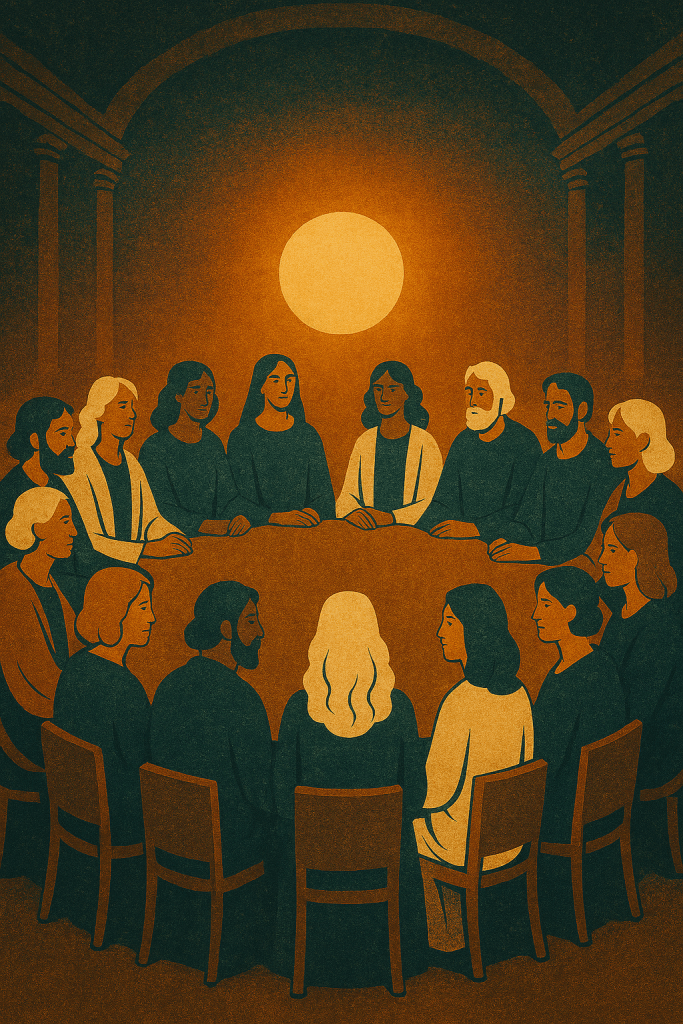


World Government: Great Idea or daft fantasy?

We’ve passed a little time this year discussing the idea of a World Government. In our series which began back in January[1] we looked at the basic idea. Many of the world’s problems, we opined, were transnational: mass migration, climate change and pandemics are only a few. Nation states were no longer big enough to solve these on their own, we said. Or rather, their existence precluded the solutions, in any reasonable time frame, which would permit human survival. We also noted the terrible danger of a World State[2] : that it could quickly engender an tyranny even more terrible than those of Robespierre or Stalin: and this time with no where to escape to at all.

We spent some time discussing the idea both in these pages and with friends and acquaintances. We received some surprising responses. Even some quite hardened nationalists and Europe-bashers thought we had a good idea, but that it was utterly unfeasible in any meaningful time frame. We think that they are probably right. For another trope of these pages has been the depressing tendency of humankind to divide itself in to mutually loathing groups, over issues both large and small. We have looked at the work of thinkers Like Amy Chua , Eric Kaufman and David Ronfeldt{3.4] We looked at studies like the Robbers Cave Experiment [5] which seem to provide the essential psychological underpinning to these writers’ ideas. All of the foregoing made us feel that our sceptics had the point, and that our Big Idea was, if not wrong, then at least hopelessly impracticable.

It is the to the credit of Great Big Ideas that even when wrong, they can point the way to fertile new investigations, if they are catchy enough. No one thinks Henri Pirenne said the last word on Medieval Economics, not Freud on psychiatry. But it was the achievement of these scholars to make their ideas so strong that they challenged further studies, if only because some were so eager to prove them wrong. It is in this spirit that we shall turn to looking at some questions we have raised. Is the Nation State, which has served us so well so far, really constrained ? Can people from different groups and identities not only sink them into a common cause but actually achieve something thereby? These will be some of the the in the months ahead. And while you are waiting, don’t forget: problems like antibiotic resistance, climate change and mass migration will be getting worse.

[1]LSS 1 8 25, 14 1 25 et al

[2] LSS 22 1 25

3 LSS 16 8 20

4 LSS 10 3 21

[5]LSS 1 4 25

#world government #nation state #economics #politics #tribalism #amy chua

Why Taxes are good for you #3: look what happened to China

One of the great disadvantages of low taxes is that you end up getting conquered. As China learned at terrible cost. In the eighteenth century Qing China had been one of the greatest states in the world:, rich and populous, with booming trade, advanced techniques in agriculture, and envied craftsmanship  Taxes were low, less than 5% of GDP it is estimated. So was military spending. And there was the problem. For nations in the west, like Britain for example, ran at much higher tax burdens, perhaps 15-20% GDP. With the result that they could pay for vast armies and fleets which captured all the world’s sea lanes and trade routes. It’s true that the most advanced western thinkers were classic Liberals like Ricardo and John Stuart Mill, who loudly proclaimed the virtues of low taxes and a minimal state. It was just that no one serious paid any attention to them. The result that these fleets and armies were eventually flung against China. The resulting Opium Wars were not only one of the most terrible crimes in History, they disgraced and destabilised China until 1949.[1] [2]

It was a lesson the British themselves had to relearn after the rise of Hitler forced them into frantic re-armament after 1937. After nearly two decades of orthodox economics like the Gold Standard and low taxes, suddenly the latter began to rise. Fast. All those Spitfires and cruisers and radar had to come from somewhere. So in 1938 the standard rate of income tax was raised to 27.5% (5s 6d in the pound) to help fund rearmament.   A 41% surtax applied to very high incomes (over £50,000 annually), targeting the wealthiest. Other hated impositions like death duties and PAYE *were imposed. And -despite what it says in the Daily Mail-it worked. Not only was just enough done to survive the perilous summer of 1940, by 1944 Britain was the most fully mobilised of all the wartime economies. Pride indeed.

Yet there is a little irony at work here . It is our lived experience that those who most loudly proclaim the greatest patriotism are also those who would avoid paying taxes wherever and when ever possible. It is their right to say such things. But ours also to at least doubt the sincerity of a patriotism which will not pay to uphold that which it professes to adore.

*Pay as You Earn

[1] Thomas Piketty Capital and Ideology

[2] David Ricardo Principles of Political Economy and Taxation

#taxation #economics #liberalism #free markets #imperialism #opium wars #china #britain

Making an end to Cervical Cancer, making a start on an end to Alzheimers- two stories of real hope

At a time when ignorance and anger are gleefully presenting themselves as the new norms, it’s heartening to see that some people are still active on our side. And achieving real, substantial progress. That’s why we’re proud to bring you two stories which show what educated minds, still employing the twin discipline of fact and reason, have achieved lately.

Repurposing old medicines. Regular readers will will recall our enthusiasm for lateral thinking, using old things which were there all along to do unexpected new ones. So Sharon Wooller of the Mail has a triple whammy for us this week.[1] After screening 80 commonly used drugs or vaccines , ingenious scientists at the University of Exeter selected three that might have a bearing on the terrible scourge of Alzheimers disease. They are: Viagra, which stops those pesky tau plaques from building up. Riluzole which may actually bring them down. And the shingles vaccine Zostavax which may also affect the immune system. Now we know the brain barrier frontier is pretty much down (LSS passim) this has to be a powerful runner, gentle readers. But best of of all is why these scientists set out to do this. To quote Sharon. in a nutshell:

Making drugs from scratch can take ten to 15 years and cost billions of pounds, with no guarantee they will work.

If you cant afford new ones, why not try a few old ones? Quod erat demonstrandum

Cervical success People can co-operate, even across national lines, when there is “cause sufficient”. One of these was cervical cancer, which not only blighted and destroyed lives, but effectively deprived the world of much of the better half of its workforce. Two releases today from GAVI and the WHO evince the remarkable strides in the vaccination programmes which have done do much to eliminate this disease. Hats off not just to the scientists, but also to the intrepid field workers who have combed the wildest, remotest corners of the earth, employing the most recondite means, to save lives and afford a brighter future to millions [2] [3]

When we read stories like these we know we are not alone. Our side is still out there. And unless they crush all universities and research institutes everywhere, we shall be back one day. For keeps.

[1]https://www.dailymail.co.uk/health/article-15298699/Viagra-Alzheimers-drugs-hope.html

[2] https://www.gavi.org/news/media-room/cervical-cancer-vaccines-save-over-1-million-lives-lower-income-countries

[3]https://www.who.int/news/item/17-11-2025-world-marks-cervical-cancer-elimination-day-as-countries-accelerate-action

#vaccine #drug #medicine #alzheimers #cervical cancer #women #health

Why taxes are good for you: part #1 of a new series

Next to the arrival of immigrant persons, nothing so exercises the anger of our old friend Dave Watford and his mates at the Dog and Duck as the imposition of taxes. All taxes. Any taxes. Death duties, sales taxes, income taxes……the mere mention of the “t ” word is enough to unleash paroxysms of indignant wrath. As we have heard it so many times we think we can give a fair summary of their case, which goes like this

I’ll tell you what’s wrong with this country, mate —taxes. I work hard, and they just take it. For what? So some bloke in a suit can sit in an office pushing paper? I don’t see any of it. Roads are still full of ‘oles, the(expletive deleted) NHS is on life suppawt, and don’t get me started on foreign aid. They say it pays for schools an ‘ospitals—well I haven’t been in school for 40 years and I haven’t seen a(expletive deleted) doctor since ’98. Why should I pay for stuff I don’t use? And all these entrepreneurs, they’re the ones wots creating jobs. Government just gets in the way. If they cut taxes, we’d all be better off. More money in our pockets, less wasted on(expletive deleted) bureaucracy.

Dave, despite the obvious logical fallacies in your arguments. we respect you! We know you and your kind work hard and on the whole put in more than you take out. We know how your lives are centred on family and community, and that the world can seem a harsh, bewildering place. But can we, dare we, just take a short time to offer the counter-intuitive case? Just because every argument by its nature always carries a counter point.

For we believe that taxes and their imposition do more than pay for armies, police and courts (which they do). We believe they do more than generate economic growth (and we will show that they do indeed) That they create more stable societies-and we have strong evidence for that. But what we really believe is that the idea of taxes lies at the very beginnings of Civilisation, and are what made it possible to rise above the level of stone age farmers and grangers. It’s that profound. In the next few weeks we shall be running a series of blogs which explore these themes. If only for the sake of balance. In the meantime compare Finland (top tax rate 57.65%, rigidly enforced) with Chad (top tax rate 30%, barely enforced), and answer these questions:

1 Which has GDP per capita of a $53 189 and b which $1420?

2 which of the two boasts a universal healthcare, free education, strong infrastructure, low corruption. and which b Fragile institutions, limited public services, poor infrastructure, high corruption.?

3 Which of the two do you think has Higher life expectancy, lower infant mortality, combined with top global rankings in happiness and education?

ANSWERS TO QUIZ

1 a Finland b Chad

2 a Finland b Chad

3 Finland

#economics #tax #infrastructure #growth #GDP wealth creation

Depressing Diptych for November #2:Falling vaccine rates

As the sun sets on the Americas, politically and economically, a new and insidious trend is only going to add to their problems. Read this from the ineffable Nature Briefing: Canada loses measles elimination status

Canada no longer holds measles elimination status after experiencing a cross-country outbreak that has persisted for more than 12 months. By default, this means that the entire Americas region has also lost its status. Infections took hold in undervaccinated Mennonite communities where the COVID-19 pandemic eroded already-shaky trust in the healthcare system — a shared source of recent measles outbreaks in the United States. The number of new cases is going down, but the loss is “a giant wake-up call that we have gaps in our public health infrastructure”, says physician-scientist Isaac Bogoch.CBC | 6 min read

If only it were just them! But it’s now a world-wide trend. According to a recent report by the WHO,[1] Measles cases rose to 10.3 million in 2023, a 20% increase from 2022, with outbreaks intensifying into 2024 and 2025. No less than 138 countries reported measles cases in the past year, with 61 facing large or disruptive outbreaks—the highest since 2019. Meningitis and diphtheria (horrid afflictions) are also re-emerging, particularly in regions with strained health systems and declining immunization coverage. And the causes? Funding cuts and humanitarian crises for one thing Access barriers, especially in marginalized communities, for another  But the prime one, and most baffling to us, is our old bugbear: Misinformation and vaccine hesitancy, A fact well illustrated by a similar  study from Europe which showed that vaccine hesitancy among adolescents and parents ranges from 12% to over 30%. We invite you to research more, gentle readers.

And so combining with the previous part of our Dreary Depressing Diptych of dispatches (that’s enough D’s-ed) we get a truly dismal picture of this species which has the barefaced cheek to call itself “sapiens.” If an tiger came to you an announced it was was giving up its stripes, you would counsel “don’t do it-if you throw away your principle evolutionary advantage, you will get no dinner!” Similarly if a spider monkey were to forego the use of its tail, or a real spider its web. But humanity seems determined to forego the use of its principal evolutionary advantage, its brain. Palaeontology will record what comes next.

[1]https://www.who.int/news/item/24-04-2025-increases-in-vaccine-preventable-disease-outbreaks-threaten-years-of-progress–warn-who–unicef–gavi

#vaccine #measles #diptheria #medicine #health #childhood disease

Fear, despair and loathing as the last drops of 20th Century Politics drain away

If ever there was a journalist whom we have learned to take seriously, it is John Harris of the Guardian. He it was, along with film-maker John Domokos , who first went round the people in the heartlands of Britain in the 2010s. And thereby revealed the depths of bewilderment, rage and despair that now lurk ubiquitously just below the surface of our national life. “Anywhere but Westminster” they called their work, revealing the deep cleavage between the formal politics of governance and the real feelings of most voters. His article which we riff on for you today, gentle readers is a neuralgically painful contrast between the increasingly empty rituals of the nation’s leaders and an ever more bloody-minded and fractious populace. [1]

Being a thoughtful sort of chap, Harris goes deeper. suggesting that this explains the sudden rise in the fortunes of formerly small parties such as the Greens, Reform, Plaid Cymru and the others. And the agonising decline in the fortunes of those two stalwarts of 20th Century British politics, the Conservative and Labour Parties. He cites the obvious causes- a stagnated economy, changing identities and “the failures of the various administrations that have run the UK since 2008” And this:

The essential point was made a few days before Reeves’s speech by Luke Tryl, the UK director of the thinktank and research organisation More In Common, and someone with an incisive understanding of where we have arrived. “I still don’t think enough people realise how much traditional mainstream politics is in the last chance saloon, in no small part because it can’t be trusted to deliver what it promises,” he said on X. 

Why has every single administration failed to deliver the things people want? Governments in the last century used to deliver quite acceptable levels of health, defence, housing and so on.. Here we move beyond Harris (we never put words in others’ mouths) to our own speculations, touched on in our blog Pity poor Rachel Reeves, LSS 23 10 25, and earlier ones in this vein. Remember how we said every nation state, even the richest, are plagued with such debts and poor economies that they no longer have any room to seriously mitigate the lives of their citizens? That the combined weight of investment capital, expressing its power in things like bond and currency markets, could stymie the efforts of any finance minister? Could it therefore be that the Nation State, which has hitherto served us so successfully, is no longer an effective vehicle to manage the the lives of its citizens? It is a terrifying conjecture: for we have no idea of what may replace it. But one thing we do remember: read everything you can lay your hands on about the collapse of Yugoslavia, and what followed.

[1] https://www.theguardian.com/commentisfree/2025/nov/09/21st-century-politics-labour-tories-turbulence-green-party-reform

#nation #country #politics #governance #finance #currency market #bond market #populism

Steve Schifferes Part 2: where the next crash might come from-and the chilling consequences

Our earnest recommendation of the second part of Steve Schirreres’ excellent diptych of articles for The Conversation

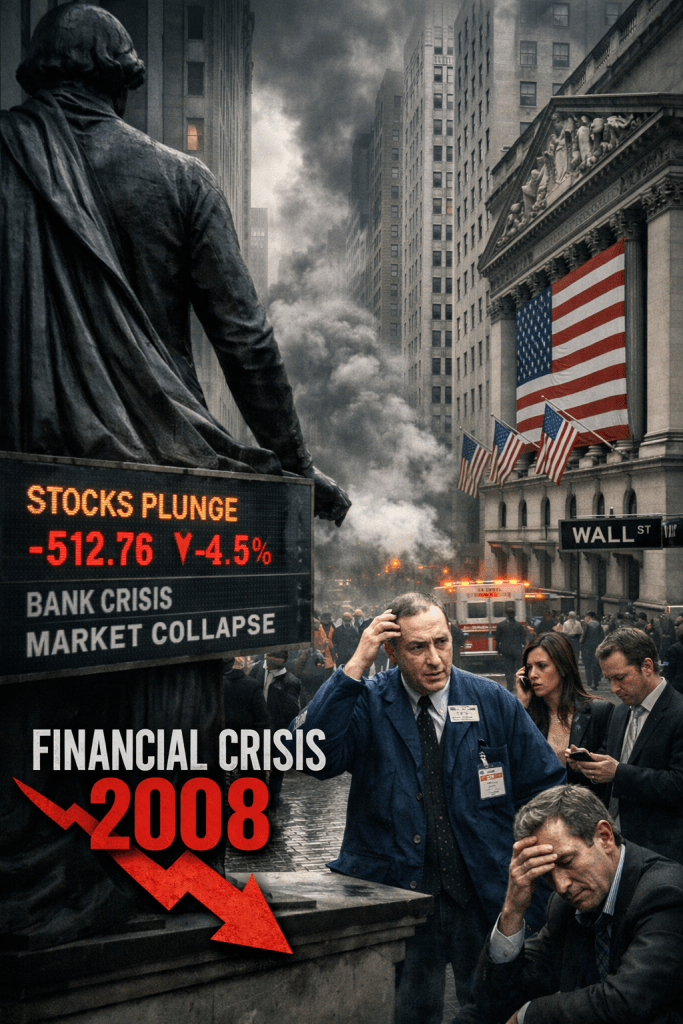
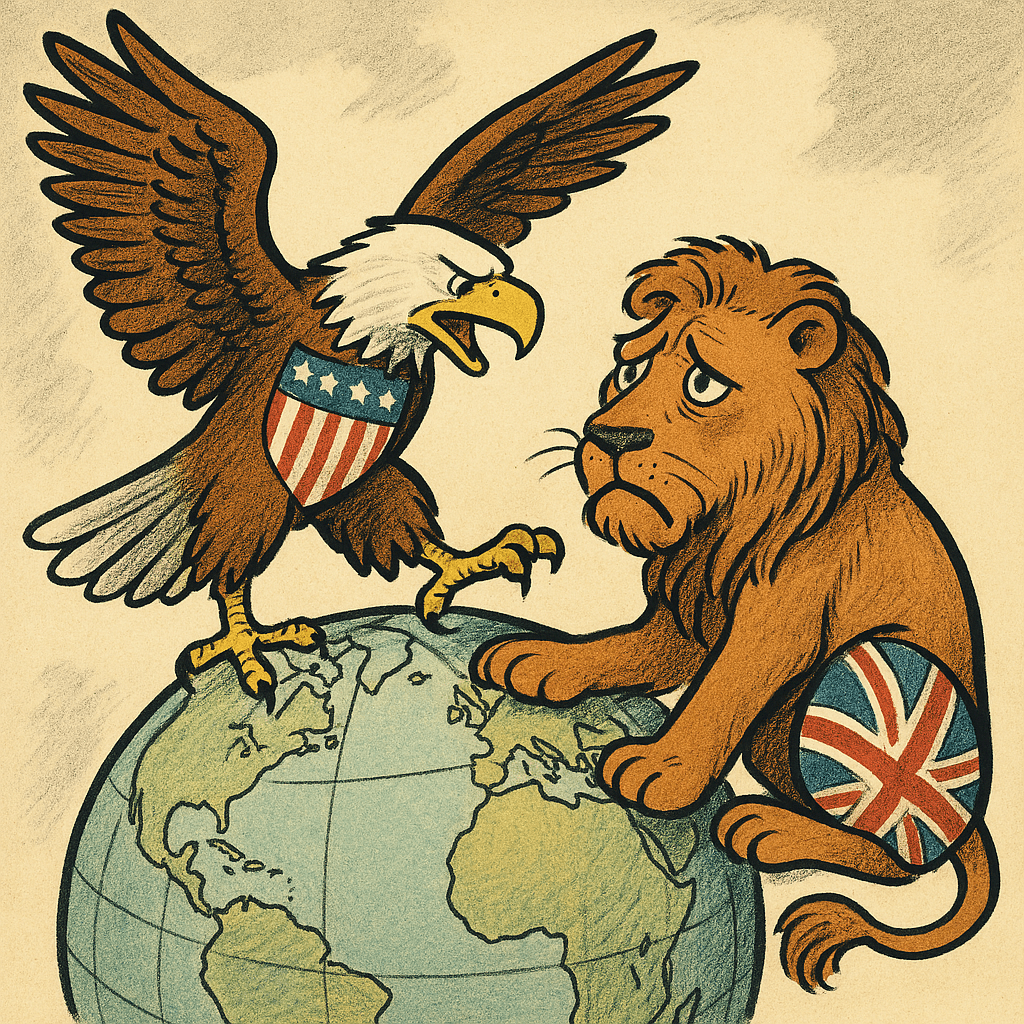
As Britain declined after world war one, no other power replaced it with the necessary financial, military and cultural power necessary to avert the political and financial instability that followed. The result was revolution, boom, crash and depression, leading rapidly to the Second World War. “Ah!” we hear you say, “Ah! That could never happen again. Look for example how well the world did to wriggle out of the consequences of the financial crash of 2007-2008!” But that, gentle readers, is to beg the question. For back in those days the world had two shots in its locker which are now fully fired. First, a spirit of co-operation among the great powers which let them co-ordinate rescue plans quickly: and the trust to make them stick. (Schifferes is rather good on this, having had a ringside seat) Now Mr Trump has declared that he will only ever consult American national interest. He may have valid domestic reasons for taking this line; but it will make any recovery from a future recession very much harder indeed.

Secondly, the America of those days still had deep and unrivalled capital markets, which enabled its Federal Reserve to act as a lender of last resort to the whole world. And this is where Schifferes gets really interesting. Firstly he details deep worries about the long term stability the US Bond market and the dollar. Remember- a hegemon needs both bonds and a currency to ensure global stability. Combine this with the threats to the US Stock market( a concern to many commentators at the time of writing) and you have not only the elements for a perfect storm, but no obvious lifeboat to climb into when it strikes.

If you want to know how the world really works, and get some glimpse of where it might be heading, then these articles are a must read. And remember- next time you get cross because the train is late, or service slow in your local restaurant: these troubles may be slight compared to what is coming down the line.

[1]https://theconversation.com/the-rise-and-fall-of-globalisation-why-the-worlds-next-financial-meltdown-could-be-much-worse-with-the-us-on-the-sidelines-267920?utm_medium=email&utm_campaig

#economics #history #US Bonds #dollar #trade #globalisation

Is Globalisation over? Steve Schifferes worries what comes next

Recently the residents of the Canadian State of Ontario irritated US President Donald Trump by running a series of TV ads showing former President Ronald Reagan disparaging trade tariffs,. Why would such hero of the global Right have taken such a heterodox view? The answer is that Reagan thought that free trade was the best way to distribute prosperity as widely as possible. Under the hegemonic power of the United States of America of course. And he had good evidence for this belief, as Steve Schifferes makes clear in this article for the Conversation.

Schifferes is such a good writer. His sentences are always short and to the point, He keeps away from jargon. Which clarity allows him to range over the last 400 years or so of history tracking the rise and fall of the various powers-China, France, The Netherlands, Britain the USA all of whom aspired to the hegemonic position in world affairs. In the first of two such called The Rise and Fall of Globalisation: the battle to be top dog he comes to one overarching conclusion. Things go better, and the world grows when there is one such dog. The period of British dominance , roughly 1815-1914 was marked by ever closer union of world markets and ever greater flows of capital and people. The American hegemon, roughly lasting from 1944 to 2016 was a second such example. The great problem for the world was that, as Britain stepped down in 1918, the USA did not step up to the plate. Leading to two decades of deep economic and international stability that culminated in the most destructive war in History. This one we shall urge you to read, gentle readers. It not only describes, it explains.

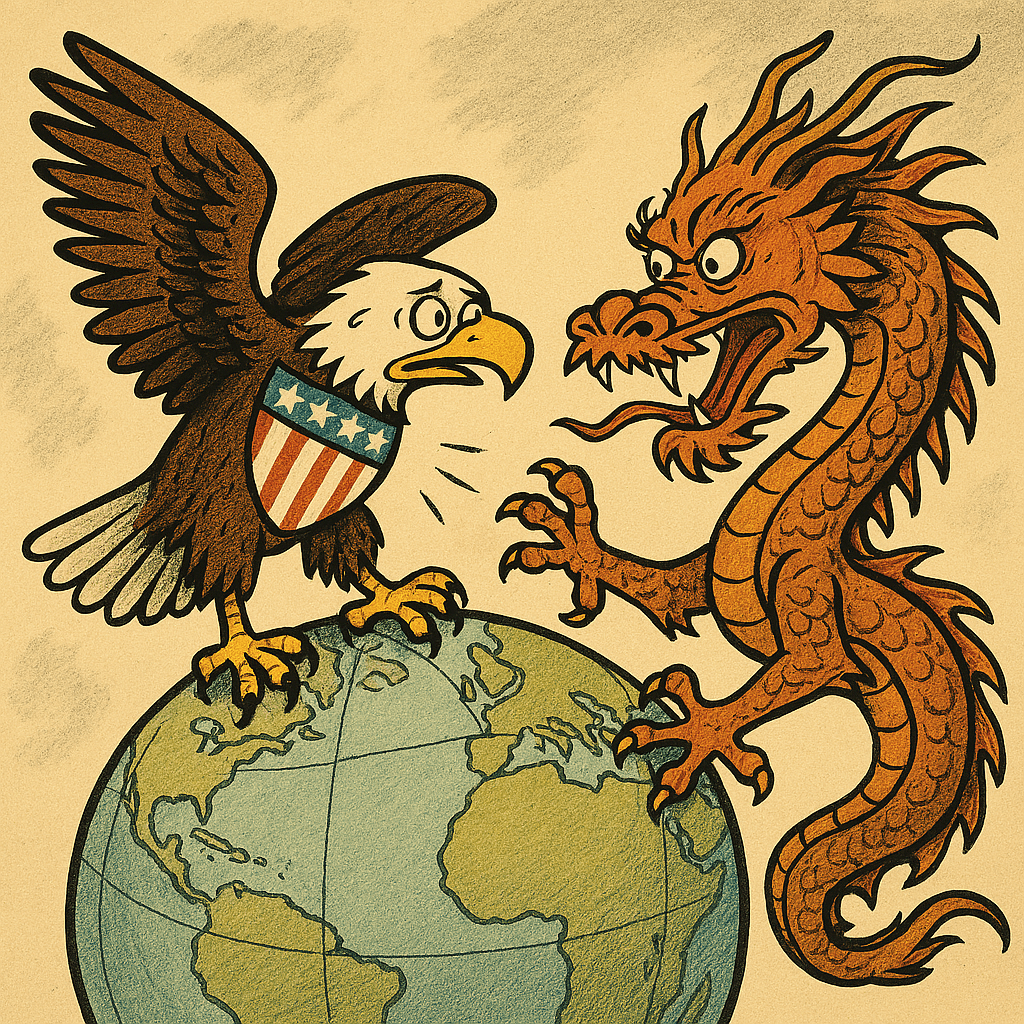
And now? Populists everywhere not only proclaim that globalisation is dead, they actively seek to undermine it wherever possible. Tariffs, restrictions on free movement of goods and people, hostility to learning and science-all indicate the flow of history is one way. Yet populist nationalists can point to one overarching weakness in the globalists argument. The whole system when it worked, depended on the successful nationalism of one nation,the hegemonic power. Their nationalism was a good thing. From which many concluded “if nationalism is a good thing, we want some of it too.” So as the hegemon declines, as America now does precipitously, they will assert their own nationalisms more and more. World war Three anyone?

[1]https://theconversation.com/the-rise-and-fall-of-globalisation-the-battle-to-be-top-dog-267910

#steve sciffereres #history #economics #trade #USA #war #globalisation

Pity Rachel Reeves-but Britain’s problems are as dreadful as everyone else’s

Pity poor Rachel Reeves, Britain’s beleaguered Chancellor of the Exchequer (that’s what we call our finance minister). According to Larry Elliott of the Guardian, [1] she faces some agonising choices as she tries to prepare November’s Budget. Being a British Chancellor has never been all beer and skittles. And Larry’s dissection of the fiscal and financial constraints she faces , to say nothing of organisations like The Office for Budget Responsibility (OBR) or the Bank of England breathing down her neck is as succinct and percipient analysis as you will get of the economic landscape of Britain today.

Or any where else. All the advanced nations seem to be in dreadful trouble at the moment. The USA, France, Italy: even the once vaunted Germany and Japan seem be in the same mire of rising debt, financial constraint and  absolute inability to deliver the rising standards of living, education and health which their citizens had come to expect. Why do finance ministers suddenly seem so powerless?

They can still control some things of course: fiscal policy , debt issuance, regulatory frameworks and co-ordinating policy with Central Banks. What lie outside their control are immense things like global capital flows, stock market volatility, commodity prices and private investment decisions. At the time of writing over 80% of the world’s investment capital is in the hand of things like Hedge Funds, Sovereign Wealth Funds and Family Offices, as well as less shady entities such as pensions and mutual funds. And this has had very real consequences. For us Elliott’s key paragraph was this rather neat summary of the history of the world in the last twenty five years:

……..the big moves in inflation in recent decades have been globally rather than domestically driven. There was a long period in the 1990s and early 2000s when globalisation led to much cheaper imports, especially from China. More recently, the main reason inflation shot up above 10% was the sharp increase in gas and food prices caused by the war in Ukraine. Trying to hit a specific inflation target using the blunt instrument of bank rate is a mug’s game.

Which raises the question: is the Nation state still the best vehicle to deliver the thing its citizens really need? It’s a big question and the answer may not come down to a simple yes/no. But if it is to succeed, the nation must be immensely strengthened and reformed. Who will do it?

[1] Rachel Reeves is the face of this budget. But the really big decisions are not in Labour’s hands | Larry Elliott | The Guardian

#economics #history #inflation #rachel reeves #UK #Germany #France #finance #money #capital

If all the wealth in the world were shared out, what would happen?

Many decades ago, we often used to hear the argument “if all the money in the country were shared out, everyone would only get 20p” A tiny sum, which could not make any difference to daily life. This was the UK in 1973, Perhaps it was true then, there. Is it true of the world as a whole today?

The statement itself is a cognitive howler: because it equates wealth with money, carefully avoiding the inclusion of all the goods, capital infrastructure(IT systems, railways, etc.) and productive resources such as factories that make up the wealth of the world, which is best expressed as GDP. When we set out to find what that was, the best estimate was from the World Bank,[1] who put it at $105 trillion in 2023. Now, the population of the world is around 8 billion (8×10⁹) people. What would happen if we found a way to share that GDP among all of them? The answer is: everyone ends up with an an income of $13 125 a year. Which surprised us greatly. Instead of being insignificant, its actually quite a lot. Let us explain why.

That same world bank defines four categories of national income by GDP. Low: $1 135 or less. Lower Middle: $1 136-$4 465. Upper Middle: $4 466- $13 845. High: $13 846 and anything above. There is enough wealth in the world to raise everyone almost to the level of high income countries, certainly to the very top of the middle range.

Now there may be very good reasons why this cannot be done. Some are practical. Some are moral. But if it were done, what difference might it make to such issues as mass migration, educational attainment, and the overall level of demand in the world economy? Let alone health, security and basic nutrition. Just a thought.

[1]https://ourworldindata.org/grapher/gdp-worldbank

#wealth #GDP per capita #economics #inequality #migration #health #geography #economics