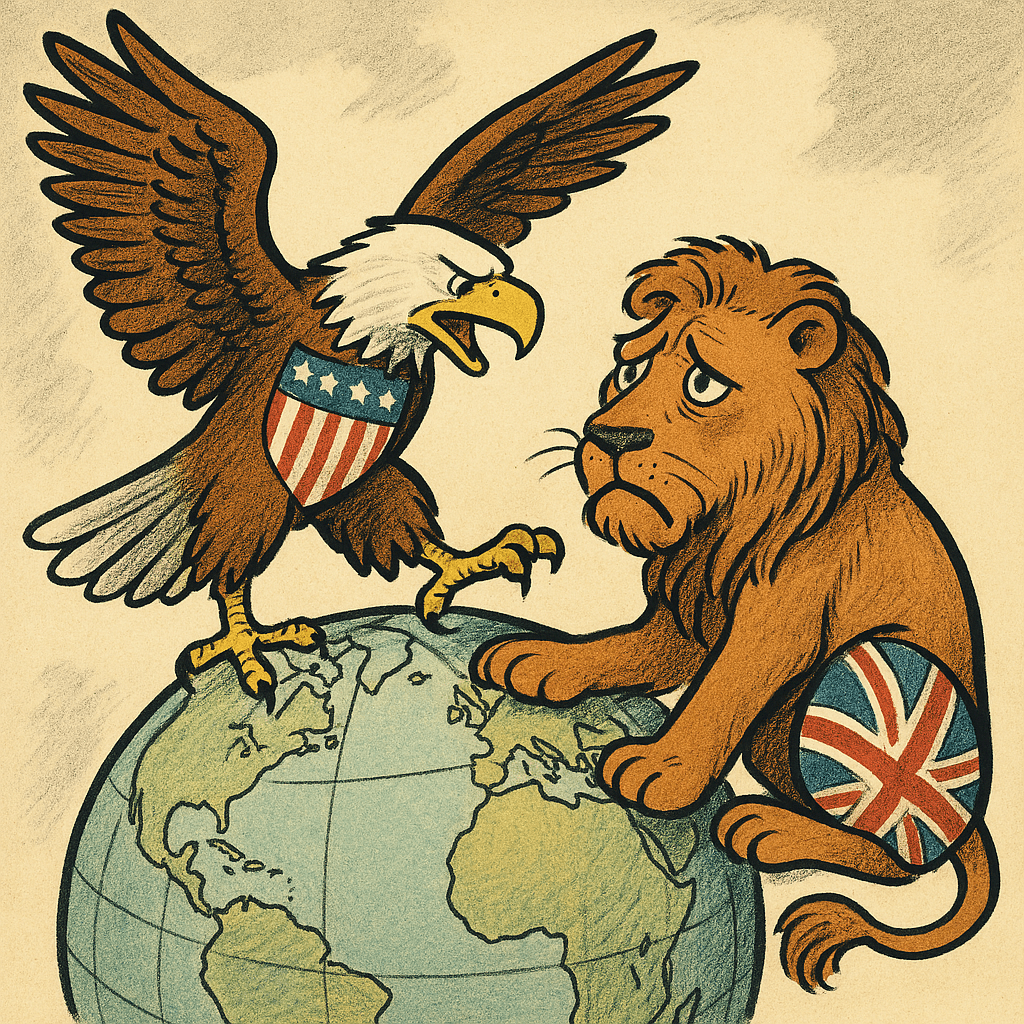
The Slippery Slope fallacy: the one we’ve never got on with

“Don’t throw that rubbish there! Put it in the bin like you’re supposed to!” Many years ago we lived on a pleasant private estate in West London with trimmed lawns, walkways, security, a residents association, all those sorts of things. The only problem was some of the residents, who were either too lazy or felt culturally compelled to throw their domestic rubbish down by the rubbish chutes instead of putting in properly, as we, the decent majority did. This bad practice spread, being quickly copied across the estate and soon we all had a widespread problem with flies, rodents and an ugly disfigurement of our pristine areas. It’s called the slippery slope. Another example is when the office agrees to step out for a single drink and, three hours later, the entire company ends up blind drunk ,broke and embracing each other with varying declarations of love. Everyone copies bad behaviour, because they feel entitled, or are missing out. And so crime, disorder, drugs and violence spread quickly through communities, reducing everyone to common beggary.

And that raises a bigger problem for us here at LSS. For years we have proudly touted our Enlightenment, Whig, rational, call them what you will credentials like a badge of honour. Central to our purpose, hardened readers will recall, is the practice of reason and logic. Avidly do we follow websites like your logical fallacy which are stuffed with every classic example you could wish for: post hoc propter hoc, texas sharpshooter, all shining beacons of clear thought each one of them.. Standing out like a dead rat in a melon souffle is the slippery slope, of which the authors state

Allowing to happen will cause Z to happen: therefore we should ban A now!

Yes, we see the error. The slippery slope is a fallacy for it allows one to jump to conclusions without checking each intervening link from A to Z for both logic and empirical fact. Its the classic howler of someone like a Daily Mail columnist, carried away on tides of hysteria and dread. The trouble is: it’s how humans really behave. It’s the way most of them are.

So our problem with the slippery slope mirrors a more general problem. Reason, learning, and all the the qualities which we prize are not always good guides to how society works. (Try a Friday night out in Croydon if you don’t believe us) Yet the values we espouse are the only ones which will ensure not only the good life but also human survival in the long term. The problem we now have is how do we form a critical mass to allow those values to prevail?

[1]https://yourlogicalfallacyis.com/

#logic #fallacy #reason #slippery slope #enlightenment

1st September 2025: the day world history changed forever(you did notice, didn’t you?)

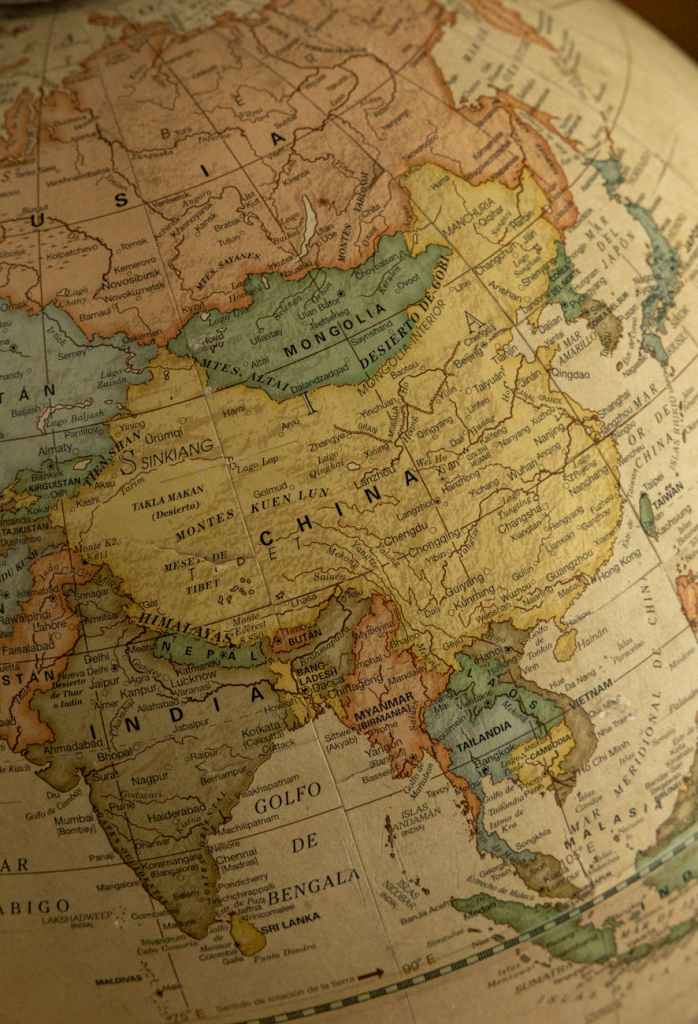
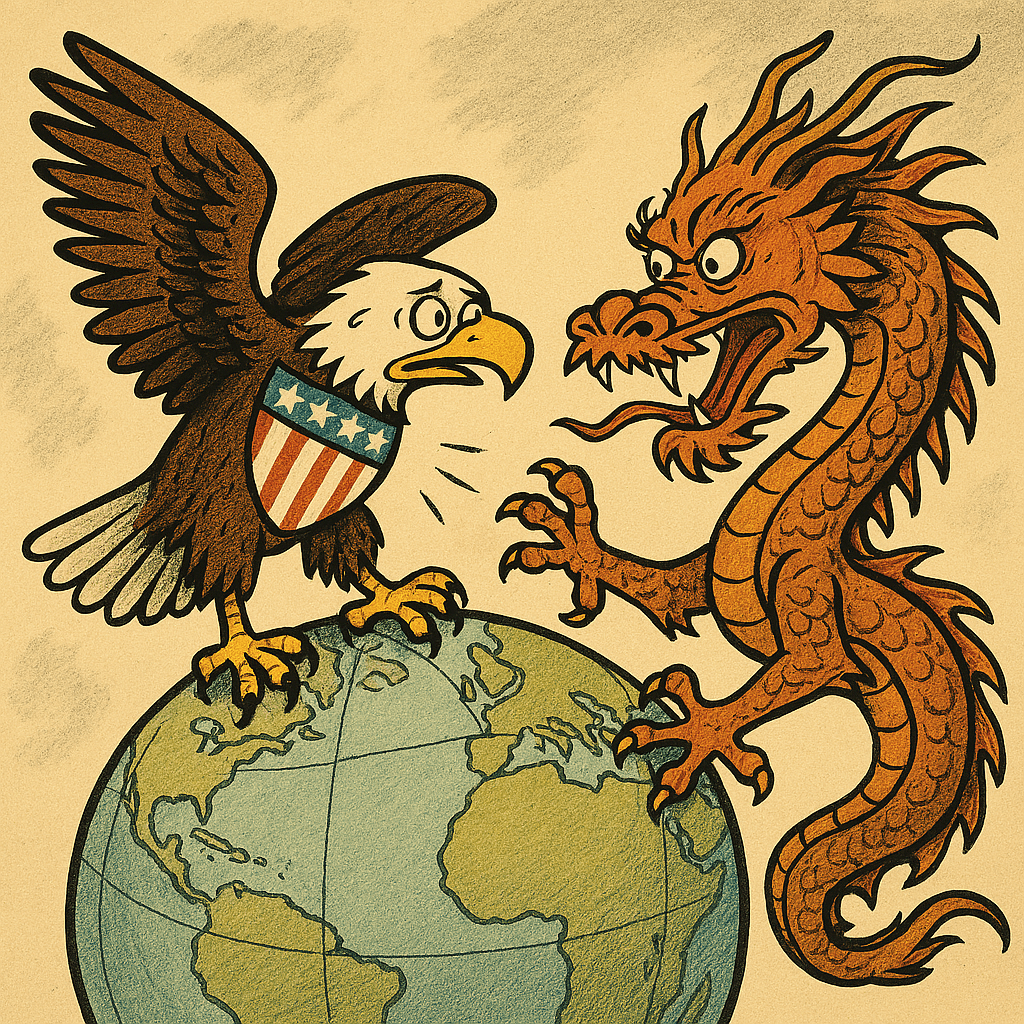
Today, or yesterday (it’s all a bit muddled what with time zones, deadlines and so on) world history changed forever. Because the two biggest powers on the planet have started to come together. Making Asia potentially one huge zone of economic co operation. the true centre of economic and political power in the world. Yes, Mr Xi and Mr Modhi have started to talk about the joint efforts of 1.416 billion Chinese and 1.464 billion Indians. all increasingly prosperous and tech hungry. All of which trumps the 347 million Americans who so recently seemed to have the world game so utterly in their hands(anyone remember George W Bush?)

Ah, critics might say- but look at the GDP figures. America at $30.51 trillion is still comfortably ahead of both its enemies combined($23.4 trillion) But a Briton in 1900 could have pointed to similar figures which showed how rich they still were, ignoring the growth potential of rivals like the USA and Germany. And ominously, the current USA is in a bad position here, with 1.9% against China’s 4.0 % and India’s 6.9% The conclusion is obvious; the USA is fast on the way to becoming a regional, local power. It’s days of strutting the world like a colossus are over, or very nearly so.

And how has this come about? There have been long term trends of course. Growing inequality. political polarisation and corruption of its legal system have been in evidence since 2000 at least. The Iraq war of 2003 was an epic blunder and the crash of 2008 fatally undermined the rationale of the American order. But until recently America still represented an open democratic country Rational independent institutions. inalienable Rights , Something worth fighting for, both for its own people and for its allies. But now those allies are humiliated . [2] Others, not allies but still potential partners, alienated by irrational and erratically applied tariffs, rush to form their own blocs and trading systems. It was easy to believe that Mr Trump and his policies made sense at least from the point of view of their own country. Now the damage is not only deep, it is permanent. Welcome to a new world order.

[1]https://www.bbc.co.uk/news/articles/cp37e8kw3lwo

[2]https://www.independent.co.uk/news/world/americas/us-politics/trump-tariff-ass-kissing-nrcc-hannibal-b2729968.html

#china #india #usa #donald trump #narendra modi #Xi Jinping #geopolitics

Is all the money in the world running out?

Is the United States of America about to go bust, the way that previous empires like Spain and Britain did? Critics point to astronomical levels of government debt ( it’s now a whopping 123% of GDP) and ballooning trade deficits. Exactly the opposite to the US position just over one hundred years ago when it elbowed aside Great Britain to make Uncle Sam the dominant world player. “Ah”, counter the critics” if you have the world’s reserve currency you can issue as much debt as you like. And the fact that America has independent institutions makes its bonds the safest bet in the world for foreign investors”. So-no problem then? Perhaps. The trouble with debt is that it’s OK until it isn’t. As interest rates start to rise (as they have been doing for some time) the rising costs crowd out all sorts of fiscal flexibility. Especially on crucial issues like defence, health and education. As for the United States much vaunted institutions- recent events have put their independence in very great doubt indeed. [1]

But before we heap all the opprobrium on poor old America, don’t forget everyone else is doing it too, Japan is running debt at an eye watering 250% of GDP: while in France things are so bad , there are even rumours that they are flirting with an IMF bailout[2] If stalwarts such as they are in such deep trouble, what hope for less prosperous nations? The answer, chillingly, is not much. According to a report by Schroders [3] the levels of sovereign debt around the world are so high that they represent a real risk to future investment, growth and healthy trade. In effect the repayments will come to stifle most normal economic activity. Though the authors are careful not to go quite this far, what worries us is that if this activity slows, then there may be a real risk that many nation states may become structurally unable to ever repay their debt. If sovereign bond markets cease to function there is no real stable credit, In effect. all the money in the world has run out. The political, social and military consequences of that would be interesting indeed.

[1]https://edition.cnn.com/2025/08/29/economy/trump-fed-turkey-argentina

[2]https://www.theguardian.com/world/2025/aug/27/france-on-the-brink-political-crisis-economic-francois-bayrou

[3]https://www.schroders.com/en-gb/uk/institutional/insights/sovereign-debt-dynamics-the-alarming-backdrop-to-rising-geopolitical-risk/

#sovereign debt #USA #japan #france #economics #finance

Is Donald Trump A socialist? It’s really about tariffs

A few months ago we published a little blog(LSS 7 4 25) in which we wryly suggested that the policies of Donald Trump. especially on trade tariffs, more resembled those of socialists like Tony Benn than those of classic right wingers like Ronald Reagan. Our aim was less with ideology and more with practical matters: will the tariffs work? We even pointed out that, with advances in automated techniques like AI, it was pretty unlikely that huge numbers of jobs would be created in manufacturing, even if the tariffs really did change the pattern of trade in the way Mr Trump desires.

It’s view shared by professional economists of some standing, as this article by Steven Greenhouse for the Guardian points out. For example Ann Harrison of UC Berkeley, not only shares our thoughts on the automation thing. She also points out that to be successful, tariffs need steady application over decades. Trump’s wildly erratic “they’re on. they’re off” approach seriously impedes investment planning. And how long has he got anyway? Would a successor-perhaps JD Vance or a younger member of the Trump dynasty-have the same approach? While Michael Strain of the impeccably right wing American Enterprise Institute worries that all these tariffs will simply raise costs for most US manufacturers – a serious own goal if ever there was one. The various experts raise other questions too. Will the so called pledges of investment from other nations really materialise? Will the tariffs create an archaic automobile industry based on petrol, hopelessly unable to sell a single unit to a world which has long since moved on to electric? Frankly, are tariffs high enough to achieve their stated purpose(yes, that surprised us too) But all of these are laid out in Steven’s excellent article.

Tariffs are like many things. Sometimes they’re good and sometimes they’re not. If they were all good, then every nation would set them at 100%. If they were all bad, they would have been abolished long ago. The real mistake is to implement a good idea with insufficient care and attention. Now that really does resemble many socialist regimes of the past.

[1] https://www.theguardian.com/us-news/2025/aug/18/trumps-tariffs-manufacturing-resurgence-jobs

#donald trump #socialism #capita;ism #tariifs #trade #economics #american enterprise institute

Co-LAB-oration, or why its good news UK is back in Horizon

Science is good for economic growth. It’s theme we’ve touched on before in this blog(LSS 4 10 23; 1 3 24) So any initiative that builds on this incontrovertible fact will meet with our approval. if only because we want a higher standard of living next year. Which is why we showcase this article by Lisa O’Carroll of the Guardian [1] which reviews progress of the UK’s revived membership of the EU administered Horizon Programme, which tries to bring together the efforts of scientists technologists and scholars from across many countries.

It may soothe the objections of our more rabid eurosceptic readers, to learn that almost half the members (20:27) are not in the European Union, but are located as far afield as Canada and New Zealand (“is that Bri’ish Empoire enuff fer yer, Guv?”) But because science is a collaborative process it helps if you can recruit your teams from close neighbours, if only because it saves on things like travel costs on the day of the interview. We need not discourse long on close financial and technological links as Lisa covers them well in her article. It’s a cultural link of a different stripe which makes us think that rejoining was the right decision.

For what the UK and its fellow members have in common is that they are open societies, where information and people flow freely. The other possible partner, the USA, is showing strong signs of both damaging the free flow of information as well as launching major attacks on both the funding and the very work of scientists, as our readers well know. The Horizon programme and the countries that contribute, are the genuine heirs of both the Renaissance and Enlightenment. Societies that abandon the practice of truth and reason soon fall into cultural and economic stagnation. Just as being in UEFA is a sound bet for British Football Clubs, so is Horizon for British Universities. A good news day forr once

[1]https://www.theguardian.com/science/2025/aug/12/uk-recovers-position-horizon-europe-science-research-eu-brexit

[2]https://commission.europa.eu/funding-tenders/find-funding/eu-funding-programmes/horizon-europe_en

#science #technology #economics #EU #UK #renaissance #enlightenment #donald trump

Here is the weather forecast: there will be a World government, soon

We at LSS might not want a world government: we might be quite happy with the State we’re in. But you can’t avoid the inevitable. And the hard data, the ineluctable facts from the weather forecasters, suggest that this inevitable may come sooner rather than later, But before we draw our conclusions: what are these facts?

If we break 1.50C global warming (and all the evidence suggests we shall) the effects will be dramatic. There will be alternating cycles of fires and floods in many countries, and for the first time the trend of ever rising food production will go into reverse. The loss of land, and the beginning of floods in coastal cities will lead to rapidly increasing migration pressures. Many would say that is already happening. But it’s as nothing compared to smashing the 20C limit. At that point, sea levels will rise by 40cm by the end of this century, displacing hundreds of millions and wrecking the pattern of the world economy. The surviving lands, wracked by floods and droughts, will start to lose their capacity to produce food at all . The resulting migration pressures will make todays numbers look negligible. As for 30C? It’s too scary to give the full details. But its got something to do with complete collapse of the seasons, fires in the tundras, and social unrest brought about by massive flows of refugees.

In such circumstances a World Government would form very quickly. Because it would be the only body capable of addressing the multiple threats at a global level; Which is the only level at which they can be tackled. History shows that sudden changes in ecology (usually plagues or climate changes) produce truly massive, paradigmatic changes in politics and society . The ending of the Roman Climatic Optimum meant the end of the Ancient world. All its customs, norms and beliefs were washed away in a new Medieval Europe. Similarly it was the Black Death that nailed the coffin of Feudalism, and an utterly new capitalist world was born. The nation state has served us well for hundreds of years. But then-so did cathode ray TVs, plastic musical records and steam trains. So-do we cling to what we’ve got? Or replace it it in anticipation, saving everybody time in the long run?

Further reading:

LSS 3 1 25 et al.

Anatole Lieven Climate Change and the Nation State Penguin 2021

Harriet Bulkeley and Peter Newell Governing Climate Change Routledge 2033

John Vogler Climate Change in World Politics Springer 2016

#black death #climate change #global warming #ecological collapse #capitalism #world government #nation state

Closing the Fleming Fund-a bad day for antibiotics

One of the few certain things in life, apart from death and taxes, is to go to the bar of the Dog and Duck and there eavesdrop on opinions on the question of the UK Foreign Aid budget. “We got omeless on ahr streets, an dere sendin billions abrawd!” “We’re taxed to the ilt, an’ they’re givin it away!” are some of the politer opinions we dare repeat here. How ironic for them to see a hated Labour Government make the very cuts they so long for. But our pleasure is short lived..

For the Government seems ready to abolish The Fleming Fund. [1] A body set up in 2015 and named after the the illustrious pioneer of penicillin, the fund states its purpose as a

UK aid programme supporting up to 25 countries across Africa and Asia to tackle antimicrobial resistance. The Fund is managed by the Department of Health and Social Care and invests in strengthening surveillance systems through a portfolio of country and regional grants, global projects and fellowship schemes.

But-what goes around comes around, as the old saying has it. Antibiotic resistant superorganisms know no national boundaries. If they evolve in the third world, they will be here soon. This decision appears to be very short sighted.

We sympathise with a government caught in a hard place between the obdurate creed that says taxes must never rise, and the urgent need for spending to achieve at least a minimal defence capacity. Perhaps the real problem is not economic, or biological, but philosophical. For if the world is divided into competing nation states, what choice does each government have but to look after its own immediate interests? And if nations arm, each in mutual fear of its neighbours, what hope for spending on international co-operative efforts like the Fleming Fund? Perhaps the trick for LSS and its readers is not to develop more antibiotics, but to persuade millions of the sorts of people who go to the Dog and Duck to realise this simple truth.

thanks to J Read

[1]https://bsac.org.uk/closure-of-the-fleming-fund-risks-undermining-uk-leadership-on-amr/

[2]https://www.flemingfund.org/about-us/

#fleming fund #overseas aid #antibiotic resistance #health #medicine #microorganisims

G7 v BRICS: is this how the sides will line up for World War Three?

We know we started out as a science based blog, mainly devoted to the encouragement of more research into antibiotics. If our brief has widened a little, it is because we cannot ignore the wider world around us. If that world decides to spend more on weapons of mass destruction, and less on antibiotic research, it impinges directly on us and our readers. Which is why this pair of articles from the Guardian caught our eye. They strongly suggest that the sides for the next world war are lining up. And the outcome is by no means certain.

On the one hand are the G7 group of countries, led by the USA.[1] Thirty years ago they had the game in their hands. Immensely rich, accounting for an enormous slice of the global pie, their triumph over the Communist bloc had seemed to set them apart . They were the world’s bankers, the world’s policemen, the world’s shop keepers. Since when, hubris seemed to set in and it has been downhill all the way. Iraq, financial crash, tariffs, Brexit…………These words are shorthand, metanymies if you will, for a deep moral rot that is grounded in an almost childlike reverence for the supremacy of financial markets and the sorts of people who work in them. Now as the admirable Joseph Stiglitz and his colleagues observe, the once mighty G7 is in danger of being little more than a front organisation for the interests of large American multinationals. A position sure to alienate many around the world.

Among the alienated are a group which starting out as the BRICS (Brazil, Russia, India, China and South Africa)[2] has expanded to include rising stars such as Indonesia. It may not be morally perfect either(its stance on Ukraine, and the fact that many members are autocracies cannot be overlooked). But its members are united on one thing: they are tired of the whims and policy lurches of the US, particularly under such a nakedly self-serving President as the current one. They are ready to have done with the traditional instruments of US domination such as the Reserve Dollar. And they are developing the economic resources to make these ambitions feasible.

History has two lessons. The decline of one hegemonic power and the rise of another is usually a signal of impending war. Another is the formation of alliance blocks; as one small event triggers a chain reaction of consequences. Think Europe 1914 as the case example for both. And don’t expect the supply of antibiotics to go up any time soon.

[1]https://www.theguardian.com/business/2025/jul/02/the-g7-has-once-again-put-multinationals-profits-over-the-interests-of-people?CMP=Share_iOSApp_Other

[2]https://www.theguardian.com/commentisfree/2025/jul/13/the-guardian-view-on-brics-growing-up-a-new-bloc-seeks-autonomy-and-eyes-a-post-western-order?CMP=Share_iOSAp

#G7 #BRICS #China #USA #IMF #dollar #geopolitics #brasil #russia #indonesia

Calling all Billionaires: Please read this blog

John Caudwell[1] is no fool. Anyone who has started a company like Phones4U and turned it into a multibillion pound company must be pretty well endowed in the brains department. Yet he has one particularly intriguing belief. He believes in meritocracy: he is deeply suspicious of the idea of inherited wealth. If you want to know more about why you can hear home talking to Tony Hawks in this podcast [2] Tony Hawks is Giving Nothing Away on the BBC. But essentially Caudwell thinks that in the long run his children will lead healthier, happier lives if they have to make their own way. Like he did.

We don’t know about individuals. But we know societies function better if the follow Caudwell’s prescriptions. Old LSS hands will recall our long time advocacy of the works of Thomas Piketty [3] and Wilkinson and Pickett. [4]Who show that societies with more equal economic structures have better health outcomes, lower crime, more scientific innovation and much higher social mobility, than less equal peers. One of their key findings was that wealth hoarded into family dynasties is one of the key blockers of healthily mobile societies.

Which is why Caudwell has joined the Giving Pledge. [5]No it’s not a marxist commie plot: it’s run by some of the richest people on the planet. In the words of the organisation’s own website:

Pledgers support a wide array of issues in every corner of the globe and give in a multitude of ways. What unites them is a shared promise and a commitment to creating an impact.

Wealth can be spent in two ways. It can be wasted in endless competitions as to who drinks the best bottle of wine, drives the fastest Rolls Royce or has the biggest yacht. Or it can be re invested like this creating a healthier better world, with-who knows?-maybe even enough antibiotics. if you really want to spend your money to make your children safe, this is the way to do it. If you are a billionaire, thank you for reading. If you are not-find one gentle readers, and press the works of the Giving Pledge into their hands.

[1]https://en.wikipedia.org/wiki/John_Caudwell

[2]https://www.bbc.co.uk/sounds/brand/m002fj92

[3] Thomas Piketty Capital in the 21st Century Harvard University Press 2014

[4] Richard Wilkinson and Kate Pickett The Spirit Level Penguin 2009

[5]https://www.givingpledge.org/pledger/john-caudwell/

#john caudwell #the giving pledge #economics #philanthropy # equality #social mobility

Why a falling population will solve most of our problems

Back in the 1970s we used to worry about rising population the way we worry about antibiotics now. Problems like pollution, energy shortages and even climate change were being discussed in the better pubs in the area where we grew up. Birth rates were soaring around the world. Everyone agreed that by 2010 there were going to be far,far too many people for the planet to support (and you wondered why you weren’t invited to more parties?-ed)Since when the situation has changed. Rulers, particularly of the more authoritarian sort, are fretting that their populations are actually starting to fall. The reason this keeps them awake at night, they asseverate, is that thereby there will not be enough young workers to keep pensioners in the style of living to which they have become accustomed (although we privately suspect they have darker motives) “Make women have more children!” is their cry. How about “the pram is the tank of the Home Front!” Or has that one been used already?

The reality is rather different as Larry Elliott points out so limpidly in this short piece for The Guardian [1] A falling population means less pressure on oceans, air and land. Less need for antibiotics! More seats in cinemas and restaurants! And, quite quickly, a rising GDP per head of population. As for the economic thing: a single modern worker produces and consumes far more GDP and products than a hundred medieval farm hands. To keep the economy growing you just need to raise the standard of living, you don’t need more workers

But as committed feminists we have another sort of worry. If you really want women to have more children, you will have to take them out of universities and higher education generally. Re- structure the wage market so men are again the main breadwinners. Recreate ideologies of patriarchy and submission, a bit like those currently popular in Afghanistan. is that what you really want?

[1]https://www.theguardian.com/commentisfree/2025/jul/02/britain-falling-birthrate-economy-politics

#feminism #pollution #population #economics #ecology