Beyond the Nation: we conclude

In March we opened a new series called Beyond the Nation(LSS 5 3 26), which suggested that there are a number of practical , and very pressing problems which could be more efficiently addressed if the response were global rather than by the current group of 193 or so mutually suspicious, jealously competing, nation states. In particular we looked at things like pollution, disaster relief, and the economic brakes imposed by creating national identities,

Thinking about it, that last is the very heart of what we’re on about, isn’t it? Because national identities are really, no viscerally, important to people. They have more power over our minds than any alternatives offered by religions, class, sports teams or profession. They not only define who we are: they define the behaviour others expect of us, and more importantly, the behaviour we expect of ourselves. And no one can deny the critical importance they have played at times when freedom was in critical jeopardy. Would Ukraine have sustained the fight against Russia for so long without a crucial sense of its own identity? Or for that matter would the USSR have sustained its own fight against the Nazis without incorporating a strong sense of Russian Nationalism? All this, and more can can be set in the balance for the Nation as the highest form of organising human societies, as we have argued elsewhere. (LSS passim: see our World Government series)

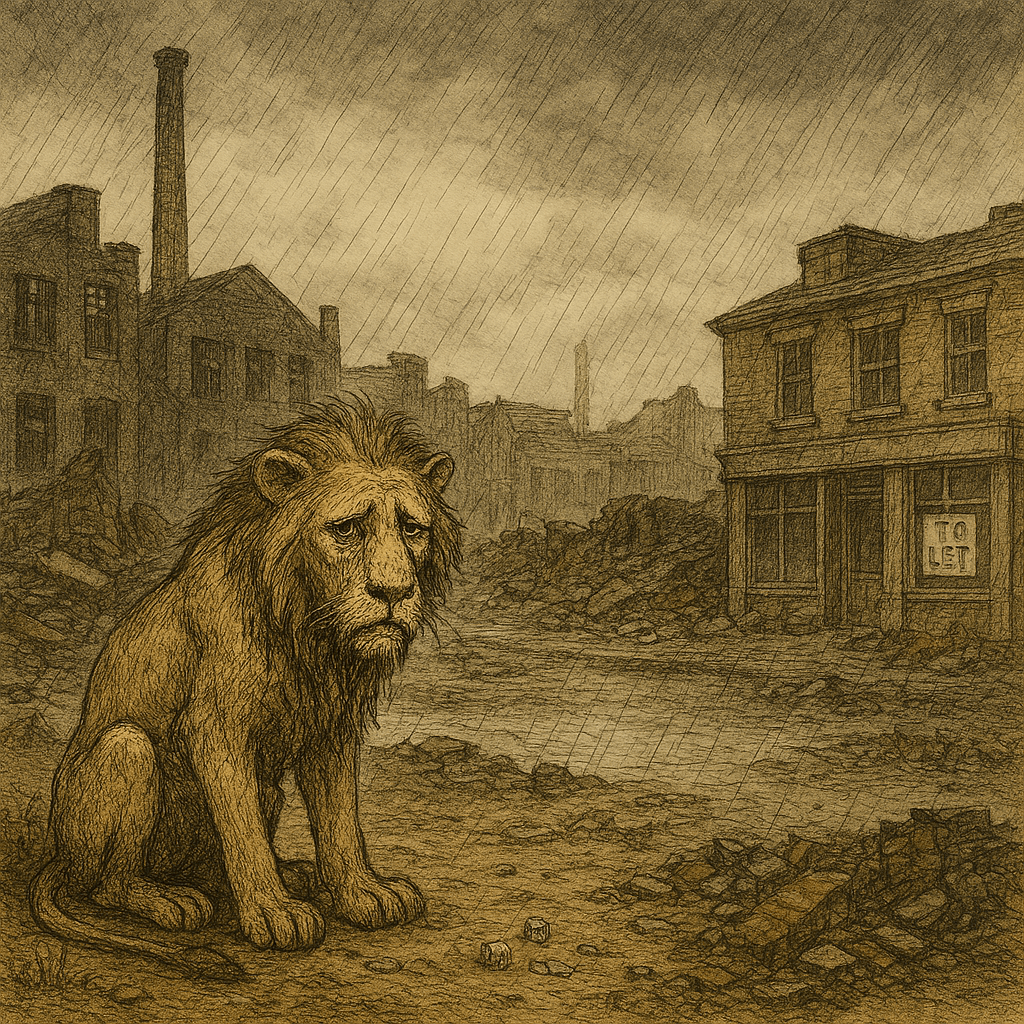
Yet nations are transient, fleeting things. Where are the Spartans or the Akkadians now? Men and women lived and died for their causes, and many like them, across thousands of years of history. Yet the real drivers of existence are huge impersonal things like climate, disease or massive technological leaps such as the Industrial Revolution. Britain spent immense quantities of treasure and lives trying to defend a position it had established in the Age of Sail, only to discover that the Age of Steam made all its efforts irrelevant[1] And so the question becomes “If your identity is so important, what price are you prepared to pay to maintain it?” Because if technologies can change, so can societies, and the identities which they generate.

We shall close the series with a personal anecdote, a thing we rarely do, Many many years ago still trapped in Undergraduate adolescence we were debating the question of Britain’s membership of what was then called the European Community with a fellow inmate, albeit far more intelligent than ourselves Being good Young Socialists we then followed the Orthodox Labour Party Line: that the UK should leave forthwith. Being entirely of independent mind (and far less neurotic) our interlocutor laughed and observed “You would have been against joining up Wessex with Mercia, wouldn’t you?” A quiet wisdom which time has made more memorable than almost any other things we have ever heard or read.

[1]Kennedy, Paul. The Rise and Fall of the Great Powers: Economic Change and Military Conflict from 1500 to 2000. New York: Random House, 1987. London: Unwin Hyman, 1988. ISBN: 0394546741 (US hardback); 0049230737 (UK hardback). see especially chapter 3

#nation state #society #politics #history #russia #ukraine #USSR #Britain #economics

When George Monbiot says “listen” we pay attention

George Monbiot has been right on so many things-climate change, river pollution, re-wilding- and often so far ahead of the curve, that when he comes up with something new, we take notice. Today he tackles an agonising question: why are the political extremes doing so well, and the messaging of what we used to call rational parties not cutting through? George thinks he knows why, and what’s more, thinks he has a way of making up lost ground. He calls it radical listening. [1]

George notes that just relying on focus groups or turning up on someone’s doorstep and arguing changes very little. Especially the arguing: we’ve noticed that most people will resort to the most twisted verbal convolutions and distortions rather than lose face by admitting that the first thing they said was wrong. Radical listening, according to George, means spending quite a bit of time with people, just letting them talk and giving them space to say what’s really on the minds. He even reports on a variation of the technique which was tried out in the streets of certain small towns in Devon, with remarkable results, But you should read those bits for yourself.

And why do we think George is right? Because we have observed that most of the mistakes in the world are made by Important and Powerful Men(mostly) who are far too busy to listen to anyone, spending their time making Big Decisions quickly, which lets them move on to making the next decision…..Plus: something  first observed by another George, this time one called Orwell. Who noticed that what people say, and the political, philosophical  or religious opinions they aspire to, are often the result of deep emotional states and preoccupations which are actually quite distinct from the manifestoes and policy positions these philosophies ostensibly adduce.    Listening is a skill in all sorts of areas-sales, learning languages, human relationships, even management, occasionally. And its defining characteristic is humility. Perhaps Plutarch says things best of all

“Know how to listen, and you will profit even from those who talk badly.”

Moralia, “On Listening to Lectures”

[1]Imagine a technique that can heal Britain of division and keep out the hard right. I call it ‘radical listening’ | George Monbiot | The Guardian

#populism #listening #politics #economics #alienation #Right #Left

[

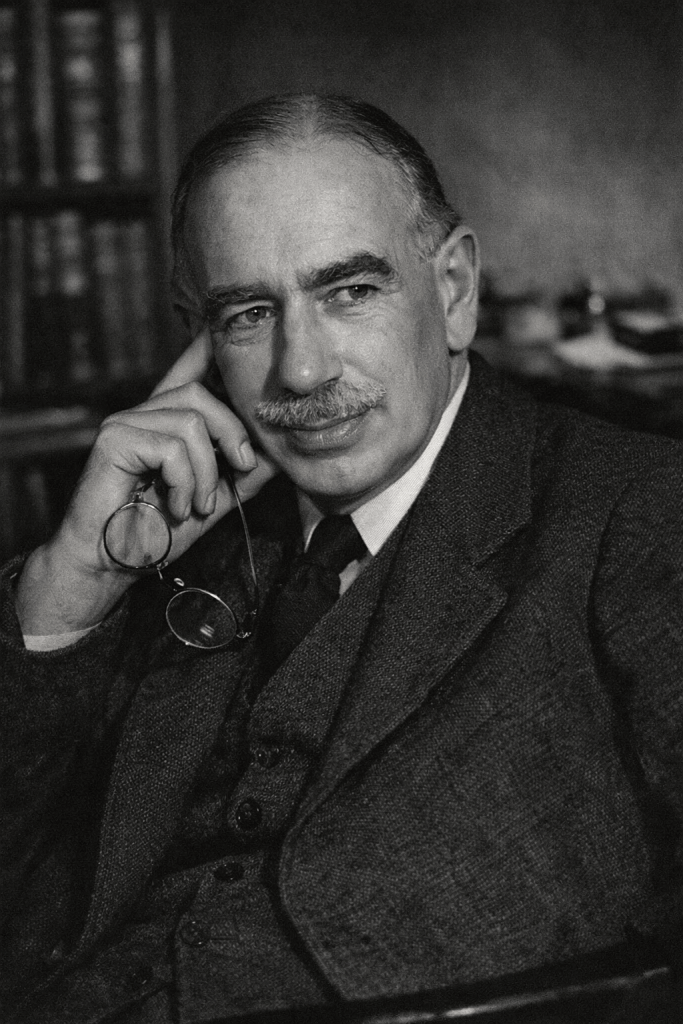
Farewell Robert Skidelsky. If you want to know more about the current mess, read this

No one over thirty will forget the terrifying autumn of 2008. For on September 15th of that year the collapse of Lehman Brothers initiated the acute phase of a chronic financial crisis, tumbling the world economy towards final ruin. And as the indefatigable Larry Elliott [1] notes in  the Guardian, in his masterly obituary of Robert Skidelsky, the ruling classes of the west  were utterly bewildered:

…… there was almost universal disbelief that the crisis was happening. The entire economic establishment – politicians, bankers, Treasury officials, analysts and pundits – were caught unawares, because according to the free-market orthodoxy there was no chance of such a catastrophe occurring

Robert Skidelsky (1929-2026) might have known better. Having devoted a lifetime to studying the works of John Maynard Keynes, he presumably shared that thinker’s suspicion of the axiomatic beneficence of untrammelled Free Markets. Ironically by the summer of 2008 even he felt the Keynesian game was up, and was contemplating other projects, as Elliott points out. Then, as they say-It happened.

For a few fleeting months Keynes was in vogue again, so desperate was the plight of the Great and Good. Interest rates were cut. Money printed. Governments borrowed and spent, Catastrophe was averted. And then? Well, in Britain the Cameron government was elected and reverted to the via dolorosa of financial orthodoxy. Cutting the budget was all that mattered, as if a nation was like a grocer’s shop in a small market town. Keynes was firmly shown the door: and the consequences of poverty, lost growth, wasted lives and appalling political outcomes are with us to this day.

Like Keynes, Skidelsky was not a tribal Party man, having variously flirted with Labour, the SDP, the Tories, and even Jeremy Corbyn in his time. Both Keynes and Skidelsky preferred solutions that worked, reason and evidence over belief and emotion. And both knew that Keynes’ essential insight was that money is about a lot more than just cash, or even more sophisticated accountants’ tricks like stocks and shares. Money is really a network of obligations, contracts, promises and deliveries which facilitate the flow of energy through human societies and by which they live. Any system which depends ultimately on the unregulated competition of lone individuals will ultimately corrupt the information and break the trust on which all depend. A truth now lost in the declining plutocracies of the west, but which certain other parties have understood very well

[1] Lord Skidelsky obituary | Robert Skidelsky | The Guardian

[2] Skidelsky, Robert. John Maynard Keynes: 1883–1946: Economist, Philosopher, Statesman. London: Penguin Books.

#robert skidelski #JM Keynes #economics #politics #financial crash

Beyond the Nation State #6: The Cost of Nations

Identity, it is said, is the most important thing a People  can have. So what better way to guarantee that identity than by taking back control and assuring it inside a sovereign nation state.? It’s a very popular policy at the moment, so there must be advantages. But it’s worth at least noting the counterfactual argument, because it has consequences for what we try  do here.

If you’re going to have a sovereignty worthy of the name, you must have the following: Defence, Intelligence, Borders, Customs, Taxes, Tariffs, Executive, Legislature, Judiciary, Foreign ministry ,Legal system, Central bank, Currency, Police and Regulators. To say nothing of the fixed obligations such as pensions you inherited from the larger state you have left. You could opt for health education, culture, policy, tourism and transport as well; but these are discretionary. So could smaller entities bear all these costs if they went it alone? Could California? (large-ish) Wales?(medium) Or Jersey? (rather small, with due respect).  Take Wales as a hypothesis : let’s say the UK spends £50 billion on Defence and Wales is 3.1% of its population. That ratio would entitle an independent Wales to £1.5 billion. Would they be as well defended? The answer is no. For one thing they would have to set up entirely new structures of command, procurement, intelligence and all the other essentials of a modern force. Secondly, there is the brute fact that larger purchases always generate cheaper prices for anything Defensive-aeroplanes, tanks, guns, even the dusting cloths you need to keep them clean. Bulk purchase means cheaper unit cost. And it works the other way. Even a superb Welsh manufacturer of tanks would only enjoy tiny assured domestic markets, making its borrowing and production costs prohibitive in a world market. That is why American giants like Ford and General Motors thrived in the twentieth century: they had fixed access to the largest Single Market then available. That is why nations which have tried to downsize, like the UK after Brexit, have struggled so badly ever since.

The argument to grow polities into larger units is the same as that for growing companies. Economy of scale and stripping out fixed costs. A World Government would only need one of each the exhaustive list above.  Imagine the procurement advantages in any number of things-medicines, schoolbooks, computers or even those wretched dusters again. What a saving for taxpayers!  A single world Ministry of Defence would enjoy the highest possible bargaining power against its suppliers, cutting the cost of the $2.7 trillion we spend as a planet on defence by whole orders of magnitude. Of course, if there were a World Government most defence spending would become unnecessary anyway, as most nations’ armies exist sole to defend against other nations’ armies. But that’s something for another day

#nation state #history #politics #economics #world government

Camilla Cavendish Confounds the Conspiracists

Of all the columnists we follow, Camilla Cavendish of the Financial Times is one of the most clear-eyed and objective. But the reason we’re showcasing her today is because she has turned her mind to that old LSS favourite: conspiracy theories and their devotees. Here is the reference [1] but because it’s behind the FT paywall* we’ll provide a short summary, clearly distinguishing Camilla’s points from our own riff on them, which is demarcated below.

CAMILLA SAYS

She notes sadly that an old pal (University educated!) has fallen for the hoary old belief that anthropogenic global warming is a hoax. Which leads her to consider why people need Conspiracy Theories: their History (apparently they had previous spikes around  the troubled years 1900 and 1950): that people have an inherent tendency to believe facts that confirm their existing beliefs: and most chilling of all, that believing one conspiracy acts as a gateway to believing all, as the susceptible mind links the dots between anything and everything. Astutely, she notes that the provision of facts and reason almost never help the sufferers, because these do not address the deep emotional and psychological needs which are really driving participation in these modern cults. She even provides further reading: a book called Foolproof: why we Fall for Misinformation by Professor Sander. Camilla concludes with an admirable determination to read more things that she disagrees with. A form of mental training also recommended by Bertrand Russell, another much admired favourite of this blog.

OUR THOUGHTS

She’s right, sadly. For us, what’s so depressing is the way that conspiracy theories and misinformation on just about anything choke up the worldwide interweb like bindweed in a garden.  The intellectual level of much conspiracy discourse-the use of language, evidence and reason-reminds us of the old Anonymous Letters we used to examine long ago in a Police Laboratory, long before the internet could spread such rubbish universally. So we’ve little enough to add, frankly. Except perhaps some further reading into Social Identity Theory as pioneered by the great Drs Tajfel and Turner [3], and its depressing observations that the species we are forced to belong to tends to draw its conclusions about what is true from the opinions of others rather than an objective consideration of the facts. In which case the only remedy is to choose you friends, family and above all, masters, with extreme care.

* or is it? Gentle readers when we clicked on this the whole thing came up in which case you can read all of Camilla’s article for yourselves. Go on, try it

[1] It’s far too easy to get sucked down a conspiracy theory rabbit hole

[2] Foolproof: Why We Fall for Misinformation and How to Build Immunity
London: Fourth Estate, 2023.ISBN: 978-0008466764

[3]https://en.wikipedia.org/wiki/Social_identity_theory#:~:text=As%20originally%20formulated%20by%20social%20psychologists%20Henri%20Tajfel,the%20activities%20in%20which%20o

Conspiracy theory #climate change #misinformation #internet #social identity theory #camilla cavendish #financial times

Beyond the Nation #4: Of War and Peace

Themes of war and peace are constant here. Human beings, we have often said, posses a pathological tendency to divide themselves, quickly, into mutually hostile groups [1,2] And that once those identities are established, their members proceed to ascribe all evil and nefariousness to their latest enemy. [3.4] Even the most advanced and enlightened nations are not immune. We do not wish to single out the US. But remember when the North Vietnamese were about to unleash a domino effect with countries like Thailand, Malaysia, Indonesia and beyond toppling to Communism, ending with the Red Flag raised in triumph over the Sydney Opera House? Or when Mr Saddam Hussein grasped weapons of mass destruction of such awesome power and reach that they threatened the lives of very man woman and child with imminent destruction?

Nations change in size, Bu the threat is the same. Our Spanish readers will recall a time when nations such as  Castille, Leon, Navarre, Aragon and the various emirates to the south fought each other like tom cats. If they tried it now the Spanish Government would simply send the police to arrest the culprits. Every nation shows the same sorry trend: remember our post on the unknown skeletons of Neolithic Alava, who died for causes long rendered futile by their utter unknowability? (LSS 5 11 2023)

It is impossible to estimate the costs-economic, ecological, in lives- of the current war in the Middle East. All of us must pay them, although only three of our current nation states are directly involved. But we know they will constitute a long lasting tax on future generations. Which leads back to the United States The principle of their founding Revolution was “no taxation without representation.”   So do all the other nations deserve representation in the dialectic of this war?  And thereby, perhaps, to stop it while there is still time?

[1] Social identity theory – Wikipedia

[2] Realistic conflict theory – Wikipedia

[3] Chua, Amy. Political Tribes: Group Instinct and the Fate of Nations. New York: Penguin Press, 2018.

[4] Kaufmann, Eric. Whiteshift: Populism, Immigration and the Future of White Majorities. London: Allen Lane, 2018.

#war #social identity theory #peace #nation state #vietnam war #iraq war #middle east #saddam hussein #president george w bush

Beyond the Nation State #2: Climate Change and all that

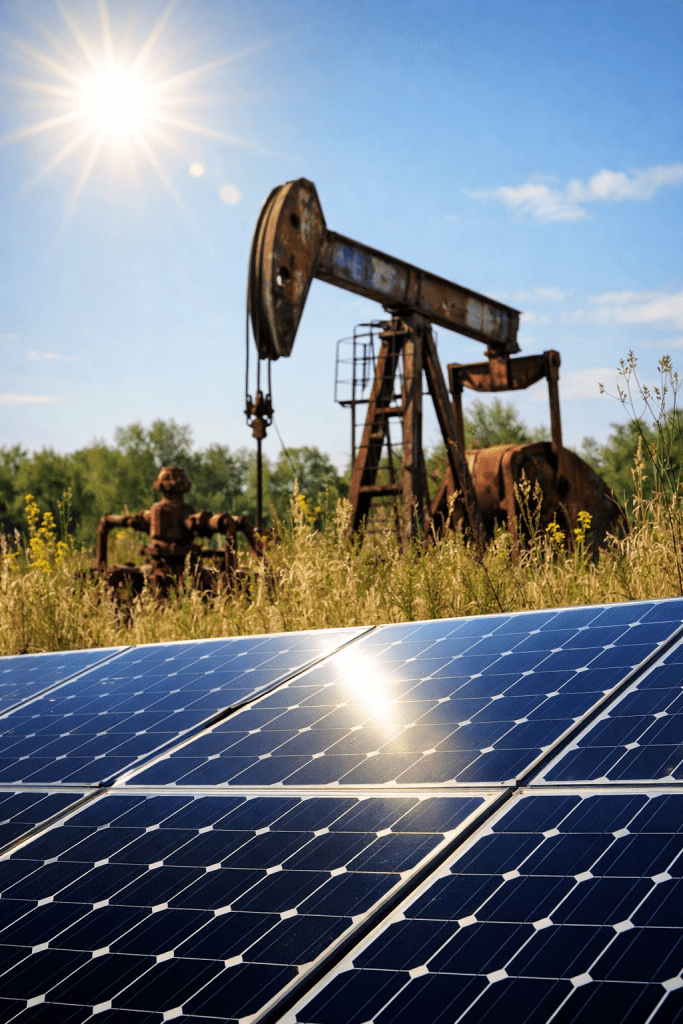
Global warming is here, real, now and it’s getting faster.[1] God knows how many times you’ve been beaten over the head with that , and we loathe to insult your intelligence.  But we live in a world of rising temperatures, melting glaciers, collapsing ocean currents, dwindling food supplies and the massive shifts in human migrations which  all of these entail. And this set against the possibility of a world which could be cleaner, healthier and politically stable-consequences which  a safe climate would bring.[2] So-why bring it all up again, right in the middle of a massive, near-world, war? Because we think it is the ne plus ultra example of this series’ main purpose. The existential threat of global warming is beyond the capacity of a world organised into nation states.

We take today’s reasons from History and Information Theory: is that eclectic or what? The first shows that every time nation states are faced with the issue, they duck it. As we noted before (LSS 30 8 23)  the 1970s oil shocks didn’t trigger a transition; they triggered a doubling‑down on fossil dependence in the name of “energy security”. Kyoto collapsed[3] the moment the United States decided it didn’t suit its short‑term interests, and Canada followed like a polite echo. And Information theory explains why: because the nation‑state is, at heart, an information‑processing machine optimised for short‑term competitive advantage. It filters every signal — scientific, moral, existential — through the question: does this keep us ahead of our rivals in the next decade? Long‑term planetary risk is systematically down‑weighted, not because leaders are cowards, but because sovereignty itself is a bandwidth problem. No single state can act at the scale or speed required, and pretending otherwise is a comforting fantasy.

Once again we stress: we do not advocate the abolition of sovereign nation states, as to abolish them would invite utter anarchy. But, just as national governments sit above local governments there must now be some sort of global authority to deal with the dangerous, the pressing, the existential risk of utter ecological and economic collapse. And just to cheer you up, we’ve got several more like this, so keep reading.

[1] https://www.nature.com/articles/d41586-026-00745-z?utm_source=Live+Audience&utm_campaign=366c08b912-nature-briefing-daily-20260309&utm_medium

[2]https://theconversation.com/four-ways-to-tackle-health-and-climate-together-and-lift-millions-of-people-out-of-poverty-276696?utm_medium=email&utm_campaign=L [3] Kyoto Protocol – Wikipedia

#climate change #global warming #geopolitics #nation #state #sovereignty #meteorology

Aditya Chakraborrty nails the UK life‑expectancy crisis (we just happened to get there first)

No one would ever accuse us of blowing our own trumpet. Humility-intellectual, moral personal- is the name of our game. Most of the time. So when a writer whom we admire as much as Aditya Chakraborrty of the Guardian [1] picks up on a theme we’ve covered here before (twice) we won’t mention that at all. Well, not very often anyway. We won’t even mention the two main blogs(LSS 21 12 21; 19 2 25) we penned on the subject, nor any of the others. Instead we shall cut to Aditya’s excellent piece, for the benefit of newer readers to this blog. If that’s not modesty. well, we’re not sure what is.

Drawing on the work of some pretty learned experts Aditya points out that UK Life Expectancy has pretty much stalled for most people. In fact, it seems to be in decline for many. And all at a time of unprecedented increases in medical knowledge( we cover a lot of them here too) and general popular awareness of things like nutrition and wellness. And he links the poor performance to a whole slew of statistics on social inequality and policy choices made by various governments:

Yet in a society as unequal as the UK, how well or sick you are depends on how rich you are……..That is injustice. It could be improved, but British governments have made choices that mean poorer children get old sooner and die earlier than richer children. 

He even points out the comparison with similar statistics from the old Soviet Union, which showed them to be in deep, deep trouble long before the whole system collapsed. Just as , ahem, did we. gentle readers

All of which leads us to a few simple conclusions. First if you want the good stories early, read this humble self effacing little blog. Secondly we believe Aditya, his experts, the ones we cited like Emmanuel Todd and a whole lot of other authors like Wilkinson and Pickett [2]and Thomas Picketty[3] who saw this utter disaster coming years ago. And not just in the UK. What depresses us is that we will never understand why people buy the newspapers and watch the TV channels that have made it all possible.

[1] https://www.theguardian.com/commentisfree/2026/mar/06/uk-death-healthy-life-expectancy-decline-sta

[2]Wilkinson, Richard, and Kate Pickett. The Spirit Level: Why More Equal Societies Almost Always Do Better. London: Allen Lane, 2009.

[3]Piketty, Thomas. Capital in the Twenty-First Century. Translated by Arthur Goldhammer. Cambridge, MA: Harvard University Press, 2014.

#health #life expectancy #nutrition #inequality #economics

Things Beyond the Nation State #1 Introduction

Identity, belonging and how this species organises itself in groups has been a recurrent theme on this blog since we started back in the pandemic days of 2020. We’ve surveyed the work of theorists like Amy Chua: pondered sports affiliation, tribe and nation, and the several  ways of belonging to each. Considered experiments in psychology and behaviour. Even speculated if there might be a World Government waiting in the decades to come. Yet up to now nothing has superseded the Nation State as the only successful and enduring method of organising our multifarious hostile tribes into larger confederations.  By which they obtain common benefits of defence and low mutual trading barriers, the two sine qua nones of all statecraft. (everything else is method)

The trouble with this comforting settlement is size. Each little kingdoms of Anglo Saxon England-Wessex, Mercia and the rest-was perfectly able to provide its residents needs for hundreds of years. Until a bunch of pesky Vikings came along and nearly drove them all to utter destruction. Only by forming a larger unit, England, were the Anglo Saxons able to survive and prevail: And England became their nation in turn. A lesson repeated across many lands and times. So powerful that it begs the question: are our current polities, even the largest, now too small too indebted, to mutually jealous, to cope with the existential questions now born into the world? We repeat: this is not a call to abolish nation states which can and should continue to exist, But it may be a call for a next tier or organisation to act on those problems, and only those problems, which only it has the competence to address.

We think those problems are Global Warming, Pollution, Migration, sudden Catastrophes like pandemics, economic Inequality and Security risks from things like AI and nuclear weapons All are pressing and all interconnected at some level or other. You may suggest more, gentle readers. But in the next few weeks we will do our best to list them into some sort of order and try to  consider some of the problems they pose, for you to think about. For we know of few hard and fast answers. We hope you will join us on this journey and will welcome your comments, suggestions and ideas. Keep ‘em coming.

#global warming #nuclear war #pandemic #volcano #AI #pollution #economics #history

Trump, Tariffs and the arc of History

Availability bias: it’s one of the great errors of the human mind, from selection of romantic partners to the decisions of statesmen on whether to enter major geopolitical wars. We get cross because a Minister says this, or a football manager makes that decision. So it’s  refreshing to come across an article that puts the  stories flickering across our screens into a broader context. And this(uncredited) opinion piece from the Guardian does exactly that. Weaving threads of tariffs, Supreme Courts, President Trump, China, and economics it finds a historical parallel for all that’s going on-and why it matters.[1]

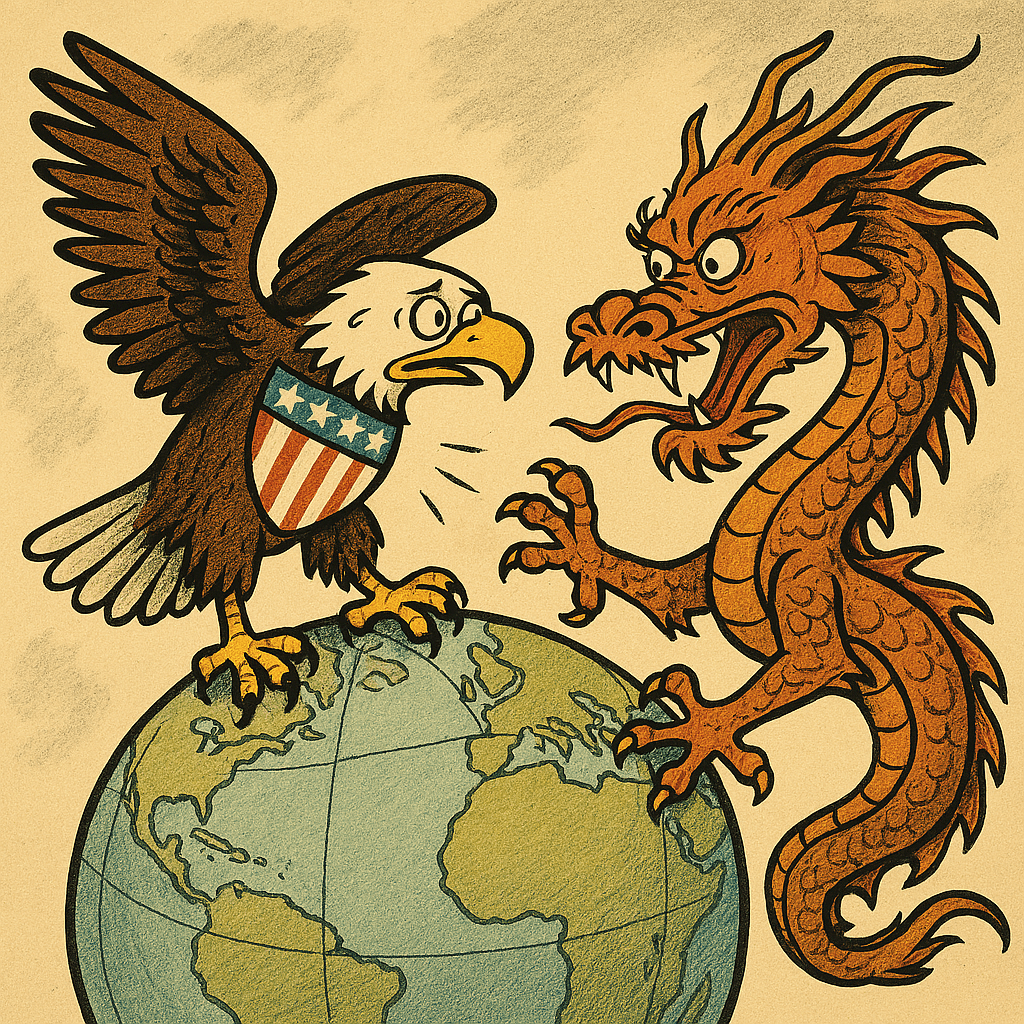
The writer asseverates that Mr Trump is trying to restore a lost America of the 1970s when its manufacturing and technological capacities were unchallenged. Now China, which has concentrated on manufacturing, has obtained an edge which increasingly threatens the US global position. And once that happens, the consequences for powers that go down are not nice.  The historical parallel is clear: Britain neglected its manufacturing base from the 1870s onwards, relying on financial services and the strength of sterling to maintain its dominance. In the end it was displaced by the manufacturing strength of the USA, and the inevitable loss of reserve currency status was the final nail in the coffin of British Power.[2]

Unlike many, we do not question Mr Trump’s intelligence, nor patriotism by his own lights at least. But these qualities may not ensure optimal decisions. Nostalgia is a dangerous force. For often the golden ages it longs for were exactly the times when the fatal decisions were made. America chose the path of financialisaton over manufacturing in the 1980s : so to want to go back there is to want to repeat that mistake.  Mr Trump has come too late to arrest America’s decline, whatever he decides about tariffs, immigrants or anything else. The basic problem of the United States is a hopelessly skewed balance of money and  information between rich and poor, Until that is fixed, the trajectory will continue one way.

[1] The Guardian view on Donald Trump’s tariffs: a nostalgia that misreads a changed world | Editorial | The Guardian

[2] Barnett, Correlli. The Collapse of British Power. New York: William Morrow, 1972. ISBN: 0688000010

#economics #history #USA #china #great britain #reserve currency #financialisation #manufacturing