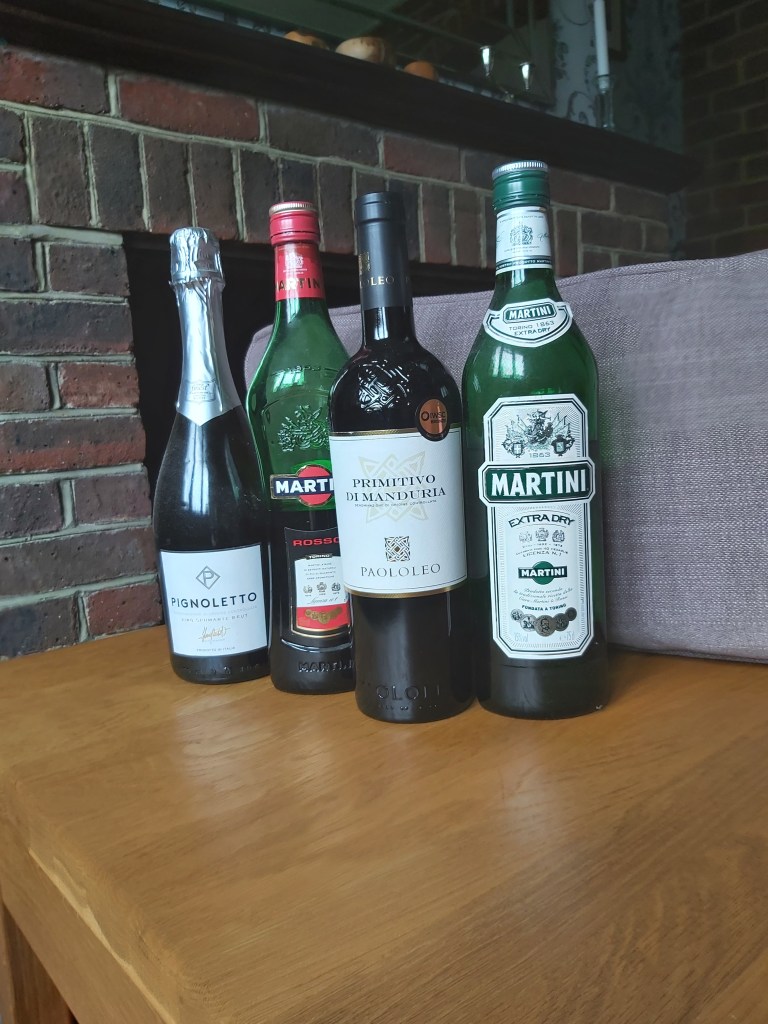
We’re interrupting the production line of cocktail recipes this week to bring you something we saw on safe usage.Because we at LSS believe that alcohol is wonderful stuff, if it’s managed responsibly. And this little piece will help you to find where that point lies. What with Christmas approaching, office party season upon us and all that, it’s probably high time to do so. Well, Joe Davies and Victoria Allen of the Mail have a lovely piece which gives you all the advice you need to enjoy the festive season and still avoid a hangover.
According to the authors most people make two mistakes. They underestimate the size and number of units an any given drink, They also underestimate how many units they take in every week. In the UK that is now only fourteen for men and women. Nothing like the world we remember from our youth! So there’s an excellent quiz to see how much you know.
And which countries are the worst offenders? Surprisingly, it’s not the Brits, which may surprise anyone who has more than a passing acqaintance with the town of Magaluf in Mallorca. It seems that countries such as Latvia and certain other east European countries enjoy a tipple more. Anyway the league table will show your national standing.
Finally-do you have a problem, or does someone that you know? They include a rule-of-thumb but handy little guide to keep you safe and on the straight and narrow, this Christmas and every Christmas. Now go and enjoy all those parties, Normal service will resume next week.
Overseas readers may not know whether to weep or laugh at the atavistic decision of the English government to open a new coal mine in Cumbria. The arguments adduced in its favour are largely specious[1]. But, before you condemn, we beg you to at least try to understand the real motivations of our countrymen, and the state of despair this reveals.
For England was once an industrial country. A land of shipyards, furnaces, docks and mines. True, the work in them was usually harsh, badly paid and perilous. But membership of such communities gave people some income, some purpose (England was once a world power)- a way of life. Cumbria was the first region to de-industrialise. Now the wind blows over empty ports and yards. Fragmented, cruelly exploited labour in warehouses and call centres can never be a substitute for the tales of the grandfather and great-grandfather.
And those who lose hope in the future will look for it in the past. A mindset that has played out disastrously since 2016, and not just in England. There are many opportunities to build a future in Cumbria (think wind and tidal power for example). But the poor people who live there were never given the education nor the mentality to suspect that these exist. They demand to be put back under the ground, where the life is dirty, damp and dangerous. And even this sacrifice will be for little gain, as elsewhere cleverer people move on to other things.
Whenever we see images of hungry, starving children (and they’re all over the news right now), our first reaction is “what a waste of human capital!” Somewhere in that crowd is a future Einstein, Marie Curie, or JS Bach. Whose potential will never be available to the rest of us. Their life has been ruined by the starvation and violence all around them. Contrary to the assertions of certain right-wing news outlets, the effects of poverty are well documented.[1] They show up in things like learning, fine motor control, growth, social skills, and health. Which brings us back to yesterday’s blog, and a reader’s response to it.
In the blog (LSS 5 Dec 22),we stated that the streptococcus A crisis in the UK was yet another reason to speed development of new antibiotics. But as regular reader Gaynor Lynch pointed out, this is essentially a reactive response to the crisis. It ignored the causal factors. In particular, Gaynor stated
“Prevention is much better than cure“…..adding that “good nutrition is essential to support the immune system.”
And how right she was we found when we did a little digging. There seems to be a clear and unequivocal link between childhood deprivation and sub-development of the immune system. The literature is rather vast, but this link to the HuffPost gives a good, journalistic level jumping off point [2] For those who like their details detailed, we include a review study from Plos One, but be warned-it’ll take more than one cup of strong black coffee to get through this one.
You can read all of Gaynor’s thoughts in the comments section to yesterday’s blog. But we couldn’t help thinking: it’s going to take years and lots of money to develop a new generation of antibiotics. In the meantime, how about a little spend on food for hungry children? It could be a long-term investment.
We don’t know about you, gentle readers of foreign lands, but here in the UK we’re witnessing an uptick in Streptococcus A infections. And this is worrying. It’s already killed six children and has hospitalised more. Why? Who? Where What? and all those other questions they try to teach you on management training courses. Michelle Roberts has a good go at answering these for the BBC [1]. But since her article, it’s got worse, and the Prime Minister is now involved as Kevin Rawlinson explains in the Guardian.
There are two things that worry us a little. Firstly, although this bacterium is normally benign, it can cause some truly terrifying cases, as you’ll see if you click on our links. We note particularly the iGAS syndrome, which is what happens when it gets behind your immune defences.
But what concerns us most of all here is the following sentence. which we confess to have lifted lock, stock and barrel from Michelle’s article
“……..strep A is treated with antibiotics”
Except when it isn’t. Because as well-established readers of this little blog will know, there won’t be any antibiotics soon, unless we really and truly pull our fingers out. And anyway, what if a new antibiotic resistant form evolves? The rate at which humanity is squandering its current antibiotic reserves suggests that day will be sooner rather and later. So how many children will die then?
This is a big one Quantum computing is so very new and so very powerful (confession: and difficult to understand) that we assumed no one could do anything useful with it for years. Wrong, wrong and wrong again as this story from Nature Briefings explains. This will change the world, sooner than we know. Wormhole inside a quantum computer
Physicists have sent quantum information through a simulated wormhole in a ‘toy’ universe that exists only inside a quantum computer. The tunnel is analogous to passages through space-time that might connect the centres of black holes in the real Universe. “The surprise is not that the message made it across in some form, but that it made it across unscrambled,” write the authors of an analysis published alongside the study in Nature. Some scientists think that such experiments could help to unite the theories of quantum mechanics and gravity in the simplified realm of toy universes, leading ultimately to the answer to one of the biggest problems in physics: a real-world quantum theory of gravity.Nature | 5 min read Go deeper with an expert analysis by theoretical physicists Adam Brown and Leonard Susskind in the Nature News & Views article (7 min read, Nature paywall) Reference: Nature paper
Online Addictions Someone once told us of a casino in Las Vegas where, if you won too much, they sent the heavies round to your room and took the money back by force. How true this story is we’ll never know. But the gambling industry will certainly go to great lengths to part people from their money, as this story from Bloomberg shows. What will they do with quantum computing when it finally arrives on your smartphone?
Losing my Religion Is the UK becoming a secular society? The decline in adherence to the Christian Religion shown by these figures would seem to indicate so. It seems to be a trend across many societies. But fans of religion should not despair. The prosperous centuries from up to about 200AD saw a decline in faith in the old Gods like Jupiter and so on. But this was followed by an enormous revival, first in Christianity then Islaam. The names of the Gods change, faith in them does not.
Can’t do right for doing wrong We at LSS tend to think that Mr Xi was trying to do his best to protect his people from COVID-19. Albeit in a way different to western countries. But even his best efforts have reached an impasse. If he stays in lockdown, the economy tanks and the people get restless. If he opens up, the virus (and many others) will spread like wildfire. Tricky balancing act needed as this one from The Conversation shows:
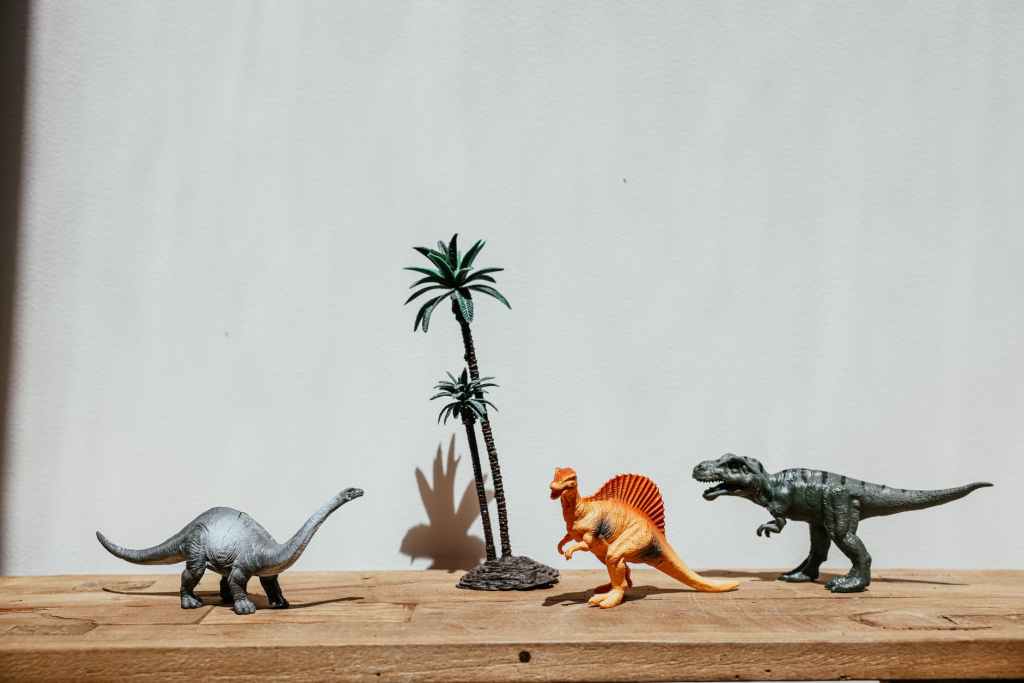
Touchy Feely Tyrannosaurs Did Hitler like dogs? Dis Jack the ripper buy flowers for his mum? Now there’s news that Tyrannosaurus rex, the world’s most fearsome dinosaur, may have been a big softie at heart. Wekll, perhaps as this story from The Guardian makes clear
Irish Spirit The Irish never gave up their culture and independent spirit despite centuries of foreign oppression. It’s produced a great feisty culture, especially in literature and music. To end this week, we’ve chosen one of our old favourites, where the Pogues and the Dubliners combined in an incredibly spirited rendition of The Irish Rover
One thing about evolution-it keeps happening. However inconvenient that may seem to some who lead comfortable lives. Up to know, LSS has tended to emphasise what happened in the past. Slime moulds, Dinosaurs, Fox News viewers, that sort of thing. But what will our evolution look like in the future? Anders Sandberg, writing in the Conversation offers some fascinating clues. [1]
He thinks our future belongs to cyborgs- human machine hybrids, running on AI computer implants. With physical and mental powers far beyond those of Homo sapiens. While the planet itself can be returned to the wild, its devastated ecological and meteorological systems painfully rebuilt. And maybe even some of the mess cleared up, we pray?
And what of actual flesh and blood humans? Chances are that a few may survive as “holdouts”, a bit like the Amish or other groups on reservations, preserved by the tolerance of the more advanced societies around them. True minorities. And maybe that’s no bad thing. Maybe we should all learn a little humility right now.
Photo by Rafael Classen rcphotostock.com on Pexels.comPhoto by Reto Bu00fcrkler on Pexels.comPhoto by Pixabay on Pexels.com
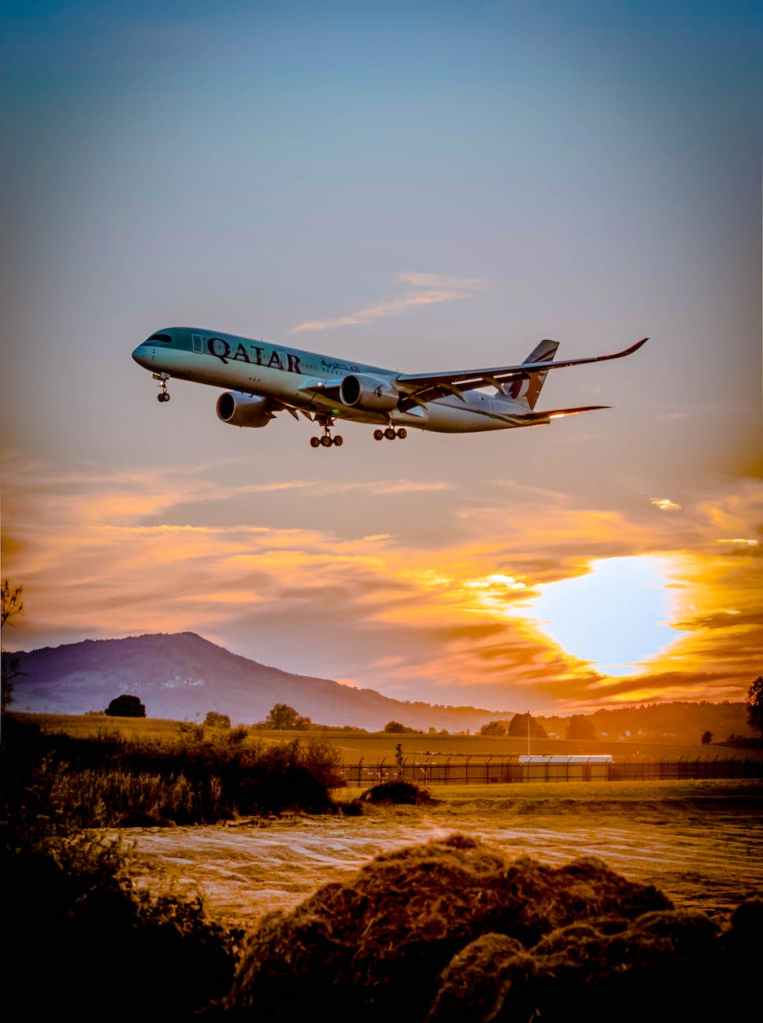
Poor old aviation! it’s had a bit of a kicking from all those groups who want to save the planet, and rightly so. According to the World Wide Fund for Nature[1] the number of passengers globally is expected to go from 2.4 billion (2010) to 8.3 billion by 2030. That’s an enormous rise in CO2, plus all the other pollutants caused by jet aircraft, such as nitrates, particulates and of course all that noise! Do you really need to make that business trip to Frankfurt in the age of zoom and what’s app? Or a boozy week in Benidorm? We understand why people ask these questions. But we fear that cutting back on mass travel runs a severe danger of throwing out the baby with the bathwater.
We at LSS have sometimes been accused of putting the cart before the horse. It has even been alleged that we have been guilty of crossing bridges before we come to them. But we would never, under any circumstances run the risk of throwing out the baby with the bathwater. Especially on questions of aviation. For it is our settled belief that there is nothing so conducive to breaking down the barriers between peoples as mass cheap travel. Take it away, and the masses will sink into isolated, mutually hostile groups, except now they have nuclear weapons.
Alternatives are needed. We have already noted the possibilities offered by airships (LSS 26 5 21), and we also offer a quick guide here to solar powered flight [2]. Now it’s just possible that a third way exists: hydrogen fuel. Which, as every schoolchild knows, burns clean and green to leave nothing more than water. Jasper Jolly has a piece in the Guardian which describes the efforts of Rolls Royce to power aeroengines with hydrogen fuel. [3] The answer? Well, at the moment it only seems to work for turbo prop engines (the type you get on short haul domestic routes) Yet a start has been made, and by one of the best engineering companies in the world. Maybe we can still keep that baby intact, even as all the nasty dirty bathwater is thrown out for good. [4]
Declaration of interest: Rolls Royce once gave us a magnificent pair of cufflinks and an attaché folder, both of which we still treasure to this day
Lost Coin? The Crisis of the Third Century AD was one of the inflection points of world history. War, invasion, currency collapse, pandemic…these fifty-odd years were when the world moved decisively from the humanistic Classical to the religious Middle Ages. Whether the ephemeral Emperor Sporian existed or not, his story sheds light on a terrible period. Here’s the detective work which may have uncovered him:
Lost Money? We don’t know about cryptocurrencies at the moment, but investors at the conservative end of the financial market also have their woes. Glorifi Bank was started to address the concerns of depositors who were concerned that the banks of Wall Street were becoming too woke, liberal and lefty (surely some mistake?-ed). How this noble aim panned out is summarised rather aptly here:
Bones and bias Science is supposed to be objective, free of bias and equal to all. That’s the idea, anyway. However, it isn’t long before someone starts presenting their interpretations as incontrovertible truth, with all the social implications that flow from it. Today we present how this happened in Paleoanthropology. But it wasn’t the first place, nor will it be the last.
In Bones and Bodies, forensic anthropologist Alan Morris takes us on a journey to the past, revealing racist interpretations of historically important fossils and artefacts related to the origin of humanity. “The tour is fascinating, demoralizing and insightful,” writes reviewer Fatimah Jackson, a biological anthropologist. “Combing through more than 100 years of scholarship, Morris lays bare how anthropologists built a ‘scientific’ justification for the low status they afforded peoples of African descent, particularly in South Africa, and how this justification became part of a systematic effort to ensure African peoples’ disenfranchisement.”Nature | 6 min read
Dirty Old River We don’t know about your country, but for the last 12 years the rivers and seas of England have slowly transformed into open sewers, filled with toxins and detritus. And it has become a lot worse since the lifting of EU protections after 2020. That admirable organisation Surfers against Sewage is fighting a lonely battle for so many-anglers, boaters, swimmers and anyone who might think that not getting typhoid is part of a quality life. Today we link to their latest report. But surely even readers of The Sun can grasp that clean water is good for the tourism industry?
ttps://sas.org.uk/waterquality2022
The virus wakes As if Russia hadn’t caused enough trouble, news of a dormant virus waking from the melting tundra is the stuff of science fiction
A Little Dance Number The old art deco films of the 1930’s breathed and elegance and charm uncatchable in the uncouth, disco ordinated gyrations observed in modern “clubs” and other places of entertainment. To show you how it was done, here’s Fred and Ginger at their best from Swing Time (1936) It’s worth a lot, lot more than 50 cents.
Well, the talking and the build-up are nearly over. In less than two hours from writing this, the teams will walk out and we will see how special the Special Relationship really is. (Most Americans have never heard of it). So-how does a cocktail column cope with such an important clash of the nations? By recourse to that first-rate website Tasteatlas, of course. They have provided us with handy lists of the ten most popular English Cocktails, and the ten most popular American ones. What is more, every entry has a picture, a brief history and handy instructions on how to make one.
If you’re watching the match in England, they recommend that you mix up from one of the following: Corpse Reviver, Pink Gin, Tom Collins, Black Velvet, Boilermaker, Bramble, Vesper, Espresso Martini, Gimlet and the Black and Tan. [1]
But if you tune in from the USA, you could try: Zombie, Screwdriver, Moscow Mule, Mai Tai, Sex On the Beach, Cosmopolitan, Tequila Sunrise, Piña Colada, Old-Fashioned, and Bloody Mary [2]
Whatever you choose, we wish football fans everywhere an enjoyable evening (afternoon in the United States) and may the best team win, as they say in the true sporting spirit.
But before we go, a brief note on terminology. The word “football” means just that-football. The clue’s in the name. You use your feet. There is a trend in some parts of America to use the word “soccer”. We’ve never heard it used, and we doubt that anyone in the rest of the world has either. Meanwhile Americans use the word to describe a curious “sport” which would be better termed “Rugby with hats”. Why anyone would wear a hat to play rugby is beyond our powers of explanation. It’s like that other game we saw one night in Santa Barbara-Cricket with no stumps.
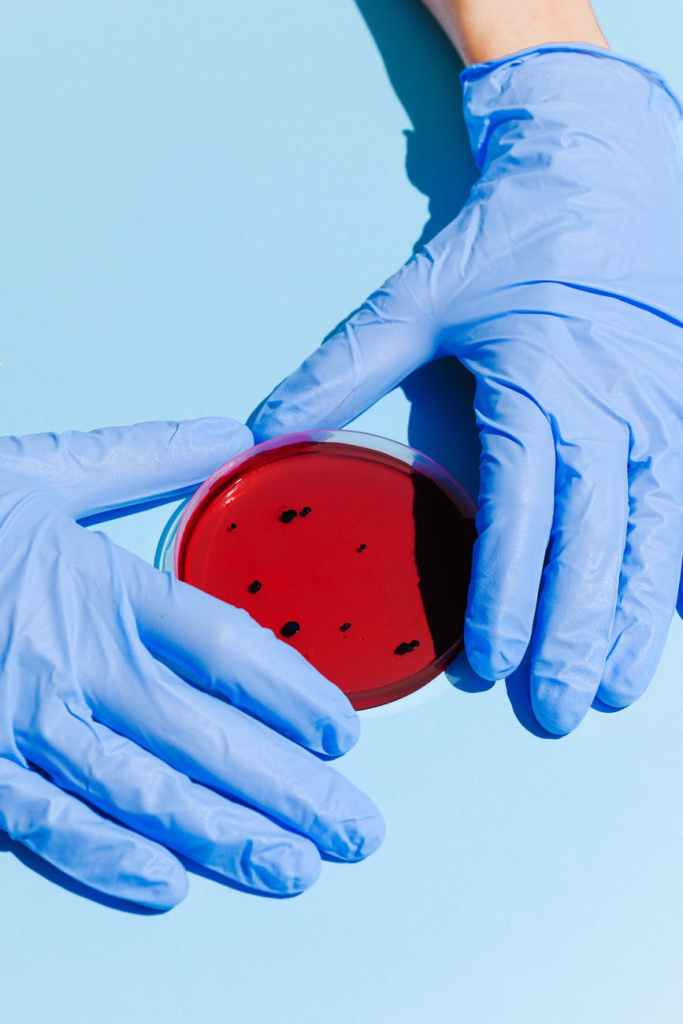
Sorry readers, but the old problem of microbial resistance to antibiotics just isn’t going away. As it’s popped up four times in the news this week, we’d thought we’d give you a summary outside of the bounds of our weekly roundup, and suggest at least one thing you could do to help.
Sky News got the ball rolling with this piece on Monday. [1] OK, it’s UK-centric, but the same deadly pattern applies everywhere. dear readers. The stone in the shoe is simple: the bad news is up, again. If you want some base line figures to convince people in the pub/school/supermarket, this is a good jumping-off place.
The squandering of antibiotics in lazy farming practices would be bad enough. But now the antibiotics from farms are leaking into the water table, massively increasing the chances of resistance appearing in nature. This piece by AdamVaughn for the Times looks at studies in rivers in Britain. But once again the chances are it could be a river near you. [2]
Asking people to do it less has been a preoccupation of religious fundamentalists, educationalists, malthusians and party hosts for centuries. We never dreamed that we, as a kind of sciencey, rationalist style blog would join them. But what if they don’t do it less? Once answer is to hand out massive morning after doses of antibiotics. With the grim potential consequences which Nature Briefings makes clear: Concern over Preventive Antibiotics for STIs
A health department in the United States has become one of the first to recommend that people who are at high risk of getting a sexually transmitted infection (STI) take a preventive dose of antibiotics after unprotected sex. Clinical trials have shown the strategy can reduce infections such as chlamydia, syphilis and gonorrhoea. But some researchers worry it will contribute to antibiotic resistance. Researchers say guidelines about use are important for informing people about the safety of a strategy they might already be using. “People should have access to this tool, if it makes sense for them and their lifestyle,” says sexual-health physician Jenell Stewart.Nature | 6 min read
The reason we bang on about all this is made clear by a second piece from Nature Briefings Bacterial Infections the Second Biggest Killer Globally. That’ s even more than Vladimir Putin‘s wildest dreams! Well, the headline says it all, but just in case, here’s the text. And plenty of references for you to click on in your coffee break.
Bacterial infections were associated with close to 8 million deaths in 2019, making them the second biggest killer globally after coronary heart disease. Death rates differed widely by region, from 230 deaths per 100,000 people in sub-Saharan Africa to 52 deaths per 100,000 across western Europe, North America and Australasia. “These new data for the first time reveal the full extent of the global public health challenge posed by bacterial infections,” says study co-author Christopher Murray.AFP | 3 min read Reference: The Lancet paper
Well, some decent people are refusing to let all this go. In the UK we have a charity called Antibiotics research UK who try to fund new research raise awareness and try to do all the things they can to stem the tide. But they’re small, and they need money. They have lots of international connections, so if anyone can donate, you’re helping your own country too. Go on, have a bang on this one, mate, [3] to paraphrase the actor Ray Winstone. In the long run, it’s a much better bet than a World Cup match.
With thanks to Mr John Read of Henley-on-Thames for the first two parts to this story

















 Learning, Science and Society