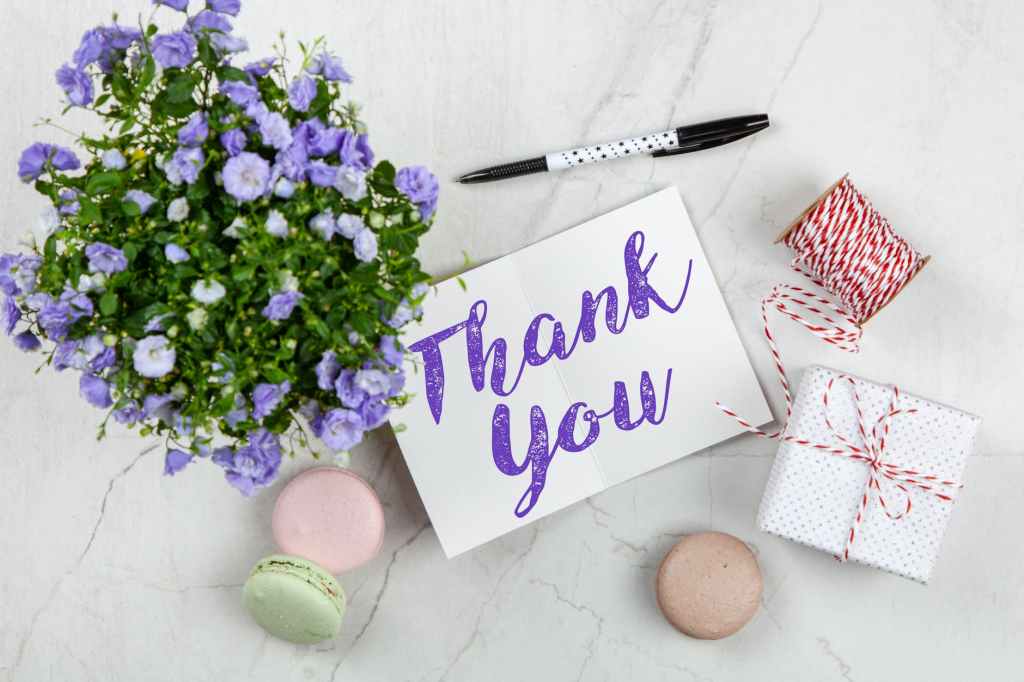
Thank you, Counselor Brandon

We would like to thank Counselor Brandon for following our little blog. If we have missed other followers, thank you very much, nevertheless. Put our omissions down to our own IT incompetence, which is legendary among family, friends and work colleagues

We link to his website below, and take pleasure in seeing his delightful cats.

#counsellorbrandon

Here’s the question we wanted to ask Boris Johnson, but he didn’t hear it

We have to applaud the way that the UK Government tries to take questions from its citizens as part of its response to the Covid-19 pandemic. No taxation without consultation, one might say.

The question was “Will the UK Government fund research into Artificial Intelligence algorithms, thereby helping it to predict the next mutation in the SARS-CoV-2 virus?

Alright, they take a lot of questions, and we didn’t make the cut! But for those who missed our last outing on this theme (LSS; 28April; Using AI …..) here is a brief summary of our ideas.

All genomes, that is to say the nucleic acids strands in our cells, have hotspots. These are places where the normal rate of mutation seems to speed up. According to Patricia Frost in Science Daily the mutations are 18 times more likely in DNA sequences where the same chemical letter, such as A, G, C, or T is repeated multiple times. They are 12 times more likely where you find repeated triplets, e.g, TTT or AAA.

Now, we know more astute readers will protest that coronaviruses code in RNA. Yet this is where the fun starts. RNA viruses are more prone to mutation, as they are dependent on certain error-prone enzymes, and have less in built correction mechanisms, than more advanced DNA -based organisms.

In theory, it should be possible to produce a model of the viral genome, and to map its mutation hotspots. More importantly, the possible mutational pathways of the virus should be predictable.

Work to analyse viral mutations is already been undertaken for influenza, though we don’t know what computational techniques the authors used (see link below)

A simple survey of Wikipedia demonstrates the enormous power and range of AI applications, though we could not resist adding a post from fellow blogger Aayushi Johari. Why not now deploy this power on an urgent and pressing problem, instead of designing tired old games, that frankly, everyone has seen before? A success here would be national prestige indeed.

https://www.ncbi.nlm.nih.gov/pmc/articles/PMC4274636/

https://www.sciencedaily.com/releases/2018/07/180730132924.htm

https://www.edureka.co/blog/artificial-intelligence-applications/#

https://en.wikipedia.org/wiki/Applications_of_artificial_intelligence

#sarscov2 #covid19 #borisjohnson #genome #mutation #artificialintelligence

The Wealth of Nations-but how is it measured?

pixabay

The Wealth of Nations(1776) was the seminal text of Adam Smith, in which he outlined his vision of the best way of ensuring a prosperous economy, and with it, the optimal levels of human happiness.

Its central prescriptions -of free trade, unfettered markets, freedom of information and expression-are too well known to be expurgated again here. On the whole, his notions have stood the test of time better than that of rivals such as Marxism or religious theocracy. As with any creed, the problem came with believers who took it too seriously, whose logic and zeal out runs their reason.

So if taxes are bad, they say, why not abolish them altogether?(at least for rich people) If the state can be a drag, why not get rid of it altogether? Surely any government activity is evil, and should be avoided religiously. It is interesting how the most perfervid expressions of these beliefs come in novels, not works of fact.

Yet in a crisis, the state can create wealth. Does in fact, in ways that a pure free market can neither facilitate nor measure. No one can doubt that a society with antibiotics is infinitely richer than one without. Yet one cannot measure that in the way one can for a cup off latte macchiatto, a mobile phone, or a tube of lipstick.

Below we reference two articles from the website of the charity AntibioticsResearchUK. In which Vicki Joughin describes the partnerships which created Penicillin, the first designer antibiotic. For us, the key quote is:

The story of the mass production of penicillin to help the Allied Forces win World War II is a remarkable one. It was brought about by an unparalleled collaboration between governments, industrial giants and renowned scientific establishments who had a common goal – which was not a financial one.

Advocates of low taxes and weak states must always make an exception for strong armies and police; can biological threats be excluded?

#antibioticsresearchuk #penicillin #worldwartwo #vickijoughin

What the readers saw

We at LSS have always hoped to act as a gathering place where intelligent and informed people can meet to exchange ideas. To come on this blog, we suspect you to have two considerations in mind: that learning comes from experience; and that wisdom from careful thought.

To this end we present our new section called “what the readers saw”. A gathering of ideas from intelligent people who think YOU should know about things which they think are important to us all.

And so we have the privilege of presenting the snippets they have pulled from this weeks media, in no particular order.

Should we be printing more money? Mr John Read, a businessman from Henley on Thames, draws our attention to a sky news article about top Irish economist David McWilliams, who says that governments and banks should be showering “helicopter money” on ordinary citizens, to get the economy moving after the virus peak has passed. A good idea? Judge for yourself:

https://news.sky.com/story/coronavirus-top-economist-says-central-banks-should-give-away-free-money-11985517

We cannot resist telling you that John moonlights as both manager and lead singer of an excellent band called The Covered, whom we have seen perform live on two occasions. Available now for weddings, club dinners and all other conceivable social occasions!

Care Homes and the CoronaVirus: We do not doubt the good intentions of the UK Government, whatever mistakes they may have made. But did an overemphasis on hospital safety leave care homes at risk? Mr Lindsay Charlton, whom some will already recall as a broadcaster and entrepreneur of some note, recommends this well-researched piece from Reuters:

https://www.reuters.com/investigates/special-report/health-coronavirus-britain-elderly/

Is there Life On Mars? We have always been fascinated and frustrated by the ambivalent findings of the Viking Mars probes in 1976. Growing evidence suggests that the red planet may once have contained many of the preconditions for a working biosphere. Mr Peter Seymour, an expert in the care of vulnerable people in his day job, draws our attention to the remarkable findings by a team of scientists investigating the famous Allan Hills Martian Meteorite, reported here by Apple News. It seems to contain a curious mix of nitrogen compounds which may yet be precursors to the more complex bio-molecules upon which life depends:

https://www.vice.com/en_uk/article/g5pxx4/a-piece-of-mars-that-fell-in-antarctica-contains-ingredient-for-life-scientists-discover

Tagging-the scourge of Facebook. We had seen this word used in our time hanging around the Facebook site, but have not fully understood what it meant. Now Mr Gary Herbert, famous for his many sheds and haunted outbuildings, has explained that it means two things. It can be a simple way of noting the presence of a friend in a photograph, perhaps at a wedding or something like that. But he counsels that it can also be a vexatious method for those one has “cut off” to yet intrude their baleful presence into one’s own little corner of cyberspace. (spoiler alert: we still don’t exactly understand how, but Gary is frightfully clever, and has set us up with more bits of tech than you can subroutine an algorithm with, so he must be right) It is further example of the abuse of the privilege of communication, and we hope Facebook may find a way to stop it.

Do you have any snippets you want to discuss, or think that the Intelligent Community needs to know about? If so , contact us here at Learning, Science and Society. And now we can all go off for our Saturday Night glass of cold beer. Enjoy!

#Helicoptermoney #tagging #AllanHills84001 #coronavirus #carehomes

Pandemic, Infodemic: New Scientist on how to spot suspect science #2

If the covid-19 outbreak has taught us anything, it is the fearful vulnerability of our cyberspace to the postings of every crank, fool and sinister manipulator who has a keyboard, and the difficulty of separating their lies and hidden agendas from honest error, rightful emotion- and tiny fragments of genuine truth. It will not go away after covid-19. It is also a problem in politics, economics. health and other fields which have a direct bearing on human life.

We do not advocate the abolition of a universal Right to Post, nor do we call to the restriction of discourse to those with proven expertise in a given field. But advocates of the Free Speech Defence should recall that the freedom granted by a driving licence is not the same as the freedom to drive fast down the wrong carriageway of major trunk roads, nor to ignore red traffic lights.

Until a happier day when these dilemmas might be resolved, we have pleasure in advocating this checklist compiled by Graham Lawton of New Scientist on how you can recognise studies that might be poor, misleading-or worse.

Study is published on a blog, preprint server, or social media

It hasn’t been peer reviewed by other experts yet. Two heads are better than one .All the best science goes through a long process whereby other experts in the field look at it. In science this is called peer review. In marriage, it is called health and safety. How would you get on if you blew the family savings on a new Rolls Royce without telling your wife first?

Study only has one author

It’s probably very early research, and very tentative. Once again, two heads are better than one.

The researchers are from a surprising field of study

Perhaps they are geologists talking about viruses. Why would they suddenly do that, who’s paying them? Would you take advice from a cricketer about how to play poker? Maybe- but a poker player might be better.

The analysis is very fast

It’s never a good idea to go too fast in science and engineering. Older readers will remember the Comet airliner, which should have been a world beater, but kept crashing because it was rushed into service too quickly

The study is very small

This is common sense- but Graham’s rule of thumb is that any medical study with less than 50 participants is highly questionable-and we agree. Any football team can win one match. Champions are proved by a whole season

The trial has no placebo group

If you test a drug you give samples of it to a group of 100 people. You also give pills that look and taste exactly like the drug to a second group called the placebo group. Only this way can you be sure your drug is doing anything at all. If there is no placebo group, then the researchers are on very shaky ground indeed

The study reports a correlation or association

We did this ! Correlation is not proof-remember the sharks and ice cream?(Learning, Science and Society 23 April) It’s often telling you something, but it may not be what you think it is. So be advised.

https://www.newscientist.com/article/mg24632813-000-how-the-covid-19-pandemic-has-led-to-a-flood-of-misleading-science/

#newscientist #grahamlawton

Pandemic, Infodemic: New Scientist tells it best #1

The most depressing experience of the current outbreak of COVID-19 has been the proliferation of armchair virologists, epidemiologists and population geneticists, most of whom seem to have had no training in these disciplines whatsoever. Nor in any science. Nor indeed in even the rudiments of logic, most of which have been available since the Middle Ages. it is a point which we tried to address in our post If you are not a virologist, just shut up...[sic] on 1st May.

Now the Editor of New Scientist* has said it much, much better. We therefore take the awful liberty of posting direct from their leader article from 9 May 2020

The covid-19 pandemic has upended many of the things that we once took for granted, but perhaps the most insidious is what it is doing to our ability to detect fact from fiction.

Science remains the best tool we have f-though by no means a perfect one -for creating reliable knowledge………………………it is becoming hard at times to sort good science from bad, and worthwhile hypotheses from conjecture, hyperbole and nonsense.

The editorial expands on this gloomy theme, then links to a detailed article by Graham Lawton* called “Science in Crisis” in the print version, which we link below.

Graham’s article is so very good that we shall extract his “suspect science” checklist and discuss it in a blog to follow shortly

https://www.newscientist.com/

https://www.newscientist.com/article/mg24632813-000-how-the-covid-19-pandemic-has-led-to-a-flood-of-misleading-science/

#newscientist #coronavirus #covid19 #grahamlawton #hydroxychloroquine

A big thank you to Alex Markovitch art

A great big thank you to alex markovitch art of Russia, who have noted our little blog. It is thrilling to have readers in other lands-especially the land of Tolstoy, Dostoievsky , Shostakovitch and Yuri Gagarin.

We cannot forget, on this 8th May, how older people told us of the enormous sacrifices which the people of Russia made to defeat Hitler. A fact well testified by objective historians.

https://kadr.vip/

Friday Night is….Cocktail Night!

Friends of LSS, it’s so easy to be gloomy about things nowadays, as our last three rather sombre blogs demonstrate. And so it’s time to find a corner of your life, and home, for a little cocktail cheer. This week, another summery one: Planter’s Punch.

What you will need: Shaker, six ice cubes, tall glasses, dark rum, Galliano, orange juice, apricot brandy

How to do it : In the shaker add one measure dark rum, 0.5 measure apricot brandy, 3 measures of fresh orange juice, 1 measure Galliano. Shake over ice.

Decorate: to keep that yellow tropical look, slices of things like lemon and orange, even apricot if you can manage it without cutting your fingers off.

#cocktail #planterspunch

Larry Elliott on what’s happening next

The growing debate about whether, and when, to start letting people back to work, reveals an agonising dilemma for the Government. How do you save lives without causing a total economic collapse? We at LSS will listen to both sides with the utmost empathy, as is our Duty on this blog.

For a look at the awful economic problems which confront the Government, you could do worse than go to the writings of Larry Elliott of the Guardian. He has always been one of the most fair-minded and independent economics journalists whom we have come across. Once again, we shall link his article below, and precis the main points for those rushing off to the office. (who they?-ed)

He advises:

-To all intents and purposes, the economy has collapsed

-Past recessions have tended to concentrate on one section of the economy; this collapse is system-wide

-There is little sign that bounce back will be rapid; the damage is already too deep, and health restrictions will have to continue in some form

-Falls in wages and employment levels will make consumers exceedingly cautious as we move into the autumn

He concludes “The aim now is to avoid a great depression”

https://www.theguardian.com/commentisfree/2020/may/07/snapback-uk-economy-lockdown-recession-coronavirus

#LarryElliott #GuardianBusiness #RishiSunak #depression #covid19

Easy to point the finger at Johnson, but….

Today we have the honour to air the views of our first Guest Contributor, Mr Lindsay Charlton. Although we do not necessarily agree with his views, nor those of any of our future guests (and boy, have we got some lined up for you), Mr Charlton has had a successful career as a journalist, broadcaster, Managing Director and successful high tech entrepreneur. A man with a CV like that has to be taken seriously. This is what he says

It would be easy to point a finger solely at Johnson and Hancock for the tragic toll of life in care homes but I suspect history will conclude that our scientists were slow off the mark too. Thirty years as a journalist taught me two things about experts. The first is that they constantly disagree with each other, the second that they hedge their bets. Or am I being harsh?

Lindsay Charlton

To get Lindsay’s full thoughts on this and many issues, go to the following link.

https://www.linkedin.com/in/lindsay-charlton-02b1506/

#BorisJohnson #MattHancock #lockdown #coronavirus #LindsayCharlton