Don’t say it out loud, but the current wave of racial disputes sweeping through western societies is missing the point. Of course people feel their identities deeply, and want justice for themselves (not others, of course), but that is exactly the problem.
Anyone who did a little police or forensic work back in the last century will have been familiar with the anonymous letter rant. Pages of hate-filled invective defending the imagined superiority of one racial group over another, and why mixing with them would lead to degeneration. One anxiety was the sickle cell gene, which evolved in some west African populations as a defence against malaria. We wonder what our anonymous correspondents would say now to the news that CRISPR technology is developing so fast that it can wash away sickle cell problems with the same ease that penicillin washed away tuberculosis. (well, until now!)
Nature Briefings has a delightful story of how a brave lady called Victoria Gray has become the first successful recipient of a CRISPR treatment for sickle cell. This link is packed with good scientists and companies, too numerous to name here. The point is they all think hard, unlike haters. Here are the precis and the links:
So if CRISPR can modify our genes, what price racial identity in the twenty first century? Except maybe this. One day, people will colonise Mars and the Moon, Both bodies have very different gravitational fields, making it hard for them to return to earth. Humans being what they are, they will start breeding among themselves. And that could very quickly produce new races,maybe even new species.
Species which will regard all the races of earth as amazingly similar. And hostile.
It is easy to laugh at nostalgia addicts, who bury themselves in the past because the present is bewildering and the future fearsome. Well, we think they are absolutely right. Because coming down the tracks is a piece of future so awesome that it puts the invention of bronze tools on about the same level of significance as the June 1973 edition of Smash Hits. It’s called quantum computing and it could give us computing abilities millions of times faster than today’s supercomputers.
We assume most of you will know the basics. It’s all based on everyday run of the mill quantum mechanical phenomena like superposition and entanglement, which will let us solve those tricky little problems like integer factorization and RSA encryption. Alright, we haven’t got a clue either, so here’s a link to a splendid Wikipedia article which does*
Writing in El Pais (attention all Brits, Catalans, Basques and Galicians- you’ll need your translator) Patricia Fernandez de Lis* describes how the heat is on. In Santa Barbara, Google have actually got one to work, if only foe three minutes and twenty seconds. But hey, wasn’t that longer than the Wright brothers? While over in New York, IBM are hard at it too. Governments are also being busy bees-the usual suspects are China, the USA and the EU via CERN. So we get faster downloads of your favourite movies like Footloose and Ice Age XXVI. What’s not to like?
Well, up to now, we, that is to say Homo sapiens, have been the cleverest thing on the planet. We come out top on IQ tests, not those smelly chimps and cuddly killer whales. Remember the one about the stupid farmer, the sack of grain and the goose, or something? No parrot could solve that! And what about adding the next three negative integers in a fibonnacci sequence- can you see an eagle handling that? No we’re Homo sapiens, buddy, the wise ones. Look at us, and admire. Please?
In his rather readable book 21 Lessons for the 21st Century *Israeli futurologist Yural Noah Harari gives many pages to his disquiet about the arrival of artificial intelligence. It’s quicker than us. It knows more. It learns better. Governments can use it to spy on you in the toilet. Combine that with the new superpower of quantum computing, and we could start to look very past it indeed.
We at LSS have always suffered from mental collapse when confronted with Immunology. The proliferation of entities, processes and concepts is just sheer too much for us. All those different T cells, lymphocytes, feedback loops, and molecules! Then one thing starts if something else doesn’t, but doesn’t if a third one infects you on a Wednesday with an R in the month……..
But one person not so fazed is Sophie Goodchild of the Mail.* She has combed through an enormous quantity of experts and journals, including the formidable Journal of Allergy and Clinical Immunology *to ask the question “are people with allergies less likely to get a Covid-19 infection? And if so why?” There’s a lot of fascinating stuff here, so we will get out of Sophie’s way, inviting you to the link. However, we would note that the key seems to be in the number of ACE2 receptors on the membranes in the lung cells of allergy sufferers. But please read it for your selves.
Meanwhile, an extra ration of tuna for our favourite pet on Saturday night, with thanks?
In our last blog, we discussed how many people are drawn to ethnic tribalism because it offers many substantial rewards to them in the here and now. And that to override and dismiss these feelings can lead to disastrous consequences, as the Labour Party found out. But the phenomenon is not unique to the UK. Parties of the left are failing to engage across the whole world. Where are the mighty French Socialists and German SPD now? Where the powerful Democratic Party and Trades Unions that once stood behind Franklin Roosevelt and Harry Truman? We at LSS believe that tribalism will have fatal long term consequences in a nuclear-armed world. To ask people to abandon it there must be a better offer. We believe that is Justice: but to explain it we must beg your forgiveness for diving into the past; but that was where we were educated.
In his masterly History Of Medieval Europe Professor Davis described how the Romans’ success in uniting the Mediterranean Basin into a single economic unit had produced centuries of peace and prosperity. To do it, they distinguished between Custom, which was local, and Law, which being linked to reason and justice, was universal . Once law was universal, trade and learning could be practiced over larger and larger areas. No one can deny modern examples; the various states of the USA such as Virginia or Rhode Island have prospered far more by pooling their sovereignty than if they had remained independent polities, as have the nations of Europe or the different states of India. The trouble for the Romans came when the barbarian tribes intruded into this empire because of
..the determination of the barbarian invaders to prefer the law of their ancestors to the law of reason, since that preference implied the superiority of one’s own race over loyalty to the civilised world
A contemporary, St Augustine, realised the disastrousness of this (we transcribe Davis’ quotes)
Set aside Justice, and what are kingdoms but great bands of brigands? And what are brigands’ bands but little kingdoms? The underlings are directed by the same commander, they swear a confederacy, and the takings are shared out by law among them.
Augustine cited the case of Alexander the Great, who captured a small time pirate and demanded “why do you plague the seas-how dare you?”
To which the pirate replied ” Because I do it with one little ship, I am called a pirate. But you do it with a whole navy, so they call you Emperor. How dare you?
It is clear that states can be based on ethnic tribalism. But they can never be Just. Once Justice is rejected, then corruption and favouritism become endemic. The essential question asked of every new thing is not “Is this Just?”, or “Is this reasonable?”, but rather: “Does this shore up the defences of our society?” The enemies of that society are everywhere, usually in league with Foreign Devils. Universities become an international joke. The arts shrivel into sterile conformity. Scientific research becomes distorted and eventually fails. The list of artists and scientists banned by the Nazis was very long. But the principles of Relativity are not Jewish, as there are no Jews in other Galaxies. Eventually the presence of other gangs and Foreign Devils becomes unendurable, and war breaks out. This time with chemical, biological and nuclear consequences.
If we cite the ancient example of the Romans, it is because their idea worked, for a while. And we have tried to show limited examples of more modern successes. The counter offer to the tribe must be a shared prosperity. That working together alone will solve the common problems such as global warming and antibiotic resistance. And that justice is the reasoned set of rules which will let that happen.
St Augustine’s vision of the future was “The City of God” Perhaps that is a little dated.
But future of radiant, prosperous communities is graspable, perhaps not only on Earth. Think then of Justice as an insurance policy as well; and it will sell.
The report on the recent defeat of the Labour Party in the recent general election makes melancholy reading for “progressives” in this country.* A whole tradition, centuries old, of people who who have called themselves variously Whigs, Liberals, Socialists, Social Democrats, Methodists, and Trades Unionists has been effectively closed off, perhaps for ever, as the report makes clear. The reasons for the defeat are twofold. Firstly the inept leadership of Jeremy Corbyn and his clique. About whom we find the report’s language to be surprisingly mild and forgiving. It is hard to confine our opinion of this man within the bounds of decent language, so we will conclude by saying that personal feelings of moral righteousness are a poor substitute for thought and reason, and leave it at that.
The truly worrying trend is the way that Labour has ceased to speak to, and for, the mass of older, less educated but essentially decent people who were once its bedrock. It is now a party of the young, the educated and the city dweller. Admirable as they are, they are never going to be enough to win any election, or provide the long support for a government, as for example the Trades Unions did for Clement Attlee.
The Left and progressives have always held that economic causes, and their class concomitants, were the organising principles of society. The Right has always had a different view; that beyond the immediate overwhelming drives of food and sex, it is ethnic tribalism that is the real organising principle of human groups. This view is rigorously explored by Amy Chua in works such as Political Tribes, *and Eric Kaufman in Whiteshift.* If that alone does not make it worthy of serious examination, then its current success in country after country (USA, UK, Hungary, Poland, Russia, India) should at least tell objective thinkers that something is happening that resonates with people.
Societies based on ethnic tribalism are a response to feelings of profound insecurities about fast economic and social change.* The feelings behind them are found in all ethnic groups and races around the world. Societies which take this course can be stable for decades (Northern Ireland, Nationalist South Africa). Often they can only be overthrown by powerful enemies or sustained insurrections (Nazi Germany, Rhodesia). Internally they can provide a fair level of emotional order and even some limited freedoms for the in-group. Northern Ireland and South Africa always had Parliaments and elections, as did the southern states of the USA. It is arguable that the formation of strong stable in groups may have had powerful evolutionary advantages for their members, as a defence against enemies and the spread of contagious disease. Above all it provided a sense of identity. To dismiss any of the above, with a condescending Marxist smear of “false consciousness” would be folly indeed.
And that is essentially what Labour has done. In its rush to accommodate every possible notion of identity in a shifting. cosmopolitan urban population, it disastrously neglected the same feelings among those who lived slower lives in town and field. Immigration is a purely capitalist phenomenon, brokering the supply of labour to demand. For a party that has always been suspicious of unregulated markets, it was an obvious target to call out for strong regulation and control. The principle of universalist solidarity is very admirable. It is also hard to communicate. And the other side controlled the media.
In any cultural war the Right will have many advantages. The Left can only say “vote for us, give up your current privilege, and things should get much, much better for everyone(but we can’t guarantee it)* To which the right can point to symbols of order, continuity and identity which are dear to many hearts. And so it has always been, because groups that do it this way thrive and prosper.
Then would it be better to surrender to the inevitable, to accept that ethnic groups are our destiny, and retreat into flag waving and parades, while awaiting the inevitable, probably final, war? Is there any alternative? In the next piece we hope to show that there may be.
Our weekly round up of news that didn’t have time to go in the blog
Our first story comes with thanks to our inimitable Hertfordshire correspondent, Mr Peter Seymour. It is a real tale of moral courage. Older readers will recall the first anti- racist protest at the 1968 Mexico Olympics, when John Carlos and Tommie Smith demonstrated from the winners’ podium. Well, there was a third, white, man who insisted on joining them, Peter Norman of Australia. It was a brave decision, and one that was to cost him dear. Are we really prisoners of our ethnic identities, doomed to hate and fight for all time? Or can the courage of people like Norman change the world? Read below:
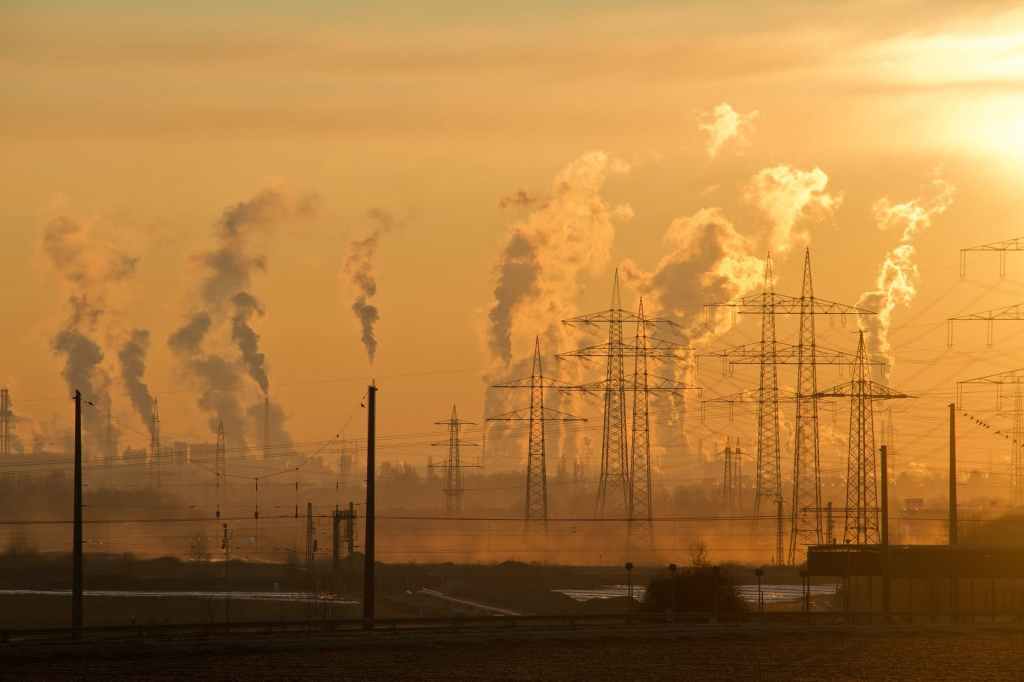
Perhaps ethnic tribalism once had a selective advantage, but we doubt that it does today, if global warming is to be avoided. Here, a gloomy summary from Nature Briefings looks at how emissions are bouncing back. Never have we needed the old Canned Heat song Let’s work together so badly!
All along the Eastern edge of Europe, democracy seems to be fading. which will gladden the heart of a Certain Person a bit further east. Our indefatigable Buckinghamshire correspondent, Mr Gary Herbert cites this example from the excellent Open Democracy Website, about the sinister events in Bulgaria.
It is so easy to be misled by numbers. Look at this quote from Nature Briefings “Mathematical Pitfall plagues antibody tests”
Even if a screening test is very accurate, if it is not 100% perfect then it will deliver some false positives and some false negatives. And the lower the infection rate, the more likely it is that a positive result is wrong. An imperfect antibody test for COVID-19, for example, could leave a lot of people thinking that they are possibly immune to the disease, when they have never even had it. Scientific American explains, with a very handy graphic, how this mind-bending fact arises.Scientific American | 3 min read
We read it, gentle readers, and it is a tour de force of how to present scientific concepts in an easy to understand way. Science teachers, take note!
And finally…our heartwarming animal story of the week concerns that marvellous organisation the WWF (the animals, not the wrestlers) and their efforts research and protect the beautiful snow leopards of the mountains of Asia. Remember what will happen to us all if those glaciers melt. How many gin and tonics will be needed to catch all that ice?
We at LSS have never been afraid to tackle the crucial social issues of our time. And now another has come up- is it best to use oranges or lemons in a cocktail?
It all started when a letter flooded in from Lady M—–, of Collingwood Gardens South Kensington, and Brinkley Court, Gloucestershire. “Oh Cocktailmeister”, she writes, “Oh cocktailmeister, is it better to use oranges or lemons in a cocktail for one’s guests?” Well, these people are running the country now, so we thought we’d better come up with an answer. And the way to do it is to let you, the people decide. We shall offer a choice for you to try, and make your own minds up. Let’s start with lemon. It can be frightfully sour stuff, so the drinks tend to be short.
Brandy Sour
5 ice cubes; juice of 1 lemon; 3 measures good brandy; (Courvoisier or Remi Martin -none of that Spanish stuff you picked up at Malaga airport) 3 drops angostura; 1/2 measure sugar syrup. Mix in a shaker, hold back the cubes : then pour to a cocktail glass and decorate with lemon peel.
Between the Sheets
As many a teacher used to declaim “We’ve done this before!” But for the benefit of those who weren’t paying attention last time, here we go again:
5 cubes ice; 1.5measures brandy (see above); 1 measure white rum; 0.5 measure Cointrea;. 1 measure lemon juice; 0.75 measure sugar syrup. Mix in a shaker, hold back the cubes; pour to a cocktail glass and decorate with lemon peel.
Now for the orange. As, on the whole, orange juice isn’t so sour, we are able to offer a classic long shot and a shorter classic
Harvey Wallbanger
1 measure vodka; 3 measures fresh orange juice ;1/2 measure Galliano. You shake in your Bond- style shaker, but this time the cubes go in with the mix to a long glass. You can decorate this with slices of orange.
Luigi
Here’s one for a classic cocktail glass. 1 measure dry vermouth;1 measure fresh orange juice; 1/2 measure Cointreau; 1 measure grenadine; 2 measures dry white gin. Once again, shake ’em up in the good ol’ shaker, and pour to your best Dartington crystal glass. Hold back the ice. Peel or slices of orange to decorate
Still can’t decide? Or a fan of compromise and coalition? Then we invite you to try the recipe for the Singapore Gin Sling. There’s your homework.
We suppose it’s good news that new use of dexamethasone may alleviate the sufferings of Covid-19 victims. We even think that vaccines and pretty effective tests may be available soon. But if you think that when this passes everything will be fine and dandy, well think again. For a start, a new antibiotic-resistant micro-organism could start a worse pandemic at any time. And then there is our old friend Global warming, which is so deadly that it hasn’t even gone into remission.
It’s true that there has been a blessed fall in the number of aeroplanes, and traffic has not been quite at its normal neurotic levels. However, two reports today (we use the Guardian, but they are all over the media) suggest all is very far from well. In the first, Fiona Miller *describes the awful dangers of a reckless uncontrolled economic bounce back, regardless of its environmental consequences. And just to underline the problem Damian Carrington headlines a new climate study from Siberia*. Fans of coincidence will love the fact that it was in Siberia that the most cataclysmic disaster event of all time originated, the famous Permian-Triassic Mass extinction. Just thought we’d mention it.
But, gentle readers, we could not leave you without hope! The same Damian Carrington, in the same Guardian, has filed another piece in which someone is trying to do something about our plight. Highview Power in Greater Manchester, have come up with new technology which uses green energy to compress air into a liquid. When they want, they just release it to spin a turbine, the world’s biggest in fact, powering many homes. It should go live in 2022.
In the long ago 2000s, opponents of green energy solutions used to love sneering that renewable ideas only worked when the sun was out, the wind blowing, blah etc, blah etc, etc blah. Technologies like Highview’s show that it is easy store power from peak times and release it later, hugely extending the efficiency of new systems. Remember that this is only one such solution. History shows that as new ideas and technologies develop, whole economies can grow and thrive. It’s fossil fuels that need to wither and die.