We at LSS are sometimes depressed by a seeming world- wide trend away from democracy and towards monarchy. Of the world’s three superpowers, Russia, China and The United States, two are already ruled by persons who are monarchs in all but name, and the United States may well go the same way if President Trump is re-elected in November. We suspect that the reasons lie deep in issues such as demographic change, economic inequality and ecological collapse: the storms of emotion unleashed are beyond the power of anyone but autocrats to contain.
However, if democracy is to try to survive, it must address many problems. In the United Kingdom these include deep ethnic and tribal divisions, a bitter unresolved class war, the concentration of media ownership in a few, usually foreign owned hands, and a deep cynicism about the possibilities of reform. Our regular correspondent, the tireless Mr Peter Seymour of Hertfordshire, has always believed that a more efficient system for voting than than First Past the Post must be devised. Here he asks to consider a well-written article from The Independent where radical campaigner Peter Tatchell calls for the UK to adopt a Proportionl Representation system for voting in General Elections.
Confession: we at LSS have always been FPTP guys; it seems as English as Walpole, fine roasts and a good glass of claret. However, the case against is here put with such eloquence that we urge you to read it.
We have always been interested in the link between stress and people developing cancers, auto-immune and other types of diseases. We realise, gentle readers that this is a tricky, complex area. That stress, however you define it, can come from many places. That there are all kinds of people like immunologists, geneticists, psychologists and many others with far more learning than we at LSS possess. All we can say is: we think it is a very, very live subject, so we think it will get bigger in the months and years ahead. And so we are going to run a series of pieces where we look at the matter from different angles. Always we hope with a critical mind and the help of our dear readers and followers in all continents.
Who better to start us off than our old friend Gaynor Lynch of London, whose short piece below has so many talking points that we don’t know where to begin. So here is the piece, and then some key questions.
Gaynor: Stress and cancer. Stress has been recognised by many immunologists as having a significant factor in the onset and progress of autoimmune diseases. The etiology of autoimmune diseases is in many cases is poorly understood but is recognised to be multifactorial: genetic, environmental, hormonal, stress, and immunological. I have a very rare autoimmune disorder. It started when I was in my early teens (hormones) but was not diagnosed until I was an adult when I had a significant breakdown in my health which was triggered by a traumatic event (stress). Cortisol, the stress hormone, plays havoc with your body. It has a lot of negative impacts including heart disease, increased blood pressure, digestive system problems and very significantly supresses the manufacture of lymphocytes which play a key role in the immune system. They detect, infiltrate and destroy abnormal cells, viruses and bacteria. If your immune system is compromised you may be at risk of developing cancers It doesn’t cause the cancer but effects the bodies ability to detect and kill abnormal cells which then reproduce and lead to a cancer. So stress may not be a direct causal factor of cancer but the stress hormone cortisol definitely impacts on the autoimmune systems ability to deal with abnormal cells.
1 etiology of autoimmune diseases is in many cases is poorly understood Never was a truer statement made! We have known about things like MS for over fifty years. And despite the heroic efforts of a few charities and researchers, our understanding is weak. When you consider what we have been able to do with things like DNA and space science, by comparison
2 Cortisol…..significantly supresses the manufacture of lymphocytes which play a key role in the immune system. We are starting to come across this in our own humble investigations. Why does that worry us?
3 Because: cortisol definitely impacts on the autoimmune systems ability to deal with abnormal cells.
And, as Gaynor points out, you can see where that is going. But is it just cancer?
Obviously, different people respond differently to stress. But as working ours go up (if you have a job) and salaries stagnate, as markets and currencies fluctuate wildly, it looks like we’re all in for more of it, like it or not. So what do you think? Do you know someone who has “worked themselves to death!”, as they say? Or someone who drinks to beat the stress, which only ends up by killing them indirectly? Come on, LSS folk, let’s hear your tales!
Heard the one about the man with a long term happy marriage and successful career who left his wife for the office harpy? Eight years later he was dead, ravaged by chronic illness-but why? Was it guilt at what he’d done, gnawing away at his immune system? Or the one who ran into financial difficulties who then worked his fingers to the bone in high stress jobs to save his wife and family, and succeeded-only to be stricken by cancer? That’s as sad as it gets. Or even the fool who loses his business, the family home and his children’s future, who then develops a wasting disease like Multiple Sclerosis-again, is it guilt, or what? We all know stories like this, and doubtless many of you can tell others.
So what is the link between stress, cancer and other illnesses? We think there is a lot of stress coming to a lot of people in the next few months and years, largely due to the coronavirus crisis in the economy. So-can it kill you? If so how? What are its causes, and are some people more vulnerable to stress than others? Is it in our genes, or our life experiences? Or are you just living too close to a long forgotten lump of lead? Over the next few weeks we shall be returning to this theme, looking at learned articles and trying to find the best scientific answers to the questions above. But above all, we want YOU, gentle readers to help. What are your experiences, anecdotes and discoveries? Who do you trust to give the best answers? Contact us please, and let’s make this a joint enterprise.
To get you started we have reproduced the thoughts of Cancer Research UK, a marvellous body, to whom we have been regularly contributing since 2003. You should do likewise. And, although we respect their considered thoughts (see link) we can’t help wandering that, even if they are right in general terms, is something else going on at a more subtle level?
Our old correspondent Ms RS of Southend on Sea wrote to us recently thanking us for our suggestions, and for the pleasure afforded thereby to her and her many neighbours. “we love to sit in our front gardens with our many neighbours and children round the barbecue, swigging back the old cocktails while the boys race their cars down the streets, competing to see who can make the loudest noise” . That at least is the gist of what she told us.
We thank Ms RS of Southend on Sea, but realising that some of our other readers might prefer a slightly more-ah, formal setting, we hereby recommend three venues for the sophisticated enjoyment of the fruits of the Cocktail Tree, all of which we have personally visited. Check Covid restrictions before you pitch up!
The Queen Mary was built in 1936 as the last word in ultimate ocean luxury. When finally taken out of service, she was given a re-tread as a marvellous hotel (which goes nowhere) permanently moored at Long Beach. Yet nothing has been missed out, from the state rooms to the marvellous glass and steel of the first class cocktail bar, now renamed as the Observation Room. Sip your cocktail in are deco splendour as the ghosts of the 1930s cool crowd flit around you.
Our recommendation-something short and sophisticated, maybe along the lines of Martini, Manhattan or Margharita
Long ago, old hands returning from the sweltering East would put in at subtropical Madeira to acclimatise before the return to cold rainy Blighty. In those days, one stayed at Reids- a marvellous mixture of gentle stucco walls, and rich interiors of polished wood and marquetry, and deep hidden gardens. No better part of this than the Cocktail lounge with its panoramic views of the harbour, town of Funchal and the mighty cruise ships moored, as t’were, at your feet. Service comes with smartly uniformed waiters, attentive to every subtle whim of the thirsty cocktail seeker.
Our recommendation: Madeira’s hot, so ask for something long and cool. such as a gin sling or a Long Island Iced Tea
We don’t know how they train ’em, but we had one of the most subtle mixes ever here. Our companion of that night and this advises us that it was called a 1928 or something, but check the menu, ‘cos there’s something for everyone. As for the hotel, the name speaks for itself. But if you are like Ms RS of Southend on Sea and don’t like posh nosh, we believe there is something called MacDonalds, or MacRonalds, or something, close by in the Strand.
Our recommendation: Stay in the Savoy to eat after your cocktail.
When we were young, the typical manager was a swaggering charismatic male, who Got Things Done and Cut Corners, who was loud and brash, big with the ladies and always had a ready turn of phrase. They came in various shapes and sizes, but older British readers might remember some one like Inspector Reagan from the old Sweeney TV series. Women in such cultures were seen as weak, confused and ultimately second rate.
As we grew older, our experience was curiously at odds with this pattern. We knew good and bad managers of both sexes. We saw things being done, and things falling apart. And all to often the hard-living Alpha Male turned out to be a bluffer, a bully and a cheat-or at least a failure who made snap decisions based on intuition and impulse.
Now the evidence is coming in that female leaders have been handling the Covid crisis better than their male counterparts. Here’s a story from the Metro, brought to us by the indefatigable Mr Peter Seymour of Hertfordshire comparing the performance of female leaders with that of men. Guess who’s done better?
News that financial markets are almost back to where they were before the Covid Crash, while thousands of jobs are being shed is baffling to say the least. Larry Elliott of the Guardian* has always been his own man, and today’s column is its usual mix of careful analysis and searching questions. Read it, but as you do, think about these questions. And they don’t just apply to Britain.
1 There was a truly massive injection to save the system in the spring; and ultimately Central Bank money is our money. So why are stock markets recovering, but the real world shrinking?
2 Traditionally, a market recovery is held to predict the arrival of a real world recovery. But how long will the wait be? What causes the lag?
3 After the last rescue in 2009, why was there such a surge in property, bonds and assets, but the real economy remain so weak?
4 Does the constant bailing out of financial markets lead to reckless behaviour?
5 If it’s OK for Governments and Central Banks to subsidise financial markets, why can’t they subsidise a Green Economy?
6 Why was there no major asset bubble for 50 years after the Wall Street Crash?
7 Why has a dangerous asset bubble happened every six years since 1990?
We at LSS can only speculate, gentle reader. Meanwhile, Elliott recommends a little book called Boom and Bust by William Quinn and John D Turner , which may help.
Regular readers of LSS will know that the greatest fear we have in these pages is that of Tribalism. This pathological tendency of Homo sapiens to divide itself into mutually hating groups, screaming hatred and deaf to all reason. Hence the terrifying divisions over things like Brexit, Black Lives Matter, football matches and Donald Trump. In a species as well armed and emotionally fragile as this one, it could now prove very fatal very quickly indeed. It is a theme explored well by Amy Chua *and Eric Kaufman. * The psychological roots were underlined in the infamous Robbers Cave Experiment*, which quickly led to terrifying levels of violence and hatred.
Now, the website Open Democracy carries an article by Perry Walker* called Beyond Tribal Competition which for the first time suggests that ways out of this trap are possible. We won’t spoil it for you, you should read this one. But what impressed us was a list of case examples which suggest some of the methods might work. Here is a checklist of things which might, one day resolve poisonous conflict and open the way to science and learning.
1 Get groups to see that dialogue is the only possible way forward. Failing which:
1a Get a convenor whom both sides trust. In the Minnesota custody dispute this was Governor Mark Dayton. (we at LSS remember John Hume in Ireland)
2 Recognise both sides have shared interests in many things. In Chattanooga Tennessee this was clean air and water
3 Read all you can lay your hands on by Mary Parker Follet. She invented the idea of win-win. Look for the deeper needs of both parties. Your example here is Camp David in 1978. It turned out that the Israelis wanted security and the Egyptians Sovereignty.
4 Find different reasons for different groups to support the same policy. By demilitarising Sinai, the Egyptians could take the sovereignty, but the Israelis had security.
Tentative stuff. But we as intelligent people have to start somewhere. Remember how we got heliocentrism and votes for women through against the instincts of the mass of mankind? Maybe we can do the same again.
Well, a lot of it’s coronavirus again, but we sort of think its important and so do a lot of you, so here goes. We owe a lot of today’s ideas to the tireless media hunting of Mr Gary Herbert of Buckinghamshire.
How is Coronavirus going around the world? Is it carried by things as well as people? According to the Mail. China has found samples of Sars-CoV-2 on imported chicken wings. Think about the implications of that one on the world economy.
Vaccines are our best hope, not just for Covid-19 but also for the common cold virus. Never forget the power of synergy. The skills and learning you develop in one area can easily be used in another! Here New Scientist discuss the latest on vaccine research for colds.
The debate on the Swedish Strategy, so different from most countries, just won’t go away. We at LSS have always been amused how the Social Democratic Swedes have become the poster boys of the arch libertarian Right in the Anglo Saxon countries. Plus ca change!
And finally, just to change the subject. When we were young, it was taught that everything outside Earth was a lifeless, frozen desert. Then water started popping up everywhere. Mars, Europa, Enceladus, Pluto, even the good old Moon. The latest candidate is tiny Ceres, as this piece from the Guardian shows. Always expect the unexpected, as Barcelona found out recently against Bayern Munich!
As late summer draws on and the languid airs linger in the dusty leaves, as the humid nights begin to lengthen
(Get on with it, they haven’t got all day-ED)
Well, anyway, we thought you’d want some new recipes for August (more like it-ed) So, courtesy of that excellent journal Woman and Home, here are some for you to try on the patio or in the summerhouse
1 Fruitpicker’s Strawberry Iced Tea
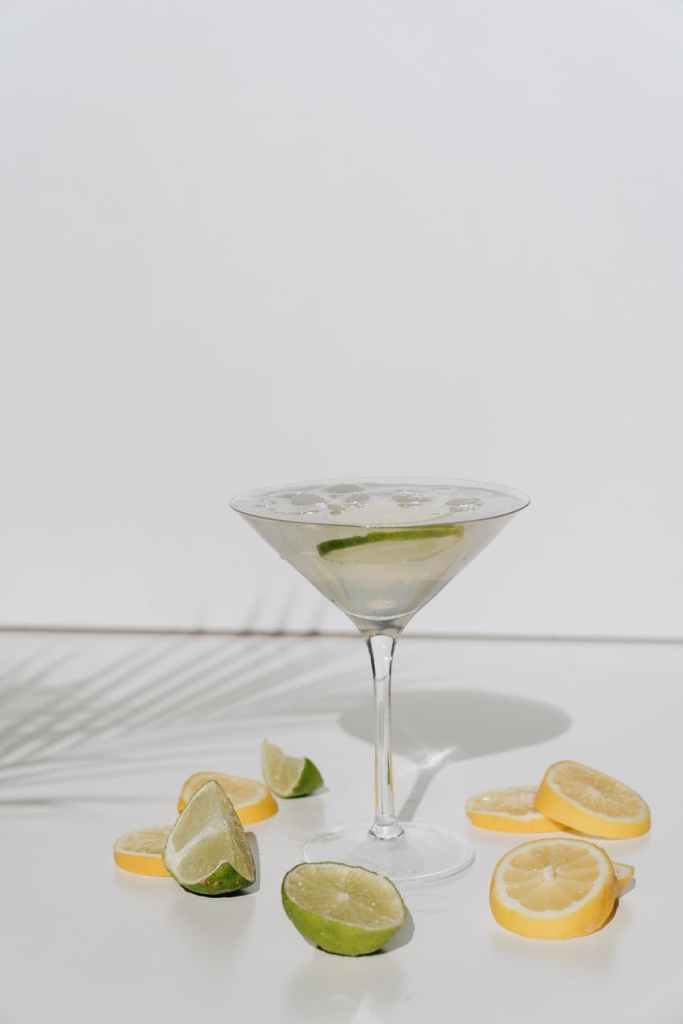
Make 75 ml of strawberry iced tea, and cool. They say 35ml of gin-we say no need to be picky about the label! Slice up some strawberries and limes. Put the gin in a martini glass over crushed ice, then add enough strawberry tea to top up. Slices to garnish. Perfect for sophisticated sipping as the bats swoop through your undercroft.
2 Persian Rose Garden Fizz
From the ancient civilisations of the sunny Middle East, here’s a recipe for four
Pop 65 ml of pomegranate juice, plus 65 ml of orange juice, well chilled into champagne flutes and top up with a reasonably-priced champagne, also ice cold. Bollinger or Veuve Cliquot will do at a pinch, although Ms RS of Southend on Sea recommends something called prosecco, whatever that is. Now comes the clever bit- you balance a rose petal on the glass, which is filled with pomegranate seeds. Proper Omar Khayyam, or what?
3 Pink Grapefruit Mojito
They say this is one to clear the palate before your barbecue , so basically it just goes like this
In your shaker mix up 1 tablespoon of lime juice, 1 tablespoon maple syrup, 75ml of grapefruit juice, 50ml white rum, and big cubes of ice. Shake ’em ’til you break ’em, as they say. Pour to a cocktail glass, taking the ice with it. Top with cool soda water if you need to, and garnish with mint leaves and grapefruit slices.
We thank Mrs Christine Hartley of Sussex for tonight’s ideas
How do you negotiate with people like the Taliban, particularly when the the latter are in well organised groups and armed with Kalashnikovs and RPGs? That’s the problem facing Farahnaz Forotan and the women of Afghanistan now that their Government and the US are aiming to bring the Taliban in as partners in a national coalition government.
Most people will have heard of the Taliban, archtype of fundamentalist Islamic thinking., As they are going to be a coalition party, a flavour of their history and ideas is found in the Wikipedia link below. It will give some idea of what a Taliban election manifesto might look like, particularly on issues like the flying of kites and education. Whatever your thoughts on the Taliban, Sharia Law and Womens’ Rights, there is a real risk that the situation of women could deteriorate alarmingly.
In a piece in The Guardian, Ruchi Kumar details the brave struggle of Farahnaz and thousands of women like her. Their struggle is our struggle.