A Really Great Read

This week, we are starting a new feature called A Really Great Read. In which we invite you, the readers to tell us of, not a book you can do with, but one you can’t do without. Did it teach you things you didn’t know? Did it make you laugh/cry/fall asleep? Was it special at some time in your life? Tell us. A reader is like a traveller to a foreign land. Maybe the rest of need to know about what you discovered there.

Purely to start the ball rolling, we will begin with the following

A History of Medieval Europe by RHC Davis.Longman I came across this book at a time of great personal and economic difficulty. And I figured, well the Middle Ages were a time of great difficulties, if they can jolly well get through it, then so can I! And that has stood me in good stead ever since.Yet there are many, many books on the Middle Ages. What is so good about this one, I hear you ask.Well read for yourself. But as you do so answer these questions:

Is it the clarity of style?The structure of the Roman Empire was based on the unity of the Mediterranean, its people and its gods….It was first cracked by the claim of the Christian Church to be the guardian of absolute truth, because that claim made religious compromise impossible. It was further cracked by the determination of barbarian invaders to prefer the law of their ancestors to the law of reason, since that preference implied the superiority of loyalty to one’s race over loyalty to the civilised world. It was shattered when traders lost the freedom of the sea. When that happened , the greater part of Europe reverted to an agricultural economy in which there was no place for the cities which made men civilised.

In a nutshell, or what?

Is it: unites a whole range of themes effortlessly?

Dip into Chapter Nine and you will be thrown into a single weave: The great Medieval Trade Fairs, Byzantium, Arabs, Mongols, rising prosperity, shipping, cloth, and the origin of Banks. Enough for one Sunday morning? Well, there’s a lot more in the chapter. But it won’t half help you appreciate all those funny old buildings you see in places like Barcelona or Bruges.

Is it the amazing little fact?

Under the Islamic Empire there were banks with branches in the most important cities, and

It was possible to draw a cheque in Baghdad and cash it in Morocco

( explainer:there were no cash points in the ninth century; but they sure were doing alright for the time)

Is it: The vast sweep?

We start in a collapsing Roman Empire, move on to the barbarian Invasions ,the rise of the Church and the Franks, the Islamic Conquests and the ninth century simultaneous attacks of beastly hordes like Vikings, Hungarians and Saracens. We draw breath with an economic survey of Europe before the door opens to the more successful High Middle Ages, A time of new buildings and art, booming trade and military success. This was the age in which the foundations of modern science, commerce and Universities were firmly laid; only to be dampened somewhat by the arrival of the Mongols and the Black Death.

And finally A note of odd bravery. I leave it to Professor Davis-and you

(at the end of the thirteenth century)

The conservative might lament the passing of the old order, and try to reconstruct it, but the task was beyond them. The significant figures were the friars who set out to find the Mongols and explore the unknown, however fearsome it might be.

#rhcdavis #ahistoryof medievaleurope #middleages

Another thank you

Three thanks

1 A like from The Treasure International https://henrypatroski28gmailcom.wordpress.com/about/

2 Happy Birthday the Hubble Telescope -what things you have shown us!

3 Happy Birthday The Spectator. Alright we don’t always agree with what they say, but sometimes you need a Right-wing voice like theirs to cut through certain self -righteous droners on the Left.

We really, really appreciate it when people take the trouble to read our musings.

And we really appreciate it when intelligent people work in teams to produce something intelligent and out of the ordinary. It certainly is unusual.

#NASA #Hubblespacetelescope #The Spectator #thetreasureinternational

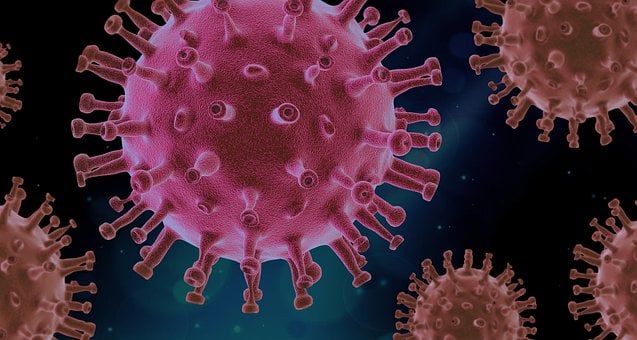
Yes, Covid 19 is man-made. But Sars-Cov-2 isn’t

Virus, Pathogen, Infection, Biology
pixabay

We at LSS have always admired precise thinking, where possible. And so it is important to distinguish between the disease COVID 19, which we think has been largely man-made, from the virus SARS-Cov-2, which isn’t. Let’s start with the latter, as there have been some amazing claims lately that it has been cooked up by nefarious scientists, at the behest of an evil government somewhere. Today we review an article by Peter Beaumont of the Guardian which deals with this.

Anyone who has even a passing acquaintance with courses in logic will know that one of the basic principles is that extraordinary claims require extraordinary evidence. If I assert that there is a large green dinosaur swimming around a lake in Scotland , the burden is on me to produce some very, very strong evidence, as the proposition is contrary to all known geological and zoological experience. So, if you think the virus was engineered, answer these questions:

What are your proofs in virology, statistics, and epidemiology?

Where were these findings peer-reviewed?

SARS-Cov-2 bears overwhelming resemblances to many naturally occurring mammalian viruses. How do you explain that?

Why was the early Wuhan outbreak characterised as predominantly type B, with some type A?

Why was the early outbreak in Guandong predominantly type A, with only some type B?

Who might benefit from spreading disinformation about the virus? Why?

Spoiler alert: If you say “well I saw some top expert on the internet say x y and z”, that is not evidence, it’s for the pub.

The disease COVID 19, on the other hand, is almost entirely of our making. One may wax lyrically angry about the failures to control the escape of the virus. The appalling failures in public health which have led to widespread problems with smoking, obesity, cardiovascular and a range of other health problems which have left sufferers appallingly vulnerable. The atrocious atmospheric pollution in so many cities around the world. The exaltation of “growth”,- which seems to us a brash process of outing up huge concrete boxes where people spend 16 hours a day watching each other on computer screens-over things like education and health. And ignorant greedy people crashing into delicate ecosystems and robbing them of their precious plants and animals.

That’s how we created this disease.

The two articles below will give you more, and the BBC one in particular has many references.

https://www.theguardian.com/world/2020/may/01/could-covid-19-be-manmade-what-we-know-about-origins-trump-chinese-lab-coronavirus

https://www.bbc.com/future/article/20200427-how-air-pollution-exacerbates-covid-19

#Sars-Cov-2 #covid19 #pollution #publichealth #originscoronavirus

Friday Night is Cocktail Night

Christine Hartley

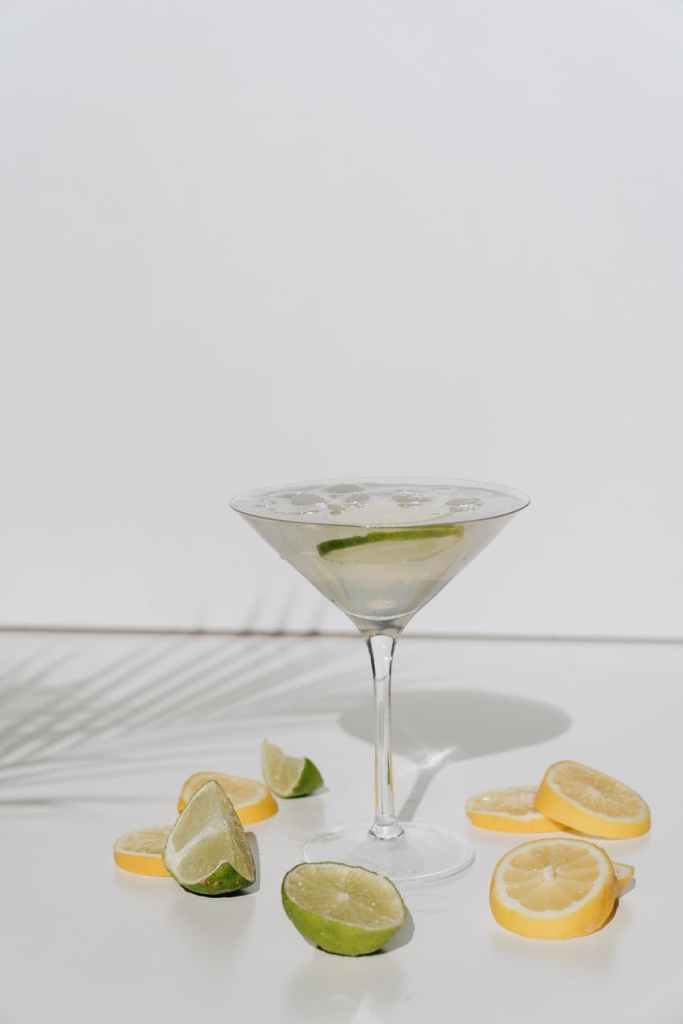
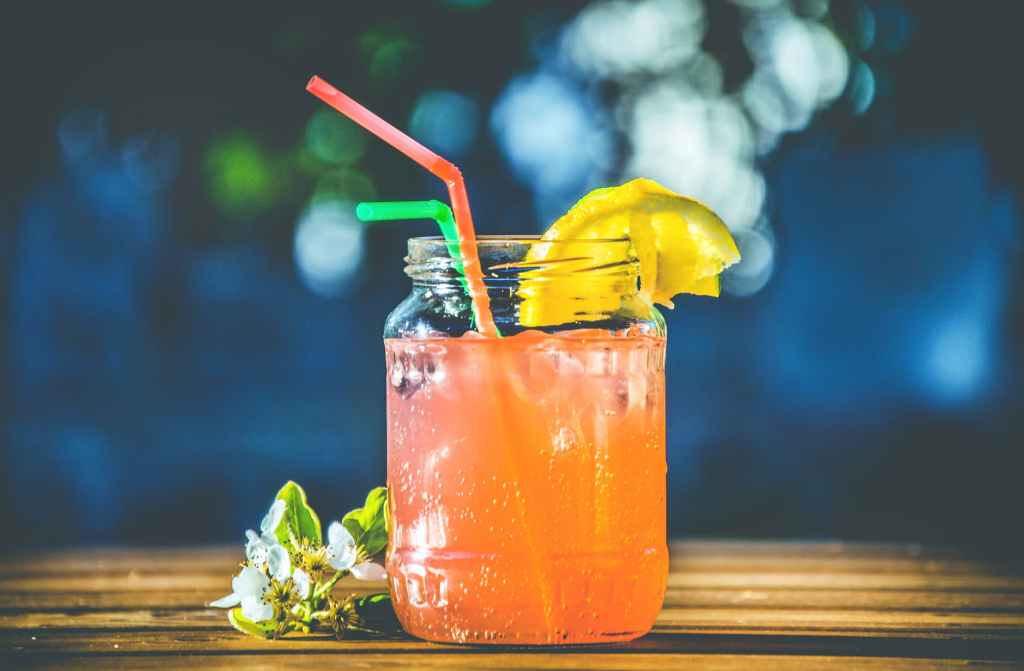
Well, the cocktail we’re going to feature today is not the one in the picture above, but my wife thought that it was so good , it should go in anyway. So be it.

No, the one we’re going to cover tonight is the famous Daquiri. We shall start with a basic recipe, then suggest ways that serious aficionados can jazz it up according to their whim.

According to Wikipedia:

Daiquirí is also the name of a beach and an iron mine near Santiago de Cuba, and is a word of Taíno origin. The drink was supposedly invented by an American mining engineer, named Jennings Cox, who was in Cuba at the time of the Spanish–American War.

In other words, it’s a tropical cocktail. One to be sipped slowly under a palm thatch as the sun goes down after a long day on the beach. When you’re freshly showered and after sunned, and the staff are preparing the hotel for the evening meal. But-as you are not going to a hotel any time soon, here’s how to make one at home:

You will need: Cocktail shaker, cracked ice 2 fresh limes (and I mean that) 1 teaspoon sugar syrup, 3 measures white rum, e.g. Bacardi.

How to do……..IT! Crack your ice into smithereens and pop it into the shaker. Squeeze as much juice as you possible can from the limes, and pour in. Add the sugar syrup, then the white rum. Shake like it’s saving your life for 20 seconds then pour into a freshly chilled cocktail glass.

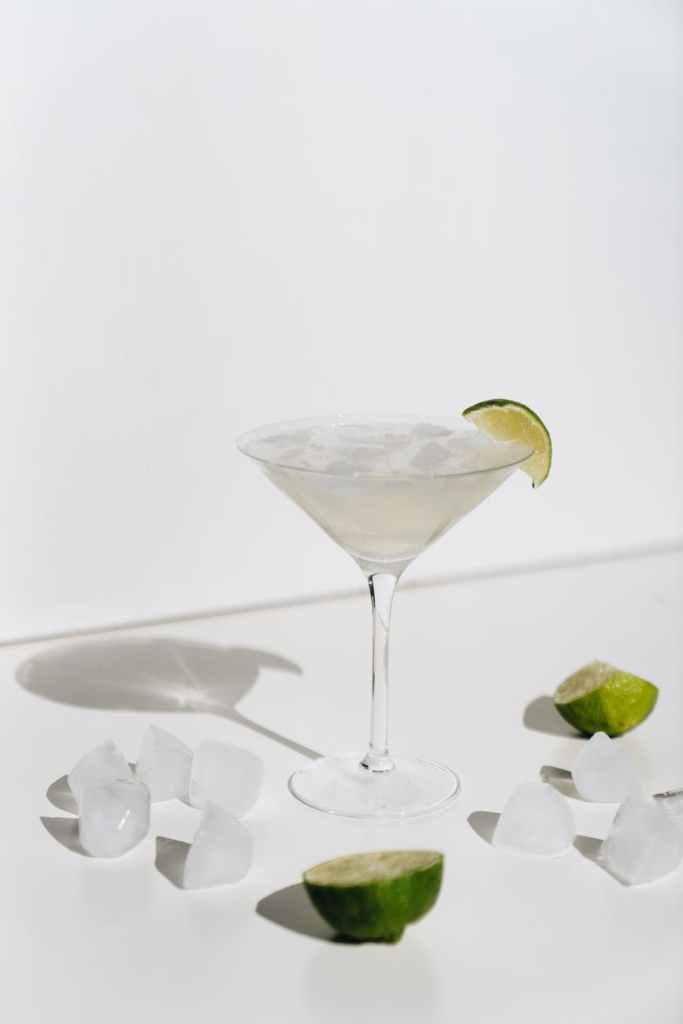
That’s like the one shown below, although Daquiri purists prefer one of those rounder shapes, of which we cannot find a free picture. But, as these are times of austerity, we are sure you won’t mind, cocktail pickers.

Variations

By using the juices of things like pineapple, coconut liqueur, apricot, strawberry, et al, you can make a pleasant variation to the base line model described above. Or.to add a little extra pzzazzz, things like Cointreau and grenadine. Daquiris are gregarious, democratic cocktails-they welcome everyone.

They are ideal for the zeitgeist of our time,with all these new buzzwords of the emergency like quarantini, locktail hour, and martini espresso.

As it is May Day, we will conclude by saying “Drinkers of the World, Unite!”

#Daquiri #cocktail #whiterum #limejuice

Daiquiri – Wikipedia

en.wikipedia.org/wiki/Daiquiri

Some truths on coronavirus: if you are not a virologist, why not just shut up and listen for a change?

One of our self appointed tasks at LSS is to stand back and bring you ideas from people who are far more intelligent than ourselves. And not to get in the way!

Here are two pieces from Nature updates. One counsels that the whole corona trope is now so big, so complicated and so emotional that no one can understand it in its entirety. Especially conspiracy theorists and those grinding out hidden agendas, who have never seen a virology lab in their lives.

The coronavirus pandemic is “a problem that is now too big for any one person to fully comprehend”, argues science journalist Ed Yong in a long read about the factors in play. We struggle to master knowledge that is new to many of us: the definition of a ‘coronavirus’. The characteristics of this specific one, SARS-CoV-2, and the disease it causes, COVID-19. What the research on treatment and vaccines really means, and which experts and self-appointed experts we can trust. And how we can parse misinformation, shifting public-health advice and the uncertainty inherent in a fast-moving scientific landscape. The Atlantic | 26 min read

The second traces the history of the virus

Some of the history of the SARS-CoV-2 virus is recorded in its mutations. In this infographic-packed feature, follow the journey of the virus’s progress from Wuhan, China, to everywhere by tracing tiny variations in its RNA.The New York Times | 7 min read

So for all those who assert that that there isn’t a virus, and it started in China/the USA/Russia/Droitwich, why not just take a rest from spouting your own uninformed opinions, and look at some evidence from someone intelligent? Like, just for a change?

Nature Briefing <briefing@nature.com>

#sars-cov-2 #coronavirus #covid19 #wuhan #Nature #Atlantic #NewYorkTimes

A big and humble thank you…

To our latest followers and likes. The latest is a site called politics with CW, in the United States of America. They show a video analysing the statements of a Mr Donald Trump, who I believe is their President. If this is so, he follows in the tradition of George Washington, Abraham Lincoln and Franklin D Roosevelt. So, by analysing his words and statements, we can all learn ore about Logic and Deep Thinking. I suppose.

#donaldtrump #politicswithcw #factchecktrump #USpresidents

Who was your best teacher? Why?

We at Learning, Science and Society are fascinated b y the way people learn. Don’t learn. And unlearn. Last year the UK, from where we sit now, spent £91.8 billion on education, which was 11% of its GDP*. If you add to that the amount spent on private education, professional training, all the various types of evening classes and so on, that’s a very, very great deal of money. How much value does a society get from all this spending. In a nutshell: how often does a piece of knowledge get transferred to from one person to another?

Let me give an example. Many years ago a friend of mine moved with his young family to one of the new villages springing up around the boom city of Cambridge in England (there’s that education word again). As did many, he joined the local football club: busy young executives need exercise. His team had mixed fortunes in their local league. But they tried hard, had practice every Wednesday evening, and were led by one of those enthusiastic types you find a lot in local clubs and societies. This one had made a study of football tactics and training, which he tried to impart to my friend and his teammates on Wednesday nights.

The Trainer had diagnosed that one of the reason for their bad results was a tendency to boot the ball away aimlessly in great long kicks, especially when danger threatened. There was no attempt to make passes or find a colleague: in fact it was very much the English style of the time.

The Trainer felt that the solution was close, directed passing, “playing the short ball.” And one Wednesday evening he drilled them endlessly in this. Everyone agreed; everyone bought in, as they say.

Came Sunday morning, and the first match in the new style of play. The other team kicked off, and attacked. The Centre Half of my friend’s team found the ball at his feet and in one second, BOOT, away he hoofed it to the centre circle. As if Wednesday night had not happened at all.

I hope I do not ruffle too many feathers when I assert that some central defenders are more noted for their qualities of strength and toughness rather than agility in any form. And that, as a psychological type, they form the rugged honest yeoman, don’t- waste- my -time -with- fancy- new- ideas attitude that is the bedrock of any human group. Many have even gone on to careers in management, or the Professions. Yet it must be admitted that this man seemed to have learned nothing, absolutely nothing from two hours of training. And that only three days before.

So what was going on? Why do some people learn some things, and others not? Did you have a good teacher, who made the information flow? Or did you do better in later life, perhaps in work training, where things were less academic? Did you have a difficulty to overcome? Why do girls seem to be outpacing boys? Why do some groups, especially boys, seem to despise learning?

We don’t know. We want your ideas. For us at LSS, there is no better or more interesting source of ideas than other peoples’ experiences. As the above example shows. Please contact us on the links shown, or via Facebook. We want to know

*UK Public Spending website ukpublicspending.co.uk

#Learning #education #learningtransfer #good teacher #schoolmemories

After Coronavirus, what’s the next horrible thing to befall humanity? Part three

Well, according to Nouriel Roubini..

Hang, on, who’s he?

Professor of Economics at New York University Stern School of Business, who has also moonlighted for The International Monetary Fund, the US Federal Reserve, and the World Bank.

And, apart from that?

He was the one who accurately predicted the crash of 2007-2008. When a thinker makes an accurate prediction, that’s the time to take them seriously. Like Einstein and light wave bending.

So what’s his latest prediction?

That there is going to be a rather large, unpleasant recession in the 2020s, in the form of a letter L. For falling off a cliff and then crawling painfully away from the bottom.

And how does he work that one out?

He’s got ten reasons. Do you want to hear them?

Well. It’s not as if I’ve got to go to work or anything, is it?

Nor will you, by the sound of it. Okay . Number one is debt default. Covid-19 has led governments everywhere to run up massive fiscal deficits, at a time when these were already becoming unsustainable. Paying them off will need more austerity. As households lose income, private sector debt becomes unsustainable, with inevitable defaults and bankruptcies.

But surely the natural cycles of the economy will unleash growth?

Well, there could be a brake here, which leads us to number two, the demographic time bomb. Many countries have ageing populations. But Covid-19 has shown that having an integrated efficient public health system is just as essential as an army. Both can be expensive. Which implies more borrowing and spending.

So-will I have to work until I am eighty three?

Well only if there is something for you to do. Covid-19 has unleashed a curious slack in both production (all our machines stand idle as no one can buy the things that they make) and demand (no one has a job making anything) Which in turn leads to a price collapse, and more insolvencies. This is our number three.

But, wow, a price collapse! I will have loads of money to spend!

Not if the currency is debased, because it won’t buy anything. At first governments will run monetarised fiscal deficits to avoid depression. But as more and more money is printed, inflation will follow. We could get stagflation, a slightly nostalgic number four.

What’s that?

Inflation, but no economic growth. It was quite fashionable in the nineteen seventies. Around the time of glam rock. In fact the Professor thinks that the supply shocks will lead to further declines in globalisation, making it inevitable. That leads us to number five.

You mean we’ve got five more to go?

Six, actually. And they are the ones that seem to really worry the good Professor. Number five is digital disruption. As a result of supply shocks , companies will source production home, away from cheap overseas suppliers.

That has to be good for jobs at home, right?

Not necessarily. If you bring production into a relatively high cost economy, the pressure is on for automation. You should no longer confuse output with jobs. Which leads us easily to number six-de-globalisation

At least some of these link together well

Lucky us! Roubini observes that this is already well underway in things like pharmaceuticals and food. As protectionism kicks in there will be restrictions on the flow of goods, labour, services and capital, among others. So economies shrink further, leading to number seven

Seven was never my lucky number! Alright, let’s have it.

He predicts a backlash against democracy. Numbers five and six can only lead to a scapegoating of Foreigners, and the rise of populists and dictators, which must lead to further restrictions on trade.

But everyone’s a foreigner to someone! Surely we can’t all be to blame!

Well in a way, we are, The Professor deals with those in number ten, below. But he wants you to go through numbers eight and nine first-war. He thinks all these problems will lead to rising tensions between the US and China (both are Foreigners) leading to certain increases in cyber warfare, (eight) with a possible deterioration into a conventional shooting war.(nine) Not good, if we are to deal with things like global warming. Which finally leads us to number ten, as I promised.

Ten? Ah, yes, we’re all to blame

Professor Roubini agrees with all the conspiracy theorists -up to a point. He thinks that Covid 19, HIV, SARS, MERS and H1N1 are man-made. Not dreamed up by diabolical conspirators in Labs, but as a result of our reckless over population, crashing into natural ecosystems, and poor public health and sanitation. He implies a real rethink in the way we do things generally.

And in the meantime?

Well, we could sing a song, How about Let the Good Times Roll?

https://www.theguardian.com/business/2020/apr/29/ten-reasons-why-greater-depression-for-the-2020s-is-inevitable-covid

#NourielRoubini #Covid19 #GreaterDepression #Guardian

Using Artificial Intelligence to get ahead of the virus

Fans of our old Facebook blog (what’s Facebook?-ed) will recall a significant posting about how Artificial Intelligence was used to scour the databases of old papers to come up with a new class of antibiotic, called Halicin. We hoped that this team of workers would receive a Nobel Prize . God knows they deserve it.*

Could AI help to dig us out of this terrible hole we are in due to SARS-Cov-2? Especially, will the virus mutate, and if so, how? And if it does, will all these wonderful new vaccines stop working all of a sudden? Uh-oh.

There may be hope. We know that DNA contains “hotspots” where the chances of a mutation are higher. A Google search will give you lots on this, so I’ll include just one ref to give you a jumping off point.* Up to know, this work has mainly been the preserve of workers in fields like cancer and autism, but that’s fair enough, as we didn’t have a virus pandemic until this year.

But will it work for the RNA in a coronavirus? According to a post in Engineering.com by Vincent Charbonneau an AI start-up called Graphen are doing exactly that. Using data on whole genome sequencing from over 30 countries, they are using AI to plot how the virus mutates, spreads and propagates. This will lead both to better drugs, and predictions of the most harmful variants of the virus.

A thought occurs, albeit in the realms of Science Fiction. Can someone use AI to look at hotspots and map the future mutation potential of other viruses? What about other organisms, such as bacteria?

We await with anticipation.

*J Stokes R Barzailly J Collins et al A deep learning approach to antibiotic discovery CELL vol 180 pp 688-702 Feb 20 2020

*https://www.sciencedaily.com/releases/2018/07/180730132924.htm

https://www.engineering.com/DesignSoftware/DesignSoftwareArticles/ArticleID/20036/Using-AI-to-Monitor-COVID-19s-Evolution.aspx

#graphen #engineering.com #mutationhotspots #ArtificialIntelligence