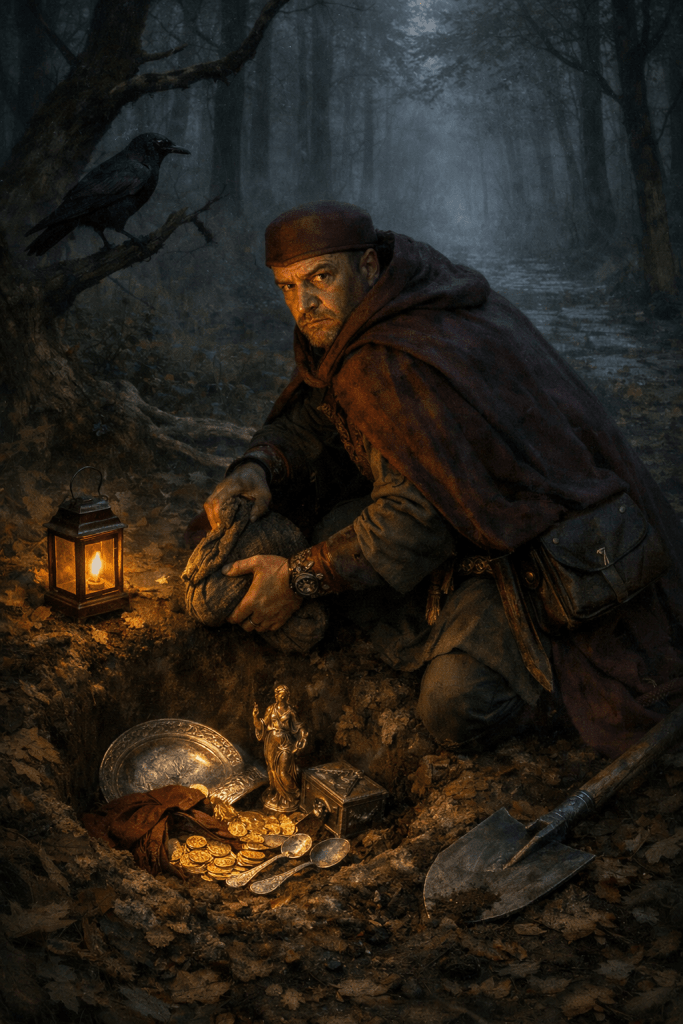
Southern Britain 297 AD. A frightened Roman official, alone in the woods, is frantically digging a hole. It is unaccustomed work for a man of his rank, and he sweats, while nervously looking over his shoulder for soldiers, secret policemen, or even hungry peasants. Why is he here? Any number of reasons could have caused his fall: civil war, a coup, a sudden change of Emperor. Hole completed, he quickly throws in his entire wealth-a bag of gold coins, jewels and silver cups, and takes one last look at them before filling the earth on top. Carefully,he notes the position of larger trees and certain other markers. For one day he hopes to return, when Fortune has turned again. But he never will. He is the last person to see these things before they are unearthed, over seventeen hundred years later into a world of AI, Space technology and jet airliners. The darkness closes-and opens.
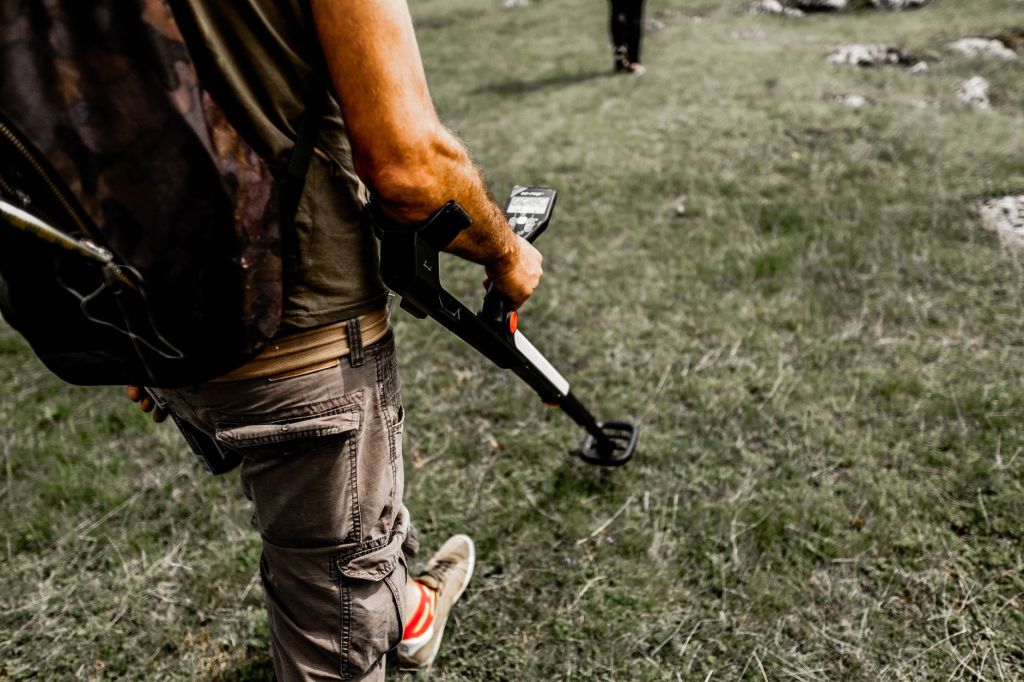
Such are always our thoughts when ever we stand in front of a hoard of Roman treasure in a museum. Who left these things there? Why? What was in their mind when they left them? And-why did they never return? When we read this story of the latest hoard to be unearthed [1] near Ilminster in Somerset , covered in this excellent Guardian piece by Steven Morris, these thoughts and many others came back. Hoards are invaluable to historians and archaeologists, because the coins allow solid dating estimates, which are worth far more than gold to serious scholars. Their occurrence rises in direct proportion to the frequency of political and economic troubles in the Empire. And nowhere was more troubled than the provinces of the Britannias in the period 286-296AD [2] when rebel rulers tried to set up a separatist regime against the central Empire. The likely date of the finds (297) offers haunting possibilities for speculation about their likely loser, and the subsequent events of his life.
But what fascinates most are the hoards themselves. Unlike amphitheatres, churches and other remains, which decay and otherwise change in tune with the society around them, hoards are frozen in time. The last time they were seen was in a declining empire, wracked by pandemics and climate change. A melancholy time of failing trade, broken roads-and an overwhelming mood of doubt and uncertainty. Where increasingly authoritarian governments tried to hold together the remains of a failing world with ever more repression and ever more dubious promises of a return to the long remembered Golden Age. Yet the Empire had endured for so long and was still so big that people who buried the coins could imaging no other possible form of political and social organisation. And were not able to break out of the cycle of decline until they could. Perhaps there is a lesson for our times in there too.
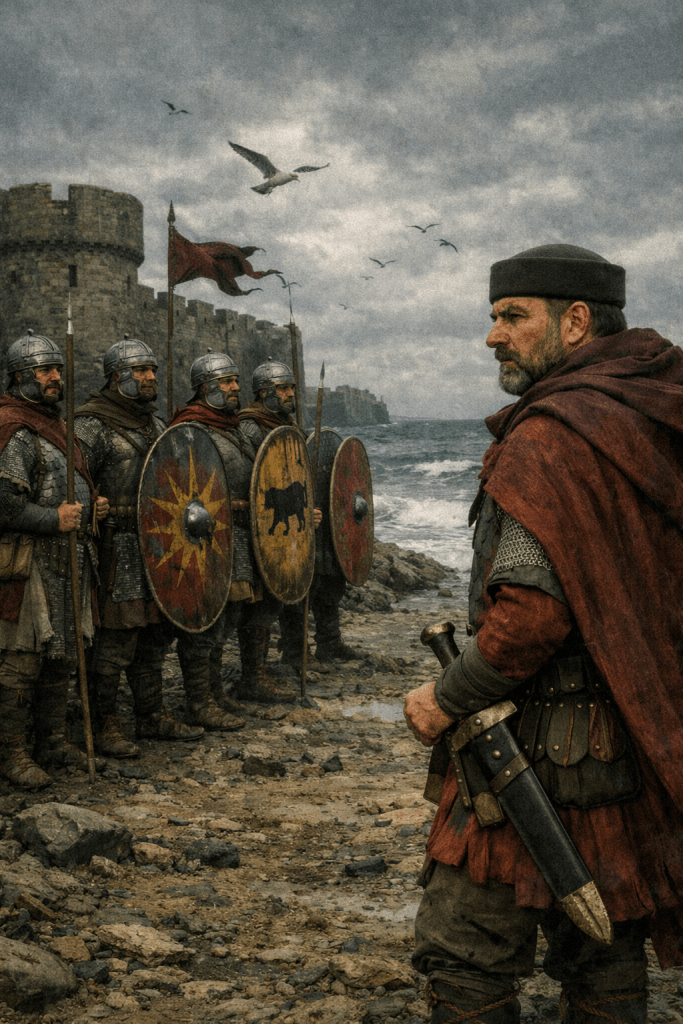
note – we worked really hard to get our Roman uniforms right. We hate those films and programmes where they dress fifth century Romans in the clothes and uniforms of about AD 14
[1]Somerset detectorist strikes gold with ‘spectacular’ Roman ring find | Roman Britain | The Guardian
[2]Carausian revolt – Wikipedia
#archaeology #roman empire #coin hoards #history


