The Emperor Julian’s strategic disaster: are their any modern parallels?

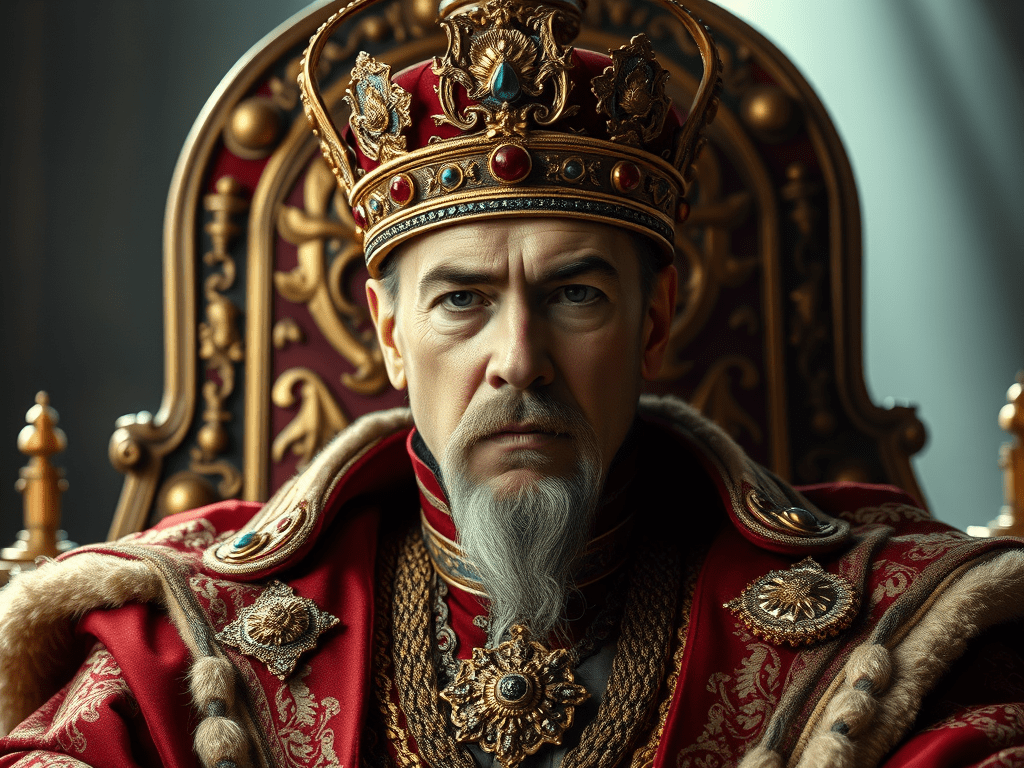
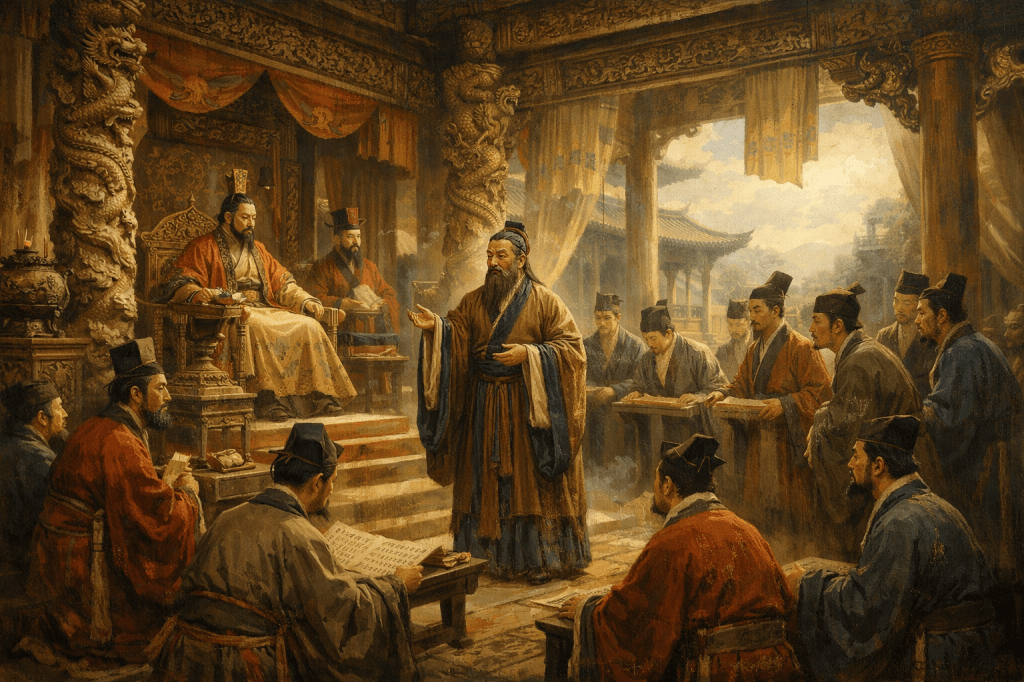
When the Emperor Julian the Apostate [1] took the Imperial throne in 361AD, he inherited an Empire far past its peak. Although still close to full size, centuries of economic decline, pandemics and civil wars had left it gravely weakened and divided. But Julian was nothing if not idealistic. He would make Rome great again by restoring all the old ways of its Imperial zenith. And his chosen method was a culture war: he would overthrow the new religion of Christianity and restore the traditional Roman beliefs of the Pagan Gods.

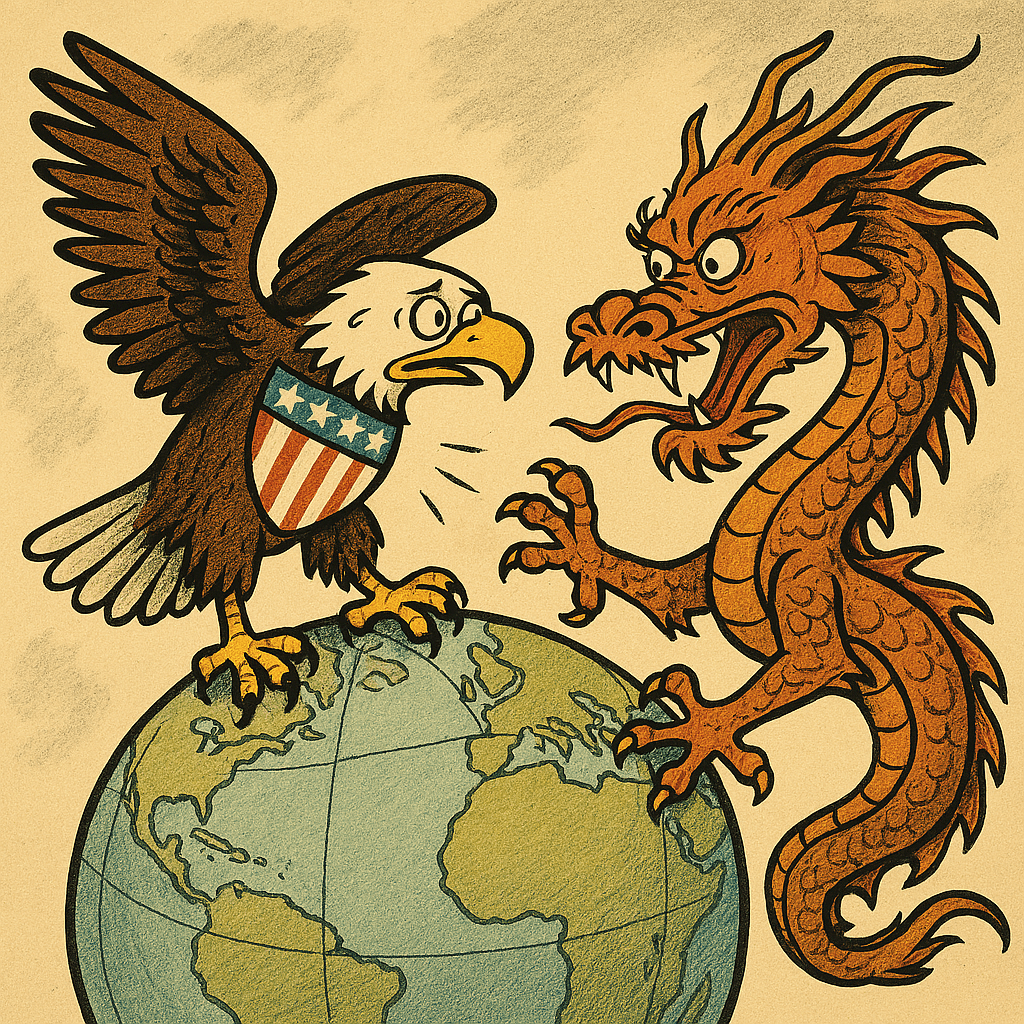
But it takes more than a few decrees and orders to restore an nation in decline. Within a year the Empire was even more divided by the passions his reforms had unleashed. Prestige damaged, project weakened, Julian had one last way to seize the initiative. To invade Rome’s traditional enemy Persia ( a country now called Iran) and crushing them with superior military might. Thus his own prestige would be so enhanced that everyone at home would have to do what he said. It was tempting operation: he was a good general, the Roman Army was still a formidable force, the ruling Sassanid dynasty of Iran, sorry, Persia, was both oppressive and unpopular. So in the Spring of 363 Julian led his army across the Euphrates in a lightning march designed to shock and awe his enemies into submission.

At first all went well. Towns were captured, battles won, territories seized. But the Sassanids, masters of asymmetric warfare, refused to play by Roman rules. They harried, retreated, drew Julian deeper and deeper into hostile terrain. Supply lines thinned, losses mounted and the army grew increasingly unsure.  We have an eyewitness account from a Roman Officer who served in the campaign:

The Persians, avoiding a regular engagement, harassed us with frequent skirmishes, and by burning the country round, deprived us of the means of subsistence.”
— Ammianus Marcellinus, Res Gestae, Book XXV, Chapter 1

Eventually the Sassanids closed the trap. Julian was mortally wounded. His successor was forced to surrender the army and retreat in disgrace. But the real loss was far graver than that. Julian had made the last gamble of the undivided Roman Empire-and lost. His culture war did not outlive him, for the empire was fully Christian within a generation. The Roman army would never be strong enough to take the strategic offensive again: it became an entirely defensive force. Even that failed at the great Battle of Adrianople in 378, which finally shattered the myth of Roman invincibility. Julian has had many admirers, both ancient and modern [2] But the verdict on him is damning. For reasons of internal prestige he launched a war with no clear strategic aims against an underestimated enemy and thereby inflicted an irretrievable strategic defeat on his own nation. Can you think of any modern parallels?

[1] Julian (emperor) – Wikipedia

[2] Gore Vidal, Julian.Vintage International (Knopf Doubleday), reissued 2003.

#Julian the Apostate #history #Persians  #Iranians #Roman Empire #military

Beyond the Nation #4: Of War and Peace

Themes of war and peace are constant here. Human beings, we have often said, posses a pathological tendency to divide themselves, quickly, into mutually hostile groups [1,2] And that once those identities are established, their members proceed to ascribe all evil and nefariousness to their latest enemy. [3.4] Even the most advanced and enlightened nations are not immune. We do not wish to single out the US. But remember when the North Vietnamese were about to unleash a domino effect with countries like Thailand, Malaysia, Indonesia and beyond toppling to Communism, ending with the Red Flag raised in triumph over the Sydney Opera House? Or when Mr Saddam Hussein grasped weapons of mass destruction of such awesome power and reach that they threatened the lives of very man woman and child with imminent destruction?

Nations change in size, Bu the threat is the same. Our Spanish readers will recall a time when nations such as  Castille, Leon, Navarre, Aragon and the various emirates to the south fought each other like tom cats. If they tried it now the Spanish Government would simply send the police to arrest the culprits. Every nation shows the same sorry trend: remember our post on the unknown skeletons of Neolithic Alava, who died for causes long rendered futile by their utter unknowability? (LSS 5 11 2023)

It is impossible to estimate the costs-economic, ecological, in lives- of the current war in the Middle East. All of us must pay them, although only three of our current nation states are directly involved. But we know they will constitute a long lasting tax on future generations. Which leads back to the United States The principle of their founding Revolution was “no taxation without representation.”   So do all the other nations deserve representation in the dialectic of this war?  And thereby, perhaps, to stop it while there is still time?

[1] Social identity theory – Wikipedia

[2] Realistic conflict theory – Wikipedia

[3] Chua, Amy. Political Tribes: Group Instinct and the Fate of Nations. New York: Penguin Press, 2018.

[4] Kaufmann, Eric. Whiteshift: Populism, Immigration and the Future of White Majorities. London: Allen Lane, 2018.

#war #social identity theory #peace #nation state #vietnam war #iraq war #middle east #saddam hussein #president george w bush

Heroes of Learning: Piero Della Francesca

Think back to school: did you ever know the kid who was bright at everything? Most of us were good at something, but that alone: the sporty type who to put it politely, was not too strong on sciences. The maths nerd with negative social skills. The arty type, the musician, the classroom politician…..but did you ever know someone who was brilliant all around the block?  We think that Piero Della Francesca (1415-1492) must have been one of those irritating subset of pupils who really was.[1]

Apprenticed as a painter and artist in his birthplace of Borgo Santo Sepolcro, he was soon brushing up against giants like Fra Angelico, Donatello and Brunelleschi. Something must have rubbed off, because within a few years he was earning the first commissions for what was to become a remarkable canon of early Renaissance masterpieces: they remain favourites of the art-loving public to this day. And for once we can be very specific about their USP: because alongside his studies in art the young Piero had been busy studying geometry and other branches of mathematics. Their influence is not just glimpsed in his work, they are the very basis of its careful precision and intellectual rigour. Here was a Renaissance man par excellence, who can stand comparison with Leonardo or indeed the genius of any age in human history. A Polymath for All Seasons.

One of the downsides of the immense quantities of knowledge in the modern world is the way it drives ever narrower specialisation. And this is quite necessary: one must spend years studying a particular enzyme system or economic model before there is anything new to say. In the course of a long life we have met one, possibly two, polymathic geniuses who might make useful contributions in several fields in the way that Della Francesca did. But to  see the light sparkle in his pictures is to glimpse a time when the educated  could still delight in  all discoveries, and learning seemed to be something more than a task.

[1] Piero della Francesca – Wikipedia

#art #science #polymath #Italy #renaissance #mathematics

Beyond the Nation#3: Assorted Pollution

We kicked off this series with a blog about global warming: if that’s not a pollution story, we don’t know what is. But as several of you pointed out, there are many other forms of pollution in the world, all equally insidious and all resistant to efforts to clean them up. So here we go.

Pollution is the purest demonstration of the nation state’s irrelevance. PFAS don’t recognise sovereignty. Microplastics don’t stop for border guards. Nitrates don’t care who won the last election. They move through the world according to the laws of physics, chemistry, and biology, not geopolitics. And yet we persist with a governance model that is incapable of addressing a problem so acute it threatens basic survival.

Meaning companies have every incentive to dump where enforcement is weakest. Meaning diplomatic stalemates ensure treaties — if they exist at all — move at the speed of the slowest government. Meaning a jungle equilibrium of absolute economic self‑interest prevails, and no state wants to, or can afford to, be the first to tighten rules.

Take mercury. The Minamata Convention (2013)[1] was meant to curb global pollution from this utterly unpleasant and dangerous substance. But it is a broken reed, riddled with exemptions, get‑out clauses and pulled punches. National opt‑outs, slow phase‑outs, feeble enforcement and zero penalties for non‑compliance. Global mercury emissions have not meaningfully declined since the treaty was signed — and in some sectors have increased — seeping into rivers, seas and oceans, and contaminating supposedly healthy foods with a potent neurotoxin.

And alongside mercury we could list such fracases as PFAS (no treaty at all), the Asian brown‑cloud smogs, [2] the Basel Convention on plastic waste (more holes than Emmental cheese), not to mention our own bête noire of antibiotic resistance, where a total failure of international co‑ordination may yet lead to the most deadly health emergency of all.

At no point do we blame individuals, nor look for sinners against whom we may throw stones. Everyone caught in this trap is acting in their own rational self‑interest. Governments, by definition, measure themselves against other governments. The system has worked reasonably well up to now — at least it allowed copying from better practitioners. And companies are simply obeying the iron economic rules of profit and loss, buy and sell.

The trouble is that these rules now operate globally, while regulation remains national. And all the pollutants we have mentioned fall into those gaps — where they will continue to accumulate with deadly effect.

[1] Minamata Convention on Mercury – Wikipedia [2] Asian brown cloud – Wikipedia

#pollution #governance #treaties #PFA #mercury #nitrates #antibiotic resistance

Beyond the Nation State #2: Climate Change and all that

Global warming is here, real, now and it’s getting faster.[1] God knows how many times you’ve been beaten over the head with that , and we loathe to insult your intelligence.  But we live in a world of rising temperatures, melting glaciers, collapsing ocean currents, dwindling food supplies and the massive shifts in human migrations which  all of these entail. And this set against the possibility of a world which could be cleaner, healthier and politically stable-consequences which  a safe climate would bring.[2] So-why bring it all up again, right in the middle of a massive, near-world, war? Because we think it is the ne plus ultra example of this series’ main purpose. The existential threat of global warming is beyond the capacity of a world organised into nation states.

We take today’s reasons from History and Information Theory: is that eclectic or what? The first shows that every time nation states are faced with the issue, they duck it. As we noted before (LSS 30 8 23)  the 1970s oil shocks didn’t trigger a transition; they triggered a doubling‑down on fossil dependence in the name of “energy security”. Kyoto collapsed[3] the moment the United States decided it didn’t suit its short‑term interests, and Canada followed like a polite echo. And Information theory explains why: because the nation‑state is, at heart, an information‑processing machine optimised for short‑term competitive advantage. It filters every signal — scientific, moral, existential — through the question: does this keep us ahead of our rivals in the next decade? Long‑term planetary risk is systematically down‑weighted, not because leaders are cowards, but because sovereignty itself is a bandwidth problem. No single state can act at the scale or speed required, and pretending otherwise is a comforting fantasy.

Once again we stress: we do not advocate the abolition of sovereign nation states, as to abolish them would invite utter anarchy. But, just as national governments sit above local governments there must now be some sort of global authority to deal with the dangerous, the pressing, the existential risk of utter ecological and economic collapse. And just to cheer you up, we’ve got several more like this, so keep reading.

[1] https://www.nature.com/articles/d41586-026-00745-z?utm_source=Live+Audience&utm_campaign=366c08b912-nature-briefing-daily-20260309&utm_medium

[2]https://theconversation.com/four-ways-to-tackle-health-and-climate-together-and-lift-millions-of-people-out-of-poverty-276696?utm_medium=email&utm_campaign=L [3] Kyoto Protocol – Wikipedia

#climate change #global warming #geopolitics #nation #state #sovereignty #meteorology

Things Beyond the Nation State #1 Introduction

Identity, belonging and how this species organises itself in groups has been a recurrent theme on this blog since we started back in the pandemic days of 2020. We’ve surveyed the work of theorists like Amy Chua: pondered sports affiliation, tribe and nation, and the several  ways of belonging to each. Considered experiments in psychology and behaviour. Even speculated if there might be a World Government waiting in the decades to come. Yet up to now nothing has superseded the Nation State as the only successful and enduring method of organising our multifarious hostile tribes into larger confederations.  By which they obtain common benefits of defence and low mutual trading barriers, the two sine qua nones of all statecraft. (everything else is method)

The trouble with this comforting settlement is size. Each little kingdoms of Anglo Saxon England-Wessex, Mercia and the rest-was perfectly able to provide its residents needs for hundreds of years. Until a bunch of pesky Vikings came along and nearly drove them all to utter destruction. Only by forming a larger unit, England, were the Anglo Saxons able to survive and prevail: And England became their nation in turn. A lesson repeated across many lands and times. So powerful that it begs the question: are our current polities, even the largest, now too small too indebted, to mutually jealous, to cope with the existential questions now born into the world? We repeat: this is not a call to abolish nation states which can and should continue to exist, But it may be a call for a next tier or organisation to act on those problems, and only those problems, which only it has the competence to address.

We think those problems are Global Warming, Pollution, Migration, sudden Catastrophes like pandemics, economic Inequality and Security risks from things like AI and nuclear weapons All are pressing and all interconnected at some level or other. You may suggest more, gentle readers. But in the next few weeks we will do our best to list them into some sort of order and try to  consider some of the problems they pose, for you to think about. For we know of few hard and fast answers. We hope you will join us on this journey and will welcome your comments, suggestions and ideas. Keep ‘em coming.

#global warming #nuclear war #pandemic #volcano #AI #pollution #economics #history

Friday Night: a feast for the real St Valentine

Who was the real St Valentine anyway? Legend says that he was a Christian citizen martyred at Rome on 14th February 269 and buried among the tombs on the Via Flaminia. Trouble is, the evidence is shaky. For one thing, the Eastern churches celebrate his day on 6th July: so what was the real date? He doesn’t even get a mention in  lists of saints, compiled in the Fourth century: and even his earliest appearances occur in somewhat shaky sources [1]   And the Emperor then reigning Claudius II Gothicus (not the bloke from Robert Graves) has no record as a persecutor, having many more pressing matters in his in-box [2] But whether there was a real Valentinus or not, he has left us a feast which we still celebrate today: Christians of all makes and now many non-Christians too. So with the aid of a little research we thought we’d take you back to the sort of food and drink he might have f known in that cold winter day in Rome in 269 AD.

The first thing: this isn’t the opulent capital of a superpower depicted in the movies any more. The Empire has been racked by civil wars climate change and invasions for over a century. A terrible pandemic, the Plague of Cyprianus, is raging: it will carry off the Emperor and many citizens in the next few years. And Rome reflects this downturn: it is starting to look scruffy and uncared for, because the money is running out, and the Emperor is nearly always on the frontiers. But a sort of middle class, the Decuriones still survives. It’s the stratum a real Valentinus might have come from. And tonight the paterfamilias of a modest family wants to push the boat out in honour of his older brothe, who is about to return to active service with the prestigious Legio V Macedonia, in Dacia.

All the Hollywood togas, silks and linens have vanished too. People dress in rough woollen tunics with equally serviceable hooded cloaks to keep out the weather. Much is influenced by military styles: the brother even wears braccae, a curious new garment which encloses the legs in tubes of cloth joined at the top and belted at the waist. And the food reflects Rome’s beleaguered state. As this is special, there is a first course of bread (panis secundarius) and some cheese, olives and pickled vegetables. Wine is served: rough red stuff from Campania: Gaul has long been cut off by a military rebellion. It will be well watered and served in earthenware cups. The main course will be a type of stew usually made from herbs. As tonight is special, a little expensive pork has been added. Desserts are simple too: a few raisins, dried figs maybe even some honeyed dates, as Africa is still under the rightful Emperor. And the talk is not of literature or Courtesans, but of battles, taxes, and who is still alive.

Ok it’s fiction But there really was a Valentinus, this is the world he would have known. Pretty rough, pretty humble. Compare it to the pink prosecco, chocolate and lavish meals that so many will be gobbling down tomorrow. And whatever your troubles, think yourself lucky.

[1] Saint Valentine – Wikipedia

[2] Claudius Gothicus – Wikipedia

For a general history, try

Goldsworthy, Adrian. Rome: The Eclipse of the West. London: Weidenfeld & Nicolson, 2003.

#christianity #st valentine #roman empire #history #church #food #drink

GCSE Revision: why humans became extinct

The following is a specimen answer to a History examination question set for GCSE students of the species Homo emergens in the year 2126 (year 76 NSE  of the New Species Epoch)

Discuss the extinction of our predecessor species Homo sapiens in the middle of the 21st century and its replacement by Homo emergens

The factors that led to the downfall Homo sapiens, sometimes called humans, were in fact biological. Their cognitive capacities were no longer able to match the complexity of the world which their own technology had created.

Homo sapiens emerged from a group of similar hominin species such as Homo erectus and Neanderthals. It had evolved a brain structure which gave it an edge in cognitive reasoning. This allowed it not only to drive its competitor hominins to extinction: it allowed it to become, briefly, the biologically and ecologically dominant life form on this planet. And to form huge interconnected networks of information, trade and energy exchange called “cities”. Yet the brains of these creatures had not evolved beyond those of their ancestors. Who were adapted for survival in small hostile competing groups. The neurological architecture which had been so adaptive for that period was utterly inadequate for the complicated world which had been created in the last century of their existence. These cognitive inadequacies included confirmation bias, the sunk cost fallacy, motivated reasoning and a tendency to divide quickly into mutually jealous hostile groups.  The primitive institutions which this species evolved were therefore plagued by short term bias, institutional inertia and deep patterns of hierarchical loyalty which left them unable to adapt to the rapidly changing complexities in which they operated. And none of these cognitive failures could be overcome, because they were part of the inherited biological adaptations of the species.

Thus the complications of the late human era such as climate change, Artificial Intelligence and disease pandemics represented a new environment to which this species could no longer adapt. Instead of solutions  they caused economic decline, political polarisation and eventually The Great Final War of 2046. The massive falls in human population and its reduction to technological impotence provided the ecological niche into which our own species, Homo emergens, was able to move. Our current thriving is due to the same superior intellectual capacity which had allowed H sapiens to exterminate Homo erectus: as it in turn had done to the preceding Australopithecines. It is a mark of our intelligence that we have not exterminated our own predecessors but have confined their remnants  to zoological parks where they may continue to be objects of scientific study and public amusement. Their fate shows that no species can survive if it is not well adapted to its environment: a lesson our own would do well to learn.

copyright: EmergentEdge Specimen solutions 76: “we write ’em- you pass ’em!”

#biology #evolution #extinction #cognitive bias #war #climate change

Everyone hates Keir. Here’s why

As we write. the current troubles of UK Prime Minister  Sir Keir Starmer are profound. One of the reasons they are so bad is that, almost before he took office, almost no one has warmed to him: many evince active dislike. Meaning this serious, intelligent man can draw on no reserves of public goodwill in the way that a more raffish character like say Boris Johnson could. Why?

We think part of the answer lies in this article by Larry Elliott. For it charts Britain’s fall from manufacturing powerhouse to fragile services-led house of cards in a few punchy paragraphs, while noting China’s almost inverse trajectory to high tech manufacturing superpower. How so?  Elliott compares the policies of two politicians who took power at around the same time in their respective nations: Deng  Xiaoping  and Margaret Thatcher. While the former did everything he could to foster manufacturing, the latter, a true disciple of unfettered free markets, believed:

…… market forces should determine which businesses thrived. If Britain excelled in financial and business services……… That’s what the country should concentrate its efforts on, while other nations made the ships and the machine tools

Underwritten by the short term unearned bonanza of North Sea Oil, this catechism was applied unchecked. With the results we see today. No British Government will ever again have the resources to satisfy the clamours of its citizens-for hospitals, for thriving high streets and clean water, nor create the booming economy they crave.  But, used to abundant wealth and easy answers, these citizens still think like spoiled heirs burning through the last remains of the family patrimony. So any sensible family lawyer like Starmer, who tries to utter the self-earned nature of their plight, will pass unheeded, or worse, actively scorned. Such people will always prefer a story teller to a truth teller. And for a way forward? Restore manufacturing, to which end Elliott has some policy  recommendations of course . But his real answer  is psychological, not economic.

The bottom line is that to rebuild manufacturing Britain has to see the world through the prism of a developing country not a developed one.

In other words -forget its pride.

[1] How can Britain regain its manufacturing power? Start thinking like a developing country | Larry Elliott | The Guardian

#economics #UK #China #Deng Xiaoping #Margaret Thatcher #manufacturing #politics

Neo Liberalism to National Market Liberalism: is this a Great Global Transformation?

“The nine most terrifying words in the English language are: ‘I’m from the government, and I’m here to help.’”

These words of  Ronald Reagan were  the  best and most concise  summary ever of the creed of Neoliberalism, which he shared so avidly with Margaret Thatcher. They called themselves Conservatives: but their belief was utterly radical, dominating all public discourse and transforming the world at least until the Great Crash of 2007-2008.

The radical nature of that transformation is laid out by Branko  Milanović in The Great Global Transformation. We have two reviews for you, one via the inestimable Nature Briefing [1] and the other by Ivan Radanović for the equally prestigious London Review of Books [2] As ever we won’t spoil these excellent pieces, humbly begging you to read both.  However we  could not resist this  passage from Radanović’s review. For it highlights the contradiction at the heart of the Reagan led project which would ultimately bring it crashing down:

For Branko Milanović and many others, China is at the centre of the current ideological paradigm shift. China’s rise, enabled by global neoliberalism, also made the end of global neoliberalism inevitable, by growing too big to be integrated into a global order whose rules are written by the US and its allies.

The Chinese saw a blindspot which the complacent westerners had missed: if you build an economy where the private sector is good and the state bad, how do you cope when foreign governments act like private companies? In Britain many utilities privatised by Thatcher are owned by foreign governments: is that Socialism or Capitalism? The shrewd rulers of China simply flipped this conundrum: the State and the Communist Party oversee the activities of a thriving private sector. Is that Socialism or Capitalism? In which case, what do words like “Conservative”, “Liberal” and Neo Liberal” really mean?

 Milanović worthily joins a list of critics of the Neoliberal project including Wilkinson and Pickett, Thomas Piketty,  and Will Hutton. It is easy to see Neoliberalism’s faults now, but it was very popular once. And before we rejoice its final passing, what follows may be very much darker indeed.

[1]“Nationalism grows on the terrain of never-satiated mass plenty and greed,” writes economist Branko Milanovic in his new book, The Great Global Transformation. Milanovic argues that globalization benefited previously poor populations, notably those in China, and the already rich, but left the middle and lower classes in countries such as the United States behind. The result is “the exponential growth of ‘nationalism, greed and property’”, writes sociologist Roberto Patricio Korzeniewicz in his review. “For Milanovic, greed is the iron cage of our times, and our future is bleak.”

Nature | 7 min read

[2] Branko Milanović – is neoliberalism being replaced by something more capitalist? – LSE Review of Books

The Great Global Transformation: National Market Liberalism in a Multipolar World. Branko Milanović. Allen Lane. 2025.

#politics #economics #Ronald Reagan  #free markets #capitalism #socialism #communism