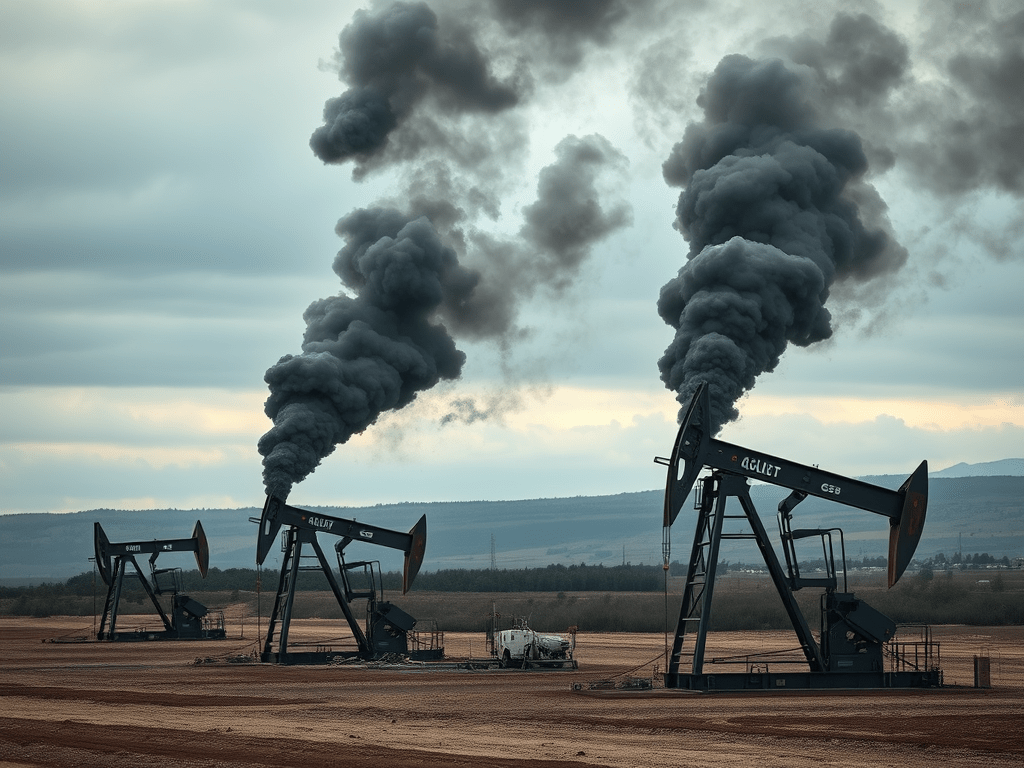
Global warming is here, real, now and it’s getting faster.[1] God knows how many times you’ve been beaten over the head with that , and we loathe to insult your intelligence. But we live in a world of rising temperatures, melting glaciers, collapsing ocean currents, dwindling food supplies and the massive shifts in human migrations which all of these entail. And this set against the possibility of a world which could be cleaner, healthier and politically stable-consequences which a safe climate would bring.[2] So-why bring it all up again, right in the middle of a massive, near-world, war? Because we think it is the ne plus ultra example of this series’ main purpose. The existential threat of global warming is beyond the capacity of a world organised into nation states.
We take today’s reasons from History and Information Theory: is that eclectic or what? The first shows that every time nation states are faced with the issue, they duck it. As we noted before (LSS 30 8 23) the 1970s oil shocks didn’t trigger a transition; they triggered a doubling‑down on fossil dependence in the name of “energy security”. Kyoto collapsed[3] the moment the United States decided it didn’t suit its short‑term interests, and Canada followed like a polite echo. And Information theory explains why: because the nation‑state is, at heart, an information‑processing machine optimised for short‑term competitive advantage. It filters every signal — scientific, moral, existential — through the question: does this keep us ahead of our rivals in the next decade? Long‑term planetary risk is systematically down‑weighted, not because leaders are cowards, but because sovereignty itself is a bandwidth problem. No single state can act at the scale or speed required, and pretending otherwise is a comforting fantasy.
Once again we stress: we do not advocate the abolition of sovereign nation states, as to abolish them would invite utter anarchy. But, just as national governments sit above local governments there must now be some sort of global authority to deal with the dangerous, the pressing, the existential risk of utter ecological and economic collapse. And just to cheer you up, we’ve got several more like this, so keep reading.
[2]https://theconversation.com/four-ways-to-tackle-health-and-climate-together-and-lift-millions-of-people-out-of-poverty-276696?utm_medium=email&utm_campaign=L [3] Kyoto Protocol – Wikipedia
#climate change #global warming #geopolitics #nation #state #sovereignty #meteorology

 Learning, Science and Society