Round up for this week: What’s the biggest living thing. how many quantums in an atom, lupus progress-and international relations

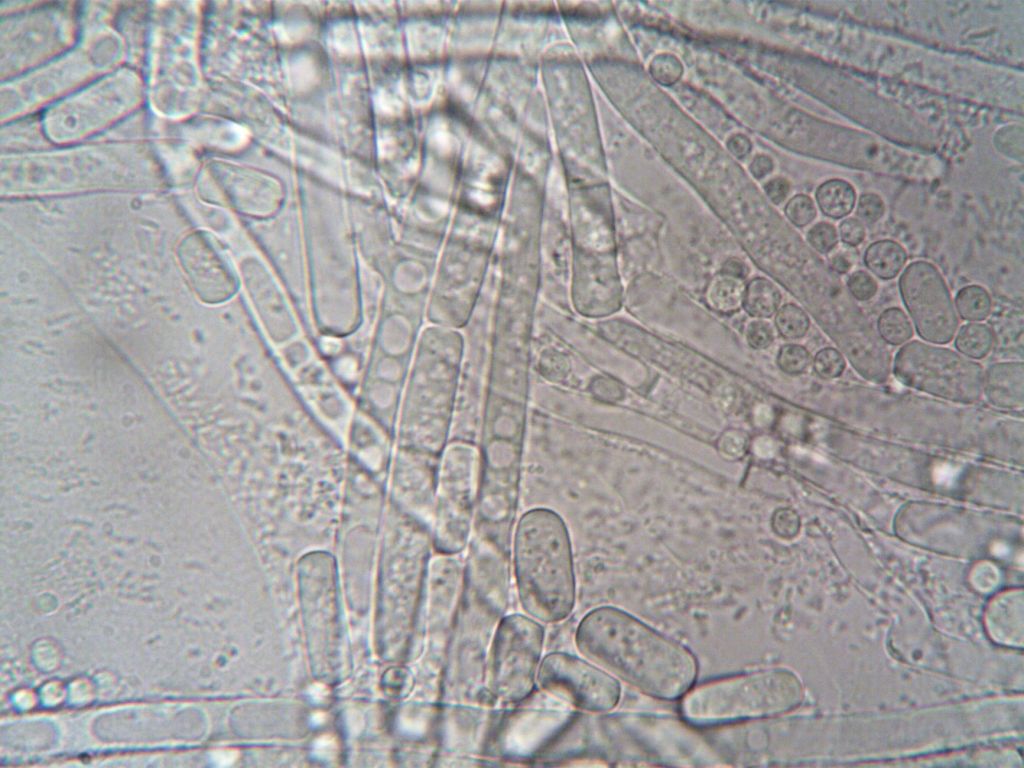
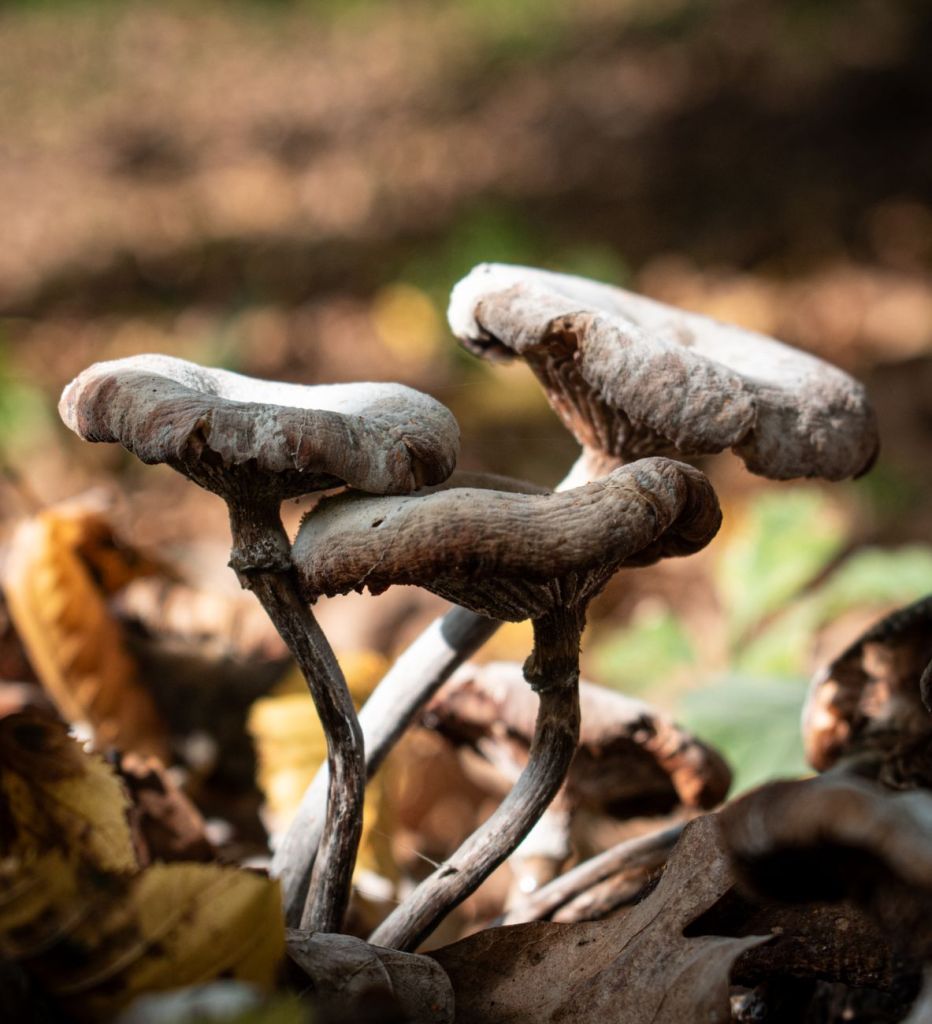
Fungal internet  Its not whales or trees:Some of the largest living things on our planet are actually vast networks of microscope white fungi growing beneath the ground on which  we unthinkingly tread as The Conversation explains;

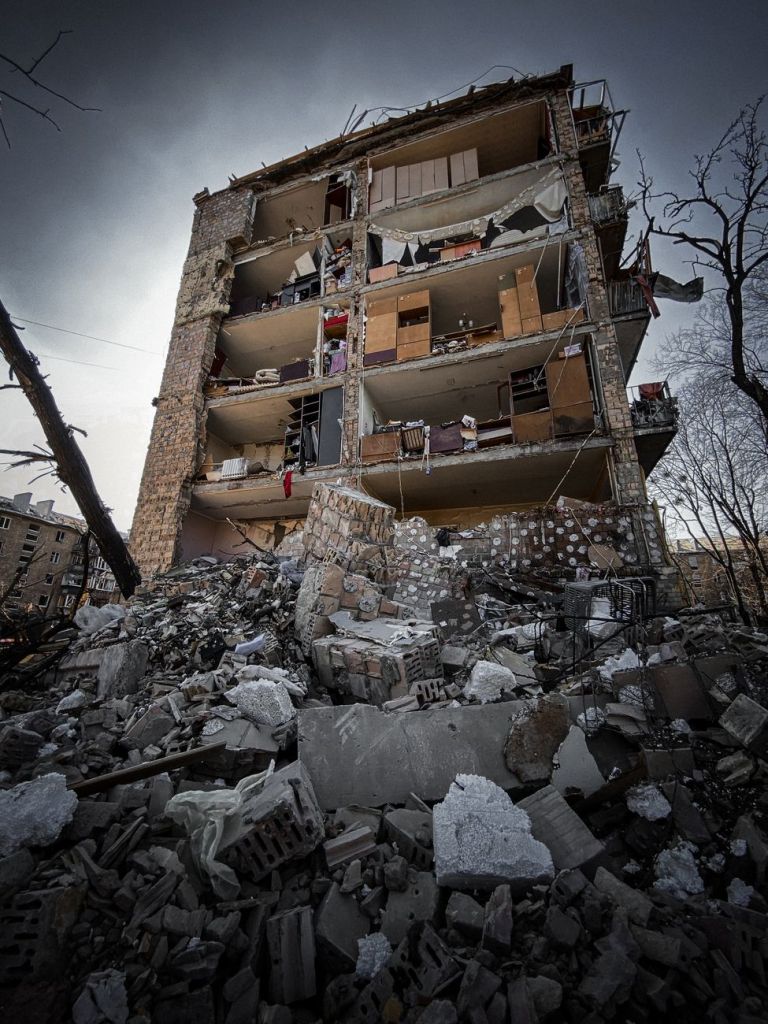
Don’t expect Putin to go quietly if he loses in Ukraine    If you think current developments in the Russian Ukraine war might lead to a status quo ante bellum, think again ,as this prescient article from the Guardian makes clear

https://www.theguardian.com/commentisfree/2026/jun/14/vladimir-putin-ukraine-war-borders-russian-president

Plant a tree in ‘73, plant some more in ‘74 was a Government slogan from our long distant youth But maybe trees won’t save us from climate change as well as we thought they might  as this piece  from The Guardian explains

Trees may store less planet-heating carbon than hoped, study suggests | Greenhouse gas emissions | The Guardian

A bestiary of bosons Nothing so  defeats us as the vast and baffling variety of particles ,waves and other strange things that make up the modern atom .So we welcomed this article from Nature Briefing which tries to make sense of the matter

 How many elementary particles are there?

Even if you know your fermions from your bosons, the actual number of fundamental particles — the electrons, quarks and other building blocks of physics — is still uncertain. From the 17 that feature on posters on classroom walls, “where you stop depends on your taste for complexity and mystery”, explains science writer Natalie Wolchover. “Plausible answers range from 17 to — in all seriousness — 995.5.”

Quanta | 13 min read

Lupus in remission Just before we pressed the “SEND” button, our researchers insisted that this  encouraging story about a new immunological technique which seems to be turning the tide on the debilitating disease of Lupus went in, Good for them. here’s the BBC

‘I’ve never been this good’ – revolutionary immune reset puts lupus in remission – BBC News

Quote of the week

He that hasteth with his feet sinneth.” (Proverbs 19:2)

#lupus #immunology #fungi #Russia #physics #quantum physics #vladimir putin #trees

So just how big is Artificial Intelligence going to be anyway?

Go into any pub, stand in any supermarket queue, and you’ll hear some one talking about “this ‘ere artificial intelligence wotsit, guvnor.”  Some, especially the elderly and bewildered, are overwhelmingly hostile. Others like ourselves reference it from time to time in specialist settings like the development of new drugs and other molecules.  Yet others, visionaries indeed, see it as the absolute future, already indelibly written. So how significant will it be really, and what changes might it effect? To find out, we thought we’d compare it with other big turning points in the History of the World and see how it shapes up by awarding each event an LSS Significance Verdict (SV) Ready?

1950s Rock and Roll replaces the Big Bands Well , you could make just as big a noise with far fewer musicians, and the lyrics got better. But in the bigger scheme of things-nah, not really SV 1/10

1780s Industrial Revolution There had been wind and water mills, but the first time the power of muscles was replaced by machines on a truly worldwide scale, although  mess it created still needs clearing up. In human terms at least this must go down as quite a biggie. SV 5/10

2320 BC Writing For the first time data could be captured and stored outside of human memory. This immensely helped the development of early agrarian civilisations as well as giving us writers like Dante and Shakespeare On the other hand it has also given us popular newspapers, graffiti and those funny little jokes you find when you open up Christmas Crackers SV 5/10

3.351 287 years BC, Tuesday 27th June: Invention of tools Now we’re getting somewhere .  The great Arthur C Clarke said this was a big one because the tools themselves shaped the biological evolution of their owners : teeth shrank because they were less needed, hands became more delicate to make ever finer tools, and so on. Some think AI will have this effect on the current human species, but we think it could be bigger than that (see below)  SV 7/10

390 000 000 years BP Vertebrates come on land Because humans are vertebrates and write all the Prehistory books, they big this up as one of the great steps in time. It isn’t, as any arthropod, mollusc or plant will tell you: they had already climbed up there 100 million years before. SV 3/10

1,250 000 000 years BP Fusion into eucaryotes Now we are talking .Somewhere around this time a small bacterium that lived free took up its home in the cytoplasm of a larger organism called an Archaea. The new cells were a sort of hybrid , each retaining their own DNA, but fusing into a successful new organism called Eucaryota. Which includes all plants, fungi and animals that currently live or have ever lived on this planet. One type is even trying to get into space albeit slowly and not very well. If both AI and humans could fuse their identities into a single superorganism, then we predict a very bright future for them indeed. And an end to all these chats about “Is AI going to take us over?” SV 9/10

So what do you think gentle readers? What steps would you choose? The invention of fire? Language? The sudden demise of platform soles and flared trousers round about late 1975? Each thesis will have its opponents and defenders. But one thing is certain. AI is here to stay so we had better get used to it.

#technology #history #Artificial Intelligence  #IT #evolution #industrial revolution #space travel

Friday: Greek rosé wines corner

When we asked our team of researchers what Greece, and Greek culture, have given to the world, they came up with this:

Homer epic poetry Hesiod didactic poetry Sappho lyric poetry Pindar odes Aeschylus tragedy Sophocles tragedy Euripides tragedy Aristophanes comedy Herodotus history Thucydides history Xenophon history Plato philosophy Aristotle philosophy Socrates ethics Diogenes Cynicism Zeno Stoicism Epicurus Epicureanism Pythagoras mathematics Euclid geometry Archimedes physics engineering Eratosthenes geography Hipparchus astronomy Aristarchus heliocentrism Anaximander cosmology Democritus atomism Hippocrates medicine Galen medicine Herophilus anatomy Ptolemy astronomy geography Phidias sculpture Praxiteles sculpture Polykleitos sculpture Ictinus architecture Callicrates architecture Mnesicles architecture Parthenon architecture Athenian democracy political theory Solon lawgiver Cleisthenes reforms Pericles statesmanship Alexander the Great empire‑building Hellenistic science Alexandria library Septuagint translation Byzantine theology Cappadocian Fathers Orthodox liturgy Hagia Sophia architecture Procopius history Anna Komnene history Photios scholarship Cyril and Methodius Slavic literacy Byzantine diplomacy Greek fire military technology Cretan Renaissance literature El Greco painting Rigas Feraios nationalism Adamantios Korais Enlightenment Greek War of Independence Philhellenism modern Greek state Venizelos diplomacy Cavafy poetry Seferis poetry Elytis poetry Kazantzakis literature Theodorakis music Hadjidakis music Papandreou political thought Onassis shipping Greek diaspora scholarship modern Greek cinema modern Greek science modern Greek shipping global Greek cuisine Mediterranean diet.

“Ah,” we countered, but they never invented cocktails!” But they did have-no, do have- some fine rosé wines. So to counter this obvious aching gap in Greek culture we sent those same researchers off to create a short but very handy guide to three Greek Rosés, priced to all pockets,  which could make for some delicious  refreshments if it gets as hot as we think it might get hot in this El Niño summer. (See LSS 5 6 26)

£8–£10 — Kourtaki Retsina Rosé (Attica)

Often found in larger Tesco or Sainsbury’s stores, depending on region. Dry, light, herbal, very Greek, very summery. (If your local doesn’t stock it, M&S sometimes carries a Greek rosé under its “Found” range.)

£12–£14 — Mylonas Rosé (Mandilaria/Agiorgitiko, Attica)

Available from The Wine Society, Waitrose Cellar, and several independents. A proper step up: strawberry, pomegranate, a little herb; beautifully balanced.

£18–£22 — Gaia 14–18h Rosé (Agiorgitiko, Nemea)

A cult bottle. Stocked by Berry Bros. & Rudd, The Wine Society, and good Greek specialists. Serious rosé: pale Provençal style but with Greek backbone and minerality.

Sorry if they forgot Demis Roussos

With thanks to Mrs MF of Bridport, Dorset

#wine #greece #hellenic #rosé  #holiday #demis roussos

Thomas Piketty thinks he has a way out of the mess: but do we know enough to take it?

Given the simultaneous polycrises we’re now immersed in, it’s always poignant to come across a report that offers possible ways out. So when another such is unearthed, this time by Jonathan Watts of the Guardian, [1]we were particularly intrigued. Partly because it covers some the same tropes we have circled around here ( Justice;  LSS 24 4 23 et seq : Inequality: LSS 16 9 25 and governance; LSS 16 1 25 et seq) And partly because one of the report’s moving spirits is the great Historian and economist Thomas Piketty, whose name has also graced these pages. [2]

Living standards can rise for all, the authors asseverate. The worst of climate change may be mitigated. Political and social tensions ameliorated. The key is to tax the small group of billionaires who control most of the world’s wealth and power. While at the same time redirecting investment away from carbon heavy industries such as construction, mining and manufacturing and towards education and healthcare. The new world they envisage would have a shorter working week, be more prosperous (the lowest universal income quartile would come in around $5000 per annum) and above all be ecologically stable. Hyper capitalist consumers and green neo-puritans come in for equal criticism. Both endless consumption and austerity hair shirts are unfeasible say Piketty and co. Sufficiency is their new lodestar for their intriguing (dare we think Whiggish?) Third way. [3][4][5]

And our thoughts? We think the report’s careful scholarship and refreshing new thoughts are clear already. Its recommendations are both sanguine and rational and would undoubtedly contribute to a more tolerable world. But: they run up against what in everyday language is called human nature and in Social Identity Theory comparative advantage. Most people would rather live in a world where they had £10 and their neighbour £5 rather than one in which they had £15 and that neighbour £13, as their relative social advantage is better in the first instance than the second. That, in a nutshell is the human weakness.[6] It suggests that groups enjoying relative social advantage will fight like tom cats to maintain it against inferior groups, rather than join with them to their common benefit. Particularly if they are well funded to do so by sympathetic billionaires who thereby ensure their own supreme advantage over all. This is human instinct. In theory we could overcome it. Have we the cognitive capacity to do so?

[1]‘An equal and habitable world is possible’: academics set out sweeping vision for planetary survival | Environment | The Guardian

[2]Thomas Piketty – Wikipedia

[3]World Inequality Conference 2026 – World Inequality Lab

[4]World Inequality Report 2026

[5]Global Justice Project

[6] Ernst Fehr & Klaus M. Schmidt, “A Theory of Fairness, Competition, and Cooperation,” Quarterly Journal of Economics 114(3), 1999, pp. 817–868.

#economics #climate change #inequalty #social justice #tax #education #decarbonisation

Why Adam Smith thought immigration controls were Creeping Socialism

Many people who call themselves free‑marketeers begin from a sincere fear of “creeping socialism.” They see every new regulation, planning rule, workplace standard, environmental requirement and every tax as another brick in a wall that hems in enterprise and erodes liberty. They believe that once government starts managing economic life, it rarely stops. Which creates a contradiction at the heart of a lot of modern political rhetoric. Parties, especially of the Right, describe themselves as advocates of free‑market nations, committed to open trade, open capital, open competition, lower taxes — and then insist that immigration must be tightly controlled. It sounds like a reasonable compromise, a balancing act between global economics and local sentiment. But it’s also a rejection of the classical liberal tradition we claim to inherit. Smith, Ricardo, Mill, Bastiat — none of them imagined markets as a buffet where you could pick capital and goods but decline labour. For them, the free movement of labour was not an optional extra but a structural necessity. Capital moves to where it earns the highest return; goods move to where they are most valued; labour moves to where it is most productive. These are not moral preferences but mechanical facts. Remove one gear and the machine does not slow down politely; it compensates, strains, and distorts.

Yet modern politicians try to keep the first two gears spinning while jamming a stick into the third. Where capital must be free, goods must be free, but labour must be fenced, filtered, and  rationed. The economic equivalent of declaring your devotion to physics while exempting yourself from gravity on weekends. Once you restrict labour mobility, you are no longer operating a free market. You are operating a managed economy with selective liberalisation. This may be politically popular. It may even be economically defensible in certain circumstances. But it is not classical liberalism.

And the distortions appear everywhere. If labour cannot move, something else must. Capital moves instead: offshoring, outsourcing, investing abroad. Goods move instead: imports rise to fill the gap. Wages diverge between protected insiders and excluded outsiders. Productivity stagnates as firms rely on scarcity rather than innovation. Regions hollow out as young workers leave and old workers remain. Demographics collapse as fertility falls and dependency ratios rise. Ironic, really: anti‑immigration sentiment produces the very globalisation its supporters resent. Block the worker, and the factory moves, the goods arrive instead, the demographic pyramid inverts. You can restrain labour, but you cannot restrain arithmetic.

Adam Smith warned that restrictions on labour mobility were a violation of natural liberty — an eighteenth‑century way of saying that such rules protect incumbents at the expense of everyone else. Immigration controls raise domestic wages artificially, raise prices for consumers, reduce competition, entrench inefficiency, and subsidise native labour at the expense of the global poor. This is protectionism by another name. And once you accept protectionism in labour, you have accepted the principle that economic policy must be directed by the Government for the public good. And that free markets do not deliver the optimum national outcomes.  A country can choose many things — a managed economy, a protectionist economy, a high‑skill selective system, a low‑migration demographic strategy. All of these are legitimate political choices. But what a country cannot choose is to restrict labour while claiming to champion free markets. That is not a philosophy; it is a branding exercise.

Wealth of Nations, Book I, Chapter 10

#Adam Smith #David Ricardo #free markets #liberty #economics #politics #capitalism

Eyes show why evolution is never linear

Opponents of evolution and natural selection are fond of quoting the eye as an example of irreducible complexity which they imagine will wash away all objections to their creeds: “How could anything so complex have evolved without a very clever chap like God being behind it?” they ask, “and why would it have evolved as it only works when it’s completed?” Aside from the logical error which astute readers will have spotted at once, the story of how eyes evolved not only demonstrates how it happened, but answers so many other questions,that it’s actually rather more interesting than the stories offered as an alternative. Read this beautifully explained article in the Conversation by George Kafetzis and Dan Nillson [1] for a full exposition. Our humble summary appears below.

About 620 million years ago there lived an animal that was ancestral to all animals that would ever have two sides and move forward. It needed to steer as it swam: so it had two light sensitive areas symmetrically up front on either side. Another patch on top told light from dark, and which way up it was. And there it might have ended except for two things One group of these animals went to live in the mud as filter feeders. Having no need to swim they lost the steering eyes. Of course they kept the middle eye as it as still important to know if the Sun was shining. But when some of their descendants in turn started swimming again they needed to steer. Slowly the sides of the top eye moved apart, developed lenses and became eyes. These were the vertebrates. And this is why the eyes of all vertebrates-fish, lizards, birds and humans are so very very different from all other animals :invertebrates, such as scorpions, flies, octopuses and so on . Never giving up moving, their ancestors needed those original bilateral side eyes which slowly became more and more complex. Look at a fly if you don’t believe us. For the record the vertebrates kept the third top eye, its just that in mammals it has shrunk to the internal pineal gland where it still controls lots of light-related things like sleep and melatonin release

Its funny to think of eyes starting simple, evolving, un-evolving in some groups, and then evolving again, all according to the needs of those animals at the time. Its refreshing to find our basic LSS beliefs confirmed. Truth, or knowledge worth knowing, is complex and requires a lot of patient exposition to tease out. And it shows that simple, this-explains-it -all tales only end up obfuscating any real understanding.l. Nice to think that what happened 600 million years ago still has lessons for us today.

[1]https://theconversation.com/our-modern-vision-evolved-from-an-ancient-one-eyed-worm-creature-278120?utm_medium=email&utm_ca

#evolution #natural selection #eye #cambrian #vertebrates #invertebrates #paleonto;ogy #biology

Quantum Computers model Quantum Matter

Study this , Quantum simulations match real-world data. from the inimitable Nature Briefing. For you are seeing into the future, at a quantum level.

For the first time, physicists have matched detailed quantum-computer simulations to experimental data gathered from work with solid materials. Two teams of physicists achieved the feat independently: one simulated the physical properties of a magnetic material, such as its heat capacity, and the other modelled a different material’s response to being excited into a range of energy states. Both agreed with experimental data. The work “sets the stage for a new standard in the application of quantum simulation to materials science,” says theoretical physicist Daniel González-Cuadra.Nature | 5 min read
Reference: arXiv preprint 1 & preprint 2 (not peer reviewed)

And our thoughts? Well, for the first time, quantum computers have reproduced the real, experimentally measured behaviour of solid materials, not toy models or idealised systems. That matters because it turns quantum computing from a theoretical promise into a scientific instrument — one that can interrogate nature at its own level, rather than approximating it from above. It also signals that quantum tech is advancing faster and more quietly than the AI hype cycle suggests, edging into domains where classical intuition simply can’t follow. And in doing so, it blurs the old boundary between “understanding” and “emulating” reality, letting us use a human‑built quantum device to explore quantum structures our minds were never evolved to picture — all powered, in my case and yours, by nothing stronger than coffee.

LSS is about much more than antibiotics and Allosauruses, gentle readers. We do IT and computing too. If you want the real cutting edge stuff in many fields, all neatly wrapped up in espresso-sized cups, then this is where to place your order.

#IT #quantum computers #AI #materials science #sub atomic #technology #science

Beyond the Nation State #2: Climate Change and all that

Global warming is here, real, now and it’s getting faster.[1] God knows how many times you’ve been beaten over the head with that , and we loathe to insult your intelligence.  But we live in a world of rising temperatures, melting glaciers, collapsing ocean currents, dwindling food supplies and the massive shifts in human migrations which  all of these entail. And this set against the possibility of a world which could be cleaner, healthier and politically stable-consequences which  a safe climate would bring.[2] So-why bring it all up again, right in the middle of a massive, near-world, war? Because we think it is the ne plus ultra example of this series’ main purpose. The existential threat of global warming is beyond the capacity of a world organised into nation states.

We take today’s reasons from History and Information Theory: is that eclectic or what? The first shows that every time nation states are faced with the issue, they duck it. As we noted before (LSS 30 8 23)  the 1970s oil shocks didn’t trigger a transition; they triggered a doubling‑down on fossil dependence in the name of “energy security”. Kyoto collapsed[3] the moment the United States decided it didn’t suit its short‑term interests, and Canada followed like a polite echo. And Information theory explains why: because the nation‑state is, at heart, an information‑processing machine optimised for short‑term competitive advantage. It filters every signal — scientific, moral, existential — through the question: does this keep us ahead of our rivals in the next decade? Long‑term planetary risk is systematically down‑weighted, not because leaders are cowards, but because sovereignty itself is a bandwidth problem. No single state can act at the scale or speed required, and pretending otherwise is a comforting fantasy.

Once again we stress: we do not advocate the abolition of sovereign nation states, as to abolish them would invite utter anarchy. But, just as national governments sit above local governments there must now be some sort of global authority to deal with the dangerous, the pressing, the existential risk of utter ecological and economic collapse. And just to cheer you up, we’ve got several more like this, so keep reading.

[1] https://www.nature.com/articles/d41586-026-00745-z?utm_source=Live+Audience&utm_campaign=366c08b912-nature-briefing-daily-20260309&utm_medium

[2]https://theconversation.com/four-ways-to-tackle-health-and-climate-together-and-lift-millions-of-people-out-of-poverty-276696?utm_medium=email&utm_campaign=L [3] Kyoto Protocol – Wikipedia

#climate change #global warming #geopolitics #nation #state #sovereignty #meteorology

Things Beyond the Nation State #1 Introduction

Identity, belonging and how this species organises itself in groups has been a recurrent theme on this blog since we started back in the pandemic days of 2020. We’ve surveyed the work of theorists like Amy Chua: pondered sports affiliation, tribe and nation, and the several  ways of belonging to each. Considered experiments in psychology and behaviour. Even speculated if there might be a World Government waiting in the decades to come. Yet up to now nothing has superseded the Nation State as the only successful and enduring method of organising our multifarious hostile tribes into larger confederations.  By which they obtain common benefits of defence and low mutual trading barriers, the two sine qua nones of all statecraft. (everything else is method)

The trouble with this comforting settlement is size. Each little kingdoms of Anglo Saxon England-Wessex, Mercia and the rest-was perfectly able to provide its residents needs for hundreds of years. Until a bunch of pesky Vikings came along and nearly drove them all to utter destruction. Only by forming a larger unit, England, were the Anglo Saxons able to survive and prevail: And England became their nation in turn. A lesson repeated across many lands and times. So powerful that it begs the question: are our current polities, even the largest, now too small too indebted, to mutually jealous, to cope with the existential questions now born into the world? We repeat: this is not a call to abolish nation states which can and should continue to exist, But it may be a call for a next tier or organisation to act on those problems, and only those problems, which only it has the competence to address.

We think those problems are Global Warming, Pollution, Migration, sudden Catastrophes like pandemics, economic Inequality and Security risks from things like AI and nuclear weapons All are pressing and all interconnected at some level or other. You may suggest more, gentle readers. But in the next few weeks we will do our best to list them into some sort of order and try to  consider some of the problems they pose, for you to think about. For we know of few hard and fast answers. We hope you will join us on this journey and will welcome your comments, suggestions and ideas. Keep ‘em coming.

#global warming #nuclear war #pandemic #volcano #AI #pollution #economics #history

GCSE Revision: why humans became extinct

The following is a specimen answer to a History examination question set for GCSE students of the species Homo emergens in the year 2126 (year 76 NSE  of the New Species Epoch)

Discuss the extinction of our predecessor species Homo sapiens in the middle of the 21st century and its replacement by Homo emergens

The factors that led to the downfall Homo sapiens, sometimes called humans, were in fact biological. Their cognitive capacities were no longer able to match the complexity of the world which their own technology had created.

Homo sapiens emerged from a group of similar hominin species such as Homo erectus and Neanderthals. It had evolved a brain structure which gave it an edge in cognitive reasoning. This allowed it not only to drive its competitor hominins to extinction: it allowed it to become, briefly, the biologically and ecologically dominant life form on this planet. And to form huge interconnected networks of information, trade and energy exchange called “cities”. Yet the brains of these creatures had not evolved beyond those of their ancestors. Who were adapted for survival in small hostile competing groups. The neurological architecture which had been so adaptive for that period was utterly inadequate for the complicated world which had been created in the last century of their existence. These cognitive inadequacies included confirmation bias, the sunk cost fallacy, motivated reasoning and a tendency to divide quickly into mutually jealous hostile groups.  The primitive institutions which this species evolved were therefore plagued by short term bias, institutional inertia and deep patterns of hierarchical loyalty which left them unable to adapt to the rapidly changing complexities in which they operated. And none of these cognitive failures could be overcome, because they were part of the inherited biological adaptations of the species.

Thus the complications of the late human era such as climate change, Artificial Intelligence and disease pandemics represented a new environment to which this species could no longer adapt. Instead of solutions  they caused economic decline, political polarisation and eventually The Great Final War of 2046. The massive falls in human population and its reduction to technological impotence provided the ecological niche into which our own species, Homo emergens, was able to move. Our current thriving is due to the same superior intellectual capacity which had allowed H sapiens to exterminate Homo erectus: as it in turn had done to the preceding Australopithecines. It is a mark of our intelligence that we have not exterminated our own predecessors but have confined their remnants  to zoological parks where they may continue to be objects of scientific study and public amusement. Their fate shows that no species can survive if it is not well adapted to its environment: a lesson our own would do well to learn.

copyright: EmergentEdge Specimen solutions 76: “we write ’em- you pass ’em!”

#biology #evolution #extinction #cognitive bias #war #climate change