Dudula and the difference between racism and xenophobia

“All them Africans coming here and nicking all our jobs and bunging up the hospitals!” It’s a cry heard commonly enough on the racist side of politics in the UK. But what if the people who uttered these words were fellow-Africans, and they were uttered not in South London, but South Africa? Now a fascinating piece of film from Jamal Osman of Channel 4 News raises deep questions about exactly what racism is and what causes it [1] And, at least by implication, a clue to the roots of our present woes, and how they might be cured.

Our staff here have seen a lot of racism over the years, some in the course of their professional work in law enforcement agencies. It’s an elaborately confected theory of dividing people into groups, and how some groups are inherently superior to others. The theory unleashes hatred of breathtaking extent, explanations of baroque complexity and specious logic. So what happens when identical behaviours are unleashed between people who seem to be of identical race (at least to others) Think South Africans and Zimbabweans, as in Jamal’s film. Or Arabs and Israelis? Our favourite example has always been the inhabitants of Northern Ireland who work tirelessly to maintain grievances which are utterly imperceptible to outsiders. What is going on?

Look at the word-cloud around Dudula in Jamal’s film, and the links we’ve chosen to accompany it. [2] [3] [4] What is a typical Dudula member? Poor. Marginalised. Insecure. People like market traders, the self employed. generally. Before you start to feel superior, gentle reader, imagine if you were something like a self employed builder. Every morning begins a full day’s work, and every night a struggle to price new jobs, fill up your stocks and try to calculate the margin of survival for you and your loved ones. Given the natural human tendency to distrust strangers, are you going to rush out to welcome them with open arms? Especially if they enter into direct economic competition? And so every nation and every race gets its Dudula, its Proud Boys, Otzma Yehudit or Nazi Party. It’s not racism at all, it’s xenophobia, and it’s part of the human condition. And it manifests strongly in the same social classes all around the world.

And slowly but surely, it’s tearing us apart into mutually suspicious tribes, reducing the flow of trade and ideas and making us all poorer. History shows that in such circumstances, wars inevitably follow. Is it possible that the solution is to reduce the anxieties and ameliorate the economic and educational conditions of those in the lower reaches of the economy?

this blog was the result of a pooled discussion of the Editorial Board

[1]https://www.channel4.com/news/the-vigilante-movement-targeting-immigrants-to-clean-up-communities-in-south-africa

[2] https://en.wikipedia.org/wiki/Operation_Dudula

[3]https://www.channel4.com/news/the-vigilante-movement-targeting-immigrants-to-clean-up-communities-in-south-africa

[4] https://www.opendemocracy.net/en/podcasts/podcast-borders-belonging/south-africa-dudula-diepsloot-migrant-nyathi-zimbabwe/

#operation dudula #racism #xenophobia # Nazi Party #otzma yehudit #fascism #economics
Honey and antibiotics? An unlikely combination! Or is it?

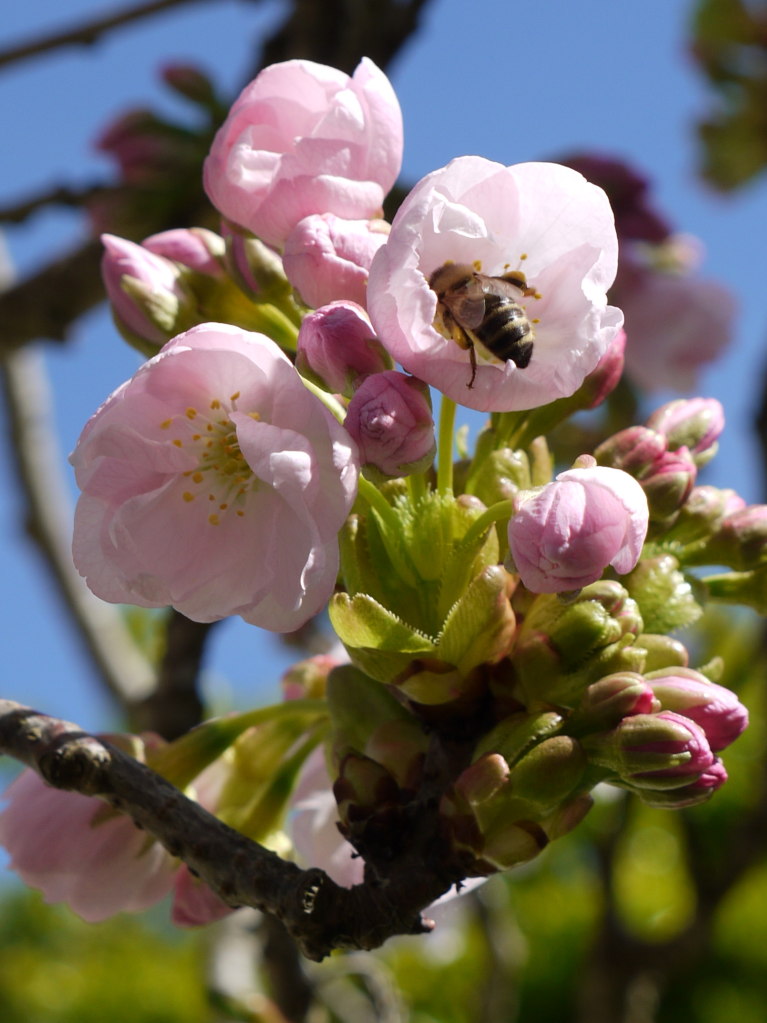
A while ago we published a piece suggesting that ants might harbour some interesting surprises in the hunt for new antibiotic substances. (LSS 23 5 22) Now it seems that their stripey cousins, bees, could yet come to our rescue as well. Incredible as it seems, honey may have antibiotic properties. Researchers led by Professor Les Baillie at the University of Cardiff are now actively investigating this possibility. And about time too, we say, because the situation is becoming so bad we welcome any initiative, however far-fetched it might seem at first glance. So we’ve got two reports wherein you can read more, one from the BBC and one from the Independent. [1] [2]

The relationship between humans and honey dates back thousands of years. People were probably robbing bee hives in the Paleolithic. For a long while, the relationship between us and our buzzing chums was largely in equilibrium. Starting a few decades ago, this changed, to the infinite detriment of the bees. Across the world, hedges have been ripped out. Wild meadows built over. Enormous quantities of toxins have been sprayed across immeasurable acres of land-and have sunk in to stay. This has had a devastating effect on bee populations. If you want a few facts, have a look at this link to Friends of the Earth [3] And all in the slapdash, neurotic search for ever higher production targets, output and numbers. Ironic indeed if the attempt to create wealth ends up destroying long term value. We suppose it’s an easy mistake to make for the sort of people who confuse money with wealth.

Yes, we’re antibiotics buffs on this blog. But we suspect the we’re not the only ones who suspect that the natural world and the things in it are a treasure trove of real wealth, on a scale that Ali Baba and his business associates could not begin to imagine. Time to start thinking intelligently about it. Or is that too much to ask?

[1]https://www.bbc.co.uk/news/uk-wales-65233103

[2] https://www.independent.co.uk/news/health/honey-antibiotics-infections-bacteria-scientists-b2317687.html

[3] https://friendsoftheearth.uk/nature/what-are-causes-bee-decline

#bees #honey #ants #antibiotic resistance #antibiotics #medicine #health

Tragic story of Antibiotics pioneer poses questions for us all

Kirsty Smitten is 28. She has a PhD in Chemistry. She has discovered two new types of antibiotics. And set up her own company to market them. She is being written about in Forbes. She may even be up for a Nobel Prize. Which she she almost certainly will not live to collect, as she will probably die very soon from a rare form of inherited heart tumour. You can read the full story here from Helen Carroll of the Mail. [1]

If the discoveries prove viable (and there is no reason to suspect they will not) her short life will have left humanity enriched. She has given us something far more valuable than all the posh handbags, private jets, luxury cars, interior design schemes in the world rolled together. And how very much more might she and her teams create, if she is yet granted a full life? We still hope that some miracle will save her, but if it does not, we all must face some profound questions

What is the nature of real wealth, and how do we preserve and create it? If we had spent a little more on heart research, and cancers, and a little less on beer and cigarettes, might that have guaranteed her life? And how many other lives would that have saved in turn? What might happen if all those football supporters, or Arabs and Israelis, stopped fighting each other and set up medical research institutes instead. We owe it to Kirsty to find answers.

[1] https://www.dailymail.co.uk/health/article-11952247/Cancer-stricken-scientist-created-antibiotic-type-40-years-die-Nobel-Prize.html

#antibiotic resistance #microbes #research #medicine

A Happy Easter and thanks

Easter is coming for all of us, whatever we believe. As long time students of JG Frazer’s immortal The Golden Bough, we suspect that a major spring festival predates things like Easter and Passover by millennia. You know, Adonis, Attis, Osiris, returning vegetation, and all that stuff. And festivals imply a busy social, culinary and business calendar, especially for those of us on the writing and creative teams at LSS. Which means no more blogs for a while.

All the more reason to thank all of you- readers, followers, those who have helped with ideas or other contributions and wish all a most happy spring festival. And see you all after this happy and most welcome break

THE EDITORIAL BOARD

JG Frazer The Golden Bough 1913- 15, 1922 various editions

Your musical tip: JS Bach St Matthew Passion

It’s time for UK to develop its human capital

Empires rise, and nations fall, largely by the quality of the people which they deploy to solve their problems. Even right wingers as impeccable as Corelli Barnett knew that.[1] The economic and social system of Victorian Britain created a stunted, diseased proletariat and an etiolated ruling class, both utterly unequal to the challenges of the twentieth century. The mighty British Empire collapsed, and the implosion of British power continues to this day, What do we do about it? (overseas readers, there are lessons for you in the UK Laboratory too, you know)

A nation’s basic resource is its human capital. It helps to have mineral resources like oil, or proximity to a large nearby market. But nothing in the end works like a healthy, well trained workforce. Which is why we believe that Beverly Barnett-Jones (we assume she’s no relation to Corelli) has an intriguing answer to the problem:invest in our children. Do it big. Do it now. She makes her case in the Guardian[2]. And we’ve backed her up with some further thoughts for those as might be interested, from the Child Poverty Action Group [3] Healthy contented children make better learners and pay a long term dividend. As every parent knows.

But where does the money have to come from? It’s a question which touches on every major problem from social issues to defence and climate change, It’s one we’ll always listen to. Well, Beverly has an answer, at least for her manor: Check this out

 ………the cost of not investing in early childhood is £16.13bn a year in England. This is the price of the remedial steps we take to address issues – from children in care, to short- and long-term mental and physical health issues – that might have been avoided through action in early childhood

Patriotism is claimed by many as their virtue. For some it consists in fat old men waving flags around glasses of beer and belching loyalties like gassy catechisms. For others it lies in creating healthy human societies where all members have the best chance of living prosperous fulfilling lives, and thus making their countries truly strong. We know which we choose.

thanks to Mr P Seymour

[1] Corelli Barnett The Audit of War Macmillan 1986

[2] https://www.theguardian.com/commentisfree/2023/apr/03/early-years-support-parents

[3] https://cpag.org.uk/child-poverty/effects-poverty

#poverty #early years development #human capital #crime #mental illness #education

Immigration: If you read one thing today, it must be Larry Elliott

Identity is the central driver of politics. Which is why the agonising passions unleashed by high levels of immigration are so destructive. The attempt to preserve identities, and their attendant hierarchies, runs like wild floods through the body politic, tearing down all rationality and all hopeful reason. Closing off any roads to dealing with things like climate change, health and education. The solutions to which would allow all of us to lead happier, more fulfilling lives.

Some months ago this blog ran a series on immigration, its causes and possible solutions. But we admit-we are one tiny little blog. Our voice is small, our reach miniscule-although our thanks to our valued readers is without limits. That’s why it’s so important when someone much bigger comes along and visits our arguments with the statistics and clear writing that only a fully employed professional can bring. That someone is Larry Elliott of the Guardian. We’ve sampled him before here a lot. But if you want a level headed, rational analysis of why population migrations occur, this is it.

And we must try to understand, gentle readers for without understanding we shall do nothing effective about it. And if this problem goes unsolved, our lives will be bleak indeed. At best we shall come to live in ethnic silo states, like the Boers, Ulster Protestants and similar groups in history. Ever defensive, ever on guard, bereft of reason and true learning. Or die in wars like those in Lebanon, Israel and parts of Africa, where bloody ethnic war is the raison d’etre of those already doomed societies.

You have a busy day ahead, with many no doubt pressing assignments. But please take time out to read this. And think.

https://www.theguardian.com/business/2023/apr/02/uk-spending-on-refugees-is-a-classic-false-economy

#immigration #emigration #climate change #larry elliott #economics

Weekly Round Up: Ocean Currents, shorter lives, a slowing economy, a prescient professor, and musical suggestions for a former President

stories of more than passing significance from this week’s feeds

Ocean Current Scene One of the scariest bits from John Wyndham’s The Kraken Wakes is the bit when the baddy aliens melt the polar ice caps, wrecking the world’s weather and nearly destroying humanity. But hey, who needs aliens? Read this from Nature Briefings

There are worrying signs that torrents of fresh water melting off Antarctica are disrupting the flows of cold, salty, oxygen-rich water that drive crucial deep-ocean currents. These powerful currents store and transport huge amounts of heat and carbon around the world, and support marine life by churning nutrient-rich water from the depths to the surface. A slowdown in this ‘overturning circulation’ could drive further melting and shift rainfall patterns around the globe.The Straits Times | 4 min read
Reference: Nature paper

Live Fast, Die Young, US-style Amazing how, with all those advances in medicine and science, people are starting to die younger and younger. At least in the United States. And it may surprise you to learn it’s not all down to the gun lobby. Nature Briefings, so good we ran it twice

Ten years after a landmark study on life expectancy in the United States, the news is grim: the number of years a person can expect to live has dropped for the second year in a row, down to 76 years. Maternal mortality and child mortality are rising. And many of the myriad causes of shortened life expectancy are more likely to affect younger people: death from guns, cars and opioids, for example. One thing that might help, say public-health researchers, is for people to open their minds to what works in other countries. “You look at these healthier countries, they’re free countries — England, France, Italy — they’re not banning delicious foods. They’re not chaining people to treadmills,” notes Ravi Sawhney, a co-author of the landmark report.NPR | 11 min read
Reference: US Health in International Perspective: Shorter Lives, Poorer Health report (from 2013)

Banks for the memory Two weeks ago the media were full of the SVB debacle and its consequences Think the whole thing’s gone away? Your troubles are just beginning according to The Conversation

https://theconversation.com/seven-likely-consequences-from-the-banking-crisis-that-most-people-havent-realised-yet-202634?utm_m

He saw it coming The Guardian long read can be just that, so normally we wouldn’t recommend it to busy people. But Professor Timothy Snyder saw Putin coming, long ago That’s prescience indeed:

https://www.theguardian.com/world/2023/mar/30/how-timothy-snyder-became-the-leading-interpreter-of-our-dark-times-putin-trump-ukraine

He saw it coming too Real Climate scientists do real original work. And have been doing it for decades. The so called skeptics just cherry pick bits of data, bluster and try to cast doubt, and rarely do original research of their own. Claude Lorius belonged to the former group, and right back in 1965 he may already have started to save your childrens’ lives

https://www.bbc.co.uk/news/world-europe-65060965

Music for former Presidents Recently, we came across a web site called 20 Classic Songs about Prison and Spending Time in the Slammer Tracks include

JAILHOUSE ROCK Elvis Presley JAILBREAK Thin Lizzy LOCKED UP IN JAIL John Lee Hooker

CHAIN GANG Sam Cooke……and lots, lots more more Why do we think a certain rather orange coloured former President of the United States might find it appropriate?

Enjoy your weekend, Donald. And everyone else too.

#global warming #climate change #antarctic #life expectancy #health

Friday Night: How Prosecco conquered the world

If you went back in a time machine to 2003, you would find yourself in very strange place. Quite different from our current one. Imagine if you had stepped out of your time machine and said “I wonder if Saddam really has nuclear weapons?”People would have looked at you very strangely. If you had then said “This here economic boom, guvnor-I wonder if it will last?” they would have looked at you even more strangely. And if you had said “I’d like a glass of Prosecco, please” they might have carted you off to an institution. Because no one had ever heard of the stuff. Yet fast forward to 2009, and the modern world had been born in all its ghastly familiarity. American policy in the Middle East had collapsed in sanguinary catastrophe. The economy had crashed, and has never really recovered. And the yellow bubbly stuff is all around us, from hen nights to summer cocktail parties, as ubiquitous as i-phones, and much easier to use. So how did a humble, obscure wine from a corner of Italy go to world domination on an almost googlish scale? It’s an interesting question, because it raises all sorts of questions about marketing, advertising, money and fashions. We can’t answer it. But once again we bring you the opinions of people who know quite a lot about the matter.

For Per and Britt Karlsonn of Forbes it was all about deft name changes which supercharged the DOC, while at the same time shutting out the competition What’s in a name? Everything, say they:

https://www.forbes.com/sites/karlsson/2022/10/18/how-prosecco-became-the-worlds-most-popular-sparkling-wine-with-a-name-change/?sh=358e188a2315

Olivia Blair of The Independent put it down to Gap analysis. Champagne was just too dear, and Cava and other sparklers of the 1980s were looking just, well, a little tired by 2010.

https://www.independent.co.uk/life-style/food-and-drink/prosecco-italian-sparkling-wine-how-beat-champagne-france-a7751971.html

It’s a woman thing Like all generalisations this needs to be treated with caution: but our subjective impression is that one’s introduction to the marque tended to come from a female companion, be it wife, colleague, sister or lover. Clearly they couldn’t be all at once, we hasten to add! Bell Italia takes on this theme in their analysis of the phenomenon

Prosecco Spumante: the 5 reasons of its global success

We think the intellectual problems of everyday life-marketing, brand acceptance, fashion, and so on-are every bit as intriguing as the recondite discoveries of people like quantum physicists or genetics folk. Certainly they need just as much brain power, and a lot more emotional intelligence. So as you relax tonight with your glass of prosecco, or prosecco cocktail, please pause. And look at at it before you knock it back. Because you are holding something very interesting indeed.

#prosecco #sparkling wine #fashion #marketing

Here’s a warning to all our readers-from a Bank, believe it or not

It’s not often we’d use a Bank communication as a basis for this blog. We all need banks, bless ’em. But like all other giant corporate institutions, their prose can seem a little dull. However worthy their intentions, we would rarely recommend their documents as reading for anyone other than the most inveterate sufferers of insomnia. But they do know what they’re talking about. And we want to protect you, gentle readers, from the activities of the loathsome tribe of fraudsters, con artists and scammers, who will be more active than ever at this turning time of the financial year.

So, at the risk of all creative and street credibility, here is an edited version of a missive from NatWest Bank. they may be a UK based outfit, but their principles apply across all nations and jurisdictions. So this is what they say, with our glossae added

In the first half of 2022, more than £61m was lost to fake investments in the UK. These scams are really convincing. That’s why we’ve put together some key watch-outs for you

Always use the FCA Register to check if the firm is authorised to provide investments- and to verify their contact details. If they’re not on there, it’s probably a scam. (LSS notes: your country  should have some equivalent of this, unless your President’s little friends have taken it over)

Don’t just take the word of an online ad or something you’ve seen on social media, some scams use fake celebrity endorsements. (LSS Notes: and other fake “experts”, in our experience. Beware the ones who look and sound most like you)

Even if you’ve made good investments in the past, make sure you still do your research as there’s no guarantee you won’t be scammed. (LSS notes: if it sounds too good to be true, it probably is)

Before making any investment, tell a family member or trusted friend what you’re planning to do. Real investment companies will give you time to think about your options. (LSS notes: most errors are made by people on their own. This is why romance scams work as well. For God’s sake-tell someone what you plan to do)

Contact a company directly with trusted contact details that you have researched yourself to make sure you’re not speaking to a cloned company.(LSS notes: Some of these fake websites are incredibly good these days. We always ring/e mail a company these days, to check it really is them, and we’ve flushed out fakes, twice!)

Following this advice could be the difference between a safe investment or losing your savings.. (LSS notes and we have heard some terrible, heartbreaking cases of lives utterly destroyed by conpersons. The basic principle they work on is “there’s always another sucker born every minute”. Don’t be one!)

scam #con #fraud #investment #financial year #NatWest #warning

Why Film and TV get it totally wrong about the Romans

Everyone thinks they know what Romans looked like. From Quo Vadis all the way through to Gladiator, there’s a specific style-clothes, army uniforms, buildings, what have you. A Fashion Statement taken up in the less grandiloquent world of TV, books and computer games until it becomes a standard reference point. Like westerns, Vietnam movies, and 1970s dramas, with all that big hair, lapels and Ford Cortinas.

Except it wasn’t like that, as this amusing video from The Archaeologist makes clear. People make shows about characters like Atilla or Hypatia wearing clothes from the age of Augustus. It would be like putting Donald Trump in the costume of Phillip II of Spain. Go on, it only lasts 12 minutes; you’ll learn something.[1]

Interesting but harmless? It doesn’t really matter, about the Romans’ underwear, except perhaps to specialists. But there’s a deeper worry. People get fixed ideas about more important things. Vaccines. Pollution. Economics. After which, diseases of the human mind like Confirmation Bias and Directed Reasoning set in. Case in point: the reason that producers always dress Romans as if they lived in 1 AD is because it’s the only way modern audiences can register them as “Roman”. So if you’ve been trained to think every scientist who talks about vaccination is part of a conspiracy, you’ll dismiss any facts before they are proffered. And that, more than any other single thing, is the real problem of out times.

[1]https://www.bing.com/videos/search?q=what+clothes+did+the+late+romans+wear+after+the+3rd+century+ad&doci

#costume drama #history #confirmation bias #directed reasoning