Foreign Aid Cuts: Penny Wise, pound foolish

News that Britain is to cut its foreign aid budget by £4bn from 0.7% to 0.5% will be popular at home. But what do thoughtful people, the type who read LSS blogs, think about it? (overseas readers,this is not navel-gazing, as these discussions have relevance for your own country)

At first sight, the case seems strong, if you see the world in accounting terms. Stricken by Covid and with the loss of its main overseas markets, the UK economy is in for a deep and long period of retrenchment. It makes sense to balance the books as far as possible, to bring money home, and let pesky foreigners stand on their own two feet. Such an approach is rooted in Britain’s cultural DNA. Napoleon called Britain a nation of shopkeepers, but perhaps accountants would have been nearer the mark.

The trouble is that we have been here before. Common sense, man-in- the- street calls to reduce the Land Tax in the eighteenth century led to weakening the Royal Navy and the loss of the American Colonies. The nearer parallels are in the twentieth century. The interwar years saw two disastrous rounds of cuts-the Geddes tranche of 1922-23 and the huge cuts bought in by the National Government in an attempt to respond to the financial crisis of 1931. Cuts were drastic across the board. For example, Geddes cut defence spending by 41.5% in a single year. The knock on effect in the defence sector in terms of purchasing, recruitment and research was incalculable.

Because foreign eyes were watching. As Britain’s Imperial commitment waned, they moved into British markets, sea lanes and spheres of influence. Dictators such as Benito Mussolini and Adolf Hitler especially noted a weakening Royal Navy and Intelligence Sector and made their plays accordingly.

Foreign Aid is not just about money. It buys influence, and opportunities for all kinds of marketing and intelligence gathering. When one power stops doing it, another moves in. Britain has left the European Union, never to return. The only rationale for that was to make Global Britain a world power again. Cutting your sales and intelligence opportunities is not the way to go about it.

#globalbritain #foreignaid #cuts #eu #russia #china #usa #japan

Avoiding Foolish Opinions 2: Susan Stebbing

On of the biggest mistakes we have made has been to ignore the advice of intelligent women. One such woman was Susan Stebbing (1885-1943). Until her life was tragically cut short by cancer, she was a pioneering philosopher of clear thinking, and scrupulous attention to logic. Although a contemporary of thinkers like Bertrand Russell, and did achieve a chair in philosophy, her light has been eclipsed by her male peers, as so often happened to women in those days.

Yet now she has been rehabilitated. In an excellent short piece for The Conversation, Peter West extols the simple clarity of her work, which she distilled into a book called Thinking to Some Purpose . We could say a lot more, but her trick was to make thinking so simple that anyone could do it. See our links below, but her basic rules are: Question your cherished beliefs; Beware special pleading; Avoid emotive language. It’s an excellent adjunct to our little post on Russell (LSS 30 9 2020)

Stebbing published in 1939. By that time the world had already abandoned the advice of thinkers. The emotional and the believers were about to plunge humanity into its bloodiest conflict yet. But if we try to understand her now, we may yet avoid the next one.

Susan Stebbing – Wikipedia

Thinking to some purpose: A manual of first-aid to clear thinking, showing how to detect illogicalities in other people’s mental processes and avoid them in our own. by L. Susan Stebbing (goodreads.com)

#susanstebbing #bertrandrussell #criticalthinking #foolishopinions #sceptic

Drinks for the Big Match

Few can ignore the titanic clash of those footballing giants Italy and England at Wembley Stadium this Sunday 11th July. To get into the spirit , we’d like to suggest a few refreshing beverages to keep your throat moist as you do all that cheering. As we have done the England drinks theme rather to death lately (LSS passim),we shall concentrate on matters from an Italian perspective. After all, you can drink these too if you’re English, or neutral.

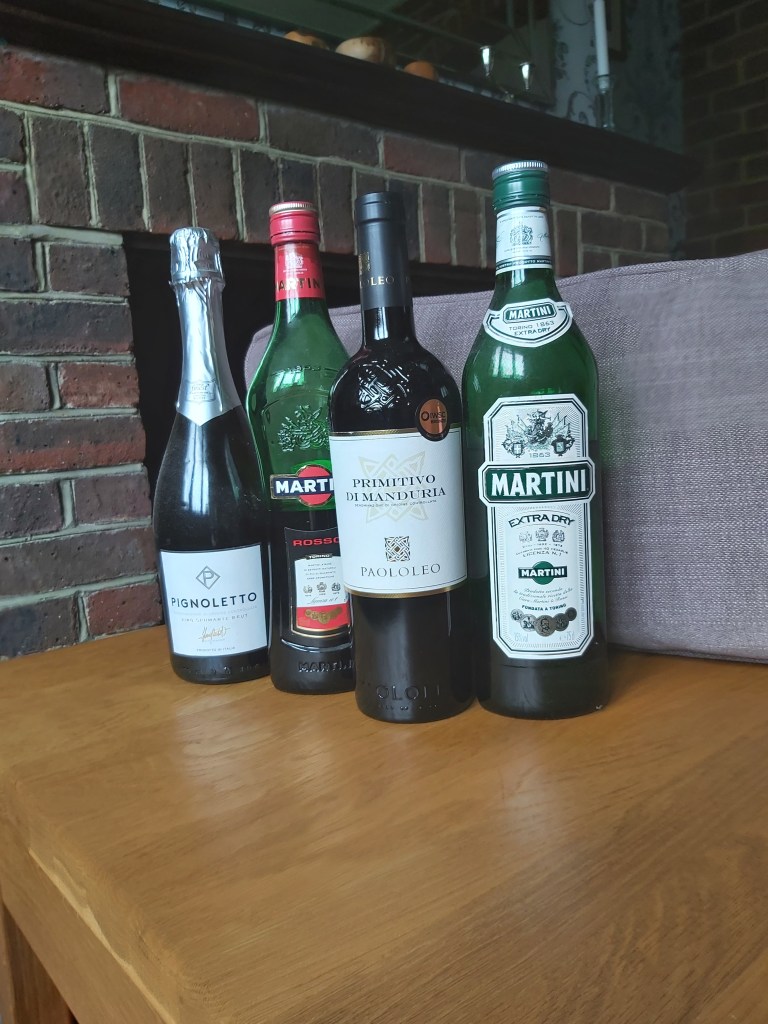
Beers The Italian ones we like are Peroni and Moretti. Although now owned by a giant international booze combine, Peroni dates back to 1846 and is still stylish, cool and refreshing. Whereas we just love the guy on the Birra Moretti bottle-who is he? A Tyrolean clock maker? Roberto Mancini’s great-grandfather? A Hit Man relaxing after a difficult slaying? Check out links to both companies below.

Peroni Beer – Everthing About Italian Style In A Bottle (alcoholvolume.com)

Home | Birra Moretti

Wines Italian wines probably predate the Roman Republic, and a role call of their names reads like a to-do list for civilisation, sunny holidays and the odd drop into a conveniently nearby museum. We can’t begin to do justice to all this, so here’s a little personal tip: Primitivo. Although it hails from the southern tip of the peninsula, experts believe the grape is identical to its famous American cousin, the Zinfandel. We’ve a link below, but get this; our regular dining companion reports that, unlike so many red wines, this one doesn’t give her a headache. Gotta be worth a try.

The complete guide to Italian wine with maps and tasting notes (independent.wine)

Learn About Primitivo: Wine, Grape, History, Characteristics, and Pairings – 2021 – MasterClass

Battle of the Vermouths Anyone who survived the 1970’s will recall two inimitable TV Commercials. The one for Martini showed Bright Young Things on a curious hovercraft-like contraptions racing over some dubious looking marshes, while the singer belted out:

Try a taste of Martini/the most beautiful drink in the world/It’s the bright one/it’s the right one/that’s Martini

Whereas their great rivals Cinzano created some of the most hilarious TV ads ever, the ones starring Leonard Rossiter and Joan Collins. Ms Collins still tags these on her live roadshows, so well have they stood the test of time.

Well, we’re not going to push you to one nor the other. Both come in bottles of various shades of red, pale yellows and pinks and are superb on their own, mixed with things like lemonades and ice, or as the components of many, many cocktails. So they have to be worth a punt on your next trip to Lidl or Waitrose.

Martini | The Original Vermouth Since 1863 | Martini Global

cinzano.com

All in all we think that enough ideas to keep you thinking through the long hours of the build-up, match and analyses. Enjoy, and may the best team win!

#UEFA #football #vermouth #wine #beer

Weekly Round up: Management styles, electric cars and multishaped humans

some stories which intrigued-and might even point to the future

Management Styles Ask a refugee from the nineteen-eighties about football managers, and the picture that emerges is a cigar chomping, whisky-swilling alpha male who made big decisions, gave orders and was generally in charge. It was type common across business at the time. We knew a few women managers like it too, come to think of it. But England manager Gareth Southgate appears to be pioneering a different, collegiate style. And we can see how it has got some results. For more details, try reading Andre Spicer of The Conversation:

Extreme Weather and climate change One of the most invidious tactics of climate change deniers was to deny the link between extreme weather events and climate change. Like the evidence on the probable causes of lung cancer and smoking, there was always just enough wiggle room for those who didn’t want to believe to continue in ignorance. Perhaps they did us a favour; statistical techniques are now so strong, the link is undeniable, as this piece in Nature shows. Climate change made heatwave more likely:

The chance of temperatures in North America’s Pacific Northwest coming close to 50 °C has increased at least 150-fold since the end of the nineteenth century, found a rapid analysis conducted in response to last month’s heatwave. “This heatwave would have been virtually impossible without the influence of human-caused climate change,” says climate scientist Sjoukje Philip. “It was probably still a rare event, but if global warming might exceed two degrees, it might occur every five to ten years in the future.” Canada’s highest-ever temperature — 49.6 ℃ — was recorded in Lytton, British Columbia, on 29 June. The next day, the village was almost completely destroyed by out-of-control wildfires.Nature | 4 min read

Current concerns about the future If we are not really careful, there could be real problems as the batteries of electric cars wear out. Here’s Emma Woollacot of the BBC. It just goes to show:nothing is ever the complete answer, not in technology, politics, religion science or football.

Electric cars: What will happen to all the dead batteries? – BBC News

we thank Mr Gary Herbert of Buckinghamshire for this story

Pleistocene humans were plasticine One of the problems bedevilling the study of really modern humans, by which we mean anybody born after 700 000 BC, is the bewildering array of different species. Homo sapiens, denisovans, neanderthals, red deer cave folk, hobbits…. You name it, before someone else does. As ever, the Devil whispers in our ear “what if there was one species, and other factors made them just different enough for someone to give them a different name, just to make them stand out ?” Now a fascinating study suggests things like climate may have been driving all these different body shapes. Think of tigers. Siberian ones are much bigger and heavier because they live in a cold climate, while the Sumatran ones are altogether smaller and lighter. But they’re all still tigers. Here’s Charlotte Burton in The Guardian

Human body size shaped by climate, evolutionary study shows | Evolution | The Guardian

Well, that’s it for this week. Think differently-and look at the evidence

#tiger #climatechange #humanevolution #electric cars #management styles

At last, real hope from Laura Spinney

Writing as someone who is about to witness the beautiful county of Sussex carpeted over with concrete, to produce a dreary landscape of housing estates, shopping malls and car showrooms, it is heartening to note that the real cause of this destruction may be weakening. For world population may at last be falling. And we’ll all be better off as result, according to Laura Spinney of The Guardian.

There has always been a school of thought, usually associated with first year undergraduates and the inmates of certain lavishly funded think tanks, that a rising population is somehow associated with greater prosperity. Apart from the very rich, that has scarcely ever been true. Since the Industrial Revolution it has been laughably false, as one machine can outproduce any number of human workers. Laura is right on the money when she reports:

Demographer Ron Lee of the University of California, Berkeley, and others have shown that GDP per person, and hence living standards, are highest when fertility falls just below replacement level (around 2.1 births per woman) – to 1.6 or even less.

In other words, lower fertility is good for men as well as women. And then there’s the environment to think about, as readers in the western parts of North America must be acutely aware. Maybe we won’t all live to see it, but it is nice to know that one day the vast soulless deserts of modern cities will give way again to clean air, space-and a better life for all.

Why declining birth rates are good news for life on Earth | Laura Spinney | The Guardian

#population #fertility #environment #climatechange #gdp

No more coughs

Back in the long-ago days of 2020, when lockdowns were new and the England Football Team were nowhere near a major final, we at LSS kept making modest coughs and pointing to ourselves to let you know how clever we really were. (LSS 28 April, 22 May 2020 et passim). The reason? That Artificial Intelligence and supercomputers were starting to solve intractable problems in healthcare, and that the field would only grow.

It has. Natalie Grover of The Guardian describes the unveiling of a UK Supercomputer called Cambridge-1. Developed in partnership with Nvidia, it will be used to mine huge data sets, to improve our understanding of diseases like dementia, or to participate on new avenues of drug design. And if you look at the list of big hitters climbing on board-GSK, AstraZeneca, Oxford Nanopore, to name but a few-it reads like a roll call of some of the brightest minds on the planet.

Humanity has always been suspicious of computers. Films like 2001: a space odyssey or Terminator 2 depict futures where murderous AI supercomputers gleefully do in plucky humans, thus turning our subconscious fears into box office bonanzas. But it isn’t like that. AI will allow all to lead longer, healthier and better-educated lives. And you will be surprised at the business and working opportunities thereby afforded. Already persons known to us, some of them contributors to this humble blog, are working with AI systems to create amazing new products in cardiovascular care. But now you don’t have to take our word for it.

Read Natalie’s article. Follow up. And we need cough no more.

UK supercomputer Cambridge-1 to hunt for medical breakthroughs | Artificial intelligence (AI) | The Guardian

Artificial Intelligence Computing Leadership from NVIDIA

#healthcare #ArtificialIntelligence #supercomputing #drugs #dementia

Mathematicians v the rest: is the great divide about to close?

Most people who have ben through even a bit of education, soon notice a rather odd but repeatable phenomenon. Mathematicians versus the rest. It is a bit cultural, a bit behavioural and a bit intellectual. Maths, and its camp followers in things like physics and computing, seem to think one way. Whereas biologists, with strong allies in things like humanities, seem to run very differently.

This of course boils over into sometimes heated discussions like “can you use mathematical formulae to explain life?” or the famous idea that life has “emergent” behaviours” such as consciousness, which cannot be explained by the laws of physics.

Some thinkers, including such luminaries as JBS Haldane, Albert Einstein and Erwin Schrodigger had long argued that physics might one day explain life. In 1943 Schrodigger even had a good stab at how a real gene might look and function-ten years before Messrs Watson and Crick. Eighty years later, there are exciting signs that at last the two areas of learning may be pulled together. Writing in Nautilus, Professor Sidney Perkowitz has an exciting new insight. Studying the information encoded in the DNA of an organism will in turn reveal its thermodynamic behaviour. Perhaps even how the structure of its neurons leads to consciousness. In higher beasts such as humans or dolphins of course.

Neurons depend on neurotransmitters. and Nature takes this further. If drugs act like neurotransmitters, then the attempts to use quantum computing to design and refine them could have enormous implications. We at LSS see this as having enormous potential for those suffering from terrible degenerative diseases like multiple sclerosis, or illnesses such as schizophrenia. This would indeed be the beginning of understanding life at the quantum level of explanation, the final act in uniting the physical and biological sciences.

Biology Flirts with Quantum Computing

Biomedical researchers are beginning to probe the possibilities of quantum computing. The technology offers the tantalizing prospect of speeding up tasks such as working out the best arrangement for atoms in a drug molecule, or simulating molecular processes such as photosynthesis. The next few years will reveal “what problems it will help solve and where it will really increase our understanding”, says structural bioinformatician Charlotte Deane.Nature Methods | 19 min read

The Math of Living Things – Issue 102: Hidden Truths – Nautilus

we thank Mr Peter Seymour of Hertfordshire for this insight into something that may be rather big!

#mathematics #biology #quantum #consciousness #disease #illness

Climate Change: when science fiction became reality

One of the best things about the old John Wyndham novels like The Day of The Triffids or The Kraken Wakes was the way that disaster crept up little by little, sign by sign, until it was too late. Indeed the Kraken Wakes describes a group of malevolent aliens who set out to destroy humanity by melting the ice caps and drowning us all. Who’d have thought it? Not that we needed aliens, given our propensity for fast cars and cheap fuel.

Although written in 1953, Wyndham’s predictive powers were in top gear. Writing in the Guardian‘s long read Alice Bell describes how awareness of global warming slowly dawned. It’s eerie to discover that politicians like Lyndon B Johnson and Henry Kissinger were talking about this more than fifty years ago, but, Wyndhamesque as ever, humanity kept sleepwalking closer to the abyss. We also plug Alice Roberts’ book, Our biggest Experiment, for those with time in the long warm summer days.

If you still think it won’t happen to you, try Ran Boydell in The Conversation. He thinks that most building standards were designed for an age before global warming and its terrifying new weather events. Perhaps the subtitle should have been-atishoo, atishoo, we all fall down?

Sixty years of climate change warnings: the signs that were missed (and ignored) | Climate change | The Guardian

Buy Our Biggest Experiment 9781472974778 by Alice Bell for only £ (guardianbookshop.com)

#climatechange #globalwarming#oil #johnwyndham

Weekly round-up: some new and some nostalgia

Our weekly round up of stories you may have missed

Suddenly we find out…how little we knew about viruses. Maybe this whole pandemic thing has concentrated minds, but Nature makes alarmingly clear how little we know about how many types of virus there are, and how many of them. Next time some know it all conspiracy theorist starts sounding off , you will know they are wrong. Because no one knows anything.

Scientists estimate that there are about 1031 individual viral particles inhabiting the ocean at any given time — 10 billion times the estimated number of stars in the known Universe. But we’ve officially named only 9,110 virus species. Now, we are seeing an explosion in viral classification, thanks to changes that allow scientists to judge viruses on the basis of their genomes, instead of having to culture them and their hosts. The wealth of information is feeding a new wave of discovery about how endless variations of viruses propel evolution by shuttling genes between hosts. Nature | 13 min read

Not more flying saucers? As the cold war ended, we thought that was the end of UFOs as well. We saw them more as a psychological projection of human hopes and fears than real interstellar vehicles piloted by daredevil Martian space jockeys. Now the wretched things are making a comeback, with a big hoo-ha about some Pentagon report. Alright, never say never, but we are inclined to go with the very calm and rational Kyle Cunliffe of The Conversation, who puts the fuss down to a strange phenomenon called “human error”. Why haven’t we heard about that one before?

World Anti Microbial awareness week That excellent scientist and citizen Professor Colin Garner reminds us that at last we can all do something about microbial resistance to antibiotics. WHO is launching a week of awareness from 18-24 November 2021. Why not look on the WHO site to see if you can help, or if there is a charity in YOUR country that’s already up and running? UK readers can help that marvellous charity Antibiotic Research UK, whose website is full of ideas .

World Antimicrobial Awareness Week (who.int)

Antibiotic Research UK | Fighting Antibiotic Resistance

T. Rex is No 1 Apparently most of the dinosaur bones that you see in museums are just plaster casts, and the originals are kept locked away in a safe. Now the Wollaton Hall Museum in Nottingham, England is putting on a display of a Tyrannosaurus Rex with real bones. Apparently the creature’s name was Titus (how do they know that?-ed) and he or she lived 65 million years ago in Montana , USA. In attraction terms, the museum hopes its T. rex will be a number one hit, relieving the glory days of such masterpieces as Ride a White Swan, Hot Love and Jeepster. Jessica Murray of The Guardian has a great story and picture.

‘Real’ T rex goes on show in England for first time in over a century | Museums | The Guardian

#virus #sars-cov-2 #covid-19 #alien #ufo #antibiotics #dinosaurs #museums

Friday Night Cocktails at the Savoy, and its eponymous book

Anyone with even a passing acquaintance with The Savoy Hotel in London, and its cocktail bars, will tell you that it is a byword for good taste and elegance. That’s why this week we are openly plugging a delightful volume called The Savoy Cocktail Book (Constable 2014) The first edition appeared in 1930 as a fitting record of the hotel’s accomplishments in bringing the knowledge of fine drinks to a somewhat archaic British palate. The work has been intermittently revised and updated ever since.

The latest edition is like a bible for the sophisticated imbiber. There’s an excellent history of the whole gaff, worth buying a copy for on its own. Then an elegant guide to the best available in the famous American Bar and Beaufort Bar. Followed by a large general compendium of cocktails punches and fizzes that you are more than free to try for yourself at home. At the end, a fascinating vade meacum to the great French wine regions, with port tucked on.

So even if you can’t make it to the Savoy this year, what with all these pesky travel restrictions and what have you, this book will let you create a little of its elegant chic in the comfort of your own kitchen sink. We once saw them advertise a night of comedians and burlesque dancers in one of the hotel’s reception rooms. How you try to recreate that in the age of Covid is up to you.

Note the publishers of this blog have received no money or any form of recompense whatsoever for this column-it’s entirely off of our own bat)

The Savoy Hotel – Guest Reservations

#cocktails #savoy #artdeco #burlesque #covid-19