Massive apologies to all readers for our recent post The Hardest Logic PuzzleEver, which appeared without its hyperlink. This error was corrected as soon as possible.
This was due to our own illogical incompetence and is therefore further proof of why you should read the article by Brian Gallagher. So you don’t end up like us.
Thanks again for your patience and for all our wonderful readers and contributors who have let us put the blog together for another month
What is logic? Why is it important? We at LSS think that logic is the ability to create chains of linked thoughts in a way that the links between them are strong. If A=B and B=C, you can be confident that A=C. When it is used on conjunction with observable facts it’s pretty powerful, giving us satellites, antibiotics, computers, and understandings of things like photosynthesis, star formation and other interesting things which were unknown to previous generations. When it is not used, you get things like climate change denial, opposition to vaccines, celebrity magazines, and all manner of strange and lethal political and religious beliefs.
Now we at LSS know that our intelligent and curious readership like nothing better than a good logical puzzle. So, courtesy of Brian Gallagher of Nautilus, we are proud to offer you the hardest logical puzzle ever. But don’t worry- it comes in step by step guides, with lots of sub puzzles. So you can read as far as you want, solve the puzzles, take your time, and if you finally get fed up, move down to the solution at the end. Here’s the puzzle, courtesy of Professors Raymond Smullyan and George Boolos.
Three gods A, B, and C are called, in some order, True, False, and Random. True always speaks truly, False always speaks falsely, but whether Random speaks truly or falsely is a completely random matter. Your task is to determine the identities of A, B, and C by asking three yes-no questions; each question must be put to exactly one god. The gods understand English, but will answer all questions in their own language, in which the words for “yes” and “no” are “da” and “ja,” in some order. You do not know which word means which.
We at LSS don’t think pure logic will solve all our problems. But we do think it should be taught a lot more in schools. Because the consequences of illogic can be found today, burning, throughout the world.
LSS freely admits to being a Whig blog, which of course makes us heirs to The Enlightenment. You remember-that heady time when thinkers like Locke and Voltaire advised the world to run on science and evidence, and roast beef and fine claret were the cult food statements. It seemed to work for a bit, it gave us the Industrial Revolution, modern medicine, computers and a whole host of other things that seemed to make life more interesting and bearable.
Except that now it doesn’t. There are huge groups of people who delight in denying evidence, denigrating reason and accusing scientists of being only in it for the money. (reality check; we have only met one rich scientist in our lives, and he spent more time in business meetings than in the lab) The problem is that with things like climate change, pandemics and any number of political delusions kicking around, the Ignorance of the Many becomes really dangerous. We can no longer afford to run the world from the saloon bar of the Dog and Duck.
Up to now, what may be euphemistically called the reason-based community has tries two things. Facts, and if they failed, trying to shame those whose mental processes are somewhat different. And, with a few exceptions, it hasn’t worked. Why people refuse to respond to evidence, and what to do about it has been a perennial fascination to us since long before Donald Trump invented the Interweb. Now Brooke Harrington seems to have some of the answers. Writing in The Guardian and taking the prickly subject of anti-vaccination as her muse [1], she recommends finding ways of giving the deluded a way to climb down in such a way that they do not lose face within their own little group. For it is there that opinions, prestige and social power are gained and lost, not in the wider world.
Perhaps the mistake of the Enlightenment philosophes was to inhabit their own little community, where reason and evidence were the touchstones. Forgetting that there were other cells where what counted was who had the best trainers, or could induce the most fear in those around them. The world is too small for multiple communities now, and unless we act, the dull will drag us all down with them Perhaps Professor Harrington has an answer.
Childhood Poverty History shows that more technologically advanced societies eventually displace backward ones. So you need to recruit the widest possible pool of talent and intelligence. One way to undermine your own best efforts is to raise children so hungry that they will never be able to think or learn properly. Julia Diez tells the story for El Pais (this ones’s in Spanish, so translators at the ready)
Hydrogen a healthy alternative As the planet starts to burn up (see Greece, Turkey, California, Siberia and many, many others) we desperately need alternatives to oil. So far electric cars are making the running-but what about hydrogen? Jack Warrick of Autocar looks at some exciting developments
we thank Mr Gary Herbert of Buckinghamshire for this link
Making clothes sustainable Everyone likes a new outfit every so often. But it’s so depressing to see the enormous amounts of energy and time that go into making and transporting cheap fashions that people wear once and throw away. Hope is at hand as Elaine Ritch of The Coversation runs through some sane alternatives
Tim Vine grows on you Finallywe would like to intoduce the work of British Comedian Tim Vine to our worldof readers. How can you not like a man whose observations include “Crime in Multi-storey carparks-it’s wrong on so many levels.” He’s got lots and lots and lots and lots more where that came from
Recently, a letter flooded in to our offices from our old correspondent Ms RS of Southend on Sea. Good of her to write, we thought, and though we cannot reproduce her words in their entirety, here at least is an extract which coveys the gist of what she means:
Ere, Cocktailmeister (surely “dear”?- ed) some of us have had enough of all your poncey manhattans and martinis and all that posh booze they knock back at the Savoy, and that. What about the ones wot the average geezah or bird in the street likes? Eh?
We take your point, Ms RS. There is indeed a market, and a very lively one for the sort, of bright, primary colours and strong booze cocktails which can hit you harder than a builder in Butlins. These drinks can be found anywhere that the English, or some of them, are at play from Felixstowe to Faliraki or from Manchester to Magaluf. Here then is a selection, to give our foreign readers a view of England and its culture at its very most typical. Not working, but on holiday.
Piña Colada
The go-to order for every gaggle of eighteen-year old females in the local town disco, because it’s the only one they’ve heard of at that tender age. That funny Spanish n with the squiggle adds to the air of sophisticated connoiseurship. Basically it’s just fruit juice with lashings of alcohol. Here is a minimalist recipe from Hamlyns Ultimate Cocktail Book, but be warned-they will come a lot more powerful than this in Benidorm
1 measure white rum, 2 measures coconut cream 2 measures pineapple juice . Mix in a shaker with ice and decorate with a cocktail cherry
Sex on the Beach The ultimate aspiration of almost everyone who went on an 18-30 holiday in the nineteen eighties. We mean the drink of course. We dug the recipe from the BBC Food website. Basically it’s Peach Schnapps, vodka and Orange juice, but you can judge for yourself by clicking the link below. It makes us think of the characteristically Spanish ñaca -ñaca sound of castanets on Thursday Flamenco night at the hotel.
Planters Punch Again chosen for its tropical holiday feel and primary colours, the remains of several of these can be found on midnight pavements wherever you find le tout anglaise. Various measures of dark rum may be mixed with lemon and orange juices, dashes of angostura bitters and some actual sugar! After shaking, the ice cubes are left with the tincture, which is then garnished with lumps of banana, pineapple and whatever other exotic remains the bartender found in the local flea market. For many, must on their first night on the town
So, Leigh-on Sea, this is where I want to be, as the old song has it. (surely some mistake?-ed) Thank you Ms RS and may you and all your friends injoy a glorious night out on the lash!
Stadtluft macht frei: town air freed. It was the phrase used by historians of the European Middle Ages to describe the movement of serfs from rural bondage to newer, more fulfilling lives in the growing urban areas of that continent.
But it expresses a universal truth. The tension between rural communities and urban ones is universal to all places and cultures, and is essentially one of values. Townies allege that they are the places that nurture new identities and new ways of thinking and learning. In the Ancient world, they point to the achievements of Athens and Alexandria. In the early Middle Ages, feudal and rural Europe was backward when compared to the great scientific and cultural advances of the city based Islamic Empires. The return of urbanisation to Europe produced the Renaissance and Enlightenment. So the story goes.
Yet country dwellers claim virtues too; stability, continuity, above all identity, which admit it or not , we all crave. And so the tension plays out today. In England the essential split on the Brexit vote was large cities versus rural and small town areas. In the USA , Trump and the Republicans largely gather support from rural areas, while the big cities break for the Democrats more often than not. Your homework, gentle readers, will be to find more examples of this chasm, so old that neither Aristotle nor Cicero would be surprised to learn of it if we brought them back to life.
Nowhere is this conflict more clearly played out than in Afghanistan where the Taleban largely draws its support from those living in the countryside, while the Government supporters are the younger, more educated sections of the urban population. No real progress will be achieved until we ask “why are the Taleban so popular among certain groups?” They must be offering something, or people would not support them.
One thing is certain. The deep cultural and intellectual divide between town and country must somehow be bridged if we are to survive and progress. Could a joint response to our various existential crises (one of which is climate change) be the answer?
Mention the word “spider” and the chances are that many people will shudder. It evokes a picture of huge hairy tarantulas or various nasties lurking in drains or under old stones. Or the sudden appearance of a gigantic huntsman on the wall during a dinner party in Australia. However, the picture is unfair. While there are some really dangerous venomous species, and others that can give a nasty bite or scratch, most are harmless. And without them we would soon drown beneath a sea of insects, because all the swifts and anteaters in the world could never keep up. But there is now a fascinating new possibility which could make our eight-legged chums of vital importance in medicine. Even maybe in regenerative nerve medicine, that holy grail of the profession.
Because today, courtesy of the BusinessInsider site, we are proud to present a video [1] which shows some of the latest research into spider silk. It’s incredibly strong and tough, and so could be used for things like surgical meshes, new joint ligaments and maybe even tendon substitutes. But the really exciting idea is how it seems able to provide a frame, a bit like the trellis in your garden allowing nerve cells to grow again. The possibilities in ameliorating the lot of those who have suffered crippling injuries or degenerative disease, are wondrous indeed. To be fair, cost is going to be a big problem. But we say: what if we took back just a little of the money stashed away in certain offshore dependencies, as a loan to start with, and used that? That’s one way to solve the issue.
At LSS we use Wikipedia a lot as our baseline learning tool. But this fantastic organisation isn’t free. If you want to keeep the beacon of learning alive, why not contribute by clicking here?
a weekly summary of stories which we think may indicate deeper trends
Economics: half a new paradigm? The ancient battle between Keynesians and Hayekians takes a new twist as Larry Elliott of The Guardian asseverates that the Covid crisis has swung the odds in favour of the Sage of Bloomsbury once more. It’s questionable as to how great are the real differences between them, but it seems very important to everyone around us from bankers and politicians at one end to the crowd at the Dog and Duck who simultaneously demand lower taxes and lavish public services. Better read it, we think
Why do people have affairs? According to the experts, sex sells papers, or least generates clicks, so we at LSS thought we’d better give it a try. We’ve worked in places where the whole department apart from ourselves seemed to exist in a frenzy of extra marital high jinks. “Going over the side ” was what many Metropolitan Police Officers used to call it. The Times explains the eight reasons why they did it (spoiler alert: this came via Apple News, so you may need a bit of clicking to get the full article)
Fat is a complicated issue: We all know about the plague of obesity stalking advanced countries, and we still think that losing a bit is a Good Thing. Imagine the money you’d save if you could get back into your 1996 chinos! But knowing that LSS readers are an intelligent lot who like their truths subtle, here is an interesting counter-blast from Nature, Uncoupling weight and health:
Many researchers and doctors take it as a given that obesity means ill health. But geneticist Ruth Loos says that “we can be obese but remain healthy”. Many people with obesity have healthy cholesterol and blood glucose levels, for example, while many lean people do not. Loos and other researchers are examining genes, animal models and people to understand how factors such as the nature and distribution of fat in the body can blunt or compound any health impacts of extra weight.Science | 12 min read
Private jets If you want to escape from all our admonitions, why not buy a private jet. We include a link to a site below. They seem a bit reticent about the prices, but it seems a good one could set you back anything around $13 500 000. (11,340 000 euros) That’s before you pay to have an in-flight magazine printed.
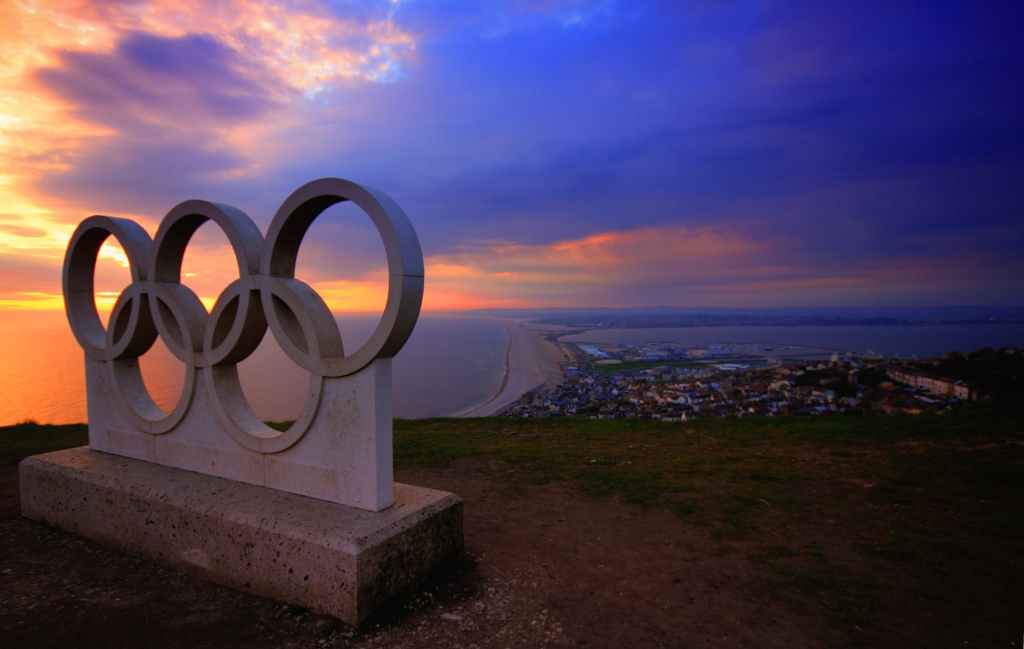
The Olympics are on us again. We love all the bright colours, the fantastic skill of the competitors and the feeling that for a few hours the world has parked its quarrels and we can all settle down in front of the TV like it’s one big happy village. But as you settle into your armchair to watch swimmers swim, boxers box and athletes athlete (surely some mistake?-ed), what drinks will lift your spirits and at the same time get you truly into that vital Japanese spirit? Today we’ll look at a range, starting with:
Beer According to Wikipedia it only arrived in the home islands in the seventeenth century, brought by Dutch traders. But the Japanese being the Japanese soon learned to improve on their teachers and now the market is dominated by four large brands-Suntory, Kirin, Asahi and Sapporo. All are light and refreshing. But thirty years ago we used to love the shape and design of the old Sapporo tin. It’s a bit less in-and outy than we remember from the far off days of 1991, but much else has changed too Remember Japan in the Passing Lane? Warning- drink too many of these and you’ll look more like a Sumo wrestler than a lady gymnastic competitor.
Sake No study of Japanese History, Art and Political Economy would be complete without a long discussion of Sake, the famous drink made from rice. As you might expect from a land where ritual and ceremony are prized, there are numerous flavours and types. You can drink it chilled, lukewarm or heated, depending on the weather. Sake is deeply embedded in Japanese culture at all levels. One famous example was the famous Kamikaze pilots of the Second World War, who drank a last toast in it to The Emperor before departing on their doomed missions.
Tea In Britain, from where this blog originates, tea is something you throw into boiling water in a mug , mix in milk and sugar and slurp down on any occasion from dawn to dusk. It’s something you give to those burly men in overalls who come round to do things to your roof or dig enormous holes in your drive. It’s all rather informal; a washed cup is rather an eye-raiser in such circumstances. Nothing could be further from the elaborate rituals and refined sensibilities of the Japanese tea ceremony. This is so complicated that we cannot explain it, but invite readers to our Wikipedia link below. Don’t try to repeat it without plenty of practice.
Whisky and more galore All that hard work makes Japanese people very thirsty, and we have a link which shows the other runners and riders competing to quench the eastern thirst. These include plum wine and of course whisky. Time was, after the Second World War, when both Japanese and Americans developed a fascination for all things Scottish, like whisky and golf. Once again, Japanese brands are competing successfully with the old masters, and are no doubt just as good as giving you a hangover the size of the Loch Ness Monster
And so we say “Kanpai!” to competitors, sports fans and everyone else in Japan and round the whole world. Enjoy the games, enjoy a good Friday night, and we’ll be back tomorrow with a round up you will not lightly forget.
If there’s one thing that separates that small elite band who read LSS from the rest of humanity, it is their ability to slow down and think for a bit. To see that problems are complex and that quick easy answers inevitably lead to mistakes. Big ones, sometimes.
So nothing could be more apposite than to think carefully about COP26 and the actions that result from it. One august body that has done just that is the Financial Times. Our rare brushes with this journal have always left us impressed by the thoughtfulness, erudition and occasional dry wit of its writers. So it is with Philip Stephens, who lays out the utter delicacy needed for the next few months, in thoughtful, balanced prose. [1]Once more, we won’t spoil the pleasure for you. But let this taster be a sample of what you will miss if you don’t click below. Getting it right, he says, would be a pretty good thing. Getting it wrong::
ends in a fresh explosion of political populism as the burden of implementing all those ringing international commitments falls on those least able to afford them — on the anti-globalist left-behinds who backed Donald Trump for the White House, cheered Britain’s flight from the EU and might yet put the hard-right populist Marine Le Pen in France’s Elysée Palace.
It is just over a hundred years since the Versailles Conference comprehensively blew the chance to set a new world order. Its failure led to the Second World War, the costliest in history, less than twenty years later. Read Philip, and don’t let COP26 become a second Versailles.


















 Learning, Science and Society