“If we can catch it in time, we can cure almost anything.” So a Doctor once told LSS, and we believed her. The problem with cancers is that they can grow undetected for months, even years in some cases, and by the time that they are found, it’s too late- or treatment is incredibly intrusive. Now a US company called Grail has developed a marvellous new test which can identify up to 50 types of cancer long before any symptoms whatsoever have manifested themselves. They idea is rather clever. All living masses, tumours included, will shed little bits of DNA. Like criminals at a crime scene, this gives away their identity. So the grail test looks for little fragments of giveaway DNA in the blood.
We’ve got a press story from the PA via the Mail for you*1 plus a link to the Grail company website. *2They are an impressive bunch, and once again we have to admire their intelligence and hard work. And there’s a deeper story here, one that separates out intelligent people like the LSS reading community from other types of person one encounters on the internet. Because we know how Grail did it. They looked for evidence, built a theory and when new evidence came along they abandoned the theory and tried a new one which fitted their facts better. Eventually something worked, and we are all a little bit safer from cancer.
Conspiracy communities and those based solely on faith do the opposite. They start from one central idea, fit all the facts around it, and never ever think about new data. They have already made up their minds. Their only response to difficult new data is to shout and scream. The trouble is that just shouting at cancer won’t make it go away.
The task for intelligent people is to preserve areas of enquiry and reason. That way, there will still be cures for cancer and many other things, in the future.
One of the depressing things about our current plight is how complicated it all is. Over here is all the waste we produce. Over there-global warming and energy production. In the middle, ordinary people wanting a better life, and at the same time, wanting to do the right thing.
Take electric cars. They’re a lot less polluting, quieter and cheaper to run than the old petrol ones. But there’s a real environmental cost to producing the batteries. Most of us are seeing a gradual and worthy uptake in these new vehicles. But before you rush round to your nearest Rolls Royce dealer, does this current craze have a serious rival? What if we could power clean green motors and get rid of some of the mountains of filthy waste which disfigure the planet?
We’ve posted three takes on hydrogen today-all based on the idea of its use in fuel cells, those almost miraculously simple devices which produce nothing worse than a little water after combustion. In AutoExpressMartin Saarinen *1 has a nicely balanced menu of pros and cons which should give some pause for thought. Especially for anyone about to unleash major damage to their bank account with a new vehicle. Molly Burgess of H2 News *2 reports of some exciting British companies who hope to use waste to generate hydrogen. (LSS finds the first English plant to this purpose is already planned) And for all you scholars the US Department Of Energy *3 has a nice summary of all the ways that H2, the lightest gas can be run up in quantity.
But has hydrogen got off to a late start? A little digging showed LSS that there are 35000 electric charge points in the UK and 8 380 Petrol stations, no less. If hydrogen has a future, if must replace the latter, while competing with the former. At which point we remember the wise thoughts of that brilliant journalist James May. Although we cannot find the precise reference,. we remember him explaining how electric cars almost strangled petrol ones at birth in the years 1910-1920. Petrol only won because there were no national grids, so it was easier to build and supply filling stations. The UK hydrogen hopefuls we alluded to above plan to have 800 stations by 2027 and 2000 by 2030. By which time electric may have already won the marketing battle. Remember VHS v Betamax? It’s a cautionary tale.
We thank Mr Gary Herbert of Buckinghamshire for the idea and research for this blog
Our weekly look at some stories which seemed significant
It’s been a big week for fans of Paleoanthropology, with help coming from many areas of science and the world all at once. Best of all is the Dragon man from China, and you can read the fascinating story of its discovery, hiding and re-discovery here, in a beautifully illustrated piece by Anthony Sinclair for the Conversation, It’s been called Homo longi by the scientific team. But we can’t help wondering-is this what the Denisovans looked like?
Talking of Denisovans,it looks like the cave where the original specimens came from had different types of humans living in it at different times, as exciting new DNA studies show. But how different? Everything points to several large brained modern types of humans running around since at least 500 000 years ago. Can they all really be different species? Or are we looking at one pretty successful species that was rather variable? Certainly they all seem to have been interbreeding like mad, the ur-definition of a single species Here’s Nature, Iconic Cave sheltered several human species
It’s all stories anyway Names that we put on old bones are just labels on a reality that was far more complex. And this is true for modern history too, as this discussion of the famous Alamo siege tells. Who were the good guys and bad guys really, ask Bryan Burrough and Jason Stanford of Time
we thank Mr Peter Seymour of Hertfordshire for this story
Weekend Spoiler Just because of the big COP26 conference coming up, don’t think your worries about climate change are over. LSS admits a start has been made, but much of the heavy lifting remains to be done, as Nature points out, Leaked report sends dire climate warning:
The next Intergovernmental Panel of Climate Change (IPCC) report will deliver an unprecedented climate-change wake-up call, reports the AFP news agency. The leaked draft report, due to be released next year, says that global temperatures are already at 1.1 ℃ above levels in the mid-nineteenth century. Even if we meet the Paris climate agreement target of keeping temperatures below 1.5 ℃, “conditions will change beyond many organisms’ ability to adapt”. And if we continue on current trends, we are headed to break 3 ℃ — with serious, irreversible consequences. “The worst is yet to come, affecting our children’s and grandchildren’s lives much more than our own,” the draft report states. “We need transformational change operating on processes and behaviours at all levels.”AFP | 5 min read
There’s more to it than IQ The endless obsession with IQ and cleverness may have been masking something else. Flexibility, creativity and adaptability may be more important, as this study by Barbara Sahakian and colleagues for the Conversation shows.
Our view has always been-IQ tests are always so boring, why would anyone want to try at them? That’s why we treat the results with suspicion. See you Monday
Photo by Sebastian Coman Photography on Pexels.com
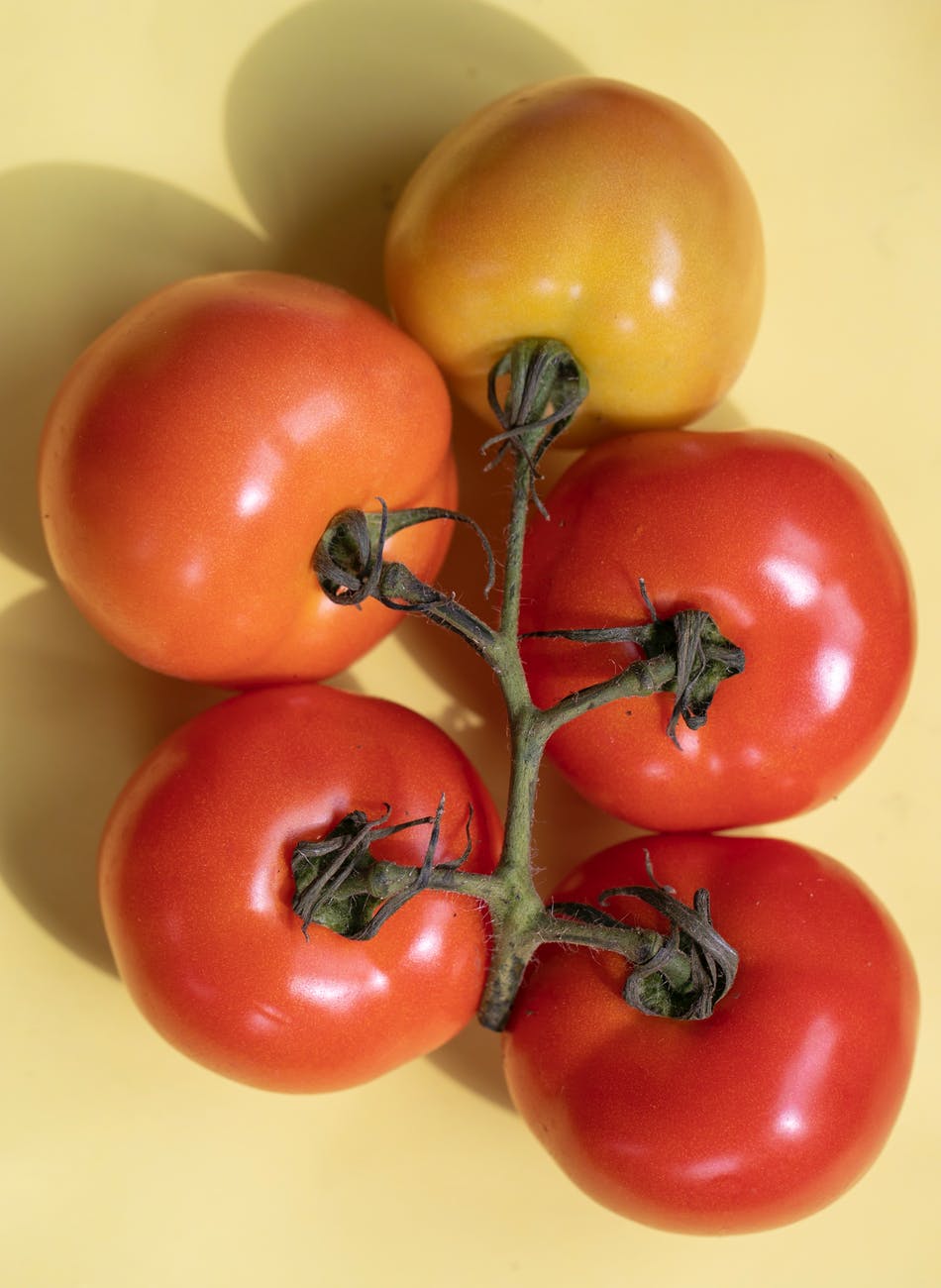
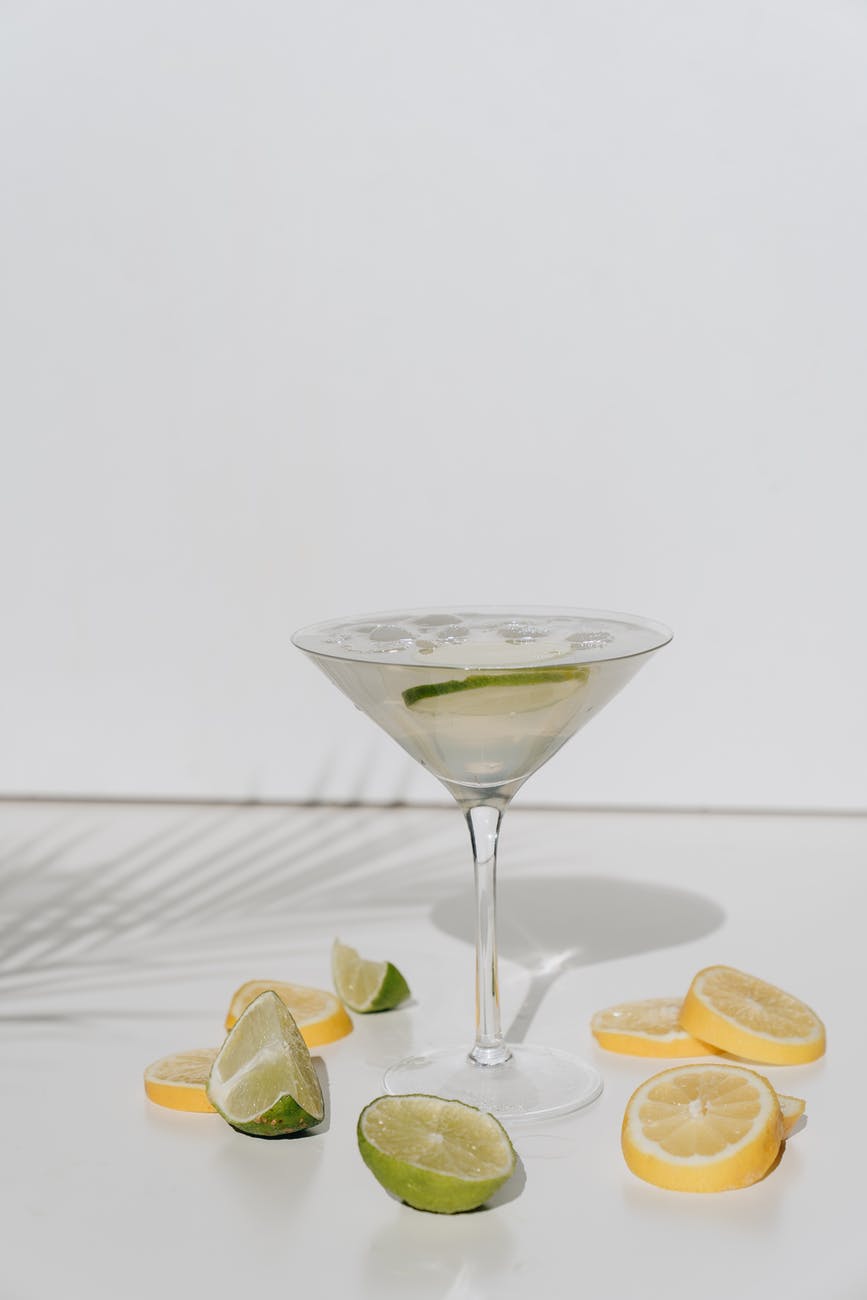
Monday sees the return of the world-famous tennis tournament to the world-famous All England Lawn Tennis and Croquet Club at Wimbledon, or WMBDN as London Transport used to call it. It’s going to be harder than ever to get tickets for this year’s men’s final. So for the unlucky few of our readers who won’t make that auspicious date, here are a couple of cocktail ideas to drown your sorrows while you watch it on the telly in the summerhouse. And to give it a theme, we have chosen that most Wimbledon of all fruits, the strawberry (if you don’t know what one of those is, see central illustration above). Also, if you are going to try mixing these at home, make sure your lorry driver has some on his trailer-if you can find a lorry driver, that is.
Strawberry Daiquiri-Cool and smooth
Put lots of cracked ice in a well-chilled margarita glass. Now take a blender and add 1 measure white rum, 1/2 measure strawberry liqueur, and 1/2 measure of lime cordial. Blend for 30 seconds then pour over the cracked ice. Decorate with powdered sugar and a slice of strawberry-if you can get it to stay on. Now sit back and watch them toiling in the summer heat, and be glad you’re not mixed up with the racquets. You could end up in court!
Thanks to TheUltimate Cocktail Book (Hamlyn) for this idea
Strawberry Cup– Refreshing and sociable
This recipe from The Bartender’s Guide by Peter Bohrman, is designed to slake thirsts at group events like garden parties
Take 0.6803885 kg of strawberries, and take out those irritating green bits at the blunt end. What are they doing there anyway? we ask. Now cut the strawberries up into lumps, but not too small. and gently introduce them to a punchbowl. Add 3.5 measures of strawberry liqueur, and pop the lot into a cold refrigerator for 45 minutes. On removal add 2 bottles of white wine-Chablis is a good bet-and two bottles of well chilled champagne. Pack ice around your bowl, and serve with silver ladle to flute glasses. Note-the key to this is to keep it cold, so if you can find a way to pack some ice around the punchbowl, feel free to try it. Ms RS of Southend suggests blu-tack but somehow we don’t think it’s a good idea.
Pimm’s -from last week!
Take one measure of Pimm’s No.1 Cup and and add to a highball glass. (Ours have real Pimms logos!) Add 3-4 ice cubes, then 2 slices of lemon, two slices of orange and one chopped strawberry and one slice of cucumber. Top up with lemonade and decorate with a sprig of mint or borage We had to repeat this, folks-it’s got more Wimbledon than South West Trains.
Is the world about to enter an era when pandemics become the new normal, meaning Covid-19 was just the curtain raiser to a newer, grimmer era? We cannot be certain, but it has happened before.
When the Emperor Marcus Aurelius (161-180 AD) succeeded to the throne of Rome, he inherited a world that had had known nothing but peace and growing prosperity for generations. Under the benign rule of Rome, trade prospered, cities flourished and the arts, learning and mass sports were cultivated. In 165 all this changed forever. A new and terrible plague, probably smallpox, tore its way through the Empire. The population fell, at least by 20%. The currency weakened, trade fell and production dwindled. Most ominously the Roman Army was no longer all conquering and invincible, and barbarian tribes started to press into the Empire.
Marcus was an able man, and somehow managed to save things-just. But as Professor Harper shows, this was only the first of many pandemics that ravaged the advanced civilisation of Rome. Smallpox returned in the reign of Marcus’ degenerate son Commodus. Then, following a few fleeting years of recovery, the terrible plague of Cyprian struck around 249 AD. An Ebola-like virus which caused terrible suffering, its mortality seems to have been greater than smallpox, and Harper shows that its demographic and economic consequences were never recuperated. The Eastern rump of the Empire was essentially finished by the great plague of Justinian in the sixth century. World power shifted to the Moslem nations not long afterwards.
What caused these sudden upswings is not certain though Harper makes a strong circumstantial case for climate change and ecological in-balances in animal populations that harboured the viruses. What worries us at LSS is how familiar this seems. The easy peace and prosperity of the nineteen nineties has long passed. Since 2000 outbreaks of diseases like SARS, MERS and Ebola have become frequent. Until recently these were contained. But Covid-19 is very much the genie that got out of the lamp. As the relentless destruction of habitat continues, more pathogens will escape from wild hosts like bats and cross the species barrier. We have already alluded to the dangers of antibiotic resistant microbes and the influenza family of viruses. There will be others. And never forget that certain nations ruled by ageing autocrats will be holding stockpiles of biological weapons, with virus derivatives more terrible than anything in nature. As their regimes crumble, who is to say they will not release them in a last desperate attempt to cling to power?
It was in the reign of Marcus that the citizens of Rome saw the first shadows fall of the new darker age. It was to last for centuries. Are we in a similar place?
Kyle HarperThe Fate of Rome: Climate, Disease and the end of Empire: Princeton University Press 2017
“Oh no,” we hear you groan ” not another gloomy LSS post, telling us off for our failings!” a regular refrain from readers as we berate you for not doing enough on antibiotics/global warming/education or even generally sprucing up and improving your moral outlook. Or saying how bad everything’s getting. You know.
Well that means its time for a good fun story about a real success. Tigers are not just emblematic animals (they regularly top polls for world’s favourite animal) but their existence guarantees the survival of vast, carbon swallowing forests such as in the Himalayas or the Sundarbans. We all know that their population has been in freefall since the start of the last century. Now it seems that valiant efforts to preserve wild populations are at last succeeding. No organisation has done more to achieve this than the World Wide Fundfor Nature and today we link to their latest magazine. Of course we highlight the article Bringing Back the Roar by Mike Unwin, but the whole thing is an easy hit of good positive stories and great pictures from around the globe.
Tigers are nor saved yet, but many of the problems are now those of success, like integrating wild tigers with people and linking up parks and habitats. There are some big hitters on board including the World Bank and Vladimir Putin, no less, who will chair a big conference in Vladivostok on “next steps” in 2022. We have asked you to put your hands in your pockets before, but if there is one outfit that’s truly on the side of the angles, it has to be WWF. And remember-saving wild habitats actually saves you, in the long run.
Here’s some stories that intrigued us and might add to your reading, in between football matches of course.
Ten Best Places to look for life When we were young, the possibility of extra terrestrial life in the solar system was sneered at. Now opinion is swinging the other way. Astrobiologists with a strong interest in betting will love the odds on this survey by Neev V Patel of MIT technology Review, via Nature of course!
When the rivers run dry Drought could be a really big consequence of runaway climate change. The problem will be mass migration from devastated lands. Here’s two stories from the Guardian, but most outlets are picking up on this one at last. Fiona Harvey looks at the global problem, and a leader is devoted to some brilliant reporting on how it’s playing out in the one region: The American Southwest.
Teaching Life Skills One of the things about having a garden is that it teaches you life skills. A day in the garden will require planning: What really needs doing and what can I better leave until next week? Organisation:where shall I put my tools so that I can find them? (the alternative is hours looking for a hoe) That things sometimes go wrong– Yes, I took down that oak tree well, but what cruel fate made it crash through the greenhouse? And how do I explain that to my wife? We think teaching practical skills to children at an early age will equip them to become better laboratory workers and managers later. Teachers, we offer you some ideas from Thought.co website, just as a starting point
Foreign readers may be forgiven for not noticing that these islands are hosting a popular Association Football Match. That’s soccer to US readers, while many of the rest of you will refer to el futbol. Once there was a country called Britain, and the England- Scotland matches had only a sporting significance. Recently deep undercurrents of nationalism have lent these events a deeper, political frisson. However the heady joys of waving flags play out in the next few years, we hope tonight’s event will pass peacefully enough. And in that spirit, no pun intended, we offer a classic cocktail from both nations. Help as ever from The Hamlyn Ultimate Cocktail Book, available as ever from all good booksellers or online.
Scotland: Rob Roy
This is so good, Sir Walter Scott himself would have loved it. Put one large ice cube into a mixing glass, add one measure of scotch, 1/2 measure dry vermouth and a wee dash of angostura bitters. Stir well and pour into a cocktail glass, Decorate with a spiral of lemon. If they down a couple of these the Scottish forwards will be ready to go through the English defence faster than a load of bad hay through a herd of Aberdeen Angus cattle.
England: Pimm’s Classic
Famous English persons include Robin Hood, Moll Flanders, Paul Gascoigne, Wallace and Grommitt. All would have enjoyed this most English of cocktails. (You can scale up this recipe to make jugs for garden parties and barbecues).
Take one measure of Pimm’s No.1 Cup and and add to a highball glass. (Ours have real Pimms logos!) Add 3-4 ice cubes, then 2 slices of lemon, two slices of orange and one chopped strawberry and one slice of cucumber. Top up with lemonade and decorate with a sprig of mint or borage, if you can find the latter. Can’t even find it in Waitrose, darling. If you up the Pimm’s dosage or add gin, you won’t just leave Europe, you’ll leave your senses!
Photo by u0404u0432u0433u0435u043du0456u0439 u0421u0438u043cu043eu043du0435u043du043au043e on Pexels.com
What have Ian Dury, Arthur C Clarke, Frida Kahlo, the Emperor Claudius, Neil Young and Francis Ford Coppola all got in common? All were born before 1955 and all suffered from poliomyelitis.
Poliomyelitis is caused by an enterovirus. It travels in faeces and enters the body when the victim contacts contaminated water. Most cases result in a mild illness, but in one in a hundred victims the virus invades the nervous system, and things get serious. Meningitis follows, with high temperatures and progressive paralysis of the muscles of the legs, upper body, and even the neck. About half of these cases will be left with some form of permanent paralysis leaving them disabled and often immobile. No wonder it was so feared, and the arrival of vaccines after 1955 was greeted with such joy.
Vaccination has been one of humanity’s few undoubted achievements alongside things like tools and fire. Former terrors such as tuberculosis, measles, smallpox, rabies, yellow fever and so many others have either been confined to history or brought under control. Polio is a real poster child for the technique: the 1988 WHO vaccination programme has virtually eradicated the disease everywhere except for Pakistan and Afghanistan. Here resistance to vaccination is strong, for various historical reasons.
But in 2018 there came news of an alarming uptick of polio cases in parts of the Asia Pacific region. Writing for the Australian ABC news Olivia Willis and her co writers tell the story of how polio got a foothold in Papua New Guinea, Indonesia and neighbouring countries. Polio was eliminated in the Asia-Pacific. Then it suddenly came back – ABC News. It’s coming down again, due to the .efforts of governments and health workers. However, the causes are alarming.
For field workers, the best vaccine has always been the good old fashioned Oral Polio Vaccine, which uses an attenuated form of the virus. It’s cheap, reliable, and effective in breaking the chain of infections. The trouble is that on rare occasions, the attenuated virus can escape, start to spread, and mutate until it is ready to strike again. That is what happened in Papua.
Anti-vaxxers will pounce on this with glee. We can imagine the spiteful joys on their websites: “VACCINES SPREAD DISEASE” and the somewhat paradoxical “Vaccination programmes don’t work.” Doubtless they will omit the crucial vindication that the vaccination rate in Papua was only 66% of the population. In polio-free Europe it is over 90%. That, combined with poor sanitation and public health in certain regions was why the outbreak occurred.
This has profound implications for the number one problem currently assailing the world, called Covid-19 in case you haven’t heard of it. Governments, scientists and doctors agree on one thing.
The only way out of this sorry social, economic and medical mess is the rapid production and distribution of as many vaccines as possible. Anti-vaxxers are having a field day denigrating ,casting doubt and spreading misinformation, much as they have been doing ever since the eighteenth century. The malign consequences of their efforts were shown by the upsurge in diseases like measles after the Andrew Wakefield scandal. The evolution of the delta variant of Sars-Cov-2, which causes Covid-19, was a direct consequence of the virus running amok in unprotected populations. We have to stand firm on vaccines, because something much worse is waiting.
For about 60 years bacteria have been held in check by antibiotics. However, levels of bacterial resistance to antibiotics are now increasing fast. Already ancient killers like TB are making a comeback. New forms of MRSA in hospitals could make safe surgery impossible. According to the charity Antibiotic Research UK this problem is already causing 700,000 unnecessary deaths a year and by 2050 this figure will reach 10,000,000. The consequences of two or more antibiotic resistant diseases appearing at once would make the effects of a single coronavirus seem small indeed.
Despite heroic efforts to develop new antibiotics, bacteria will always evolve new resistance. The only long term answer is to develop a massive and sustained programme of vaccination. A recent review article in Nature outlines some promising lines of research the role of vaccines in combatting antimicrobial resistance | Nature Reviews Microbiology. As our experience of Covid-19 shows, the sooner that vaccines are developed and used, the smaller is the toll of death and misery.
To surrender to the anti-vaxxers even on one case like polio will hamper the efforts of researchers and health workers everywhere. The consequences in suffering and death will be enormous. But to adopt a policy of universal vaccinations offers the hope of a future where we still have hospitals, and diseases like polio and TB are no more than ancestors’ tales.
Many years ago, a book was pressed into our hand by an old friend. It purported to be the autobiography of a hardened supporter of the football team Manchester City. It seemed to us to be little more than a dreary round of fights, status anxiety and prison time served. But we always remember one anecdote. A friend of the author explained his arbitrary desire to stand in a part of the football ground reserved for the most violent supporters of City’s rivals, who are known as Manchester United. When his friends warned him of a hostile reception, he declared “I’m City through and through, City until I die….” He went to the aforementioned location was was duly subjected to a brutal and life threatening assault.
What was the point? we wondered. Does being City stand for a higher moral status, improved arts, or a plan for the better governance of the Republic? And United for that matter- has the club discovered a cure for cancer, or a new form of energy? Apart from the fact that one wears blue, and the other red, why risk all?
Today Mr Biden, President of the United States meets Russian leader Putin in Geneva. It would be easy for this site to take sides. Sufficient that the US Declaration of Independence and Constitution seem to sum up our thinking rather nicely, and that nothing of comparable value has emerged to date from the Russian empire. Unlike football, real values and real issues are at stake. Yet to denigrate Putin is to misunderstand him. Russians too have their insecurities and grievances, and unfortunately can point to many instances where the US and its western allies have acted less than nobly. The potential for a detonation is very great; the language used, and its meanings, must be very carefully spelled out.
Another great power, China, will not be represented. But its spiritual founding father, Confucius (Kong Fuzi) had this to say:
If language is not correct, then what is said is not what is meant; if what is said is not what is meant, then what must be done remains undone; if this remains undone, morals and art will deteriorate; if justice goes astray, the people will stand about in helpless confusion. Hence there must be no arbitrariness in what is said. This matters above everything.
(we take this from the excellent quotes net, linked below)
The world is not always how we would like it to be; western values of freedom, justice and peace have not travelled well. But to provoke the leader of a nuclear armed power into nihilistic violence will help no one. One side at least must try not to think like the football fans above.