Weekly Round-up: Maths, drugs and other ideas for a really great weekend

things we thought about this week

These Foolish Things A few weeks ago we praised UK Prime Minister Rishi Sunak for trying to put mathematics at the heart of the education curriculum(LSS 4 1 2023) You know-clear thinking, Bertrand Russell, avoiding foolish opinions, logical thinking, all that sort of thing. Hints that the policy may be less sagacious than we had hoped are dropped in this article from Huffpost

https://www.huffingtonpost.co.uk/entry/himiliation-rishi-sunak-expert-criticises-maths-plan_uk_643e3415e4b0482824b778a3?ncid=APPLENEWS00001

Thanks to P Seymour

The season of all natures, sleep Alzheimers and dementia, their causes and cures, are still a swirling pool of opinions, projects and discoveries. Which is all the more reason to research any advance in this field. Could the common sleep drug suvorexant have a role to play? The Mail thinks so:

https://www.dailymail.co.uk/health/article-11994909/Common-sleeping-pill-slashes-Alzheimers-proteins-fifth-24-HOURS-study-finds.html

Now I’m living in Ecstasy PTSD can ravage the lives not just of sufferers but the families and loved ones around them. Survivors of the 1990s will cast a wry eye on the news that their old friend MDMA may hold the promise of relief for this unfortunate condition Here’s Nature Briefings

The US government could soon approve the hallucinogenic drug MDMA to treat post-traumatic stress disorder (PTSD). Psychedelics had long been investigated as mental-illness treatments, until their ban made them difficult to study. The theory is that MDMA allows people to confront their trauma by dampening the fight-or-flight response. Questions linger about how MDMA will be administered and by whom: in recent clinical trials, the drug was combined with psychotherapy, which isn’t regulated. And because MDMA has been around since 1912 and cannot be patented, there’s little financial incentive.Nature | 10 min read

Who guards the guards? When the Sudanese Government set up a special elite guard to keep everyone else in check, it seemed like a great wheeze. They forgot one important lesson Quis Custodiet ipsos cusodes? As any Roman Emperor could have told them, your biggest threat is always from the Commander of your guards. Maybe elections are actually safer for everyone in the long run? This week’s hisory lesson is from The Conversation

It’s the rich wot ‘as the pleasure, it’s the poor wot takes the blame Since at least 1918, the same lesson is relentlessly drummed into English schoolchildren of all ages, via a thousand propaganda outlets “inflation is caused by greedy workers asking for money” Well, maybe so, And then again, maybe not, as this counterintuitive from Larry Elliott ponders for the Guardian:

https://www.theguardian.com/commentisfree/2023/apr/19/wage-price-inflation-greedflation-pay-cost-of-living

The heat is on The evidence that climate change is real, is here, and is harming us all now is unmistakeable, as this story from the BBC makes clear. Time is short, and we’d strongly advise that if you come across a denialist you just press the delete button from now on. Let them rot with flat earthers, anti-vaxxers and the flying saucer crowd.

https://www.bbc.co.uk/news/science-environment-65317469

Your Face and under the Linden Tree I Remember your eyes These carefully crafted and lucid lyrics will recall that warm and sunny summer of 2004 when O Zone topped the Hits Parade with their memorable ditty Dragostea din tei. So for notalgists everywhere, her’e the Moldovan Maestros back,as t’were in fine song

#mdma #alzheimers #sudan #ptsd #climate change #global warming #economics

Friday Night Guest: Mark Arbouine on his favourite cocktail

Our first guest in the new series is Mark Arbouine, who gives us a way to enjoy wonderful tropical flavours without the sometime inconvenience of alcohol. Over to you, Mark!

Don’t Mock Mocktails – In Praise of The Virgin Piña Colada

Let’s talk about cocktails for the teetotallers amongst us. This might be where I lose those belonging to the booze brigade who think alcohol-free means bland and boring but they couldn’t be more wrong. Non-alcoholic cocktails, also known as mocktails, are a great option for those who choose not to consume alcohol or who simply want a refreshing and flavourful drink without the hangover. They can be made with a variety of ingredients, including fruit juices, herbs, and sodas, and can be just as delicious as their alcoholic counterparts. Mocktails are perfect for social events as they allow everyone including teetotallers, designated drivers, people on medication and those who want to limit their alcohol intake, to participate in the celebration without feeling left out.

One of the great things about non-alcoholic cocktails is that they are incredibly versatile. They can be sweet and fruity, like the clientele at a classy Mayfair bar, or tart and spicy, like the regulars at a less salubrious drinking establishment. Either way, there are countless taste combinations to explore to create complex and nuanced flavours that can rival any alcoholic drink.

Non-alcoholic cocktails are not only delicious, but they can also be a healthier option than their boozy counterparts. Many mocktails are made with fresh fruits and vegetables, which are high in vitamins and nutrients. They are often be lower in calories than alcoholic drinks, which can be loaded with sugar and other unhealthy additives. Mocktails are a great way to enjoy a delicious and refreshing drink without compromising your health or wellness goals.

Alcohol-free cocktails can be enjoyed at any time of day or night because unlike alcoholic drinks, which are often reserved for evening events, mocktails can be served at brunches, lunches, and even breakfasts. They are a great way to start the day on a positive note or to refresh and hydrate after a workout. Non-alcoholic cocktails are a fun and versatile beverage option that everyone can enjoy, regardless of their drinking preferences.

One of my favourite non-alcoholic cocktails is the virgin piña colada which I first tried in Bulgaria at the beginning of the millennium. At various points in my life, I have chosen not to drink alcohol, sometimes for a few months, other times for many years and on one such occasion it coincided with a holiday to this Balkan nation. I went into bar in Slanchev Bryag, a coastal resort on the Black Sea coast, thinking I would have to settle for teetotaller’s standby of an orange juice, coke or mineral water but I was pleasantly surprised that on their cocktail menu, in the bottom corner, was a small section for mocktails. The only name I sort of recognised was “Virgin Piña Colada” which I correctly assumed was an alcohol-free version of the famous cocktail. This drink is made with the following ingredients:

  • 75ml pineapple juice
  • 50ml coconut cream
  • 1 lime, juiced
  • 3 tbsp apple juice
  • 1 tsp dark muscovado sugar

Everything is blended together with a small amount of ice until it is smooth and is served in a glass garnished with a pineapple wedge. This drink is easy to make and is a great option for those who want to enjoy the flavours of the original piña colada without the alcohol.

The virgin piña colada’s flavour is an inviting mix of sweet and refreshing notes. The drink’s primary taste is derived from the pineapple, lending a vibrant and juicy sweetness to the mix. The pineapple’s juicy tanginess also adds a hint of sharpness to the beverage, enhancing the depth of its flavour. The smooth and creamy coconut cream bestows a luxurious richness to the drink and its texture perfectly balances the sharpness of the pineapple, adding a delicate, mellow creaminess that elevates the drink’s opulence and sophistication.

There are many of other non-alcoholic cocktails out there to try. You can experiment with different juices, syrups, and garnishes to create your own unique drinks. The great thing about mocktails is there are no rules, just get creative and have fun with it.

#cocktail #alcohol-free #bulgaria #fruit #health

Pre-eclampsia: a women’s sorrow that’s been ignored by men

There’s a silent, deadly killer stalking the hospital corridors of the UK. Every year it carries off 1000 babies [1] It affects between 5% and 8% of all pregnancies. When it turns severe it poses a clear and present danger to about 2% of all pregnancies. it’s called Pre-eclampsia, and no one knows what causes it. And, if you scale up the UK figures to get the world wide picture, it gets worse. If we accept the figure of 133.99 million births in 2022, then that implies no less than 6 699 500 cases globally. Quite an epidemic.

Have you seen much about this lately on a news feed or channel near you? Maybe it gets covered occasionally by magazine journalists. Yet all our searches only revealed sites like the NHS, Wikipedia and so on. [2] [3] All high on integrity, helpfulness and informed communication. But where’s the punchy, angry journalism that might push this one over the line and get it the attention it’s so obviously crying out for?

Whisper it if you dare-is this because it only affects women? When a cause and cure for the new disease of AIDS was needed, it all went rather quickly, didn’t it? Remember something called COVID-19? Older readers might. From outbreak to vaccines to control took a couple of years. Yet eclampsia has clearly been around for thousands of years, and still a clear causal mechanism eludes us.

Perhaps if a little less was spent on things that make men look good- like fast cars, fighter planes and gargantuan yachts- and a bit more on things that help women live-biomedical research comes to mind here-we might all do better in the long run.

[1]https://www.wrh.ox.ac.uk/research/pre-eclampsia

[2] https://www.nhs.uk/conditions/pre-eclampsia/

[3] https://en.wikipedia.org/wiki/Pre-eclampsia

#eclampsia #preeclampsia #women #health #pregnancy #mother and baby

Gepotidacin and GSK-and why the last eight years have been worth it after all

Avid readers of our little blog will recall that our interest in antibiotic research predates it by many years. It was around 2015 that we realised the lack of new antibiotics was becoming an existential threat to us all. Since when we joined with the efforts of leading members of the Community of the Great and the Good to try to actually do something about it.

Well, the news we have this morning is good. GSK, the giant pharmaceuticals corporation, is not only trialling a new antibiotic called gepotidacin, but the trials are going well. This implies a few reasons to be cheerful, to quote Ian Dury, so forgive us if we list them. First it shows that leading commercial organisations are finding ways to finance antibiotic research again. The old “profits are God” model just wasn’t delivering social outcomes. Secondly, new antibiotics will only benefit from the economies of scale, experience in good practice and marketing and communication expertise of something the size of GSK. Thirdly, they’ve targeted a real social need, particularly for women, the debilitating complex of UTIs in general and cystitis in particular. Reasons to be cheerful indeed.

So we’ve got three links for you this morning. For a nice journalistic overview, here’s Ethan Ennals of the Daily Mail[1] For a very simple baseline there’s good old Wikipedia [2] And for lovers of linguistic and intellectual complexity, to say the least, we have a piece of text from GSK themselves. Be warned: it’s definitely not for the faint-hearted. [3]

[1]https://www.dailymail.co.uk/health/article-11976115/UK-approves-new-antibiotic-20-years-kills-superbugs-causing-UTIs.html

[2] https://en.wikipedia.org/wiki/Gepotidacin

[3] https://www.gsk.com/en-gb/media/press-releases/gepotidacin-s-positive-phase-iii-data-shows-potential-to-be-the-first-in-a-new-class-of-oral-antibiotics-for-uncomplicated-urinar

##antibiotic resistance #superbugs #gepotidacin #uti #medicine #pharmaceuticals #research

Weekly Round up: Strikes, Europa, mass shootings, Catalonian Drought, and Beethoven Blues

stories we thought to be of more than passing significance

A generational divide It’s not that we always revere opinion pieces in The Guardian. But sometimes one of them goes to the heart of the matter. The last thirteen years have seen a massive switch of wealth from young to old in the UK, with dire economic and political consequences. Is it happening where you live?

https://www.theguardian.com/commentisfree/2023/apr/14/junior-doctors-strike-money-generation-betrayed

From Europe to Europa Rising powers go in big for exploration. Signs that this may be happening in Europe came this week with the successful launch of the JUICE mission, which will show up at Jupiter in 2034. The maths of how you get it to orbit three moons at once is beyond us! Nature Briefings makes all clear

Today, the Jupiter Icy Moons Explorer (JUICE) successfully launched on its eight-year journey to Jupiter, where it will study three of the planet’s four Galilean moons: Ganymede, Callisto and Europa. The launch required a precise lift-off time to insert the spacecraft into the correct orbit around the Sun: exactly 12:14 UT. “There is no launch window, only one launch instant,” said programme director and launch operator Véronique Loisel.

The European Space Agency’s spacecraft will be the first to orbit a moon of another planet when it circles Ganymede in search of a hidden ocean beneath the icy surface. A complex manoeuvre around the Sun and Earth will slingshot JUICE towards the outer Solar System. The mission will eventually end with a crash landing on Ganymede’s surface.Nature | 6 min read

Mass shootings explained The plague of mass shootings in the United states is doing that country immense damage. No wonder many countries look askance at alliances with such a system. And at a personal level, we know many who no longer go there for holidays. Before America can confront this haunting devil, it must understand it. Here’s one possible route from The Conversation

https://theconversation.com/why-do-mass-shooters-kill-its-about-more-than-having-a-grievance-198387?utm_medium=em

Climate Change Catalan Style If there is one nation that’s always punched above its weight economically and culturally, it’s Catalonia. But even the “Swiss of Spain” aren’t exempt from the ravages of climate change, as the BBC shows. If it can happen to them, it can happen to anyone!

https://www.bbc.co.uk/news/world-europe-65129735

Beethoven Blues We thought we’d leave you with something thoughtful this week. Beethoven’s piano sonata no 8 (pathetique) is full of intriguing little touches, bringing the best out of its players, if they’re to do it right!

ps://www.bing.com/videos/search?q=beethoven+piano+sonata+no+8&&view=detail&mid=F9EA0363

have a good weekend

#JUICE #economics #generational divide #climate change

Friday Night Cocktails: Guest slots are our thing

Over the next few weeks, we’re going to throw open Friday Night Cocktails slot to guests. We’ve done a few of these in the past, and now some more pals are stepping up to the plate. It won’t just be cocktails per se-not everyone likes them, after all. But they will be telling us all about their favourite drink, and why they like it. We’ve already got three lined up; but consider this. Why couldn’t YOU be number four? Of course there will be no prize, as we prefer to spend the money on ourselves. But you will be joining, and contributing to, that select band, the readers of LSS who constitute the cream of the elite of the top 3% of the cutting edge of the world’s most erudite and stylish persons. And, by penning a few simple notes, you will at once be deepening and strengthening that community. We can’t make a fairer offer than that.

So, send us your ideas, and for the next few weeks look out for some elegant and stylish guest writers, for whom The Atlantic would give their eye teeth Talking of which, our recommendation this week is Sharp’s Atlantic Pale Ale, sold widely in every eatery from Brown’s to the Toby Carvery and to which we link below

Enjoy

https://www.sharpsbrewery.co.uk/blogs/beer/atlantic

Pollution: One step back, two steps forward

Pollution: not the nicest thing to happen to happen to you, particularly if it’s killing you and your children by means of things like cancer, rising sea levels and violent weather patterns. So today we thought we’d take stock and instead of being all gloomy, the Salvians of the twenty first century, we’d offer you a little bad news, balanced by a little good.

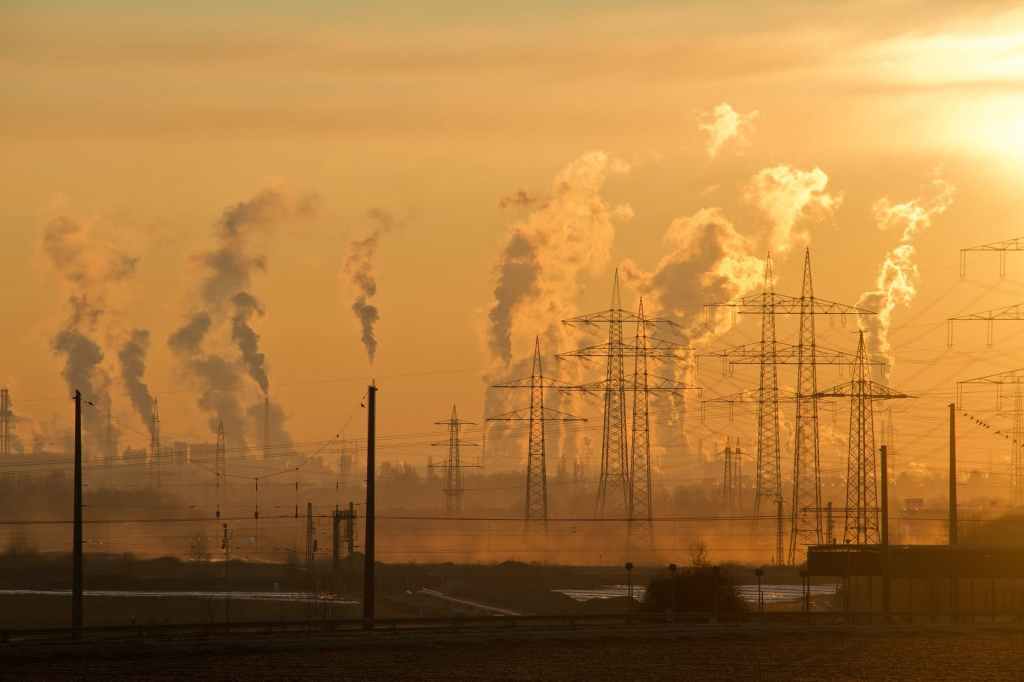
Lung cancer is still out there. Remember how hard we worked to get rid of smoking in pubs and offices? Well lung cancer is down. But it’s still happening. In a piece called How air pollution causes lung cancer, Nature Briefings looks at how what’s left in the atmosphere, after all that tobacco smoke has gone, may still be felling us by the thousand:

Air pollution might cause lung cancer by creating inflammation that encourages proliferation of cells with existing cancer-driving mutations — not by mutating DNA itself. The results provide a mechanism that could apply to other cancers caused by environmental exposure and might one day lead to ways to prevent them. “The idea is that exposures to carcinogens could promote cancer without actually doing anything to the DNA,” says medical geneticist Serena Nik-Zainal. “Not every carcinogen is a mutagen.”Nature | 5 min read
Reference: Nature paper

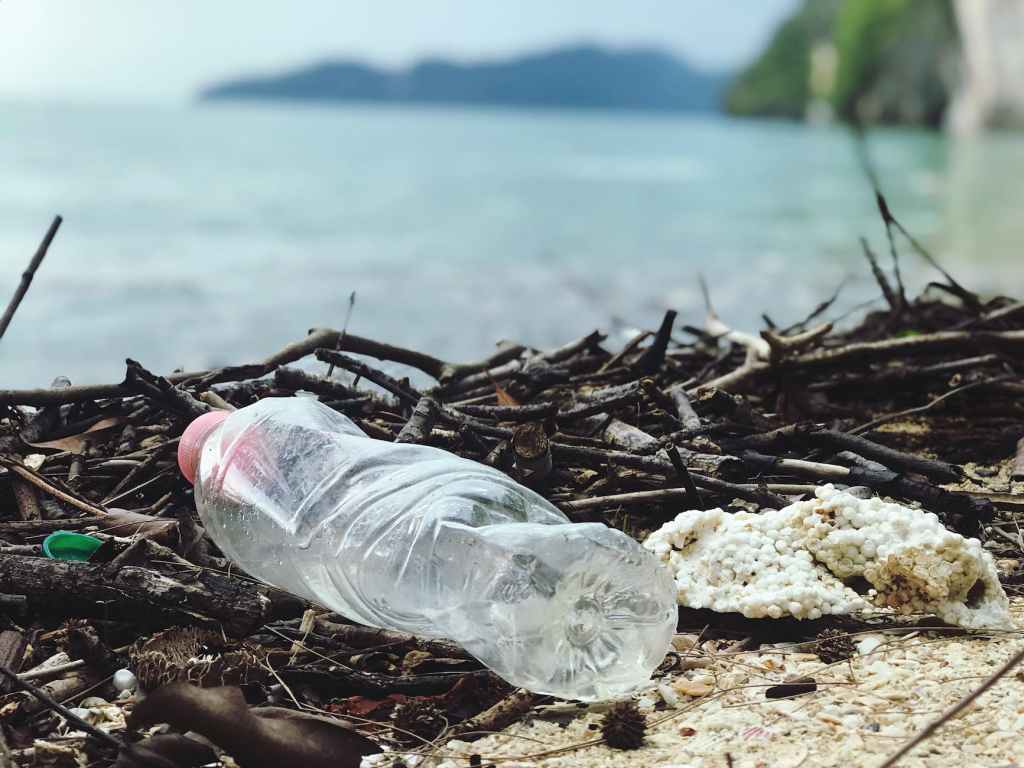
Plastics-the way ahead Plastic pollution is horrible even to look at, as anyone who has recently taken a walk on the shores of the English Channel can tell you. So the first of pieces designed to cheer you up looks at how someone is actually doing something about it Nature Briefings, three ways to solve the plastics crisis

More-sophisticated policies, smarter recycling and new materials could stem the tide of plastic waste, which is set to triple to more than one billion tonnes annually by 2060. Although there are already many well-meaning efforts to cut down on plastic, their effectivness is unclear because there’s “virtually zero monitoring”, says policy researcher Steve Fletcher. Smart interventions could decrease the amount of uncollected and unregulated plastic litter by around 80%.Nature | 15 min read

Are fossil fuels starting to go the way of smoking? Still thinking about smoking? Progress was glacial at first, but then came rather quickly. There were enormous well-funded lobby groups obstructing progress on both. Now there is a hint, just a hint, that renewables are starting to get their nose ahead, and Big Oil may be going the way of the dinosaurs. From whose fossiliferous beds they extracted most of their poison anyway-ironic, isn’t it? Fossil Fuel emissions from electricity set to fall, says the BBC

https://www.bbc.co.uk/news/science-environment-65240094

#cancer #pollution #global warming #climate change #fossil fuels #renewable energies #plastic #oceans

Dudula and the difference between racism and xenophobia

“All them Africans coming here and nicking all our jobs and bunging up the hospitals!” It’s a cry heard commonly enough on the racist side of politics in the UK. But what if the people who uttered these words were fellow-Africans, and they were uttered not in South London, but South Africa? Now a fascinating piece of film from Jamal Osman of Channel 4 News raises deep questions about exactly what racism is and what causes it [1] And, at least by implication, a clue to the roots of our present woes, and how they might be cured.

Our staff here have seen a lot of racism over the years, some in the course of their professional work in law enforcement agencies. It’s an elaborately confected theory of dividing people into groups, and how some groups are inherently superior to others. The theory unleashes hatred of breathtaking extent, explanations of baroque complexity and specious logic. So what happens when identical behaviours are unleashed between people who seem to be of identical race (at least to others) Think South Africans and Zimbabweans, as in Jamal’s film. Or Arabs and Israelis? Our favourite example has always been the inhabitants of Northern Ireland who work tirelessly to maintain grievances which are utterly imperceptible to outsiders. What is going on?

Look at the word-cloud around Dudula in Jamal’s film, and the links we’ve chosen to accompany it. [2] [3] [4] What is a typical Dudula member? Poor. Marginalised. Insecure. People like market traders, the self employed. generally. Before you start to feel superior, gentle reader, imagine if you were something like a self employed builder. Every morning begins a full day’s work, and every night a struggle to price new jobs, fill up your stocks and try to calculate the margin of survival for you and your loved ones. Given the natural human tendency to distrust strangers, are you going to rush out to welcome them with open arms? Especially if they enter into direct economic competition? And so every nation and every race gets its Dudula, its Proud Boys, Otzma Yehudit or Nazi Party. It’s not racism at all, it’s xenophobia, and it’s part of the human condition. And it manifests strongly in the same social classes all around the world.

And slowly but surely, it’s tearing us apart into mutually suspicious tribes, reducing the flow of trade and ideas and making us all poorer. History shows that in such circumstances, wars inevitably follow. Is it possible that the solution is to reduce the anxieties and ameliorate the economic and educational conditions of those in the lower reaches of the economy?

this blog was the result of a pooled discussion of the Editorial Board

[1]https://www.channel4.com/news/the-vigilante-movement-targeting-immigrants-to-clean-up-communities-in-south-africa

[2] https://en.wikipedia.org/wiki/Operation_Dudula

[3]https://www.channel4.com/news/the-vigilante-movement-targeting-immigrants-to-clean-up-communities-in-south-africa

[4] https://www.opendemocracy.net/en/podcasts/podcast-borders-belonging/south-africa-dudula-diepsloot-migrant-nyathi-zimbabwe/

#operation dudula #racism #xenophobia # Nazi Party #otzma yehudit #fascism #economics

Honey and antibiotics? An unlikely combination! Or is it?

A while ago we published a piece suggesting that ants might harbour some interesting surprises in the hunt for new antibiotic substances. (LSS 23 5 22) Now it seems that their stripey cousins, bees, could yet come to our rescue as well. Incredible as it seems, honey may have antibiotic properties. Researchers led by Professor Les Baillie at the University of Cardiff are now actively investigating this possibility. And about time too, we say, because the situation is becoming so bad we welcome any initiative, however far-fetched it might seem at first glance. So we’ve got two reports wherein you can read more, one from the BBC and one from the Independent. [1] [2]

The relationship between humans and honey dates back thousands of years. People were probably robbing bee hives in the Paleolithic. For a long while, the relationship between us and our buzzing chums was largely in equilibrium. Starting a few decades ago, this changed, to the infinite detriment of the bees. Across the world, hedges have been ripped out. Wild meadows built over. Enormous quantities of toxins have been sprayed across immeasurable acres of land-and have sunk in to stay. This has had a devastating effect on bee populations. If you want a few facts, have a look at this link to Friends of the Earth [3] And all in the slapdash, neurotic search for ever higher production targets, output and numbers. Ironic indeed if the attempt to create wealth ends up destroying long term value. We suppose it’s an easy mistake to make for the sort of people who confuse money with wealth.

Yes, we’re antibiotics buffs on this blog. But we suspect the we’re not the only ones who suspect that the natural world and the things in it are a treasure trove of real wealth, on a scale that Ali Baba and his business associates could not begin to imagine. Time to start thinking intelligently about it. Or is that too much to ask?

[1]https://www.bbc.co.uk/news/uk-wales-65233103

[2] https://www.independent.co.uk/news/health/honey-antibiotics-infections-bacteria-scientists-b2317687.html

[3] https://friendsoftheearth.uk/nature/what-are-causes-bee-decline

#bees #honey #ants #antibiotic resistance #antibiotics #medicine #health

Tragic story of Antibiotics pioneer poses questions for us all

Kirsty Smitten is 28. She has a PhD in Chemistry. She has discovered two new types of antibiotics. And set up her own company to market them. She is being written about in Forbes. She may even be up for a Nobel Prize. Which she she almost certainly will not live to collect, as she will probably die very soon from a rare form of inherited heart tumour. You can read the full story here from Helen Carroll of the Mail. [1]

If the discoveries prove viable (and there is no reason to suspect they will not) her short life will have left humanity enriched. She has given us something far more valuable than all the posh handbags, private jets, luxury cars, interior design schemes in the world rolled together. And how very much more might she and her teams create, if she is yet granted a full life? We still hope that some miracle will save her, but if it does not, we all must face some profound questions

What is the nature of real wealth, and how do we preserve and create it? If we had spent a little more on heart research, and cancers, and a little less on beer and cigarettes, might that have guaranteed her life? And how many other lives would that have saved in turn? What might happen if all those football supporters, or Arabs and Israelis, stopped fighting each other and set up medical research institutes instead. We owe it to Kirsty to find answers.

[1] https://www.dailymail.co.uk/health/article-11952247/Cancer-stricken-scientist-created-antibiotic-type-40-years-die-Nobel-Prize.html

#antibiotic resistance #microbes #research #medicine