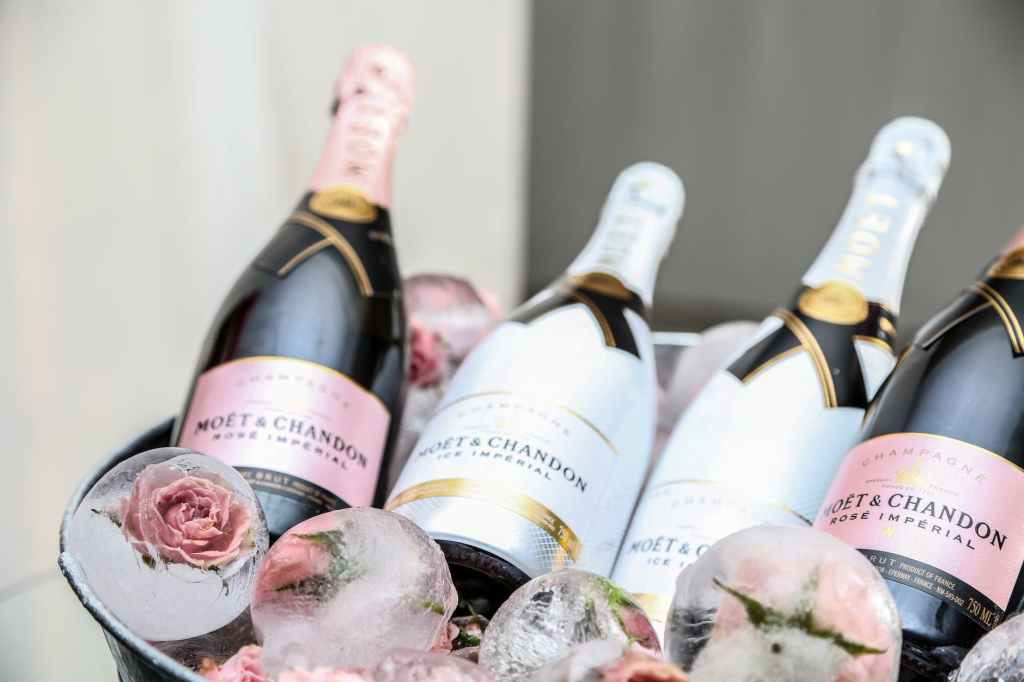
We at LSS have never been afraid to tackle the crucial social issues of our time. And now another has come up- is it best to use oranges or lemons in a cocktail?
It all started when a letter flooded in from Lady M—–, of Collingwood Gardens South Kensington, and Brinkley Court, Gloucestershire. “Oh Cocktailmeister”, she writes, “Oh cocktailmeister, is it better to use oranges or lemons in a cocktail for one’s guests?” Well, these people are running the country now, so we thought we’d better come up with an answer. And the way to do it is to let you, the people decide. We shall offer a choice for you to try, and make your own minds up. Let’s start with lemon. It can be frightfully sour stuff, so the drinks tend to be short.
Brandy Sour
5 ice cubes; juice of 1 lemon; 3 measures good brandy; (Courvoisier or Remi Martin -none of that Spanish stuff you picked up at Malaga airport) 3 drops angostura; 1/2 measure sugar syrup. Mix in a shaker, hold back the cubes : then pour to a cocktail glass and decorate with lemon peel.
Between the Sheets
As many a teacher used to declaim “We’ve done this before!” But for the benefit of those who weren’t paying attention last time, here we go again:
5 cubes ice; 1.5measures brandy (see above); 1 measure white rum; 0.5 measure Cointrea;. 1 measure lemon juice; 0.75 measure sugar syrup. Mix in a shaker, hold back the cubes; pour to a cocktail glass and decorate with lemon peel.
Now for the orange. As, on the whole, orange juice isn’t so sour, we are able to offer a classic long shot and a shorter classic
Harvey Wallbanger
1 measure vodka; 3 measures fresh orange juice ;1/2 measure Galliano. You shake in your Bond- style shaker, but this time the cubes go in with the mix to a long glass. You can decorate this with slices of orange.
Luigi
Here’s one for a classic cocktail glass. 1 measure dry vermouth;1 measure fresh orange juice; 1/2 measure Cointreau; 1 measure grenadine; 2 measures dry white gin. Once again, shake ’em up in the good ol’ shaker, and pour to your best Dartington crystal glass. Hold back the ice. Peel or slices of orange to decorate
Still can’t decide? Or a fan of compromise and coalition? Then we invite you to try the recipe for the Singapore Gin Sling. There’s your homework.
We suppose it’s good news that new use of dexamethasone may alleviate the sufferings of Covid-19 victims. We even think that vaccines and pretty effective tests may be available soon. But if you think that when this passes everything will be fine and dandy, well think again. For a start, a new antibiotic-resistant micro-organism could start a worse pandemic at any time. And then there is our old friend Global warming, which is so deadly that it hasn’t even gone into remission.
It’s true that there has been a blessed fall in the number of aeroplanes, and traffic has not been quite at its normal neurotic levels. However, two reports today (we use the Guardian, but they are all over the media) suggest all is very far from well. In the first, Fiona Miller *describes the awful dangers of a reckless uncontrolled economic bounce back, regardless of its environmental consequences. And just to underline the problem Damian Carrington headlines a new climate study from Siberia*. Fans of coincidence will love the fact that it was in Siberia that the most cataclysmic disaster event of all time originated, the famous Permian-Triassic Mass extinction. Just thought we’d mention it.
But, gentle readers, we could not leave you without hope! The same Damian Carrington, in the same Guardian, has filed another piece in which someone is trying to do something about our plight. Highview Power in Greater Manchester, have come up with new technology which uses green energy to compress air into a liquid. When they want, they just release it to spin a turbine, the world’s biggest in fact, powering many homes. It should go live in 2022.
In the long ago 2000s, opponents of green energy solutions used to love sneering that renewable ideas only worked when the sun was out, the wind blowing, blah etc, blah etc, etc blah. Technologies like Highview’s show that it is easy store power from peak times and release it later, hugely extending the efficiency of new systems. Remember that this is only one such solution. History shows that as new ideas and technologies develop, whole economies can grow and thrive. It’s fossil fuels that need to wither and die.
When we asked Madeleine Mead-Herbert to contribute a piece to our books section, we little expected this tour de force of sheer erudition. You are about to go on a rollercoaster ride from Michaelangelo through to Jack Kerouac, taking in such luminaries as Shakespeare, Kant and TS Eliot on the way. So grab a nice cup of your favourite coffee and enjoy a dose of real learning. We believe that the world will hear from this woman again. So remember- you read her first at Learning, Science and Society.
My Favourite book: On The Road – Jack Kerouac
By Madeleine Mead-Herbert
The Creation of Adam painting (Michelangelo, 1512)
This painting depicts the moment at which Adam is given consciousness; the ability humans have to think deeply and critically about life and the world around them. As you can see, the blanket around God is suggestive of the shape of the brain, something that Michelangelo would be aware of given his work in the medical profession. Additionally, on examining the expression of Adam’s face more closely, it could be assumed that before God’s touch, he is in fact rather gormless.
Descartes said the famous words ‘Cogito, ergo sum’ or ‘I think, therefore I am’ (1637). Through literature, there is a common trope where the challenges that come with consciousness lead to the protagonist’s demise. Each human will know the feeling of being unable to sleep because of racing thoughts or having a full body shudder whilst cringing at a memory of something said years before. Shakespeare emphasises the power and burden of consciousness through Macbeth who states ‘I am afraid to think what I have done’. This ability to ruminate and develop deep devouring emotions like shame and guilt are what destroy him. During the Romantic Period, Lord Byron depicted this same problem. His (quite nihilistic and perhaps adolescent) character Manfred states ‘thy heart and brain together’ and once again, it is this capacity for profound thought and reflection that cause so much pain for Manfred which leads ultimately to his untimely (and rather dramatic) demise at the top of the French Alps.
The philosopher Immanuel Kant was concerned about the Secularism and the decline of Christian beliefs and thus this painting provides a symbolic representation and insight into Kant’s summary of the Enlightenment period, quoted as ‘sapere aude’ or ‘dare to be wise’. Kant wanted individuals to think for themselves and not join the ‘great unthinking masses’. This call to celebrate deep thought and individualism was adopted whole-heartedly by American culture and Transcendentalism flourished with poets retreating to the woods to be away from society and be with their own thoughts. I must admit, this has acted as inspiration for what I have tried to replicate amongst the COVID-19 ‘Stay at Home’ and ‘Lock Down’ advice.
Thoreau went to Walden Woods and wrote ‘I went to the woods because I wished to live deliberately, to front only the essential facts of life, and ‘see if I could not learn what it had to teach, and not, when I came to die, discover that I had not lived’.
As a member of the Transcendentalist Movement, Whitman praised the individual who is ‘is complete in himself’ and has a ‘deathless attachment to freedom’.
In 1855, Walt Whitman wrote that the United States was ‘essentially the greatest poem’ and ‘poetical in nature’ due to her complex and contentious history, turbulent political movements and vast range of cultures that made the country was she was (Whitman, 2009: 439).
Jack Kerouac captured the desire to live ‘deathlessly’, think and be free, that Transcendentalists promoted through his masterpiece On the Road. This novel was largely auto-biographical and presented Kerouac’s experiences (as the character Sal) of travelling through America and Mexico with his friend Neal Cassidy (as the character Dean).
The novel starts with Sal expressing how he has been depressed and ‘feeling that everything was dead’. He tells the reader how he had always had plans to travel but had never actually mustered the momentum to go, he states ‘always vaguely planning and never taking off’. Upon meeting Dean, his life is propelled into adventurous travel and exploration.
My favourite quote from the start of the novel and a quote that has always stuck with me is:
I shambled after as I’ve been doing all my life after people who interest me, because the only people for me are the mad ones, the ones who are mad to live, mad to talk, mad to be saved, desirous of everything at the same time, the ones who never yawn or say a commonplace thing, but burn, burn, burn like fabulous yellow roman candles exploding like spiders across the stars and in the middle you see the blue centerlight pop and everybody goes “Awww!”
Sal ‘shamble[s]’ after the people that interests him rather than feeling a part of the excitement, he feels like he is on the peripheral. But by the end of the novel he is driven and passionate in his own right, even finding love.
In my favourite poem, The Lovesong of J Alfred Prufrock by T.S. Eliot, this feeling of being trapped and apathetic is presented by the speaker:
And indeed there will be time
To wonder, “Do I dare?” and, “Do I dare?”
Time to turn back and descend the stair,
With a bald spot in the middle of my hair —
(They will say: “How his hair is growing thin!”)
My morning coat, my collar mounting firmly to the chin,
My necktie rich and modest, but asserted by a simple pin —
(They will say: “But how his arms and legs are thin!”)
Do I dare
Disturb the universe?
In a minute there is time
For decisions and revisions which a minute will reverse.
For I have known them all already, known them all:
Have known the evenings, mornings, afternoons,
I have measured out my life with coffee spoons;
I know the voices dying with a dying fall
Beneath the music from a farther room.
So how should I presume?
And I have known the eyes already, known them all—
The eyes that fix you in a formulated phrase,
And when I am formulated, sprawling on a pin,
When I am pinned and wriggling on the wall,
The imagery of the pinned butterfly, the reduction of life to being ‘measured out in coffee spoons’, the refrain of ‘do I dare?’ to an audience who cannot respond to tell him ‘yes, do dare!’ and the mention of his aged persona making the possibility of change feel so finite.
This is what Kerouac manages to capture; action against apathy and his will to change and achieve the dreams that can so easily lay dormant. Sal’s actions are what I wish for Eliot’s Prufrock to do so that he can actually sing his ‘love song’.
Yes, it is true that we think and this is what makes us who we are but this ability to think can so frequently make us inert and unable to change or fulfil our dreams. A modern school of thought amongst sociologists and anthropologists is researching how humans cope with regrets about the past and so often think about ‘what could have been?’.
This novel gives me that sense of longing to travel and see the world. It makes me want to spend more time thinking positively and proactively about my dreams and ambitions for the future and how I will achieve them. This novel also gives me the drive to leave regrets in the past and accept that I can only change what I can, and move forwards, unlike Prufrock who wishes he was a pair of ‘ragged claws’. This synecdoche reflects his self-esteem, he wishes to be only a part of an inferior creature, moving sideways on the ‘floors of silent seas’.
So with all this time to think that lock-down has lent us, I wonder if you have assessed your future ambitions and priorities?
“The air was soft, the stars so fine, the promise of every cobbled alley so great, that I thought I was in a dream”
with thanks to our old friend Ms Sarah McCabe, whose idea this was
Lies. Screams. Rants. Fake news. Conspiracy. These days, both the internet and the world wide web are both full of them, choking out the truth like weeds in a badly-kept garden. Or is it graffiti on the toilet walls of a low public house in the port area of a run down city? The trouble is that every uneducated jackass can spew out their beery opinions, and in internet terms it’s just the same as finding something from Nature or the Economist. Sad, but true. The disease of our age.
But there is a remedy, gentle readers. Since the time of Plato and Aristotle, through the Medievals like St Thomas Aquinas up to moderns like Bertrand Russell, the cleverest people in history have been developing a concept called fallacies in reasoning. It is a list of logical errors that we all make without thinking. And we have some sites here which you can go to find out what they are. You too will have a kit which will let you detect the errors in the confused ramblings which clutter up our beautiful internet. Links below, but here’s a couple of examples:
Straw man argument. You select someone you hate (the straw man), put some words into their mouth, then attack them on that basis
Of course, if someone had toppled the statue of Winston Churchill, the Guardian the BBC and all the liberal media would say it was good, because they want a Revolution and bring in communism
Spotted the error(s)? You may not like the Guardian, maybe with good reason. But you don’t know what they would say because they haven’t said it yet. Then you attribute communist motives which they may not have. By the way-how do you know that Revolution is their preferred political method?
False cause and effect
This is where can believe in something you want to be true by using bits of “evidence”, without considering other explanations
Example If there was a large hairy caveman living in the Himalayas, we would find its tracks in the snow, We would hear strange calls. There would be reports and sightings from locals and mountaineers
There are many examples of tracks in the snow, strange calls. and odd reports and sightings from locals and mountaineers in the Himalayas. Therefore, the Abominable Snowman is real.
Is it? What about bears? Snow leopards? Did the locals and mountaineers, brave men no doubt, make honest mistakes? Was someone else up there less honest, faking things?
Once upon a time, logic and reasoning were central to the curriculum. The tragedy of our times is that schools don’t teach them. They are hypersensitised to pushing their pupils through examinations. But there is a wide gap between examinations and thinking. So, gentle reader, it’s down to you. Find something on the internet, then read the words very carefully. Then check those words against the lists of errors below. Now you will know how good it is
and here we found a free online university course (spoiler alert: we haven’t tried it but were so amazed by its very existence, we had to give them a plug)
Most people are aware how truly dreadful a world without antibiotics is going to be. Because if you go into hospital, you’ll die. No routing hip and hernia operations. Live with it, pal. No cancer operations. Live with it pal, as long as you can. As for childbirth-feminist historians will tell you what puerperal fever was. And what will be the effect of leprosy on the fashion- conscious, now that it is making an antibiotic resistant comeback?
One of the principal causes of burgeoning antibiotic resistance is their over-use in agriculture. In countries like the USA, for example, antibiotics are poured into farm animals of all kinds in intensive factory farms. It protects from infection, increases growth and allows a cruel density of stock raising currently unknown in the UK. And of course, it allows for cheap food. But what happens when the antibiotic resistance is so high, that these levels of farming cannot continue? And what’s the point of cheap food anyway, if you have cancer, and they can’t operate because of the risk of infection?
That excellent scientist and campaigner Professor Colin Garner is concerned that the current agriculture bill may open up the UK to this joint danger. In the link below he discusses the dangers of the bill from an antibiotic point of view. There are some excellent links.
Our view at LSS: The slogan “a trade deal with the USA means cheap food” is so over-simplistic that it’s just pub economics. Of course we want cheap food. But unless the views of thoughtful people like Professor Garner are heeded, the price of cheap food could be very high indeed.
Our weekly roundup of things our readers saw, or we haven’t had time to cover.
Earlier this week we blogged an intriguing tale of green shoots from Amsterdam, at the behest of the well-known broadcaster and entrepreneur Mr Lindsay Charlton, of Kent. But he thinks this is so important that he wants you to know more. Read how Amsterdam’s doughnut shaped economy could pull all of us out of the current quagmire.
Nuclear fusion is the energy source of the future-and always will be. So runs the sardonic joke of the last 65 years. Yep, it’s a holy grail-endless cheap green energy. Trouble is, we haven’t been clever enough to make it work. Now Abigail Beall of the New Scientist thinks that Artificial Intelligence may be coming to our rescue. If this one has legs, it will transform all of our lives for the better
Mr Peter Seymour of Hertfordshire reminds us that human ingenuity finds surprising expressions. Here’s a piece from The Conversation which shows how analysis of sewage will help us track the progress of Covid 19. Old Forensic Scientists will love the way tiny traces provide marvellous results, if you try hard enough-and of course the presence of our old friend, PCR!
While we spend our time on statues and coronavirus, nemesis is approaching fast. It looks like we have underestimated the effect of greenhouse gases by a lot. Here’s Jonathan Watts in the Guardian
And finally….astute readers will have noticed that when corporations or other organisations are in trouble, they change their name. It is usually a vanity and a delusion, because the old faults are still there. Should humanity do the same? When the first real humans appeared they were called Homo ergaster. In Latin, it means “work man”. A simple no-nonsense name that suggests a species that got on with making the tools, chopping the meat, and had all the plain unpretentious values that go with it.
About half a million years ago, the name was changed to Homo sapiens, which means “wise man”. Have you ever heard of anything so vainly self-deluding? “Oh we’re so clever and cool, we can do anything we like!” we told ourselves. Try telling that to a coronavirus or an antibiotic-resistant bacteria. It’s pride and hubris that lead to nemesis, and it looks like we’re the next victim.
We once again thank Paul and Lindsay for providing us with these answers to our quiz.
1 When is it generally agreed that “cocktails” were first created?
The first reference to a cocktail was in 1806. In that year, an American gentleman’s magazine called strangely enough The Balance and Columbian Repository described “a stimulating drink composed of any kind of sugar, alcohol and bitters” – as “a cocktail”
2 One of the earliest cocktails was called an “Old Fashioned”. What is its main ingredient?
Rye Whisky
3 Bringing things up to date – what was the world’s best- selling cocktail in 2019?
An Old Fashioned!
4 What goes into a White Russian?
Vodka, Kahlua (or coffee liqueur) and cream
5 What is the “pink” in a pink lady?
Grenadine
6 Which Cuban classic consists of white rum, lime juice, sugar, soda water, and crushed mint?
Mojito
7 Who claims to have invented the daiquiri and which bar did he make famous in Havana?
Ernest Hemingway-Floridita
8 Who sung Making Your Mind Up? Clue– it was the song which won Eurovision for the UK in 1981?
Bucks Fizz
9 The Eagles named a song after a cocktail. What was is called?
Tequila Sunrise
10 James Bond is famous for asking that his martinis are ‘shaken but not stirred’. In which novel did he first use this phrase?
It is not often, gentle readers, that we at LSS can boast the help of professional broadcasters and journalists. But tonight we are proud to present their inimitable contribution, a specially designed cocktail quiz for your Friday night delectation. For the benefit of our copyright lawyers, Mr Larsmon wrote the original for his pub, the Lockdown Arms, in Wiltshire. Mr Charlton has added his own suggestions, and we are proud to present their joint efforts.
Answers will be published tomorrow.
1 When is it generally agreed that “cocktails” were first created?
2 One of the earliest cocktails was called an “Old Fashioned”. What is its main ingredient?
3 Bringing things up to date – what was the world’s best- selling cocktail in 2019?
4 What goes into a White Russian?
5 What is the “pink” in a pink lady?
6 Which Cuban classic consists of white rum, lime juice, sugar, soda water, and crushed mint?
7 Who claims to have invented the daiquiri and which bar did he make famous in Havana?
8 Who sung Making Your Mind Up? Clue– it was the song which won Eurovision for the UK in 1981?
9 The Eagles named a song after a cocktail. What was is called?
10 James Bond is famous for asking that his martinis are ‘shaken but not stirred’. In which novel did he first use this phrase?
The first in a series celebrating those who have advanced learning and knowledge.
Imagine that you lived in a world where all civilisation, order and trade were collapsing. Where statues and other works of art were torn down. Roads, bridges and aqueducts crumbled. Where schools and Universities were closed , and blind faith replaced reason and evidence as the basis of human life. Would you give up in despair, concluding that barbarism and ignorance had triumphed over law and learning? Conclude that darkness had triumphed forever? Or try to save something from the wreck, and pass it on to future generations?
Such was the situation facing Marcus Aurelius Cassiodorus Senator (c 485-585 AD). In his lifetime the Barbarians achieved the final destruction of the western Roman Empire. Cities and trade routes slumped into decline. The Emperor Justinian, urged by his religious advisors, closed the Universities of Athens.* The same Emperor invaded Italy, and the subsequent wars with the Goths wrecked Italian economy and society, initiating the real start of the Dark Ages. We could continue with massive volcanic eruptions and plagues, but we think you get our drift.
Cassiodorus was a realist. He came from a distinguished family, raised in the tradition of Classical culture. But he was the first to face the fact that the old world was gone. The Goths were there to stay. The Imperial power was decadent. So the only reasonable course was to adapt to this new world, to try to save something from the old, for future generations. He was the first to tackle the new realities of his time, with his History of The Goths. It was completely outside the old curriculum. In all his life in public office, he was always trying to reconcile Romans and Goths, realising that they would achieve far more together than they would by squabbling and fighting.
When this failed, rather late in his life, he still refused to despair. He moved to Squillace in Italy and founded a monastery called the Vivarium. This was to be far more than just a place to pray. He had realised that the one place where works of learning could be effectively preserved was in the shelter of monasteries. And so he set his monks to work, copying and preserving as many works as they could. It is thanks to him that so much work survived the collapse of ancient civilisation. And that one day this learning, more precious than gold, would be revived.. To this end, he instituted a set curriculum, including such subjects as vocabulary, etymology, arithmetic, geometry, music and astronomy.
Of course he has his critics. He deliberately cultivated an obscure and pompous writing style, to make him seem more learned. But that is quite familiar to those who have suffered the teachings of the humanities departments of certain modern universities, with all their Structural criticism and post modernism. An uncritical adoration of books led him to believe that elephants had no knees; that they saluted only just and not unjust rulers; and that their breath was a cure for headache.*
For all his faults, Cassiodorus had realised the vital truth. That learning and knowledge must be prized for their own sakes. And that to learn anything worthwhile requires a formal disciplined training. We live in a world where learning ahs to show a cash profit. Where exchange of ideas becomes almost impossible, as people retreat into screaming silos of mutual hatred. Where the adolescent mind has triumphed over the adult, in fact.
The ultimate victory of the educated will be by passing on what we have learned, ensuring that the current triumphs of the barbarians are remembered with contempt. If remembered at all.
RH Davis A History of Medieval Europe Longman 1987
Here’s a quote from Dr Peter Daszak in The Guardian
Determining the origins and emergence of a pandemic is as messy and complex as studying a plane crash. Just as the air crash investigator pieces together the fragments at a crash site, pinpointing the origins of a new virus is painstakingly difficult and time consuming, and requires logic and reason.
Now here are some conspiracy theories which you will find all over the internet. You don’t have to look very hard.
It came from outer space. It’s all the work of Bill Gates, who wants to control the world. It was created in a government lab in China. It comes from 5g masts……
Of course everyone has an opinion. Merely existing gives you opinions. So does beer. Isolation. Personal unhappiness. The need to be noticed-lots of reasons, in fact. The post modern crowd say that all are equally valid, from Nigel Farage to Dianne Abbott. If that is true, we at LSS have a problem. If we have a persistent pain and cough, should we consult the opinion of a Doctor, or a painter and decorator? If I we have a knocking sound coming from a car, then should it be the opinion of a mechanic, or an expert in literary structural theory? (hey, he’s even got a PhD!)
Practical people need practical examples. Let’s compare Dr Daszak and a conspiracy theorist, both talking about the Covid-19 outbreak and decide whose opinion might be more useful to us.
Dr Daszak: Trained scientist. Head of Eco Health alliance which maps disease hotspots around the world.
Conspiracy theorist: has been “going on the internet a lot since this thing started, and what you find there, it’s really scary, they say………”
Dr D and team: 15 years studying problem in China
Conspiracy theorist: Has no team. Has spent 15 days talking to like minded souls on internet.
Dr D Has sampled 16 000 bats.
CT No bats sampled. Or Rats. Or Cats. Used to think bats were used in cricket, but now recalls them from old Scooby Doo cartoons.
Dr D Has found cluster of corona viruses in Yunnan, Laos, Vietnam region, all related to Sars-Cov-2.
CT: Has read menu in local Chinese restaurant. Saw a film once about these guys in the Vietnam war, that bloke from the West Wing was in it, or was it his son?….anyway..
Dr D: Has found that 3% of locals there have antibodies for bat corona viruses. Implies 7 million people have them naturally.
CT: If they put them antibodies in us, it will destroy our freedom!
Dr D: Has found that the protein sequence on the Sars-Cov-2 “spike” occurs in natural variants of the virus.
CT: Has difficulty with this one as failed biology at school. But believes firmly in freedom of speech.
Dr D: Thinks the balance strongly indicates a natural origin in a disease hotspot in South East Asia. And there are more to come
CT: Heard from their mate Dave who used to go to the Dog and Duck before this thing started that the Chinese had a Lab and it got out, but really the North Koreans were behind it, because it’s just the sort of thing they would do………
Dr D: changes ideas as facts come along.
CT: When a new fact comes along it must be quickly cut and butchered to fit his opinion, because that must never change.
Before you read the article, we shall take a personal note, a thing we rarely do at LSS. For many years, we had the privilege to work alongside leading Forensic Scientists whose job was to investigate difficult and complex criminal cases (we repeat-alongside, not as). Whatever their personal faults, each one of them knew that every case they did required immense amounts of time, hard work, thorough examination, and the intellectual honesty to admit, again and again, that their initial ideas were wrong, and so were modified as they found new things. So, having witnessed seen how much hard work and thought is required to obtain just a little truth, we tire of those who can seem to demonstrate neither in the support of their opinions.
Western countries and their freedoms face many threats in years to come. China may well be one of them. To face them with a population where large numbers of people are prey to hoaxes and delusions is a sure way to let these threats overcome us all.