Photo by Giftpundits.com on Pexels.com
We wish to register a thank you to all our followers
In particular SoundEagle (soundeagle.wordpress.com) and PedroL of Galicia (worldwidepedrol.) for their much appreciated mentions
#Soundeagle #pedrol #thanks
blogging new ideas in science, business, learning
We wish to register a thank you to all our followers
In particular SoundEagle (soundeagle.wordpress.com) and PedroL of Galicia (worldwidepedrol.) for their much appreciated mentions
#Soundeagle #pedrol #thanks


One of the unexpected pleasures of the Coronavirus lockdown has been the chance to visit favourite old books by favourite old authors. Take 1989. It was a long time ago in my life. It was a long time ago in your life. I put it to you it was a different life, and that you were doing different things. Certainly your internet collection was a bit slower. Yet was their an old book at the time that was part of that world? A book that the You-of-1989 used to take out a lot, but now sits dustily on the shelves, loved still, but unused?
One of my favourite authors of that epoch was the writer Alfred Duggan . He wrote of Romans and Greeks, Knights and Normans, Archbishops and Kings. Even in the midst of hard work, I would find a few hours to follow Count Bohemond and the first crusade along the dusty shores of the Mediterranean to Antioch, or run through the swamps of Kent as a beaten British army fled from the invading Anglo Saxons.
One indubitable advantage of reading historical novels was that you could try to follow them on maps. The problem in the nineteen eighties was that all the maps were on paper. They never quite showed you where you wanted to be. Now Google Earth has changed all that. For me, there is now Bari, where Bohemond and Pope Urban plotted the First Crusade. How much has survived from 1094? How much from when Duggan was there researching 1n the 1930s? Would you go on holiday there today?
This is a game anyone can play. If you like Jane Austen, try to find the stately homes where her heroes and heroines lived out their cossetted lives. Fans of Raymond Chandler can visit the streets that run down to the booming Pacific rollers; how many more murders, and cocktails are still going on behind those high stuccoed walls? Zoom in on Nassau (James Bond) or the Islands of the South Sea (Joseph Conrad) Did your favourite author really capture the spirit of the place? Why did they not mention the car park or the phone mast? (it won’t give you the virus, by the way) Now I can stand in Doryleum at the exact spot where Bohemond unleashed the Frankish Cavalry and opened the way to Jerusalem. Where are you going to go?
New technology doesn’t destroy old pleasures-it augments, accentuates and adds. Happy reading Happy searching.
#books #GoogleEarth #AlfredDuggan #JaneAusten

Yesterday was St George’s Day in England and many of our friends were celebrating as best they could, in spite of the lockdown. We hope and believe that by next year the pubs will be back open and they can celebrate once more in their normal way with many pints of their favourite fine olde Englishe ales!
But, cocktail pickers, there is another drink that is also quintessentially English. That had its origins in England of beautiful gardens, fine lawns and Oxbridge Colleges, Inns of Court, the deep greens of Surrey golf courses and Hampshire forests. We refer to Pimms, which has been steadily moving outwards from its roots to embrace barbecues and evening sundowns, without ever losing a drop of class. So why not follow our recipe, mix one up, and dream of some summer in the future when you are back at Glyndebourne, Ascot, or pulling a fast one at Henley!
Be advised: this recipe is designed to fill one glass. You can scale up to make a pitcher for a St George’s Day parties.
What you will need:
5 good sized ice cubes
3 slices fresh sweet orange I strawberry cut into pieces 3 slices of lemon 3 slices cucumber sprig of fresh mint
3 measures of cold lemonade (diet is just about OK here
2 measures Pimms No 1 Cup
add all to a chilled hurricane glass in the above order. (although if you can get a glass with the Pimms logo, it looks great) A nice mixer rod helps- see above
Final Thoughts: In our discussion and research for this blog, we took counsel from the noted journalist, broadcaster and business entrepreneur Mr Lindsay Charlton. He recommends adding an extra measure of gin to the above, But otherwise, basically, he says it’s alright
#Pimms #lemonade #cocktails #StgeorgesDay
We are grateful to Mr Peter Seymour, of Hertfordshire, for drawing our attention to the article by Daniel Burke* on CNN, concerning the increasingly acrimonious debate in the United States about whether that country should be opened again for normal commercial business. Burke bases his argument on a detailed analysis of the Utilitarian Philosopher Jeremy Bentham, author of the famous dictum “The Greatest Good of the Greatest Number“. “Openers” will scream that more damage will be done to more people by the lockdown than the lives saved by its converse. The other side will reply in the opposite, with every weapon in its armoury. We expect that the coming months will see a bitter and divisive debate, with each side brandishing statistics, arguments and proofs, with no clear winner.
We lack a really objective mathematical model of what actually works.
Now Ciaran Lee Gilligan, writing in New Scientist, offers an answer.* He thinks the problem is that we do not clearly distinguish between causation and correlation. Here is an example.
“Data from seaside towns tells us that the more ice creams are sold on a day, the more bathers are attacked by sharks. {Correlation}Does this mean that ice cream vendors should be shut down in the interests of public safety?”
The answer is no. Here it is easy to see the cause behind this correlation. More people go to the beach in hot weather. More ice creams. More swimmers. More shark deaths. But-if you only had the data on the sharks and ice creams, how would you know this? The trouble is for thousands of problems in science, medicine and economics, we have lots of data. And no way of knowing the true cause, because correlation is never proof of cause.
In the 1990s, Judea Pearl of UCLA came up with a new tool which he called the theory of causal inference. At this point you really, really should read the article below: but to give you a flavour-
It should allow us to mine data sets to better establish the real causes and effects in all sorts of areas like medicine, science and economics (see the relevance to Burke now?)
It should allow us to remove all sorts of biases and uncontrolled variables when we try to replicate the work of other researchers
Economists are excited, as it should give us much better ways of really assessing all kinds of policy changes, in health, taxation, and so on. (Both Daniel Burke and Jeremy Bentham would love this)
We at LSS humbly admit to the most breathless, desperate filleting of an intelligent article about intelligent people. We know where the foregoing sentence leaves us. But please again, read and judge for yourself. If enough people do it, maybe we can avoid these desperate miscomprehensions in places like Denver.
https://edition.cnn.com/2020/04/23/us/reopening-country-coronavirus-utilitarianism/index.html
#CNN #JeremyBentham #Utilitarianism #Reopen #coronavirus #JudeaPearl #causalinference
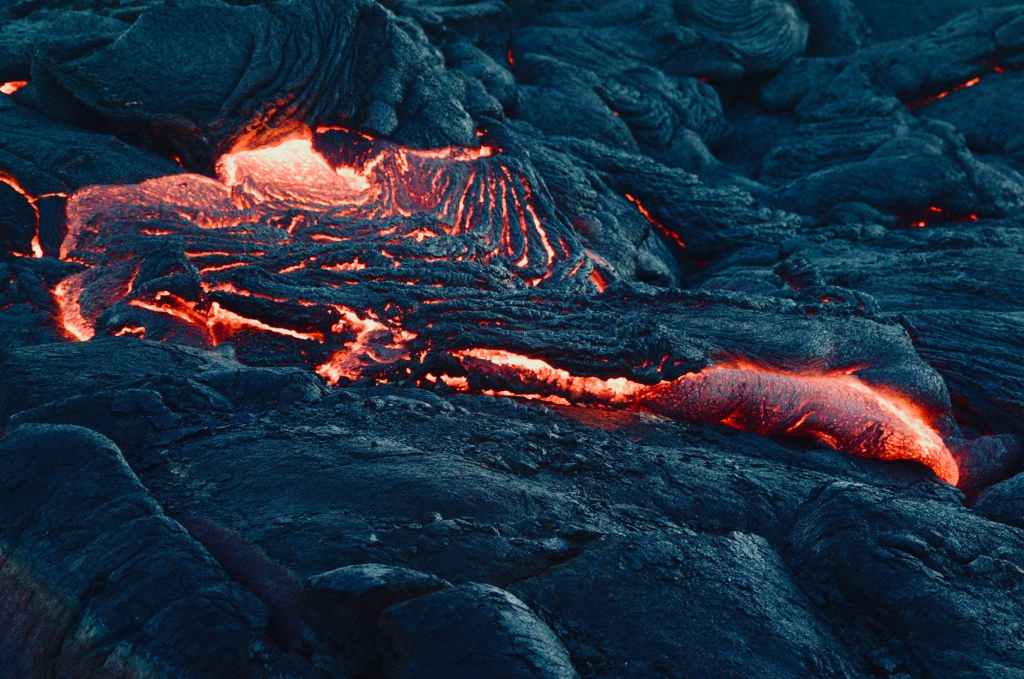
Another instalment in our light-hearted look at the terrible catastrophes that await humanity if we manage to emerge from the coronavirus crisis
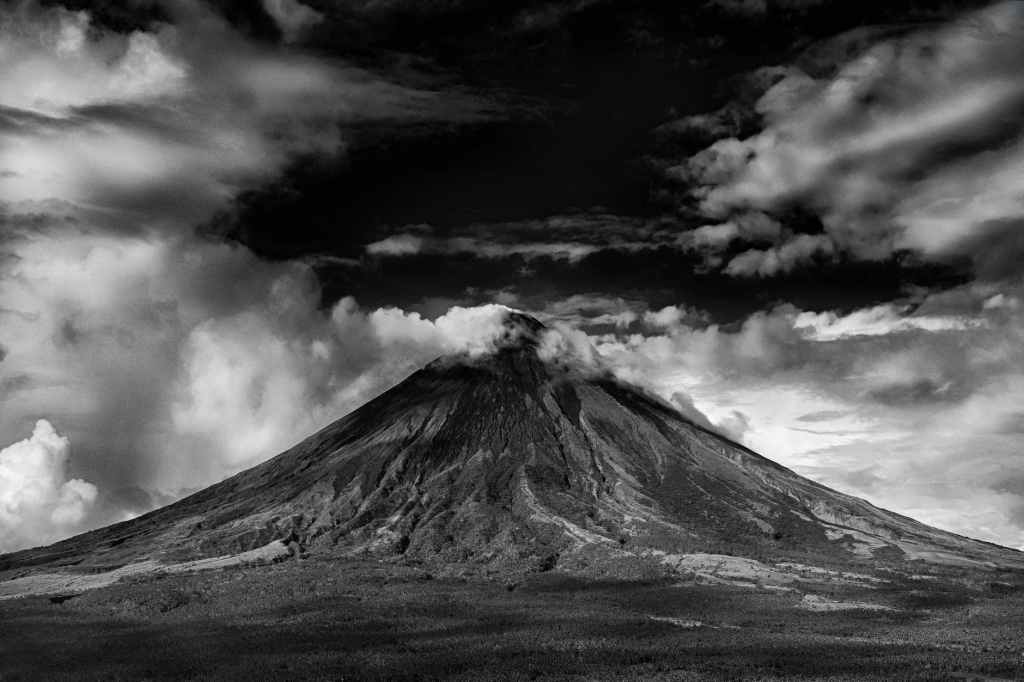
On April 5th 1815 Mt Tambora in Indonesia* exploded, killing at least 10 000 people, making another 35000 homeless, and sending 150 cubic kilometres of rocks and ash into the atmosphere.* But the real effects were only felt in the following year. 1816 should have been a good one: the first year of peace and recovery after twenty six years of instability and world war caused by the French Revolution. Instead it was a disaster. There was no summer. Snow fell in July and August. Crops failed around the world, leading to mass hunger. The ash had darkened the sky. And the sulphur dioxide had turned to acid rain, poisoning river, stream and field. One good thing: stuck under leaden skies in a holiday home in Lake Geneva, Mary Shelley was inspired to pen her Dark gothic masterpiece Frankenstein.
There are many, many volcanoes around the world, all of them of various sizes, all of them primed and loaded to “go off” at any time. The sad fact is, our ability to predict these events is very poor. For your perusal, gentle reader, I include one take on the most dangerous ones.*
The one that everyone is worried about is the Yellowstone Caldera, in Yellowstone National Park, USA. (immortalised as “Jellystone” in the old Yogi Bear cartoon series). If this one blows, it could cover the whole of the western United States in layers of ash metres deep. The “ash skies” following could be grim indeed (this one’s much bigger than Tambora; Much, much bigger, to be precise). Although some geologists are relatively sanguine, there are signs of increased seismic activity in the area: you never know, do you? So you can make your own assessment, I post an excellent Daily Mail article* which estimates the chances of a” big one “at only five to ten per cent in this century.
Don’t forget- the last Supervolcano, Mount Toba,* nearly wiped out humanity 75000 years ago. What would one do now to a technological civilisation, armed with nuclear weapons, that is fitfully emerging from a disease pandemic? We leave it to your imagination.
http://www.britannica.com/place/Mount-Tambora
https://curiosityaroused.com/nature/10-most-dangerous-active-volcanoes-around-the-world/
https://en.wikipedia.org/wiki/Yellowstone_Caldera
#supervolcano #volcanicwinter #threatstomankind
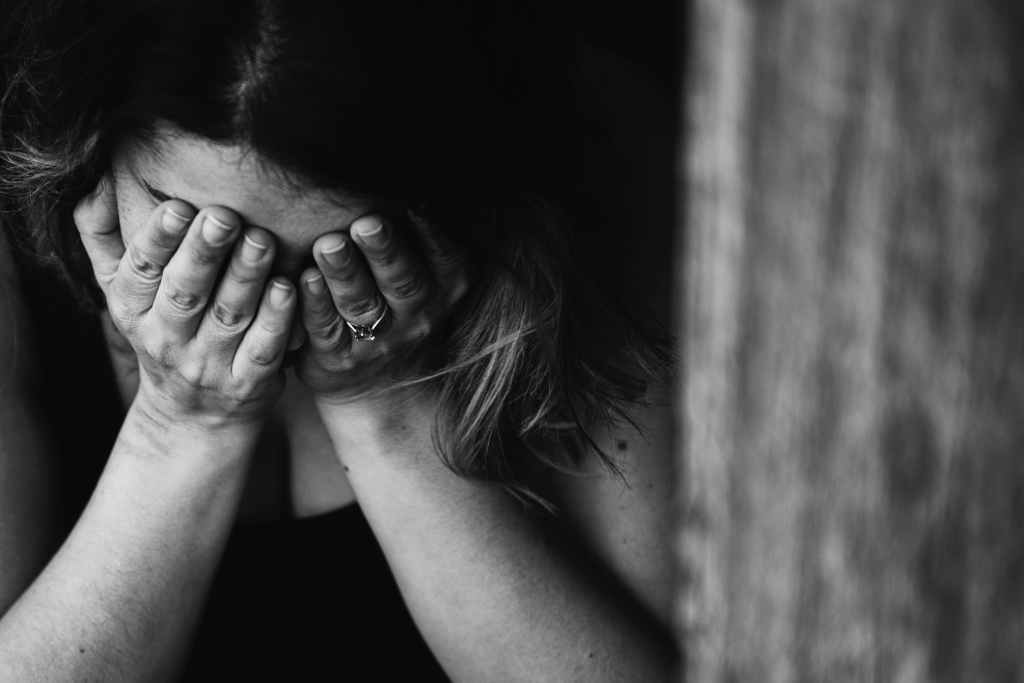
We’ve all heard about online romance scams. Heartless frauds who wreck lives, and finances, by preying on people who are terrifyingly lonely, bereaved, or deeply lacking on street sense.
Now Bristol woman Suzanne Parker is using her computer to take them on. In an excellent article in today’s Daily Mail by Jenny Johnstone, she lists her Scammer Warning Signs, which help you to decide if the new Love of Your Life is a bit dodgy. * Read it for yourself, but here are a few:
Something odd in their story conflicts with regulations like Health and safety (who works alone on an oil rig?)
They have an amazing job-astronaut, MI5 agent , astronaut. Businessman is a good one, asit hides a multitude of sins.
They are doing amazingly well, but just right now are short of money. Lots of it.
Their grammar and spelling are odd, and even inconsistent. Are two people writing these messages?
We recommend that you read the full storyin the article below. The question for us is-why does Suzanne have to do this on her own. Scammers have two advantages. Firstly the isolation of their victims. In our modern, atomised society, the lonely individual is always going to get less of the breaks when they are up against an organised gang. Secondly, the scammers can operate across national boundaries. There is currently no single jurisdiction, nor intelligence network, nor co-ordinated operation against them.
It’s an international crime, and it won’t go away until an international agency is tasked to deal with it. How about Suzanne Parker to head it up?
* https://www.dailymail.co.uk/femail/article-8246315/Sleuth-turned-tables-lonely-hearts-scammers.html
#SuzanneParker #JennyJohnston #Datefraud #RomanceFraud #onlinescam
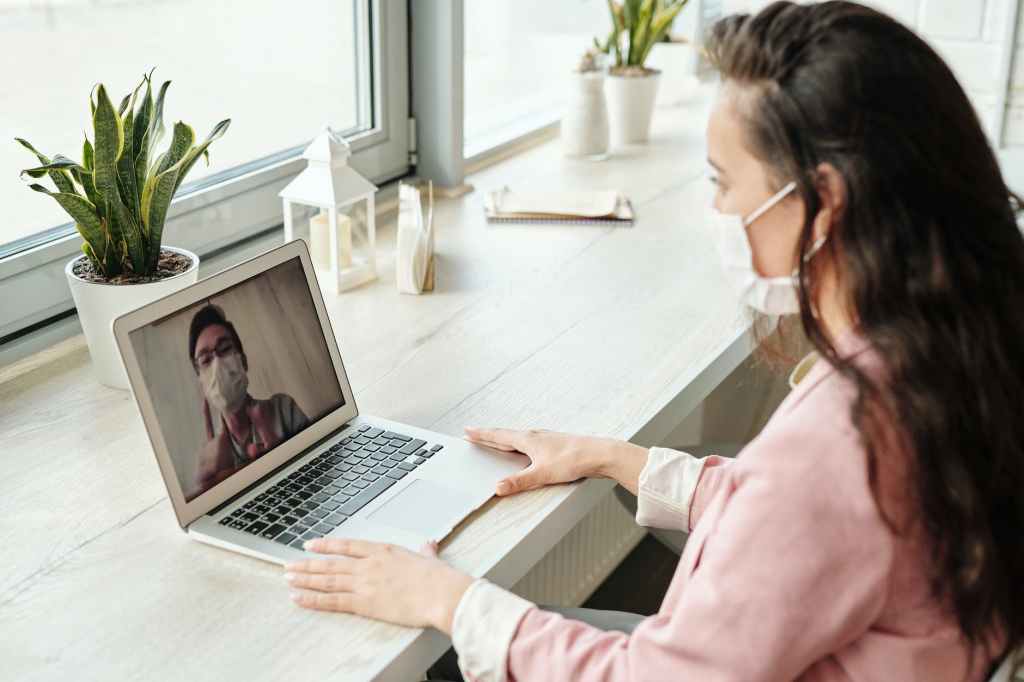
Everyone’s experience is important to us here. We want to know about how your life is going during the Coronavirus Emergency. How you are coping. The people you meet and talk with. Or not. The aim is to collect and publish the daily lives of people around the world. Tell us what it’s like for you
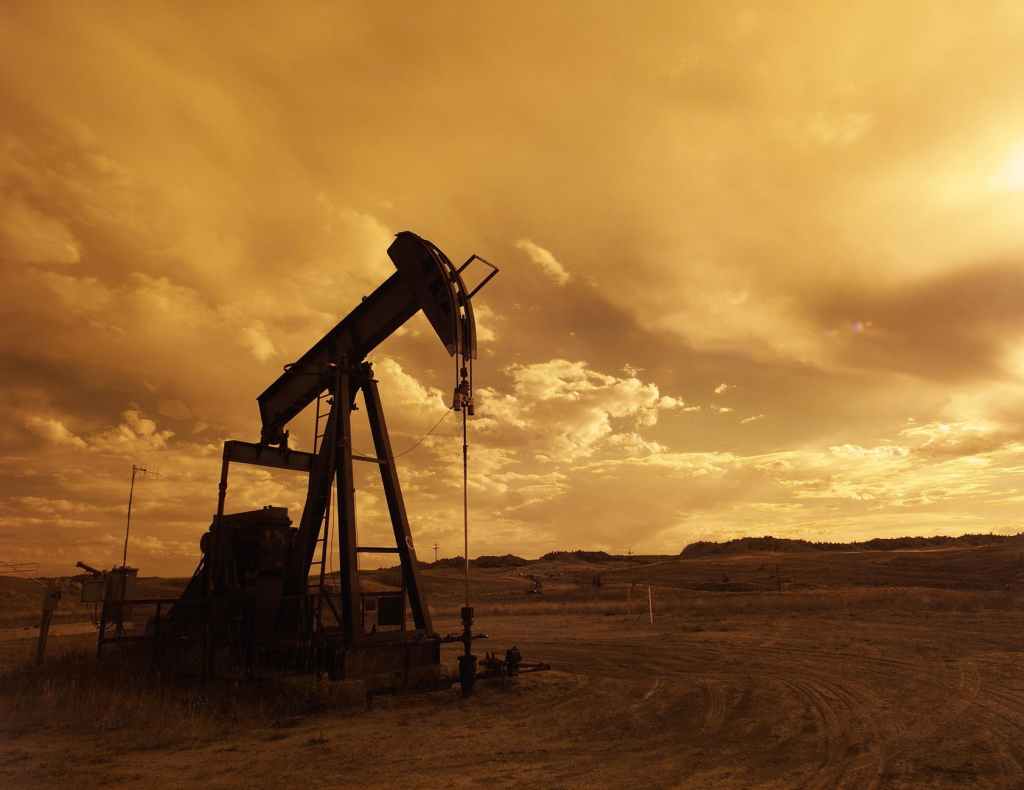
The sudden drops in oil prices should ring a bell with those of us who remember the wild fluctuations of the past. Older readers will recall the crisis of the winter of 1973-74. Crude pumped mineral oil has been central to our civilisation since at least 1900. Victory in the Second World War ultimately depended on who controlled oil resources, as both sides knew well. Oil has sat at the heart of car culture, shopping mall culture and holiday culture, and lots more, ever since 1945.
This is why price fluctuations in it are so important. Along with a few other things like the Dollar, US Treasury Bonds, Gold and certain metals futures, it is a key indicator of the speed and direction of travel of the world economy. Like one of the key indicators on your car (no joke intended)-the speedometer perhaps. The recent wild drops (as I write US prices are negative and Brent at $16) indicate that something very strange is happening.
It could of course be supply and demand clearing to find a price, the classic expression of a healthy market economy, and just another economic calculation. But if we are going to talk calculation, we should remember the advice of the great Viennese economist Ludwig von Mises, whose paper on this subject appeared in 1920.* It was, he said, the central feature of a capitalist economy that it has a price mechanism, particularly in capital goods. Planners in a socialist economy could never find a rational price, and so would never be able to allocate resources in an efficient manner. So far, History has proved Mises right, confirming his thesis by the fall of the Soviet planned economy in 1991.
But what happens in a capitalist economy if all of these price signals start to fluctuate wildly at once?
Fortunately it has not happened yet. But anyone would be advised to keep an eye on the forward prices of things like US bonds, metals futures, and Euro spreads in the next few months. It might be a very bumpy ride indeed.
*
https://wiki.mises.org/wiki/Economic_calculation_problem
#mises #economiccalculation #oilpricefall

In an article which is so clearly written that I could never hope to match it, Guardian writer Jim Al-Khalil shows you how to distinguish between the three types of people whom you will meet during this crisis. Which one are YOU?
The Scientist: Making mistakes is the cornerstone of knowledge. As new data emerges, you change your mind and opinions. Doubt is at the centre of your mental processes, because it opens the door to new knowledge, but you are never completely certain.
The Politician: You are in command at all times, You have no doubts. New data and questions are to be avoided or dodged where possible, as they threaten your authority.
The Conspiracy Theorist You claim to be a sceptic. But you are always certain. So you interpret any new data whatsoever in a way that confirms your existing belief.
The results
The Scientist: You can come across as a bit odd, but you can be pleased to have given us electricity, medicines, powered transport and safe foods, without which the other two would be stuffed. Take quiet satisfaction.
The Politician: You are charismatic and intelligent and your sex life is often very colourful indeed. (we are too polite to ask about your financial affairs) You give us rules, wars, schools and things to talk about. Be pleased with that, instead of always looking in the mirror.
The Conspiracy Theorist: Okay, your accommodation can be a little small and cramped, and the least said about your hair and teeth, the better. But you bravely battle on in the face of all adversity and common sense, showing that there is nothing so odd as folk, as the old saying has it. Oh-and don’t look in the mirror.
The question is: from being a tiny unformed new–born infant, how did all three of you end up like that?
Jim Al Khalil Guardian Doubt is essential for scientists, but for politicians it’s a sign of weakness
#Conspiracy #Politician #Science #JimAlKhalil
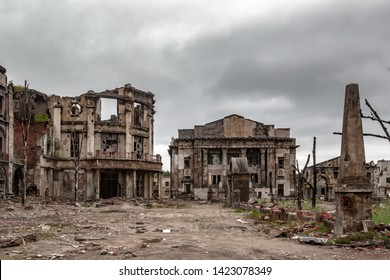
You thought that Coronavirus was bad. Well maybe “you ain’t seen nothin’ yet!” as Ronald Reagan once famously remarked. In this first of an occasional series, we’ll be looking at some of the other threats, large and small, which may yet assail us after ol’Charlie Corona virus has toddled off.
And we’re going to start with THE POLAR MAGNETIC FLIP

As some of you will recall, the earth’s core is made of liquid iron, slowly oozing around itself like a giant pot of raspberry jam. This sets up a huge magnetic field, with North at the top and south down at the bottom. This has advantages, like giving us auroral displays and protecting us from truly harmful doses of solar radiation. The bad side is- we have tuned all our compasses, navigation systems and satellites etc to it. Well, it seemed like a good idea at the time.
So what’s the problem? Well, the magnetic field seems to “flip” every so often, so that north is south and south is north. It has done it 19 times in the last 5 million years, giving us an average of 263,157.8947368 years. That last bit after the decimal would take you to the middle of October, so you’d probably get your summer holidays in. Trouble is, the last flip was 780 000 years ago, and all experts agree they are totally unpredictable. Should we be worried?
According to the experts, the field is starting to weaken much faster than in the past-and it’s starting to move faster, too. (check out my references below) So something is happening, it’s just a question of what.
One thing known is that the flips are not sudden; they seem to need a chaotic period of between 1000 and 8000 years to settle down. During that time there may be up to eight magnetic poles. Or none at all. Nobody knows.
What would be the consequences of all this? Well if solar radiation starts leaking through, you must expect an increase in things like skin cancer and other disease, and presumably increased mutation rates in living things. Could that mean more bacteria which are resistant to antibiotics?
The real damage would be to our infrastructure. There could be enormous outages in power systems, with loss of mass transit and the ability to store and distribute food. All of our navigation systems for ships, planes and GPS satellites would have to be recalibrated, to say the very least. The effects on animal migration-things like birds, whales, etc. could lead to the collapse of whole ecosystems.
I shall leave you with two bits of good news. At least it hasn’t happened during the coronavirus crisis. And there is no evidence that magnetic flips lead to mass extinctions.
Drink, anyone?
https://en.wikipedia.org/wiki/Geomagnetic_reversal
https://www.iflscience.com/environment/so-are-earths-magnetic-poles-about-to-flip-or-not/
https://www.livescience.com/18426-earth-magnetic-poles-flip.html
#geomagneticreversal #geomagneticflip #solarradiation
 Learning, Science and Society