My choice for VE Day-Cross of Iron (1977)

Street, Architecture, Outdoors, Old
pixabay
pixabay

“Never forget that war is about destroying things and killing people.” So said Squadron Leader Teddy Haslam to the historian Peter Hennessy in 1978.* It is right to celebrate the downfall of one particularly odious dictator. But there were many more; and more no doubt to come.

The experience of war has been depicted so many times in films books, and comic strips, that it has become hard for us who have never experienced a war to know what it is like. This week, many will be selecting their favourite World War Two movie (why does that make us feel ever so slightly uncomfortable?) And so, for that alone , we will at least nominate one, by a master director. And we will try to be as brief as possible. I hereby nominate Cross Of Iron (1977) Director; Sam Peckinpah

Wars start because one side gambles that it can win. if you want to see the reasons why Hitler gambled, and how he lost, you can do worse than look at the credit titles of this film, which are all taken from Nazi newsreels of the time, that slowly merge into the action , which takes place during the German retreat in Russia in the autumn of 1943. Wars are hell, not only because of the killing and bad food, but also because they are fought by people. Which means that all the petty rivalries, jealousies and hatreds of office politics are simply transferred to the battlefield. You can never escape your adversaries whether they are the Other Side or your own Commanding Officer. And boy is Captain Stransky ( Maximillian Schell) a difficult boss! Aside from being backstabbing, authoritarian, homophobic, vicious and mean, he can attempt the same attempts at faux charm as a moray eel gently welcoming a school of angel fish into its lair for lunch. You will have seen the type. The only time that his rival, Sergeant Steiner (James Coburn) can really get out on his own is when Stransky betrays his own men, leaving them far behind enemy lines. Steiner has his own ideas about 360 degree performance appraisals, but we will not spoil the ending. Which, instead of being a happy one, dissolves into an unhappy anti idyll of the horrors of war, and this famous quote from Bertold Brecht:

Don’t rejoice in his defeat, you men.

For though the world stood up and beat the bastard back

The bitch that bore him is in heat again

*Peter Hennessy Never Again Vintage 1994 The author now is of course Lord Hennessy

#veday #hitler #crossof iron

The Cat, the physicist and the Policeman-apparently a true story

We are indebted to the noted educationalist and raconteur Mr David Foley, of Greenford, for the following story, which apparently is true.

One day a German physicist was driving home from his laboratory. Suddenly a Police motorcyclist came alongside and asked him to pull over. He did so, and wound down the window of his car* to ask what the problem was.

“You have a cat in the boot of your car, sir.” said the Police Officer.

” So, what is the problem?” he asked of the Officer.

“The problem is, that it is dead, sir.” said the Officer

“How do you know it’s dead? It was alright when I put it in there”

“Well, it is now, Professor Schrodinger”

*We know that this is a true story because of the authentic detail about winding the window down. If it had been faked later, the creator would have mentioned electric windows. Schrodinger lived long before electric windows

#schrodingerscat #cat #police #quantum physics

After the coronavirus, could antibiotic resistant bacteria be our next problem?

Before the Covid19 pandemic, many of us were worried about the possibility of at least one, perhaps more, superbacteria that were resistant to all known antibiotics. Far from going away, this possibility has actually been brought nearer. Because as patients who suffer from Covid19 develop secondary infections, we burn through our stock of effective antibiotics even more quickly. One of the prime aims of LSS is to get out of the way, and let people who know take over. One such group is Antibiotics Research UK, a charity, which was founded by Professor Colin Garner.

And so we link to their website. It is packed with information, including special features on coronaviruses. And it shows how you can help. If you have a family, or know someone who needs surgery, or has cancer, antibiotics protect all of them. Please consider them very seriously indeed

https://www.antibioticresearch.org.uk/latest-news

#antibiotics #coronavirus #covid19 #antibioticresearchuk

A Really Great Read

This week, we are starting a new feature called A Really Great Read. In which we invite you, the readers to tell us of, not a book you can do with, but one you can’t do without. Did it teach you things you didn’t know? Did it make you laugh/cry/fall asleep? Was it special at some time in your life? Tell us. A reader is like a traveller to a foreign land. Maybe the rest of need to know about what you discovered there.

Purely to start the ball rolling, we will begin with the following

A History of Medieval Europe by RHC Davis.Longman I came across this book at a time of great personal and economic difficulty. And I figured, well the Middle Ages were a time of great difficulties, if they can jolly well get through it, then so can I! And that has stood me in good stead ever since.Yet there are many, many books on the Middle Ages. What is so good about this one, I hear you ask.Well read for yourself. But as you do so answer these questions:

Is it the clarity of style?The structure of the Roman Empire was based on the unity of the Mediterranean, its people and its gods….It was first cracked by the claim of the Christian Church to be the guardian of absolute truth, because that claim made religious compromise impossible. It was further cracked by the determination of barbarian invaders to prefer the law of their ancestors to the law of reason, since that preference implied the superiority of loyalty to one’s race over loyalty to the civilised world. It was shattered when traders lost the freedom of the sea. When that happened , the greater part of Europe reverted to an agricultural economy in which there was no place for the cities which made men civilised.

In a nutshell, or what?

Is it: unites a whole range of themes effortlessly?

Dip into Chapter Nine and you will be thrown into a single weave: The great Medieval Trade Fairs, Byzantium, Arabs, Mongols, rising prosperity, shipping, cloth, and the origin of Banks. Enough for one Sunday morning? Well, there’s a lot more in the chapter. But it won’t half help you appreciate all those funny old buildings you see in places like Barcelona or Bruges.

Is it the amazing little fact?

Under the Islamic Empire there were banks with branches in the most important cities, and

It was possible to draw a cheque in Baghdad and cash it in Morocco

( explainer:there were no cash points in the ninth century; but they sure were doing alright for the time)

Is it: The vast sweep?

We start in a collapsing Roman Empire, move on to the barbarian Invasions ,the rise of the Church and the Franks, the Islamic Conquests and the ninth century simultaneous attacks of beastly hordes like Vikings, Hungarians and Saracens. We draw breath with an economic survey of Europe before the door opens to the more successful High Middle Ages, A time of new buildings and art, booming trade and military success. This was the age in which the foundations of modern science, commerce and Universities were firmly laid; only to be dampened somewhat by the arrival of the Mongols and the Black Death.

And finally A note of odd bravery. I leave it to Professor Davis-and you

(at the end of the thirteenth century)

The conservative might lament the passing of the old order, and try to reconstruct it, but the task was beyond them. The significant figures were the friars who set out to find the Mongols and explore the unknown, however fearsome it might be.

#rhcdavis #ahistoryof medievaleurope #middleages

Another thank you

Three thanks

1 A like from The Treasure International https://henrypatroski28gmailcom.wordpress.com/about/

2 Happy Birthday the Hubble Telescope -what things you have shown us!

3 Happy Birthday The Spectator. Alright we don’t always agree with what they say, but sometimes you need a Right-wing voice like theirs to cut through certain self -righteous droners on the Left.

We really, really appreciate it when people take the trouble to read our musings.

And we really appreciate it when intelligent people work in teams to produce something intelligent and out of the ordinary. It certainly is unusual.

#NASA #Hubblespacetelescope #The Spectator #thetreasureinternational

Yes, Covid 19 is man-made. But Sars-Cov-2 isn’t

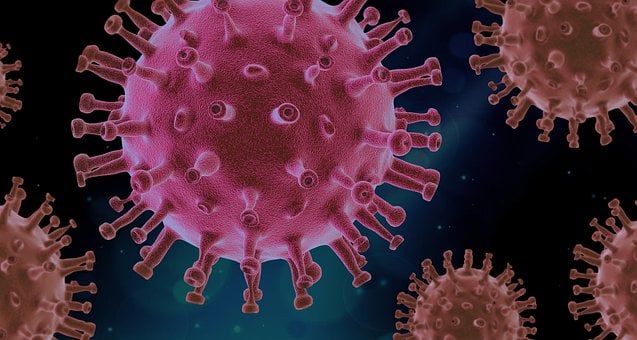
Virus, Pathogen, Infection, Biology
pixabay

We at LSS have always admired precise thinking, where possible. And so it is important to distinguish between the disease COVID 19, which we think has been largely man-made, from the virus SARS-Cov-2, which isn’t. Let’s start with the latter, as there have been some amazing claims lately that it has been cooked up by nefarious scientists, at the behest of an evil government somewhere. Today we review an article by Peter Beaumont of the Guardian which deals with this.

Anyone who has even a passing acquaintance with courses in logic will know that one of the basic principles is that extraordinary claims require extraordinary evidence. If I assert that there is a large green dinosaur swimming around a lake in Scotland , the burden is on me to produce some very, very strong evidence, as the proposition is contrary to all known geological and zoological experience. So, if you think the virus was engineered, answer these questions:

What are your proofs in virology, statistics, and epidemiology?

Where were these findings peer-reviewed?

SARS-Cov-2 bears overwhelming resemblances to many naturally occurring mammalian viruses. How do you explain that?

Why was the early Wuhan outbreak characterised as predominantly type B, with some type A?

Why was the early outbreak in Guandong predominantly type A, with only some type B?

Who might benefit from spreading disinformation about the virus? Why?

Spoiler alert: If you say “well I saw some top expert on the internet say x y and z”, that is not evidence, it’s for the pub.

The disease COVID 19, on the other hand, is almost entirely of our making. One may wax lyrically angry about the failures to control the escape of the virus. The appalling failures in public health which have led to widespread problems with smoking, obesity, cardiovascular and a range of other health problems which have left sufferers appallingly vulnerable. The atrocious atmospheric pollution in so many cities around the world. The exaltation of “growth”,- which seems to us a brash process of outing up huge concrete boxes where people spend 16 hours a day watching each other on computer screens-over things like education and health. And ignorant greedy people crashing into delicate ecosystems and robbing them of their precious plants and animals.

That’s how we created this disease.

The two articles below will give you more, and the BBC one in particular has many references.

https://www.theguardian.com/world/2020/may/01/could-covid-19-be-manmade-what-we-know-about-origins-trump-chinese-lab-coronavirus

https://www.bbc.com/future/article/20200427-how-air-pollution-exacerbates-covid-19

#Sars-Cov-2 #covid19 #pollution #publichealth #originscoronavirus

Friday Night is Cocktail Night

Christine Hartley

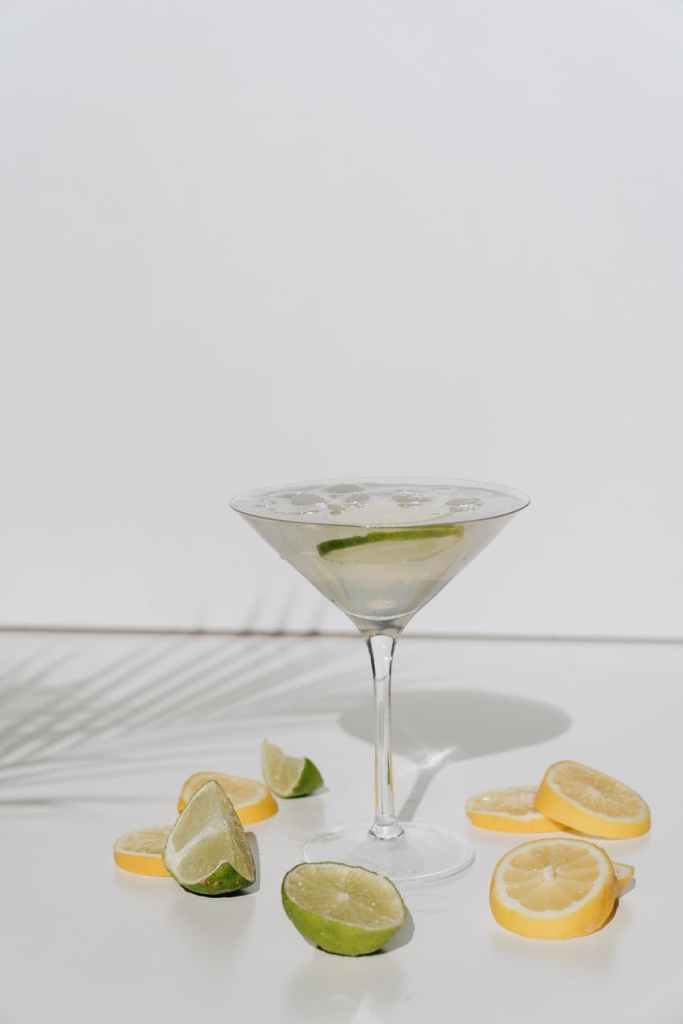
Well, the cocktail we’re going to feature today is not the one in the picture above, but my wife thought that it was so good , it should go in anyway. So be it.

No, the one we’re going to cover tonight is the famous Daquiri. We shall start with a basic recipe, then suggest ways that serious aficionados can jazz it up according to their whim.

According to Wikipedia:

Daiquirí is also the name of a beach and an iron mine near Santiago de Cuba, and is a word of Taíno origin. The drink was supposedly invented by an American mining engineer, named Jennings Cox, who was in Cuba at the time of the Spanish–American War.

In other words, it’s a tropical cocktail. One to be sipped slowly under a palm thatch as the sun goes down after a long day on the beach. When you’re freshly showered and after sunned, and the staff are preparing the hotel for the evening meal. But-as you are not going to a hotel any time soon, here’s how to make one at home:

You will need: Cocktail shaker, cracked ice 2 fresh limes (and I mean that) 1 teaspoon sugar syrup, 3 measures white rum, e.g. Bacardi.

How to do……..IT! Crack your ice into smithereens and pop it into the shaker. Squeeze as much juice as you possible can from the limes, and pour in. Add the sugar syrup, then the white rum. Shake like it’s saving your life for 20 seconds then pour into a freshly chilled cocktail glass.

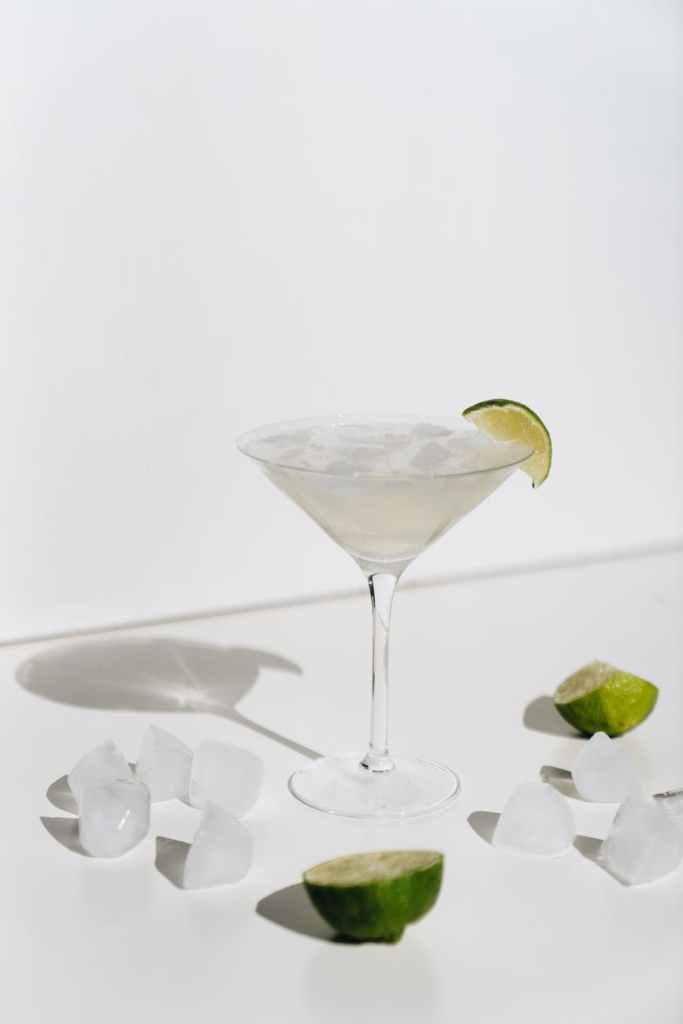
That’s like the one shown below, although Daquiri purists prefer one of those rounder shapes, of which we cannot find a free picture. But, as these are times of austerity, we are sure you won’t mind, cocktail pickers.

Variations

By using the juices of things like pineapple, coconut liqueur, apricot, strawberry, et al, you can make a pleasant variation to the base line model described above. Or.to add a little extra pzzazzz, things like Cointreau and grenadine. Daquiris are gregarious, democratic cocktails-they welcome everyone.

They are ideal for the zeitgeist of our time,with all these new buzzwords of the emergency like quarantini, locktail hour, and martini espresso.

As it is May Day, we will conclude by saying “Drinkers of the World, Unite!”

#Daquiri #cocktail #whiterum #limejuice

Daiquiri – Wikipedia

en.wikipedia.org/wiki/Daiquiri

Some truths on coronavirus: if you are not a virologist, why not just shut up and listen for a change?

One of our self appointed tasks at LSS is to stand back and bring you ideas from people who are far more intelligent than ourselves. And not to get in the way!

Here are two pieces from Nature updates. One counsels that the whole corona trope is now so big, so complicated and so emotional that no one can understand it in its entirety. Especially conspiracy theorists and those grinding out hidden agendas, who have never seen a virology lab in their lives.

The coronavirus pandemic is “a problem that is now too big for any one person to fully comprehend”, argues science journalist Ed Yong in a long read about the factors in play. We struggle to master knowledge that is new to many of us: the definition of a ‘coronavirus’. The characteristics of this specific one, SARS-CoV-2, and the disease it causes, COVID-19. What the research on treatment and vaccines really means, and which experts and self-appointed experts we can trust. And how we can parse misinformation, shifting public-health advice and the uncertainty inherent in a fast-moving scientific landscape. The Atlantic | 26 min read

The second traces the history of the virus

Some of the history of the SARS-CoV-2 virus is recorded in its mutations. In this infographic-packed feature, follow the journey of the virus’s progress from Wuhan, China, to everywhere by tracing tiny variations in its RNA.The New York Times | 7 min read

So for all those who assert that that there isn’t a virus, and it started in China/the USA/Russia/Droitwich, why not just take a rest from spouting your own uninformed opinions, and look at some evidence from someone intelligent? Like, just for a change?

Nature Briefing <briefing@nature.com>

#sars-cov-2 #coronavirus #covid19 #wuhan #Nature #Atlantic #NewYorkTimes

A big and humble thank you…

To our latest followers and likes. The latest is a site called politics with CW, in the United States of America. They show a video analysing the statements of a Mr Donald Trump, who I believe is their President. If this is so, he follows in the tradition of George Washington, Abraham Lincoln and Franklin D Roosevelt. So, by analysing his words and statements, we can all learn ore about Logic and Deep Thinking. I suppose.

#donaldtrump #politicswithcw #factchecktrump #USpresidents