What the readers saw

We at LSS have always hoped to act as a gathering place where intelligent and informed people can meet to exchange ideas. To come on this blog, we suspect you to have two considerations in mind: that learning comes from experience; and that wisdom from careful thought.

To this end we present our new section called “what the readers saw”. A gathering of ideas from intelligent people who think YOU should know about things which they think are important to us all.

And so we have the privilege of presenting the snippets they have pulled from this weeks media, in no particular order.

Should we be printing more money? Mr John Read, a businessman from Henley on Thames, draws our attention to a sky news article about top Irish economist David McWilliams, who says that governments and banks should be showering “helicopter money” on ordinary citizens, to get the economy moving after the virus peak has passed. A good idea? Judge for yourself:

https://news.sky.com/story/coronavirus-top-economist-says-central-banks-should-give-away-free-money-11985517

We cannot resist telling you that John moonlights as both manager and lead singer of an excellent band called The Covered, whom we have seen perform live on two occasions. Available now for weddings, club dinners and all other conceivable social occasions!

Care Homes and the CoronaVirus: We do not doubt the good intentions of the UK Government, whatever mistakes they may have made. But did an overemphasis on hospital safety leave care homes at risk? Mr Lindsay Charlton, whom some will already recall as a broadcaster and entrepreneur of some note, recommends this well-researched piece from Reuters:

https://www.reuters.com/investigates/special-report/health-coronavirus-britain-elderly/

Is there Life On Mars? We have always been fascinated and frustrated by the ambivalent findings of the Viking Mars probes in 1976. Growing evidence suggests that the red planet may once have contained many of the preconditions for a working biosphere. Mr Peter Seymour, an expert in the care of vulnerable people in his day job, draws our attention to the remarkable findings by a team of scientists investigating the famous Allan Hills Martian Meteorite, reported here by Apple News. It seems to contain a curious mix of nitrogen compounds which may yet be precursors to the more complex bio-molecules upon which life depends:

https://www.vice.com/en_uk/article/g5pxx4/a-piece-of-mars-that-fell-in-antarctica-contains-ingredient-for-life-scientists-discover

Tagging-the scourge of Facebook. We had seen this word used in our time hanging around the Facebook site, but have not fully understood what it meant. Now Mr Gary Herbert, famous for his many sheds and haunted outbuildings, has explained that it means two things. It can be a simple way of noting the presence of a friend in a photograph, perhaps at a wedding or something like that. But he counsels that it can also be a vexatious method for those one has “cut off” to yet intrude their baleful presence into one’s own little corner of cyberspace. (spoiler alert: we still don’t exactly understand how, but Gary is frightfully clever, and has set us up with more bits of tech than you can subroutine an algorithm with, so he must be right) It is further example of the abuse of the privilege of communication, and we hope Facebook may find a way to stop it.

Do you have any snippets you want to discuss, or think that the Intelligent Community needs to know about? If so , contact us here at Learning, Science and Society. And now we can all go off for our Saturday Night glass of cold beer. Enjoy!

#Helicoptermoney #tagging #AllanHills84001 #coronavirus #carehomes
Pandemic, Infodemic: New Scientist on how to spot suspect science #2

If the covid-19 outbreak has taught us anything, it is the fearful vulnerability of our cyberspace to the postings of every crank, fool and sinister manipulator who has a keyboard, and the difficulty of separating their lies and hidden agendas from honest error, rightful emotion- and tiny fragments of genuine truth. It will not go away after covid-19. It is also a problem in politics, economics. health and other fields which have a direct bearing on human life.

We do not advocate the abolition of a universal Right to Post, nor do we call to the restriction of discourse to those with proven expertise in a given field. But advocates of the Free Speech Defence should recall that the freedom granted by a driving licence is not the same as the freedom to drive fast down the wrong carriageway of major trunk roads, nor to ignore red traffic lights.

Until a happier day when these dilemmas might be resolved, we have pleasure in advocating this checklist compiled by Graham Lawton of New Scientist on how you can recognise studies that might be poor, misleading-or worse.

Study is published on a blog, preprint server, or social media

It hasn’t been peer reviewed by other experts yet. Two heads are better than one .All the best science goes through a long process whereby other experts in the field look at it. In science this is called peer review. In marriage, it is called health and safety. How would you get on if you blew the family savings on a new Rolls Royce without telling your wife first?

Study only has one author

It’s probably very early research, and very tentative. Once again, two heads are better than one.

The researchers are from a surprising field of study

Perhaps they are geologists talking about viruses. Why would they suddenly do that, who’s paying them? Would you take advice from a cricketer about how to play poker? Maybe- but a poker player might be better.

The analysis is very fast

It’s never a good idea to go too fast in science and engineering. Older readers will remember the Comet airliner, which should have been a world beater, but kept crashing because it was rushed into service too quickly

The study is very small

This is common sense- but Graham’s rule of thumb is that any medical study with less than 50 participants is highly questionable-and we agree. Any football team can win one match. Champions are proved by a whole season

The trial has no placebo group

If you test a drug you give samples of it to a group of 100 people. You also give pills that look and taste exactly like the drug to a second group called the placebo group. Only this way can you be sure your drug is doing anything at all. If there is no placebo group, then the researchers are on very shaky ground indeed

The study reports a correlation or association

We did this ! Correlation is not proof-remember the sharks and ice cream?(Learning, Science and Society 23 April) It’s often telling you something, but it may not be what you think it is. So be advised.

https://www.newscientist.com/article/mg24632813-000-how-the-covid-19-pandemic-has-led-to-a-flood-of-misleading-science/

#newscientist #grahamlawton

Pandemic, Infodemic: New Scientist tells it best #1

The most depressing experience of the current outbreak of COVID-19 has been the proliferation of armchair virologists, epidemiologists and population geneticists, most of whom seem to have had no training in these disciplines whatsoever. Nor in any science. Nor indeed in even the rudiments of logic, most of which have been available since the Middle Ages. it is a point which we tried to address in our post If you are not a virologist, just shut up...[sic] on 1st May.

Now the Editor of New Scientist* has said it much, much better. We therefore take the awful liberty of posting direct from their leader article from 9 May 2020

The covid-19 pandemic has upended many of the things that we once took for granted, but perhaps the most insidious is what it is doing to our ability to detect fact from fiction.

Science remains the best tool we have f-though by no means a perfect one -for creating reliable knowledge………………………it is becoming hard at times to sort good science from bad, and worthwhile hypotheses from conjecture, hyperbole and nonsense.

The editorial expands on this gloomy theme, then links to a detailed article by Graham Lawton* called “Science in Crisis” in the print version, which we link below.

Graham’s article is so very good that we shall extract his “suspect science” checklist and discuss it in a blog to follow shortly

https://www.newscientist.com/

https://www.newscientist.com/article/mg24632813-000-how-the-covid-19-pandemic-has-led-to-a-flood-of-misleading-science/

#newscientist #coronavirus #covid19 #grahamlawton #hydroxychloroquine

A big thank you to Alex Markovitch art

A great big thank you to alex markovitch art of Russia, who have noted our little blog. It is thrilling to have readers in other lands-especially the land of Tolstoy, Dostoievsky , Shostakovitch and Yuri Gagarin.

We cannot forget, on this 8th May, how older people told us of the enormous sacrifices which the people of Russia made to defeat Hitler. A fact well testified by objective historians.

https://kadr.vip/

Friday Night is….Cocktail Night!

Friends of LSS, it’s so easy to be gloomy about things nowadays, as our last three rather sombre blogs demonstrate. And so it’s time to find a corner of your life, and home, for a little cocktail cheer. This week, another summery one: Planter’s Punch.

What you will need: Shaker, six ice cubes, tall glasses, dark rum, Galliano, orange juice, apricot brandy

How to do it : In the shaker add one measure dark rum, 0.5 measure apricot brandy, 3 measures of fresh orange juice, 1 measure Galliano. Shake over ice.

Decorate: to keep that yellow tropical look, slices of things like lemon and orange, even apricot if you can manage it without cutting your fingers off.

#cocktail #planterspunch

Larry Elliott on what’s happening next

The growing debate about whether, and when, to start letting people back to work, reveals an agonising dilemma for the Government. How do you save lives without causing a total economic collapse? We at LSS will listen to both sides with the utmost empathy, as is our Duty on this blog.

For a look at the awful economic problems which confront the Government, you could do worse than go to the writings of Larry Elliott of the Guardian. He has always been one of the most fair-minded and independent economics journalists whom we have come across. Once again, we shall link his article below, and precis the main points for those rushing off to the office. (who they?-ed)

He advises:

-To all intents and purposes, the economy has collapsed

-Past recessions have tended to concentrate on one section of the economy; this collapse is system-wide

-There is little sign that bounce back will be rapid; the damage is already too deep, and health restrictions will have to continue in some form

-Falls in wages and employment levels will make consumers exceedingly cautious as we move into the autumn

He concludes “The aim now is to avoid a great depression”

https://www.theguardian.com/commentisfree/2020/may/07/snapback-uk-economy-lockdown-recession-coronavirus

#LarryElliott #GuardianBusiness #RishiSunak #depression #covid19

Easy to point the finger at Johnson, but….

Today we have the honour to air the views of our first Guest Contributor, Mr Lindsay Charlton. Although we do not necessarily agree with his views, nor those of any of our future guests (and boy, have we got some lined up for you), Mr Charlton has had a successful career as a journalist, broadcaster, Managing Director and successful high tech entrepreneur. A man with a CV like that has to be taken seriously. This is what he says

It would be easy to point a finger solely at Johnson and Hancock for the tragic toll of life in care homes but I suspect history will conclude that our scientists were slow off the mark too. Thirty years as a journalist taught me two things about experts. The first is that they constantly disagree with each other, the second that they hedge their bets. Or am I being harsh?

Lindsay Charlton

To get Lindsay’s full thoughts on this and many issues, go to the following link.

https://www.linkedin.com/in/lindsay-charlton-02b1506/

#BorisJohnson #MattHancock #lockdown #coronavirus #LindsayCharlton

Sars-CoV-2 : A most fearsome adversary

A recent posting in Nature Briefings gives us some idea just how tough the Sars-CoV-2 virus is going to be. We post the link below, and urge you to take a little time to read it, whether as a citizen, taxpayer, family member, or as befits a reader of LSS, a good old fashioned rationalist who is curious about the world around them. We will not spoil it for you, but note these telling points as you read

This virus has an array of adaptations which make it more lethal than previous coronaviruses which we have encountered

It attacks human cells at multiple points, unlike previous corona viruses

It has a dangerous mutation mechanism called recombination

There is also a very clear discussion of the origins and evolution of this virus.

Here is a precis, from Nature Briefings, which we hope can give you a link by other means

The new coronavirus, SARS-CoV-2, has an array of adaptations that make it much more lethal than the coronaviruses humanity has met so far. Unlike close relatives, SARS-CoV-2 can readily attack human cells at multiple points, with the lungs and the throat being the main targets. Once inside the body, the virus makes use of a diverse arsenal of dangerous molecules. And genetic evidence suggests that it has been hiding in nature possibly for decades. But there are many crucial unknowns about this virus, including how exactly it kills, whether it will evolve into something more — or less — lethal and what it can reveal about the next outbreak from the coronavirus family.

Nature | 14 min read

#NatureBriefings #Sars-CoV-2 #Coronavirus #Covid19 #Bats

Our Musical Choice for VE Day-Vaughn Williams 49th Parallel

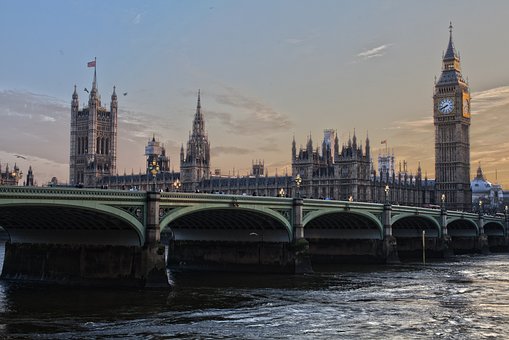
London, Parliament, England, Ben Ben
pixabay
pixabay

Ralph Vaughn Williams (1872-1958) was a formidable composer of symphonies, orchestral pieces. ballets and songs. General readers will best recall his Fantasia on a Theme by Thomas Tallis and Greensleeves; fans, his Lark Ascending and songs such as Silent Noon. Coming from a well- to- do and high-minded family, his life and ethos are somehow typical of that mid-century, BBC -and- Rations Britain which fought the second world war and went on to create things like the NHS, Welfare State and jet engines.

In 1941 that war was going very badly indeed. Having scraped through the Fall of France and the Battle of Britain, convoy losses were mounting. More worryingly for insiders, the last of Britain’s gold reserves were about to be gobbled up by the United States. in return for some distinctly vintage destroyers. It was the moment at which Britain had finally stepped down from its status as an independent power. Yet it still fought on for its democracy, its only important ally being Canada.

Hoping to out- propaganda Goebbels in the then neutral United States, the government commissioned filmmakers Michael Powell and Emeric Pressburger to make a wartime action film with some of Britain’s then leading stars, including Laurence Olivier and Leslie Howard. It concerns the adventures of a U -Boat crew trying to flee across Canada to the United States, the people they meet, and their ideas. It was a successful defence of the ideals of democracy free speech and tolerance, as opposed to falling under the rule of a single all powerful dictator. That film was 49th Parallel -and it can still be watched today.

Asanother of the Best Of British, Vaughn Williams was asked to score the film, and succeeds triumphantly. The phrasing and orchestration capture his style perfectly; newcomers will find no better introduction to his works. The version I link below is the one for original film titles, with Muir Mathieson and the London Symphony Orchestra. Modern conductors are inclined to take it faster. Listen to what audiences of the time would have recalled on VE Day!

https://en.wikipedia.org/wiki/Ralph_Vaughan_Williams

#49thparallel #VEDay #vaughnwilliams

Biden Leads-or are voters just playing games?

We are indebted to Mr Peter Seymour of Hertfordshire for bringing our attention to an article published in CNN news by Harry Enten (How Trump has broken the polls 4 May 2020)*

Enten draws an important distinction between what people want to happen, and what they believe will happen. Example: when you tell a pollster “I will vote for Biden”, you want Biden to win. When you tell the same pollster in the next question “I think Trump will win”, that is your belief about what will happen. Unless you have changed your mind.

Enten points out that between 1988 and 2012, voters’ predictions of who they believed would win were a more powerful predictor of electoral success than voters’ declared intentions (“I will vote for Dole,Romney, Dukakis…etc”) However he points out that in recent times this pattern has broken. In 2018, voters called the US House race for the Republicans, but the Democrats won it-as the opinion polls had been correctly predicting.

So what is happening? We at LSS have always been fascinated by the gap between when people say what they think you want to hear, and their true intentions. Especially when these intentions are not certain, and they may be havering between choices that they would really rather not make. As in quantum mechanics, the very act of measuring the system changes it. This may explain odd election results such as that of Britain in 1992, Readers may recall that after large poll leads, Labour was soundly beaten, a fact attributed to “shy Tories“, who told the pollsters one thing, then did another.

Yet we believe this explanation is at once too facile, and misses an opportunity to delve deeper into a fascinating subject-Games Theory. The observation that as one member of a group changes its behaviour, other members react, in turn change theirs is well known. A classic example is the game of Poker, played by some very intelligent people, where the change in tactics by one player will be mirrored by all the others around the table. Michael Karnjanaprakorn posts an interesting guide to poker decision pathways in his beginner’s guide to game theory, which we have linked below.*

Games theory attempts to put mathematical models onto complex systems where the actions of every player modify the actions of all the others. The pioneering work was started by John van Neuman and Oskar Morgenstern in 1944. It is widely applied in biology, information and economics. In our present context it would attempt to answer the fiendish intricacies of a situation where voters declare for Biden, making Trump supporters try harder, leading Biden voters to fear they have caused a Trump win, so they react by…… etc etc ad nauseam)

Before we go mad, or lose ourselves in a whole day in games theory (see excellent Wiki article below) it is worth remembering two things. Firstly, most voters’ attachments are deeply formed, and they will not change their minds. Most elections are decided by a relative handful of swing voters in a few constituencies (we think that’s Districts in the US). Secondly, all attempts to apply over elaborate theories to human behaviour have so far failed. It was always the Communist boast that Marxist analysis was so perfect that the victory of the proletariat was inevitable. So you had better get on the winning side, or look out. Obviously the more people who did that, the more chance there was that the Communists would win.

They didn’t.

https://edition.cnn.com/2020/05/03/politics/trump-polling/index.html *

https://hackernoon.com/beginners-guide-to-game-theory-31e3e6adcec9 *

https://en.wikipedia.org/wiki/Game_theory

#enten #DonaldTrump #Biden #gamestheory #opinionpolls