At least all these aliens there are about might teach us how to think

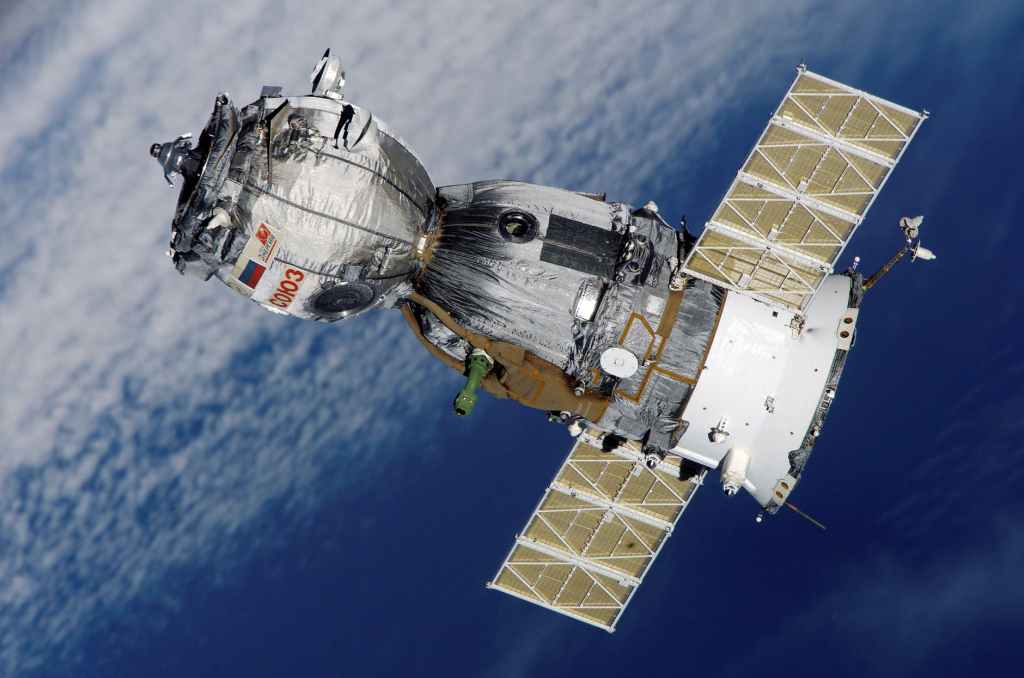
Those of us still hoping for the detection of a signal from intelligent life on other worlds will have perked up this week. Astronomers are investigating the news of a possible signal from Proxima Centauri, our nearest neighbour. If it’s a positive it may seem to some a little too close for comfort. Ian Sample covers it well for the Guardian, but most news organisations had good pieces this week.

The trouble with all of these “aliens” is that we’ve been here before. Back in the last century, news of the first pulsars was hailed as possible evidence of alien life. Then came the famous Wow signal. More recently there have been SHGbo2+14a and Tabby’s star, which fuelled excited speculation but have since been shown to be at best equivocal, or to have a natural(i.e. non-alien) explanation.

Jerry Ehman, discoverer of the Wow signal, perhaps said the wisest words of all when he warned against drawing vast conclusions from not-vast data. And this is a problem all of us humans have. We see something, get an idea into our heads, then defend it come Hell or High water. All new bits of data fit into our hypothesis. Everybody who puts up contrary data or arguments becomes a fool and traitor. From this root grow most of the troubles of the world.

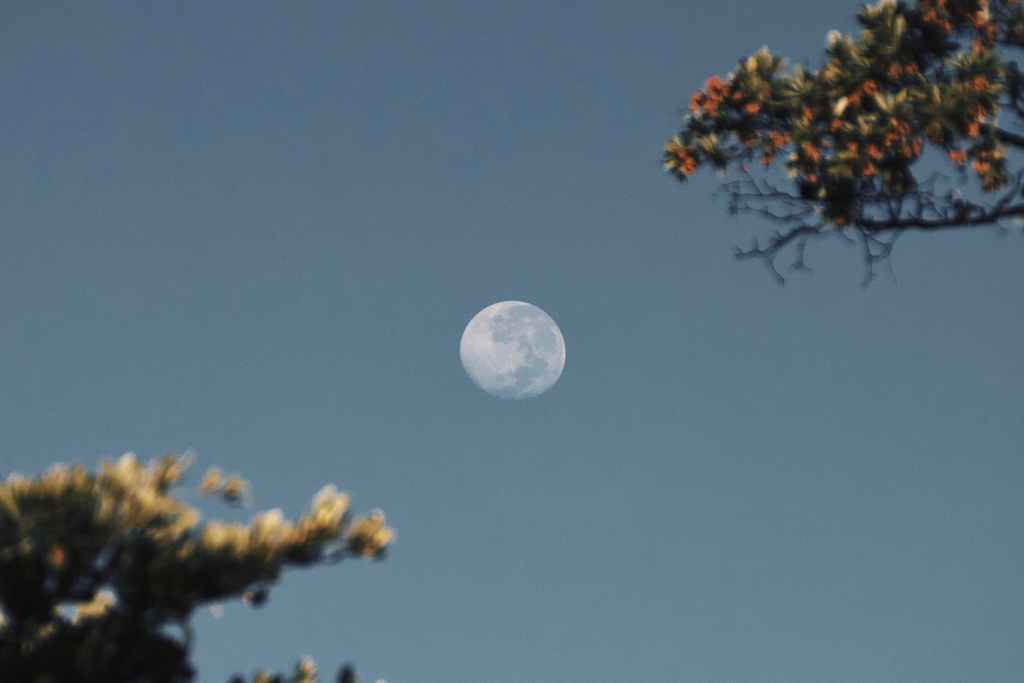
Fortunately there is an antidote. It’s very simple. It’s called the Null Hypothesis. Every time you come up with a theory, you have to consider the direct opposite. Example-suppose we think that the Moon is made of cheese. We first gather every piece of data that we can from astronomy, spectroscopy, what have you, to support that hypothesis. Then we construct the Null Hypothesis. In this case, that the moon is not made of cheese. We then gather all the evidence we can to support that argument, from the same data sources. It’s an amazing mental exercise, better than all those computer games. It’s actually how drugs trials work. Your hypothesis is your drug, and your null is the placebo.

Try it today. Think of your favourite political, religious or scientific belief. You have most of the evidence you need, or you wouldn’t believe it anyway. Think why you want it to be true. The Null Hypothesis is easy- this belief of yours is not true. Now gather all the evidence you can for that hypothesis. Why would anyone want this to be true? (Caution- not all people are fools and knaves)

We’d be interested to hear how you got on.

Scientists looking for aliens investigate radio beam ‘from nearby star’ | Space | The Guardian

#seti #proximacentauri #nullhypothesis #evidence #criticalthinking
The Snowball – a Christmas retro cocktail

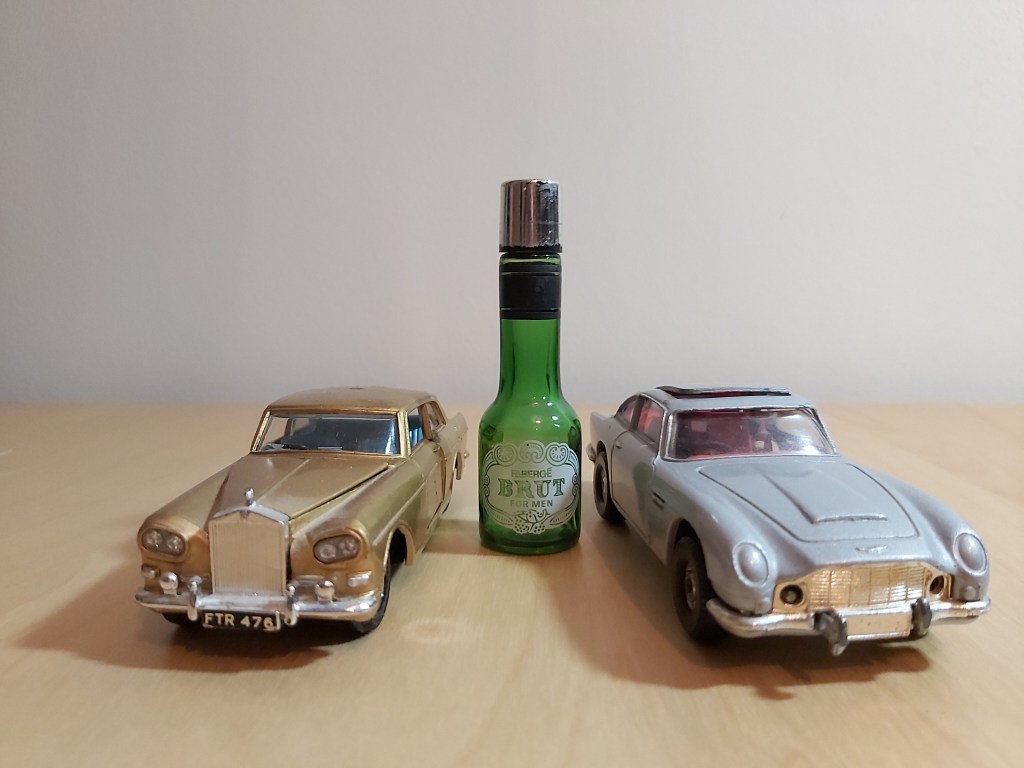
It is Christmas 1965. Harold Wilson leads a Labour Government. Lyndon Johnson has committed massive US Forces in Vietnam. There is a coup in Dahomey. The Beatles are top of the UK Hit Parade with their Day Tripper/ We Can Work It Out double A side, but they are closely pursued by such luminaries as The Seekers and Ken Dodd. The cool cars of the year were the Rolls Royce Silver Cloud III and the James Bond Aston Martin DB5, both pictured above. (are they real?-ed) If you had wanted, you could have driven them home from pub or party, for Barbara Castle‘s Drink and Driving Act was still two years away from bringing down the alcohol-fuelled carnage on nineteen sixties roads.

And at that pub or party, the cool cocktail of the season was The Snowball. It’s a heady mix of lemonade and Advocaat. We have a recipe below, but it’s the latter we want to concentrate on. It’s almost forgotten now, but back in ’65 it used to fly off of the shelves. Advocaat is a Dutch drink, a curious mix of eggs, sugar and brandy with a strong yellow colour. It looks and tastes like custard and is delicious. We suspect its place as the sweet thick aperitif has been taken by the likes of Baileys. Nevertheless if your chocolate buds are jaded, here’s a nice little alternative-just don’t mix it up with the custard on your Christmas pudding. Or might you? And talking of eggs, Faberge had recently launched their new brand of aftershave, Brut, which must have delighted many under the mistletoe. Ask your Granny.

To wish you good Christmas cheer we have two links, a Wikipedia one to Advocaat and the other from the BBC Food website. Both organisations are beacons of light in a darkening world and we beg you earnestly to lens them your support. Here’s to Merry Christmas.

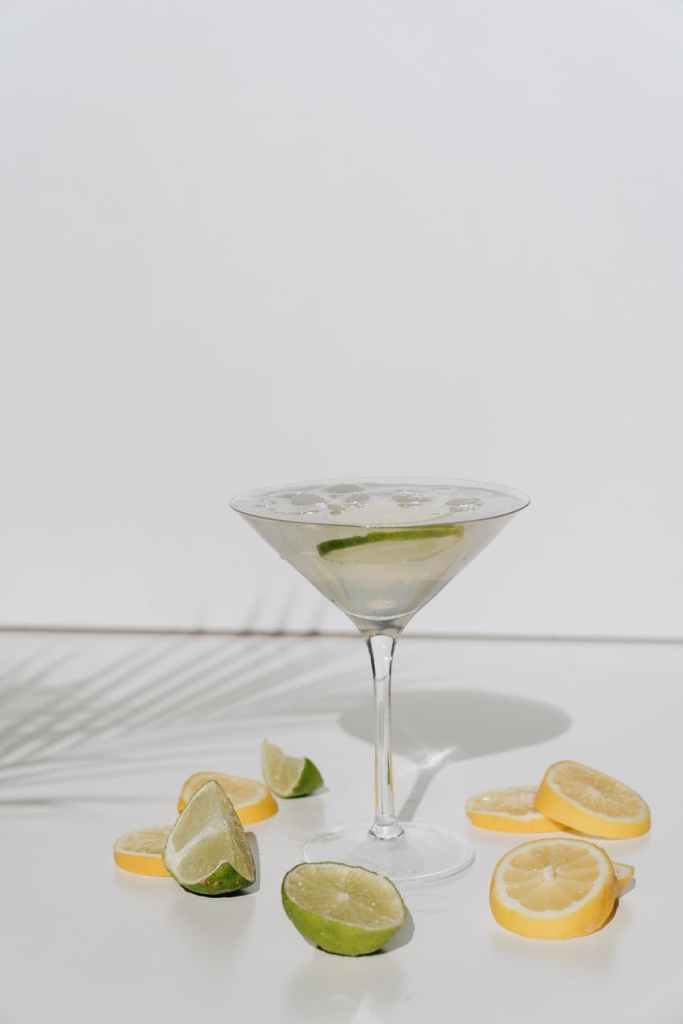
Snowball: 50 ml lemonade. 50 ml Dutch advocaat. 10 ml lime juice. Add ice and a cocktail cherry to decorate

Advocaat – Wikipedia

Snowball cocktail recipe – BBC Good Food

#warninks #bols #faberge #advocaat #snowballl #christmas

Let’s hear it for the BAED community, our fastest-growing demographic

BAED community? Who are they?

Bladder and Erectile Dysfunction-marketers think it’s one of our fastest growing demographics

What’s so good about them?

They have houses, pensions, savings-that’s quite a lot of cash to tap

And what do they like to spend it on?

Things that try to bring back things they loved long ago. Motorbikes. Fast cars. Viagra.

Cars?

Big fast red ones. Ferraris. Jaguars. Porsches. With huge throbbing engines

Hang on, didn’t Freud have something to say about this sort of thing?

Well,  he wasn’t alive in the age of sports cars, but yes, he would have had a lot to say about symbolism.

And what will the market trends be?

As they move forward the trend will be away from the cars and towards things like spectacles, walking sticks, TV remotes with great big buttons, and knee operations

What about IT?

They’ll buy those apps that let you find missing things like keys

Nice things to say

Well, Roxy Music must have been very good in their day.  

Don’t worry-there’s many bases to a stable relationship

Not nice things to say

Why did England get knocked out in the quarter final in 1970? 

I don’t think those yummy mummies are actually interested in you

#BAED #viagra #marketing #discretionaryspend #demographics

After Covid, there could be another epidemic. It might be bubonic plague

Surely that all went away in the Middle Ages-Robin Hood and all that?

Well, not really. It’s still endemic in many countries, including the United States. Between 2010 and 2015 there were 3248 cases around the world, causing 584 deaths.

Is it a fairly painless way to go?

Not quite. Let’s say you get bitten by a flea. The bacteria (Yersinia pestis) invade your lymph nodes, which swell up to agonising proportions, called buboes. You also get muscle cramps and spasms, coughing blood and your skin decays and peels off. In the end death is due to generalised organ failure. If untreated you have about a 90% chance of death. But it’s not exactly a fun thing to go through even if you live.

But if I keep away from fleas?

Unfortunately, there are also the septicaemic and pneumonic forms which are even more deadly. But they usually depend on a good flea-born infection rate to get going.

So that’s all right then. Surely there aren’t as many rats and fleas around as there were in the good old days?

We keep them under control with public health measures. But don’t forget, rats are becoming more and more resistant to poisons, and so are fleas. And the general response of public health to Covid 19 has been quite poor in some countries. Anyway the disease can hide in many types of small mammals.

Why are Doctors worried?

It so deadly that it could make a deadly biological weapon. This has been tried several times in history, most recently by the Japanese Imperial Army in 1941. We now have the knowledge that could let someone quickly engineer resistant rats and fleas-and Bob’s your uncle, as they say.

Remind me –what happened in the past?

Well, there’s been lots of outbreaks. The Big Ones were the Black Death of 1347, which is estimated to have wiped out between 30%-60% of the population. And the Plague of Justinian in 541. Records are scarcer but contemporary chroniclers speak of 5000 people a day dying in Constantinople, and ships drifting with all the crews dead.

Have we any hope?

Yersinia pestis can be killed with antibiotics. But as you know, bacteria too are becoming more and more resistant, just like fleas and rats. Unless we try to get ahead, we could be at the mercy of a rogue state or terrorist organisation at any time.

Could I just deny it exists?

Of course-it’s your right as a free person! However the long term outlook for those who try to make up reality is never good, as certain American politicians know only too well.  Having an opinion and being right are not always the same thing.

Bubonic plague – Wikipedia

The Fate of Rome by Kyle Harper Princeton 2017

#bubonicplague #pandemic #epidemic #covid-19 #biologicalwarfare #terrorism #roguestate #antibioticresistance

In praise of Zdenek Burian. The art of science

Have you ever wondered what it really felt like to live in another time, far remote from our own? Perhaps when early reptiles first became mammals, or round the campfire with some cannibal early humans? If so, nothing will get you closer then the work of Czech artist Zdenek Burian (1905-1981).

Starting out as a commercial artist, he came to collaborate with Czech scientist Professor Josef Augusta. Together they embarked on the finest canon of Paleoart ever created. If the early works owe something to pioneer Charles Knight, then Burian soon left this mentor far behind, producing works whose depth, dynamism and attention to detail cannot be matched. His landscapes capture the vast emptiness of the primeval. His action paintings, the swift movements of dinosaurs and primitive fish in mortal chase and combat. His portraits, whether of Neanderthals or mammoths create real presence and personality for their subjects. His landscapes recall Brueghel or Constable. His use of colour is like Rembrandt‘s. His eye for light and mood is as good as anything in Vermeer-or Edward Hopper, a contemporary whose work also massively transcended its commercial purpose.

It’s true that scientific advance has rendered some of his work a little inaccurate. Australopithecines did not have apelike feet, they were entirely modern. If Brachiosaurs had been as deep in the water as Burian depicts them, they would have suffocated immediately. But he worked with best that the science of the time could tell him, and to cavil would be like rejecting VelazquezSeige of Breda on the grounds that details of the soldiers’ uniforms are inaccurate. Sorry, you’re missing the point.

His corpus was vast. If you want to immerse yourself in it, we have a Wikipedia link below as a jumping-off point. But good litho reproductions can be found as illustrations to the books be produced with Augusta and later Professor Spinar, which can be picked off at good prices from sites like e bay and Amazon. As you revel in the art, remember the science. For final recognition came in 2017 when the first wholly Czech dinosaur was named Burianosaurus augusta, in the honour of two fine men.

Zdeněk Burian – Wikipedia

#zdenekburian #josefaugusta #paleoart #dinosaurs #earlyhumans #evolution #paleonto;ogy

The Scottish Question-it’s strategic

As 2020 draws to a close, we predict that the question of Britain’s immediate relationship with Europe will start to drop down the agenda; by January there will be a deal or no deal, and we shall cope one way or another. No, we think the Big Existential Question for next year will be Scottish Independence. And. although we won’t take sides now, or ever, we think it’s worth considering at the historical aspect, which so far has been overlooked in more immediate questions of sovereignty and power.

From William I until Robert Walpole, every ruler of England faced a strategic dilemma. There was always a a neighbour, potentially hostile, with a land border in the north. Thus if England committed itself too heavily in a European war, its continental adversaries could drum up a land invasion to divide English forces, blunting their effect on both fronts. It could be parried, but at enormous cost. The danger was acute for monarchs as far apart in time as Stephen, Edward III and Henry VIII.

The Act of Union of 1707 closed this danger down. It meant that one centre of strategic power now controlled the whole landmass from Torquay to Thurso. As the Royal Navy could now sail unimpeded from Scottish as well as English ports, it meant the island was effectively immune from invasion-a strategic card of immense power in the hand of any statesman. As any soldier knows it is very difficult to invade a country when you have to land on a hostile shore where the enemy controls all the roads, strongpoints and obedience of the population. Much easier when your forces have the support of an adjoining nation, where you can build up in peace until the time comes to launch.

And so we predict that intelligent members of Britain’s High command will even now be whispering in Boris Johnson‘s ear, urging him of the strategic dangers of “losing” Scotland. Not to Britain, but to England. We flatter ourselves that you read it here first.

#borisjohnson #england #scotland #scottishindependence #brexit #referendum #britain #unitedkingdom #nicolasturgeon #snp #conservativeparty

Magnetism and free speech. Just a few quick thoughts to round up the week

Our readers have busy lives, as do we in the world of commerce and retail. But here’s time for a couple of thoughts which we hoped you might like. Well, we think they’re intriguing!

Nick Cohen on free speech

The reason we call Nick Cohen the new George Orwell is not because of his fearlessness, nor his razor sharp mind. It’s because he’s so objective. You’ll find his pieces scattered from left to right from the Guardian far out to the Spectator. It’s because he sees the fools and knaves in every camp, and so should we. Here he is from the Spectator on the current culture wars ravaging Cambridge University.

Cambridge academics have just won an important battle for free speech | The Spectator

Magnetism- a mystery unlocked

We at LSS have always been baffled by magnetism. Electricity- we know about that. You need it to turn on the lights, and there’s things like amps and ohms and volts which are OK if you can get your head around the equations. But magnetism?-it’s like electricity’s mysterious sister. It’s there, alright, but why, and what makes it tick? Now a fascinating new theory attempts to understand it using game theory, specifically the once popular 15 puzzle. It’s funny how something from one place suddenly turns up in another branch of learning. There’s a lesson in there somewhere.

A Child’s Puzzle Has Helped Unlock the Secrets of Magnetism (getpocket.com)

we thank Mr Peter Seymour of Hertfordshire for this story

Twins Peak

Fans of amateur astronomy should note the Geminid meteor shower which should peak some time around Monday December 14th. A pair of binoculars should actually be better than a telescope. But how many times do we have to say it- observe after dark, when there is no danger of looking into the Sun. Because that will be the last thing you will see. Here’s Joanna Whitehead in the I

How to see Geminid meteor shower 2020 in the UK: What time to watch, when Geminids peak and what to look for (inews.co.uk)

we thank Mr Gary Herbert of Buckinghamshire for this story

Well, that’s it for this week. We have to go now, for all sorts of reasons. Have a good weekend.

#geminids #astronomy #magnetism #15 #electromagnetism #nickcohen #cambridgeuniversity #freespeech #respect #tolerate

Friday Night Cocktails comes to you from Texas, USA. Sort of.

Tonight’s contributor is our old friend and stalwart colleague Tracy Ann Ball

Alright, what is it?Margarita  
And where did you sample it?La Mansion del Rio Riverwalk, San Antonio, Texas, USA  
What, you mean in Texas? Good heavens, weren’t there lots of cowboys about?   No- I was with my  husband Jon, seated outside overlooking the river at Trev’s Bistro  
And what ingredients did Trev use?Patron orange liqueur, Grand Marnier, Patron reposado tequila, agave nectar and lime juice  
Gosh, that’s a mouthful-was it good?Well, firstly it was delicious, not watery, but strong and flavourful, without tasting massively alcoholic. It seemed the essence of our Texas holiday. It was served in a pretty, coloured, swirly glass and we were sat on a terrasse overlooking the river watching the world go by under a blue sky while the girls were enjoying the pool.
Add a bit more for less fortunate readers…………It was warm and sunny, some people were working on the planting along the riverbank, but most people were strolling, enjoying the surroundings
And your husband?Jon liked it too!

#texas #sanantonio #margarita #cocktails #friday night

On the joys of owning an e-bike:(health tip-you could learn a lot from this)

Paul Larsmon

Journalist, commentator, economist and now e- bike aficionado

I was probably around four or five when I learned how to ride a proper bicycle, two wheels not three, and no stabilisers. It was in the yard of my dad’s family farm in Norway, struggling to stay upright on a pig-iron heavy lady’s bone shaker. My older brother Dave was running along behind, clutching the saddle to keep me vertical – until he wasn’t. I sensed his absence and knew, immediately, that I could now ride a bike. And all that meant in terms of freedom.

I’ve been riding bikes ever since – rushing around suburban pavements to meet up with childhood friends; tearing down forest paths against the stop-watch with cow-horn handlebars and no sense of mortality. Commuter cycling to the station, sticking the bike in a slam door guard’s van and then hurtling across London sans helmet, sans fear (and still without a sense of mortality).

And latterly, mostly on hybrids, be-jeaned and be-shorted .   Unlike wrapped-in-Lycra friends, who spent more on their wheels than I did on a whole bike.  But I’m not sure they enjoyed the sights, smells and sounds of the countryside any more than me. Mostly they always looked unhappy and in pain.

And then, well, I got older. Hills and headwinds conspired to curb my enthusiasm. The bicycle stayed in the garage, garnering cobwebs. I started thinking about mortality.

It was a chance encounter with the bike of my chum Lindsay’s wife that changed everything. Lynda’s bicycle had a motor! Four power settings so naturally, being male, I went straight to the top one and took off down their cul-de-sac like Barry Sheene. Later I learned that, legally, the battery-powered motors must cut out at 15.5 mph. But of course, you can get to that mind-bending velocity as slowly or quickly as you like.

Anyway, it changed my life. Straddling my e-bike, I have been on many day rides (even during Covid) and, pre-plague, on a few longer trips: the Peace Trail around the Ypres battlefields for example, and 150-odd miles across North Devon. Both in the excellent company of said Lindsay, who now has his own e-bike.

So here, as they say, is the science.

An e-bike is not a moped. It’s a normal bicycle aided by a battery charged electric motor. This is usually situated in the rear wheel hub. The battery is charged from a normal three pin plug and takes a few hours to go from zero to full. Charging will cost no more than 10p.

The bike has gears (usually 7/8) and you still have to pedal. The heart beat rises! At the end of a full day you feel knackered and in need of beer!

There are usually four power modes, so you can choose how much you want to be assisted. As you would expect, the higher power you choose, the less the range. Battery capacities vary. I found that on a fairly hilly route (eg  up to Exmoor and down again), I could easily do 50 miles. But the size of the battery is an important consideration, dependent on what sort of cycle trips you are planning.

There is as big a range of e-bikes as there is for the ordinary variety: hybrids, mountains, fold-ups…

And, of course, prices vary hugely.

I’d go for mid-range. One of the big price drivers with traditional bikes is weight. So you pay more for less (a bit like designer bikinis). But weight isn’t really so important when you have a motor. I reckon you can get a very decent ebike for around £1500. 

So – it’s good for you.

It’s good for the environment (especially if it stops you getting in the car).

And it’s good for your smile!

What’s not to like?

FACT BOX

  • Sales of electric bikes tripled during the UK’s Covid summer (Halfords)
  • UK consumers bought 100,000 ebikes in 2020, up 40% on the previous year (Mintel)
  • Ebike sales are expected to more than double by 2025, to 6.5 million units (The Confederation of the European Bicycle Industry – Yes! It exists!)
  • The UK government is planning subsidies to encourage ebike buying which could see prices slashed by 30% (The Times)

#e-bike #cycling #health #lifestyle #ypres

Chris Ryder-fearlessly brave and fair

Wars are always bad, and the people who fight them are too, usually. They have to be to survive. So any glamorization of one side as heroic freedom fighters and the other as The Evil is nearly always a simplification for children and elderly men with a drink problem. Anyone who has studied the troubles in Spain’s Basque Country knows this well. In the British Isles, no one knew it better than Chris Ryder, a veteran reporter on the Northern Ireland beat, with both sides in his contacts book, and a healthy scepticism for the claims of each.

Ryder was correspondent for both Sunday Times and then Telegraph. Because of his reporting, the Provisionals soon planned to kill him, but were dissuaded because of the PR damage it would inflict upon their cause. His admiration for the courage of the security forces was manifest, but:

…… Ryder did not shy away from the controversies that dogged the regiment. He faced full-on the issue of secret dual membership of the UDR with loyalist paramilitaries and the regiment’s reputation as a sectarian force among the nationalist population, arguing that the UDR would have to be disbanded as part of necessary reforms to the security system.

Courage indeed to attack your own side, especially given the insane passions of the time.

Off duty he was a generous man, husband and bon viveur. We link his full Guardian obituary below, from which our quote is taken. What could intelligent people like him achieve in peace, if they lived in a place where their neighbours had not descended into a sociopathic and futile conflict, like all the others?

Chris Ryder obituary | Media | The Guardian

we thank Mr Lindsay Charlton of Kent for this story

#northernireland #ira #uda #udr #thetroubles #journalism #chrisryder