Weekly round-up: some new and some nostalgia

Our weekly round up of stories you may have missed

Suddenly we find out…how little we knew about viruses. Maybe this whole pandemic thing has concentrated minds, but Nature makes alarmingly clear how little we know about how many types of virus there are, and how many of them. Next time some know it all conspiracy theorist starts sounding off , you will know they are wrong. Because no one knows anything.

Scientists estimate that there are about 1031 individual viral particles inhabiting the ocean at any given time — 10 billion times the estimated number of stars in the known Universe. But we’ve officially named only 9,110 virus species. Now, we are seeing an explosion in viral classification, thanks to changes that allow scientists to judge viruses on the basis of their genomes, instead of having to culture them and their hosts. The wealth of information is feeding a new wave of discovery about how endless variations of viruses propel evolution by shuttling genes between hosts. Nature | 13 min read

Not more flying saucers? As the cold war ended, we thought that was the end of UFOs as well. We saw them more as a psychological projection of human hopes and fears than real interstellar vehicles piloted by daredevil Martian space jockeys. Now the wretched things are making a comeback, with a big hoo-ha about some Pentagon report. Alright, never say never, but we are inclined to go with the very calm and rational Kyle Cunliffe of The Conversation, who puts the fuss down to a strange phenomenon called “human error”. Why haven’t we heard about that one before?

World Anti Microbial awareness week That excellent scientist and citizen Professor Colin Garner reminds us that at last we can all do something about microbial resistance to antibiotics. WHO is launching a week of awareness from 18-24 November 2021. Why not look on the WHO site to see if you can help, or if there is a charity in YOUR country that’s already up and running? UK readers can help that marvellous charity Antibiotic Research UK, whose website is full of ideas .

World Antimicrobial Awareness Week (who.int)

Antibiotic Research UK | Fighting Antibiotic Resistance

T. Rex is No 1 Apparently most of the dinosaur bones that you see in museums are just plaster casts, and the originals are kept locked away in a safe. Now the Wollaton Hall Museum in Nottingham, England is putting on a display of a Tyrannosaurus Rex with real bones. Apparently the creature’s name was Titus (how do they know that?-ed) and he or she lived 65 million years ago in Montana , USA. In attraction terms, the museum hopes its T. rex will be a number one hit, relieving the glory days of such masterpieces as Ride a White Swan, Hot Love and Jeepster. Jessica Murray of The Guardian has a great story and picture.

‘Real’ T rex goes on show in England for first time in over a century | Museums | The Guardian

#virus #sars-cov-2 #covid-19 #alien #ufo #antibiotics #dinosaurs #museums

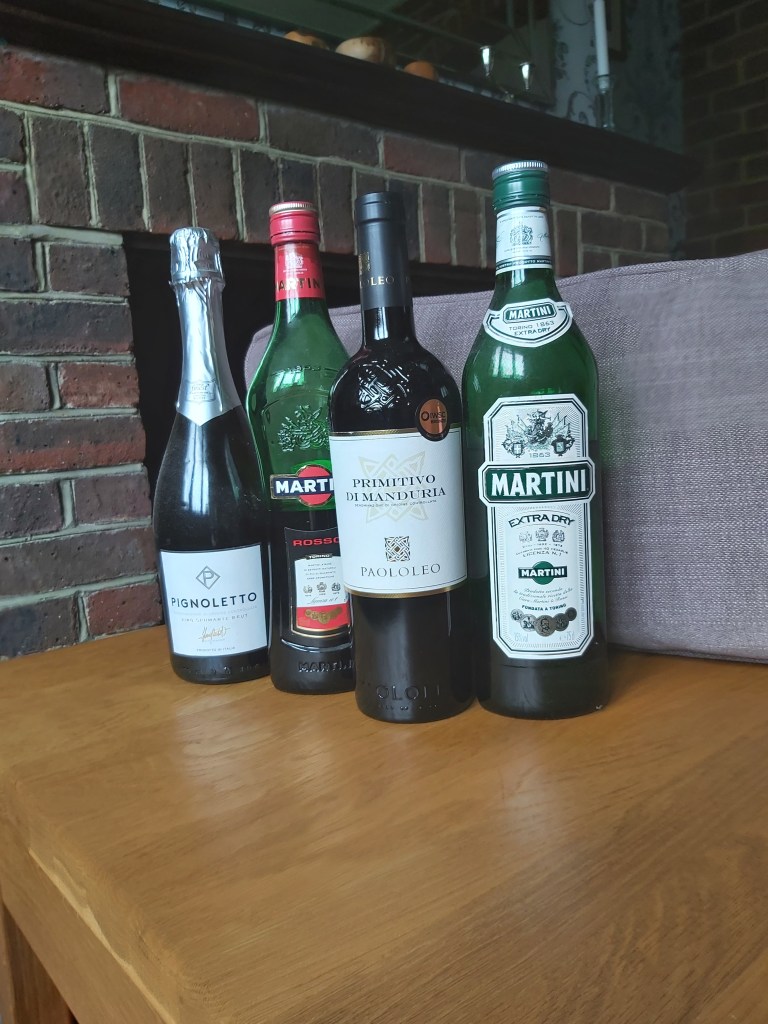
Friday Night Cocktails at the Savoy, and its eponymous book

Anyone with even a passing acquaintance with The Savoy Hotel in London, and its cocktail bars, will tell you that it is a byword for good taste and elegance. That’s why this week we are openly plugging a delightful volume called The Savoy Cocktail Book (Constable 2014) The first edition appeared in 1930 as a fitting record of the hotel’s accomplishments in bringing the knowledge of fine drinks to a somewhat archaic British palate. The work has been intermittently revised and updated ever since.

The latest edition is like a bible for the sophisticated imbiber. There’s an excellent history of the whole gaff, worth buying a copy for on its own. Then an elegant guide to the best available in the famous American Bar and Beaufort Bar. Followed by a large general compendium of cocktails punches and fizzes that you are more than free to try for yourself at home. At the end, a fascinating vade meacum to the great French wine regions, with port tucked on.

So even if you can’t make it to the Savoy this year, what with all these pesky travel restrictions and what have you, this book will let you create a little of its elegant chic in the comfort of your own kitchen sink. We once saw them advertise a night of comedians and burlesque dancers in one of the hotel’s reception rooms. How you try to recreate that in the age of Covid is up to you.

Note the publishers of this blog have received no money or any form of recompense whatsoever for this column-it’s entirely off of our own bat)

The Savoy Hotel – Guest Reservations

#cocktails #savoy #artdeco #burlesque #covid-19

Of Donald Rumsfeld and a failure of catastrophic proportions

Historians of the future, assuming any such will exist, will spend hours raking through the broken rubble of the western alliance and ask this: How did this group of nations, still fresh from victory in the Cold War, so quickly lose their power? When did their decline commence? They will point to many impersonal forces: economic, cultural, demographic perhaps. But they will know that at one point, as always, a group of men sat around a table and came up with some bad – no, really bad – decisions that changed everything for all time. And Donald Rumsfeld was right in the middle of such a group of men.

The Iraq Invasion of 2003 was a decision so monumentally awful that its consequences cannot be summarised in one tiny blog. Suffice that it wasted trillions in money and thousands of lives. It threw down Iraq and raised up Iran – a dreadful exchange. Far from concluding the daftly named “War on Terror”, it exalted such groups as ISIS and Al-Queda, who would go on to unprecedented achievements of atrocity and bloodshed. Above all it legitimised dictators everywhere to conclude that there was no new rules-based order. That if the US and its allies could invade anyone they jolly well didn’t like, so could anyone else. The sauce was the same for goose and gander.

As the reading of the links below will show, Rumsfeld committed the primary error of proud people everywhere. He felt that his will could be be made real if he only tried hard enough, and that he had no need of the advice of others. Not one. Not his intelligence people, not his senior commanders (whom he seems to have brought close to mutiny), nor his wiser allies inside the Republican Party and abroad. He was not alone; the whole Bush Administration and its media cheerleaders blundered into Iraq. But there he stood among them – proud, confident, knowing – and utterly wrong.

The benign world that existed before the Iraq invasion has vanished. The planet is once more divided into hostile, lethally-armed camps. Great problems such as climate change and epidemic disease seem as far as ever from solution, with all their conflict-generating potential. And while far from alone, the decisions and influence of Donald Rumsfeld did as much as any to push us all down this slope.

Media coverage of Rumsfeld has been so widespread that can only select a few examples, and one book

For an unforgiving take try Julian Borger of the Guardian

History unlikely to forgive Donald Rumsfeld’s Iraq warmongering | Donald Rumsfeld | The Guardian

Daniel McCarthy of the Australian Spectator tries to balance Rumsfeld’s goods and bads

Donald Rumsfeld succeeded at everything — so why did he fail in the end? | The Spectator Australia

For a really good book on the whole sorry mess try

James Bluemel and Renad Mansour Once Upon a Time in In Iraq BBC 2020

#iraq #invasion2003 #georgewbush #donaldrumsfeld #foxnews #sunni #shia #iran #terrorism

What did the British do in India? Amartya Sen explains

The legacy of the British Empire lives on in passion. For some the British in India were a noble species who brought justice enlightenment and technology, A bit like those oddly benign aliens who popped up in the old Star Trek TV series, advertising their superiority and admonishing earthmen and others to mend their ways. For many Indians they were invaders, devoted to plunder, rapine and oppression-think Clingons if Star Trek is your thing.

The truth, like all truths, is subtle, complex and requires a very great deal of thought. But Amartya Sen, writing for the Guardian, makes a very fair stab at it. Rather than balancing the feel good sensibilities of the warring parties he goes for facts, salient ones, and some are interesting indeed. That before the British there was no country called India is hard to dispute. Yet the example of what Japan achieved without white rulers is a telling counterfactual for the Indian narrative.

Seventy-four years after India achieved its freedom, does any of this matter? In England, yes. Memories of a time when white Brits were effortlessly above darker types resonate strongly in the crowded housing estates and contested streets of the former power. They inform decisions on so much-constitutionally, electorally and culturally. And racism is never a one way street.

Whatever India is now and may become-and that could be much- it cannot forget one long ago but vital aspect of its being. History is a sort of by product, thrown out by nations as they move along. In the hands of authors like Sen, it is intelligent, fair and just.

Illusions of empire: Amartya Sen on what British rule really did for India | India | The Guardian

#raj #india #britain #britishempire #woke

Cancer: Early detection is the Holy Grail

“If we can catch it in time, we can cure almost anything.” So a Doctor once told LSS, and we believed her. The problem with cancers is that they can grow undetected for months, even years in some cases, and by the time that they are found, it’s too late- or treatment is incredibly intrusive. Now a US company called Grail has developed a marvellous new test which can identify up to 50 types of cancer long before any symptoms whatsoever have manifested themselves. They idea is rather clever. All living masses, tumours included, will shed little bits of DNA. Like criminals at a crime scene, this gives away their identity. So the grail test looks for little fragments of giveaway DNA in the blood.

We’ve got a press story from the PA via the Mail for you*1 plus a link to the Grail company website. *2They are an impressive bunch, and once again we have to admire their intelligence and hard work. And there’s a deeper story here, one that separates out intelligent people like the LSS reading community from other types of person one encounters on the internet. Because we know how Grail did it. They looked for evidence, built a theory and when new evidence came along they abandoned the theory and tried a new one which fitted their facts better. Eventually something worked, and we are all a little bit safer from cancer.

Conspiracy communities and those based solely on faith do the opposite. They start from one central idea, fit all the facts around it, and never ever think about new data. They have already made up their minds. Their only response to difficult new data is to shout and scream. The trouble is that just shouting at cancer won’t make it go away.

The task for intelligent people is to preserve areas of enquiry and reason. That way, there will still be cures for cancer and many other things, in the future.

Blood test to detect 50 types of cancer `accurate… | Daily Mail Online

Home | GRAIL

#cancer #screen #dna #grail #detection #prevention

Is Hydrogen going to waste?

One of the depressing things about our current plight is how complicated it all is. Over here is all the waste we produce. Over there-global warming and energy production. In the middle, ordinary people wanting a better life, and at the same time, wanting to do the right thing.

Take electric cars. They’re a lot less polluting, quieter and cheaper to run than the old petrol ones. But there’s a real environmental cost to producing the batteries. Most of us are seeing a gradual and worthy uptake in these new vehicles. But before you rush round to your nearest Rolls Royce dealer, does this current craze have a serious rival? What if we could power clean green motors and get rid of some of the mountains of filthy waste which disfigure the planet?

We’ve posted three takes on hydrogen today-all based on the idea of its use in fuel cells, those almost miraculously simple devices which produce nothing worse than a little water after combustion. In AutoExpress Martin Saarinen *1 has a nicely balanced menu of pros and cons which should give some pause for thought. Especially for anyone about to unleash major damage to their bank account with a new vehicle. Molly Burgess of H2 News *2 reports of some exciting British companies who hope to use waste to generate hydrogen. (LSS finds the first English plant to this purpose is already planned) And for all you scholars the US Department Of Energy *3 has a nice summary of all the ways that H2, the lightest gas can be run up in quantity.

But has hydrogen got off to a late start? A little digging showed LSS that there are 35000 electric charge points in the UK and 8 380 Petrol stations, no less. If hydrogen has a future, if must replace the latter, while competing with the former. At which point we remember the wise thoughts of that brilliant journalist James May. Although we cannot find the precise reference,. we remember him explaining how electric cars almost strangled petrol ones at birth in the years 1910-1920. Petrol only won because there were no national grids, so it was easier to build and supply filling stations. The UK hydrogen hopefuls we alluded to above plan to have 800 stations by 2027 and 2000 by 2030. By which time electric may have already won the marketing battle. Remember VHS v Betamax? It’s a cautionary tale.

We thank Mr Gary Herbert of Buckinghamshire for the idea and research for this blog

40 waste-to-hydrogen refuelling stations planned for the UK (h2-view.com) *2

Alternative Fuels Data Center: Hydrogen Production and Distribution (energy.gov) *3

Hydrogen fuel cells: do hydrogen cars have a future? | Auto Express*1

#fuelcells #hydrogen #electriccars #wasteenergy #transport

Weekly round up: New labels on old things

Our weekly look at some stories which seemed significant

It’s been a big week for fans of Paleoanthropology, with help coming from many areas of science and the world all at once. Best of all is the Dragon man from China, and you can read the fascinating story of its discovery, hiding and re-discovery here, in a beautifully illustrated piece by Anthony Sinclair for the Conversation, It’s been called Homo longi by the scientific team. But we can’t help wondering-is this what the Denisovans looked like?

Condominium Cave

Talking of Denisovans,it looks like the cave where the original specimens came from had different types of humans living in it at different times, as exciting new DNA studies show. But how different? Everything points to several large brained modern types of humans running around since at least 500 000 years ago. Can they all really be different species? Or are we looking at one pretty successful species that was rather variable? Certainly they all seem to have been interbreeding like mad, the ur-definition of a single species Here’s Nature, Iconic Cave sheltered several human species

In the past decade, a mere eight human fossils unearthed in the Denisova Cave in southern Siberia have rewritten the human story, from the tiny finger bone that revealed the extinct human Denisovans, to the discovery of a first-generation Neanderthal–Denisovan hybrid. Now a study of DNA in the cave’s soil reveals the complex history of human and animal habitation there. Hundreds of soil samples show a cycle of inhabitants, starting with Denisovans about 300,000 years ago. Different groups of Denisovans and Neanderthals left their marks on the cave, and modern humans appeared about 45,000 years ago. “I cannot think of another site where three human species lived through time,” says archaeological scientist Katerina Douka.Science | 5 min read
Read more: Lead researcher Elena Zavala tells the suspenseful first-hand tale of the discovery in an essay for the Nature Ecology & Evolution Community blog.
Reference: Nature 
paper

It’s all stories anyway Names that we put on old bones are just labels on a reality that was far more complex. And this is true for modern history too, as this discussion of the famous Alamo siege tells. Who were the good guys and bad guys really, ask Bryan Burrough and Jason Stanford of Time

It’s Time to Correct the Myths About the Battle of Alamo | Time

we thank Mr Peter Seymour of Hertfordshire for this story

Weekend Spoiler Just because of the big COP26 conference coming up, don’t think your worries about climate change are over. LSS admits a start has been made, but much of the heavy lifting remains to be done, as Nature points out, Leaked report sends dire climate warning:

The next Intergovernmental Panel of Climate Change (IPCC) report will deliver an unprecedented climate-change wake-up call, reports the AFP news agency. The leaked draft report, due to be released next year, says that global temperatures are already at 1.1 ℃ above levels in the mid-nineteenth century. Even if we meet the Paris climate agreement target of keeping temperatures below 1.5 ℃, “conditions will change beyond many organisms’ ability to adapt”. And if we continue on current trends, we are headed to break 3 ℃ — with serious, irreversible consequences. “The worst is yet to come, affecting our children’s and grandchildren’s lives much more than our own,” the draft report states. “We need transformational change operating on processes and behaviours at all levels.”AFP | 5 min read

HOME – UN Climate Change Conference (COP26) at the SEC – Glasgow 2021 (ukcop26.org)

There’s more to it than IQ The endless obsession with IQ and cleverness may have been masking something else. Flexibility, creativity and adaptability may be more important, as this study by Barbara Sahakian and colleagues for the Conversation shows.

Our view has always been-IQ tests are always so boring, why would anyone want to try at them? That’s why we treat the results with suspicion. See you Monday

#modernhumans #denisovans #neanderthals #dna #homosapiens #climatechange #IQ #cognition

Friday Night Cocktails: Strawberries for Wimbledon

Monday sees the return of the world-famous tennis tournament to the world-famous All England Lawn Tennis and Croquet Club at Wimbledon, or WMBDN as London Transport used to call it. It’s going to be harder than ever to get tickets for this year’s men’s final. So for the unlucky few of our readers who won’t make that auspicious date, here are a couple of cocktail ideas to drown your sorrows while you watch it on the telly in the summerhouse. And to give it a theme, we have chosen that most Wimbledon of all fruits, the strawberry (if you don’t know what one of those is, see central illustration above). Also, if you are going to try mixing these at home, make sure your lorry driver has some on his trailer-if you can find a lorry driver, that is.

Strawberry Daiquiri-Cool and smooth

Put lots of cracked ice in a well-chilled margarita glass. Now take a blender and add 1 measure white rum, 1/2 measure strawberry liqueur, and 1/2 measure of lime cordial. Blend for 30 seconds then pour over the cracked ice. Decorate with powdered sugar and a slice of strawberry-if you can get it to stay on. Now sit back and watch them toiling in the summer heat, and be glad you’re not mixed up with the racquets. You could end up in court!

Thanks to The Ultimate Cocktail Book (Hamlyn) for this idea

Strawberry Cup– Refreshing and sociable

This recipe from The Bartender’s Guide by Peter Bohrman, is designed to slake thirsts at group events like garden parties

Take 0.6803885 kg of strawberries, and take out those irritating green bits at the blunt end. What are they doing there anyway? we ask. Now cut the strawberries up into lumps, but not too small. and gently introduce them to a punchbowl. Add 3.5 measures of strawberry liqueur, and pop the lot into a cold refrigerator for 45 minutes. On removal add 2 bottles of white wine-Chablis is a good bet-and two bottles of well chilled champagne. Pack ice around your bowl, and serve with silver ladle to flute glasses. Note-the key to this is to keep it cold, so if you can find a way to pack some ice around the punchbowl, feel free to try it. Ms RS of Southend suggests blu-tack but somehow we don’t think it’s a good idea.

Pimm’s -from last week!

Take one measure of Pimm’s No.1 Cup and and add to a highball glass. (Ours have real Pimms logos!) Add 3-4 ice cubes, then 2 slices of lemon, two slices of orange and one chopped strawberry and one slice of cucumber. Top up with lemonade and decorate with a sprig of mint or borage We had to repeat this, folks-it’s got more Wimbledon than South West Trains.

Home – The Championships, Wimbledon 2021 – Official Site by IBM

#wimbledon #tennis #pimms #strawberries #champagne #whitewine

Are we entering the age of the Super-Pandemic?

Is the world about to enter an era when pandemics become the new normal, meaning Covid-19 was just the curtain raiser to a newer, grimmer era? We cannot be certain, but it has happened before.

When the Emperor Marcus Aurelius (161-180 AD) succeeded to the throne of Rome, he inherited a world that had had known nothing but peace and growing prosperity for generations. Under the benign rule of Rome, trade prospered, cities flourished and the arts, learning and mass sports were cultivated. In 165 all this changed forever. A new and terrible plague, probably smallpox, tore its way through the Empire. The population fell, at least by 20%. The currency weakened, trade fell and production dwindled. Most ominously the Roman Army was no longer all conquering and invincible, and barbarian tribes started to press into the Empire.

Marcus was an able man, and somehow managed to save things-just. But as Professor Harper shows, this was only the first of many pandemics that ravaged the advanced civilisation of Rome. Smallpox returned in the reign of Marcus’ degenerate son Commodus. Then, following a few fleeting years of recovery, the terrible plague of Cyprian struck around 249 AD. An Ebola-like virus which caused terrible suffering, its mortality seems to have been greater than smallpox, and Harper shows that its demographic and economic consequences were never recuperated. The Eastern rump of the Empire was essentially finished by the great plague of Justinian in the sixth century. World power shifted to the Moslem nations not long afterwards.

What caused these sudden upswings is not certain though Harper makes a strong circumstantial case for climate change and ecological in-balances in animal populations that harboured the viruses. What worries us at LSS is how familiar this seems. The easy peace and prosperity of the nineteen nineties has long passed. Since 2000 outbreaks of diseases like SARS, MERS and Ebola have become frequent. Until recently these were contained. But Covid-19 is very much the genie that got out of the lamp. As the relentless destruction of habitat continues, more pathogens will escape from wild hosts like bats and cross the species barrier. We have already alluded to the dangers of antibiotic resistant microbes and the influenza family of viruses. There will be others. And never forget that certain nations ruled by ageing autocrats will be holding stockpiles of biological weapons, with virus derivatives more terrible than anything in nature. As their regimes crumble, who is to say they will not release them in a last desperate attempt to cling to power?

It was in the reign of Marcus that the citizens of Rome saw the first shadows fall of the new darker age. It was to last for centuries. Are we in a similar place?

Kyle Harper The Fate of Rome: Climate, Disease and the end of Empire: Princeton University Press 2017

#pandemic #ebola #sars-cov-2 #covid-19 #biological warfare #ecologicalcatastrophe #sars #mers #antibiotic resistance