As facts change, so should minds

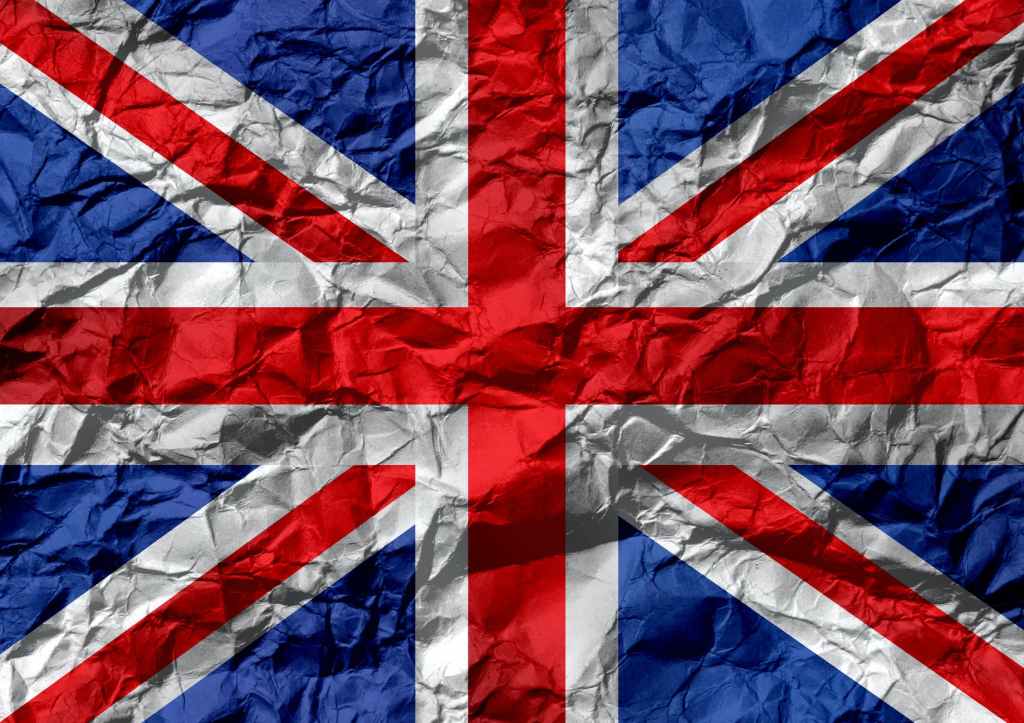
“When facts change, I change my mind.” So wrote JM Keynes. That simple sentence, from far back in the last century is one of the most profound ever made. Its logic separates the doctor from the quack, the scientist from the conspiracy theorist and the honest from the fool. It is why historians of the future will mark the last week of January 2021 as the moment when the nation state proved to be the most efficient possible method of organising groups of humans, and the attempt to create pan- national entities, such as the EU, to have failed.

Before moving on, it is worth recalling why so many in Britain believed the effort was worthwhile. Just as counties like Mercia and Wessex had once merged their sovereignties into a larger entity called England, so it seemed that the moment had come to unite the joint talents of entities such England, Italy and Germany into something even larger. The European model of capitalism in particular seemed a bulwark against extremist forces of right and left. To those on the continent it was above all a peace project.

Yet a comparison of the response of the UK and the EU to the Covid-19 pandemic has made one fact abundantly clear. Smaller, nationally organised entities can better organise to protect their citizens than larger squabbling coalitions of nations. It is not a question of moral evil or stupidity; but by its very nature the EU was unable to react fast when speed above all was needed. All will learn the lessons that this implies for the future. That future is one of nations, not multi-nations.

And so the new world begins. Its advocates may enjoy a well- earned moment of triumph. But it will not be without its problems. For one, the existence of multiple, competing jurisdictions is a paradise for those who wish to hide their private wealth from the public good in tax havens. The problems of inequality will be further from solution than ever. Secondly, as RH Tawney, a neighbour and contemporary of Keynes observed “freedom for the shark is death for the minnow”. Large nations, who now need only consult their own interest, will inevitably dominate smaller ones. Many large international companies are now equal in wealth to all but the largest nation states-what is sovereignty to them? Thirdly, if power is best organised in local, national bodies, then it it makes sense for Scotland to leave the UK in the way that the UK left the EU.

All of these questions are implied in the new order, and must now be tested all around the world. But they are for the future. Today is the triumph of the nationalists, and we must wish the new order well. There is no other choice. Time will answer the questions we have raised.

#eu #uk #scotland #yugoslavia #covid-19 #taxhavens #nationalism #multinationals

Weekly Round Up: a Covid-Free zone

It seems the whole week has been nothing but Covid-19. In health, education, geopolitics, you name it. It’s been Covid this and Covid that, and Covid the other, from morn on Monday through to the last dregs of our Friday night Cocktail. So much so that we are going to give you an entire blog of Covid free news, gentle readers, and hope you like it. This week our theme is the errors of reading the wrong thing from incomplete data.

Dyatlenko Pass Followers of urban oddities will recall the strange case of the Dyatlenko Pass incident. Back in 1959, a group of young, experienced Soviet Hikers went rambling in the Urals, only for their bodies to be found in the snow, apparently half eaten by something. It has been the subject of numerous films, books and programmes, all featuring their tragic last diaries and snapshots. Fans of cryptozoology have no problem with an explanation ; “Yeti got ’em!”. Other explanations included dirty dealings by the security forces, dodgy defence experiments, and alienated local residents. Now Robin George Andrews of National Geographic reports on the real answer- a terrible combination of winds and avalanche drove the unfortunate victims from their tents to die of hypothermia. We love the way that the advanced simulation techniques from movies and science have been brought together on this one.

Has science solved the Dyatlov Pass incident, one of history’s greatest adventure mysteries? (nationalgeographic.com)

Is there life on Venus? Old hands on the LSS blog will recall how we covered the flurry of excitement caused by the discovery of phosphine on Venus. It was a hint of life on our nearest planetary neighbour, said some. But as so often, the passage of time is pouring tons of cold water on this burning question. Here’s Nature‘s take:

Two papers have dealt a fresh blow to the idea that Venus’s atmosphere might contain phosphine gas — a potential sign of life. In one study, researchers analysed data from one of the telescopes used to make the phosphine claim and could not detect the gas’s spectral signature. In the other, they calculated how gases would behave in Venus’s atmosphere and concluded that what the original team thought was phosphine is actually sulfur dioxide, a gas that is common on Venus and is not a sign of possible life. Still, the case isn’t closed yet. The new studies argue against the presence of phosphine, but can’t entirely rule it out.Nature | 5 min read
Reference: arXiv preprint 1 & arXiv preprint 2 (Both papers have been accepted for publication in Astrophysical Journal Letters)

Do 10 000 steps every day! So they have been telling us for years. Of course walking is good-and enjoyable. But does it really have to be 10 000 paces every day? Here’s Lindsay Bottoms in the Conversation:

Do we really need to walk 10,000 steps a day? (theconversation.com)

Something to think about: What is still lying about in the ground? Who dropped it, and why? Here’s a fascinating from Isobella Nikolic of the Daily Mail, about how Charles I dropped a jewel depicting Henry VI which actually belonged to Henry VIII. It is worth £2million and lay under a tree in Northamptonshire for over 300 years until it was found by a metal detectorist named Kevin Duckett.

Metal detectorist finds £2million centrepiece jewel of Henry VIII’s lost crown buried under a tree | Daily Mail Online

#dyatlovpass #avalanche #yeti #venus #phosphine #exobiology #health #bodymass #treasure #metaldetector

Friday Night Cocktails: Grenadine

Today we’re featuring one of the best known and most versatile cocktail syrups: Grenadine. Old hands will know it as a vital ingredient in refreshments as diverse as Luigi, Tar, Skipper, Club, Sweet, Down Under, Hawaiian Vodka, Honolulu ,Cherry Julep, Clear Skies Ahead, Port Antonio, Alice Springs, St Vincent and Morning. Don’t try them all in one night!

For centuries,etymologists and linguistic purists have debated fiercely about the origins of grenadine in cocktail bars from the Kerguelen Islands to Nuuk. LSS is happy to set the record straight for all humankind for all time. Grenadine is made from water, sugar and pomegranate juice. Hence the name, derived from the French grenade, meaning “pomegranate”. Which in turn was derived from Latin Granatum. Spanish speakers have a problem. Their noun granada does indeed derive from Latin for pomegranate and means the same thing. But the ancient and venerable City of Granada takes its name from the Arabic garnatah. It was after this town that the Grenadine Islands were named. Sorted.

Of course there isn’t time to list the recipes for all the wonderful drinks that we name-checked above. We’ll just do two, one long and one short, both the from The Ultimate Cocktail Book by Hamlyn.

Alice Springs: In a shaker, put 4-5 ice cubes. Add 1 measure of fresh lemon juice, and the same of orange juice. Add 1/2 teaspoon of grenadine, 3 measures of gin and three drops of angostura bitters. Close off and shake ’til they rattle. Pour into something in the general region of a hurricane glass and top up with cold soda water. Decorate with slices of orange, lemon or cocktail cherries

Luigi: In a fresh shaker add 4-5 ice cubes, 1 measure of fresh orange juice, 1 measure of dry vermouth, 1/2 measure of Cointreau and 2 measures of gin. Shake a pour without cubes to a proper cocktail glass, Decorate with a slice of blood orange.

#luigi #alicesprings #grenadine #cocktails

Speculation: time to stop the game?

Most readers will have been following the frantic speculation in the price of GameStop shares. It’s all very exciting, even for those of us without a dog in the fight, as small investors use the new found power of the internet to ambush the bigger boys who are apparently trying to short out the company. We’ve got two Guardian stories for you today, but it’s well covered in all the media. And one day it will all go into the “do you remember….?” file along with Lehman Brothers, Enron and 1987.

The point for the Ordinary Joe is “does it matter?” Shouldn’t people be doing better things with their time and money? It has always been a criticism from the the Left that speculative bubbles distort investment. Writ small it means sexy bubble share companies draw funds away from those concerned in the real economy who do dull things like making pharmaceuticals and producing food. Writ large, a financialised economy produces massive inequalities in wealth and power, corrupting information and education, and undermining the very markets that created them. Like all good criticism, much of it is valid; but it suffers from one very real drawback.

No alternative to alternative to capitalism has ever been able to get around the audit power of a price mechanism, which measures close to people’s real needs, not what they say that they want. The old style civil service was a classic example of a market- free institution. It had its virtues. But all too often whole departments could be captured by a few toxic individuals. They were then able to divert the resources to their own ends, awarding themselves perks and pay rises, while the stated purpose of the department was at best secondary. With no competitors and a guaranteed supply of taxpayers’ money, the situation could persist for years. So if you have free trading, the buying and selling of resources according to price, you well get some odd behaviours, like speculation, shorting, arbitraging-and they are just the legal ones. Until someone comes up with a better idea, we believe that they are inefficiencies of the lesser sort

GameStop’s dizzying share price rise is game over for the short-sellers | Games | The Guardian

How GameStop found itself at the center of a groundbreaking battle between Wall Street and small investors | Stock markets | The Guardian

#gamestop #shorttrades #wallstreet #freemarkets #socialism #civilservice #speculator #hedgefund

You never know who will save your life one day

The most depressing feature of having to live with humans is the way you divide yourselves in to warring tribes, usually over little things. You call yourselves “the Left” and you hate deride and eventually want to eliminate all those who call themselves “the Right”. Or you call yourselves “the Right” and you hate, deride and eventually want to eliminate all those who call themselves “the Left.” Frankly, you are becoming a little boring. Because the truth is a little more complicated. As the following example shows.

The Adam Smith Institute* is an impeccably right wing (some would say far-right wing) outfit: very low taxes, private health, free markets, no planning or immigration controls). Bien-pensants of the Centre and Left should hate and ignore everything they say and do, out of a sense of duty. Except when they shouldn’t. For one of their number, Sam Bowman has been a major force in setting up a major new website called Anti-Virus:the Covid FAQ* which uses the tools of objectivity, reason and facts to try to get to some reasonable understanding of people’s fears and anxieties about the Covid-19 epidemic. Is it heretical to suggest that Sam is not the Devil Incarnate, but a reasonable honest man whose enquiries sometimes lead him to the wrong conclusions? And sometimes to the right ones?

Even an inveterate Nixon-hater like Gore Vidal had to admit that the 37th President got it right on rapprochement with the USSR and China. Have none of you ever had an experience of an unexpected stranger suddenly putting out a hand? At the end of The Little Emperors By Alfred Duggan, a Roman Governor suddenly finds himself on the run in St Albans, in imminent danger of death by fire. He is saved by his freeman, Paul, who tells him “if you decide to live, remember that you have this chance because you were kind to a lonely freedman, and treat all slaves as though they might one day save your life.” It’s a great lesson in humility.

Anti-Virus: The Covid-19 FAQ (covidfaq.co)

Adam Smith Institute – Adam Smith Institute

Alfred Duggan The Little Emperors Phoenix 2007

#covid-19 #sars-cov-2 #coronavirus #herdimmunity #vaccine #nhs

A new drug against COVID (no, it’s not a vaccine)

It’s all very well to have new vaccines: but what do you do with people who have already got the virus, and may be very ill indeed? So far, clinicians have tried dexamethasone and remdesivir. Now preliminary results from a multinational team suggest that a new drug called Plitidepsin may be even more effective yet.

Adolfo-García-Sastre of Mount Sinai University in New York heads up a truly diverse team of experts from UCSF, the Pasteur Institute and biotechnologists Pharmamar. They’ve been combing a vast variety of sources for possible new treatments. Plitidepsin, extracted from a humble sea creature called Applidium albicans was originally developed as a drug for cancer. But by blocking the action of the protein which the virus needs to take over your cells, it could have enormous therapeutic benefits for people who already have the virus. We’ve showcased Nuño Dominguez in El País for your story today, so you’ll need a translator app. But the English language media should be on to it

We think there’s lots of lessons for LSS readers here. First, the drug was found in an obscure sea squirt.* So let’s stop polluting the oceans and killing everything in them-there may be more goodies out there. Secondly, the future clearly lies in multi-talented, multinational teams. But if they’re working across continents, they’ll need all kinds of logistic support. What an opportunity for makers of conferencing software, translation programmes and blended international cuisine for meetings! Thirdly, the more science you do, the more pay-off you get. How about asking the world’s richest 100 people to loan 10% of their fortunes to set up and run an International Medical Research Institute? It’s a thought.

Plitidepsina: Un antiviral fabricado en España es 100 veces más potente que el tratamiento actual | Ciencia | EL PAÍS (elpais.com)

About PharmaMar – Pharmamar S.A

Aplidium – Wikipedia

#plitidepsin #remdesivir #dexamethasone #covid-19 #sars-CoV-2 #coronavirus

Heroes of Learning: Jane Goodall

Fans of the nineteen-sixties will recall a breathless time of progress, of limits being pushed and excitement in all kinds of new learning from astronautics to computers. Alongside all the Mick Jaggers and Jean Shrimptons there was another new girl who would change the staid world academia and leave a lasting legacy of learning and progress. Her name was Jane Goodall.

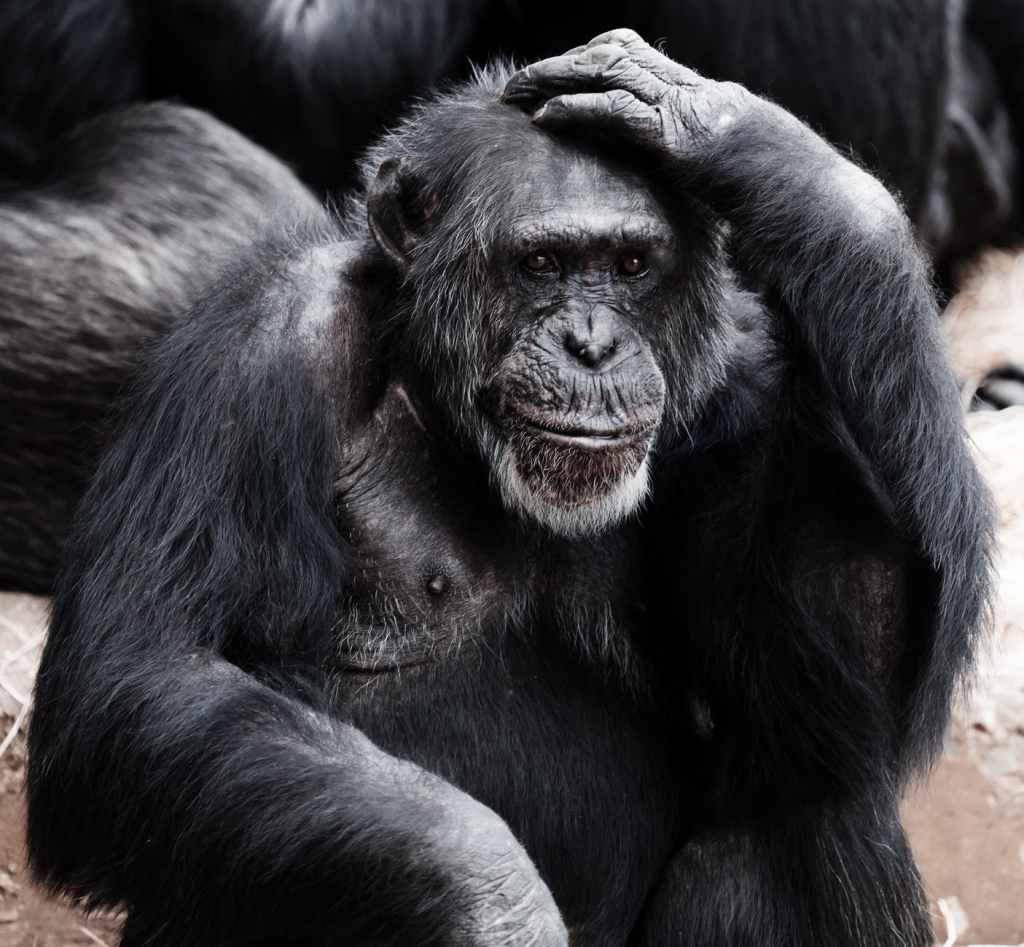
Jane epitomised all that was best in the values of the old English middle classes. Decent, hard working and ambitious, but not particularly well-to do, she managed to break in to the exclusively male world of primatology. Alongside the obvious integrity and academic flair was a shrewd mind, more than able to play the boys at their own games. Some of them, like Louis Leakey and John Napier, were among the sharpest minds of their generation. They gave her the break she wanted; the chance to observe real chimpanzees in the wild, to see if they had any bearings on human behaviour.

New discoveries and new methodologies came thick and fast, as she went round the jungle and the lecture theatres upsetting a whole series of apple carts. Chimps had personalities; so she gave them names. (it’s now standard practice in ethology). They were lethal hunters, not simple vegetarians. They made tools. And they killed each other in deadly wars. Sound familiar? And she became a star in a pioneering wildlife documentary for National Geographic, awakening millions to an awareness of nature.

It didn’t take long for Jane (that’s Dr Goodall to you and me) to realise that the same forces of destruction that threatened her Gombe Stream Chimp Reserve were busily smashing up all the other natural habitats all around the world. She soon took on a programme of environmental activism which you can read about in the link to her institute below. She now travels the world for at least 300 days year, actively educating, lecturing and campaigning. If your grandchildren are to have a future, they will point to one of the undoubted reasons why: Jane Goodall.

Jane Goodall – Wikipedia

the Jane Goodall Institute Homepage

#janegoodall #primatology #anthroplogy #ethology #animalbehaviour #chimpanzee #environment #animalwelfare

Weekly round-up: the blind see, and the crippled may walk

Wisdom is better than rubies, and health than wealth, so they say. Old clichés, doubtless: but we agree with them. This week the round up is devoted to really encouraging new stories on health, plus a new feature-something to think about.

New Corneas for old- Blindness is a tragic affliction, and we welcome every cure. Stacy Liberatore in the Mail tells of work of Professor Irit Bahar of the Rabin Medical Centre in Israel. The Professor is pioneering the introduction of a corneal implant called Kpro, a new type of tissue. Early trials are a success-we beg you to read on.

Legally blind man regains sight following the first successful artificial cornea treatment | Daily Mail Online

Breakthrough in Nerve Cell Regeneration Stacey Liberatore strikes again! When we were young it was axiomatic on all life science courses that damaged nerve cells could never regenerate. And so the tragic fates of those with spinal damage, confined for life to wheelchairs. Using a genetically-engineered protein called hyper-interleukin-6 (yes, we know it’s a mouthful!) Dr Dietmar Fischer of the Ruhr University in Germany has started to get paralysed mice walking again. Of course it’s a long way to humans, but the technique seems sound. Here’s Stacey’s very clear article, again for the Mail:

Hope for millions as paralyzed mice walk again after just TWO WEEKS of breakthrough gene therapy | Daily Mail Online

Don’t You Forget About Me- Even simple minds will recall that the whole reason vaccines work is that they cause your immune system to remember a hostile protein from a virus , and so have your defences ready. There’s been a bit of a media lather since Christmas about how long the new vaccines will last, and if they will cope with the new variants. Fear and anxiety sell more papers than good news, but we will stick our necks out notwithstanding. Here’s Nature, via Science Daily on why you should give your immune system credit for being tougher and more resilient than some media commentators would have you think.

Immune system mounts a lasting defense after recovery from COVID-19, researchers find — ScienceDaily

Something to think about The first run of our new feature!

Anyone who has had the privilege to drive a Cadillac will recall the pleasure. But could it fly? Now General Motors have unveiled their project for a vertical take off version. Here’s the Mail on the recent show-off at the Consumer Electronics Show. It’s battery powered and should move you around at 55 mph, building to building, in the world’s most crowded cities. We can’t wait for our friends to try it.

GM takes to skies with flying car concept unveiled at CES | Daily Mail Online

For those who got our little joke, here’s Simple Minds. Why is this our cat’s favourite song?

Simple Minds – Don’t You (Forget About Me) – Bing video

#generalmotors #cadillac #vtol #immunesystem #antibodies #covid-19 #Sars-Cov-2 #neuralregeneration #genetic engineering #cat

Cocktail Night: The Pink Lady

LSS is read in many countries. So today we are truly proud to have out first international contribution. It’s from our old friend and colleague Marce Lee Gorman, a Forensic Scientist who is now based in Dublin. Clearly Marce thinks that if ever this wretched lockdown lifts, and you’re breezing through downtown Manhattan, then you should try a Pink Lady at Rosie O’Gradys. We link them below.*

What’s in it? Gin, Grenadine, Egg white
Where did you drink it?Rosie O’Gradys Irish Bar, Manhattan
Who were you withA work colleague
Why was cocktail goodJust fab: great colour in a martini glass 
What was going on around youGreat Fun
Who else likes/liked this one?I don’t know. It’s unique to me 

Personal note: Marce didn’t specify any music, so we’re going to take a chance and make a recommendation of our own: Rosalie by Thin Lizzy. In our humble Anglo-Saxon view they were the greatest Irish band ever. Move over U2 and the Pogues, and learn from the masters. Sláinte.

here’s a great recipe from the BBC

Pink lady cocktail recipe – BBC Good Food

here’s rosie o grady’s

Rosie O’Grady’s Restaurant | Irish Pub NYC | Manhattan Pub Food |

#manhattan #dublin #pink lady cocktails #newyork #forensicscience

Maybe we need a few aliens to attack us right now

We at LSS always had short time for devotees of aliens, UFOs, Ancient Astronauts and Little Green Men. In youth, one avoided them at parties, as any further communication from them tended to arrive in green ink. So, with the broadmindedness that comes with extreme age we say hats off to Avi Loeb of Harvard University in his lonely battle to convince us that Oumuamua more commonly known as Il/2017/U1, which flew through the solar system a few years ago is in fact an alien spacecraft. We link the Mail‘s coverage below.

Good news, we say-because it may be just the medicine to solve the terrible divisions which wrack the world. Superpower rivalry, ethnic tensions, conspiracy theories-never have we been so divided against ourselves. But there is a way out.

No education in politics, psychology or philosophy is complete until one has read of the life and times of Jeeves, Bertie Wooster’s valet in the works of PG Wodehouse. Astute readers will recall how Jeeves uncanny knowledge of psychology saved many a tricky situation from cataclysmic disaster. For us, the classic exemplar was Right-Ho Jeeves. Bertie’s meddling had left a near terminal meltdown at previously tranquil Brinkley Court. The marriage of his Aunt Dahlia and Uncle Tom was on the point of collapse. Tuppy Glossop and Cousin Angela were no longer talking. The chances of any marriage between Gussie Fink-Nottle and Madeleine Basset were null and void. Brinkley Court was riven by the hatreds of warring factions. Then Anatole the Chef handed in his notice.

Into the situation stepped Jeeves. He knew that ultimately there is only one way to bring people together. Give them a common enemy. He provided one, in the shape of his employer, Bertram Wooster. In a short while he had contrived to turn Wooster into an object of common hatred, derision and scorn. The warring factions united. The marriage was saved. New engagements pledged. The cook resumed his duties. All was right with the world.

And so we believe that nothing would unite us all better than the arrival of hostile alien forces, either real or imagined. Our personal experience of aliens is rather limited. But it may be useful in general to think of them as the Clingon types from Star Trek One-malevolent baddies with nasty eyebrows and apres-ski outfits ever ready to do us down. So that we may at last unite the warring tribesmen of the ignorant and move forward to better things.

Harvard physicist believes Oumuamu is an alien craft, NOT a comet | Daily Mail Online

#pgwodehouse #jeeves #oumuamua #aliens #flyingsauces #psychology #commonenemy