No more coughs

Back in the long-ago days of 2020, when lockdowns were new and the England Football Team were nowhere near a major final, we at LSS kept making modest coughs and pointing to ourselves to let you know how clever we really were. (LSS 28 April, 22 May 2020 et passim). The reason? That Artificial Intelligence and supercomputers were starting to solve intractable problems in healthcare, and that the field would only grow.

It has. Natalie Grover of The Guardian describes the unveiling of a UK Supercomputer called Cambridge-1. Developed in partnership with Nvidia, it will be used to mine huge data sets, to improve our understanding of diseases like dementia, or to participate on new avenues of drug design. And if you look at the list of big hitters climbing on board-GSK, AstraZeneca, Oxford Nanopore, to name but a few-it reads like a roll call of some of the brightest minds on the planet.

Humanity has always been suspicious of computers. Films like 2001: a space odyssey or Terminator 2 depict futures where murderous AI supercomputers gleefully do in plucky humans, thus turning our subconscious fears into box office bonanzas. But it isn’t like that. AI will allow all to lead longer, healthier and better-educated lives. And you will be surprised at the business and working opportunities thereby afforded. Already persons known to us, some of them contributors to this humble blog, are working with AI systems to create amazing new products in cardiovascular care. But now you don’t have to take our word for it.

Read Natalie’s article. Follow up. And we need cough no more.

UK supercomputer Cambridge-1 to hunt for medical breakthroughs | Artificial intelligence (AI) | The Guardian

Artificial Intelligence Computing Leadership from NVIDIA

#healthcare #ArtificialIntelligence #supercomputing #drugs #dementia

Mathematicians v the rest: is the great divide about to close?

Most people who have ben through even a bit of education, soon notice a rather odd but repeatable phenomenon. Mathematicians versus the rest. It is a bit cultural, a bit behavioural and a bit intellectual. Maths, and its camp followers in things like physics and computing, seem to think one way. Whereas biologists, with strong allies in things like humanities, seem to run very differently.

This of course boils over into sometimes heated discussions like “can you use mathematical formulae to explain life?” or the famous idea that life has “emergent” behaviours” such as consciousness, which cannot be explained by the laws of physics.

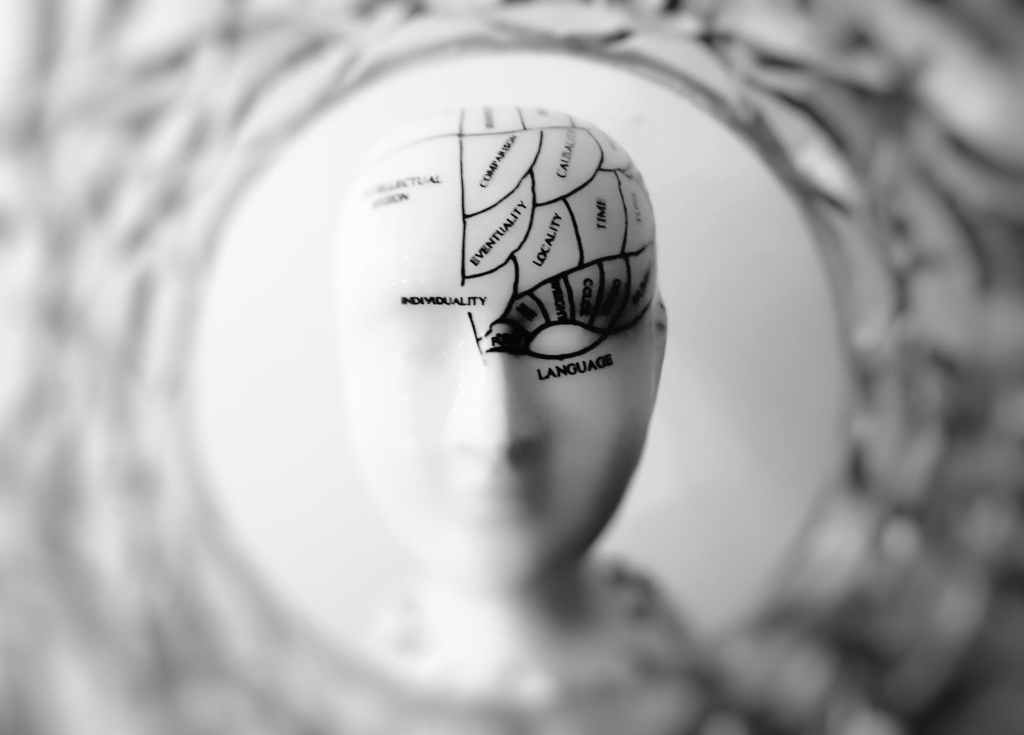
Some thinkers, including such luminaries as JBS Haldane, Albert Einstein and Erwin Schrodigger had long argued that physics might one day explain life. In 1943 Schrodigger even had a good stab at how a real gene might look and function-ten years before Messrs Watson and Crick. Eighty years later, there are exciting signs that at last the two areas of learning may be pulled together. Writing in Nautilus, Professor Sidney Perkowitz has an exciting new insight. Studying the information encoded in the DNA of an organism will in turn reveal its thermodynamic behaviour. Perhaps even how the structure of its neurons leads to consciousness. In higher beasts such as humans or dolphins of course.

Neurons depend on neurotransmitters. and Nature takes this further. If drugs act like neurotransmitters, then the attempts to use quantum computing to design and refine them could have enormous implications. We at LSS see this as having enormous potential for those suffering from terrible degenerative diseases like multiple sclerosis, or illnesses such as schizophrenia. This would indeed be the beginning of understanding life at the quantum level of explanation, the final act in uniting the physical and biological sciences.

Biology Flirts with Quantum Computing

Biomedical researchers are beginning to probe the possibilities of quantum computing. The technology offers the tantalizing prospect of speeding up tasks such as working out the best arrangement for atoms in a drug molecule, or simulating molecular processes such as photosynthesis. The next few years will reveal “what problems it will help solve and where it will really increase our understanding”, says structural bioinformatician Charlotte Deane.Nature Methods | 19 min read

The Math of Living Things – Issue 102: Hidden Truths – Nautilus

we thank Mr Peter Seymour of Hertfordshire for this insight into something that may be rather big!

#mathematics #biology #quantum #consciousness #disease #illness

Climate Change: when science fiction became reality

One of the best things about the old John Wyndham novels like The Day of The Triffids or The Kraken Wakes was the way that disaster crept up little by little, sign by sign, until it was too late. Indeed the Kraken Wakes describes a group of malevolent aliens who set out to destroy humanity by melting the ice caps and drowning us all. Who’d have thought it? Not that we needed aliens, given our propensity for fast cars and cheap fuel.

Although written in 1953, Wyndham’s predictive powers were in top gear. Writing in the Guardian‘s long read Alice Bell describes how awareness of global warming slowly dawned. It’s eerie to discover that politicians like Lyndon B Johnson and Henry Kissinger were talking about this more than fifty years ago, but, Wyndhamesque as ever, humanity kept sleepwalking closer to the abyss. We also plug Alice Roberts’ book, Our biggest Experiment, for those with time in the long warm summer days.

If you still think it won’t happen to you, try Ran Boydell in The Conversation. He thinks that most building standards were designed for an age before global warming and its terrifying new weather events. Perhaps the subtitle should have been-atishoo, atishoo, we all fall down?

Sixty years of climate change warnings: the signs that were missed (and ignored) | Climate change | The Guardian

Buy Our Biggest Experiment 9781472974778 by Alice Bell for only £ (guardianbookshop.com)

#climatechange #globalwarming#oil #johnwyndham

Weekly round-up: some new and some nostalgia

Our weekly round up of stories you may have missed

Suddenly we find out…how little we knew about viruses. Maybe this whole pandemic thing has concentrated minds, but Nature makes alarmingly clear how little we know about how many types of virus there are, and how many of them. Next time some know it all conspiracy theorist starts sounding off , you will know they are wrong. Because no one knows anything.

Scientists estimate that there are about 1031 individual viral particles inhabiting the ocean at any given time — 10 billion times the estimated number of stars in the known Universe. But we’ve officially named only 9,110 virus species. Now, we are seeing an explosion in viral classification, thanks to changes that allow scientists to judge viruses on the basis of their genomes, instead of having to culture them and their hosts. The wealth of information is feeding a new wave of discovery about how endless variations of viruses propel evolution by shuttling genes between hosts. Nature | 13 min read

Not more flying saucers? As the cold war ended, we thought that was the end of UFOs as well. We saw them more as a psychological projection of human hopes and fears than real interstellar vehicles piloted by daredevil Martian space jockeys. Now the wretched things are making a comeback, with a big hoo-ha about some Pentagon report. Alright, never say never, but we are inclined to go with the very calm and rational Kyle Cunliffe of The Conversation, who puts the fuss down to a strange phenomenon called “human error”. Why haven’t we heard about that one before?

World Anti Microbial awareness week That excellent scientist and citizen Professor Colin Garner reminds us that at last we can all do something about microbial resistance to antibiotics. WHO is launching a week of awareness from 18-24 November 2021. Why not look on the WHO site to see if you can help, or if there is a charity in YOUR country that’s already up and running? UK readers can help that marvellous charity Antibiotic Research UK, whose website is full of ideas .

World Antimicrobial Awareness Week (who.int)

Antibiotic Research UK | Fighting Antibiotic Resistance

T. Rex is No 1 Apparently most of the dinosaur bones that you see in museums are just plaster casts, and the originals are kept locked away in a safe. Now the Wollaton Hall Museum in Nottingham, England is putting on a display of a Tyrannosaurus Rex with real bones. Apparently the creature’s name was Titus (how do they know that?-ed) and he or she lived 65 million years ago in Montana , USA. In attraction terms, the museum hopes its T. rex will be a number one hit, relieving the glory days of such masterpieces as Ride a White Swan, Hot Love and Jeepster. Jessica Murray of The Guardian has a great story and picture.

‘Real’ T rex goes on show in England for first time in over a century | Museums | The Guardian

#virus #sars-cov-2 #covid-19 #alien #ufo #antibiotics #dinosaurs #museums

Friday Night Cocktails at the Savoy, and its eponymous book

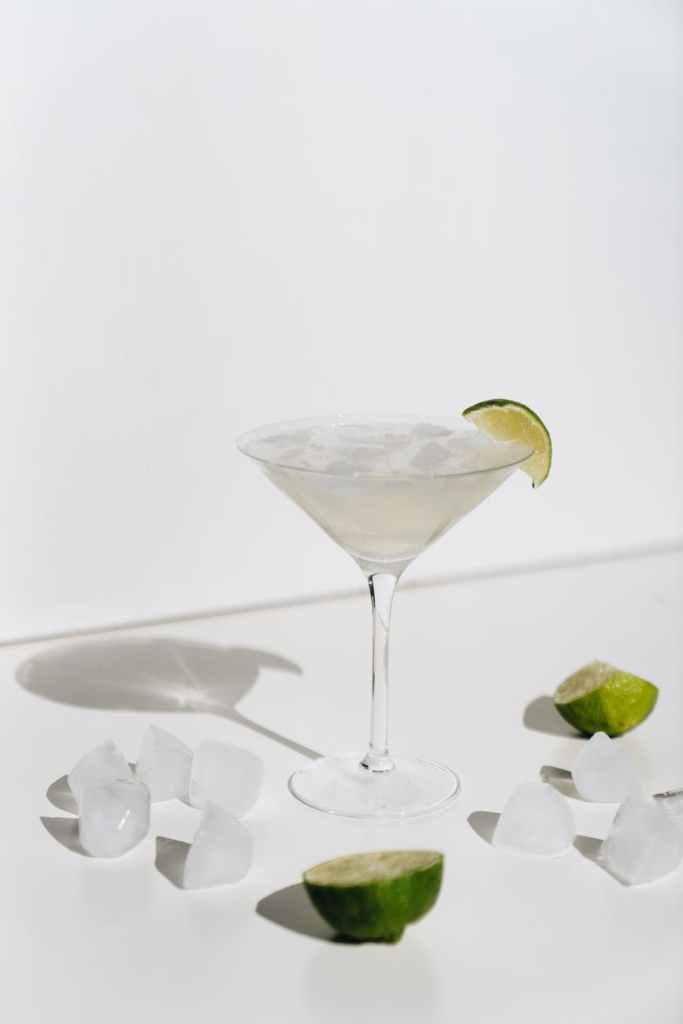
Anyone with even a passing acquaintance with The Savoy Hotel in London, and its cocktail bars, will tell you that it is a byword for good taste and elegance. That’s why this week we are openly plugging a delightful volume called The Savoy Cocktail Book (Constable 2014) The first edition appeared in 1930 as a fitting record of the hotel’s accomplishments in bringing the knowledge of fine drinks to a somewhat archaic British palate. The work has been intermittently revised and updated ever since.

The latest edition is like a bible for the sophisticated imbiber. There’s an excellent history of the whole gaff, worth buying a copy for on its own. Then an elegant guide to the best available in the famous American Bar and Beaufort Bar. Followed by a large general compendium of cocktails punches and fizzes that you are more than free to try for yourself at home. At the end, a fascinating vade meacum to the great French wine regions, with port tucked on.

So even if you can’t make it to the Savoy this year, what with all these pesky travel restrictions and what have you, this book will let you create a little of its elegant chic in the comfort of your own kitchen sink. We once saw them advertise a night of comedians and burlesque dancers in one of the hotel’s reception rooms. How you try to recreate that in the age of Covid is up to you.

Note the publishers of this blog have received no money or any form of recompense whatsoever for this column-it’s entirely off of our own bat)

The Savoy Hotel – Guest Reservations

#cocktails #savoy #artdeco #burlesque #covid-19

Of Donald Rumsfeld and a failure of catastrophic proportions

Historians of the future, assuming any such will exist, will spend hours raking through the broken rubble of the western alliance and ask this: How did this group of nations, still fresh from victory in the Cold War, so quickly lose their power? When did their decline commence? They will point to many impersonal forces: economic, cultural, demographic perhaps. But they will know that at one point, as always, a group of men sat around a table and came up with some bad – no, really bad – decisions that changed everything for all time. And Donald Rumsfeld was right in the middle of such a group of men.

The Iraq Invasion of 2003 was a decision so monumentally awful that its consequences cannot be summarised in one tiny blog. Suffice that it wasted trillions in money and thousands of lives. It threw down Iraq and raised up Iran – a dreadful exchange. Far from concluding the daftly named “War on Terror”, it exalted such groups as ISIS and Al-Queda, who would go on to unprecedented achievements of atrocity and bloodshed. Above all it legitimised dictators everywhere to conclude that there was no new rules-based order. That if the US and its allies could invade anyone they jolly well didn’t like, so could anyone else. The sauce was the same for goose and gander.

As the reading of the links below will show, Rumsfeld committed the primary error of proud people everywhere. He felt that his will could be be made real if he only tried hard enough, and that he had no need of the advice of others. Not one. Not his intelligence people, not his senior commanders (whom he seems to have brought close to mutiny), nor his wiser allies inside the Republican Party and abroad. He was not alone; the whole Bush Administration and its media cheerleaders blundered into Iraq. But there he stood among them – proud, confident, knowing – and utterly wrong.

The benign world that existed before the Iraq invasion has vanished. The planet is once more divided into hostile, lethally-armed camps. Great problems such as climate change and epidemic disease seem as far as ever from solution, with all their conflict-generating potential. And while far from alone, the decisions and influence of Donald Rumsfeld did as much as any to push us all down this slope.

Media coverage of Rumsfeld has been so widespread that can only select a few examples, and one book

For an unforgiving take try Julian Borger of the Guardian

History unlikely to forgive Donald Rumsfeld’s Iraq warmongering | Donald Rumsfeld | The Guardian

Daniel McCarthy of the Australian Spectator tries to balance Rumsfeld’s goods and bads

Donald Rumsfeld succeeded at everything — so why did he fail in the end? | The Spectator Australia

For a really good book on the whole sorry mess try

James Bluemel and Renad Mansour Once Upon a Time in In Iraq BBC 2020

#iraq #invasion2003 #georgewbush #donaldrumsfeld #foxnews #sunni #shia #iran #terrorism

What did the British do in India? Amartya Sen explains

The legacy of the British Empire lives on in passion. For some the British in India were a noble species who brought justice enlightenment and technology, A bit like those oddly benign aliens who popped up in the old Star Trek TV series, advertising their superiority and admonishing earthmen and others to mend their ways. For many Indians they were invaders, devoted to plunder, rapine and oppression-think Clingons if Star Trek is your thing.

The truth, like all truths, is subtle, complex and requires a very great deal of thought. But Amartya Sen, writing for the Guardian, makes a very fair stab at it. Rather than balancing the feel good sensibilities of the warring parties he goes for facts, salient ones, and some are interesting indeed. That before the British there was no country called India is hard to dispute. Yet the example of what Japan achieved without white rulers is a telling counterfactual for the Indian narrative.

Seventy-four years after India achieved its freedom, does any of this matter? In England, yes. Memories of a time when white Brits were effortlessly above darker types resonate strongly in the crowded housing estates and contested streets of the former power. They inform decisions on so much-constitutionally, electorally and culturally. And racism is never a one way street.

Whatever India is now and may become-and that could be much- it cannot forget one long ago but vital aspect of its being. History is a sort of by product, thrown out by nations as they move along. In the hands of authors like Sen, it is intelligent, fair and just.

Illusions of empire: Amartya Sen on what British rule really did for India | India | The Guardian

#raj #india #britain #britishempire #woke

Cancer: Early detection is the Holy Grail

“If we can catch it in time, we can cure almost anything.” So a Doctor once told LSS, and we believed her. The problem with cancers is that they can grow undetected for months, even years in some cases, and by the time that they are found, it’s too late- or treatment is incredibly intrusive. Now a US company called Grail has developed a marvellous new test which can identify up to 50 types of cancer long before any symptoms whatsoever have manifested themselves. They idea is rather clever. All living masses, tumours included, will shed little bits of DNA. Like criminals at a crime scene, this gives away their identity. So the grail test looks for little fragments of giveaway DNA in the blood.

We’ve got a press story from the PA via the Mail for you*1 plus a link to the Grail company website. *2They are an impressive bunch, and once again we have to admire their intelligence and hard work. And there’s a deeper story here, one that separates out intelligent people like the LSS reading community from other types of person one encounters on the internet. Because we know how Grail did it. They looked for evidence, built a theory and when new evidence came along they abandoned the theory and tried a new one which fitted their facts better. Eventually something worked, and we are all a little bit safer from cancer.

Conspiracy communities and those based solely on faith do the opposite. They start from one central idea, fit all the facts around it, and never ever think about new data. They have already made up their minds. Their only response to difficult new data is to shout and scream. The trouble is that just shouting at cancer won’t make it go away.

The task for intelligent people is to preserve areas of enquiry and reason. That way, there will still be cures for cancer and many other things, in the future.

Blood test to detect 50 types of cancer `accurate… | Daily Mail Online

Home | GRAIL

#cancer #screen #dna #grail #detection #prevention

Is Hydrogen going to waste?

One of the depressing things about our current plight is how complicated it all is. Over here is all the waste we produce. Over there-global warming and energy production. In the middle, ordinary people wanting a better life, and at the same time, wanting to do the right thing.

Take electric cars. They’re a lot less polluting, quieter and cheaper to run than the old petrol ones. But there’s a real environmental cost to producing the batteries. Most of us are seeing a gradual and worthy uptake in these new vehicles. But before you rush round to your nearest Rolls Royce dealer, does this current craze have a serious rival? What if we could power clean green motors and get rid of some of the mountains of filthy waste which disfigure the planet?

We’ve posted three takes on hydrogen today-all based on the idea of its use in fuel cells, those almost miraculously simple devices which produce nothing worse than a little water after combustion. In AutoExpress Martin Saarinen *1 has a nicely balanced menu of pros and cons which should give some pause for thought. Especially for anyone about to unleash major damage to their bank account with a new vehicle. Molly Burgess of H2 News *2 reports of some exciting British companies who hope to use waste to generate hydrogen. (LSS finds the first English plant to this purpose is already planned) And for all you scholars the US Department Of Energy *3 has a nice summary of all the ways that H2, the lightest gas can be run up in quantity.

But has hydrogen got off to a late start? A little digging showed LSS that there are 35000 electric charge points in the UK and 8 380 Petrol stations, no less. If hydrogen has a future, if must replace the latter, while competing with the former. At which point we remember the wise thoughts of that brilliant journalist James May. Although we cannot find the precise reference,. we remember him explaining how electric cars almost strangled petrol ones at birth in the years 1910-1920. Petrol only won because there were no national grids, so it was easier to build and supply filling stations. The UK hydrogen hopefuls we alluded to above plan to have 800 stations by 2027 and 2000 by 2030. By which time electric may have already won the marketing battle. Remember VHS v Betamax? It’s a cautionary tale.

We thank Mr Gary Herbert of Buckinghamshire for the idea and research for this blog

40 waste-to-hydrogen refuelling stations planned for the UK (h2-view.com) *2

Alternative Fuels Data Center: Hydrogen Production and Distribution (energy.gov) *3

Hydrogen fuel cells: do hydrogen cars have a future? | Auto Express*1

#fuelcells #hydrogen #electriccars #wasteenergy #transport