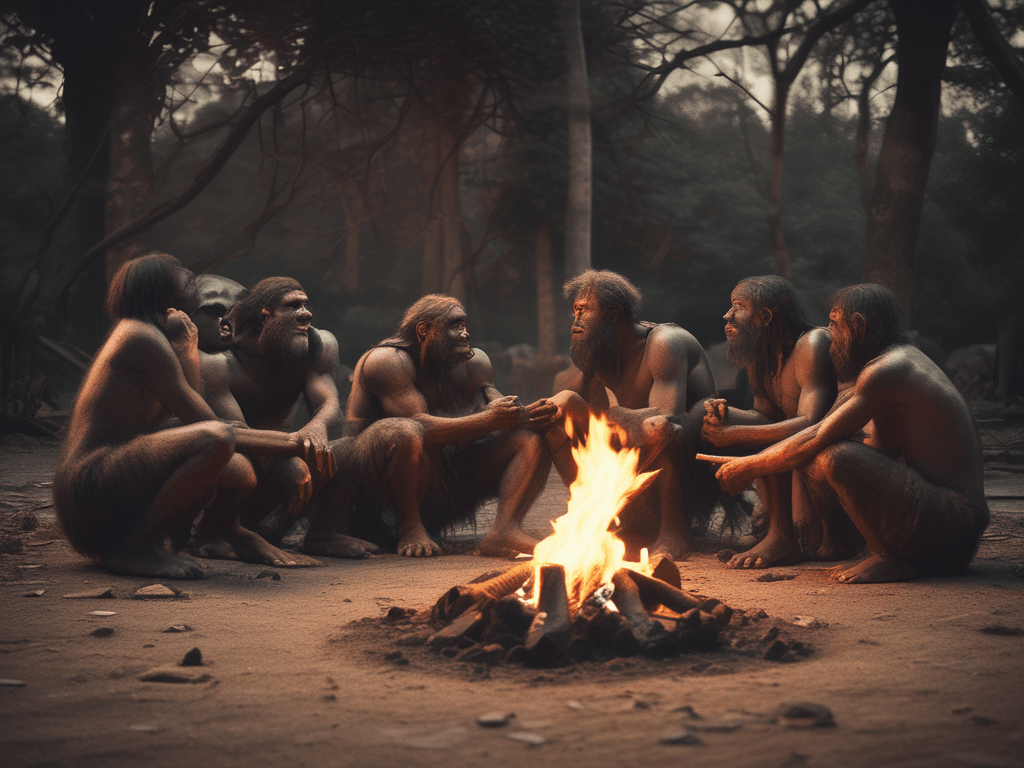


Occasionally we come across websites with lurid titles like “10 UNSOLVED MYSTERIES TO GIVE YOU THE HEEBIE JEEBIES!” And it’s all to do with odd bits of old stone or dodgy claims about flying crockery. Which made us think of a few everyday mysteries about Homo sapiens which are enough to give anyone the aforesaid Heebies, with a few jeebies thrown in for good measure. Because if we do not develop the cognitive capacity to solve them, we could well be heading for the biological equivalent of the junkyard,
(1) Where is the line between the individual and society? Countries that go too far towards prizing the State end up economically stagnant, as the society is captured by a small self-serving elite who grab all the resources. (Think USSR or Venezuela) On the other hand societies with no idea of the common good, where untaxed individuals run around doing what they like, not only end up without worthwhile armies or roads. They also get captured by an elite, this time billionaires, with almost identical outcome to the deluded Commies. No one has resolved this tension in any stable way.
(2) Emotion utterly dominates reason. All the technological and scientific advances that make life worth living (you really wanna give up soap, huh?) are formed in the reasoning part of the brain. Yet most people are driven by deep tides of emotion welling up from the subconscious. These rarely lead to anything profitable, and are the principal causes of most of the obsessions, addictions and generational hatreds which form such an immense drag on progress. Why is logic so weak and blind passion so strong?
(3) The drive to divide into hostile groups We often allude to this one; think football supporters and the Robbers Cave experiment. The American writer James Baldwin saw identity as a serious trap, denying us our own better nature. It may take all the AI in the world to solve this one
(4) The constant need for persecution of others, particularly the weak or disabled. Anyone still deluded about “the moral superiority of the oppressed” could learn from what happens to disabled neighbours in cheap housing estates, and how the noble proletarians make their lives utter hell. Why does everyone want justice, but only for themselves?
(5) The local and the trivial Why do so many people spend so much time learning about the lives of celebrities in tacky media outlets, when they would profit much more from reading magazines like The Economist or Science?
(6) An utter inability to change minds Most people are really rather deft and clever about what is around them; the hierarchies around their neighbours, families, jobs, and so on. But most of what they learned about bigger things like science or society was laid down decades ago. And the habits of mind formed in youth seem impossible to change, even when the survival need to do so becomes clear. This may ultimately be the most dangerous mystery of them all.
No species, however successful it seems at its peak, can long survive the competition from a better-adapted one. Our predecessor Homo erectus had evolved into top predator, and colonised three continents. Before it was utterly outclassed by the more intelligent Homo sapiens in its various subspecies. A newer, more intelligent form of human, perhaps incorporating elements from artificial intelligence and genetic engineering should be able to solve the above cognitive problems with ease. If that happens, there will be little enough space for the predecessor, and no motive to preserve us either.
#climate change #learning #cognition #human evolution #unsolved mysteries

 Learning, Science and Society