Property for the young: a very British obsession

For our foreign readers: nothing, and we mean nothing, obsesses the British so much as property; what the Americans call real estate. It’s true some dinner party conversations may touch upon sex (but usually everyone’s too tired), holidays (but: “been there, done that”) children (but who needs anxiety?) and even work (god, Chris is so boring!). No, it’ll be property that really gets their juices flowing-how much you’ve got, what you paid for it, what you’re doing to it and how much you could sell it for in order to buy the next ones. In this uber-financialised economy, its been the culture for generations.

It’s not hard to see why: it’s a status symbol; it may give you somewhere pleasant to live; it’s an investment. Above all, it was drummed into generations of poorer children that it was better to pay into a mortgage than to shell out the same money every month to a shark landlord, and have nothing in return. For the Ruling Class it was better still: people paying off twenty five year mortgages are unlikely to strike or join inconvenient political parties. They too have a stake in the system.

Except when they don’t. Here’s Larry Elliott of the Guardian

Levels of owner-occupation fell from a peak of 71% in the early years of this century to 64% less than a decade and a half later and have remained there ever since. One of the (many) reasons why the Conservative party polls poorly among young people is that its policies have been tailored to suit the interests of older voters

We confess that this worries us even more. History shows that an educated, propertyless precariat is a prime recruiting ground for revolutionaries of all sorts. To be fair Elliott sees hope where we didn’t think it would be: Gerard Lyons of the Policy Exchange Think Tank. Lyons sees the problem as more about deposits than paying mortgage instalments. His solution?

 …… a form of blended mortgage product that would deliver 95% loan-to-value home loans but be provided by three different financial institutions. The riskiest part of the mortgage – the bit between 85% and 95% of the homes value – would be provided by investment banks; the middle chunk would be provided by retail banks and building societies, while the last part would be delivered by long-term investors such as pension funds.

The paper supports the idea of a land value tax, and says the stamp duty holiday should become permanent, with no levy on lower-priced homes.

We beg you to read the full article; no one does context and even-handed analysis better than Elliott. Lyons and Policy Exchange are a right-wing outfit, not left-wing. Societies fail not because they didn’t understand their problems, but because they rejected solutions until it was too late.

How to turn the UK’s ‘generation rent’ into ‘generation buy’ | Larry Elliott | Business | The Guardian

Helping Generation Rent become Generation Buy:  | Policy Exchange

#property #mortgage #generationrent #owner-occupiers #socialmobility #policyexchange #deposit

Weekly Round up

Three for you this week, our common theme is something surprising, but which you just might want to know.

Scary variant Before we all relax and say “the vaccines have got it all solved”, like drunks on their second pint of beer, don’t forget that Sars-Cov-2 has some nasty tricks to play. Like mutating into dangerous new forms. Here’s Nature:

Scientists have released the data behind UK Prime Minister Boris Johnson’s warning last week that the new COVID-19 variant B.1.1.7 is linked to more deaths. The chance of dying is around 35% higher for people who are confirmed to be infected with the new variant. The risk is most pronounced for older men. The chance of death for an 85-year-old man increases from about 17% to nearly 22% for those confirmed to be infected with the variant. Researchers caution that the data are preliminary, and it is not clear whether the variant is deadlier than previous strains or is spreading to more people who are vulnerable to severe disease.Nature | 4 min read
Reference: medRxiv paper

Trump trumped It was always obvious that Trump and his supporters were going to try to play fast and loose with the 2020 election results. Just how close they came, and how democracy was saved, is outlined in this piece by Molly Ball in Time. Slowly a coalition of business, unions, Democrats, democrats, and moderate Republicans was assembled with just enough critical mass to ensure a fair result. We knew nothing about this, but it is one of the most exciting pieces that we have read for a long time-we think you’ll like it too.

The Secret Bipartisan Campaign That Saved the 2020 Election | Time

We thank Mr Peter Seymour of Hertfordshire for this story

Hiding in plain sight? Despite the efforts of many intelligent people, the deep causes of mental and neurological disorders are still hazy. And they are terrible afflictions, ruining the lives of sufferers and their families. Now the intriguing possibility exists that the balance of your gut biome– all those little creepy things that line your gut- may have profound consequences for your nervous system as a whole. It’s early days yet, but interest is growing fast. We love it when a people suddenly discover something that was there all along. Birds are dinosaurs. Continents drift. And maybe, just maybe, the cause of ASDs lies in something that happened to the mother before birth. Very clickable.

Evidence is building that the trillions of bacteria in the gut could have profound effects on the brain, and might be tied to a whole host of disorders. What was once a fringe theory — the gut–brain axis — is seeing an explosion of interest. Now, researchers are working to separate hope from hype to develop better and easier treatments for brain diseases.Nature | 12 min read

#2020election #donaldtrump #democracy #joebiden #covid-19 #sars-cov-2 #gutbiome #autism #neurologicaldisorder #bacteria #microorganism

Friday Night Cocktails-five warming ideas from The Gentleman’s Flavour

As we write these lines, England is about to be swamped by a blast of arctic cold. But that’s no excuse for the sophisticated philosofe not to enjoy a refined Friday night tipple. So we thought that our English readers, and indeed all those in cold climes around the world, could do with a little advice on some heart-warming recipes to get you through the long weekend ahead.

After a youth wasted on the pursuit of virtue, ideology and moral rectitude, the editorial board of LSS has acquired more worldly-wise weltanschauung that encompasses a broader view of humanity, its hopes and its foibles. That is why we are proud to take advice from educated men, and women, of many views and opinions, unless they gratuitously set out to offend or otherwise frighten the horses. Thus the Gentleman’s Flavour is a cigar site, and we don’t smoke cigars. Or anything else. But some of you do, and you are our friends. And they had such a good , succinct, easy to understand list of winter warmers, that we had to put their site up for this week. Click below for tips on:

Will’s Sugar Shack Hot toddy Hot Mulled Port

Spiked Apple Cider Will’s Winter espresso Martini

Southern Hot Toddy

Stay safe on those icy pavements readers- you know what going into hospital could bring right now!

5 Warming Cocktails To Beat Cold Weather – The Gentleman’s Flavor

#snow #cold #toddy #cocktail

We thank Mr and Mrs A P Foster of Dorset for the idea in this post

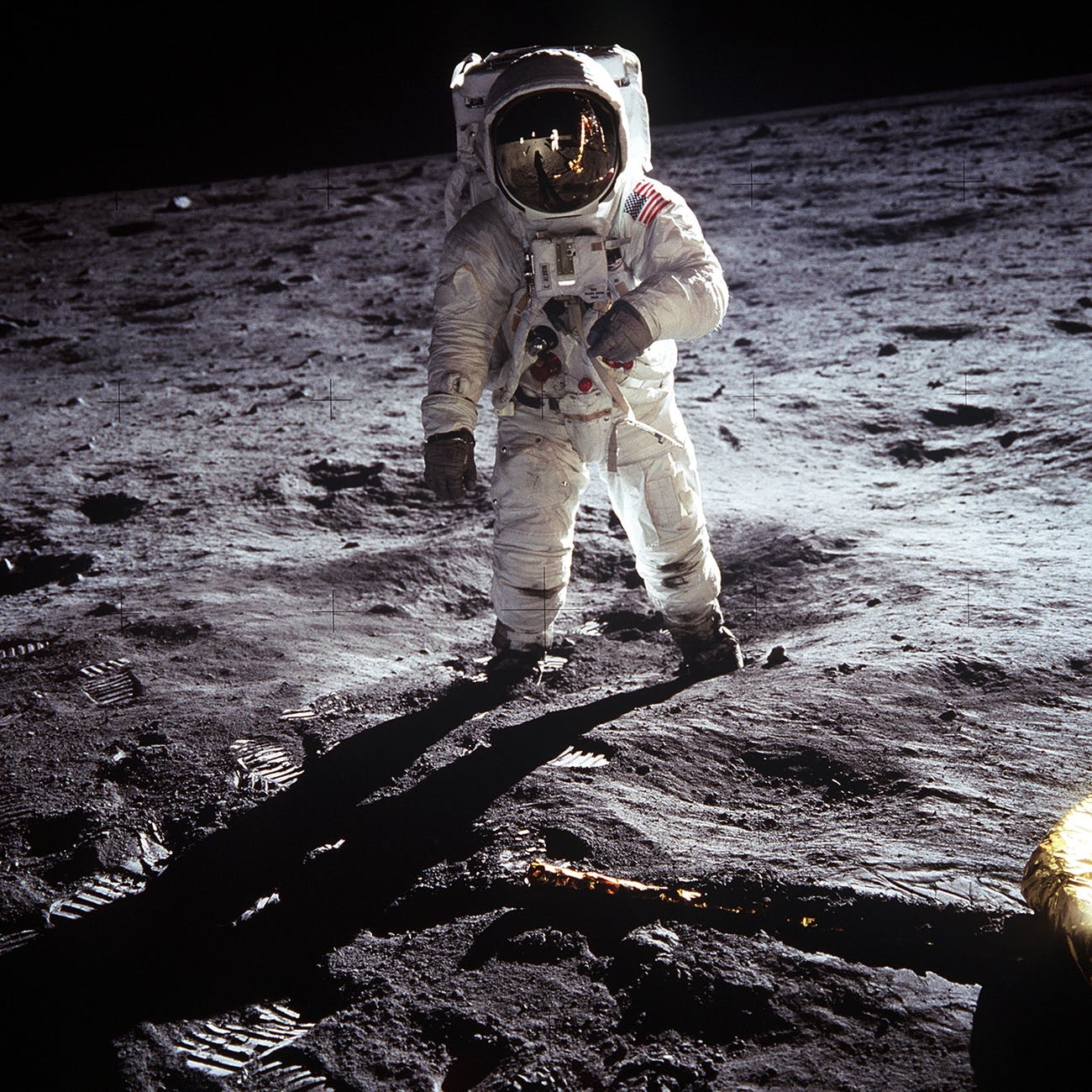
Fifty years on, Apollo is still paying for itself

Fifty years ago, with the Moon reached, Project Apollo was being wound down. Certainly the cost had been enormous (though as nothing compared to the Vietnam war, the financial bailout of 2008, and the daddy of them all the Iraq-Afghanistan campaign from 2003 onwards. We remember an argument we sometimes heard at the time. “Why spend all that money going to the Moon, when there are so many poor people who need help on Earth?” It is a decent and moral argument, and we admit that some of us struggled with it back in ’71. The only spin-off from Apollo was non-stick frying pans. Why indeed give money to slightly nerdy science types to play with, when there are hungry, diseased children out there?

Professor Mariana Mazzucato has an interesting reply. She quotes the following tale told by NASA administrator Ernst Stuhlinger to a nun who had raised that very question. We quote from Mazzucato’s book Mission Economy*

Stuhlinger asked the nun to first consider the story of a benign and much-loved count who lived in Germany 400 years ago. The count was always redistributing his riches to the poor. But he did more than redistribute; he created. The count funded the scientific activities of a strange local man who worked in a small laboratory grinding lenses from glass, and then mounting the lenses in in tubes and creating small gadgets. The count was criticised for wasting money on the craftsman when the needs of the hungry were so much greater. And yet, explained Stuhlinger, it was precisely such experiments that later paved the way for the invention of the microscope, which proved one of the most useful devices for fighting disease, poverty and hunger. The Count, by retaining some of his spending money for research and discovery, contributed far more to the relief of human suffering than…by giving all he could possibly spare to his plague-ridden community. (p79)

Fast forward to 1961. The Count is President John F. Kennedy. The researcher is the Apollo programme. Instead of a microscope, we got CAT scans, LEDs, scratch resistant lenses, memory foam, the computer mouse, laptop computers, the resistant foam in your trainers, MRIs, solar panels, water purification, defibrillators, pacemakers and many more examples of what Mazzucato terms “economic multipliers”. An inflexible emphasis on budget sheets, or endless importuning for immediate welfare spending would have killed all this. So both Right and Left can blush in shame!

We’ve said it before-research spending pays incalculable dividends. If you don’t believe us, at least give good Professor Mazzucato a try-she’s worth it.

Mariana Mazzucato Mission Economy Allen Lane 2021

#economicmultiplier #NASA #publicprivatepartnership #spinoffs #R&D #projectapollo #presidentkennedy

Why Climate Science is like Forensic Science

One of the best things about Forensic Science is not only that it can work with very small samples, but that the conclusions drawn are very large. What’s more, it is tested twice-first by other scientists in all the usual ways like conferences, learned journals and many an earnest water cooler moment. Then it goes to court and gets tested by barristers who, despite whatever personal defects they might have, are possessed of razor sharp minds and can detect any error or illogicality. It’s the ultimate test of the scientific method. Which is actually very easy. Look very hard at something. Is it real? How does it differ from what you know? What does it let you predict?

Oddly enough. it was using this method in climate science which provided the clinching proof that humans are causing global warming. As every schoolchild knows, carbon mainly comes in two forms: 12C and 13C. And these are being constantly recycled through living things and the atmosphere. Because plants generally like to work with 12C they absorb more of it from the atmosphere. So if you measures the ratio of 13C/12C it’s higher in plants than it is in the atmosphere as a whole. But because of the recycling, the atmospheric level should be stable. Which it was for many thousands of years. But if you start burning lots and lots of plant material, especially in the form of coal, that ratio will change. Which it has since about 1850. (Did we hear someone say “Industrial Revolution”?) Since when the atmospheric 13C/12C ratio has been falling steadily as more and more 12C goes up the chimney. You’re breathing it in too, but that’s another story. We have a link below to to the Wiley dummies website, which we always find to be a marvellous source of clear explanation on many topics.

So here’s some questions for those Dog and Duck types who spend too much time swallowing the output of certain TV channels whole.

How much has the 13C/12C ratio changed since 1850? Why has it changed? If it is not caused by burning fossil fuels, what is the alternative explanation? If the effect is cyclic, how long are the cycles? How have they changed in relation to other natural cycles? What other evidence can you offer to make me believe what you say?

We don’t know what answers they will give. But we have noticed that people who start shouting, change the subject or allege conspiracies show that they don’t know what they’re talking about on any subject.

Isotopes: How Do Scientists Know that Humans Cause Global Warming? – dummies

#globalwarming #carbonisotopes #CO2 #climatechange #denialists

Brain implants-hope for addictions amd much much more

Following our ever-present ethos of a tiggerish, bouncy optimism, which we know you like, we have a short story and some long links to a really hopeful step forward in the world of brain implants. Also known as neural implants, it’s where a small processing unit is fixed to interface with neural tissue, aiding or even substituting for its function. As Joe Pinkstone in the Mail* reports, there are amazing possibilities to help people control addictions-or for those with heartbreaking diseases like Parkinsons.

There is one problem. These implants need quite an operation to put them in-and they run on electricity. What do you do when the battery runs down. Give the poor patient another operation? That’s why we think that Joe’s piece is so significant. A Korean team led by Jae Woong Jeon have found a way to recharge the little implants by wireless technology, which should potentially let them last for a lifetime. And let you carry lots more.

We have some nice links below to the whole question of neural implants for readers who wish to learn more. But here’s a thought; do you want to live in a world where a buzzer sounds in your head every time you reach for a fresh can of Stella Artois?

Brain implants the size of a coin combat drug addiction in rats | Daily Mail Online

What Are Brain Implants and What Are Their Future Uses? (moneyinc.com)

Brain implant – Wikipedia

#neuralimplant #wirelesstechnology #brainimplant #addiction #neurology #parkinsonsdisease #neurodegenerativedisease #informationtechnology

It crept up and got us before we even knew it!

Old science fiction hands will recall a common trope of their beloved genre. A huge disaster creeps up on humankind; slowly at first, with the author giving teasing hints, until the cataclysm is on us all and everyone can see how bad they’ve been. It was a technique perfected by John Wyndham in works such as The Kraken Wakes and The Day of the Triffids. Except in the case of Covid-19, it may have happened for real.

Up to now, the story of Covid-19 has been simple: it appeared at the very end of 2019 in Wuhan China, got out, and spread around the world, wreaking havoc on lives, economies and the licensed catering industry. There’s a load of argy-bargy about where it came from, who covered up what, who forgot to order vaccines, and so on. But that’s secondary. The real questions are: should we even be in this mess? And why didn’t we see it coming?

Because there is now increasing evidence that SARS-COV-2 was circulating well before the ground zero date of December 2019. Regular followers will recall our story in July about researchers in Barcelona who found clear evidence of SARS-Cov-2 in water samples from March 2019. Confession-we wondered if one day that would be put down to contamination or misidentification. Except it hasn’t. And now there is another link in the chain, to a study from Italy which found virus related antibodies in 14% of a set of blood samples which were taken in September 2019. Another study showed positive tests in Brazil in November 2019-that’s a long way from Wuhan. Some of this work has still to be peer-reviewed and everyone needs time to digest the implications-but are you beginning to wonder?

We don’t do personal stuff much here. But we are aware of several persons who contracted curious and rather nasty respiratory diseases in November 2019, some of them close to us, some who worked in the health services. Coincidence? Or was it because busy doctors had not been trained to look for COVID-19, so, very understandably, they didn’t find it?

All of which raises many questions and few answers. What has been the follow up, if any, to the Barcelona finding of March 2019? Why was there a strong detection signal in Brazil, if the virus was only supposed to be starting in far off Wuhan? Are there any other biological samples around the world from 2019 which are still fresh enough to look for the virus or its antibodies? And what about 2018? Don’t forget that the HIV virus was drifting around at low frequency for years before the big outbreak in 1981. Why the sudden jump for Sars-Cov-2 in Wuhan?

If we want to avoid another pandemic, we need to know a lot more about how this one started, and spread. How about a windfall tax on hedge funds, to do it once and for all?

We thank Buckinghamshire landowner Mr Gary Herbert for help with both the inspiration and research for this story

Unexpected detection of SARS-CoV-2 antibodies in the prepandemic period in Italy – PubMed (nih.gov)

SARS-CoV-2 in human sewage in Santa Catalina, Brazil, November 2019 | medRxiv

#wuhan #china #sars-cov-2 #covid-19 #coronavirus #barcelona #italy #brazil #sewage #publichealth #originsof covid-19