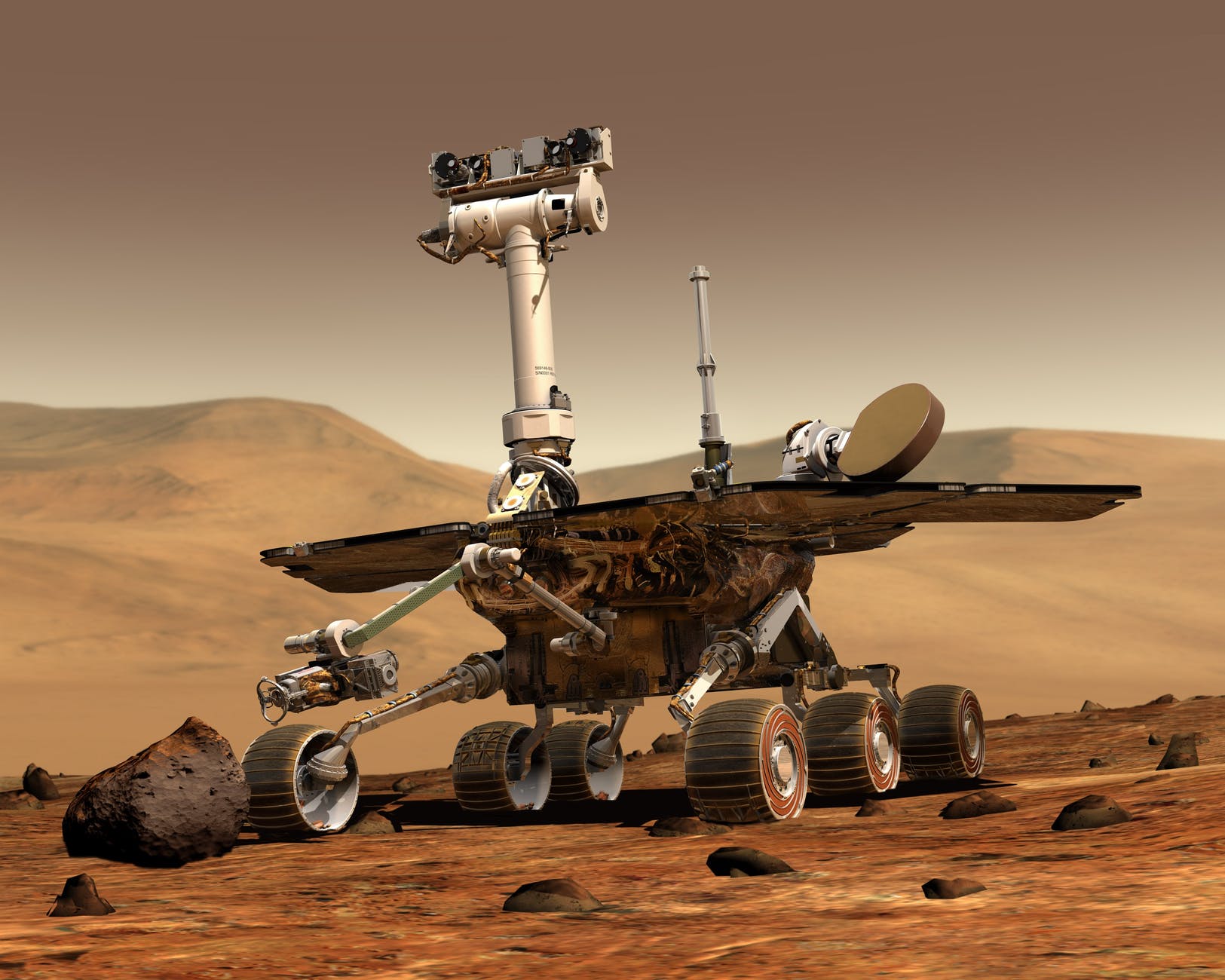
Hve we been missing something on Mars for 45 years?

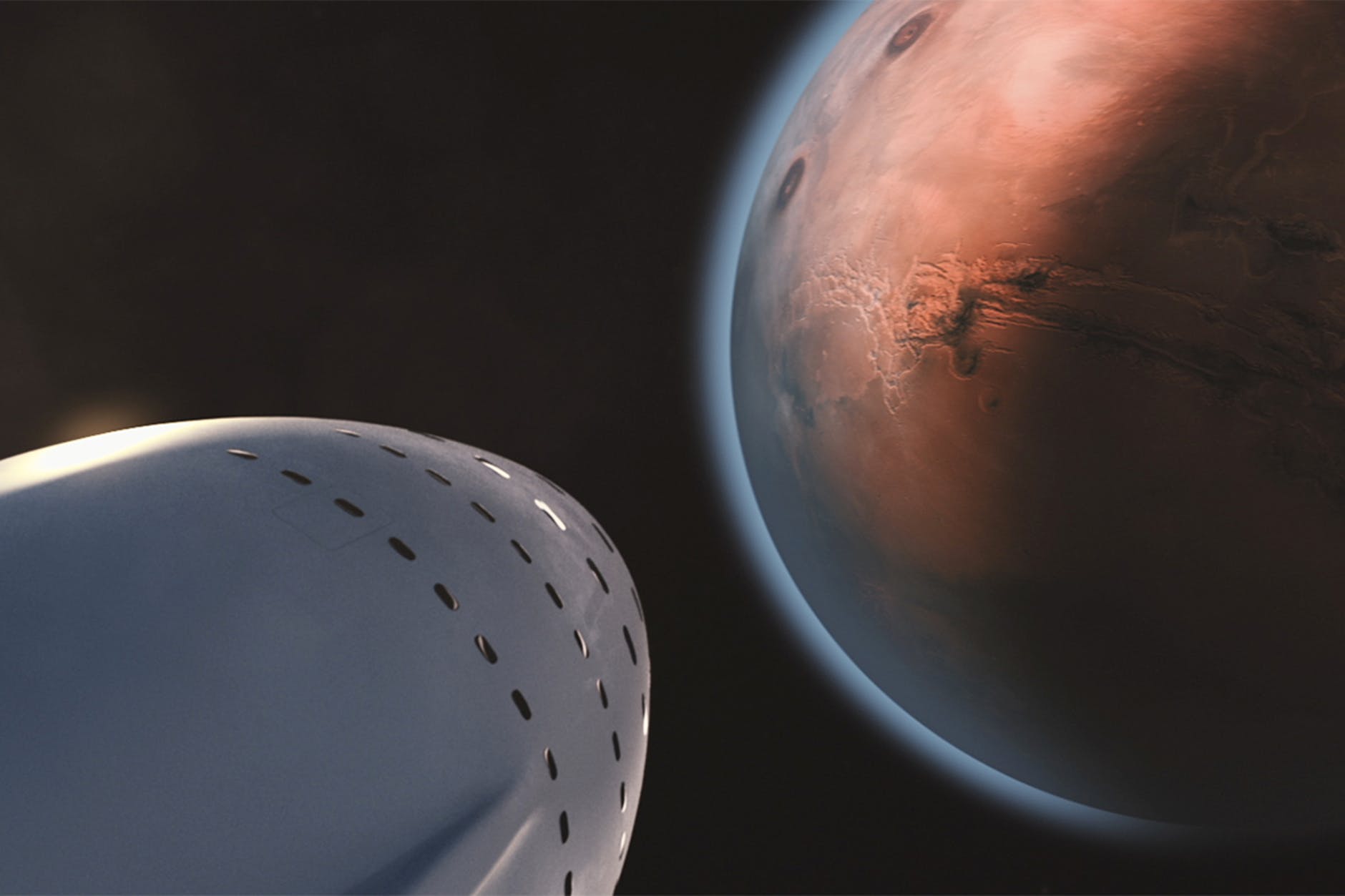
Tomorrow, all being well, the multipurpose NASA lander Perseverance will touch down and begin its programme of exploration. With China and the UAE putting probes into orbit, poor old Mars must be feeling quite invaded. And Perseverance is at last designed to answer the one question that everyone including David Bowie has been asking for centuries-Is there Life on Mars?

Except some of us have strange feelings of deja-vu. Readers who recall the long hot summer of 1976 will recall the touch down of two then state of the art probes, Vikings 1 and 2, thousands of kilometeres apart on the surface. Each carried four carefully designed and controlled experiments, mini-laboratories if you will, designed to answer Bowie’s question. On each Viking, three out of four results came back negative. And one on each came back positive.

The positive test was designed by a man called Gilbert Levin. It was called the Labelled Release (LR) and he had been using it for years to look for micro-organisms in sewage samples on Earth. It took a sample of Martian soil, added a little aqueous nutrient spiked with 14C and waited. If anything were alive in the soil , its metabolism would release CO2, which being labelled with 14C, meant you couldn’t miss it. Surprise, surprise, the LP results were overwhelming for both Vikings. For a brief period of about 12 hours the headlines LIFE ON MARS! screamed around planet Earth in the creaky media of the day. And then NASA killed it.

We won’t go into all the ins and outs of the controversies of the next few days, months and decades. Look, we’ve listed a few places to read below. It was held then, as it basically is now, that the weight of the other three experiments was enough to negate the LR ones. That was the story, and they’re sticking to it. We are the last to gainsay NASA and scientific caution. But we wondered then, as we do now-why go to all that trouble to set up an experiment then think of every reason you can to prove it was wrong all along? How can the negative interpretation be sustained in the light of the last forty years, with the discovery of things like methane, water and organic molecules on the Red Planet? Could something like perchlorates, now known to exist on Mars, have vitiated some Viking results?

We await the Perseverance results with interest. When it comes to science, a default conservatism can be justas misleading as a default sense of wonder.

Mars Perseverance Mission Overview | NASA

Viking program – Wikipedia

Michael Brooks 13 Things that Don’t Make Sense Profile 2009 (still gives the human story of the Viking controversy)

#mars #astrobiology #perseverance #viking #microbiallife #extraterrestrial #NASA
March Budget. Time for the Chancellor to help small businesses grow

“Private sector bad, public sector good” To anyone on the old socialist Left it was a mantra ingrained from birth. And every bit as wrong as its converse, the mantra of the equally unthinking Right.

Nowhere is this truer than in the world of Small and Medium Enterprises (SMEs). These private companies are the lifeblood of successful economies. They provide the energy, dynamism, most of the new ideas, and much of the employment that not only makes life enjoyable, but sustainable. And here’s a killer fact for the Chancellor: they’re much easier to tax, because they’re firmly stuck and visible in their country of origin. While the big boys can move stuff around from subsidiary to tax haven, and don’t have to pay for all the roads, schools hospitals and policemen that make their operations possible.

Now so many small businesses lie shut by the Covid-19 lockdown, uncertain of their future, shorn of their markets, while the giant chains trade away as if nothing had really happened.

UK Chancellor Rishi Sunak has a budget to deliver in March. He knows he must start lifting the UK economy out of the Covid doldrums. We qualm at advising such an intelligent man. But here are four actions which might help the SME sector.

Use the tax system to facilitate supply chains, such as logistics,skills and informational support

Tax breaks for exporters, and businesses that support them

A treasury run task force of advisers to help with all aspects of bureaucracy and form filling

A Planning Agency to identify and exploit  future export markets, comprising businessmen,economists and the Government, as in South Korea

SME people don’t want much. They prefer to stand on their own two feet. Larger export markets, for economies of scale. Sympathetic banking structures, like the German Mittelstand system. Above all a level playing field. We know personally of five such who started small and grew into major export success stories in fields as diverse as Biotechnology, Financial services, Picture framing, Games, and Forensic Science technology. They were the bravest, most risk taking, hardworking people we have met. Time to recognise these qualities?

What Are SMEs & Why Are They So Important for the UK Economy? | LABS

#exports #smes #marchbudget #rishisunak #covid-19 #lockdown

A Big Thank- you

Once again we would like to thank all of the people who have helped Learning, Science and Society through another month or so. That’s everyone who has contributed with ideas, stories technical support or taken time to tell us about their lives. Above all our readers and followers in so many countries. And of course the patient support engineers at WordPress!

The list of names is now too long to acknowledge individually, so we hope you’ll take your part of this message-because we appreciate it.

We don’t expect or intend to reach a mass readership. Our aim is to give ideas to that top 3-4% who think evidence is more important than opinion, and that you you should think very carefully about the context before you open your mouth. Rare qualities indeed.

#reason #enlightenment #emotion #directedreason #logic

Life in Lockdown-a teacher’s view

One thing we know about LSS readers, they all lead busy lives. So what’s it been like in lockdown for this elite sliver of the population? In this first of our series we talk to Heather, a teacher from London, who teaches maths at a private junior school.

How long have you been doing your job in lockdown?

Lockdown #1 was March to July 2020; Lockdown #2 started in January this year and looks like continuing until 8 March 2021

Does it feel different?

Very different to ‘normal’ school teaching obviously, but there are differences between lockdowns.  During Lockdown  #1,  I taught a couple of live lessons a day, and set tasks .In Lockdown  #2, we follow the same timetable as in school but online.   It feels a little more relentless.

Is your day longer or shorter?

Live lesson time is the same as in school but preparation and marking makes the working hours longer

Do you miss the commuting?

No, and I even get an extra half hour in bed in the morning! 

How long did it take to set up the new technology at home?

Easy. My school provided staff with laptops to deliver online teaching. We use Microsoft Teams and Zoom for lessons and I learned ‘on the job’. Also, you should never be afraid to ask the children the shortcuts as they know them all! Half the battle is staying one technological step ahead of them!

How did the kids react when the school went to lockdown?

Generally, they were OK with lockdown although some find it hard. The biggest issue is that they miss meeting up and chatting with their friends. School is about so much more than imparting knowledge and academic achievement.   

Do you feel it’s more difficult to teach some things in lockdown?

The big difference is that instead of writing on the board, you have to create a shareable PowerPoint presentation for the methodology. Some practical things are more difficult to teach, like using protractors or handling 3D shapes. But there are websites and tools where children can manipulate an online protractor or sort shapes.  You have to be creative, and think of alternatives or be ready to abandon your plan altogether if necessary. Often the children themselves surprise you by coming up with good alternative ideas!

Have any children or their families struggled with the technology?

Generally they’ve coped well. Problems are with things like patchy internet connections, accessibility issues with file formats and printers.  Parents are often working from home so sometimes there is little support for the children to sort problems out during the day.  Turning off and on again is still the best advice!

What’s it like with a whole class on zoom?

It is lovely to see the children.  Younger children mostly keep their cameras on, which apparently seniors don’t. It is a little soulless teaching to a bank of circular images rather than real faces.

It still makes me smile if they put their hand up and ask if they can go to the toilet during the lesson since if they got up and walked away there is little I can do!  

Do you still have staff meetings?

Yes – a weekly meeting on Friday afternoon it’s important to see other staff members- we miss chatting to each other too. Just like the children.

What do you do when the internet crashes in the middle of a lesson?

Luckily it hasn’t happened to me-yet.

Does the relationship between you and the kids change?

Not really. We already knew each other well from spending the Autumn term in school so you build on that. You get to see their pets or toys which is different to school but it’s sweet to share that with them.

Has lockdown given you any brainwaves for new teaching methods?

It has made me more confident with technology and more aware of video and slide presentations. I have been impressed with 3D tours of various art galleries you find online.

When the pandemic ends, do you think we could continue with some zoom classes, and maybe just bring the kids into school three days a week?

No I think this would be awful. Children need to socialise and nurture the feeling of belonging to a broader school community

Have you heard of anyone teaching in their pyjamas?

Not exactly, however there have been ‘wear a hat Wednesdays’ and ‘fancy dress Fridays’ when everyone looks forward to something a little different and a few onesies may have been worn! 

Has lockdown given you any other insights?

Lockdown can be hardest on those children who struggle with friendship or confidence issues. It is important to be able to really watch out for visual clues and listen to them and check that they are feeling ok.

Speaking generally, I feel the children at my school are not a ‘lost generation’ nor that their education is irretrievably weakened. We should not underestimate what children are capable of with incentive, encouragement and a bit of hard work. Have faith!

#covid-19 #coronavirus #schools #education #teaching #onlinelearning #lifeinthe pandemic

Get Carter at Fifty

Real works of art create their own worlds, entirely self-contained into which the reader is invited to follow. Thus Robert Louis Stevenson gave us Pirates and Francis Ford Coppola the Sicilian Mafia.Astute readers will recall many more. These worlds may to a greater or lesser extent be hokum: yet each is a world with its own rules and recognisable characters,delimited by the storyteller and destined to endure for all time.

Such was the achievement of Mike Hodges Get Carter (1971). It concerns the adventures of a sociopathic anti hero Jack Carter (Michael Caine) who travels from London, where he is a career criminal, to his roots in Newcastle, ostensibly to avenge the death of his brother. He enters a world of crooks, whores and heavies where no character, least of all Caine’s, has any redeeming features whatsoever. Apart from the fact that his cockney accent makes him stand out like a sidewinder at Fortnum amd Masons tea rooms, Caine’s merciless, transactional perfomance is a relentless exercise in contained menace. His supporting actors cast give an impeccable collection of characters who will do anything except a day’s work in the declining shipyards and coal mines of the once mighty North East. Watch for a special performance by John Osborne, whose relaxed, almost epicene chief villain is far more threatening than the stereotyped psychopaths of later gangster epics.

Above all it is the landscape which captivates, lingeringly shot by Hodges and cinematographer Wolfgang Suschitzky. Here are the remnants of a once formidable industrial powerhouse, now hopelessly decayed. Docks, shipyards, cast iron and endless industrial terraces back every scene. Once these people exported technology to the whole world. Now the only new is represented by brutalist seventies carparks and blocks of flats, all paid for by taxpayers elsewhere, Perhaps Osborne is the link to all this: the spectre of Archie Rice tells us that these children are not the men their grandfathers were. And this world is at the very end, not the beginning, of something. Still entirely white, heterosexual and male dominated, the nineteen seventies are about to overwhelm it. The film itself was delayed by a strike of the Association of Cinematograph, Television and Allied Technicians, a small harbinger of much, much bigger things to come as Britain’s grimy smokestacks collapsed into irrelevance, Meanwhile an ambitious new Minister called Margaret Thatcher was already starting to make her name at the Department of Education. The collectivist,methodist, almost socialist Britain which had endured since 1940 was coming to a rapid end.

To visit Get Carter is at once a trip in a time machine, an exercise in film noir at its very best, and a recognition of human nature at its worst. As long as people enjoy guilty pleasures, there will always be a legion of the bad to pander to them. And that both death and vengeance are motives enough for any day.

#getcarter #northeast #newcastle #filmnoir #seventies #britishcinema

Weekly Round up: Of conspiracy theories,pollution and luxury cars

In a busy week of amazing stories flitting across our screen, we’ve found it incredibly hard to cut them down to something manageable for you. So we’ve gone with our ancient principle: these are not the ones you could do with reading, there the one’s you shouldn’t do without.

Why do people believe in conspiracy theories? It’s probably the overarching problem of our times. Our indefatigable correspondednt Mr Peter Seymour of Hertfordshire wants you to look at the following piece by Will Bedingfield in Wired. It’s about Adam Curtis (yes-he of Hypernormalisation fame). Curtis has always been a polymath of eclectic proportions, and we’ll leave you to judge for yourselves. But get this killer quote as a taster:

While researching the film, Curtis interviewed conspiracy theorists in Birmingham, people who believed in “one of the great dream worlds of our time,” the idea that the CIA, Walt Disney and the Illuminati brainwash and control all the major stars. He soon learned that, when pressed, these people didn’t really believe the story. They just loved its epic magical dimensions – an alternative to this “dull, desiccated, grim, utilitarian world.”

Adam Curtis knows why we all keep falling for conspiracy theories | WIRED UK

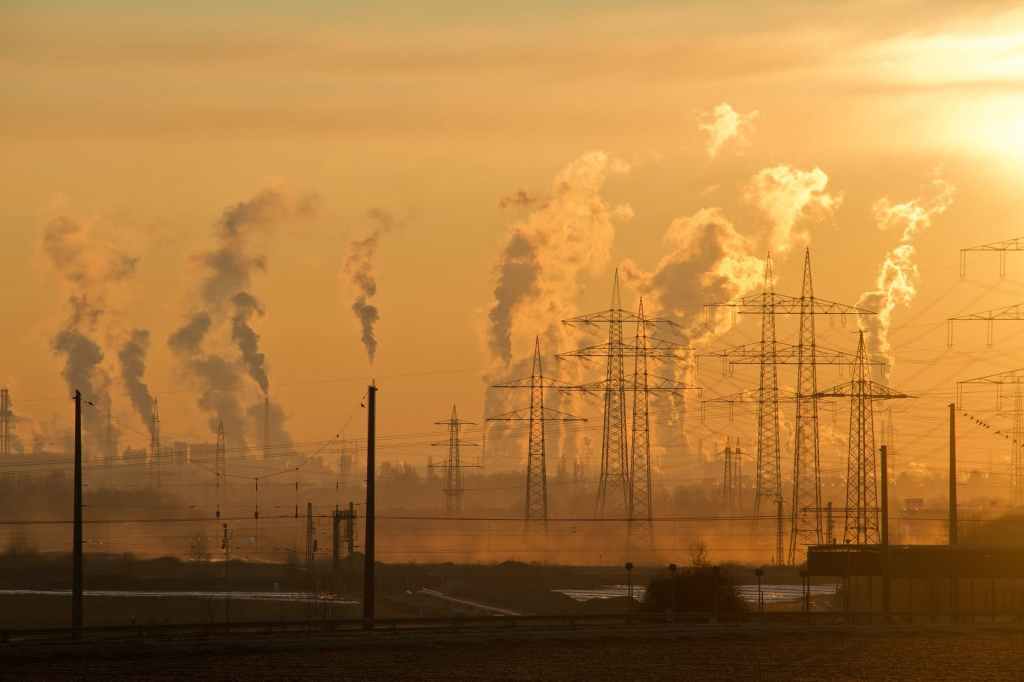
Fossil Fuels aren’t just killing the planet, they’re killing us– We’ve published one or two pieces already about how fossil fuel pollution may already be affecting our health. So it’s nice to be vindicated by much bigger hitters, in this case Nature and the Guardian. Fossil Fuels are killing 8.7 million yearly. We checked out the hyperlink-it works.

Pollution from burning fossil fuels is responsible for an estimated 8.7 million premature deaths annually — around one in 5 of all deaths worldwide. A fresh analysis, based on data representative of conditions in 2018, looked at dangerous airborne particles produced by fossil fuels — especially coal, petrol and diesel. The findings double previous estimates of deaths from fine-particle pollution, despite fine-tuning the estimate to exclude dust and wildfire smoke. “We were initially very hesitant when we obtained the results because they are astounding,” says geographer Eloise Marais. “Some governments have carbon-neutral goals but maybe we need to move them forward given the huge damage to public health. We need much more urgency.”The Guardian | 5 min read
Reference: Environmental Research paper

Credit: many years ago, a wise man called Mr John Read of Berkshire pointed out that whatever its climatic effects . “CO2 was still pollution”. A lesson we have never forgotten

Workaholics-the road to perdition No one can fault the work ethic-but surely you’ve come across a workaholic at some time? You know-they put in 18 hour days six or seven days a week, Their talk, their presence, their life is work, work, work. Managers often look favourably on this type, so they tend to drag down everyone else with them. However, it’s not all beer and skittles, even for the most manic of them, as this article in the Conversation by Professor Teena J Clouston shows.

Work addiction can be harmful to mental health (theconversation.com)

And Finally-Our weekly round up for those who haven’t quite got everything yet

How would you like a car that is, in the words of Autocar “unsurpassed mechanical refinement and rolling comfort…..superb drivability.” Well a Rolls Royce Phantom can be yours for £360 000. We link their review below. Warning; we once spoke with a man who owned one, who opined “wherever youn decide to drive it, you must budget for at least one fuel stop to fill it up.” And more often than not, he only went as far as the village shop!

Rolls-Royce Phantom Review (2021) | Autocar

#conspiracytheories #technocrats #pollution #carbondioxide #globalwarming #rollsroyce #workaholic #obsession

Friday Night:some ideas for your Prosecco

February is always a good time of year. Despite the cold, the days are becoming longer; flowers are beginning to poke through the frozen earth; the screens are full of groups of burly men knocking six bells out of one another in the Six Nations. But above all, it’s ladies night. Once again, Valentines is upon us, and the Prosecco will be flowing like water.

This week we want to emphasise a few of the things which you can do to add that certain extra je ne sais quoi to you favourite glass of bubbly. Of course, Prosecco is delicious on its own, and has a fine colour. But for that special touch, why not add some of the fine range of mixers from Monin-such as cassis,fraise,fruit de passion,or pamplemousse rose . (we did have some lovely photos of these set up for you, but the usual bloody-minded obstinacy of computer technology has precluded their use) Just a teaspoonful or two in the bottom of a flute glass before you pour will make all the difference.

Or why not just adapt a champagne cocktail to prosecco? Hamlyn’s The ultimate Cocktail Book gives a fine recipe:

First chill your glass, and your prosecco. Add one lump of white sugar, then one measure of good brandy- we think Remi Martin is a sure bet.Top up with cold prosecco, and add a slice of orange to decorate.

Happy Valentine’s day!

#prosecco #valentines #ITfailures

Sorry, Columbus just wasn’t first

Imagine if you had been a Roman posted to the far edge of Africa. Staring out at the Atlantic. Or a medieval standing on the edge of your world- at Ushant, maybe. Either way, the ocean would have stretched out before you-incomparably vast, cold, dangerous and uncrossable. Nothing came from across it, and nothing went there, until Colombus in 1492 finally proved that there was land on the other side.

That’s the conventional story. We at LSS have always been aware of hints and clues that it is not the whole story. Some of them seem like pseudohistory and wishful thinking. Others are more intriguing. For one thing, the Vikings really did sail out of Europe and reach North America, albeit in small numbers. But somehow they got lost in the parentheses. And if you live in the Arctic, where the continents of Europe, Asia and America bunch together, you could be forgiven for hardly noticing the difference.

Now there is exciting evidence that this was exactly the case. Dan Avery of the Daily Mail writes today of an amazing trade route which caused beads made in Venice to end up in far-away Alaska. And all this sometime between 1440 and 1480, a dozen years before the plucky navigator borrowed all that money and ships from the Queen of Spain.

We at LSS have always preferred Economic History as our favourite history. We are always amazed at how vast the world must have seemed before powered engines and radios. A bit like we think of space now. Yet brave and ambitious souls were crossing it, doubtless in search of profit-which tells you something. Above all, nothing in History is ever settled, a bit like other fields of real learning.

Blue glass beads from Venice discovered in Alaska date to the mid-15th century  | Daily Mail Online

Pre-Columbian trans-oceanic contact theories – Wikipedia

#transoceaniccontact #traderoutes #christophercolumbus #alaska #venice

Homo floresiensis- a really big puzzle to get you through lockdown

Faithful readers will recall our little offering (LSS 20.5.2020) about Homo naledi, the enigmatic hominin from South Africa. It was just to give you something to think about in lockdown. Now we’ve got another hominin puzzle for you. But this one is so baffling that the more we read about it, the less we feel we know. Let’s start.

In 2003 researchers in the Liang Bua caves on the island of Flores found the bones of a tiny little hominin which they nicknamed “the Hobbit”. There was evidence of tools, and fire. That settled, the controversies began. How old was the little creature? Why so small? Where did it come from? Was it a dwarf human, or was it another species? By 2021 a very rough consensus emerged, rightly challenged by some. It was a species called Homo floresiensis;* it lived between 50-60 000 years ago; tools associated with it range back to 190 000 years; small size is common in all species isolated on small islands. See the Wikipedia link below.

For us the problem is that it fits so very badly indeed with the conventional Story of Human Evolution. Once upon a time in East Africa there lived a group of apes called australopithecines who were nothing more than chimps running around on two legs. Then came a funny little fellow called Homo habilis*, who at least made tools and hunted a bit. Then about 1.8 million years ago came a tall,,noble near-human called Homo erectus* (or ergaster) who made magnificent tools, hunted, started fires, and whose brain was only a bit smaller than ours. Eventually this intrepid creature left Africa, strode out across Asia and began the mass slaughter for which we humans, clearly direct descendents, are so famous today.

Here come the puzzles. Health warning: the more you dig down to solve them, the worst they will get.

1 Why do the wrist, shoulders and other skeletal features of H floresiensis show strong affinities to Homo habilis who lived and died in Africa over a million years before?

2 How did the ancestors of the hobbits reach Flores? It is surrounded by deep fast-running straits, which never dried out, not even in the ice ages.

3 H habilis has been credited with using a very primitive type of tool called Oldowan. These are found all over Africa and Asia. Homo erectus produced much better tools, called Acheulian-but not Asia. What is going on?

4 What is the role of Homo georgicus in all this? Found in Dmansi, Georgia, it is very primitive for a Homo erectus, but a bit advanced to be a Homo habilis. The date, at 1.8 million years, is odd too. And so is the location.

How accurate are our definitions of certain hominin species? Who made what tools, and when? Why the huge gaps in space in time between apparently related creatures? Why are migrations only allowed out of Africa, and not the other way?

We wish you an interesting afternoon.

Homo floresiensis – Wikipedia

30. Homo georgicus | The History of Our Tribe: Hominini (lumenlearning.com)

Homo erectus – Wikipedia

#hobbits #flores #humanevolution #scientificpuzzles #originsof boats

Did deforestation kick off Covid?

However you cut it, there is strong evidence that the logging industry may be depriving us of more than mere oxygen. Evidence is starting to grow that mass deforestation leads to mass outbreaks of disease-some of them particularly nasty, like Ebola, HIV, Lassa, Lyme, and Malaria. We’ve got two links for you today, both from impeccable middle of the road journals- Forbes* with Jeff MacMahon and National Geographic* with Katarina Zimmer. You should read them both. But check this from Katarina on the Nipah virus:

In 1997, clouds of smoke hung over the rainforests of Indonesia as an area roughly the size of Pennsylvania was burned to make way for agriculture, the fires exacerbated by drought. Smothered in haze, the trees couldn’t produce fruit, leaving resident fruit bats with no other option than to fly elsewhere in search of food, carrying with them a deadly disease.

Not long after the bats settled on trees in Malaysian orchards, pigs around them started to fall sick—presumably after eating fallen fruit the bats had nibbled on—as did local pig farmers. By 1999, 265 people had developed a severe brain inflammation, and 105 had died. It was the first known emergence of Nipah virus in people, which has since caused a string of recurrent outbreaks across Southeast Asia.

So,if it works for Nipah, why not SARS-Cov-2 ? The borderlands of South East Asia, where China meets Laos, Burma and Vietnam are full of small mammals like pangolins, civets and bats. Above all bats, which are known to harbour any number of corona viruses. Disease has been jumping the barrier from animals to humans for thousands of years. Isn’t it time we stopped destroying the forests, and found other uses for them?

How Deforestation Drives The Emergence Of Novel Coronaviruses (forbes.com)

Deforestation is leading to more infectious diseases in humans (nationalgeographic.com)

#Sars-Cov-2 #covid19 #lassa #HIV #malaria #nipahvirus #lyme #repression #nipah #zooneses #bats #originsof coronavirus