Best Time to be alive: California 1960-1980

California dreaming. A tumultuous, fractal, sub-infinite series of images. Deep green forests and rugged mountains. Sun-drenched coasts with surfers riding unfeasibly large waves. Burning deserts and fertile valleys. Vast sprawling townscapes scattered with deep blue pools linked suburb to suburb by enormous, mustang-filled freeways. UCLA. Berkeley. All those funny people camped out in VWs around Mt Shasta. La Jolla and the Scripps Institute,  Everything the good life could be, democratically arrived at, and mass produced for ordinary people. Which made this State, in the peak years 1960-1980 the cultural and social centre of the world.  Our hope, our dream, our shimmering light.

It was defence that caused California to boom as the USA began its long tilt towards the Pacific after 1945.   The US Government’s act of undeclared Keynesianism funded Cold War icons such as  Lockheed (Burbank) North American (Inglewood) McDonnell Douglas(Santa Monica, Long Beach), Hughes(Culver City)  and Northrop (Hawthorne). As the money flowed through these companies and out the other side, it funded not only the great learning institutions, but also one of the most comfortable and agreeable lifestyles that had ever been known. Everyone, potentially, was in, although if you were black or Hispanic, your share of the pot was going to be much, much smaller.  Hollywood, to its credit, was self-funding.  But its endless output of iconic films and TV shows afforded the USA a soft power capability that was equal to at least ten carrier battle groups. All of this in turn grew the next generation of industry: Information, games and now AI. For this was a culture built not on oil, or gold or military power, but in the last resort on brains. In places, it still is.

You will by now,  gentle reader, have intuited your own huge list of favourite films, TV shows, books  popular musical singers, foods and brands which are your California. Yet it is poets who see  most clearly, capturing  the distilled essence of time and place most of all  when they set their thoughts  to music. Those poets were  Eagles Don Henley and Glenn Frey, whose songs such as Tequila Sunrise, Hotel California, The Last Resort and others managed to capture the crazy contradictory kaleidoscope  of hopes, dreams, indulgences and despairs in  a land and place at the  leading edge of our species’ experience.  Perhaps the shimmering light it is now growing dim. . But for us the word “California” carries the hope that somewhere out there still lies the possibility of a prosperous, future.

#california #cold war #JM Keynes # The Eagles #Los Angeles #hollywood

Friday Night: Madeira Wine

When we sat down to prepare this week’s  Friday article, one of our researchers suggested” why don’t you do  Madeira wine?” Which created rather a problem: How can we praise Madeira wines without sounding like one of those  articles you find among the pages of in-flight magazines or tourist guides, which seem increasingly to have been written by something other than a human intelligence?

Our first decision was let the experts do the heavy lifting. on subjects such as heritage, production, availability and so on. We have posted two links here, one to the Wine Society[1] and a second  to the indefatigable Blandys [2], more of whom below. There are actually many types of wine produced on this famous subtropical island: But the sort  everyone talks about, the eponymous Madeira is a fortified wine which comes in four types Sercial, Verdelho, Boal and Malvasia.  And the angle we want to take is history, not of the wine which our links cover, but of our own first experience of it when we visited the Madeira wine lodge, still run by the Blandy family in Funchal, 34 long years ago

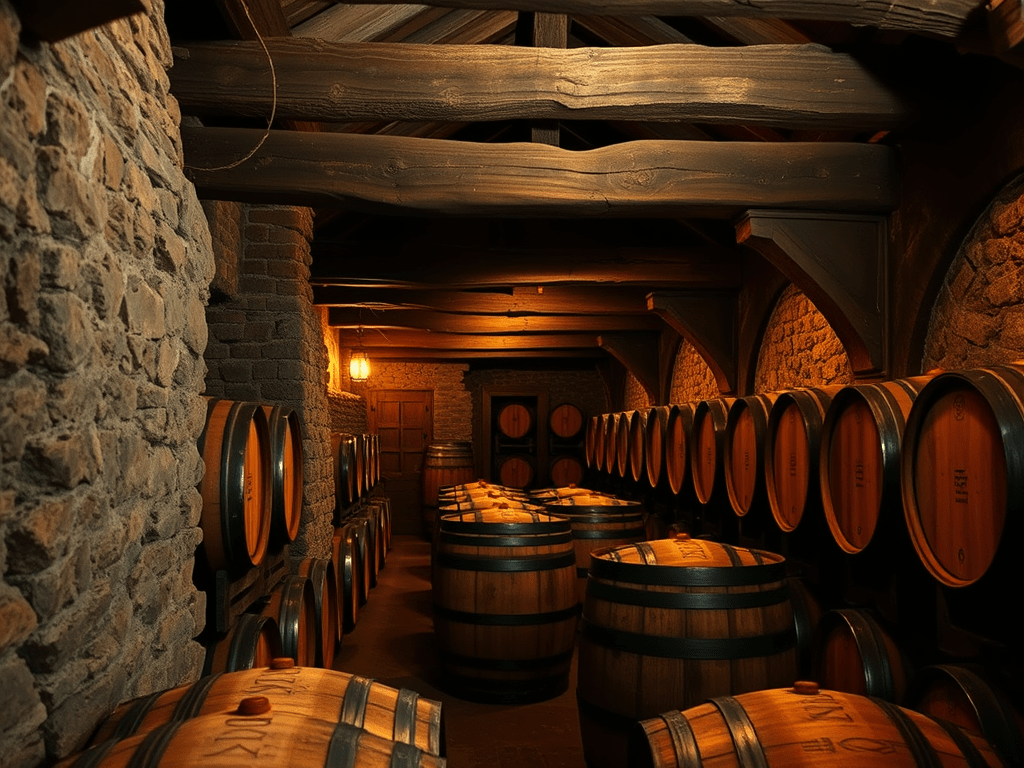
We will not detain you long with the excellence of the place, the helpfulness of the guides nor the dark wood beams and casks, the rich aroma of grape, all of  which are the same today. Rather it was our arrival, post tour,  at  the tasting session, where we learned that not only does the wine come in four types(see above) but that each type was produced by one of four traditional families: Blandy’s , Cossart Gordon, Miles and Leacock. A truly scientific  tasting would therefore require an array of 16 (4×4) glasses, as any expert in the mathematics of set theory could quickly tell you. What we had not realised was the potential wallop carried by even a small glass of the stuff. With the result that our tasting rapidly descended into a blur of ill-remembered labels, mixed tastes, and a growing feeling of confused  tiredness inconducive to sustained intellectual effort. Eventually our companion was forced to take us to recover in a nearby park with some friendly swans upon its lake. Which kept us pretty well occupied until her return from some serious shopping.

And the moral is? Blandy’s  Wine Lodge is a first rate tourist spot, which you must visit if you are ever on the island. Madeira wine is delicious, but strong. We have visited the lodge often on our subsequent six voyages to the island. But now a single glass, often the the slightly sweet Bual, is more than enough to content us. . But we steadfastly urge you to try one too.

[1]https://www.thewinesociety.com/discover/explore/regional-guides/madeira-ultimate-guide

[2] https://blandys.com/en/about-madeira-wine/?doing_wp_cron=1755271440.1276309490203857421875

#Madeira #Blandys #tourism #wine #holiday

The best time to be alive: Candidate #1 Tang Dynasty China

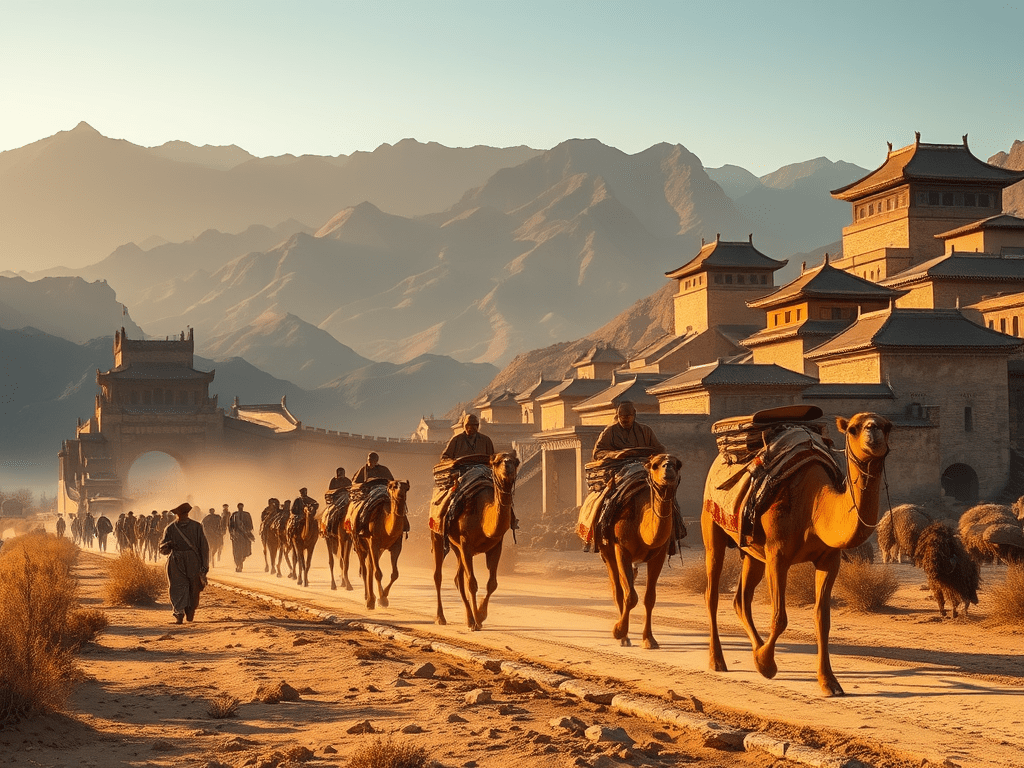
Imagine you lived in the greatest city in the world. Its streets are bustling with merchants who buy and sell goods from every known country, and many more that lie beyond the limits of knowledge. Such was Chang’an, (now Xi’an) capital and chief entrepot of China’s Tang dynasty (618-903 CE)[1][ With nearly a million residents and over 100 ethnic communities, it was more Babel than Beijing. Zoroastrian fire temples stood beside Buddhist pagodas and Nestorian churches; street food fused Middle Eastern spices with Chinese noodles. Foreign diplomats rubbed shoulders with camel-driving traders from Samarkand. The city was so tolerant and worldly that speaking Turkic or Persian on the street raised no eyebrows. Poets such as Li Bai and Du Fu flourished , as did artists such as Han Gan and Zhang Yuan. There were far reaching technological advances such as wood block printing and all presided over by relatively benign Emperors backed by a professional and highly educated Civil Service.

We’ve picked the Tang because it illustrates the essential doctrines of the great Professor RH Davis who knew that it was trade that made cities, and cities which make humans civilised. He was writing about Europe. Yet Chang’an under the Tang was one example of what humans can achieve when they try. No wonder the modern Chinese feel they need take no lessons from westerners in how to run a civilisation. The Silk Road was essentially a Chinese invention. It was, and maybe still is, the greatest trading system in the world.

It all ended in tears of course, as did many of the other examples we shall consider in this series. The Lushan rebellion of 755-763 inflicted economic and human wounds so deep that the dynasty never fully recovered. And obviously there have been many advances in technical knowledge and in things like medicine, since the Tang fell. But if you wanted to give an example of when the ordinary Joe, people like you and me, could step from their house and feel a glad confident good morning, Tang China is a very good place to start.

[1]https://en.wikipedia.org/wiki/Tang_dynasty

[2] RHC Davis: A History of Medieval Europe from Constantine to St Louis 2nd edition Longman 1988

#china #Tang dynasty #trade #silk road #civil service #history

Friday Night Feast of Fun: Strawberries, cream and what to drink

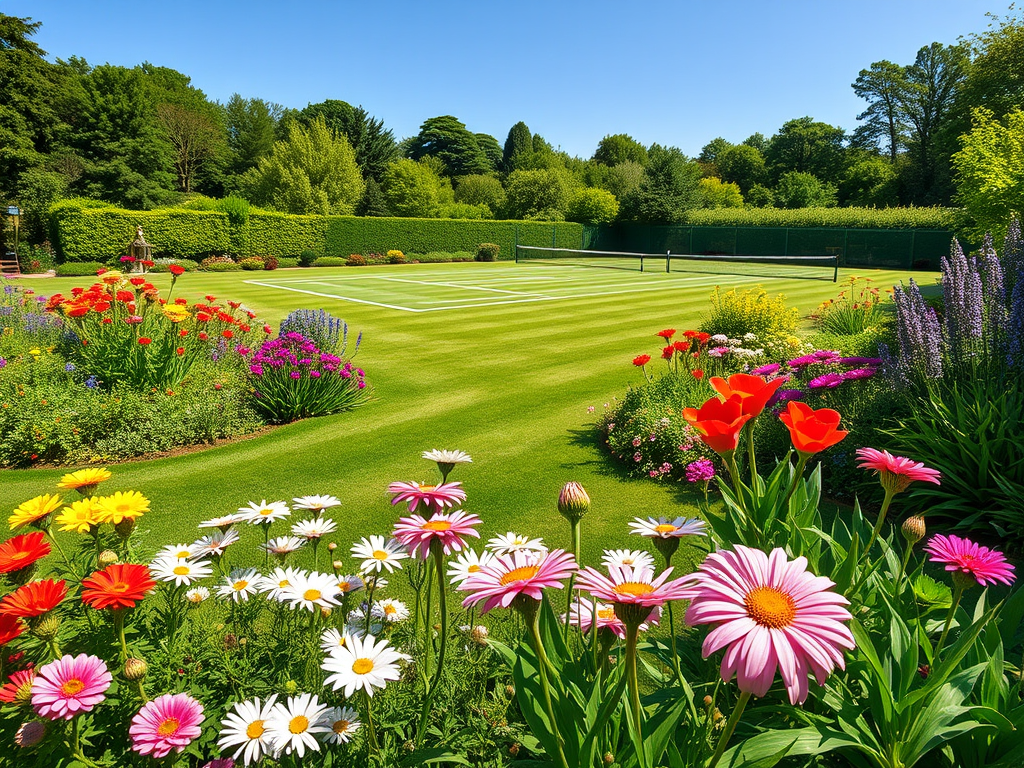
As  May rolls into June, England hits peak summer. All those  muddy football players yield to natty cricketers and immaculately coiffured green wickets . Gardens fill with flowers. At Wimbledon and a thousand other places, the air is filled with the thwack of racket on balls. Nothing captures the ambience like a well-turned bowl of strawberries and cream, that near quintessential accompaniment to a day out at the tennis or the Derby. Ok there’s one rival, but we’ll be doing that next week

People have been eating strawberries as a summer dessert since at least the sixteenth century. However the  big  ones  we  take for granted today  didn’t really come about until the middle of the eighteenth, [1] as a result of a wheeze by an enterprising Frenchman called Amédée-François Frézier .  Frankly we found all the botany and genetics in the Wiki article a little cognitively challenging: suffice to say he crossed a North American version with one from the southern continent to produce that plump juicy berry which not only tastes good, but is admirable to look at. And our recommendation to go with them? Cream, single or maybe double. Not ice cream, not clotted, not that funny squirty stuff that comes out of tins from some of our cheaper supermarkets. And certainly no sugar. Just good, old fashioned cowsmilk cream. Gottit?

Now for the really important question: what to drink? Our Intelligent researchers came up with the following list, each perfectly tailored to a different aspect of your dish. Bowl. Whatever.

  Sauternes – A classic French dessert wine with honeyed sweetness that complements the creaminess.

Coteaux du Layon – A Loire Valley wine with citrus and honey notes, perfect for the richness of cream.

Pinot Noir Rosé – Light and fruity, with strawberry and peach notes that enhance the fresh berries.

Demi-Sec Champagne – The bubbles and brioche flavors contrast beautifully with the sweetness of strawberries.

Riesling (Spätlese) – A German Riesling with floral and orchard fruit notes that highlight the strawberries.

Prosecco – Slightly sweeter than Champagne, making it a great match for ripe strawberries and cream.And much, much cheaper!

Gewürztraminer – Aromatic and floral, with lychee and ginger notes that pair well with strawberries.

And with the end of that list, may we wish you another happy Friday night feast.

[1] Strawberry – Wikipedia

#strawberries #cream #summer #wine #garden #tennis #cricket #wimbledon

Is this a collapse of Civilisation?(they’ve happened before)

Do Civilisations collapse? Do elaborate trade networks fall apart? Giant cities turn into uninhabited ruins? Ancient systems of law, education and custom vanish entirely ? Leaving nothing but an illiterate dark age, racked by violence and disorder? Yes, they can. We’ve alluded once or twice here to the collapse of the Greco-Roman world (LSS 10 3 21; 17 12 22) Professor Harper makes a convincing case for climate change and disease pandemics as the causes of that one. We in western countries are haunted by the Fate of Rome; it was relatively close in time. But there have been others.

The Bronze Age collapse 1200 BCE is further back in time, and has left fewer records, That it occurred there is no doubt. [2] For several centuries a large network of trade had built up across regions which we now call the Near East and Europe. There were cities, elaborate systems or wring and belief, Considerable prosperity; for some, and by the standards of the time. Around 1200 BCE all this was suddenly and violently cast down, with waves of wars and invasions. It took four or five hundred years at least for order of a sort to be restored and progress to resume, Further afield , the collapse of the Shang dynasty in China (c. 1050 BCE) and the Olmec Civilisation of Central America (c, 400 BCE) are chilling reminders that civilisational collapse is not unique to the West.

Art this distance in time it is possible to see a pattern. The natural human instinct to trade and ma make a bit of spare cash gradually leads to the growth of larger and larger cities. These require common systems of law to maintain the rising levels of prosperity. The resulting peace is very pleasant to live under for a few generations. But lurking in the trade routes are the pandemic diseases which can shake societies to their foundations. When you combine that with the ability to cause massive changes in climate(no one would dream of blaming the Myceneans for that!) the potential for sudden catastrophic failure is multiplied exponentially.

Such an event would confront the educated classes(of which the readers of this blog are such valuable members) with a number of inconveniences. We will look at possible responses in the next few blogs,

[1]Kyle Harper The Fate of Rome Princeton University Press 2017

[2] https://en.wikipedia.org/wiki/Late_Bronze_Age_collapse

#olmecs #shang dynasty ##kyle harper #pandemic #climate change #global warming #collapse

Academia has its Robbers Caves too, you know

Here at LSS we’re always praising the learned. Exalting the scientists, doctors and philosophers who would unleash a trouble-free prosperous world, if only we were given the chance. Instead all those nasty hypermacho builders, farmers, football supporters and military types have imprisoned us in a hopeless nihilistic trap of warring tribes which we called The Robbers; Cave(LSS 1 4 2025)

There may be some truth in it. But before we hand over the world to a bunch of Professors and nerdy Civil Servants, let’s flag down a large black cab and ask it for a journey to the Reality Hilton Hotel. Because, we ask-are all these brainy types so immune from Robberscavism, to coin a phrase? Anyone like us who has followed Arts, Sciences and Letters for fifty years or so will notice at once how its practitioners have a tendency to divide themselves into warring camps, like so many followers of certain East London Football teams. Back in the Middle Ages there were the Nominalists versus the Realists. In economics you get Behaviouralists going toe to toe with the Rational Choice Theory crowd, while Linguistics seems to have more warring schools than practitioners. It’s the same for us fans of the Neolithic revolution, where opinion is hopelessly divided too. One lot asseverate that the Neolithic way of life was carried out from the fertile crescent by a single contiguous culture, who replaced(exterminated?) those unfortunate hunter-gatherers who got in the way. Their opponents counter that farming, sheep herding and all those Neolithicky -type things were learned, picked up by enthusiastic locals from traders and traders and adopted with the enthusiasm reserved for certain types of computers and mobile devices in our own age. And the truth? According to studies by the learned Drs Javier Rivas and Alfredo Cortell, writing in the Conversation, [1] it was a bit of both. At one place, at one time the incomers seem to have bludgeoned in and extirpated the natives, as the English did in Tasmania. Elsewhere the locals seem to have picked up the new hoes, made better ones and then jolly well got on with life down on the farm.

And the moral in all this? For practical people, especially those who hand out grants and bursaries, always take one step back. Sometimes you have to make decisions(think of Courts and Forensic Scientists here) But the real joy of learning isn’t in constructing theories and and then fighting to impose them on everyone else. It’s in the journey of discovery itself: gathering the facts, weighing the evidence and above all talking with the people you meet on the way. The ancient virtues of humility and suspended judgement are the most settled and non controversial of all.

[1]https://theconversation.com/how-human-connections-shaped-the-spread-of-farming-among-ancient-communities-254852?utm_medium=email&utm_campaign=Late

#learning #science #neolithic #academic controversy #tribalism #robbers cave experiment #whig

Friday Night Fun:the old cheap Bubblies (Où sont les neiges d’antan?)

Everyone likes to dress up from time to time and enjoy going large with a glass of bubbly. Trouble is, the old Champagne can be a bit pricey, and there’s a lot of euros for very little extra elation. For decades people have been trying to do things on the cheap, with varying results. So tonight we thought we’d take a look at some of the braver efforts which have been made in History, and, as an added bonus, the little nibbles they served with them

1950s  Mateus Rosé Invented in Portugal in 1942 it was the iconic bottle and rather elegant label that gripped our ten year old selves(we grew up in an Off Licence) The wine itself was pink and only slightly fizzy, but worked well chilled. It was really rather popular in the 1970s (so were Watneys Party Sevens and the Bay City Rollers) but has since faded a tad, despite attempts to redesign the bottle. Nibbles: twiglets

1960s Babycham Actually a perry aimed squarely at the ladies’ market, it enjoyed a huge vogue back in the 1960s and 1970s, when it was considered rather chic among large sections of society, with huge advertising campaign There was even a special cocktail called a snowball( neiges, right?) which combined the stuff  with advocaat. Glad we never had a job as a  cleaner on the  Central line trains! Like a starlet, its beauty had started to fade by the sassier 1980s and efforts to rebrand and relaunch have never quite got it back to top of the bill

Nibbles those funny cocktail stick things with a cube of pineapple and a cube of cheese.

1970s Asti Spumante this is the real poor man’s champagne, not lager. Cheap and cheerful this Italian sparkler  graced many a working class Christmas dinner table in the age of Top of the Pops and the Queens Broadcast Ironically the sudden popularity of its younger sister (see below) has afforded a certain bounce back for this beverage-and why not? we say.

Nibbles Cheese and onion crisps/Doritos

2000s Prosecco We had never heard of this stuff until one evening in 2010. After which it seemed to be anywhere and everywhere at all times, as much a part of national life as football or Coronation Street. A bright, dry and bubbly from Friuli it can accompany anything from exam results, weddings and even those funerals where the deceased will not be too badly missed but nevertheless left enough of a memory to fund a juicy trip or two to Benidorm.

Nibbles: Marmite  flavoured peanuts

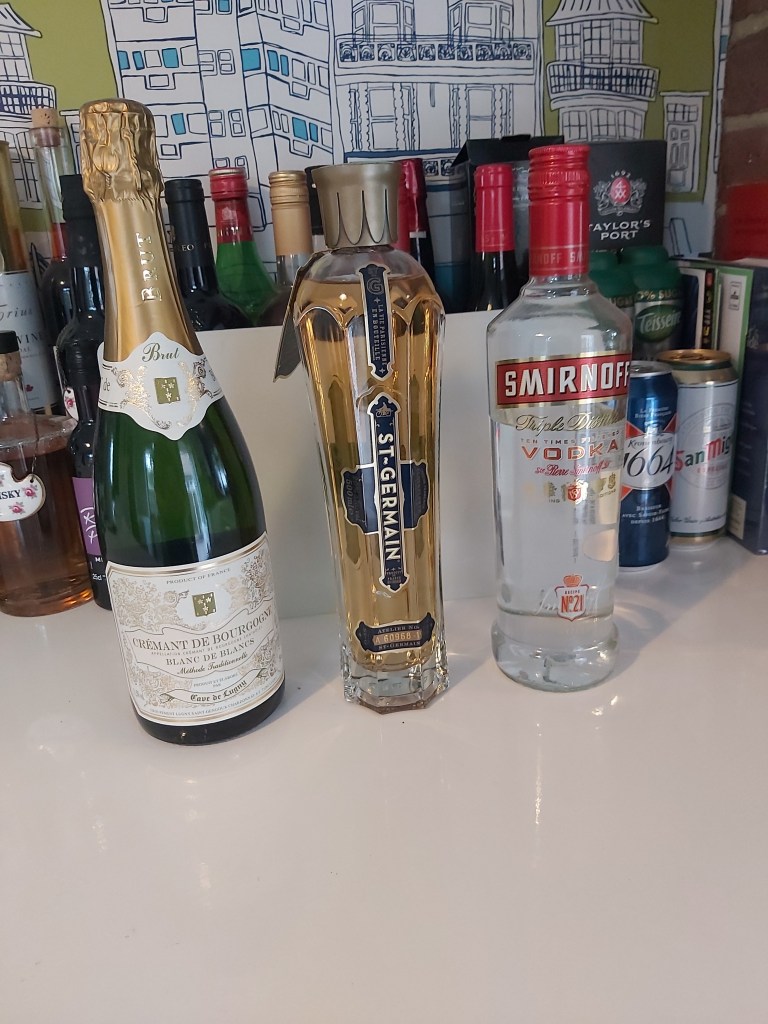
2020s Crémant—Now we’re  definitely in the right vineyard! Brewed up  in France (and Luxembourg) using the same traditional method as Champagne,  it comes from regions outside of that snooty snifter,  such as Alsace, Burgundy, and the Loire.  Sorry, we think it’s definitely a cut above Prosecco,  deliveings Champagne-like vibe at a fraction of the price.

Nibbles:Blingies with caviar

#wine #sparkling wine #party

American Scientists: Your new home in Europe awaits

Will the brain drain of the last hundred years reverse? Will the best and brightest minds start fleeing America and pitch up on Europe’s shores? We sort of raised this question last week(LSS 20 3 25) but now the admirable Alexander Hurst does it much better in the Guardian [1] Truly, it’s a real tour de force of why they’re thinking about it. It’s not just the cuts to Doctorate programmes or even the targeting of certain Universities like Columbia and Johns Hopkins for spiteful treatment. it’s the Administration’s underlying presumption that free enquiry and science are its enemies. And that the persecution has only just begun. As Alexander notes, astute minds at the University of Aix-Marseille have scented an opportunity with its Safe Place for Science initiative.[2] If the EU and associates like the UK really get their act together, Europe could look like a very good place to study nature indeed. So-where to settle,to work, and have a good life at the same time?

Our list below is little more than a list of hints and suggestions; we like to keep the blog as short as possible. But if only one or two aspiring post docs or lecturers glance over our list,and at least consider then our work for this day is done.

France The University of Aix Marseilles was first out of the starting blocks; but France also boasts such luminaries as the Sorbonne. When you throw in the food, wine and a culture that actually admires learning (you don’t get a reputation as tricky intellectuals for nothing) this is a calling card to keep near the top of your wallet.

Germany Beer’s great, food’s good and this was the home of such awesome polymaths as Goethe and the ground breakers at the centre of quantum physics. Instead of picking one or two Universities-we can’t, there’s too many good ones-we are going to tip the truly awesome Max Planck Institutes as your next home. Old LSS hands will recall our utter reverence for their Professor Paabo and his discoveries in human evolution. A glance at their website will reveal the other edges they are cutting daily. Has to be on your list [3]

United Kingdom The trio of Cambridge-Oxford-Imperial make a truly heavyweight bunch, but they sit at the top of a tree of fine institutions: if we picked out the Manchesters, Bristol and Sussex we would be doing a grave disservice to many other places of supreme excellence. Property can be pricey in these small islands, but don’t believe the stories about the food It has become immensely better in the last 45 years or so, and above all: these people speak American, godammit! [4]

Spain One of the joys of Hispanic studies was to discover that behind all the beaches, bullfighters and paellas lay a truly formidable network of research institutes and the like, which were particularly strong in Life Sciences. Again. the list is long. But The University of Barcelona and The Complutense University of Madrid are usually vying for the top places, just like Barcelona FC and Real Madrid in La Liga. With the economy growing well this really could be una casa nueva, amigos [5]

Italy Home not just of the Renaissance but a whole world of scholarship before and after (remember that Dante bloke?) this has to be a look -at. Currently Bologna and Padua are near the top, but their is a strong following pack. Once again, the food and the culture are strong selling points. Plus we visited recently, and those villages tumbling down the hillsides atill look exactly like the ones in Renaissance paintings. Were we charmed, or what?

To which we could add Switzerland, Ireland, Scandinavia, and a host of other places. but must sorrowfully admit there is no space in a short blog. Brains are like money; they tend to gravitate to where they’re appreciated. Time to leave l the Confederacy of bullies, evangelicals. good ol’ boys and conspiracists behind; once again they are on the wrong side of history. Time to look for a Union where you can once again feel at home.

There are plenty of websites which will give you the lists of top Universities by country. If you want to follow up, we urge you to visit them

[1]https://www.theguardian.com/commentisfree/2025/mar/24/french-university-scientific-asylum-american-talent-brain-drain

[2]https://www.univ-amu.fr/fr/public/actualites/safe-place-science-aix-marseille-universite-prete-accueillir-les-scientifiques

[3]https://www.mpg.de/institutes

[4]imperial college london

[5]https://ucm.es/english

#donald trump #science #learning #europe #united states #economics

Friday Night Feast of Fun: The Joy of Charcuterie

We can’t think of a better suggestion for you tonight, dear friends, than Charcuterie. It’s a French word, but the cuisines of many countries now feed in, as we shall see. Its such a simple way to up a range of flavours for guests. There’s usually always something in the mix that anyone and everyone can eat. Above all, sharing and comparing are such good conversation starters that the busy hostess or host will find that half of their task has already been completed. How’s that for ergonomics?

Without further ado, lets start with the food. We’ve put up Laura Wingrove‘s post for BBC Food [1] Ostensibly designed for Christmas, Laura’s run-through will give you all you need to serve up a mouth-watering board at any time of year. There’s no law against using this for Easter, you know. The hams include piquant Parma, and mouth watering Mortadella, all the usual suspects in fact. We confess that our favourite is the famous Spanish Jamon Serrano. As for spiced meats, French Saucisson moved to the top of our culinary Hit Parade some years ago, and has stayed there ever since. She also waxes lyrical on the best accompaniments like cheeses, olives and so on, as well as handy ways you can serve it all up to transport your guests to a rough stone Provencal kitchen diner, where we understand such meals are served all the time. Well, according to certain lifestyle magazines they are,

And to drink? The Wine O Mark website puts up its 7 best parings. [2] What we like about this is the selection of old Mr Reliables, like Reislings, Merlots and Sauvignon Blanc. Remember the trick is to serve to the lowest common denominator, but to do it well , which is exactly what they achieve. Our researchers suggest a good range of cold beers might not hurt as well- Eurolagers like San Miguel or Kronenbourg might add to the ambience here.

All of this can be picked up at good supermarkets: we might suggest Marks or Waitrose as the few extra pounds spent will more or less underwrite you against disaster.

Good luck and Happy Eating!

[1]https://www.bbc.co.uk/food/articles/charcuterie_board

[2]https://www.wineomark.com/best-wine-for-charcuterie/

#charcuterie #food #wine #beer #cheese #jamon #saucisson

Friday Night Feast of Fun: The Toby Carvery for us

For us, one of the most delicious moments in television ever came in Simon Schama‘s 2000 series The History of Britain. It recreated a moment in the working day of out first Prime Minister, Sir Robert Walpole as he attempted to bend the will of his latest Whig MP to the correct ends for Party and Country.1] And how did he do it? With a tasty dinner of English food at its best.of course! Roast meat. Roast potatoes. Yorkshire puddings. Vegetables like peas, carrots, parsnips- the best products of our deep and fertile soils, then beginning a new Agricultural Revolution. All washed down with the finest claret, glasses uncounted. It was until quite recently our main food, our only food really, topped off with various puddings made from quintessentially English things like apples, plums and creams. It’s still served today , from very expensive restaurants and snooty Fulham pubs all the way down to humble local ale houses. And deep, deep, down, in the very heart of our English souls. it’s still our very favourite best.

But where to get it? Any day of the week, served impeccably and with the best of good cheer? Well, at the risk of ostracism from some members of our social circle, we are going to recommend a Toby Carvery. [2] It’s cheap. It’s unpretentious. Some of your fellow diners may be a tad rough around the edges. You have to go up to the carvery counter to get your dinner But there are advantages. One: there is always a bar in a Toby, to get that authentic Whig-Tory Parliamentarian style experience going. Two You still have a server at your table, who in our experience are always among the most cheerful down to earth type you will encounter Three: going up to get your grub conveys several advantages: you can grab as much as you want, you can choose from the joints (there will always be beef, pork, gammon and a turkey). If you know the chef, you can always wheedle and creep your way to toothsome extra bits. and if you are on a health gig you can always cut out the potatoes and yorkshires, and cleave to lean meats and all the vegetables you need, Four, back at the table the server will still attend with all the wine refills that you, your companion or Sir Robert himself could wish for. Five we find some of the dessert items such as the ice creams and crumbles almost dangerously addictive. And at the end of the day you will pay a price, including tip which would buy you barely a starter and a glass of water in certain establishments which those who claim to have more refined tastes have forced us to attend from time to time.

And to all of those who clutch their pearls at our brazenly proletarian choice-:”you find somewhere better, mate!”

Editorial note: the writer of this piece was some time ago placed on a strict diet, and his penned this largely from memories. Happy memories.

[1]https://watchdocumentaries.com/a-history-of-britain/?video_index=9 see especailly 20-25

[2]https://www.tobycarvery.co.uk/menus/carverymenu#/

#roast dinner #sir robert walpole #english cooking