Rookwood Operations: Clearing phosphates AND capturing carbon

Today we have a good news story, brought to us by the ineffable Robin McKie of the Guardian, which brings genuine hope, Because it solves two problems for the price of one.[1]

To begin at the beginning. In the last fifteen years or so, England’s rivers have started to fill with huge, choking blooms of algae, which seize all the oxygen from the water, thus killing everything else before, dying back themselves . To leave a poisonous foul-smelling sewer , like the ones you used to find in old towns in the Industrial revolution. The cause? High levels of phosphates on agricultural lands, which runs off into the waterways, producing sudden spurts in the aforementioned algae-and down we go to death, for the ecosystem that is. Now, it could be argued that without high phosphate levels we could not feed our population ( feed or fatten?-ed) So how to square the circle?

The answer is to trap the run-off phosphates and return them to the land. And a small company called Rookwood Operations[2] is doing just that, down in the leafy county of Somerset. Their new Phosphate Removal Material just sits in the water, soaking up the phosphates until it’s full. Whereupon it is returned to the land ready for the farmers to exploit again. And get this:

For every metric ton of PRM produced, carbon is sequestered, locking CO2 for up to 1000 years.
PRM is made from completely natural circular sourced sustainable components

How’s that for two in one? There’s so much to like here for LSS readers. There’s even a feminist angle, as one of the company founders was up for the prestigious UK Women in Innovation Award.

Thinking new. Thinking differently. Using existing technologies to squeeze progress in a new way. Surely that trumps going round smashing your friends over the head because it makes you feel better?

[1]https://www.theguardian.com/science/2025/feb/02/uk-scientist-wins-prize-for-invention-that-could-help-avert-phosphogeddon

[2]https://rookwoodoperations.co.uk

#Rookwood operations #phosphates #river pollution #capture technologies #agriculture #technology
Panzootic Disease: When The Guardian and Daily Mail agree, be very afraid indeed

They’re new and they spread fast. They mutate, jumping species barries with ease. Many of them are new, meaning there are no vaccines and no established treatments. They seem to come in many forms- prions, viruses, bacteria, whatever. What are they? Panzootic diseases. They may turn out to be the most significant health risk of this decade, making it time we all thought more about them. So here are two articles which we hope will give you, gentle reader, a sort of jump-off point from which can can know more.

Let’s start with the eloquent Luke Andrews of the Mail, who concentrates specifically Chronic Wasting Disease, or CWD for short.[1] It is caused by our old friends Prions (remember CJD?) and seems to be fatal to every animal it infects. Infection is by simple contact with any body fluid; and as deer are widely hunted from Wyoming to Pennsylvania, Luke identifies a growing problem, at least in the United States. More worrying for us is Luke’s report that it has jumped to wild pigs (that’s it displaying panzootic behaviour); it causes us to worry what may come next,

Pulling back for a broader view, we come to the erudite Phoebe Weston of the Guardian.[2] Unsurprisingly to well-informed LSS readers, her classic example of a Panzootic is H5N1, the avian flu which is currently ripping through hecatombs of our most iconic species of mammals and birds. If you think in terms of hard cash, how good is that for the tourist trade? Intriguingly, she sees COVID-19 as a classic Panzootic disease as well, as it seems to have spread to 48 species (no, we didn’t know that either). Best of all, Phoebe praises a book by a man called Mark Honigsbaum called The Pandemic Century; we link to a quick review here.[3] Because the causes of this are actually quite simple: uncontrolled development. destructive short-term farming and an insatiable hunger for things which bring instant, short-term gratification. That is the real sickness.

[1]https://www.dailymail.co.uk/health/article-14280007/researchers-warn-chronic-wasting-disease-zombie-deer.html

[2]https://www.theguardian.com/environment/2025/jan/15/age-of-the-panzootic-scientists-warn-of-more-devastating-diseases-jumping-between-species-aoe?CMP=

[3]https://www.theguardian.com/books/2019/jun/23/the-pandemic-century-one-hundred-years-panic-hysteria-mark-honigsbaum-review-riveting

#panzootic disease #prion #pandemic #CWD #habitat loss #global warming #virus

Vaccine Doubts, Rational Fears

One of the curses of being an LSS reader is that we tend to see how everything is connected. The current dismays in politics, international affairs, popular perceptions of science and economics all merge into each other, meaning we cannot escape. Not even into the quiet groves and ivory towers of Académe. Not even for a moment.

Proof of this came from our reading of an excellent article in The Conversation from the learned Professor Sven Bōlte,[1] who has been investigating the depressing reasons that people, including the President-Elect of the United States of America still obdurately refuse to let go of: the idea that vaccines cause Autism. Because every one of the reasons he cites can also be cited to explain the decay of democracy. Let’s look at a few, and you’ll see what we mean

Unawareness of Evidence

Reliably and accurately communicating research results to the public is difficult,” states Sven, “Popular media is typically superficial and often primarily interested in controversy that generates public attention.”

For research results read political issues Remember the £350 million on the side of the bus in the UK Referendum campaign? Quod erat demonstrandum

Challenges Understanding Science (shouldn’t that be “to understanding”?-ed)

Science is complicated and in medicine there are rarely absolute truths. The public, however, might expect clear consensus or have difficulty grasping the precise nuance of the science and its findings”.

For science read economics or law.   Yes they do struggle a bit with nuance, don’t they?

Doubts of science

“The human need for immediate and simple explanations for complex issues fuels misbelief”.

The word “research” does not mean sitting on the internet for 30 minutes and pasting up your favourite clicks.

Invisible success of vaccine programmes.

Vaccination programmes are among the most cost-effective public health interventions available and have averted deaths and long-term disease on a global level in the last decades.

They take it all for granted when it works.  Like everything else we’ve given them since The Enlightenment. You know. Soap, Schools. Scooters. Computers. Machines upon which to play their popular musical ditties.  A certain entitlement has crept in; and a price must always be paid for that.

We could go on, and you may read the whole article for yourself, gentle reader, by clicking on the link.  Does all the above suggest the bulk of humanity lacks the cognitive ability to live in a post industrial world? Or are they just festering with resentment because we stopped them from smoking and burning witches? We await your thoughts.

[1]https://theconversation.com/why-do-false-claims-that-vaccines-cause-autism-refuse-to-die-here-are-nine-reasons-246360?

#autism #vaccines #science #medicine #evidence #conspiracy #reason #emotion

Human Genome Editing: A Frankenstein Future?

Technology always advances faster than ethics. Leaving society and individuals floundering in it wake. The printing press transformed European society in the sixteenth century. The cotton gin transformed the economy of the US South, arguably deepening Slavery, and instituting a pattern of violence and cultural wars which have lasted to this day. In the last century, the development of nuclear fission and computing have effected changes as profound as any known in History. It is with these examples in mind that we approach the subject of Human Genome Editing, which may make everything before look silly.

This has been a decade in which the effective manipulation of nucleic acids in living systems has become routine. We have covered such exciting techniques as CRISPR Cas-9 and Base Pair Editing. While all educated people stand in awe of the rapid advance of mRNA vaccine technology, which did so much to stem the COVID-19 pandemic and now offers real hope of new cancer treatments. But, without disparaging the intellectual brilliance or immense hard work of their creators, these technologies are relatively small scale in the size of the biological interventions which they entail. So now read this from Nature Briefings:

Brace for the arrival of Gene editing Modifying multiple DNA variants in human embryos at the same time, a process called polygenic genome editing, could substantially reduce the likelihood of certain diseases occurring. But it also raises concerns, say the authors of a Nature analysis — not least the renewed threat of eugenics. “This is not a hypothetical issue,” argues an accompanying Nature editorial. While such genome editing might be decades off, societies need to consider its possible benefits and risks now to avoid having to play regulatory catch-up when the technology becomes available.Nature | 4 min read
Reference: Nature paper

Imagine a society where the very richest may edit the DNA of themselves and their offspring so that they, and they alone form a race of superbeings. The future for the rest of human kind, the untermenschen if you will, looks grim, and may be very brief. Such evolutionary bottlenecks have occurred in the past; and those on the wrong side(always the majority) “fly forgotten as a dream, flies at the end of day” as the old hymn puts it. Time to consider this very seriously indeed we think. Nature thinks you may have 30 years: we suspect it to be much shorter than that.

#gene editing #dna #biology #biochemistry #CRISPR #Base pair editing #genetics

Hollywood Fires: Global warming on a screen near you

We confront the endless coverage [1] of the fires raging through Hollywood in California with nothing but profound melancholy. For we had two of our most enjoyable holidays ever in that distant State of America, and many times experienced the kindness and intelligence of enlightened people. The trouble is that they were motoring holidays. We toured around vast areas, heedlessly filling the atmosphere with carbon dioxide and other pollutants, and thereby contributed to the disaster that has befallen these unfortunate people.

And more disaster is to come. Any hopes that this trouble is exceptional and can be put down to an El Niño event, now look forlorn. Read this from Nature Briefings; and click on their link if you dare:

Is Global Warming Speeding Up? Earth shattered heat records in 2023 and 2024, with temperatures rising further than expected on the basis of previous trends and modelling. A mysterious reduction in cloud cover, combined with an El Niño weather pattern, could be responsible for temperature increases in 2023. However, scientists expected temperatures would decrease again in June 2024 when the El Niño subsided, which didn’t happen. Now they are racing to work out whether this sudden spike is just a blip in the climate data, or an early indicator that the planet is heating up at a faster pace than they thought.Nature | 6 min read
Reference: Science paper

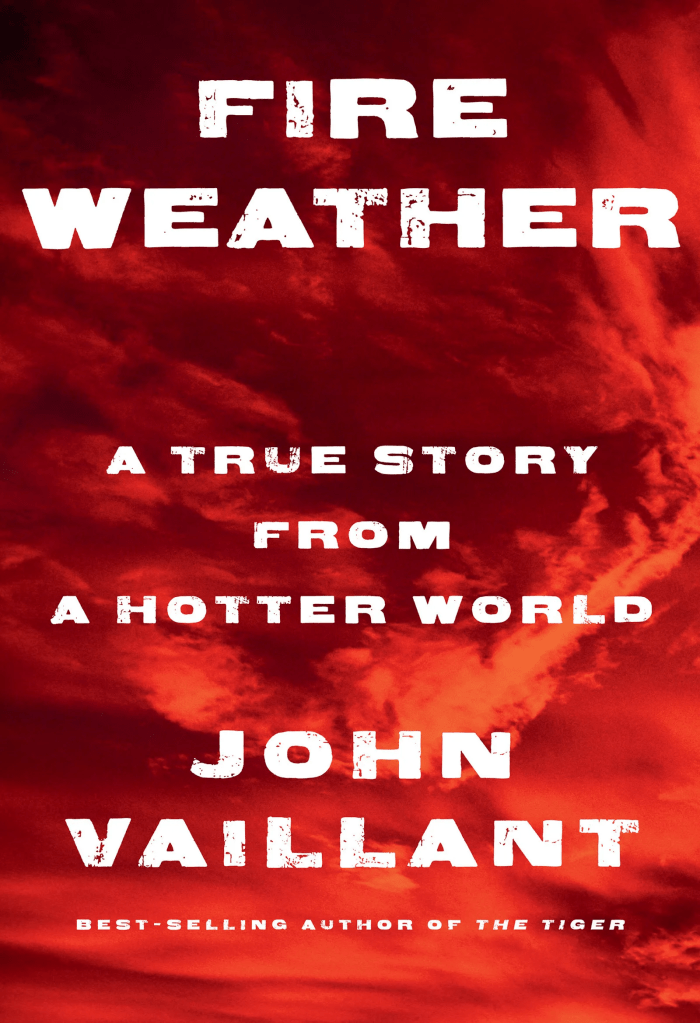
Why, and how, are we bringing this catastrophe upon ourselves? One man who seeks to understand is John Vaillant. Fire Weather is his his study of the catastrophic fires that raged for a year in certain regions of northern Canada, regions that had devoted themselves to the extraction of fossil fuels. You can read a review of his work here from Wired [3] But it’s a weary chronicle of greed, short termism, butch manliness and wilful destruction; the substrates in which climate denialism thrives.

However we cannot close without a slightly hopeful thought. Every so often one still comes across, at least in this country, members of the proletariat who ask questions like”this climate chinge fing-der yew fink iss rilly ‘appenin?” Such people, hypnotised as they are by all things American, Celebrity and Hollywood, may now have to confront a reality. Yes, it really is.

[1]https://www.bbc.co.uk/news/live/c5y81zyp1ext

[2]https://www.wired.com/story/fire-weather-book-canadian-wildfires/

[3]https://www.wired.com/story/fire-weather-book-canadian-wildfires/

#california #hollywood #global warming #fire weather #fossil fuels

Materials Science Meets medicine-with a bonus for our Spanish amigos

There’s whole areas of learning and technology which we don’t cover much here. Because frankly, we are just too ignorant. So with the guidance of Dr José Manuel Torralba we present some truly startling advances in the field of Materials Science. What we found was so unexpected that you’ll have to forgive the slightly gushing Tomorrows World 1970- style vibe with which we serve it up. (One link is in English [1] but as we found the the Spanish one first, we present that, too [2])

Implants and artificial tissues Ever heard of nitinol? Neither had we. It’s a sort of alloy of titanium and nickel. already well tested by dentists and others. According to José, it should now be possible to create corneal implants which are capable of shape-memory. Yes, that was a new one on us too. But it looks as if this is going to be an exciting, but very practical area.

Batteries have memory too Our next surprise was batteries with anodes made from something called silicon nanofibres which apparently will be much better at storing energy than the current graphite ones. If nothing else, a real boost for renewable energies

and finally:

Metamaterials We thought this was like something out of a Terminator style movie. But it may be possible to to design materials which, in the words of José

We can modify a material’s surface by creating structures that cause waves to move, bend, or reflect in specific ways. This allows us to create invisible materials (manipulating light), radar-undetectable materials, or materials that completely isolate sound. By altering a material’s internal architecture, we can achieve unprecedented mechanical properties. 

It’s so refreshing to dive into a little-visited area and find out what the clever people who work in it have been up to. Especially when it informs one of the main tropes of this blog, which is medical research. We hope you found this slight diversion useful, and will leave you with this thought:
There are more things in heaven and earth, Horatio, than are dreamt of in your philosophy- Hamlet Act 1 Scene 5

[1]https://materials.imdea.org/the-supermaterials-that-will-transform-our-lives-in-2025/

[2]https://www.bbc.com/mundo/articles/ckg9v74kvr2o

#metamaterials #nanotubes #medicine #implants #materials science

Out of Africa #2: Upsetting the Apple Cart

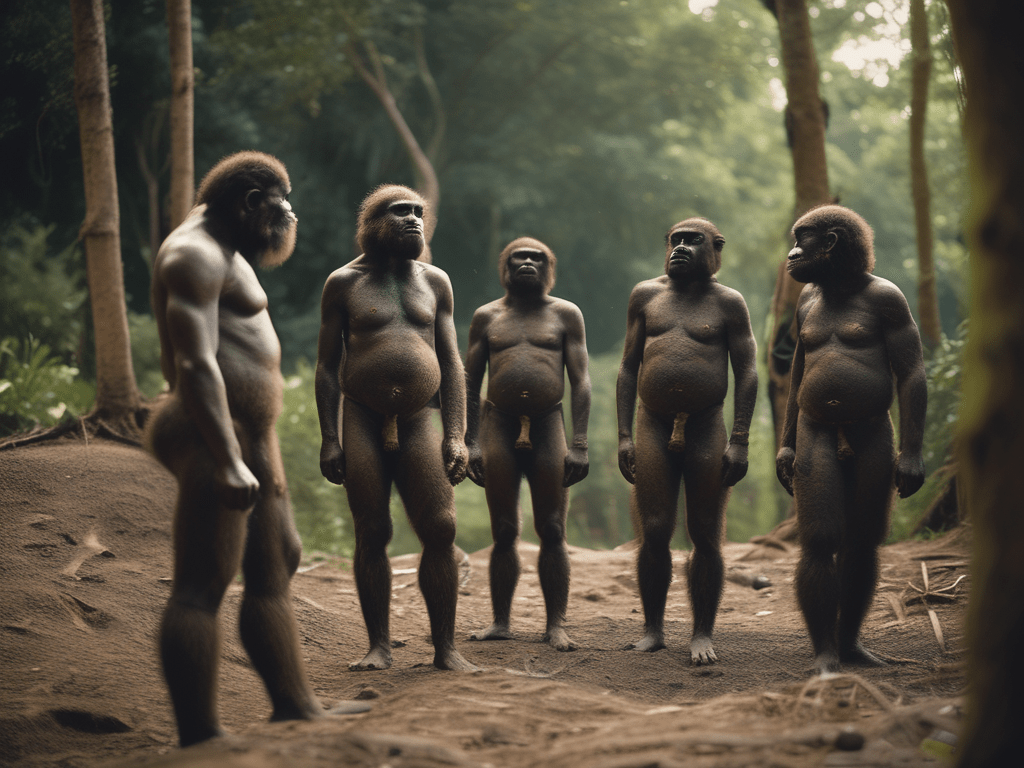
Fans of this blog will recall our long standing reservations about the various Out-of-Africa hypotheses which crowd the field of human paleontology. We’ve mentioned our doubts about the earlier one before (LSS 18 5 23). To be fair, the second one, involving modern Homo sapiens has stood up rather better, in view of all the archaeological, linguistic and genetic evidence which supports it.[1] [2] All of which is no reason not to be glad when someone comes along and upsets the apple cart. Today that someone is Professor Huan Shi, whose work is more than admirably reported on by Matthew Phelan for the Mail. [3]

The jumping -off point for Professor Shi is the Dali skull from Shaanxi province. Not only is it very old (260 000 BCE) for something which displays a lot of modern traits; it’s also a very long way from Africa. He goes on to suggest genetic similarities between early H sapiens in Europe and those in East Asia, distancing both from African centred populations. Finally he rests on the (slightly controversial) theory of Maximum Genetic Diversity, which suggests ancestral populations will exhibit a lower diversity, while derived ones will go higher.

Out thoughts? Since China rejoined the community of civilised nations after 1976 they have made some wonderful contributions to paleontology; so treat this with respect. However: there are even older fossils in parts of Africa, such as Jebel Irhoud at 315 000 BCE, which have modern features.. And all the all the models of linguistic complexity suggest the most complicated phoneme patterns are in African languages, and the least out in the Pacific islands, almost the last places we reached in our wanderings. What if both sides are asking the wrong question?After all, a thousand years is a long time for a powerful top predator. Such a species spreading at only ten miles a year would cover the whole landmasses of Africa and Eurasia in that time. Add a few thousand more and maybe the odd climate fluctuation and instead you would have a population endlessly marching, cross breeding and throwing up all sorts of variations. Of which a few fragments found hundreds of thousands of years later will give only the most cursory understanding. What if our species never began at all but has just carried on evolving, and always will?

[1]https://en.wikipedia.org/wiki/Recent_African_origin_of_modern_humans

[2]https://www.nature.com/articles/srep36645

[3]https://www.dailymail.co.uk/sciencetech/article-14236961/Scientist-challenges-Africa-theory-human-evolution.html

human evolution #china #homo sapiens #out of africa #lingiustics #genetics #microbiology

Obelisks: remarkable new life form shows there’s always an unexpected discovery around the corner

These days new life forms are like buses. Nothing happens for a long time. Then several come along at once. Plasmids, Viroids, Phages, Rickettsiae, prions…..now another discovery has been added to this strange quasi- bestiary of entities of varying complexity that seem to straddle the border lines between what is alive and what is not. These new ones are called Obelisks, and they have only been found (so far!) in types of bacteria that live in the human digestive system.

We have two links for you today, For a quick scan you won’t beat this one [1] from Ellyn Lapointe of the Mail. If you want a bit more detail. here’s Elizabeth Pennisi for Science[2] Anyway, they agree on the details. Obelisks are tiny bits of RNA, just enough to encode one or two genes, that seem to arrange themselves into tiny rod-like forms. Where they come from and why they persist are still unknown. But for us, whom readers will recall started our digital lives as an antibiotics blog, they offer one advantage. They exist as colonists in bacterial cells. Anything like that, made of nucleic acid, can in theory be tweaked. One more potential tool then to try to vitiate the effects of antibiotic resistant microbes.

[1]https://www.dailymail.co.uk/sciencetech/article-14207419/scientists-new-lifeform-hiding-inside-human-bodies.html

[2]https://www.science.org/content/article/it-s-insane-new-viruslike-entities-found-human-gut-microbes

#antibiotic resistance #microoganisms #microbiology #obelisks #biology #medicine #health

What is Truth? Professor David Spiegelhalter has some answers

“What is Truth?” Pilate is reputed to have asked Jesus at the latter’s trial in long-ago Jerusalem. Yet it is a question of neuralgic importance today. For we live in an era of angry competing claims, where everyone asserts that their particular fact-set is equal to anyone else’s. Opinions are simply hurled against each other, like children throwing stones. No learning, no judgement is possible at all. How can we, that tiny group of intelligent people who must somehow carry Civilisation forward find some sieve to winnow truth from opinion? Professor David Spiegelhalter may have some answers.

Spiegelhalter is a statistician. Fans of Covid-19 may recall him popping up on telly a lot during that pandemic. Look out for him during the next one. Yet his list of criteria (derived from the work of Bradford-Hill and Doll) may be applied to any scientific hypothesis. as a first step to get sort out wheat from chaff. . We decided to apply it to global warming today, so here goes:

Direct Evidence

1 The effect is so great that it cannot be explained by any random variable: The planet is undeniably heating up fast and this has become statistically significant

2 There is a close causal proximity between cause and effect We’ve been pumping out enormous quantities of fossil fuel gases since about 1840

3 The “dose” causes a response and it is reversible This comes from medical science, but if the “dose” is waste gas, then compare the fossil fuel emission pattern curve with that of temperature That it is indeed from coal, oil etc is demonstrated the well-known changes in C12 C13 and C14 ratios in the atmosphere

Evidence of mechanism

4 There is a plausible mechanism, explicable from known science, which explains the effect Carbon dioxide and methane are known to trap heat. Quite a lot of it.

Parallel Evidence

5 The effect fits in with what we know from other studies Consider what has happened in the atmospheres of Mars and Venus by comparison to Earth.

6 The same effect is found when the study is repeated Many peer reviewed papers have validated the early evidence; none have found against.

7 The effect is observable in very different studies and phenomena Studies as diverse as ice core samples, temperature measurements in oceans, land and atmosphere and the rising intensity of weather patterns only confirm the predictions of the first discoveries

The above list could be applied to any study of economics, social science, marketing or politics as well as the hard sciences, In fact Bradford Hill and Doll derived it from their pioneering work on the link between cigarettes and cancer. Any fairground huckster or well-funded corporate journalist can make claims. We hope the above will help you, gentle reader, to be a little more confident as to the veracity of those.

[1] Spiegelhalter, D: The Art Of Statistics Penguin 2019

#truth #science #global warming #statistics #evidence #reason #cancer #climate change #jesus #pontius pilate

Weekly Round Up: Eternal Life, China takes over, Russian Problems and a dialogue of the deaf. What a lot to think about!

We couldn’t help noticing these thought provoking tropes!

The Brain that Lived for Ever According to The Guardian, eternal life may be just around the corner. Dr Ariel Zeleznikow-Johnson is hoping to extract our brains and preserve them, in order that future generations will revive them and help us to live forever. Assuming that is, that they can bothered-who needs a clapped-out 21st century brain when you have quantum computing wired into your own? Perhaps John Agar and the Brain from Planet Arous were on to something after all. https://www.theguardian.com/science/2024/dec/01/with-brain-preservation-nobody-has-to-die-meet-the-neuroscientist-who-believes-life-could-be-eternal

If America Stumbles, will China take over? If America really does pull out of the Climate change agreements, any claim to moral leadership and soft power will have been vitiated. Forever. It will give the Peoples Republic of China the right to step up to the plate and lead the world to safety. Who can blame the rest of us if we follow? Here’s Justin Rowlatt for the BBC https://www.bbc.co.uk/news/articles/c3rx2drd8x8o

Russia’s best week turns sour Election of Donald Trump, more advances on the battlefield, free nations losing heart: what’s not to like for Russia’s Vladimir Putin? Except that his Syrian outpost is cracking and his economy is slowly going down the tubes, as this article from The Conversation makes clear. Like Britain in the 1940s he has sold out hope of future growth for the sake of victory here and now. In effect, his empire is really just a satellite of China. But maybe that’s a good thing for the rest of us-see above . https://theconversation.com/russian-rouble-collapse-exposes-deep-problems-in-the-countrys-economy-244869?utm_medium=email&utm_campaign=Latest%20from%20The%20Conversati

Why don’t they listen to scientists? A running theme of this blog is that the world never seems to notice the work and methods of science(except when it needs vaccines in a hurry) There’s no easy answer, if the popular mind deals in emotion and stories, and the scientific one in reason and evidence. Nature Briefings offers this thoughtful discourse Why we’re not solving more with Science

A Nature global survey finds that most specialists are unhappy with systems that provide science advice to policymakers. Eighty per cent said their country’s science-advice system was either poor or patchy, and 70% said that governments are not routinely using such advice. Nature’s survey — which took place before the US election in November — together with more than 20 interviews, reveals where some of the biggest obstacles to science advice lie. Eighty per cent of respondents thought policymakers lack sufficient understanding of science — but 73% said that researchers don’t understand how policy works. “It’s a constant tension between the scientifically illiterate and the politically clueless,” says policy specialist Paul Dufour.Nature | 15 min read

Well that’s it for this week. We don’t profess any religion here, but we are fans of 17th century English, brought up on the resonances of Shakespeare and Milton and the King James Bible. Which is why we have chosen this cadent little homily from their version of Proverbs 12 3 to send you away

Happy is the man that findeth wisdom and the man that getteth understanding/ for the merchandise of it is better than the merchandise of silver and the gain thereof than fine gold/she is more precious than rubies and the the things thou canst desire are not to be compared unto her

(it applies to women, too)

#china #america #climate change #neurology #the brain from planet arous #russia #vladimir putin #reason #emotion #evidence