This is what awesome intelligence looks like

No we’re not writing about ourselves as some hardened readers may have already guessed. Because we couldn’t achieve what the researchers in these two stories, both from Nature Briefing, have indeed achieved. Sorry guv- we don’t have their intellectual bandwidth . Cognitive intricacy. Brains, in good old fashioned English But we know intelligence when we see it, and we know you do too.

Algorithms design remarkable enzymes Researchers have used computer algorithms to design highly efficient synthetic enzymes from scratch, reducing the number of tedious hands-on experiments needed to perfect them. The products facilitate a chemical reaction that no known natural protein can, with an efficiency similar to that typically achieved by naturally occurring enzymes. One design was also 100 times more efficient than similar enzymes previously crafted using artificial intelligence. In comparison to enzymes that occur in nature, the algorithm’s creations are less complex and can’t grapple with multi-step chemical reactions, but they’re proof that the approach has promise.Nature | 4 min read
Reference: Nature paper

The medical potential of designer enzymes will not be lost on readers as intelligent as our own. Yet some discoveries are to be relished not for their use, but for what they tell us about the world and our real place in it Try this for size

Dragon Man was a Denisovan Ancient proteins and mitochondrial DNA extracted from the ‘Dragon Man’ fossil — a cranium found in northeastern China that is at least 146,000 years old — have confirmed that it belonged to a Denisovan, an archaic human group. The fossil is the first skull to be definitively linked to the group, which sheds light on what the ancient people looked like, putting an end to decade-long speculation.Nature | 5 min read
Reference: Cell paper & Science paper

Learning. Reason. Curiosity. Handy, aren’t they? Their absence can lead to different outcomes indeed. As the inhabitants of certain regions of the globe know only too well.

#protein #mRNA #medicine #health #evolution

Faecal Pellets: Watch the good bacteria chase out the bad

Imagine you get bad news: antibiotic resistant bacteria have set up a colony in your intestine. OK here’s some worse: they could escape and invade your blood, kidneys, whatever. In which case you have real problems. This is a very real scenario which that brilliant researcher Dr Blair Merrick of Guys and St Thomas Hospital has sought to address. [1] as reported by James Gallagher of the BBC Why not, he has reasoned, get some good non resistant bacteria to chase out all those bad ones? It is his chosen method which may raise more than one eyebrow among you, gentle readers

According to Dr Merrick, the way to get the good bacteria into his subjects is via pills made of…..well, made of faecal matter, you know,,,poo. To quote James:

Dr Merrick says there are “really promising signals” that poo pills could help tackle the rising scourge of superbugs and that donor bacteria could be going to microbial war with the superbugs as they compete over food and space on the lining of the gut and either rid the body of them completely or “reduce them down to a level that doesn’t cause problems”.

We like this for all sorts of reasons. Firstly the gut really is such a good harbour of antibiotic resistant bacteria. Secondly, as in all things ecological, making its flora more diverse can only be a good thing. Thirdly, we think it has a clever little principle behind it. Antibiotic resistant bacteria have devoted a tiny bit more of their genome to this purpose than non resistant ones. In the world of ecological competition, where tiny differences can make an enormous difference to long term survival, this could be crucial. If done correctly, the good non resistant ones should out compete the bad ones.

It’s early days yet, and the early trials have only been on 41 subjects But as seasoned veterans of the long wars of antibiotics will know, we at LSS welcome every initiative, however unusual it may at first seem. We wish every success to Dr Merrick and his team and hope that their early accomplishments continue in the bigger trials to come,

thanks to Ms G lynch

[1]https://www.bbc.co.uk/news/articles/clyge290l4xo

#gut #microbiome #antibiotic resistant bacteria #health #medicine

AIDS breakthrough shows what science can do

We now live in an age when science (and the rational habits  of mind it depends upon) is under attack.  Heirs to the rational tradition have always had to live with religious fundamentalists who deny inconvenient truths like evolution. But nowadays attacks come thick and fast from those who wish to deny  climate change, the dangers of  smoking, the efficacy of vaccines and much besides.   From people who nevertheless cheerfully accept other scientific findings which suit them.   So, just to redress the balance we thought we’d showcase this breathtaking new advance in AIDS research which, for the first time, holds out the hope of a permanent cure.

It comes from Kat Lay of the Guardian,[1] reporting the  work of the Peter Doherty Institute in Australia.[2] The background will be familiar: the great evolutionary survival trick of the HIV was to bury itself deep in certain white blood cells of the immune system, where it was immune to our attack. In the words of Kat:

In a paper published in Nature Communications, the researchers have shown for the first time that mRNA can be delivered into the cells where HIV is hiding, by encasing it in a tiny, specially formulated fat bubble. The mRNA then instructs the cells to reveal the virus. First AIDS was a death sentence: then it could be slowed with drugs. Now at last comes hope of a real cure for its 40 million or so sufferers

Science itself is a process, not a monolithic entity. It evolves, refines, and corrects itself over time. But when people selectively accept only the parts that align with their worldview, they undermine the very foundation of rational inquiry   This kind of cherry-picking often stems from cognitive biases, ideological commitments, or economic incentives. Climate change denial, for example, is frequently tied to political or financial interests, while opposition to vaccines or smoking regulations can be fuelled by misinformation or personal convenience.  But the deniers should remember one thing: if they do decide to overthrow the rationalists, will they put anything better in our place?

Truth is compared in Scripture to a streaming fountain; if her waters flow not in a perpetual progression, they sicken into a muddy pool of conformity and tradition.”

 Milton: Areopagitica

[1]https://www.theguardian.com/global-development/2025/jun/05/breakthrough-in-search-for-hiv-cure-leaves-researchers-overwhelmed?CMP=Share_AndroidApp_Other

[2]https://www.doherty.edu.au/

#HIV #AIDS #disease #mRNA #medicine #science #climate change #smoking

Genetics: a whole new perspective on human evolution?

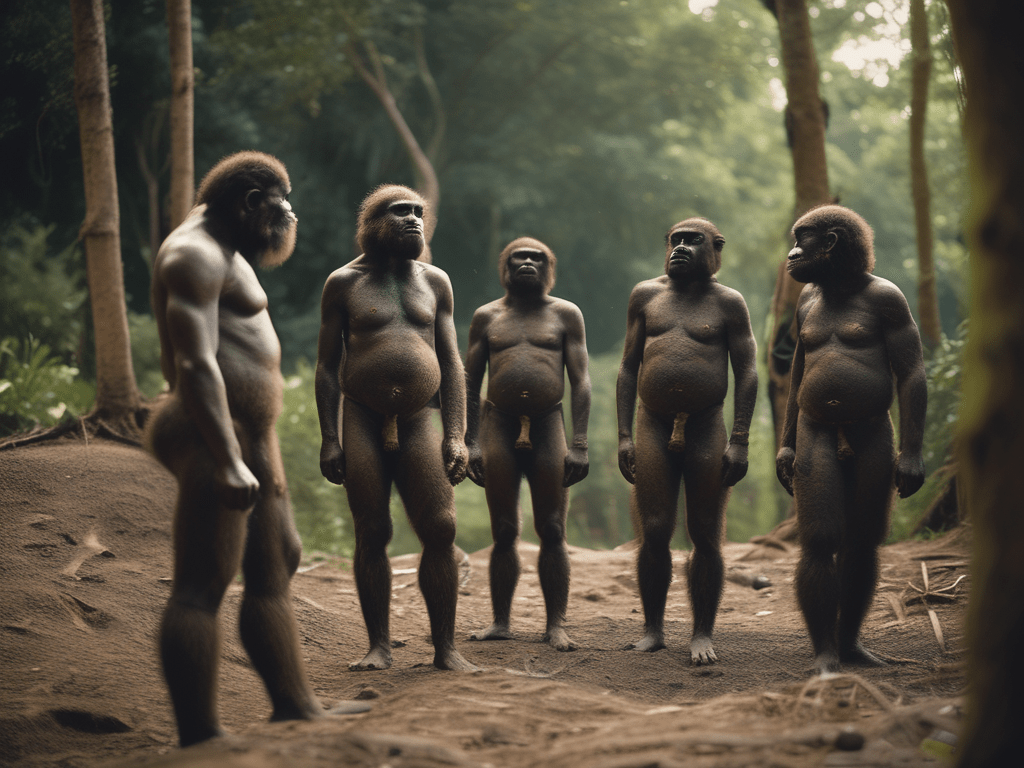
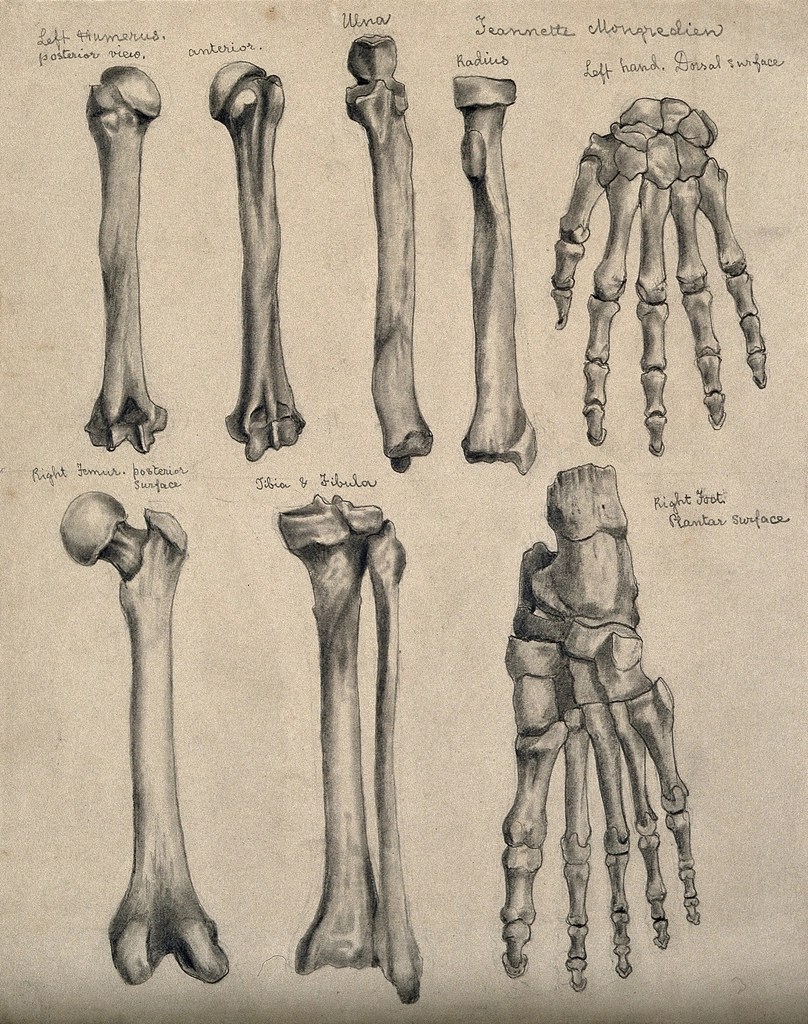
Every so often it pays to look at the same problem from a completely different perspective. For the past 57 years or so we have been collecting and grading reports of human fossil bones and old tools the way that cricket fans collect the records of every game their team has played. But today, with the help of one or two of our redoubtable AI chums, we present a whole new perspective on the old story. Much of it is locked in our genes and has been uncovered by the amazingly intelligent efforts of genetics researchers.

Their discoveries are so extensive that there is too much for a tiny blog: so we’ve summarised the findings below. But look at the timing of the mutation in the famous FOXP-2 gene, and the human species which were running around at the time. True humans fall naturally into two groups. One one side, big -brained essentially modern forms : Homo heidelbergensis, Denisovans, Neanderthals and Homo sapiens. On the other? Poor old Homo erectus, significantly smaller-brained and with a much more exiguous technological and cultural life. In this light, the mutation is almost eerily coincident.

Of course the time lines of the mutations are a bit open ended; but the picture from the fossils is a bit vague too. What really impresses us is the way that, give or take an Ice Age or two, the geneticists provide independent validation of the fossil finders’ picture overall. And there’s an even deeper lesson. The same truth can be seen in two completely different ways, Like those night sky apps you can get which can show the same firmament through visual light, x-rays, microwave or radio waves; whichever you choose. Next time you argue with someone ask yourself and them: are we really talking about two different things? There’s a cognitive advance for the ages.

all based on peer reviewed or reputable pre pubs sources (microsoft assistant)

Time (Million Years Ago)Key Genetic MutationHominins Present
~6 MYAARHGAP11B (linked to brain expansion)Sahelanthropus tchadensis (early bipedal ape-like species)
~4.4 MYAChanges in genes affecting bipedalismArdipithecus ramidus (early upright walker)
~3.3 MYASRGAP2C (enhanced neuron connectivity)Australopithecus afarensis (Lucy and her relatives)
~2.4 MYAMYH16 (jaw muscle reduction, allowing brain growth)Early Homo habilis (first tool users)
~2 MYASCN9A (pain sensitivity mutation)Homo erectus (first hominin to leave Africa)
~700,000 YAFOXP2 (language-related gene)Homo heidelbergensis (ancestor of Neanderthals and modern humans)
~900,000 – 4.5 MYAChromosome 2 fusion (reduced chromosome count from 48 to 46)Various early Homo species
~300,000 YAMicrocephalin & ASPM (brain development genes)Early Homo sapiens (our direct ancestors)

#genteics #paleontology #tools #fossils #anthropology #human evolution

We said Base Pair editing would outshine CRISPR. This breakthrough proves we were wrong. Or not

When is CRISPR- Cas-9 Base Pair Editing, and when is Base Pair editing CRISPR Cas-9?. Readers of this blog may be forgiven for thinking Base Pair Editing was the exciting new kid in town that was going to make CRISPR look like VHS tapes ( what they?ed) But according to reports of a recent breakthrough in medicine, they are, sort of, one and the same thing.

Perhaps we had better start with the breakthrough. Doctors in Pennsylvania in the USA have used gene editing techniques to treat a poor little boy whose liver lacked the necessary enzyme system to process ammonia. Our reports come firstly from Ian Sample of the Guardian and the New England Journal of medicine via hyperlink) , where Base Pair is very much to the fore While Nature Briefing has the following take , again with the hyperlink to the NEJM, Baby Boy Receives CRISPR for One Therapy

A baby boy with a devastating genetic disease is thriving after becoming the first known person to receive a bespoke, CRISPR therapy-for-one. KJ Muldoon, now almost 10 months old, received three doses of a gene-editing treatment designed to repair his specific disease-causing mutation, which impaired his body’s ability to process protein. While Muldoon appears healthy, it is too soon to use the word “cure”, says paediatrician Rebecca Ahrens-Nicklas. “This is still really early days.”Nature | 5 min read
Reference: New England Journal of Medicine paper

From all of which we have obtain the following Learning Points for your Edification , gentle reader:

1 It matters less what you call it, and more that it works-the kid’s OK now!

2 Maybe Base Pair Editing is a subset of CRISPR the way that Hammersmith is a region of London. OK, it’s Hammersmith. But it’s London too. What’s the big deal?

3 It would be interesting to learn if other big cities like New York or Madrid for examples, contain smaller areas with funny names. But we will leave that to another day.

4 If you educate people, teach them critical thinking skills and give them some money to buy test tubes with, things like this can happen

5 If you keep people working long hours for little money, educate them to a minimum and give them things like Fox News to watch, societal outcomes may be very different

[1]https://www.theguardian.com/science/2025/may/15/us-doctors-rewrite-dna-of-infant-with-severe-genetic-disorder-in-medical-first?CMP=Share_iOSApp_Other

also: see LSS 23 7 2022 and follow ups

#gene therapies #base pair editing #CRISPR Cas-9 #medicine #health

APPEAL: the charity that tries to mend broken lives like Peter Sullivan’s

It is November 1987. If you turn on the radio, you might hear T’Pau‘s popular ditty China in your Hand, or maybe George Michael belting out Faith. In the UK , Mrs Thatcher‘s government is reaching peaks of popularity, although last month’s financial crash is a harbinger of that there may be troubles ahead. But you don’t mind, because you’re going to see Cher in Moonstruck, and…….that’s it. Nothing else happens for 38 years. Because you are in prison. High Security prison in fact, for a murder which you did not commit. The world moves on, but you are frozen in 1987.

That’s what happened to Peter Sullivan. [1]His conviction was for the murder of a poor innocent woman called Diane Sindall, who died in tragically brutal circumstances in 1986, and whose real assailant has never been found. And despite repeated appeals to courts and organisations like the CCRC, whose ostensible purpose is to review purported miscarriages of justice, nothing was ever done, Until his case was taken up by APPEAL. They are a tiny charity, skeleton-staffed by lawyers and other professionals. Legal Davids taking on a Goliath of wrongful convictions. You can read more about their work here [2] One recent heart warming success was the release of an unfortunate man named Andy Malkinson who was wrongfully jailed for rape in 2003. Their are many other cases like his on our system; there will be in yours too, overseas readers.

We know there have been advances in Forensic Sciences. We know that Police Officers are forced to work far too hard, with dreadful lack of funds. We know that makes them vulnerable to all -too -human faults like jumping to conclusions and confirmation bias. ( we are less sympathetic to the hysterical vitriol poured out by the media when a “successful” conviction has been achieved) But we do know that the world needs an organisation that deals in the best currency of our species-second thoughts. APPEAL is one such. Hopelessly understaffed. desperately under resourced. They are there for every little person who has felt the full obdurate weight of the criminal justice system sitting right on their chests. And to help some of these victims stumble free, unbelievingly, into 2025.

[1]https://www.theguardian.com/law/2025/may/13/peter-sullivan-jail-murder-conviction-quashed-diane-sindall?CMP=Share_AndroidApp_Other

[2]https://appeal.org.uk/who-we-are/

here is their donate page, just to save you time (hint hint)

#APPEAL #CCRC #peter sullivan #diane sinda;; #andy malkinson #miscarriage of justice #court pf appeal #forensic science #dna

Is this plastic eating bacterium the ultimate in antibiotic resistance?

Bacteria that mutate to resist the strongest known antibiotics. At this blog, it’s in our DNA, if you will pardon the flippant quip. But-get this-what if the bacterium in question starts eating the walls you are trying to contain it in? Sounds fantastic, like the plot of one of those old 1950s B movies. Read this piece called Hospital Superbug eats Medical Plastic from the admirable Nature Briefings

Pseudomonas aeruginosa — a strain of bacterium that often causes antibiotic-resistant infections in hospitals — can produce an enzyme that can break down medical-grade plastic. Researchers found that the enzyme, dubbed Pap1, can break down a plastic called polycaprolactone that is commonly used in health care because of its biodegradable properties. The ability to break down plastic could explain why these microbes persist in hospital environments, says biomedical scientist and study co-author Ronan McCarthy.Nature | 4 min read
Reference: Cell Reports paper

We’ve put up the Cell Reports posting for you too here[1]in case the clicker above does not get you through

So is this it? The big one? A wave of highly infectious bacteria that not only eats us humans, but gleefully chomps its way through the very defensive systems we use use to contain it? Possibly, yes. But-let’s keep our Alans on, as they used to say in the old Guy Ritchie movies. For there are two good reasons to do so.

First, it’s only eating one type of plastic, so far. There are lots of others which could be deployed for special medical uses which will be less vulnerable.

Secondly, the fact that this plastic is indeed biodegradable, and that something has found a way to do it, offers great hope. Imagine a plastics ecosystem wherein every bottle, every carton, each piece of wrapping is open to attack by this Pap-1 enzyme. Potentially it opens the way to clean beaches, litter- free hedgerows and unblocked rivers and sewers. There is no reason that the genes to make the enzyme could not be spliced into a safer organism than Pseudomonas aeruginosa. It’s an ill wind that blows no one any good, we say.

[1]https://www.cell.com/cell-reports/fulltext/S2211-1247(25)00421-8

#plastics #antibiotics #microbial antibiotic resistance #science #ecology #pollution

Evolution is happening right now in South Korea

We tend to think of Evolution as something happening over millions of years. First, all those trilobites and early fish swimming in the warm Devonian seas. Then early newts and scorpions slithering out onto land, followed by dinosaurs and pterosaurs dodging the cycads; and finally those desperate battles between humans and mammoths in the frozen wastes of the tundra. Millions of years-billions if you look at things like bacteria and red algae.

But evolution isn’t like that. The change of one species into another is a by product some something much smaller, local and more rapid. It is about the environment selecting a gene here, now, for one small purpose. Read this from Nature Briefing, No Diver is an island

A tradition of diving on the South Korean island of Jeju might have influenced the genomes of all of the islanders. The Haenyeo — meaning ‘women of the sea’ — have been cold-water diving year-round and without any breathing apparatus for centuries. A genetic analysis revealed that gene variants associated with reduced blood pressure, cold water tolerance and red blood cell count — which is related to oxygen-carrying capacity — are more common in people from Jeju, regardless of whether they dive themselves, than in other South Koreans.CNN | 7 min read
Reference: Cell Reports paper

In other words, good old fashioned Darwin-Mendel natural selection of the central DNA of the organism. Because one gene variant conveys a selective advantage which the other allele doesn’t. Textbook case: on single genetic change will transform a bacterium into an antibiotic-resistant organism, with profound consequences millions. Of course, if you have enough of these over time, you might eventually transform a tabby into a tiger, or a dinosaur into a bird. But those are second order consequences.Recent discoveries have made our understanding a little more complicated. We have to factor in epigenetics (the great Nessa Carey is good guide [1] ) and even the possibility of some environmental feedback into the genome, to which we have alluded here sometimes(LSS passim)

Every so often we come across some fool, usually a pub bore or right wing columnist, who loudly declaims” I don’t believe in evolution-why would a fish want to transform itself into a salamander?” Here is your answer. The majestic old Darwinian model still functions, Right at the heart of one of the most modern countries in the world.[2]

[1]https://en.wikipedia.org/wiki/Nessa_Carey

[2]https://en.wikipedia.org/wiki/Haenyeo

#natural selection #evolution #epigenetics #darwin #mendel #dna #gene #south korea

Cortical Labs: the first working Synthetic Biological Intelligence

Far back in the last century, Arthur C Clarke drew attention to a slow but steady trend in human evolution: the gradual merging of the human body with artificial technology. Like all great things it started small, so small as to be almost unremarked. Firstly were primitive artificial legs and hands, all that could be done with the technology of the time. By the time Clarke made his prediction in the novel 2001; a Space Odyssey, the scientists of the day were experimenting with artificial hearts, lungs and kidneys. Fast forward to our own age. Not only have things like prosthetic limbs and eyes greatly improved. We are starting, tentatively, to modify the genes of living cells with early techniques like CRISPR Cas-9 (LSS passim). Elsewhere, the attempts to engineer interfaces between human tissue and silicon chips seem to be showing real possibilities of success.

But we think that the efforts of Cortical Labs to create Synthetic Biological Intelligence(SBI) takes the trend to a whole new level. [1] Their CL1 computer uses laboratory grown neurons interfacing with silicon chips to create an entity that defies old -style classifications of what is biology and what is technology. Rather than offer you 18 dreary paragraphs, we will urge you to visit their website. But if we cherry-picked that: The CL 1 far more energy-efficient than a conventional computer; that it is ideal for disease modelling. drug disorder research; that it dispenses with much of the need for animal experiments; that above all it will be available for shipment at a cost of $35000, you would see why we have chosen this item for your entertainment today. Because we honestly thought that this kind of thing was decades away. Forgive us: but we have no financial, professional, personal or any other kind of relationship with this company. We never endorse; but when we report, we mean it.

And we do indeed report developments which seem to be genuinely game changing, and truly the work of the most intelligent people at the very limits of human accomplishment. We believe that this is one of them. Which is where our doubts creep in. For Arthur C Clarke also pointed out how the very act of adopting technology (stone tools at the beginning) transformed the biology of creatures that used it. So much so that they changed into new species, quite unrecognisable to their ancestors. And absolutely dependent on the new technologies to survive, with no possibility of de-inventing them . We are not the first to suggest that some engineered organism will replace us. But we do think that possibility is now very real and very near.

thanks to G Herbert

[1]https://corticallabs.com/cl1.html

#synthetic biological intelligence #cortical labs #artificial intelligence #computers #biology #evolution

Deadly Fungus spreads as globe warms

Rising seas. Flooding rivers. Blankets of uncontrollable wildfires. But the latest risk from global warming is a humble fungus, which could now spread across the globe. We’ve mentioned the danger of antibiotic resistant fungi before here(LSS 21 10 24 et al) But we never thought to tie it to climate change.

Well all that’s just changed. Because according to a new study by Dr Norman van Rhijn of Manchester University, reported here by Alex Croft of the Independent, via Yahoo [1] dangerous strains of the Aspergillus family of fungi are starting to spread . If we carry on burning fossil fuels at the rate we do now, the strain A. fumigatus will probably extend its range by 77% by 2100, pushing up into polar regions such as Alaska. And the trend is worrying experts from many fields.[2] For one thing, fungi have an immense potential to damage drops. But they also pose a clear and present danger to human health, especially in those with weaker immune systems, such as the elderly and children. They may also produce substances such as aflatoxins which may cause liver damage and even cancer[3] It’s hard to get an exact figure which parses the number of deaths caused directly by fungi, and those cases where they become an opportunistic secondary infection. But about 3.5 million a year might not be a bad ball park figure. As the fungi become resistant to antibiotics and fungicides, this figure will grow and grow.

This is a bank holiday weekend in our country. People will be doing bank holiday things. A great many cars will be cleaned, tents put up, boats sailed and drinks drunk. But , we can’t help thinking, wouldn’t it be better to put all the fun on hold for a bit, until problems like this have been finally sorted out?

[1]https://uk.news.yahoo.com/killer-fungus-could-spread-parts-170653452.html#:~:text=Norman%20van%20Rhijn%2C%20the%20Wellcome%20Trust%20research%20fellow,a

[2]https://www.who.int/news/item/25-10-2022-who-releases-first-ever-list-of-health-threatening-fungi

[3]https://www.cancer.gov/about-cancer/causes-prevention/risk/substances/aflatoxins

#global warming #climate change # antibiotic resistance #aspergillus #fungi