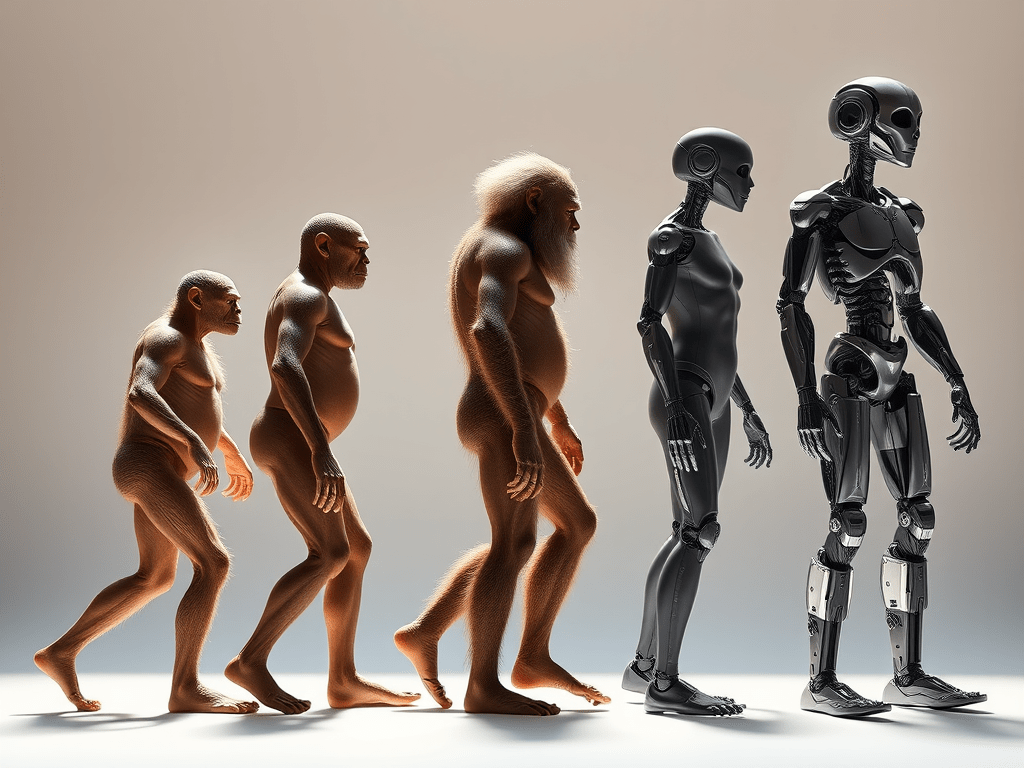
Evolution is happening right now in South Korea

We tend to think of Evolution as something happening over millions of years. First, all those trilobites and early fish swimming in the warm Devonian seas. Then early newts and scorpions slithering out onto land, followed by dinosaurs and pterosaurs dodging the cycads; and finally those desperate battles between humans and mammoths in the frozen wastes of the tundra. Millions of years-billions if you look at things like bacteria and red algae.

But evolution isn’t like that. The change of one species into another is a by product some something much smaller, local and more rapid. It is about the environment selecting a gene here, now, for one small purpose. Read this from Nature Briefing, No Diver is an island

A tradition of diving on the South Korean island of Jeju might have influenced the genomes of all of the islanders. The Haenyeo — meaning ‘women of the sea’ — have been cold-water diving year-round and without any breathing apparatus for centuries. A genetic analysis revealed that gene variants associated with reduced blood pressure, cold water tolerance and red blood cell count — which is related to oxygen-carrying capacity — are more common in people from Jeju, regardless of whether they dive themselves, than in other South Koreans.CNN | 7 min read
Reference: Cell Reports paper

In other words, good old fashioned Darwin-Mendel natural selection of the central DNA of the organism. Because one gene variant conveys a selective advantage which the other allele doesn’t. Textbook case: on single genetic change will transform a bacterium into an antibiotic-resistant organism, with profound consequences millions. Of course, if you have enough of these over time, you might eventually transform a tabby into a tiger, or a dinosaur into a bird. But those are second order consequences.Recent discoveries have made our understanding a little more complicated. We have to factor in epigenetics (the great Nessa Carey is good guide [1] ) and even the possibility of some environmental feedback into the genome, to which we have alluded here sometimes(LSS passim)

Every so often we come across some fool, usually a pub bore or right wing columnist, who loudly declaims” I don’t believe in evolution-why would a fish want to transform itself into a salamander?” Here is your answer. The majestic old Darwinian model still functions, Right at the heart of one of the most modern countries in the world.[2]

[1]https://en.wikipedia.org/wiki/Nessa_Carey

[2]https://en.wikipedia.org/wiki/Haenyeo

#natural selection #evolution #epigenetics #darwin #mendel #dna #gene #south korea

Cortical Labs: the first working Synthetic Biological Intelligence

Far back in the last century, Arthur C Clarke drew attention to a slow but steady trend in human evolution: the gradual merging of the human body with artificial technology. Like all great things it started small, so small as to be almost unremarked. Firstly were primitive artificial legs and hands, all that could be done with the technology of the time. By the time Clarke made his prediction in the novel 2001; a Space Odyssey, the scientists of the day were experimenting with artificial hearts, lungs and kidneys. Fast forward to our own age. Not only have things like prosthetic limbs and eyes greatly improved. We are starting, tentatively, to modify the genes of living cells with early techniques like CRISPR Cas-9 (LSS passim). Elsewhere, the attempts to engineer interfaces between human tissue and silicon chips seem to be showing real possibilities of success.

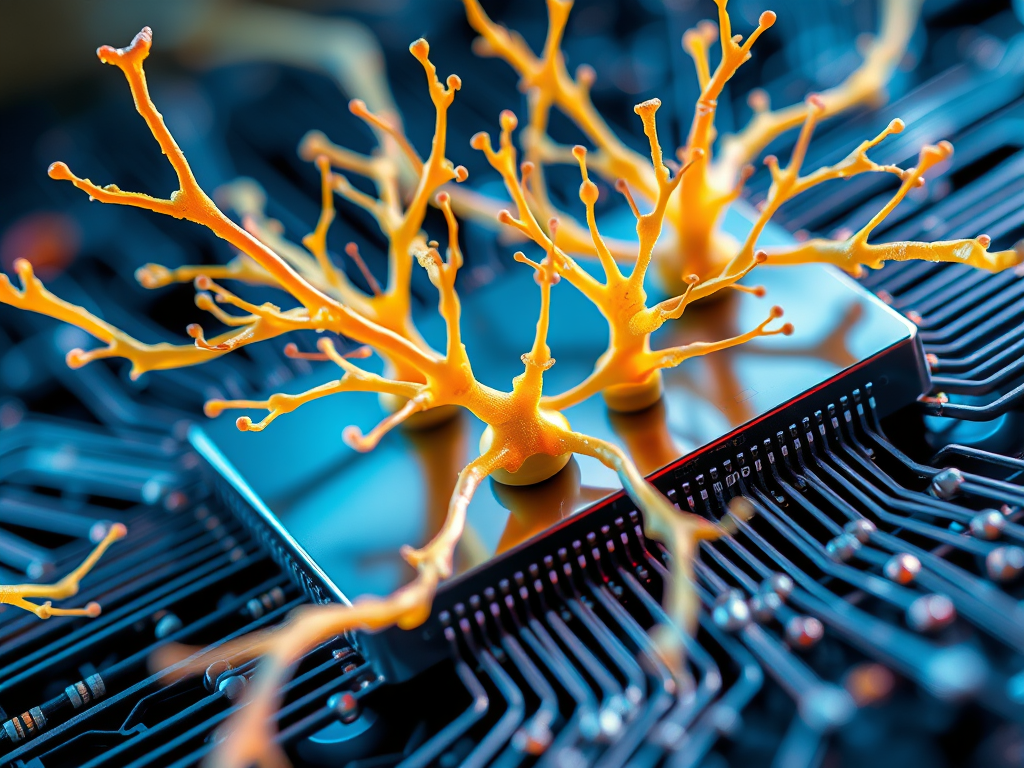
But we think that the efforts of Cortical Labs to create Synthetic Biological Intelligence(SBI) takes the trend to a whole new level. [1] Their CL1 computer uses laboratory grown neurons interfacing with silicon chips to create an entity that defies old -style classifications of what is biology and what is technology. Rather than offer you 18 dreary paragraphs, we will urge you to visit their website. But if we cherry-picked that: The CL 1 far more energy-efficient than a conventional computer; that it is ideal for disease modelling. drug disorder research; that it dispenses with much of the need for animal experiments; that above all it will be available for shipment at a cost of $35000, you would see why we have chosen this item for your entertainment today. Because we honestly thought that this kind of thing was decades away. Forgive us: but we have no financial, professional, personal or any other kind of relationship with this company. We never endorse; but when we report, we mean it.

And we do indeed report developments which seem to be genuinely game changing, and truly the work of the most intelligent people at the very limits of human accomplishment. We believe that this is one of them. Which is where our doubts creep in. For Arthur C Clarke also pointed out how the very act of adopting technology (stone tools at the beginning) transformed the biology of creatures that used it. So much so that they changed into new species, quite unrecognisable to their ancestors. And absolutely dependent on the new technologies to survive, with no possibility of de-inventing them . We are not the first to suggest that some engineered organism will replace us. But we do think that possibility is now very real and very near.

thanks to G Herbert

[1]https://corticallabs.com/cl1.html

#synthetic biological intelligence #cortical labs #artificial intelligence #computers #biology #evolution

Deadly Fungus spreads as globe warms

Rising seas. Flooding rivers. Blankets of uncontrollable wildfires. But the latest risk from global warming is a humble fungus, which could now spread across the globe. We’ve mentioned the danger of antibiotic resistant fungi before here(LSS 21 10 24 et al) But we never thought to tie it to climate change.

Well all that’s just changed. Because according to a new study by Dr Norman van Rhijn of Manchester University, reported here by Alex Croft of the Independent, via Yahoo [1] dangerous strains of the Aspergillus family of fungi are starting to spread . If we carry on burning fossil fuels at the rate we do now, the strain A. fumigatus will probably extend its range by 77% by 2100, pushing up into polar regions such as Alaska. And the trend is worrying experts from many fields.[2] For one thing, fungi have an immense potential to damage drops. But they also pose a clear and present danger to human health, especially in those with weaker immune systems, such as the elderly and children. They may also produce substances such as aflatoxins which may cause liver damage and even cancer[3] It’s hard to get an exact figure which parses the number of deaths caused directly by fungi, and those cases where they become an opportunistic secondary infection. But about 3.5 million a year might not be a bad ball park figure. As the fungi become resistant to antibiotics and fungicides, this figure will grow and grow.

This is a bank holiday weekend in our country. People will be doing bank holiday things. A great many cars will be cleaned, tents put up, boats sailed and drinks drunk. But , we can’t help thinking, wouldn’t it be better to put all the fun on hold for a bit, until problems like this have been finally sorted out?

[1]https://uk.news.yahoo.com/killer-fungus-could-spread-parts-170653452.html#:~:text=Norman%20van%20Rhijn%2C%20the%20Wellcome%20Trust%20research%20fellow,a

[2]https://www.who.int/news/item/25-10-2022-who-releases-first-ever-list-of-health-threatening-fungi

[3]https://www.cancer.gov/about-cancer/causes-prevention/risk/substances/aflatoxins

#global warming #climate change # antibiotic resistance #aspergillus #fungi

Fish farms in Space? They might be closer than you think

One thing about Science Fiction: the food in future worlds always seems a bit dodgy. From Soylent Green through 2001: A Space Odyssey all the way to Red Dwarf, it’s all a bit artificial. Despite the ingenious efforts of valiant biochemists and microbiologists,[1] it’s not really the same. But wait, gentle readers! Almost unbelievably a brilliant French Scientist called Dr Cyrille Przybyla really believes he has a way of serving up a tasty plate of fresh real Sea Bass in the dining room of a lunar colony, assuming we all survive to construct one.

According to Kim Willsher of the Guardian, it’s not so outlandish as it sounds.[2] Apparently our finny friends have been making trips into space since the 1970s. All Dr Przybyla and his his Lunar Hatch Project are doing at this stage is sending a few up to the ISS to see how they get on. But, if it’s a success-who knows. Bass are exceptionally rich in omega 3 and B group vitamins, all of which are good for fighting muscle loss which comes with low gravity or zero gravity environments. Being fish, they’re already weightless in effect, so they won’t care anyway. The idea of putting them into enclosed, self sustaining eco systems might be very feasible on the moon. We now know there’s plenty of water up there, so that potentially exorbitant problem is largely solved.

There’s so much to like about this idea. Firstly it’s new different thinking: but not so new that bits of it haven’t been tried already. Secondly, a cautious, step-by-step approach is being applied-always a good sign of a successful project. Thirdly, it addresses a real need. No wonder the Chinese are getting interested, as Kim points out. that’s because they look to the future, instead of wasting all their time and energy trying to restore a lot of rusty old factories whose time has long since passed. We think there’s a lesson in there somewhere.

[1]https://www.bbc.co.uk/news/articles/cp34wzql2xvo

[2]https://www.theguardian.com/environment/2025/apr/28/sea-bass-in-space-lunar-hatch-fish-farms-moon-aquaculture

#space exploration #fish farms #nutrition #sea bass #ifremer

Do glaciers have political opinions? and some other mystery questions do get you thinking

Instead of all those discourses on things like microbiology or economic history, we thought we’d offer you something a little different today, gentle readers. We’ve decided to come up with one of those puzzle exercises, you know, brain teasers they call them. So here are 11 questions designed to get you thinking, to stretch the old grey matter as t’were. And the good news is: Most of the answers will be available somewhere on the Interweb, or via the websites we have so helpfully posted below.

1 How do you explain the change in the ratio of C13 to C12 in the atmosphere since 1850? Why did this ratio seem have fallen especially quickly after 1950?

2 Since 1750 about 2400 gigatonnes of carbon dioxide have been added to the atmosphere. If this call came from volcanoes, why is the isotopic signature of atmospheric CO2 so different from that from volcanic sources?

3 Do glaciers retreat because they share the political opinions of the Green Party, or is all this melting caused by something else?

4 Why have global surface temperatures increased by 1.2% since the late nineteenth century, but stratospheric temperatures actually fallen?

5 Why is the ocean warming faster than the land? Why would the land warm fastest first if all this were caused by the Sun?

6 Why does spring arrive earlier and earlier in the Northern hemisphere?

7 Do fish conspire with extremists,or have their migrating patterns changed for other reasons?

8 What is causing all these temperature rises anyway?

9 Why is the atmosphere of Venus so hot? And why is the atmosphere of Mars so cold?

10 Do you think rises in sea levels will drive increases in human migration?

11 If scientists are right about cures for cancer, physics, astronomy computers and many other things, why are they suddenly wrong about climate science?

[1]https://royalsociety.org/news-resources/projects/climate-change-evidence-causes/

[2]https://science.nasa.gov/climate-change/evidence/

[3]https://www.climate.gov/news-features/climate-qa/what-evidence-exists-earth-warming-and-humans-are-main-cause

#climate change #global warming #climate science #carbon dioxide #ecology #pollution

Gepotidacin marches on

Gentle readers we’re more than happy to present the next chapter in the story of Gepotidacin. Against all the gloom and doom we serve up here, it really is a wonderful new class of antibiotic We have covered it before (LSS 30 1 23 ; 17 4 23) but today Manuel Ansede of El País [1] serves up a handy little resumé, not only of where we are now,  where we have come form, and all kinds of hyperlinks to bring you up to speed.  We can add little but to such erudition as Manuel’s. But for the sake of long term readers will riff  on these few -humbly derived- observations

Firstly, this really is a new class of antibiotic., going by the snappy name of triazaacenaphthylene bacterial topoisomerase inhibitors.  Unlike traditional antibiotics that target bacterial cell walls or protein synthesis, gepotidacin disrupts bacterial DNA replication by inhibiting two essential enzymes: DNA gyrase and topoisomerase IV. Which as most readers will instantly recall, are crucial for bacterial DNA replication and cell division. Thought so.

Secondly its already showing real world efficacy against all kinds of  bacteria, including antibiotic-resistant strains like methicillin-resistant Staphylococcus aureus (MRSA) and multidrug-resistant Neisseria gonorrhoeae. Get that: real science works.

Thirdly, to make  our old LSS point: effective action in medicine takes time. It requires teams of intelligent people. Who do not act alone, but exist in an ecosystem of universities . research institutes and government agencies. Which in turn requires careful nurturing , funds and right to feel safe enough to make long term plans without bullying and interference from the proudly ignorant and impulsive. American readers take note.

[1]https://elpais.com/ciencia/2025-04-14/el-primer-antibiotico-descubierto-en-30-anos-llega-justo-a-tiempo-de-evitar-que-la-supergonorrea-sea-imposible-de-tratar.

#gepotidacin #antibiotics #antibiotic resistance #health #medicine

Three fascinating examples of scientific detective work

We have three stories for you this morning. Not only because the stories themselves are intriguing. But because they illustrate the scientific method at its best. Persistence. Careful collection of the data, Thoughtful analysis. And above all this” Extraordinary claims require extraordinary evidence.” It’s from the first of today’s features. But it runs like a thread through all of them, and much else that is done by scientists, and all true scholars everywhere. It is of course the antithesis of the claims of conspiracy theorists, hucksters and plain incompetents everywhere.

Floods in the Mediterranean We’ve known the idea that the Mediterranean Sea was once a hot dry basin, a sort of desert land. Until one fine day about five million years ago when a truly humungous great flood burst through the Straits of Gibraltar, turning the whole, thing into that vast lake suitable for swimming, sailing and other watersports which it remains to this day. The proponents of the theory, Daniel Garcia Castellanos and Paul Carling were careful to say this Zanclean Flood was just that, a theory, Until recently they found that the alignment of hills in Sicily. plus the way that rocks of the right age were lying around there, confirmed it nicely. Detective work worthy of Comissario Montalbano, that island’s most famous son!

Awesome Jaw About 20 years ago, a large ugly looking jaw was dredged up off the coast of Taiwan. No one knew exactly how old it was or how it fitted into the jigsaw of human evolution. Now some incredibly skilful work extracting and analysing proteins from it have revealed it to belong to a Denisovan, that intriguing third branch of modern humanity Here’s Nature Briefing: Mysterious Taiwan Fossil is Denisovan

A fossilized jawbone discovered more than 20 years ago belonged to an ancient group of humans called Denisovans. Named Penghu 1, the jawbone was dredged up by fishing crews 25 kilometres off the west coast of Taiwan. The confirmation that the bone belonged to a Denisovan — the result of more than two years of work to extract ancient proteins from the fossil — expands the known geographical range of the group, from colder, high-altitude regions to warmer climates.Nature | 5 min read
Reference: Science paper

Standoffish Saharans Moving forward from the dawn of humanity to the dawn of agriculture, Chris Melore of the Mail has an intriguing story about the ancient proto-Neolithic populations of North Africa. Careful molecular detective work has revealed that they tended to keep themselves isolated from the population flows across the rest of the world which were happening about 7000 years BP. And this has quite profound implications for how agriculture and herding must have spread. One school has always held that Neolithic techniques were carried as cultural tropes by tribes who migrated out of the fertile crescent (a bit like the way particular European customs and technologies were carried to North America) The other school always held that local people came up with these ideas for themselves, perhaps with a bit of help from conversations with early travellers and traders. This evidence of isolated North Africans invented stock breeding and grazing economies independently is a definite plus for the second school and its ways.

https://www.dailymail.co.uk/sciencetech/article-14600327/Newly-mummies-reveal-new-human-ancestor-broke-humanity-thousands-years-ago.html

Careful thoughts, provisional conclusions. This is what we are all about here, and we hope you are too. Perhaps more people could be like this, if they had been given a fairer life. It is a thought we will pursue in the next blog

#neolithic #paleolithic #geology #agriculture #denisovan ##dna #protein

Neural Maps show American Science at its best. But for how much longer?

If you want to explore the potential of a vast unknown region, first make a map of it. This why many of the finest minds from the sixteenth to the nineteenth century were cartographers. The human brain, with its astronomical numbers of circuits and connections, is our century’s equivalent of an unknown continent. Where the prizes( in medical research, pharmaceuticals and lucrative spin off disciplines) will go to those who have the best idea of the layout of the territory they are exploring. Which is why it came as no surprise to find that a multi-university team of American researchers have emerged as some of the foremost neurological cartographers of the year

Hannah Devlin of the Guardian reports the work of the teams from Baylor College, The Allen Institute and Princeton who have combined different techniques to create a 3-D circuit diagram of the neurons in a mouse brain. Now, there are some riders to note: this is only a tiny portion of the brain, comprising 84 000 neurons, half a billion synapses and about 5.4 km of the neuronal equivalent of wiring. Tiny numbers compared to the colossal sizes of a human brain, or that of an elephant or a dolphin. But it’s a start. Hannah quotes experts who honestly compare this work to the human genome project around the turn of the century. We need not remind readers as intelligent as ours of all the potential which that unlocked.

So: American researchers at the cutting edge. Princeton. Big research teams. “Yawn,” they said in the newsroom, “Where’s the story?” Well the story lies in the context of the consistent cuts in science funding by a certain Donald J Trump and his Administration. [2] It’s not just the money, it’s the attacks on the confidence and independence of the institutions themselves which stunt the development of a healthy research sector. And ultimately kill the goose which has laid so many eggs.(please-no more cliches!-ed) From the 1930s onwards America thrived by taking in the best researchers, and letting them work at what they excelled. Every science magazine you picked up, every episode of the old Horizon series on BBC, had an American somewhere in it. They even got to the Moon. Now there is a real danger that all that talent, all that potential will flow elsewhere. So far the EU and UK have not really go their act together. But they are waking up to the opportunity. Perhaps the first whole-brain maps will be made in Cambridge. The English one, that is.

with thanks to J Read

[1]https://www.theguardian.com/science/2025/apr/09/us-scientists-create-most-comprehensive-circuit-diagram-of-mammalian-brain

[2] https://www.scientificamerican.com/article/trump-administration-attacks-on-science-trigger-backlash-from-researchers/

#neurology #princeton #research #donald j trump #science #biology #brain

Is that an Antibiotic in the Azaleas?

We started out as an antibiotics blogs, and we’ll always defer to it when a good story comes up. So don’t be surprised as we offer you a really good story, which we found in Nature Briefing, that inestimable source of the very best stories on science and all its ramifications. Scientists unearth new anitbiotic-literally

Researchers searching far and wide for new antibiotic molecules have discovered one in their own backyard. The new molecule — found in soil samples collected from a lab technician’s garden — targets a broad range of disease-causing bacteria and doesn’t appear to be toxic to human cells. From the soil samples, the team spotted a lasso-shaped molecule they named lariocidin, which is produced by Paenibacillus bacteria. Lariocidin attaches to structures called ribosomes in bacteria, which disrupts their protein production. The molecule slowed the growth of a range of common bacterial pathogens, including many multidrug-resistant strains.Nature | 4 min read
Reference: Nature paper

We know, gentle readers that we can occasionally overdo the bad news a tad on these pages. Today we’re glad to tip the balance back a little the other way.

If you want to receive the very latest on science and cutting edge technology, you won’t do beetr than sign up to Nature Briefing. We don’t know of anything as good as this which is still absolutely free. What’s more they have some sub briefing sites on more specialist areas if your want to keep up with a particular area why not visit these sites and see for yourself?

 briefing@nature.co

Alphafold for RNA?

Back in 2023 we praised the achievements of Google Deep Mind and its Alphafold system for predicting protein structures (LSS 23 2 23) The step change in productivity , (no disrespect to human biochemists) was so remarkable that we compared it to the invention of stone tools. Since when it has pretty much become a standard tool in medical research.

So much for proteins. What about RNA? Advances in understanding its structure, maybe even making a little of our own, might convey enormous medical benefits. Read this from Nature Briefings Seeking an alphafold moment for RNA

Protein-structure-prediction tools such as AlphaFold have transformed biology. But RNA is a tougher nut to crack: it poses unique molecular challenges, and relatively few data are available to train computational models. So researchers have been getting creative, building a toolkit to aid the prediction of RNA structure that incorporates the latest developments in artificial intelligence.Nature | 10 min read

“A tough nut to crack” Indeed. For one thing RNA has always suffered from that “middle child” syndrome, lost between its more glamorous siblings, DNA and proteins. So there is a lot less data to feed into the AIs. And even the main forms, t-RNA and m-RNA are fiendishly complicated, like any biological macromolecule. Fortunately, there is a superb article from the main part of Nature by Diana Kwon[1] which lays out the problems and challenges with great clarity; well worth a glance, However the advantage of getting on top of RNA and bringing it, so to speak, into the twenty first century could be colossal, Never forget that it was an m-RNA vaccine that finally got the SARS-Cov-2 virus on the run. That is a glimpse of what might one day be acheived.

[1]https://www.nature.com/articles/d41586-025-00920-8?utm_source=Live+Audience&utm_campaign=bc74eaec70-nature-briefing-daily-20250326&utm_medium=em

#rna #AI #alphafold #medical research #biotechnology #nucleic acids #proteins #vaccines