What is Truth? Professor David Spiegelhalter has some answers

“What is Truth?” Pilate is reputed to have asked Jesus at the latter’s trial in long-ago Jerusalem. Yet it is a question of neuralgic importance today. For we live in an era of angry competing claims, where everyone asserts that their particular fact-set is equal to anyone else’s. Opinions are simply hurled against each other, like children throwing stones. No learning, no judgement is possible at all. How can we, that tiny group of intelligent people who must somehow carry Civilisation forward find some sieve to winnow truth from opinion? Professor David Spiegelhalter may have some answers.

Spiegelhalter is a statistician. Fans of Covid-19 may recall him popping up on telly a lot during that pandemic. Look out for him during the next one. Yet his list of criteria (derived from the work of Bradford-Hill and Doll) may be applied to any scientific hypothesis. as a first step to get sort out wheat from chaff. . We decided to apply it to global warming today, so here goes:

Direct Evidence

1 The effect is so great that it cannot be explained by any random variable: The planet is undeniably heating up fast and this has become statistically significant

2 There is a close causal proximity between cause and effect We’ve been pumping out enormous quantities of fossil fuel gases since about 1840

3 The “dose” causes a response and it is reversible This comes from medical science, but if the “dose” is waste gas, then compare the fossil fuel emission pattern curve with that of temperature That it is indeed from coal, oil etc is demonstrated the well-known changes in C12 C13 and C14 ratios in the atmosphere

Evidence of mechanism

4 There is a plausible mechanism, explicable from known science, which explains the effect Carbon dioxide and methane are known to trap heat. Quite a lot of it.

Parallel Evidence

5 The effect fits in with what we know from other studies Consider what has happened in the atmospheres of Mars and Venus by comparison to Earth.

6 The same effect is found when the study is repeated Many peer reviewed papers have validated the early evidence; none have found against.

7 The effect is observable in very different studies and phenomena Studies as diverse as ice core samples, temperature measurements in oceans, land and atmosphere and the rising intensity of weather patterns only confirm the predictions of the first discoveries

The above list could be applied to any study of economics, social science, marketing or politics as well as the hard sciences, In fact Bradford Hill and Doll derived it from their pioneering work on the link between cigarettes and cancer. Any fairground huckster or well-funded corporate journalist can make claims. We hope the above will help you, gentle reader, to be a little more confident as to the veracity of those.

[1] Spiegelhalter, D: The Art Of Statistics Penguin 2019

#truth #science #global warming #statistics #evidence #reason #cancer #climate change #jesus #pontius pilate

Weekly Round Up: Eternal Life, China takes over, Russian Problems and a dialogue of the deaf. What a lot to think about!

We couldn’t help noticing these thought provoking tropes!

The Brain that Lived for Ever According to The Guardian, eternal life may be just around the corner. Dr Ariel Zeleznikow-Johnson is hoping to extract our brains and preserve them, in order that future generations will revive them and help us to live forever. Assuming that is, that they can bothered-who needs a clapped-out 21st century brain when you have quantum computing wired into your own? Perhaps John Agar and the Brain from Planet Arous were on to something after all. https://www.theguardian.com/science/2024/dec/01/with-brain-preservation-nobody-has-to-die-meet-the-neuroscientist-who-believes-life-could-be-eternal

If America Stumbles, will China take over? If America really does pull out of the Climate change agreements, any claim to moral leadership and soft power will have been vitiated. Forever. It will give the Peoples Republic of China the right to step up to the plate and lead the world to safety. Who can blame the rest of us if we follow? Here’s Justin Rowlatt for the BBC https://www.bbc.co.uk/news/articles/c3rx2drd8x8o

Russia’s best week turns sour Election of Donald Trump, more advances on the battlefield, free nations losing heart: what’s not to like for Russia’s Vladimir Putin? Except that his Syrian outpost is cracking and his economy is slowly going down the tubes, as this article from The Conversation makes clear. Like Britain in the 1940s he has sold out hope of future growth for the sake of victory here and now. In effect, his empire is really just a satellite of China. But maybe that’s a good thing for the rest of us-see above . https://theconversation.com/russian-rouble-collapse-exposes-deep-problems-in-the-countrys-economy-244869?utm_medium=email&utm_campaign=Latest%20from%20The%20Conversati

Why don’t they listen to scientists? A running theme of this blog is that the world never seems to notice the work and methods of science(except when it needs vaccines in a hurry) There’s no easy answer, if the popular mind deals in emotion and stories, and the scientific one in reason and evidence. Nature Briefings offers this thoughtful discourse Why we’re not solving more with Science

A Nature global survey finds that most specialists are unhappy with systems that provide science advice to policymakers. Eighty per cent said their country’s science-advice system was either poor or patchy, and 70% said that governments are not routinely using such advice. Nature’s survey — which took place before the US election in November — together with more than 20 interviews, reveals where some of the biggest obstacles to science advice lie. Eighty per cent of respondents thought policymakers lack sufficient understanding of science — but 73% said that researchers don’t understand how policy works. “It’s a constant tension between the scientifically illiterate and the politically clueless,” says policy specialist Paul Dufour.Nature | 15 min read

Well that’s it for this week. We don’t profess any religion here, but we are fans of 17th century English, brought up on the resonances of Shakespeare and Milton and the King James Bible. Which is why we have chosen this cadent little homily from their version of Proverbs 12 3 to send you away

Happy is the man that findeth wisdom and the man that getteth understanding/ for the merchandise of it is better than the merchandise of silver and the gain thereof than fine gold/she is more precious than rubies and the the things thou canst desire are not to be compared unto her

(it applies to women, too)

#china #america #climate change #neurology #the brain from planet arous #russia #vladimir putin #reason #emotion #evidence

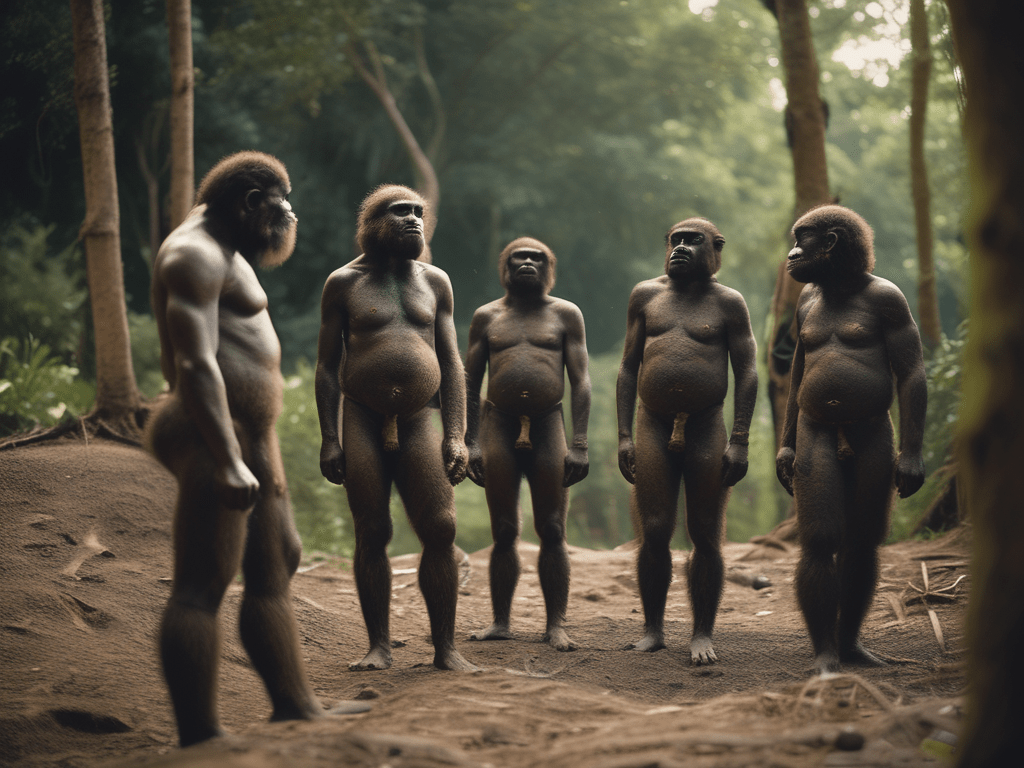
A whole herd of hominins. But how different are they really?

Fans of human evolution have more to contend with than the followers of any football team. For every one of the competitions they’re in ( Champions League, La Liga, Copa del Rey, whatever) We have six new skulls and four new DNA analyses every week. Or so it seems, and just about every one leads to a new species. Or so that seems too..

Proof of this comes from two new articles we have for you today. William Hunter of The Daily Mail (despite all their other deficiencies, a great Science Desk) waxes lyrical on recent discoveries in China [1] which suggests a fourth late-to modern population of hominins who lived alongside Homo sapiens, Neanderthals and Denisovans about 100 000 years ago. But how different were they-and how different were the other three? Our thoughts on that one below. Meanwhile Nature Briefings offers us this, An Ancient Encounter Frozen in Time

Some 1.5 million years ago, two ancient hominin species crossed paths on a lake shore in Kenya. Their footprints in the mud were frozen in time and lay undiscovered until 2021. Now, analysis of the impressions reveals that they belonged to Homo erectus, a forebear of modern humans, and the more distant relative Paranthropus boisei. The two individuals walked through the lake area within hours or days of each other — leaving the first direct record of different archaic hominin species coexisting in the same place.Nature | 5 min read
Reference: Science paper

No one would take away from the dedication and professional work of the team who made this discovery. It’s just that, with so many different hominin species hurrying about, and so few with mobile phones with which to record each other, can we really be sure who planted their feet in that long ago bed of sand?

Which leads us to recall the case of the Red Deer Cave people. Who, until recently, were a bit of a mystery in the human story. They looked very archaic and odd. But they dated very recently (maybe about 14000 years BCE) They were in the right place at the right time, Could they, might they, be real Denisovans, maybe, huh? To which recent DNA analysis gave the resounding answer: no, they were fully and completely 100% human. If they were alive today you’d have to give them a vote, a credit card and a driving licence. They couldn’t be worse than some other users of the road. All of which leads us to the following conclusions

1 Keep digging in China (look what they did for dinosaur research)

2 Let’s stand one step back from all claims and remember what happened to some of them in the past

3 What if the whole business of species labelling is missing the point, and there’s really only been one human line for three million years, with startling local changes in gene frequencies due to ecological pressures and tiny population sizes?

Only we can say that, because we don’t belong to any institution. Occasionally, that’s a freedom worth having.

[1]https://www.dailymail.co.uk/sciencetech/article-14152203/big-head-people-lost-species.html

[2]https://en.wikipedia.org/wiki/Red_Deer_Cave_people

#human evolution #paleoanthropology #dna #hominin #china #africa #paranthropus

A quick round up: Plastic Pollution just got worse, Computers just got faster…and who were the Denisovans?

a few stories that caught our eye

Plastic pollution just got worse Remember those old movies where hard-pressed producers stared combining other movies? Think Godzilla and King Kong or Jesse James and Frankenstein’s daughter. The results were nearly always worse than the original. Well, it’s the same in the ocean PFAs do quite a bit of damage, So do microplastics, all things considered. But when you consider the two together, as Tom Perkins does in this Guardian article, you are in for a whole lot more trouble.

https://www.theguardian.com/environment/2024/nov/25/pfas-microplastics-toxic

Quantum Computers just got faster Just when someone comes up with the-best-thing-ever-yet, someone else supersedes it. Remember CRISPR-Cas-9 and Base pair editing? Well now it looks as if AI may be going the same way. Read this:Giant Quantum Computers built from Light, in Nature Briefings

By the end of 2027, researchers at the private quantum-computing firm PsiQuantum aim to be using light in silicon chips to build a giant, programmable quantum computer. That ambitious goal is far ahead of major rivals such as Google and IBM. PsiQuantum researchers say they hope to also show that such a computer can run commercially useful programmes. The company has raised US$1 billion but has shown relatively little compared to its competitors, leaving some scientists worried it’s promising more than it can deliver.Nature | 13 min read

Who were the Denisovans anyway? One of the most intriguing puzzles in paleontology is the nature of the Denisovans, that mysterious third cousin of the modern human family. Since their discovery through the truly remarkable achievements of Professor Paabo and his teams, their details remain sketchy. A few scraps of bone, some DNA, and a few artefacts. So-hats off Linda Ongaro of The Conversation who pulls together what is known now, in November 2024. We are sure that she shares our wish that one day this excellent article will have been superseded.

https://theconversation.com/their-dna-survives-in-diverse-populations-across-the-world-but-who-were-the-denisovans-244441?utm_medium=email&utm_campaign=Latest%

#dna #pollution #microplastics #PFA #denisovan #quantum computer

Apologies for big mistake in that last blog!

Oh God, oh God, why do we keep doing this? In last week’s blog Plastic Pollution, killed by neo liberalism and how we can’t keep up, we forgot to include anything that covered that last bit! Tiredness, information overkill, whatever the reason we apologise utterly un-reservedly. This is what we were going to say:

There has been yet another discovery in Biochemistry. A noble and intriguing discovery no doubt. But one which has left us reeling, longing for the simplicity of earlier times. Before we start, read this: The study of RNA’s strangest form, from the admirable Nature Briefings

Circular RNAs (circRNAs) — molecules in which an unusual version of the standard RNA-splicing process folds the strand back on itself — are implicated in diseases from cancer to Alzheimer’s, but exactly what they do is still a mystery. This is in part because circRNAs are so rare, and distinguishing their impact from that of their linear cousins isn’t easy. Fortunately, researchers are quickly assembling a toolbox of materials and methods to recognize, quantify and uncover the functions of these puzzling loops. The database circAtlas is helping to clarify the landscape by requiring listed circRNAs to be identified by two tools, and biotech company Arraystar is designing microarrays to hunt for circRNA in human samples.Nature | 11 min read.

Admirable indeed. But we couldn’t help an odd nostalgia for an age when RNA came in two forms. When there were only three TV channels(in the UK) There was only beer to drink. Do you sometimes, just sometimes, feel the same?

There, Happy Now?

https://en.wikipedia.org/wiki/RNA

#rna #biochemistry #information #nostalgia

Reason or Unreason: which will give you a better life?

What happens when you apply reason to solve your problems? And what happens when you give way to emotions, like fear or anger? Two stories from Nature Briefings illustrate the consequences rather nicely, we think.

Reason: New developments in RNA therapies Older readers, who remember as far back as the Covid-19 pandemic of 2020, may recall how a little thing called an RNA vaccine began to make a big difference. Since when a lot of time has passed, and RNA medical technology has come on leaps and bounds. Don’t take our word for it, read this, RNA treatments nearing reality

As early as the mid-1990s, scientists suggested editing molecules of RNA as a treatment for certain diseases, but at the time, they lacked the tools to do so. Around thirty years later, those tools are at our disposal. Editing RNA instead of DNA has several advantages. It’s a process that cells perform naturally, it doesn’t risk permanently altering a person’s genes and it doesn’t introduce bacterial enzymes to human cells as CRISPR-Cas9 gene therapies do. The field of RNA editing may be in its infancy, but pharma companies are already testing its use in some types of eye disease and cancer.Science | 13 min read

For the record, it’s worth clicking on the link, because the article is very clear, with some truly awesome graphics

Unreason: Let’s chuck foreigners out of our Universities Now try this:

A surge in far-right parties entering governments across Europe is raising concerns for science. Policy experts warn that these parties typically show no interest in research and innovation, leaving scientists vulnerable to budget cuts. In the Netherlands, researchers are bracing for €1 billion (US$1.1 billion) in cuts to the university and research budget under a coalition government including the anti-Islam Party for Freedom. The coalition also wants to limit the intake of international students and implement rules that would require universities to apply for permission to teach courses in English, which could trigger an exodus of foreign academics who don’t want to, or can’t, teach in Dutch.Nature | 5 min read

Chuck out foreigners! Don’t let those evil English speakers corrupt the purity of our language! The really odd thing about this for us is the parallel with football . The most successful Universities are like the most successful clubs(compare the Imperial College with Manchester City, if you like) The trick is to create centres of excellence, drawing in the very best talent you can find, and taking a relaxed view of things like native language, dress sense and marital customs. There is often a strong overlap between certain types of football fan and support for right wing parties. Do they really want their favourite team to send home all the foreign players?

#football #university #learning #reason #unreason

Round Up: New Brains for old, Fungal resistance, do we need growth?

Could CRISPR Cas-9 Rebuild your brain? As the brain ages, cells and circuits die off. Hence the unprecedented rise of neurodegenerative diseases in our ageing populations. Hope that this could one day be treated comes from several sources. None more so than this new development in CRISPR Cas 9 gene editing, a much touted favourite on these pages, we admit. Here’s the inimitable Nature Briefings:

Reducing the activity of one particular gene in ageing mice rejuvenates brain stem cells, allowing them to proliferate and provide a supply of fresh neurons. Researchers used CRISPR-Cas9 genome editing to systematically disrupt 23,000 genes and test the effects on neural stem cells. Messing with one such gene, Slc2a4, reduced stem cells’ glucose intake and increased their power to proliferate in old animals, but didn’t affect the cells in young mice. The results provide crucial information for the design of cell therapies that might one day treat neurodegenerative conditions, says neuroscientist Saul Villeda.Nature | 5 min read
Reference: Nature paper

Fungal resistance: a growing problem. Regular readers of these illustrious pages could be forgiven for thinking we spend too much time on antibacterial resistance among bacteria, and not enough on fungi. We hope this very prescient article from The Conversation may go some way to correcting this imbalance

https://theconversation.com/antifungal-resistance-is-not-getting-nearly-as-much-attention-as-antibiotic-resistance-yet-the-risks-to-global-health-are-just-as-serious-239677?utm

Good Growth/Bad Growth The difference in utility between having a small family car, such as a Vauxhall Corsa, and no car at all, is very great indeed. The differences between having that same Corsa and a Rolls Royce are, we humbly submit, rather marginal. Unless you count the awe-inspiring status statement which the latter brings. Growth is good for raising people out of poverty. Yet for centuries it has been based on the production and consumption of status goods rather than useful ones. The complexities of this issue are so fiendish, that we have never known where to begin to understand it. But Larry Elliott of the Guardian makes a brave first try at untying the Gordian knot:

https://www.theguardian.com/business/2024/oct/20/degrowth-image-problem-solve-planet-climate

#veblen #growth #status #antimicrobial resistance #CRISPR Cas 9 #alzheimers #medicine #health

A Round-up of Hope: Cancer,antibiotics, green energy and life on the red planet

A few science and health stories which prove there are still few intelligent people out there working for the common good

Mouth Bacteria may protect against cancer To beat cancer we need to think laterally at times, and take bits of luck when they come from unexpected discoveries. According to Xantha Leatham of the Mail, Scientists at London’s prestigious St Thomas Hospital may have done just that. It looks like the organism Fusobacterium may protect against certain types of neck cancer. We love these serendipitous discoveries by lab scientists-real shades of Alexander Fleming!

https://www.dailymail.co.uk/health/article-13676291/Common-mouth-bacteria-melts-cancer-scientists-explain-patients-better-survival-odds.html

Antibiotics for sepsis We scraped this straight from Nature Briefings, that most worthy source of scientific information Definitely a sign of progress, we think:

A method to quickly identify the bacteria involved in life-threatening sepsis — and which antibiotics will kill them— could save patient lives. Key to saving precious time are magnetic nanoparticles with bacteria-capturing molecules. They fish out the usually tiny number of microbes from a blood sample, so testers don’t need to wait for the bacteria to grow and multiply. “I think that this technology can be in one box within three years, and… within four years, it can be in the clinic,” says bioengineer and study co-author Sunghoon Kwon.Nature Podcast | 35 min listen
Subscribe to the Nature Podcast on Apple PodcastsSpotify or YouTube Music, or use the RSS feed.

EU powers ahead on renewables Like other big power blocks such as India and China, the EU is rapidly achieving crossover on renewable energy generation, as this article by Ajit Naranjan for the Guardian makes clear. Smaller countries like the UK are doing well too. That’s the way the whole world is moving. And therein lies our real problem with Mr Donald Trump. “Drill, baby drill!” is a policy based on the psychology of nostalgia, not science. One day it will have to be reversed. At what cost?

https://www.theguardian.com/environment/article/2024/jul/30/renewables-overtake-fossil-fuels-to-provide-30-of-eu-electricity

Life on Mars? Well David Bowie’s eponymous song was a long time ago. But not so long as these billions-of-year-old spots discovered by the Perseverance rover at Mars’ Neretva Vallis formation. Were they alive? Scientists are being very cautious, as Ian Sample explains for the Guardian. But when Bowie released his ditty back in 1971, it was almost heresy to suggest life anywhere in our star system. Now Mars, Europa, and Enceladus head a list of real hopefuls. Wahttps://www.theguardian.com/science/article/2024/jul/26/nasa-rover-discovery-hints-at-ancient-microbial-life-on-marstch this space, as they say.

Well, we won’t be rounding up every week. But every so often we hope to bring you these little clutches of news which show our side is still out there-and keeping busy.

#cancer #fusobacterium #sepsis #antibiotics #reneables #global warming #donald trump #mars #astrobiology #david bowie

Six insoluble mysteries which may end us all

Occasionally we come across websites with lurid titles like “10 UNSOLVED MYSTERIES TO GIVE YOU THE HEEBIE JEEBIES!” And it’s all to do with odd bits of old stone or dodgy claims about flying crockery. Which made us think of a few everyday mysteries about Homo sapiens which are enough to give anyone the aforesaid Heebies, with a few jeebies thrown in for good measure. Because if we do not develop the cognitive capacity to solve them, we could well be heading for the biological equivalent of the junkyard,

(1) Where is the line between the individual and society? Countries that go too far towards prizing the State end up economically stagnant, as the society is captured by a small self-serving elite who grab all the resources. (Think USSR or Venezuela) On the other hand societies with no idea of the common good, where untaxed individuals run around doing what they like, not only end up without worthwhile armies or roads. They also get captured by an elite, this time billionaires, with almost identical outcome to the deluded Commies. No one has resolved this tension in any stable way.

(2) Emotion utterly dominates reason. All the technological and scientific advances that make life worth living (you really wanna give up soap, huh?) are formed in the reasoning part of the brain. Yet most people are driven by deep tides of emotion welling up from the subconscious. These rarely lead to anything profitable, and are the principal causes of most of the obsessions, addictions and generational hatreds which form such an immense drag on progress. Why is logic so weak and blind passion so strong?

(3) The drive to divide into hostile groups We often allude to this one; think football supporters and the Robbers Cave experiment. The American writer James Baldwin saw identity as a serious trap, denying us our own better nature. It may take all the AI in the world to solve this one

(4) The constant need for persecution of others, particularly the weak or disabled. Anyone still deluded about “the moral superiority of the oppressed” could learn from what happens to disabled neighbours in cheap housing estates, and how the noble proletarians make their lives utter hell. Why does everyone want justice, but only for themselves?

(5) The local and the trivial Why do so many people spend so much time learning about the lives of celebrities in tacky media outlets, when they would profit much more from reading magazines like The Economist or Science?

(6) An utter inability to change minds Most people are really rather deft and clever about what is around them; the hierarchies around their neighbours, families, jobs, and so on. But most of what they learned about bigger things like science or society was laid down decades ago. And the habits of mind formed in youth seem impossible to change, even when the survival need to do so becomes clear. This may ultimately be the most dangerous mystery of them all.

No species, however successful it seems at its peak, can long survive the competition from a better-adapted one. Our predecessor Homo erectus had evolved into top predator, and colonised three continents. Before it was utterly outclassed by the more intelligent Homo sapiens in its various subspecies. A newer, more intelligent form of human, perhaps incorporating elements from artificial intelligence and genetic engineering should be able to solve the above cognitive problems with ease. If that happens, there will be little enough space for the predecessor, and no motive to preserve us either.

#climate change #learning #cognition #human evolution #unsolved mysteries

Element 120? We stand in awe

One of the earliest memories of the school science lab was to see the Periodic Table for the first time. You know, that forbidding-looking chart of squares and funny, recondite little symbols like Mn and Cs, all arranged in a curious array of lines and columns. A long way from the everyday world of glam rock, flared trousers and playground rivalries about football teams and Ben Sherman shirts.

Those who looked slightly beyond the immediate would know that change was coming. NASA kept landing on the moon. And some very clever people were trying hard to push this same periodic table beyond its natural limit of 92 and make artificial elements with far more protons than could be found in nature. Fast forward fifty five years or so, and we suddenly realise how far they have got. Read this from Nature Briefings: Heaviest Element Yet within reach

Researchers have demonstrated a new way to make superheavy elements, opening the door to creating the heaviest element ever and adding another row to the periodic table. Scientists used a beam of titanium to make a known superheavy element, livermorium — element 116. If they’re able to make elements 119 and 120, as planned after an equipment upgrade, they will be the first documented from the eighth ‘period’. In this row, scientists expect to find atoms with so-far unseen electron configurations.Nature | 7 min read
Reference: arXiv preprint

It really is worth clicking on the link, gentle readers. If only to see a group of people performing at the best levels which our species can. Co-operating. Multinational. Thinking differently. Counter-intuitive-hell, what is a”titanium beam” anyway? That’s how progress comes. Just thinking again, in the old tired ways, the channels laid down as a child, will get us nowhere. Except, perhaps, backwards. The periodic table really can go beyond 92. Petrol really is bad for your health. Old allegiances will threaten your survival, if you’re not careful. Time to think as these scientists have done,

#nuclear physics #periodic table #research #chemistry