Photo by NEOSiAM 2021 on Pexels.comPhoto by Andrea Piacquadio on Pexels.comPhoto by u0404u0432u0433u0435u043du0456u0439 u0421u0438u043cu043eu043du0435u043du043au043e on Pexels.com
The story you are about to read is one of the most shocking domestic violence cases we have come across. So we will leave the pictures and the photos to Milo Pope of the Daily Mail.[1] Be warned: only click if you you are prepared to risk a sleepless night; because this will be traumatic.
Veteran readers will know that violence against women has always been one of our Idées fixées at this blog. You know why we think this, so we won’t run through our whole list of reasons once again. Let’s concentrate on something that we can all do, however small, to move things forward. And it seems to us that one such thing is the network of womens’ refuges and shelters which have grown up in several countries such as the UK. OK, ia shelter’s not as good as jailing the perpetrators to a life of penal servitude with hard labour. But at least its a place where the victim can feel safe and maybe begin to reconstruct the shattered fragments of body and mind.
In December last year we published an appeal on behalf of Refuge, a UK based charity which does much to try to ameliorate the sufferings of its victims. Overseas readers will find something similar within their own shores no doubt. But wherever you are, do you think you could send something, however small, to combat this enormous social evil?
Bacteriophages are back in the news, so we’ll start by linking to where where our researchers found it [1].,the ever excellent Ethan Ennals of the Daily Mail, whose work has often been showcased in our humble blog.
Ethan has been following the work of the admirable Professor Ran Nir Paz of the Hebrew University of Jerusalem, who has been injecting an effective new phage virus to combat resistant strains of Pseudomonas aeruginosa. Which is where we come in. We wanted to find a link to an original Ran Nir Paz paper, or at least a preprint or two, for readers with a little time on their hands. However, a search for the Professor produced a cornucopia of publications and work, all centred around bacteriophage technology and the investigation of resistant diseases. And the good Prof. has been at it for years, right back to the time when we were plaintively calling for research into bacteriophages in the very earliest iterations of our blog.
There’s a moral here. Even when a country has slid into the grip of shouty politicians and religious maniacs, there are still good, thoughtful, people quietly working in the background on things of real importance. We think Professor Ran Nir Paz is a prime example of what this blog is all about.
May the Unknown Force be with you Just when we think we have something like Quantum physics all nicely sorted, along comes some strange new observation and throws everything up in the air. Always expect the unexpected-maybe the UK Government might want to learn from that old adage. From the BBC
Weight Buster We are always a little suspicious of prescribing drugs for things like weight loss. Maybe people should eat less and exercise more. However, we would fail in our duty to you, gentle readers, if we did not report the latest on the remarkable semaglutide, from the latest pages of Nature Briefings
A weekly dose of the anti-obesity drug semaglutide, sold as Wegovy, seems to reduce the risk of heart attacks, strokes and death from cardiovascular disease by 20%. This suggests that there’s more than weight loss to semaglutide and other members of a new generation of hormone-mimicking drugs. “It’s hard to think of other [drugs], apart from statins, that have shown such a profound effect,” says cardiologist Martha Gulati. Researchers say the findings, if confirmed, could profoundly change preventive cardiology.Nature | 5 min read
Peace in Ukraine? Sometimes in private conversation, we have been heard to utter the opinion that the Ukraine war will end like Korea in 1953. There’s a deep moral hazard here, for it rewards the aggressor and leaves millions more under the jackboot of a totalitarian regime For a more nuanced discussion, therefore, we offer this from the Conversation
Crooked House The mysterious and wholly inexplicable fire which swept through the Crooked House Pub in Staffordshire recently has produced an avalanche of speculation and conjecture. Here Marina Hyde of The Guardian pulls together the latest deliberation, ensuring a balanced view.
Well, that’s it for this week. As our honeysuckle is blooming so well, we’ll leave you with this little gem Madreselva, from the great Carlos Gardel who did the definitive version of everything Tango
These days, the buzz words are ones like “polarised”, “deeply divided”, “tribalisms” and so on. Whether you look in the Atlantic, The Guardian, The Los Angeles Times or El Pais, everyone admits that we spend most of our time trying to find ways to hate each other. That’s why we at LSS have decided to launch a Quest, gentle readers, a veritable Quest,to try to find a few organisations that might actually draw people together. And today we are going to start with the Royal Society for the Protection of Birds (RSPB) and their international partners.[1]
In 1889 a remarkable woman called Emily Williamson realised that the insatiable demands of the fashion industry were already driving many bird species to extinction. There! That word, in 1889, readers, is that prescience or what? Well the society she founded grew so rapidly that it got a royal charter in 1904, and has never looked back. Because they realised that it’s all about birds and people, the two go together Long John Silver and his parrot. If ou are going to conserve a bird species then you have to conserve its habitat. Which in turn conserves a biome of incredible richness, a possible source of antibiotics, and a major area for carbon capture. And they’ve been doing it ever since, with the help of international partners like Birdlife International. So,overseas readers, there’s something for you after all.
And the bringing people together? Well, we’ve always wondered why Conservatives don’t do more about Conservation, as the etymological root of both is so screamingly obvious. Actually we find that most RSPB people we meet are conservative, at least with a small c, who know perfectly well that conserving the wildlands conserves us all. As for the others-liberals, social democrats, socialists and the like- you got your environmental wings a long time ago. But even the most earnest folk need to relax sometimes. What could be better than wandering the salt marshes or combing the woods, in aid of this society and its laudable goals?
We are not members of the RSPB, nor ever have been. All the more reason then to praise and advocate them as the first of our organisations which might start to bring us together again. Saving birds may possibly save people.
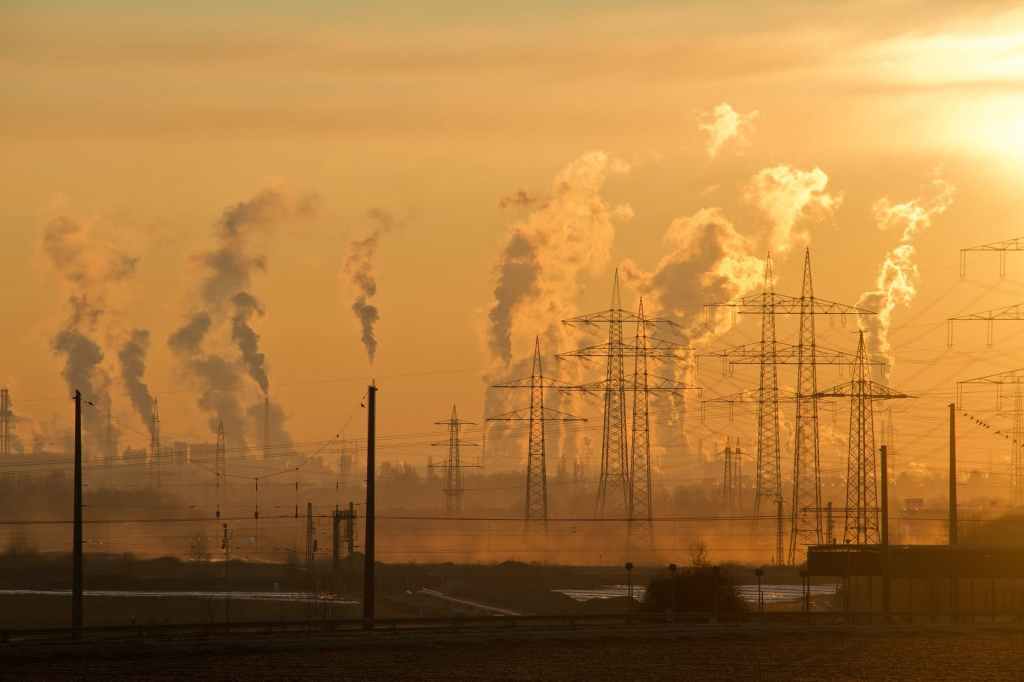
At LSS we’ve always been a bit worried about rising levels of antibiotic resistance among infectious microorganisms. We think it could kill rather a lot of people. We’re also worried about rising levels of air pollution, particularly the deadly PM2.5 particles from engines, coal and burning forests. We think that could kill rather a lot of people too.
So what de we do when someone brings the two together? Have a nervous breakdown? Take the entire staff of LSS over to the Porter and Sorter and East Croydon Station for a massive drink up? We need to decide quickly, because someone has done the unexpected. The improbable. They have found a strong link between PM2.5 particles and the rise of antibiotic resistance.
To show our utter impartiality, we’ve got two press links: one from the Guardian[1] and one from the Mail [2] Both say the same thing. An international team has used some really robust data (2000-2018; 118 countries) to show some sort of link between rising levels of pollutant particulates and rising levels of antibiotic resistance. They also have the admirable humility to admit that they don’t know how or why yet. But we strongly suspect they have opened the door on a vast new area of research in public health.
From which we draw a number of conclusions, none of them all that nice:
1 Things generally are worse than we thought
2 My freedom to drive my white van through your neighbourhood deeply conflicts with your freedom to live (Sun readers please note)
3 What else is further driving antibiotic resistance? Smoking? Ultra processed foods? Suddenly it’s wide open.
4 Should the UK Government sack Michael “we’ve had enough of experts” Gove and spend the money on research into this matter?
When we were young, the nether end of Charing Cross Road and the little courts and alleys off it always held a certain type of bookshop. Smells of joss-sticks, batik and tie dyed fittings, odd posters of karmic universes ,everywhere. And crowded shelves reflecting the more outre pre-occupations of the human mind-Bigfoot, UFOs, shamans, tantric meditations……and a vast array of books on all kinds of alternative therapies, herbs, lifestyles, cookery and diet plans. Chaotic, disorganised and essentially harmless-a far cry from our real worries of the time, such as Communism and the rise of the National Front. A hippy and a stormtrooper seemed to be a very long way apart. Or are they?
According to James Ball of the Guardian, there’s now a rather well established production line taking new age therapy fans and turning them into fascists [1].Jjames documents a few well known cases, like the hooligans who stormed the US Congress in 2020. But he also delves into the psychological roots of the conspiracists, and tries to answer the question we’re always posing here, Why do they do it? Why do so many people give up the critical faculties of their minds, which after all, is our chief evolutionary adaptation? According to James
Academic researchers of conspiracy theories have speculated about whether their rise in the 20th century is related to the decline of religion. In a strange way, the idea that a malign cabal is running the world – while far more worrying than a benevolent God – is less scary than the idea that no one is in charge and everything is chaos. People who have a reason to mistrust the mainstream pillars of society – government, doctors, the media, teachers – are more likely to turn to conspiracy theories for explanations as to why the world is like it is.
As we speculated yesterday, most people crave certainty. Given the utter chaos of the real world, from the quantum level up, that’s understandable if wrong. For a long time, waht might be termed the rational community, that tiny segment of the population which educates, manages and teaches- were able to reassure them both with our discoveries in science and the cornucopia of bright shiny toys to play with which were such an easy by product of that science. Things like the Iraq war and the crash of 2007-2008 broke much of their trust (who can blame them? to quote WH Auden
All the conventions conspire To make this fort assume The furniture of home; Lest we should see where we are, Lost in a haunted wood, Children afraid of the night Who have never been happy or good. (from Poets.org)
The lights of science and reason are now flickering dangerously low, just as they were in September 1939 Will they soon vanish forever?
Alongside our other preoccupations, such as cocktails and the shortage of antibiotics, LSS has often covered the touchy issue of identity politics. (LSS 22 10 20 was a typical example, but it wasn’t the only one. We have always felt that identity trumps just about every other concern in the way people vote and think, even at the cost of their own economic well being.
So it’s nice to see our concerns shared and expressed by finer minds. And among such minds, few are finer than that of Simon Kuper, who writes for the Financial Times on an eclectic range of subjects from Association Football to politics. In our link below [1] he returns to the painful subject of Israel and compares its deep identity crisis with that of the United States (astute readers will recall our own essay into this territory (LSS 29 7 23) But Simon does it much better, and really names names, and the terrible dangers that they represent.
The ethno-nationalist thing has always bedevilled progressives from Enlightenment Philosophers all the way out Left to Communists, because it’s not really supposed to exist. We remember Medieval History books in which Swabians hated Saxons, and vice versa. The fact that they are now all Germans meant little at the time. Identities are indeed entirely arbitrary and subjective. But they are intensely real to those who hold them at any one time. And as Simon points out, the lower you go down the social scale, the more fervently these passions are nurtured.
If all nationalities were abolished tomorrow, would people stop hating each other? We think not; probably, you would find the red blood group O people at war the the As, Bs and ABs or the left handers with the right handers or something. Identity and xenophobia are as intrinsic to the human condition as bipedality and colour vision. To acknowledge its existence, and find strategies to cope, offers the possibility of engineering sustainable systems. Because if they fail this time, we are all lost forever.
You might imagine that the thoughts of an evangelic preacher like John Bunyan (1628-1688)[1] are as far as possible from a rationalist science based blog like this one. Yet the man and his works, including The Pilgrim’s Progress represent the psychological journey of anyone who has to confront the insufficiencies of this world, and knows that to remake it has become an urgent work of survival.
Born in Bedford to a family of tinkers and small traders, Bunyan’s life encompassed that most radical period of the English speaking world at a time when it was the epicentre of human progress and self discovery. The central challenge of Protestantism-the lone confrontation of the Soul with God-meant that anyone from any social class was thereby liberated to play a role in History, but thereby carried the almost insupportable burden to remake the world around them. Bunyan’s early life (Puritan preacher, service in the Parliamentary Army) was with the grain of his times. But the return of the King in the 1660s put radicalism out of fashion, and he spent 12 long years in jail for his beliefs- a sort of Alexy Navalny of his epoch.
Anyone of any faith, or none, who wants to reform the world will have experienced the slow journey from Angry Young Communist through Socialist, Social Democrat, Liberal and Whig, with each each progressive dilution of virtue seen as a Wordly Wise compromise with reality. The Pilgrims Progress is an analysis of the psychological challenges faced by those who refuse to compromise and stay out there, to confront the Devil and his works, in the name of us all.
For a long time, the journey to Moderation seemed the safer bet, for it has given us science, reason and the comfortable amenities, pleasures even, of modern life. Yet the Devil has not gone away. These days his identity is pretty clear, in the shape of the fossil fuel industry and its various outriders and lackeys in the media and politics. The danger they represent is now very real, and the challenge of how to respond is daunting.
There is no point in returning to Evangelical Christianity, most of whose acolytes now seem to lie on the the side of the very rich and white supremacy, at least in the United States. Yet the actions of protestors like Greenpeace who recently(and peacefully) daubed the house of the Prime Minister in oil coloured sheeting seem to have captured something of the spirit of Bunyan and his kind. If our side is to prevail(and our species thereby to survive) maybe we need just a little more of that angry spirit that knows evil when it sees it. And refuses to bend.
Climate Change is about Science, not Politics We start with a heartfelt plea to try to pull all of us-Conservatives, Centrists, Social Democrats, Leftists, Greens, Train Spotters, whatever-together in the face of what is fast becoming a real planetary emergency. Here’s Adam Ramsay, trying to be as emollient as he can for the Byline Times
Emotional Intelligence Ignaz Semmelweiss has always been one of he unsung heroes of public health. Yet he demonstrates the clear perils of being absolutely right, but not cutting through. Why? Because he seemed to specialise in rubbing people up the wrong way. Sometime emollience can be worth more than logic! Here’s Nature Briefings-why hand washing took a long time to catch on
Ignaz Semmelweis radically reduced rates of death in childbirth in the middle of the nineteenth century — by introducing hand washing. Yet, at the time, his ideas about infectious agents were rejected by the wider community. A play about Semmelweis now showing in London focuses on why his ideas failed to catch on. Although Dr Semmelweis acknowledges that the medical establishment was at fault for its resistance to change, it seems to place most of the blame on Semmelweis’s character, says reviewer and writer Georgina Ferry. Amid his struggle to save women’s lives, he offended his critics and fell out with even devoted supporters.Nature | 6 min read
Red Admirals Flutter by We’ve always had a soft spot for butterflies whose eye catching flights are synonymous with lazy summer days and things like Pimms, cricket and the smell of new mown hay. But their numbers are fluctuating wildly. The culprit? You guessedit- runaaway clime change. Not bad for the Mail!
Superconductivity-what is the current situation? There’s no doubt that achieving room temperature superconductivity would enormously cut our energy use. That’s why the whole field is so hotly contested, as this piece from the Conversation makes clear
well, there’s a raft of ideas for you. Before we go: Eurythmics were one those acts whose first two singles we loved, but never quite seemed to achieve the same special, almost neuralgic level again. Not for us anyway. Maybe you disagree. So to remind you of how good they were at the beginning, here’s Sweet Dreams.
No, it’s not as good a title as Jesse James meets Frankenstein’s Daughter.* But it does pull together two of a our favourite tropes on this little blogsite: human evolution and antibiotic resistance. We won’t spoil the piece from Nature Briefings which you are about to enjoy, gentle readers. But it’s a marvellous example of using AI to squeeze available resources to the limit, in this case the genomes of our close relatives. “Would you Adam and Eve it?” as they used to say in Old Cockney Rhyming slang.
AI Brings Back Neanderthal Protein Snippets
Artificial intelligence (AI) has helped scientists to resurrect Neanderthal peptides — protein subunits that could be an untapped resource of new antibiotics. An algorithm was trained to recognize sites on human proteins where they are cut into peptides. When the algorithm and other tools were applied to publicly available protein sequences of Neanderthals and Denisovans, it found several peptides that halted the growth of certain bacteria in mice.Nature | 5 min read Reference: Cell Host & Microbe paper