Rawls and the New Whigs-5: Who was John Rawls?

Could the ideas and writing of John Rawls (1921-2002) provide a way ahead for progressive thinking?

Rawls was that rare thing- a Harvard Professor and a soldier. His service as the latter in the brutal Pacific theatre of the Second World War privileged him with insights largely unavailable if he had been solely the former. It was in the pitiless environment of the trenches that he first wondered “is there a rational way to construct an environment where things like this can be avoided?” It was the way that he followed up on this speculation that has made him such a crucial figure in western thought ever since.

There is no room here to do more than signpost you to sites which discuss his ideas. [1] [2] These links will afford you some oversight of the man and his works. You may delve deeper if you wish. Yet one central theme stands out. His conviction that any stable society must be based on Justice; curiously, a trope which St Augustine put at the front and centre of his ideas on society. Rawls’ insight was to construct a rational theory of Justice based on something he called the Original Position. Essentially it is this: how would you design a society if you did not know what point you would occupy in its social scale? Most people would want safeguards for the underprivileged, and it is from this that a natural justice flows. [3]

Unlike Marx and the Religionists, Rawls does not claim to provide all of the answers. But he does suggest a way of thinking about what a stable, more peaceful society might look like. And we certainly need more of both of those; very badly.

[1]https://www.theguardian.com/commentisfree/2023/apr/14/labour-policies-philosophy-john-rawls-neoliberalism

[2]https://en.wikipedia.org/wiki/John_Rawls

[3] John Rawls A Theory of Justice Harvard University Press 1971

#john rawls #liberals #progressives #justice #st augustine #original position #liberty #equality
Another thank you to all readers

Once again, a thank you to all readers and contributors this month. We’ve had quite a few new ones in both categories this last few weeks or so, and it’s becoming quite a little community of shared ideas.

We’re still here mainly to promote the cause of more medical research in general, and antibiotics in particular. But people like things varied, or so they tell us. And anyway, aren’t the things that caused the lack of antibiotics in the first place all related? Most of our problems come from short sightedness, greed and lack of education. For example; what might have happened if all the money spent on the Ukraine conflict had been ploughed into cancer research. Dare we hope that is more than a platitude?

So once again, welcome to everyone new, and thanks to our old readers on things like Facebook and and linked in, and we’ll try to stay with you a while longer!

THE EDITOR

THE EDITORIAL BOARD

and a note of thanks to all those funny little people down in research, accounts, HR, transport, production, security, catering and the rest. Sorry once again there is no bonus for anyone except the Board this year. Laws of economics!

Antibiotic Resistance: squeezing the last drops from the teabag

If we are going to survive the crisis of microbial antibiotic resistance, we need to do two things. To develop new methods of destroying resistant microorganisms, such as bacteria. And to make whatever use we can of our few remaining antibiotics. The new UK Antimicrobial Register is an attempt at the second. And a very brave one, in our opinion. Once again the inimitable Ethan Ennals covers the story for the Mail.[1] However, we thought our readers might like a link to the UKAR site for themselves. [2]

Like every country, the UK is facing a crisis. There are now 150 cases of antibiotic resistance presenting every day in out hospitals. Effective drugs are becoming ever rarer, Doctors need to know who is prescribing what, to whom, and how often. The new register does exactly that. It should help us to eke out the effectiveness of existing antibiotics for a few more years. Or maybe just months?

Which still begs the first of the questions which we posed above. Without in anyway disparaging the highly educated people who have developed this ingenious register, we are still waiting the mass production of reliable new antibiotics. We will continue to monitor progress. But sometimes it feels more like hope than expectation.

[1]https://www.dailymail.co.uk/health/article-12029123/British-scientists-plan-sophisticated-computer-program-combat-antibiotic-resistance.html

[2] https://bsac-ukar.org/

#UKAR #antibiotic resistance #health #microbes #bacteria

Weekly Round Up: Peaceful Protest, Black holes, Hay fever, heatwaves-and The Eagles

some significant stories from the past week

Give Peace a Chance: George Monbiot is one of the most decent and thoughtful people writing today. So when he warns that illegal and destructive action may be counter productive, we utterly agree. However pressing seems the cause.

https://www.theguardian.com/commentisfree/2023/apr/28/saboteurs-how-to-blow-up-a-pipeline-climate-crisis-direct-action

Back to Black The thing the enemies of science don’t understand is: it’s never final, it’s always refining its observations. A recent delightful proof of this comes from Nature Briefings, which chronicles our improving understanding of the Black Hole in the M87* First Black Hole Image grows clearer

The first image of a black hole blew us away in 2019, showing a ‘ring of fire’ of radio-wavelength emissions swirling around an abyss called M87*. Now, a machine-learning algorithm maximizes the resolution of the image to show a substantially thinner ring. And fresh data reveal that a stupendously bright jet of superheated matter, which was observed long before the black hole was imaged, actually emerges from the ring. Astronomers know that jets are ejected from the region surrounding black holes, but it’s still not fully understood how that happens. “For the first time, we see how the jet connects to the ring,” says radio astronomer and jet-study co-author Thomas Krichbaum.Nature | 5 min read
Reference: The Astrophysical Journal Letters paper & Nature paper

Hay Fever-what the hell’s got into you? Ever since we started this blog, more and more evidence has been accumulating which suggests links between various maladies and disturbances to the gut and mouth biome. Latest in the series? Hay fever, believe it or not. Here’s The Converstion:

https://theconversation.com/hay-fever-could-be-linked-to-our-gut-and-nose-bacteria-and-probiotics-may-help-symptoms-203855?utm_m

We’re having a heatwave So went the old Irving Berlin song. Trouble is, we don’t really want one, not in April anyway. And not if you’re Spanish, as El Pais makes clear

https://elpais.com/clima-y-medio-ambiente/2023-04-27/la-espana-peninsular-rompe-su-techo-de-calor-en-abril-388-grados-en-cordoba.htm

Doolin Dalton Nothing then or now could beat The Eagles when they hit top form ( they didn’t invariably) One of theirs which stands comparison with anyone is this cowboy-hard scrabble ballad that seems a million miles from the Hockneyised villas and pools of wealthy LA

#george monbiot #climate change #astronomy #Black holes #record temperatures

Friday Night Guest Cocktails: the Mudslide

Today it is not without considerable pride that we introduce a cocktail from sophisticated London woman-about-town  Eileen Smith Despite the ever pressing cares of a career  in business administration, Eileen has taken time out to share her wisdom on how to relax at the end of a busy long week. It’s name? The MUDSLIDE. We haven’t covered too many chocolate-y ones, so we hope this gives a fresh take for you too, gentle readers.

Ingredients:

50g dark chocolate

Ice

60ml coffee liqueur

60ml baileys

100ml double cream

Where did you drink it:?Production village, Cricklewood

Why was the cocktail good? Creamy, rich and has a kick

What was going on around you?

Enjoying a cocktail with friends, lots of other parties enjoying them too – good music on what looked like a film set

Who else likes this?

Anyone with good taste!

Final thoughts:

If you want a quick alternative that is simpler try the mudchute – 50ml baileys to 50ml vodka over ice, it  too has a kick, is not too sweet and  is easier to make.

LSS Says: thanks Eileen, definitely one to check out. We hope that you and all our readers have a good weekend. In fact, to quote Winston Spencer Leonard Churchill: “Let us go forward together!”

#friday night cocktails #mudslide #chocolate #baileys

Britain’s Filthy Waters: here are some solutions

Today our guest columnist, “Silver Surfer” explains why the UK Government is up to its neck in it

Every two and a half minutes a water company somewhere in the UK unleashes another torrent of sewage into our seas and rivers. Unsurprisingly, this has provoked a stink of outrage from the public who after years of obfuscation and delay by the government, have realised we have the filthiest water system in Europe.

In the House of Commons this week, Therese Coffey, playing politics for all she was worth,  insisted that the problem only came to public attention because of government water monitoring. This is clearly nonsense. Organisations like Surfers Against Sewage [1] have been monitoring water quality, producing scientific reports and campaigning for a clean up for more than 20 years.

Coffey told the Commons that water company targets for curbing spills from storm overflows will be enshrined in law, and they have until 2050 to do it. 

So 27 more years of regular spillage ? This simply isn’t good enough.[2]

Campaigner Fergal Sharkey argues that since privatisation in 1989, water company shareholders have benefitted to the tune of £72billion in dividends while the industry is £60billion in debt. It’s what corporations do, shareholders first, everyone else second. They can’t help themselves.

Here’s a simpler solution. Rather than wait until 2050:

1. Ensure that every water company is required to report every sewage spillage every day on their public websites.

2. Remove the monitoring of water quality in our seas and rivers from the companies to County Council and Unitary authorities who should publish independent monthly reports.

3. Legislate to ensure that each water company publishes a fully costed plan to end sewage spillage by 2035 at the very latest. 

It’s time a government who brought in water privatisation, stopped defending the indefensible and got serious about clearing up the mess it created.

[1]https://www.sas.org.uk/

[2] https://theriverstrust.org/key-issues/sewage-in-rivers

#united kingdom #sewage #water pollution #rivers trust #surfers against sewage # water privatisation #water companies

Rawls and the New Whigs 4-what is a Whig?

Our series on what has gone so wrong, and how it might be fixed

Mention the word “Whig” and it evokes a gentleman in eighteenth-century costume earnestly ingesting generous quantities of roast beef and claret, while pulling a profitable deal in business or politics. Nothing at all to do with a world of Artificial Intelligence, State surveillance cameras and genetic engineering. Or is there something else lurking below this easy caricature-something which might yet save us from our worst instincts?

A glance at Whig history [1] [2] reveals a confusing picture of factions, policies, personalities and plans that changed and metamorphosised over time, both in Britain and the United States of America. And it is true that by 1860 the party had disappeared into oblivion, felled by the new forces of class and identity politics which were surging in both countries. What exactly were they-and was it the same at the beginning as at the end?

As often happens, one of their best descriptors was their inverterate enemy, Samuel Johnson, who observed, rather petulantly that Whigs were “vile opponents” of the Tories, who “adhered to the Ancient Constitution of the State and the Supremacy of the Church of England” What did it mean then and what does that mean now? To adhere to anyhting ancient and hallowed is an act of Faith, not Reason. Seen in that light, the position of the Whigs became clear. They represented the voice of reason and of thought. From that the rest flows-trade, learning, justice. The Whigs were always Parliament men, suspicious of Kings and arbitrary authority. Thus the greatest achievement of Whig thought was the American Revolution and Constitution, based on Enlighteunment principles and not old customs. Deep down, is a awillingness to embrace the new, where that can rationally be shown to benefit.

Seen in this light, a shadow Whig Party has always existed. It sits in the centre of the political discourse. Its beacons are prosperity, enquiry and inclusion; for these are the true bases of an efficient economy. It therefore passes, or has passed by many names: Democrats, New Labour, Sozialdemokratische Partei Deutschland, and many others. Its instinct is always pragmatic and for discussion over decree. And it sees justice as the only stable basis of society ( St Augustine knew about this in the fifth century) It would of course be ridiculous to revive such a hoary name in election propaganda. But its time could come again. And we believe that one man who shows how it might be done was John Rawls, who will form the basis of the next blog in this series.

[1]https://en.wikipedia.org/wiki/Whigs_(British_political_party)

[2] https://en.wikipedia.org/wiki/Whig_Party_(United_States)

[3] https://www.theguardian.com/commentisfree/2023/apr/14/labour-policies-philosophy-john-rawls-neoliberalism

Is your town ready for a major heatwave?

When we were young, we never liked statistics much. The trouble was that they gave you probabilities. And that is no reassurance at all to those of a nervous disposition. “Look at the probability curve” clever people would tell us ” the chances of anything bad happening are so low, it’ll probably never happen to you!” “But you can’t say it won’t happen,” we fretted silently, “therefore we are bound to get cancer/eaten by a Kodiak Bear/hit by an asteroid strike/ lose our bet on the Derby/be filmed parking illegally/ get a spider bite/ eat a scotch egg with a bone in it/be taken in Adultery/ lose our keys/get called up for military service/encounter a flasher”…………….. and so on. After all, someone does-so why not us?

For a long time, the traditionalists were right- things like extreme weather events were pretty rare. But what if, rather suddenly, the statistics fail, and extreme events become more likely. It’s problem studied by Nicholas Leach and his colleagues at the University of Oxford, and they write it up in accessible form here for The Conversation [1] There’s some lovely new concepts to play with, we know you like that. Read it to find out more about things like extreme value theory, outliers and statistical implausibility. But the essential truth is that the steady accumulation of greenhouse gases has now become so great that soi-disant unlikely events are now becoming all too probable. With immense implications for social stability.

And here’s a message from our younger selves, aimed particularly a those unfortunate enough to live in Central America, Eastern Russia, the Beijing region of China and Central Europe. Statistically speaking, it could be you next.

[1]https://theconversation.com/statistically-impossible-heat-extremes-are-here-we-identified-the-regions-most-at-risk-204480?utm_medium=email&utm_campaign=Late

[2] https://royalsociety.org/topics-policy/projects/climate-change-evidence-causes/basics-of-climate-change/

#climate change #global warming #statistics #china #russia #central america #central europe #planning

Rawls and the New Whigs 3: The Failures of the Left

The Left too, saw itself as heirs of the Enlightenment. Pertinently, as the final and most perfect exemplar of the various movements which claimed to foment the (inevitable) progress towards a Better Society. Through the centuries they have gone by different names-Whigs, Liberals, Social Democrats, Socialists, Communists, Anarchists even. Each successive iteration saw itself, generally, as little to the Left, and considerably more correct, than the one that had gone before. The development of Marxism was a final catalyst. Here was a Philosophy derived from the best thinkers of the day that not only described the final perfect society, but proclaimed its historical inevitability. All that was necessary from now on was righteous action: and this perfection would be complete.

There is no room here to describe the utter failure of Marxist states and the bloody, corrupt tyrannies they erected. But their proven deconstruction left progressives with an aching problem- What do we do now? It was a question deliciously examined by Nick Cohen [1] in What’s Left? (ironically written on the eve of the great crash of 2007). True, there was a ragbag of causes and injustices left to sort out. No one can deny the partial advances progressives have made in ameliorating the condition of groups like sexual and ethnic minorities, nor in advancing some action on ecological problems.  But there is no organising principle, and without that, there could be no coherent programme for power. Progressives may shake their fists at any number of injustices. But others will decide on serious action.

Yet the terror of Communism held one advantage; it kept the ruling classes honest. Without it, the sicknesses of the present system have become acute. No sane person could call Capitalism benign. Curiously, the intellectual wind has been blowing the Left’s way for some years; the truths of Piketty {2] and Wilkinson and Pickett [3] are plain enough.  The need and opportunity are both there. But progressives, entangled in the endlessly competing claims of a myriad of oppressed minorities, cannot organise their own majority.    

The work of John Rawls does not offer the certainties of Marxism, or the Revelations of Religion. He was a modest man. He has many students, but no followers nor disciples. And that is healthy. In the next posts we shall look at the man and his work, and how he offers ways to begin to think about a way ahead.

[1] Nick Cohen What’s Left Fourth Estate 2007

[2] Tomas Piketty Capital in the 21st Century Harvard University Press 2017

[3] R Wilkinson K Pickett The sprit Level Penguin 2010

#capitalism #socialism #marxism #narchism #christianity #islaam #economics #sociology #ideology

Antibiotic Resistance takes a sinister new turn

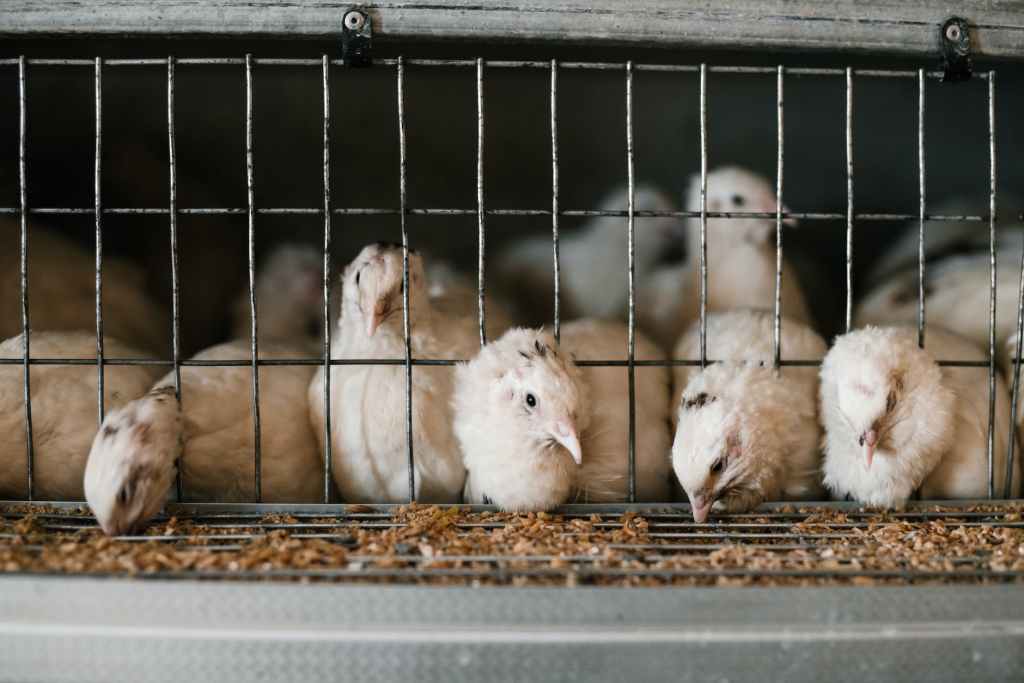
One of the greatest follies of human endeavour since 1945 has been the relentless drive to turn out ever greater quantities of food at ever lower prices. Starting perhaps from a well-meaning intention to “feed the world” it has resulted in little more than an epidemic of obesity, poor nutrition and associated diseases such as diabetes and infirmities of the cardiovascular system.

And one of the most egregious follies recursed within this greater folly has been the reckless application of antibiotics to livestock in all forms in the neurotic chase for ever greater production targets and profits. The consequences were clear to anyone with even a passing understanding of the laws of Natural Selection. Hit bacteria with a heavy raid of antibiotics, and the resistant survivors will breed and multiply until there is nothing you can do about them. It’s where we are today as long-term readers of this blog will recall. And we thought it problem enough!

Now Hannah Devlin of the Guardian reports that the above is only half the problem. Because according to a study from Oxford University, the uncontrolled use of antibiotics may be undermining our natural immune system, regardless of what artificial aids which we use to supplement it. Take one example; the antimicrobial colistin, beloved of farmers in the 1980s is rahter similar to a class of compounds called AMP s which are part of our bodies’ natural immune response. The uncontrolled use of colistin of course led to strains of E Coli which were resistant to it, and by implication to our own AMP. Colistin use has been restricted; but the damage that has been done is permanent. We’ll leave the last word to Professor Maclean, quoted in Hannah’s superb article

This is potentially much more dangerous than resistance to antibiotics,” said Prof Craig MacLean, who led the research at the University of Oxford. “It highlights the danger of indiscriminate use of antimicrobials in agriculture. We’ve accidentally ended up compromising our own immune system to get fatter chickens.”

The consequences of short sighted thinking indeed. Yet that leads to one tiny consolation. The next time some know it all offers you a solution to anything, anything at all, ask yourself this: what are the long term consequences of what he is saying?”

https://www.theguardian.com/society/2023/apr/25/use-of-antibiotics-in-farming-endangering-human-immune-system

#antibiotic resistance #agriculture #food production #Oxford University #health #obesity