What the readers saw

Our weekly look at what our readers are telling us- and what we saw that never had time to make it into the blog this week.

Have you ever met his Royal Highness Prince Andrew, Duke of York? According to Nigel Cawthorne, writing for the Daily Mail, you may not want to. In this warts-and-all biography, we are given a picture of a man who, apart from brave war service, seems to have little going for him. Is it the whole picture, we wonder?

https://www.dailymail.co.uk/news/article-8324925/The-making-Prince-Andrew.html

From Hertfordshire, Mr Peter Seymour wonders what is happening in Africa, which many predicted would suffer a devastating outbreak. He tells us

There hasn’t been much reporting of C19 (or anything for that matter) in Africa. Some reported that it has not yet become the pandemic that it had in Europe and US. The reason given for this being the lower average age in African countries being lower leading to a lower R. This article forecasts what is likely to happen longer term. 

https://www.msn.com/en-gb/news/world/virus-could-infect-more-than-200-mn-in-africa-who-modelling/ar-BB1473EB?ocid=msedgntp

Nature, that beacon of rational and enlightened thought discusses the problems science companies face in How to Make enough Coronavirus drugs

Dozens of coronavirus drugs are in development (for example, there were encouraging drips of data from a large clinical trial of the antiviral remdesivir last month). Next, we face the challenge of ramping up complex manufacturing processes to produce sufficient quantities of successful therapies to treat everyone in need. Drug manufacturers face supply-chain weaknesses and sourcing issues. And each treatment will face different challenges when scaling up production. (Nature | 7 min read)

Most commentators agree that both the Internet and the world wide web are becoming filled with hatred and misinformation. It’s a pleasure to see that the majority of our facebook pals are full of good cheer, hope, and selfless altruism. We have seen them rescue cygnets and restore them to their families. We watch the tireless way they support charities, especially animal charities such as Cats Protection , but also ones that support dogs, wildlife, and donkeys. Unfortunately, we can’t go back too many days. So here are a few honourable mentions of the last five hours

Mr Tony Kirkness, who has discovered a wonderful library of old BBC comedies, including Round the Horn and Hancock’s Half Hour. (Not Matt!)

Lesley Brackley for helping with so many lost pets. We have friends going through this currently, and it can be heartbreaking.

Douglas Nakaya and Maddy Mead, two friends from very different parts or our life, both like Greenpeace and their campaigns against one use plastic

And finally …our old friends Jill Lee from Fulham, and Steve Smith from Reading. Who during their lockdown perambulations have provided unforgettable images of our old River Thames and its nooks and reaches. We wish them and all our readers on Facebook, twitter and this blog a happy wweekend.

Sweet Thames, run softly till I end my song

Sweet Thames, run softly, for I speak not loud or long

TS Elliot

#nature #greenpeace #catsprotection #nature #princeandrew

Could Cannabis pay our Covid debts?

There is currently a drug in widespread use in the UK that does immense harm to its users. It causes obesity; it has been linked to a wide variety of cancers, including those of the liver, oesophagus and bowel. It has been shown to be linked in heavy users to brain damage including the frontal lobes, and depression. It is linked to at least 1.2 million violent incidents a year, and sensible people avoid places where its widespread use is encouraged, especially at night. That drug is alcohol, which in 2014 was worth £46 billion to the UK economy, contributed 2.5% of GDP, and gave a much needed tax yield of £10.7 billion.**

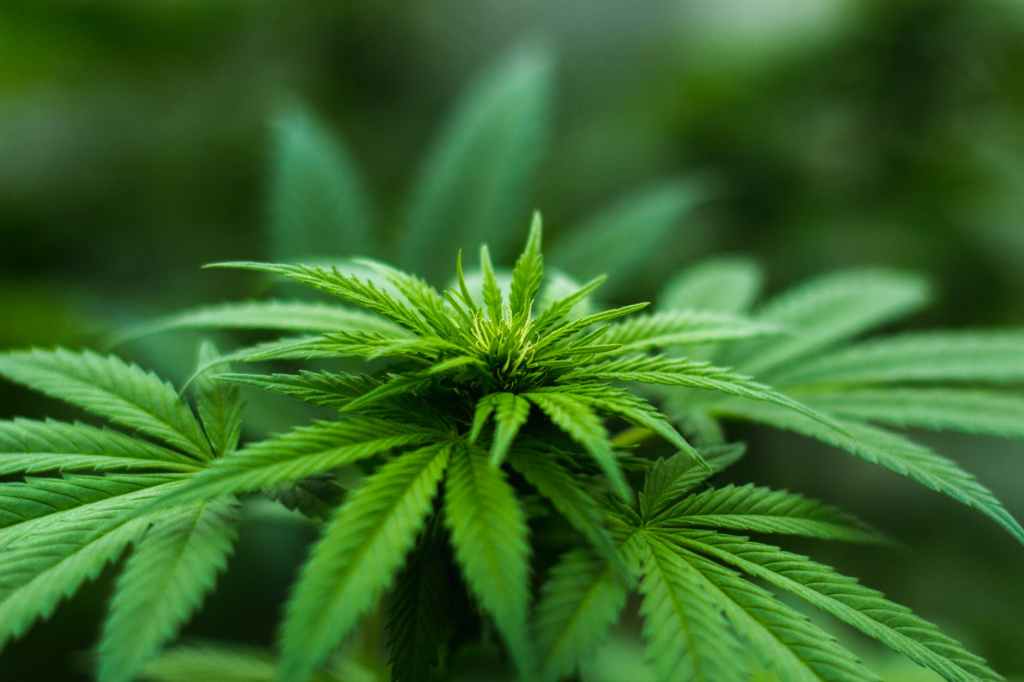
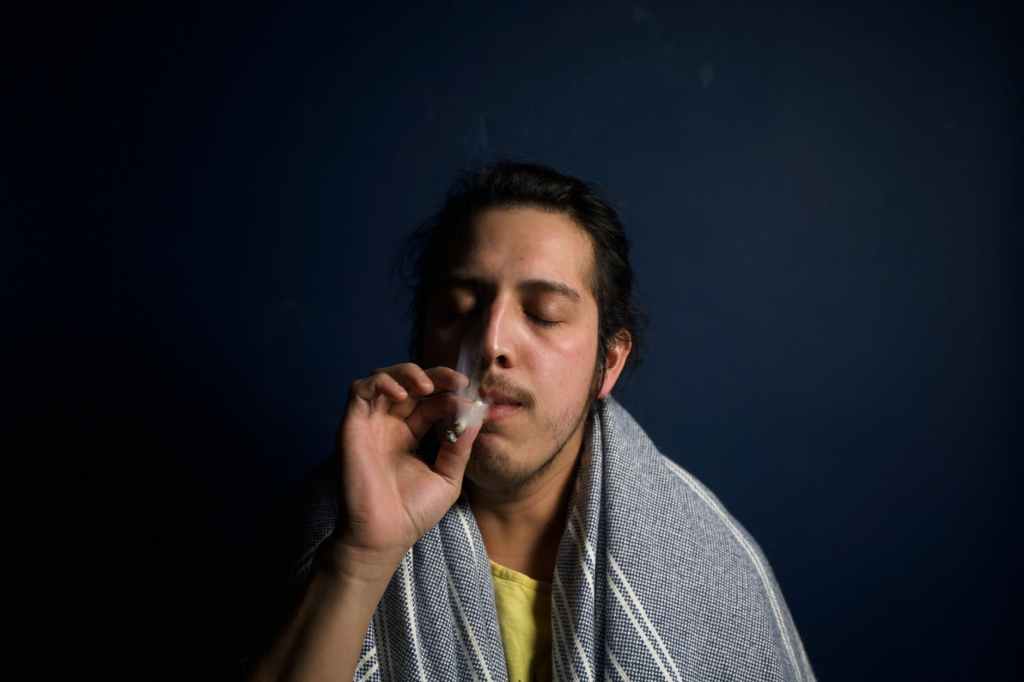
Britain now faces an immense economic problem as a result of the Covid-19 epidemic. So why not legalise and tax the common drug marijuana in order to pay for it? It is an idea that at first seems to belong to the wilder shores of Guardian– reading Liberals and Lefties, many of whom inhabit the London Borough of Islington. Yet now we find the idea seriously proposed by the impeccably right-wing Adam Smith Institute. Of their Conservative credentials, there can be no doubt- low taxes, privatise the NHS, abolish planning restrictions and bureaucracy, end all capital gains and corporation tax, and so on. They were a big part in the ideological push around the rise of Mrs Margaret Thatcher , and contributed to many of the policy studies in her administrations. Not the stuff of socialist revolutionaries. If they believe anything, they see the free individual as central to a productive economy, and are prepared to accept a little inequality as a necessary price.

And so to their Big Idea. We at LSS are open to all ideas from left, right, centre, provided they are backed by reasonable facts, and are couched in civilised language. And this report, by Daniel Pryor and Liz McCulloch, is also quire clearly written, another factor which runs it up the LSS flagpole.

Dan and Liz’s central assumption is that the Free Market will ultimately produce the optimal social outcome, if left to itself by Governments. So Prohibition laws, and meddling by state officials are counterproductive-they only produce black markets, poor product quality, and rampant criminality.

Advertising and branding of cannabis, as for alcohol, would solve all of the above problems, especially if supply was through reputable outlets-perhaps high street pharmacists like Boots, or on mobile apps. They estimate that a multibillion economy could be created in the UK, perhaps reducing our aching budget deficit by £1.25 billion per year. In the US State of Colorado alone, a legal cannabis industry created 18000 jobs, a market of $2.39 billion and tax revenues close to $1 billion. Thus, they suggest a tax scale for the UK, with stronger varieties such as “skunk”, being taxed more heavily.

For those worried about the social consequences, they point out that statistics on road traffic accidents and that cannabis is a gateway drug, are at best mixed. They even suggest that cannabis legalisation could help reduce the opioid epidemic that is currently sweeping through poorer communities in the USA.

Now we at LSS are well aware of the health risks of cannabis. Without going into too much detail, there is at least a 10% risk of addiction. There seem to be mental problems for even mild users, such as sleeping difficulties, irritability and nervous disorders. We have seen good evidence that heavy users are at risk of psychotic disorders, including schizophrenia*. And if you smoke it, you are instantly exposed to the same risks as nicotine addicts with their habit-lung cancer being the obvious one. In fact, we would counsel anyone not to use it.

But Cannabis is “out there”, as they say. So is alcohol. So are high risk sports. So is crossing the road. The authors make a reasonable case, and we present it to you as such, to make your own mind up.

http://www.ias.org.uk *

https://www.drinkaware.co.uk/ *

https://www.adamsmith.org/

-facts/https://www.adamsmith.org/research/the-green-light-how-legalising-and-regulating-cannabis-will-reduce-crime-protect-children-and-improve-safety

https://www.nhs.uk/live-well/healthy-body/cannabis-the-facts/ *

#taxcannabis #legalisecannabis #adamsmithinstitute #freemarkets

Grow the economy, then pay the debt

At the end of the Second World War in 1945, Britain faced a mountain of debt so large that it was to all intents and purposes, bankrupt. There was massive damage to the merchant marine fleet, some industrial plant was damaged by bombing ( though not as much as Germany or Japan) and much of the remaining industrial stock had been so run down by wartime overuse that it was effectively scrap.

A Government based on principles of good housekeeping would have tried to concentrate all resources on paying the debt, in the hope that a strong pound would underpin the economy, and please financial markets. Like a certain Mr Osborne in 2010, in fact.

Instead the Labour Government of Attlee embarked on a course of massive borrowing , demand stimulus and economic growth, which to be fair was kept up by the Conservative governments that followed. The overall effect was the longest period of sustained growth and rising prosperity in British History. The size of the debt mountain fell relative to that of the economy, and paying it became unnoticed in a wave of new cars, televisions, foreign holidays and new homes.

The economic history of the post 2010 years has been somewhat different.

In today’s Guardian, Larry Elliott describes how the present Government has, tentatively embarked, tentatively, on such a course. We post the link below.

Britain may be taken as a reasonably representative of many advanced countries trying to cope with this unexpected, and very grave, emergency. Which leads us to one worrying thought. The years after 1945 were marked by unprecedented and successful international co-operation. It was after all the era of Bretton Woods, The IMF, the World Bank and growing co-ordination among the advanced economies of Europe. Now most of those trends are going the other way, at varying speeds. Is it time then for a new international economic body to pool the activities of as many nations as possible?

More worryingly, what is the alternative?

https://www.theguardian.com/business/2020/may/14/how-will-britain-dig-itself-out-of-a-300bn-coronavirus-hole

#larryelliott #borrowing #rishisunak #britain

Friday Night Is cocktail night-questions and answers

Today w open our portals to you , the readers, in the hope we can allay your anxieties about this important aspect of all our lives. Your anonymity is guaranteed!

What is the correct dress for a Gentleman to wear to cocktail night? Mr AF, Bridport, Dorset Dear Mr AF: the rules on this have always been very prescriptive, but fair. In winter, a dark blue or black jacket, striped shirt, creased chinos and smart black shoes. Tie; anything regimental. old school, or your golf club. The building, not the thing you hit the ball with! In summer you may sport a light jacket, summer being defined as any date from Easter Sunday until the final Bank Holiday in August. You may of course wear a Panama. But don’t wear it indoors, or you will look like a numpty.

Does my favourite brew, Old Rogered Dog, count as a cocktail? After all, it’s got alcohol in it, and a mix of organic chemicals of dubious provenance, just like a cocktail? Dave Geezer, Watford

No

Can the enormous volume of sound systems, for example in a strip club, cause the ice in my cocktail to melt prematurely, thereby marring the pleasure of my evening? Mr NS, Sutton Coldfield

Dear Mr NS, we would hate to have the pleasure of your evening marred in any way! After consultation with leading physicists. we can report: sound is energy, and could in theory increase the rate of melting of your ice cubes. Nevertheless, other factors, such as ambient temperature, will prove more significant, so concentrate on mitigating that.

Why should a Martini be stirred, and not shaken? JB, Vauxhall

Because that’s what it says in the book, you div! Honestly, what do they teach you people at MI6 these days?

Were cocktails invented in Pirate Days? Mr SS, Reading

Dear Mr SS-The general consensus is, yes, they were. As the pirates sailed around the Caribbean, they found an abundance of fruit, and both white and dark rum. Hence most experts agree that most early cocktails were rum- based such as early versions of Between the Sheets or Pink Rum. Ice could be easily obtained by sending those who worked below decks up into the mountains-the exercise did them good. Then, as now, cocktails were for the better sort-the ship’s officers. The men were quite happy with grog and beer, and pulling weevils from each others’ beards.

What music shall I play with my cocktails? DT, Washington, USA

Anything jazzy and piano-ey. Oscar Petersen is a good jumping off point; try to imagine the atmosphere of a Manhattan hotel, full of secret agents, detectives and femmes fatales, where eyes meet over cold glasses and the promise of indiscretion hangs ever in the air. A bit hard to drum up if you live in Sutton Coldfield like Mr NS, but, as we head off to our own wardrobe to dress, we like to think you will try.

#cocktails #pirates #oscarpetersen

An Inspiring Teacher-Guest Column

Today our guest columnist is Dr Stephen Day, a Forensic Scientist and University Lecturer

Inspiring teacher: When thinking of how they ended up in the career they have, many people will cite a favourite teacher that inspired them to study science/take up acting/persevere with the violin.  I would like to do the same, but in truth there is no academic teacher in particular that I would identify that led me down the scientific route, the chemistry path or into investigative science.  These things all happened through decisions made during normal life and were just natural progression.  Instead I would say the most influential teacher I had was Mrs Higgins who was in charge of what would now be called the reception class. With her I learnt that learning itself is fun and interacting with other people, albeit small ones, inspires new ideas and teaches co-operation and compromise.  I would argue that these formative years are probably the most important in anyone’s life and that habits and attitudes manifested throughout the later years are learnt here. I worry that today’s children, with working mothers, too-busy fathers, deprived households, target-driven education, lack of continuity in childcare and stressful environments may be developing attitudes that will have repercussions down the line that we as a society will regret later. Lockdown has shown some at least that family is more important than extra money and may change attitudes to parenthood. Maybe we should as a nation gravitate towards the Swedish model, where childcare for 1-6 year old is considered vital to the nations well-being.  https://www.naeyc.org/       I particularly like the idea of gravitating towards the Swedish Model.   

#teacher #education #swedishmodel #drSPDay

An Inspiring Teacher-Guest Column

Today our Guest Columnist is Dr Stephen Day, a Forensic Scientist and University Lecturer

Inspiring teacher: When thinking of how they ended up in the career they have, many people will cite a favourite teacher that inspired them to study science/take up acting/persevere with the violin.  I would like to do the same, but in truth there is no academic teacher in particular that I would identify that led me down the scientific route, the chemistry path or into investigative science.  These things all happened through decisions made during normal life and were just natural progression.  Instead I would say the most influential teacher I had was Mrs Higgins who was in charge of what would now be called the reception class. With her I learnt that learning itself is fun and interacting with other people, albeit small ones, inspires new ideas and teaches co-operation and compromise.  I would argue that these formative years are probably the most important in anyone’s life and that habits and attitudes manifested throughout the later years are learnt here. I worry that today’s children, with working mothers, too-busy fathers, deprived households, target-driven education, lack of continuity in childcare and stressful environments may be developing attitudes that will have repercussions down the line that we as a society will regret later. Lockdown has shown some at least that family is more important than extra money and may change attitudes to parenthood. Maybe we should as a nation gravitate towards the Swedish model, where childcare for 1-6 year old is considered vital to the nations well-being.  https://www.naeyc.org/       I particularly like the idea of gravitating towards the Swedish Model.   

#swedishmodel #teacher #education #DrSPDay

A Note to our Overseas Readers-in England, it’s all about class

English readers can look away, if you want; you know all this. Foreign readers may be interested to know a little bit more about where this comes from. In England we have three social classes, and all social discourse is based upon the way they monitor each other furiously for signs of dress, speech and where they go to eat. The First is small, moneyed, and privately educated, usually very well, in things like humanities and law. The Second is larger, mainly state educated, often in things like social sciences or IT. They bitterly resent the First class, because they think they, the Seconds, could be running things better. The evidence for this is extremely dubious, as the First Class knows well, and constantly reminds the Second, through the columns of organs such as The Spectator, The Daily Telegraph, and the Daily Mail. The Second seeks comfort for its beliefs in the opinion pages of The Guardian, and even something called the New Statesman, which is very hard to get at on line.

Both hate and despise the Third class, calling them names which are too rude to repeat here. It is fair to say that this third class still carries out most of the essential functions of society. We thank them, but few will be reading here today. Their beliefs (as opposed to opinions) are largely derived from publications such as The Sun and Heat, many foreign owned, and tending on the side of sensation as opposed to analysis.

Everything that happens in England, even the coronavirus, is seen through the lenses of this conflict between Firsts and Seconds. We hope that foreign readers will enjoy our little comparison of how the two sides’ propagandists portray their views of the crisis. Both are well argued, well reasoned and based on fact. We are talking professional journalists here.

For the Firsts, Dr John Lee of the Spectator gives us ten reasons to end the lockdown. (We are grateful to Mr John Read of Henley on Thames for drawing our attention to this article) Dr Lee rightly points out that the health and social costs of this disease are colossal, nowhere more so than in the economic catastrophe it has inflicted on us in this country. And he rightly adduces that that lockdown cannot be sustained for ever. Or even very long at all. Even Keynesians admit that you have to balance the books. Or how about taking the Venezuelan Road to Socialism? Perhaps more controversially, he asseverates that the lockdown is based on flawed models, the disease is little worse than certain other viral infections, and will ameliorate anyway by the laws of natural selection.

Enter Aditya Chakrabortty in the Guardian. His piece too is well reasoned, factual, and from the heart. He points out that the richer you are, the more likely you are to escape the disease, just like in the Spanish Flu of 1918. That the chronic UK diseases of poor health, poor public funding, and social and informational inequality have exacerbated our plight. That any return to work will only return us to that unhappy status quo antes. And above all there can be no normality to return to as the economy is in one big humunguous great mess, which will take us decades to clear. If ever.

And so both sides will clobber away at each other like football supporters on a night out. Both using the weapons of fact, reason, and clear and persuasive writing. Both have been doing so since at least the 1840s. Both with that ineluctable righteousness which seems to be derived from the Protestant Reformation, so long ago. Who says you can’t build a nation on Heritage?

The most successful Prime Ministers have been those who have successfully united these warring tribes in a common cause. Or at least enough of them to give a stable majority. Thatcher and Blair come to mind, but there were brief, fleeting moments under Macmillan and Wilson. The Firsts have the money, the Seconds the brains: together they could still make Britain, or at least England, a first-class nation.

https://www.theguardian.com/commentisfree/2020/may/13/state-collapse-social-order-coronavirus-britain

https://www.spectator.co.uk/article/ten-reasons-to-end-the-lockdown-now

https://www.theguardian.com/commentisfree/2020/may/13/state-collapse-social-order-coronavirus-britain

#guardian #adityachakrabortty #spectator #drjohnlee #coronavirus #lockdon #covid19

We can’t say thank you enough, but we can say it too often

We at LSS are deeply honoured that so many people from so many places around the world have taken the trouble to read, and in some cases, our little blog. To note this is far from saying “look how well we’re doing!” We at LSS regard complacency, self-congratulation and smugness as among the deepest faults of the human psyche. Think of the unfortunate younger Bush administration and its disastrous folly in Iraq, if you want an example.

However there does come a point where numbers have to be acknowledged: and we can no longer thank personally each new follower, however much we value their time. And we do. And so we propose that once a month, we shall thank all readers, including both long-standing and recent, for their time and trouble, and to wish them well in all their enterprises.

#Learning, science and society #keirhartley #catalonia #unitedstates #russia

After Coronavirus, what’s the next horrible thing to befall Humanity? Part four-and this could be the BIG one!

Most people who think about astronomy and related themes would agree that the American humourist Woody Allen posed the essential question: “Is anybody out there? And do they have ray guns?” The physicist Enrico Fermi (1901-1954) raised this essential paradox: the abundance of planets and star systems in the universe raises a high probability of the existence of intelligent life. And there is no evidence of this intelligent life whatsoever, none. So where have all the Alien Civilisations gone?

One very plausible scenario is that they have self- destructed, probably with the aid of weapons of mass destruction, such as nuclear bombs or biological agents. The rapid evolution of technology equips evolving societies with these weapons, which their biological impulses of aggression then impel them to use.

There can be little doubt that tribal aggression is deeply wired into our own species. In her masterly book Political Tribes, Amy Chua provides a tour de force summary of the effect of tribalism and the wars of destruction which it has unleashed throughout history. Perhaps her most telling quote is

The great Enlightenment principles of modernity, liberalism, secularism, rationality and equality do not provide the kind of tribal identity that most humans crave.

The Enlightenment may be OK for the elite one per cent of the population. Of what happened when the American part of that elite tried to apply them in Iraq, she is scathing:

(Bush and his advisors believed) that ethnic, tribal and sectarian divisions would dissipate in the face of democracy and market generated wealth…..

Holiday in Iraq, anyone? It’s the mark of a good author that she gathers evidence of more and more cases , explaining the true causes of American failures in Vietnam and Afghanistan. The latter is a key exemplar of how Marxist solutions break down in the face of tribalism, as students of the late Soviet Union will confirm. The recent consequences of this tribalism in western societies is well discussed by Professor Kaufman in Whiteshift.

For those who want good evidence of the psychological and biological roots of tribalism, the literature is vast. To get you started, we shall point to the famous Robbers Cave experiments , which we link below. The essential point here is that researchers were shocked at how easy it was to initiate inter- tribal aggression, and how hard to dissipate it subsequently.

And where might it now express itself at an International Level? Current flashpoints are not hard to find: tensions between Russia and NATO in the Baltic States; Israel and Iran; India and Pakistan- all are areas where hostile tribes confront each other with weapons of unimaginable power. Perhaps the most worrying of all is Asia, where a declining United States seeks to maintain its interests and alliances in the face of a rising China. Anyone who has attended a football match, or the pubs around one, knows how quickly reckless uncontrolled violence can be unleashed by the most trivial slights. Both football supporters and national security councils are made up of humans.

So far, we are still here; and the aliens are not. They must have evolved from the same sorts aggressive biological ancestors that we did. Are we programmed to repeat their fate?

Amy Chua Political Tribes Bloomsbury

Eric Kaufman Whiteshift Penguin

https://www.thoughtco.com/robbers-cave-experiment-4774987

#tribalism #politicaltribes #whiteshift #nuclearwar

A big thank you

To Mr Lluís Bussé of Catalonia, who is now following us on LSS.

We have particularly happy memories of his homeland, Catalonia. We recommend Tarragona, Barcelona and the beautiful countryside to all visitors-when the lockdown ends! The railway journey from Barcelona to Calafell , as the train winds in and out of tunnels along sandy coves and blue seas, is as exciting as any in Europe.

I have owned two shirts pertaining to FC Barcelona in my time, in order to help with my Iberian and Hispanic studies. Unfortunately one was a fake. Which proves: don’t buy a football shirt from a market, especially when you come out of a bar.

As the man said at the time “ay,senor inglese emborrachada, quieres comprar una camisa del barca, muy barrato? Gracias! I think it may have been a quote from Lope de Vega.

Here are Lluis’ details

http://en.gravatar.com/lluisbusse

Gravatar allows you to manage all of your online identities in one place on the web.

#catalonia #lluisbusse #fcbarcelona