Why doesn’t Britain have a Sovereign Wealth Fund?

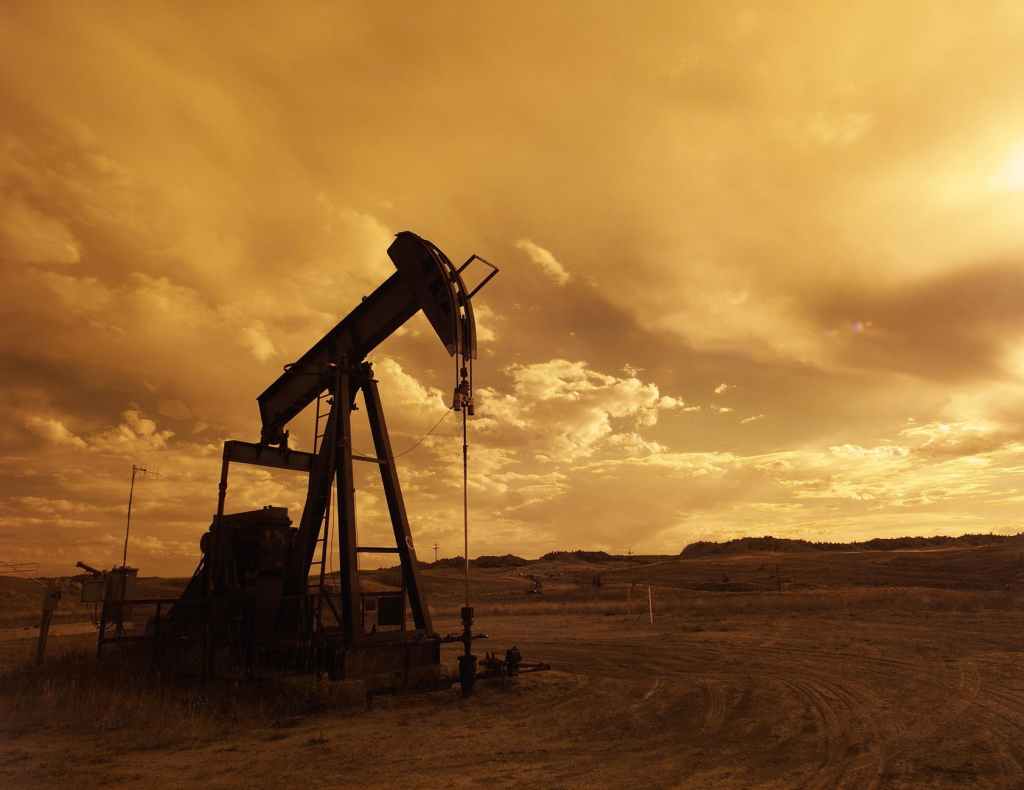
It’s a question asked by Ross Clark in the Spectator,* and in view of the money that Britain now needs to borrow, it’s an urgent one. As we don’t have one in the UK, British readers are entitled to a brief resume. Basically a Sovereign Wealth Fund is like a Private Equity fund, except it is owned by the Government on behalf of all its citizens. The largest in the world is Norway’s. Using their share of North Sea Oil profits, their fund has grown to $1186.7 billion. That’s about £160,000 per citizen. If you were Norwegian, last year you would have earned £26, 400 without getting out of bed. Writing in the Spectator* Ross Clark makes a convincing summary of the arguments for and against-and comes down on the side of for.

We at LSS see a potential here for another blame game, something we prefer to avoid. So, in place of the dubious pleasures of hindsight, let’s go back to how Mrs Thatcher and her ministers saw things at the time. It was an age when the overwhelming urge was to roll back the state. The aim was to cut government borrowing and to privatise wherever possible. To lower taxes and get people to work harder by removing state featherbedding. This ideology was especially prevalent in the so called Anglo-Saxon economies, but you could find variants in many countries. Like every other ideology, the extent to which it has worked can be debated. But it is intellectually defensible. So how could Mrs Thatcher defend all these beliefs if she then set up a powerful state- owned agency like Norway’s? She was never intellectually dishonest.

So, the oil’s gone, the milk’s spilt, let’s all stop crying and ask-where can we get the money to set one up now? Well, here’s one answer. Britain still owns many overseas territories. Some are a bit remote and it seems unlikely that other powers would want to acquire them, beautiful though they are. But some, like The Falklands (Malvinas to our world-wide readers) and Gibraltar are very sought after indeed. And when someone wants something, they will pay a price. Now we are not calling for their immediate selling-off. But we do think that an audit of their value to the British Economy might be fruitful. Especially when compared to the potential value of a Sovereign Wealth Fund, paid for by their sale.

If all of this sounds fanciful, do not forget how the hard-headed British Governments of the eighteenth century traded the sovereignty of islands like Corfu and Menorca. There were no sacred cows for them, just profits and losses. In the last century, the Government of Winston Churchill felt free to trade bases and land across the world in return for US Destroyers. In many ways, our crisis now is not so different from that of 1940. It is common to talk of the legacy left by that generation. Is this a way for us to leave one of equal magnitude?

https://www.theguardian.com/commentisfree/2014/jan/13/north-sea-oil-money-uk-norwegians-fund

we were worried about the link to Ross’ article, so here it is again tps://life.spectator.co.uk/articles/britain-needs-a-sovereign-wealth-fund-like-norways/

#sovereignwealthfund #margaretthatcher #winstonchurchill #falklands #malvinas #norway #uk #rossclark #spectator

Something we didn’t know about global warming-and we think you should too

Between 1845 and 1849 the population of Ireland fell by 25%. One million people died. One million emigrated.* The political effects of this Great Hunger (Gorta Mor) are still with us today. The cause? A plant pathogen called Phythoptera infestans.

If all this seems a very long time ago, think again. Plant pathogens including oomycetes are lurking in the soil in many countries, particularly hot ones. They can cause tremendous damage to all sorts of crops. And according to Raul Limon of El Pais,* global warming is causing them to stir-and move north.

Once again, we will not get in the way of Raul’s excellent article, which we post below. But for the benefit of monoglot anglophones, Raul makes these telling points:

A new atlas maps the distribution of all the most dangerous organisms

There are excellent predictive graphics, showing how the threat will vary according to different levels of global warming

The list of threatening organisms is frighteningly high, with threats to crops like bananas, wheat, apples and rice.

https://elpais.com/ciencia/2020-06-05/los-patogenos-que-colonizaran-el-planeta.html

for a general discussion on pathogens try

http://www.davidmoore.org.uk/21st_Century_Guidebook_to_Fungi_PLATINUM/Ch14_01.htm

https://en.wikipedia.org/wiki/Great_Famine_%28Ireland%29

#globalwarming #massmigration #irishfamine #plantpathogen

What the readers saw

Our weekly round up of what we and our readers saw as they roamed the vast trackless wastes of the media, the internet, the world wide web-or just chatted about on the good old fashioned telephone.

We have to start with an honest to goodness plug for Nature Briefings. We often state here ,and on Facebook, that Nature is one of the finest publications on the planet. Their raison d’etre has always been to publish the very finest scientific papers by the best authors. The problem for us humble joes is that they are difficult technical language. Nowadays the internet is full of specious conspiracies, fake news and ranting self righteousness. Nature Briefings tries to put the case for reason, science and evidence in a way that lets us easily access the best learning in the world. Here are just two examples as a taster-but we urge you to sign up for your self.

For better or worse, Climate Change is going to produce massive migrations. Here they post a new book which tries to address an issue which is going to make a lot of people hot under the collar in years to come!

The shifting climate means that we must allow — and assist — people, plants and animals who are forced to relocate to survive, argues a book by journalist Sonia Shah. Shah draws on affecting anecdotes and reflects on animal movements — both natural and human-caused — to explore our attitudes in advance of the vast human migration that will be caused by climate change. “The altered communities that result won’t just be different, they’ll often be better adapted to thrive in our warming world,” writes reviewer Emma Marris. Nature | 5 min read

And where on earth did this wretched virus come from? The mystery at the heart of the pandemic looks at bats and possible vectors. Nice stuff to balance the rantings of the unlettered.

The SARS-CoV-2 virus almost certainly originated in bats, then probably passed to an intermediate animal, which spread it to people. But it’s been very difficult to identify that animal — or to completely rule out the unsubstantiated idea that the virus escaped from a laboratory. Pinpointing the source of SARS-CoV-2 would require extensive sampling of coronaviruses in wildlife and livestock, and could take years. Nature | 9 min read

Earlier in the week (LSS 4 6 2020) we briefly covered the new flexible solar panels from Singapore. If you want to know more, Mr Peter Seymour of Hertfordshire recommends that you read this article from popular mechanics, which boasts some excellent pictures alongside a nice clear text.

https://www.popularmechanics.com/science/energy/a32780573/shadow-electricity-generator-solar-power/

As the lockdown eases, Governments and citizens everywhere are agonising about the chances of a second wave. David Heyman, Professor of Infectious Diseases and Epidemiology at the London School of Hygieine and Tropical Medicine, no less, discusses the chances in the Telegraph article, again tipped for us by Mr Seymour

https://www.msn.com/en-gb/news/indepth/could-coronavirus-be-killed-off-without-a-vaccine-history-suggests-there-s-a-chance/ar-BB155NpR?ocid=msedgntp

Is a new crayfish about to devastate our inland waterways? Keen waterman Mr Gary Herbert of Buckinghamshire draws our attention to the Signal Crayfish which appears to be chewing its way through our native fauna, and the walls of the riverbanks themselves. Apparently they were introduced in about 1970 to fish farms, but then escaped. Another Fine Mess, as they say.

https://www.waterways.org.uk/news_campaigns/campaigns/invasive_species/crayfish/signal_crayfish

Well we think that’s it for the week. Thanks to all who pointed out the defects in our Tequila Sunrise recipe, from Fulham to Florida. Have a good weekend and stay safe out there

#naturebriefings #originscoronavirus #climatechange #migration #signalcrayfish

Friday Night cocktails: The tequila sunrise

We at LSS have always been strong admirers of the popular musical singing group The Eagles. It has hard for non-musicians to write of music without sounding cliched and puerile. Yet for us songs like Doolin Dalton and Take it Easy, and Desperado capture something of the life lived in the vast plains and mountains of the western states. The Last Resort and Hotel California sing of the opulent , and sometimes corrupt atmosphere of the long coastal belt running from San Diego up to San Francisco. Nowhere was this more true than in the golden sixties and seventies, when California was the technological and cultural hope of the world. That was the world Frey and Henley knew.

The lush relaxed sounds of Tequila Sunrise at first suggest nothing more than a pleasant sundowner, looking out between the palm trees as the sun sinks into the Pacific. Perhaps you have a nice job in banking, financing the burgeoning new tech and entertainment industries. Maybe you build swimming pools, and now you’re sitting by your own one. Or perhaps you are connected with the arts, and your world is more like that described in the paintings of David Hockney, or the film Boogie Nights, with its intriguing insights into the film industry. Life’s pretty good, huh?

Well, maybe. We can’t reproduce the lyrics here for copyright reasons. But listen carefully and you suddenly find a couple whose relationship is breaking down in a tangle of incomprehension, adultery, and booze. Why do things go wrong, in the middle of all this plenty? It’s a good question. Frey and Henley asked many more. They proved that to be a poet you don’t need battlefields and mouldy old abbeys. The stuff to write about is right there in the malls, freeways and condos of what still in our opinion, is one of the most interesting places to visit in the world. So, my fine readers, let’s mix this one to the memory of Glen Frey (1948-2016). Thanks.

What you will need: Cocktail shaker. 6 medium ice cubes. 1.5 measures tequila. 3 measures fresh orange juice-and we don’t mean out of a container, we mean real oranges. Half measure grenadine.

How to do it: Add the ice to your cocktail shaker, then pour the juice, grenadine and tequila. Shake vigorously for 20 seconds. Pour into a cocktail glass and decorate with a slice from one of the oranges.

#theeagles #california #boogienights #davidhockney

Three quick but important stories three: as one door closes, two more open

Decline and Fall of the fossil fuel industry-really? That’s what Jillian Ambrose of The Guardian* reports today. The dual effects of Coronavirus and the new efficiency of alternative energy sources may have produced a tipping point in which this once mighty industry enters into its sunset years. Revenues are expected to fall from $39 trillion to $14 trillion, with a 2% decline in use of fossil fuels every year. Read the link below. To which we might add two things. Firstly, remember how the denialists used to tell us how green energy would never work? Secondly -investors beware-as Jillian says, “fossils” are an enormous component of market valuations, and portfolios. Clearly, a transition is needed. And there are indeed alternative energy markets which shrewd managers would do well to scrutinise. Let’s look at two possible examples below.

If we could make profits from cleaning up pollution, then everyone would be doing it. One hopeful company is Climeworks of Switzerland, which has set up a plant to capture CO2 from the air, and sell it on to people like growers of cucumbers and tomatoes. Definitely two of our favourite vegetables at LSS. We post links below,** and also a summary article by Ali Morris of Dezeen

As for solar power the Mail has a great story by Jonathan Chadwick*. Professor Tan Swee Ching of the National University of Singapore is working on a highly promising new solar panel which can work at low light intensities, maybe even in the shadows. It may even be possible to make a flexible one to wear as a bracelet, so you can charge your phone as you go along. Again, take a look at the link. We thank Mrs Christine Hartley for this last source

https://www.dailymail.co.uk/sciencetech/article-8345395/A-new-reverse-solar-panel-generates-electricity-shadows.html

https://www.climeworks.com/

https://www.theguardian.com/business/2020/jun/04/coronavirus-crisis-collapse-fossil-fuels-demand

#solarenergy #carboncapture #climatechange #fossilfuels

Three Quick but important Stories Two: Why people believe-and hate

We at LSS love it when someone discovers something big, something exciting, that seems to be real illumination of the darkness we’re in. Over the years, we have seen it in physics, paleontology, history, theology, and even sports. Now we think that Skylar Baker-Jordan of the Independent*, may be on to something. We thank Mr Peter Seymour of Hertfordshire for drawing our attention to this piece.

Let’s start with a little warning: it’s written from a point of view which could be described as “leftish”, “Liberal” or “Progressive” There’s nothing wrong with that; all articles will have their biases, which is why intelligent people always read from journals on both sides. So it takes the expected view of Mr Trump’s supporters which can be summarised in this quote about the regions in which he grew up.

Beneath the stereotype of “Midwest nice” and “southern hospitality,” a bloviating jingoism, a blustery bullying, a latent authoritarianism has always lurked.

Strong stuff indeed, and doubtless the other side could trade some equally wounding insults via Fox News or The Sun. Such name calling has slowly escalated into the terrible partisan divisions which have so wounded the United States and the current disturbances which may yet bring it to its knees.

Progressives like to say “the Right has guns-we have reason. We have facts.” So why do all these so-called reasons and facts keep seem to bounce off the intellectual carapaces of their opponents? Right- wing people are no more stupid than Left-wing ones. Look at a group of Trump supporters or Brexiteers and you will find successful engineers, businessmen or craftsmen. (they do tend to be male). It is here that Baker-Jordan hits the intellectual paydirt.

In 2016, the political scientist Matthew MacWilliams found that high levels of authoritarianism frequently correlate with support for Donald Trump. This does not mean these folks consciously crave dictatorship, but rather that they express classic authoritarian traits — a desire for “law and order” and social hierarchies, for example — triggered by their anxiety over social change. This is what makes engaging with my Trump-voting family so tricky. Most of them are incredibly defensive and utterly convinced of the righteousness of their cause because anything that challenges the status quo is seen as an innately bad thing.

Here lies the hostility to media, denial and aggression, the support for leaders like Trump and Bolsonaro. The real deep inescapable fact is this anxiety, and the cause is the massive bewildering social changes brought about by globalisation.

It is no good at all sneering at these people, or demonising them. Because they are a psychological type that constitutes a large slice of the population. A slice that often works hard, pays its taxes (except for the rich ones) and is often a vital part of the little networks that keep societies alive. By which we mean things like sports clubs, churches, masons, charities and all the other groups that constitute a healthy social ecology. If the progressives are the side of reason and fact, they need to face the fact that these people exist, and accommodate their needs. Otherwise they will be in the unfortunate position of those sailors who deny the existence of waves in the sea. And all the gains in areas like race, ecology, inequality and even freedom itself will surely be lost.

https://www.independent.co.uk/voices/trump-supporters-george-floyd-protests-gun-control-police-black-lives-matter-a9547751.html

Eric Kaufman Whiteshift: Populism Immigration and the Future of White Majorities Penguin 2018

#skylar baker-Jordan #donaldtrump #anxiety #authoritarianpersonality

Three Quick but important stories One: Antibiotics Breakthrough

Today, Gentle readers, the stories are coming in so thick and fast that we are struggling to get them all in. But we think that they are so important that you should know. So we’re going to give you a quick summary, credit the source, and give you the references to read for yourself.

The first is a major breakthrough in the science of new antibiotics. As we all know antibiotic resistance is now a major killer, and it’ll get bigger. Now a team at Princeton led by Professor Zemer Gitai has discovered a compound called SCM 79797. It seems to be showing real effect against even resistant gram negatives like E coli and MRSA. There is a superb article in Phys.org below* and if you like your news more mainstream, here’s Rhys Blakely in The Times* (spoiler alert-it’s paywalled)

We than Mr John Read of Buckinghamshire for this story.

It will be a long time for any new antibiotic to make it through trials, into production, and then prescription. We need to keep up the pressure to develop new ones all the time. If you want to help, please visit the website of the Charity antibiotics research uk * which we link below. They do sterling work on this and were one of the early groups to warn of this terrible danger. We post a link below.

https://phys.org/news/2020-06-poisoned-arrow-defeat-antibiotic-resistant-bacteria.html

https://www.thetimes.co.uk/article/new-antibiotic-promises-to-win-war-against-superbugs-xx9m7w7r9

antibioticresistance #antibiotics #princetonuniversity

The State may not be sexy. But it works

About forty five years ago, a new fashion swept through the think tanks, newspapers and political parties of the west, particularly in the UK and US. The State, they said was out of date and oppressive. It was full of fuddy- duddy old civil servants, with rules and restrictions. It was slow and sclerotic, and the taxes which paid for it could be better spent on things like imported cars and mistresses. Wealth and progress would come from the dynamic private sector, where strong buccaneering entrepreneurs (they were always men) would tear up the Red Tape and Get Things Done.

Around this time some Forensic Scientists in a Police Laboratory had a problem. Was there a way of visualising the invisible impressions of writing caused by a pen in the sheets of paper which are underneath the one that the pen is leaving its ink upon? That could provide them with very important evidence indeed. The only way to do that back in 1978 was to shine a light on the pages and hope for the best.

So they approached a couple of college lecturers called Doug Foster and Bob Freeman, who were experimenting with electrostatics. They created a device called the Electrostatic Detection Apparatus (ESDA) It was a box which sucked the document you wanted to examine flat. The operator covered it with a simple clear film, then applied and electrostatic charge. The next stage was to apply a simple black powder, which visualised the invisible writings, which could then be photographed or preserved. The technique had no effect on the document. Note- “interference free evidence” is the Forensic Scientist’s dream. It could be repeated again and again. It fitted well with other departments like drugs or biology, provided you arranged that the documents people got the thing first. It led to thousands of successful convictions, and excellent intelligence operations.

The demand for the ESDA from science labs, police forces and government agencies became immense. On the back of that Foster and Freeman set up a small factory to commence the commercial manufacture of their ESDA. Their links with Forensic Scientists led them to realise that there was a need for other devices, for example that could analyse the pigments in inks, in fingerprint technologies, and many other crime-related fields. Soon they were growing and taking on employees, and moving to bigger premises. Now they have a major business exporting around the world.

So where did the State end and the private sector begin? Whisper this as a heresy, but we think that they both played a role. The intellectual excellence and detached curiosity of the state scientists provided a seed bed of ideas and a place to test and perfect without the grinding macho pressures of the market. There is no doubt that the entrepreneurial spirit of Messrs Foster and Freeman researched developed and grew things in a way no civil service could ever achieve. Above all a well financed state sector provides a stable predictable market into which budding new enterprises can sell with a certain degree of confidence. The reason that the pharmaceutical industry is strong in the UK is because of the NHS. The reason the Americans had such a strong aerospace sector was the enormous budgets of the Department of Defense. When you can rely on a stable market, you can predict your sales, borrowings and production runs. From there, you move out into the marginal markets. The history of pulling back the State and letting the Private Sector rip has had some deadly failures; witness the failure to develop new antibiotics.

This is not to say that the state should be underpinning every private sector company. We doubt that hybrid public private partnership enterprises will be particularly successful . And there are many factors which influence industrial success- banking structures, education, labour laws for example. But one of them is a thriving public sector, particularly in areas like Law Enforcement, Heath and Defence, as a guaranteed market of resort. The old mantra of “Public Sector Bad- Private Sector Good” is as out of date now as its Communist antithesis was in 1989.

http://www.fosterfreeman.com/

#Fosterandfreeman #esda #forensicscience #pharmaceuticals

The mystery quote sourced

Attentive readers of this blog will recall us searching for the sources of the following quote on the purpose of education , which we here reproduce in full:

[to turn out young men] who would be acceptable at a dance and invaluable in a shipwreck

The originator was the first Headmaster of Stowe School, JF Roxburgh

We thank Mr Peter Seymour of Hertfordshire, who sourced it for us in Prospect magazine

At this point, we feel that our overseas readers may require a little explanation as to what Stowe School is. The Educational system in England is divided into two. There are State Schools, which attended by 93.5% of the population. Then there are Public Schools, which are attended by 6.5% of the population. Confusingly, they are also known as Private Schools and the Independent Sector. Stowe is very much in this second category.

There is a myth current among some that these Public Schools foment the development of a tiny and exclusive elite which selects itself again and again across the generations. 65% of Judges, 52% of Ministers, 44% of News columnists and 43% of cricketers come from this 6.5 per cent they say- and they go on to give many other examples. These critics go on to allege that this is somehow unfair, unusual and economically inefficient.

To which we at LSS repost: nonsense! Absolutely anyone can become a pupil at a public school and join the elite. They are open to everyone who can pay the fees.. The following figures demonstrate how easy this is.

At Stowe for example, the fees are a mere £12,697 per term. There are things like registration fees and acceptance deposits, but these are a one- off . And so a year’s education at Stowe will only set you back a mere £39 491. Of course most people have two children, so a fairer average might be £78, 982.Naturally, you will have to find things like uniforms, sports equipment and pencils on top of that, but you may well get change from £100 000 per year.

And Stowe is cheap compared to some! Take Eton, where the fees are £14,167 per term, plus estimated extras of £500-£1000 per term. David Cameron and Boris Johnson went there, so you can see it must be value for money. Or Dulwich (Nigel Farage) which will set you back £14 782 per term.

The great advantage of these schools is that they are run as private sector businesses, subject to the same market disciplines as for example Richard Branson’s Virgin Group, Ryanair or Tesco. Why they are given the same tax status as charities such as Cancer Research or the RSPCA is however a mystery which we at LSS cannot fathom.

In 2019 the UK average salary was £36 983 per annum for someone in their thirties. The median was £29 400.

https://www.stowe.co.uk/

https://www.bbc.co.uk/news/education-48745333

#stowe #publicschools #stateschools #educationalapartheid

The first thing to walk on land

There’s an old Spanish poem by Jose Asuncion Silva, which in our translation goes :

Old things, sad and faded, without voice or colour// know secrets of long dead epochs// of lives which no one conserves in memory…. and which when touched and looked at by unquiet men// tell in passing anguished voices//stories unusual of past times.

Well, that’s the gist of it. It tells of someone going through an old attic and finding things which had been put down centuries before. Have you ever looked at an old coin in a museum and wondered what the Roman soldier was thinking when he dropped it-the last thought to catch on the coin before today? Even finding an old video cassette or calculator in a garage can bring back the you of another time, before you had imagined anything that is happening now.

If that’s true for us, and things lost only a few decades or centuries ago, how much harder it is to imagine the life of something that died 425 million years ago. We read in Nature Briefings of the discovery of the very first animal which walked on land in what is now Scotland. (see link) It was a bit like a millipede, although apparently it wasn’t a millipede. But read it for yourself, there are some excellent photos as well with this one.

But what happened on the day it died? Was the weather warm and sunny, or overcast with showers?What day of the week was it-a Thursday? Were this creature’s plans for the weekend permanently ruined by The Grim Reaper? If it were brought back to life today, would it resent the fact that we vertebrates have claimed all the credit for conquering the land, even though that only happened fifty million years later?

Magazines like Nature and Science and their many competitors are filled with learned accounts of fossils and finds, bits of pterosaur and bits of pottery. We must respect their tireless examinations, exhaustive detaillizations, and voluminous expositions. But sometimes take time to step back and try to imagine the lives of forgotten soldiers or things that swam in warm vanished seas.

nature summary:

An inch-long critter similar to a millipede looks to be the oldest animal known to have lived on land. Fossil imprints of Kampecaris obanensis from the island of Kerrera in Scotland have been radiometrically dated to around 425 million years ago, in the Silurian period. The arthropod probably fed on decomposing plants on a lakeside. Even earlier land animals, from the Cambrian era, are known to have existed, but only indirectly, from their tracks. CBC | 3 min read
Source: Historical Biology paper

read:https://www.cbc.ca/news/technology/oldest-land-animal-1.5592917?utm_source=Nature+Briefing&utm_campaign=da1c13e10b-briefing-dy-20200601&utm_medium=em

#kampecarisobansensis #joseasuncionsilva #silurian