Weekly round up: Education, Education, Education

Education for women: British Prime Minister Alexander de Pfeffle “Boris” Johnson calls for more education for women. With a journalist’s eye for a telling phrase, he sees it as the Swiss Army Knife in the fight against poverty. Ahead of his chairmanship of the G7, he has appointed MP Helen Grant as his special envoy. As something that LSS has been advocating since our inception, we think it’s a worthy initiative. And as a man who has risen to the top with the best education that money can buy (Eton, Balliol), he must know the value of it. Here’s the BBC:

Boris Johnson says girls’ education key to ending poverty – BBC News

Education for Doctors: History shows that nations which are quick on the early uptake of female education soon develop a competitive advantage, as this story from nineteenth-century America shows. Nature: How the Blackwells unleashed the Caged Force of Female Physicians. Feminists of all shades should click on this

A history of Elizabeth Blackwell, the first woman in the United States to receive a medical degree, and her sister Emily, a fellow physician, reveals the complex personalities who dared to kick down the door of the all-male US medical establishment. “The path for women in medicine was not created by an army of kind, like-minded people,” writes reviewer Hannah Wunsch, herself an intensive-care doctor and epidemiologist, “but by determined individuals, each with her own agenda.”Nature | 6 min read

Education for our electronic friends: Machines are now becoming so intelligent that we have to educate them, just like with trainee musicians who try too hard. Here’s one with intriguing implications from Nature; Machine learning cleans microscopy images

Algorithms to filter out the noise from micrographs are yielding stunning results. But the magic does have risks: biologists must take care not to lose or muddle valuable signal. The stronger the noise, the more likely it is that the results are ‘hallucinations’ dreamt by the computer. And the algorithm’s reasoning isn’t always transparent. A growing collection of tools allows researchers to find and compare multiple de-noising approaches and to contribute new ones.Nature | 8 min read

“Educate, educate, educate” said former British PM Tony Blair. We recognise it’s not everything. We know people who used their education to go on to make millions. We knew others with two degrees who went on to lead miserable, stunted lives. We know of at least two millionaires who never went near tertiary education, and obviously blossomed. But the point is statistical, not individual. A good education system is like a healthy ecology. It is the substrate in which economic progress thrives. To leave one half of the human race under educated (or with none at all) is a sure way to fall behind. As Johnson knows, no force is more potent against the dark forces of ignorance than female education.

#borisjohnson #educationfor women #elizabethblackwell #feminism #artificialintelligence

Friday Night Cocktails-The Scorpion and memories of 1982

Suggested by Mr Andrew Foster of Dorset

March 1982. Even the Falklands (Malvinas) were unheard of, and everything that followed that is but a twinkle in the eye of time. In the cold winter air we braved our way on Friday nights to the Beachcomber Bar in Berkeley Street W1. Here we gathered in happy hours with a crowd of civil servants, scientists, advertisers and IT folk, to while away some time in the company of a supercharged cocktail or two. And what a tropical locale in that icy landscape! Dense vegetation of palms and parrots, with real live caimans floating in pools and tanks. A little more fun than The Gasworks Arms! And to celebrate the tropicality of it all, here’s a scorpion, which had a sting that left you unable to walk. Well, we were young.

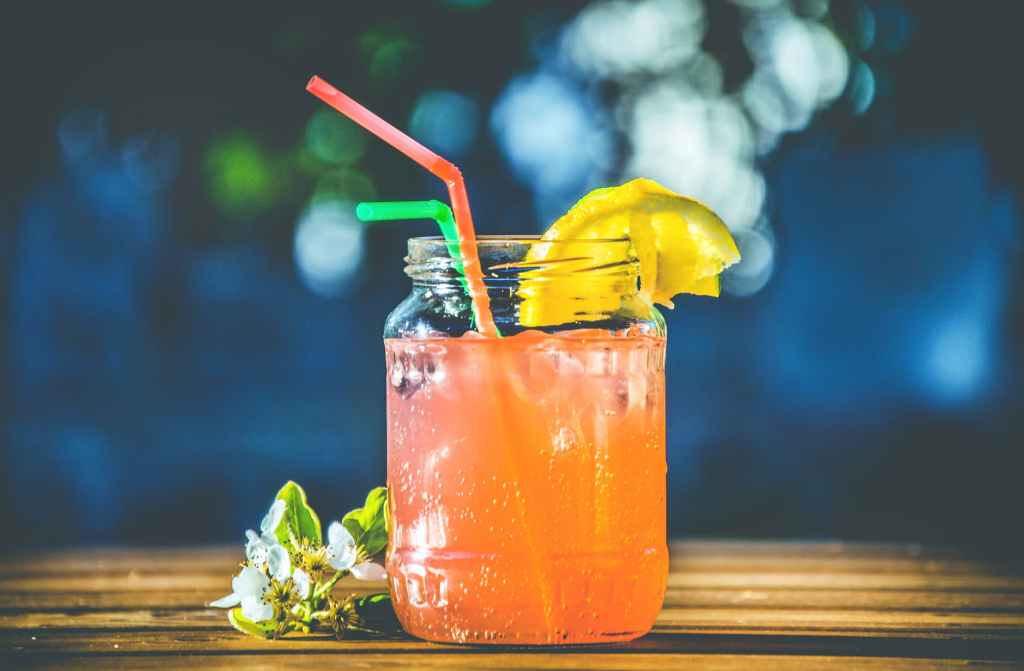
Put five cubes of ice in a cocktail shaker. Add one measure of brandy, half a measure of white rum, and half a measure of dark rum and two teaspoons of Amaretto, then two measures of fresh orange juice. Shake, and serve into a chilled glass over the cubes. Decorate with slices of orange and lemon

Source: The Ultimate Cocktail Book, Hamlyn

In memory of Nicki Southwell (neé Moll) 1956-2019 Never forgotten

#cocktails #beachcomber #london

We see weed as way ahead

When you’re in a desperate situation, think laterally. Think differently. Think about something that was there all along, but which you’ve overlooked That’s why we couldn’t resist showcasing two stories from the Daily Mail about new natural solutions to our ecological crisis.

Global Warming Everybody agrees there’s quite a lot of it about. One solution is to grow more trees. Trouble is: they’re slow to grow, and there’s always a danger that one of the President’s mates will be allowed to come along in five years and chop them all down. According to Ian Randall, a better alternative is humble sea kelp. It grows thirty time faster than trees. Its carbon capture properties are prodigious. Kelp forests give a marvellous haven for sea life. And get this- you can harvest it for cattle feed, which in turn cuts down methane emissions from these large beasts. So what’s not to like? Read this story about Carbon Kapture and its kelp farms

Environment: UK firm reveals plans seaweed farms off the Welsh coast to tackle carbon emissions  | Daily Mail Online

Plastics Ever heard of sea grass? Neither had we. But this humble little ocean vegetable may be helping to gather up the 8 million tonnes of plastic which are dumped annually into our oceans. And to deposit them in easier-to-manage clumps called Neptune’s Balls. (Neptune was the Roman god of the sea- we didn’t know he liked dancing). Here Shivali Best tells of studies in Mallorca which are looking at using sea grass to turn the tide on this disgusting act of self harm we’re all doing. Incidentally, what a great place to do scientific research!

Seagrass ‘Neptune balls’ are found to sieve MILLIONS of plastic particles from water | Daily Mail Online

#kelp #seagrass #globalwarmimg #climatechange #methane

Hungry children now means we’re all poorer in 2031

No one would ever dare accuse the Kelloggs Corporation of being lefties, pinkoes, liberals or any of the other adjectives in the demonology of the Right. It’s always been a shining example of progressive, enlightened capitalism, supplying the market with clean, benign products. (Declaration of Interest-we love them). That’s why when they come up with a report on child hunger, it needs to be taken very seriously indeed.

UK readers will be aware of the controversy swirling around the footballer Marcus Rashford and his campaigns on child hunger. Readers may take many views on this. Some religious readers may look at it on compassionate grounds. Libertarians and economists of the Chicago persuasion may take the view that any interference in a free market is both inefficient and an intolerable assault on liberty. The aforementioned Lefties and pinkoes may well develop tropes on abstract concepts like social justice and equity, whatever they are.

But what if the real argument is none of those? What happens if you take the patriotic view of long term national efficiency? The Kelloggs reports waxes lyrical indeed on the damage that hunger is doing to teaching, exam passes and assessment. We’ve included a couple of other links which suggest childhood hunger leads to increases in things like violence and physical and mental health problems. We were shocked to discover that the ancient evil of rickets is back on the rise. (Economic History note: a high incidence of rickets in the lower classes is a pretty good sign you have a truly free market economy).

If Britain is now to be a successful, stand-alone nation, it will need the best trained, best-educated workforce it can muster. There is depressing evidence that it is stuck at mid table in the world education leagues, but we promise another blog on that later. The lesson from History is also clear. The malnourished, stunted late Victorian lower classes were not up to their tasks either as workers or defenders of the Empire. (During the Boer War, the Army was forced to reject between 40 and 60% of volunteers on health grounds). There is evidence that the Government is taking Rashford seriously. Good-we can’t afford to make the same mistake twice. There’s no Empire to fall back on, nor anyone else.

R2_Kellogg_A_Lost_Education.pdf (kelloggs.co.uk)

The long-term effects of going hungry – BBC Future

Researchers link childhood hunger, violence later in life — ScienceDaily

The Boer War: Recruitment, National Efficiency and New Liberalism – Revision Cards in A Level and IB History (getrevising.co.uk)

#marcusrashford #childpoverty #childhoodhunger #kelloggs #education #boerwar #declineofbritain

Could mRNA vaccines open the way to a cure for Multiple sclerosis?

We’ve all heard of BioNTech-they were Pfizer’s partner in developing the first of the new generation mRNA vaccines against Covid-19. Remember all the excitement back in November last year? Now it seems that mRNA technology can do a lot, lot more. Like potentially curing the dreadful disease of Multiple Sclerosis. BioNTech scientists Katalin Karikó and Ugur Sahin have released results on studies on mice with a neurodegenerative disease which is similar to MS. The mRNA injections seem not only to slow the progress of the disease, but also to reverse it. It’s early days yet, but the implications are revolutionary.*

So, let’s open out this whole trope of mRNA a little further, courtesy of Nature Briefings*:

Two of the first COVID vaccines to get emergency approval — developed by Pfizer-BioNTech and Moderna — use RNA technology. They are the first RNA vaccines authorized for use in humans, despite efforts going back decades. Nature explores how manufacturing and distribution challenges held the technology back and what the future holds now that the power of RNA vaccines has been unleashed.

Please click on the link below for the piece by Elie Dolgin. It’ll quickly tell you how these things were dreamed up, how they work, and their potential, even against “Holy Grail” illnesses like malaria, tuberculosis, HIV and cystic fibrosis. We think such knowledge should now be part of the mental furniture of every educated person. Just as your grandparents suddenly had to know about things like radar, nuclear reactions and antibiotics back in 1945. Because if even half of this mRNA technology works, it will transform the world more surely than even those advances did.

for the BioNTech story, here’s Nuño Dominguez in El Pais– translators at the ready

La vacuna de la covid abre una nueva vía contra la esclerosis múltiple | Ciencia | EL PAÍS (elpais.com)

here’s the link to Nature

How COVID unlocked the power of RNA vaccines (nature.com)

#mRNA #vaccines #sars-cov-2 #BioNTech #multiplesclerosis #HIV

Doubling the power of solar panels

If there’s one type we can’t stand at LSS it’s can’t-doers and nay-sayers. There were lots of them around fifteen years ago, trotting out their gloom about how solar power could never work, it was expensive, it was inefficient. Fortunately Professor Henry Snaith and his company Oxford PV* don’t listen to rubbish. Instead they are pushing back the boundaries on new solar panels which will soon revolutionise our homes, workplaces, and so slash carbon emissions.

We’ve come a long way with solar panels, but they tend to operate at only around 20% efficiency. That’s because their semiconductor layer is made of silicon, which absorbs best in the red end of the spectrum. Henry’s idea is to incorporate a second layer of Perovskite, which looks for the bluer end. He thinks he can now push the efficiency up to around 44%. And that’s not all.

The perovskite idea has been floating around for a while, but Henry has taken the bull by the horns and set up a factory in Germany which should soon be churning out these panels big time. Instead of a 320W output, your average panel could now be churning out 440W. They hope to add a third layer which could take efficiency up to 50%, close to the practical limit from solar panels.

There’s so much to like here. The combination of learning, intelligence and optimism to try something new. Uniting the best of technology and finance to make a real difference. International co-operation, implying faster spreads of new ideas and systems, as well as economies of scale in production. As for their research labs-it’s a masterpiece of antiseptic efficiency, just look at their website if you don’t believe us!

And its not the only great new idea. The BBC has a series discussing 38 other ways to save the planet.* We link to their Oxford PV podcast below, with Tom Heap, but you might want to try a few more. Room for optimism, dare we think?

39 Ways to Save the Planet – More Power from the Sun – BBC Sounds

Leaders in perovskite solar technology | Oxford PV

#perovskite #oxfordpv #solarpanels #renewable energy #globalwarmimg #climatechange

Larry Elliott warns “what goes up might come down”

Learning, Science and Society is not an investment advice column-don’t read this if you want to get rich. But as citizens of the globe, and with the advice of persons far wiser than ourselves, we feel entitled to observe the trends in world markets, much as we observe those in science or the weather-because they affect each and every one of us.

In our opinion one of the wisest of those persons is Larry Elliott of the Guardian. An inveterate Brexiteer on a staunchly Remain newspaper, he’s very much his own man, and so when he speaks, we sit up and listen. And Larry is troubled. In his piece Are soaring house prices and house prices an epic bubble about to pop?,* he points to some troubling signs. History fans will recognise the eerie similarities with the spring of 2007 or even the uneasy summer of 1929. Firstly, the real economy is shrinking, and employment is falling in the US. Meanwhile asset prices in things like homes and shares are roaring away-with new tech equities like Tesla being singled out for scrutiny. Eyebrows are starting to rise on wise heads. Elliott cites investment sage Jeremy Grantham. But he’s not the only one, as we found elsewhere.

New entrants to the markets are always the most open to volatility. There’s nothing inherently wrong in this; once upon a time, steels and automobiles were new stocks! So we have nothing against crptocurrencies per se, it’s just that anything new will jump around until it finds its true price. So we see news that the FCA has issued risk advice to cryptocurrency investors as actually a sign that markets overall may indeed be starting to overheat. As evidence of this, the piece by Kalyeena Markotoff* notes that Bitcoin has already gone down to $35,000. This could be a blip on an upward march, of course. Bitcoin has been around for eleven years now. But does it trade in a world where assets generally are overpriced, as they were in 1929? We can’t help but be reminded of one of those cartoon characters who runs off of a cliff and keeps running, until he looks down-when the fall begins. And this goes for holders of everything, not just cryptos.

To be sure: we are not investors, much less advisers. But the straws in the wind seem to indicate caution, a little reigning in of exuberant spirits, at least until we see how the new Covid-19 vaccines really play out.

Are soaring markets and house prices an ‘epic bubble’ about to pop? | Larry Elliott | Business | The Guardian

Bitcoin: be prepared to lose all your money, FCA warns consumers | Business | The Guardian

Bitcoin tumbles 20% in worst crash since March (msn.com)

#assets #investments #cryptocurrencies #larryelliott #wallstreetcrash #1929 #2007crash

Round up of the week

So much this week, gentle readers! And even you, the cream of the elite of the cutting edge of the top 1% (that’s enough superlatives-ed) are going to have to be a bit picky. So we’ve thrown them under different filter headings to aid you in your busy lives.

Crime and Forensic Science It was always the non sequitur in Forensic Science that DNA techniques could do anything except pull apart identical twins. Now at last that may be changing. Nature posts a Guardian story on small but significant variations in the genomes even of identical twins. We are sure that some enterprising forensic scientists are already working on this!

Scientists have quantified the small genetic differences between monozygotic twins. Researchers analysed the DNA of 381 identical twin pairs (and 2 triplets) and found thousands of mutations that appeared in one twin and not the other. Twins differed on average by 5.2 early developmental mutations, which occurred after the initial formation of the zygote. Some siblings differed by dozens of mutations, and some did not differ at all. “The implication is that we have to be very careful when we are using twins as a model” for teasing apart the influences of nature and nurture, says geneticist Jan Dumanski.The Guardian | 4 min read
Reference: Nature Genetics paper

Our old friend Mr Covid Big one here is: will the new variants of Sars-CoV-2 prove immune to our new vaccines. Nature looks at the current state of play :

Researchers are racing to determine why SARS-CoV-2 variants identified in Britain and South Africa spread so quickly and whether they’ll compromise vaccines. The first laboratory results are trickling in, and many more are expected in coming days. Researchers are probing the viral variants and their constituent mutations in cell and animal models of SARS-CoV-2, and testing them against antibodies elicited by vaccines and natural infections. A preprint study (that has not yet been peer reviewed) published today found that a mutation shared by both variants did not alter the activity of antibodies produced by people who received the Pfizer–BioNtech vaccine.Nature | 7 min read
Reference: bioRxiv preprint

Environment All those pesky waste plastics are slowly killing us and every living thing on the planet. It’s like the whole place is a rubbish tip to be honest. Maybe plastic destroying enzymes in microorganisms could be the answer. Here’s Monit Khanna in the Times of India

Scientists Create Enzyme That Can Destroy Plastic Within Days, Not Years (indiatimes.com)

we thank Mr Gary Herbert of Buckinghamshire for this story

If we’re going to save this planet, change must come at local levels. Here’s the Cambridge Independent on how the residents of Swaffham are weaning themselves off of oil and into renewable energy systems. Is your community this far-sighted?

Cambridgeshire village renewable energy project wins £2m funding (cambridgeindependent.co.uk)

we thank Mr Peter Seymour of Hertfordshire for this story

That’s more than enough for one week! See you Monday.

#renewables #DNA #forensicscience# identicaltwins #plastics #pollution #enzyme #swaffham

When Biology and Information Science unite

Once upon a time, Biology and the Information Sciences were two different worlds. with different students, departments and career patterns. Now there’s every reason to expect that they are coming together. It makes sense. Information scientists are the people whose skills run factories, supply chains and international markets. When you think about it, a cell is like a factory, whose components and functions (mainly proteins) have to be in exactly the right place at exactly the right time for it to function. But how?

Now a team at the University of Sevilla, in co-operation with Swiss and Japanese workers, think they have the answer to the logistical mechanism that lets cells recognise the right molecules, and put them into the right place just in time. Led by Manuel Muñiz they have discovered that it is lipid molecules which do the identification, recognising and placing. Read it for yourself at the link below, but English-language readers be warned- you are going to need your translator app.

For us there were several learning points and questions:

1 Every scientific advance builds on something that went before, and the researchers acknowledge their debt to the Nobel Prize work of Rothman, Schekman and Südhof. To paraphrase Newton, “everyone stands on the shoulders of giants.”

2 The best science clearly grows from multi-national teams. So how do you build on this? Is it a) attract them into bigger and bigger Universities? Or B) work hard on fast cheap communication systems and language translator software that lets, for example, a German team talk with a Uruguayan one?

3 The idea of a controlled understanding of cellular processes offers real hope in the science of cancer research. We are not snake oil salesmen offering false hope-but watch this space.

El Amazon de la vida | Ciencia | EL PAÍS (elpais.com)

#cell #informationscience #protein #lipid #logistics

Friday Night Cocktails: let’s get high

Anyone can drive a drinks trolley on a plane. But it takes real savoir-faire to put your kit on a mule, or a yak, and drag all those bottles, ice, glasses and bar stools to the top of a mountain. Or a really tall office block. Then set it up and give sophisticated pleasure seekers a real experience. We’re going both ways tonight, as they used to say in the Navy. First five superb drinkers from the tops of the world’s highest buildings, courtesy of Chilled Magazine. Then seven from the highest mountains in the world, from the Liftopia blog. Here goes:

Man made

Chilled presents five amazing locations. The one that does it for us is by definition is the one on the Burj-Khalifa in Dubai-the world’s highest, 122nd floor, 442 metres-all the stats are there. That said, they all look like amazing watering holes up in the clouds. Check this out for some great pictures. Chilled magazine certainly doe s what it says on the tin!

Top Five of The World’s Highest Bars – Chilled Magazine

Man Made in the mountains

Although personally not devotees of winter sports, we at LSS have always admired the bravura of all you skiers and snowboarders. We know it’s hard, often dangerous work on the piste. So where better to relax than these seven locations below from Liftopia. Do they just go outside to get the ice for the gin and tonic? Better get up there quick before climate change melts all the snow, and you have to take up water-skiing.

7 of the World’s Highest Ski Bars (liftopia.com)

#skilodges #bars #cocktails #climatechange