Weekly Round up

Three for you this week, our common theme is something surprising, but which you just might want to know.

Scary variant Before we all relax and say “the vaccines have got it all solved”, like drunks on their second pint of beer, don’t forget that Sars-Cov-2 has some nasty tricks to play. Like mutating into dangerous new forms. Here’s Nature:

Scientists have released the data behind UK Prime Minister Boris Johnson’s warning last week that the new COVID-19 variant B.1.1.7 is linked to more deaths. The chance of dying is around 35% higher for people who are confirmed to be infected with the new variant. The risk is most pronounced for older men. The chance of death for an 85-year-old man increases from about 17% to nearly 22% for those confirmed to be infected with the variant. Researchers caution that the data are preliminary, and it is not clear whether the variant is deadlier than previous strains or is spreading to more people who are vulnerable to severe disease.Nature | 4 min read
Reference: medRxiv paper

Trump trumped It was always obvious that Trump and his supporters were going to try to play fast and loose with the 2020 election results. Just how close they came, and how democracy was saved, is outlined in this piece by Molly Ball in Time. Slowly a coalition of business, unions, Democrats, democrats, and moderate Republicans was assembled with just enough critical mass to ensure a fair result. We knew nothing about this, but it is one of the most exciting pieces that we have read for a long time-we think you’ll like it too.

The Secret Bipartisan Campaign That Saved the 2020 Election | Time

We thank Mr Peter Seymour of Hertfordshire for this story

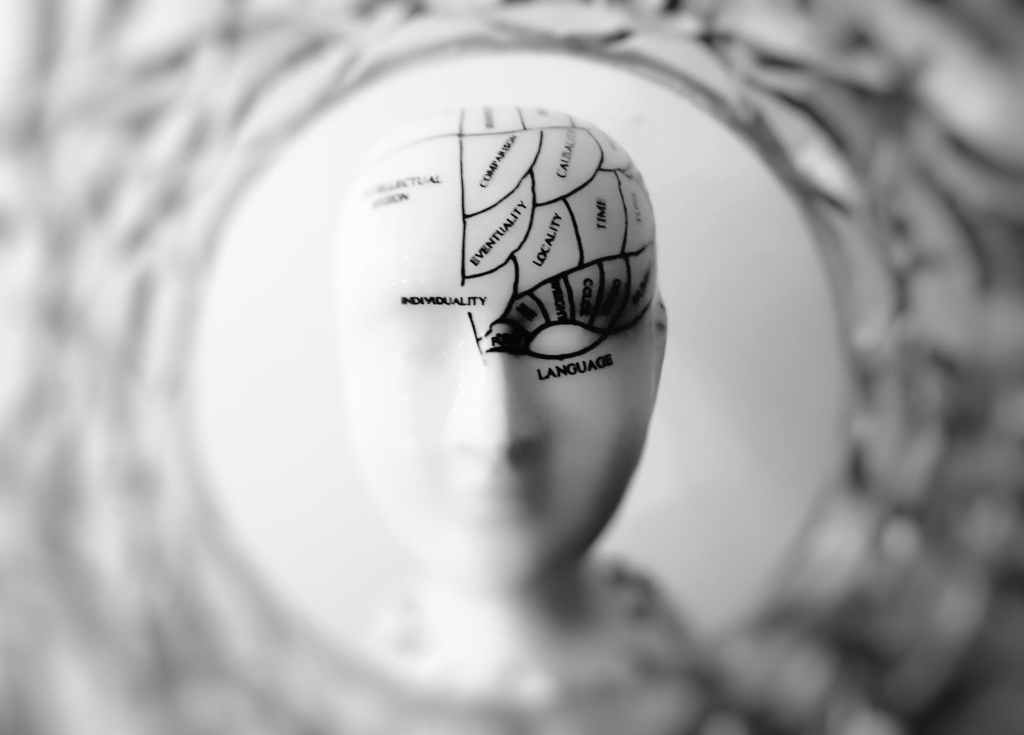
Hiding in plain sight? Despite the efforts of many intelligent people, the deep causes of mental and neurological disorders are still hazy. And they are terrible afflictions, ruining the lives of sufferers and their families. Now the intriguing possibility exists that the balance of your gut biome– all those little creepy things that line your gut- may have profound consequences for your nervous system as a whole. It’s early days yet, but interest is growing fast. We love it when a people suddenly discover something that was there all along. Birds are dinosaurs. Continents drift. And maybe, just maybe, the cause of ASDs lies in something that happened to the mother before birth. Very clickable.

Evidence is building that the trillions of bacteria in the gut could have profound effects on the brain, and might be tied to a whole host of disorders. What was once a fringe theory — the gut–brain axis — is seeing an explosion of interest. Now, researchers are working to separate hope from hype to develop better and easier treatments for brain diseases.Nature | 12 min read

#2020election #donaldtrump #democracy #joebiden #covid-19 #sars-cov-2 #gutbiome #autism #neurologicaldisorder #bacteria #microorganism

Friday Night Cocktails-five warming ideas from The Gentleman’s Flavour

As we write these lines, England is about to be swamped by a blast of arctic cold. But that’s no excuse for the sophisticated philosofe not to enjoy a refined Friday night tipple. So we thought that our English readers, and indeed all those in cold climes around the world, could do with a little advice on some heart-warming recipes to get you through the long weekend ahead.

After a youth wasted on the pursuit of virtue, ideology and moral rectitude, the editorial board of LSS has acquired more worldly-wise weltanschauung that encompasses a broader view of humanity, its hopes and its foibles. That is why we are proud to take advice from educated men, and women, of many views and opinions, unless they gratuitously set out to offend or otherwise frighten the horses. Thus the Gentleman’s Flavour is a cigar site, and we don’t smoke cigars. Or anything else. But some of you do, and you are our friends. And they had such a good , succinct, easy to understand list of winter warmers, that we had to put their site up for this week. Click below for tips on:

Will’s Sugar Shack Hot toddy Hot Mulled Port

Spiked Apple Cider Will’s Winter espresso Martini

Southern Hot Toddy

Stay safe on those icy pavements readers- you know what going into hospital could bring right now!

5 Warming Cocktails To Beat Cold Weather – The Gentleman’s Flavor

#snow #cold #toddy #cocktail

We thank Mr and Mrs A P Foster of Dorset for the idea in this post

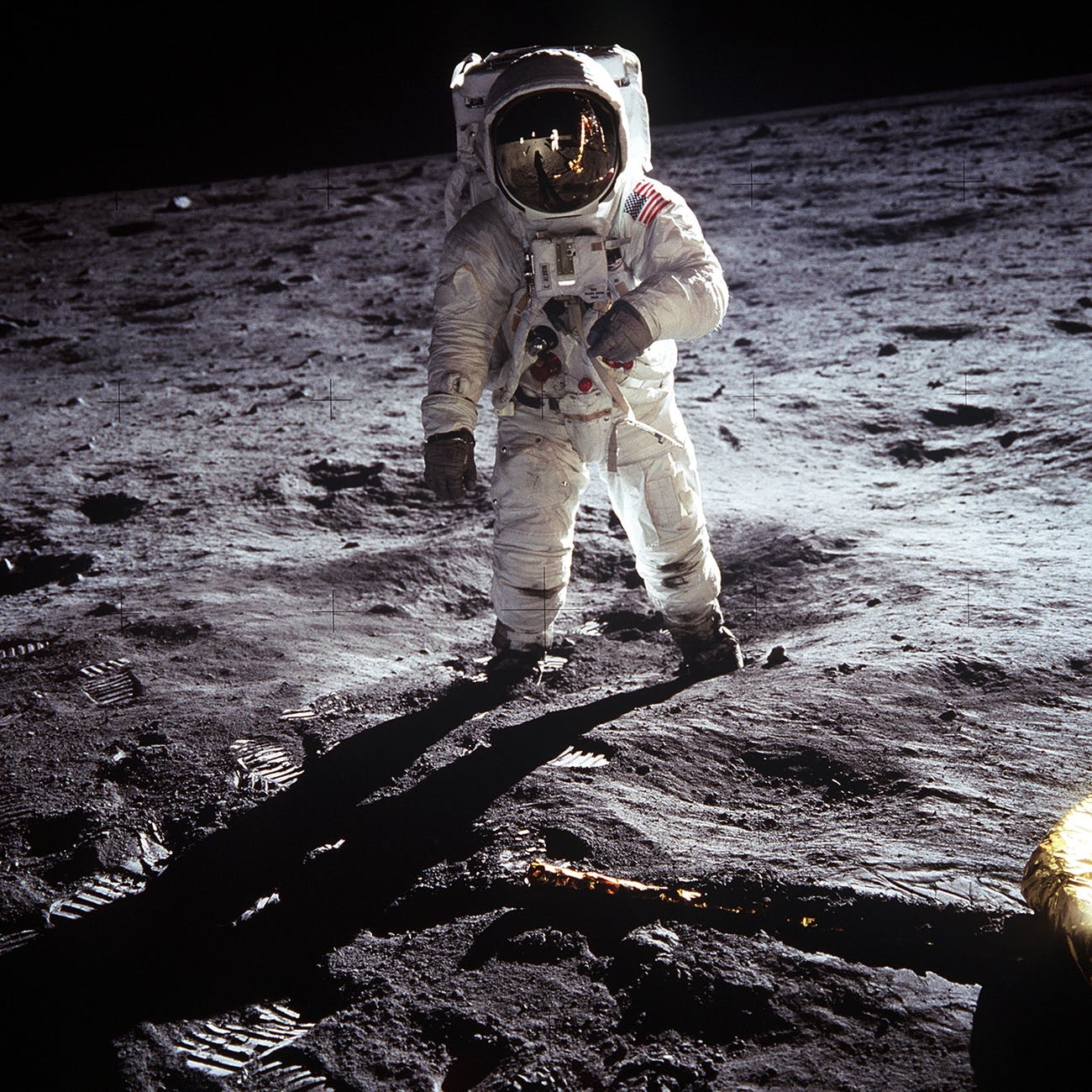
Fifty years on, Apollo is still paying for itself

Fifty years ago, with the Moon reached, Project Apollo was being wound down. Certainly the cost had been enormous (though as nothing compared to the Vietnam war, the financial bailout of 2008, and the daddy of them all the Iraq-Afghanistan campaign from 2003 onwards. We remember an argument we sometimes heard at the time. “Why spend all that money going to the Moon, when there are so many poor people who need help on Earth?” It is a decent and moral argument, and we admit that some of us struggled with it back in ’71. The only spin-off from Apollo was non-stick frying pans. Why indeed give money to slightly nerdy science types to play with, when there are hungry, diseased children out there?

Professor Mariana Mazzucato has an interesting reply. She quotes the following tale told by NASA administrator Ernst Stuhlinger to a nun who had raised that very question. We quote from Mazzucato’s book Mission Economy*

Stuhlinger asked the nun to first consider the story of a benign and much-loved count who lived in Germany 400 years ago. The count was always redistributing his riches to the poor. But he did more than redistribute; he created. The count funded the scientific activities of a strange local man who worked in a small laboratory grinding lenses from glass, and then mounting the lenses in in tubes and creating small gadgets. The count was criticised for wasting money on the craftsman when the needs of the hungry were so much greater. And yet, explained Stuhlinger, it was precisely such experiments that later paved the way for the invention of the microscope, which proved one of the most useful devices for fighting disease, poverty and hunger. The Count, by retaining some of his spending money for research and discovery, contributed far more to the relief of human suffering than…by giving all he could possibly spare to his plague-ridden community. (p79)

Fast forward to 1961. The Count is President John F. Kennedy. The researcher is the Apollo programme. Instead of a microscope, we got CAT scans, LEDs, scratch resistant lenses, memory foam, the computer mouse, laptop computers, the resistant foam in your trainers, MRIs, solar panels, water purification, defibrillators, pacemakers and many more examples of what Mazzucato terms “economic multipliers”. An inflexible emphasis on budget sheets, or endless importuning for immediate welfare spending would have killed all this. So both Right and Left can blush in shame!

We’ve said it before-research spending pays incalculable dividends. If you don’t believe us, at least give good Professor Mazzucato a try-she’s worth it.

Mariana Mazzucato Mission Economy Allen Lane 2021

#economicmultiplier #NASA #publicprivatepartnership #spinoffs #R&D #projectapollo #presidentkennedy

Why Climate Science is like Forensic Science

One of the best things about Forensic Science is not only that it can work with very small samples, but that the conclusions drawn are very large. What’s more, it is tested twice-first by other scientists in all the usual ways like conferences, learned journals and many an earnest water cooler moment. Then it goes to court and gets tested by barristers who, despite whatever personal defects they might have, are possessed of razor sharp minds and can detect any error or illogicality. It’s the ultimate test of the scientific method. Which is actually very easy. Look very hard at something. Is it real? How does it differ from what you know? What does it let you predict?

Oddly enough. it was using this method in climate science which provided the clinching proof that humans are causing global warming. As every schoolchild knows, carbon mainly comes in two forms: 12C and 13C. And these are being constantly recycled through living things and the atmosphere. Because plants generally like to work with 12C they absorb more of it from the atmosphere. So if you measures the ratio of 13C/12C it’s higher in plants than it is in the atmosphere as a whole. But because of the recycling, the atmospheric level should be stable. Which it was for many thousands of years. But if you start burning lots and lots of plant material, especially in the form of coal, that ratio will change. Which it has since about 1850. (Did we hear someone say “Industrial Revolution”?) Since when the atmospheric 13C/12C ratio has been falling steadily as more and more 12C goes up the chimney. You’re breathing it in too, but that’s another story. We have a link below to to the Wiley dummies website, which we always find to be a marvellous source of clear explanation on many topics.

So here’s some questions for those Dog and Duck types who spend too much time swallowing the output of certain TV channels whole.

How much has the 13C/12C ratio changed since 1850? Why has it changed? If it is not caused by burning fossil fuels, what is the alternative explanation? If the effect is cyclic, how long are the cycles? How have they changed in relation to other natural cycles? What other evidence can you offer to make me believe what you say?

We don’t know what answers they will give. But we have noticed that people who start shouting, change the subject or allege conspiracies show that they don’t know what they’re talking about on any subject.

Isotopes: How Do Scientists Know that Humans Cause Global Warming? – dummies

#globalwarming #carbonisotopes #CO2 #climatechange #denialists

Brain implants-hope for addictions amd much much more

Following our ever-present ethos of a tiggerish, bouncy optimism, which we know you like, we have a short story and some long links to a really hopeful step forward in the world of brain implants. Also known as neural implants, it’s where a small processing unit is fixed to interface with neural tissue, aiding or even substituting for its function. As Joe Pinkstone in the Mail* reports, there are amazing possibilities to help people control addictions-or for those with heartbreaking diseases like Parkinsons.

There is one problem. These implants need quite an operation to put them in-and they run on electricity. What do you do when the battery runs down. Give the poor patient another operation? That’s why we think that Joe’s piece is so significant. A Korean team led by Jae Woong Jeon have found a way to recharge the little implants by wireless technology, which should potentially let them last for a lifetime. And let you carry lots more.

We have some nice links below to the whole question of neural implants for readers who wish to learn more. But here’s a thought; do you want to live in a world where a buzzer sounds in your head every time you reach for a fresh can of Stella Artois?

Brain implants the size of a coin combat drug addiction in rats | Daily Mail Online

What Are Brain Implants and What Are Their Future Uses? (moneyinc.com)

Brain implant – Wikipedia

#neuralimplant #wirelesstechnology #brainimplant #addiction #neurology #parkinsonsdisease #neurodegenerativedisease #informationtechnology

It crept up and got us before we even knew it!

Old science fiction hands will recall a common trope of their beloved genre. A huge disaster creeps up on humankind; slowly at first, with the author giving teasing hints, until the cataclysm is on us all and everyone can see how bad they’ve been. It was a technique perfected by John Wyndham in works such as The Kraken Wakes and The Day of the Triffids. Except in the case of Covid-19, it may have happened for real.

Up to now, the story of Covid-19 has been simple: it appeared at the very end of 2019 in Wuhan China, got out, and spread around the world, wreaking havoc on lives, economies and the licensed catering industry. There’s a load of argy-bargy about where it came from, who covered up what, who forgot to order vaccines, and so on. But that’s secondary. The real questions are: should we even be in this mess? And why didn’t we see it coming?

Because there is now increasing evidence that SARS-COV-2 was circulating well before the ground zero date of December 2019. Regular followers will recall our story in July about researchers in Barcelona who found clear evidence of SARS-Cov-2 in water samples from March 2019. Confession-we wondered if one day that would be put down to contamination or misidentification. Except it hasn’t. And now there is another link in the chain, to a study from Italy which found virus related antibodies in 14% of a set of blood samples which were taken in September 2019. Another study showed positive tests in Brazil in November 2019-that’s a long way from Wuhan. Some of this work has still to be peer-reviewed and everyone needs time to digest the implications-but are you beginning to wonder?

We don’t do personal stuff much here. But we are aware of several persons who contracted curious and rather nasty respiratory diseases in November 2019, some of them close to us, some who worked in the health services. Coincidence? Or was it because busy doctors had not been trained to look for COVID-19, so, very understandably, they didn’t find it?

All of which raises many questions and few answers. What has been the follow up, if any, to the Barcelona finding of March 2019? Why was there a strong detection signal in Brazil, if the virus was only supposed to be starting in far off Wuhan? Are there any other biological samples around the world from 2019 which are still fresh enough to look for the virus or its antibodies? And what about 2018? Don’t forget that the HIV virus was drifting around at low frequency for years before the big outbreak in 1981. Why the sudden jump for Sars-Cov-2 in Wuhan?

If we want to avoid another pandemic, we need to know a lot more about how this one started, and spread. How about a windfall tax on hedge funds, to do it once and for all?

We thank Buckinghamshire landowner Mr Gary Herbert for help with both the inspiration and research for this story

Unexpected detection of SARS-CoV-2 antibodies in the prepandemic period in Italy – PubMed (nih.gov)

SARS-CoV-2 in human sewage in Santa Catalina, Brazil, November 2019 | medRxiv

#wuhan #china #sars-cov-2 #covid-19 #coronavirus #barcelona #italy #brazil #sewage #publichealth #originsof covid-19

As facts change, so should minds

“When facts change, I change my mind.” So wrote JM Keynes. That simple sentence, from far back in the last century is one of the most profound ever made. Its logic separates the doctor from the quack, the scientist from the conspiracy theorist and the honest from the fool. It is why historians of the future will mark the last week of January 2021 as the moment when the nation state proved to be the most efficient possible method of organising groups of humans, and the attempt to create pan- national entities, such as the EU, to have failed.

Before moving on, it is worth recalling why so many in Britain believed the effort was worthwhile. Just as counties like Mercia and Wessex had once merged their sovereignties into a larger entity called England, so it seemed that the moment had come to unite the joint talents of entities such England, Italy and Germany into something even larger. The European model of capitalism in particular seemed a bulwark against extremist forces of right and left. To those on the continent it was above all a peace project.

Yet a comparison of the response of the UK and the EU to the Covid-19 pandemic has made one fact abundantly clear. Smaller, nationally organised entities can better organise to protect their citizens than larger squabbling coalitions of nations. It is not a question of moral evil or stupidity; but by its very nature the EU was unable to react fast when speed above all was needed. All will learn the lessons that this implies for the future. That future is one of nations, not multi-nations.

And so the new world begins. Its advocates may enjoy a well- earned moment of triumph. But it will not be without its problems. For one, the existence of multiple, competing jurisdictions is a paradise for those who wish to hide their private wealth from the public good in tax havens. The problems of inequality will be further from solution than ever. Secondly, as RH Tawney, a neighbour and contemporary of Keynes observed “freedom for the shark is death for the minnow”. Large nations, who now need only consult their own interest, will inevitably dominate smaller ones. Many large international companies are now equal in wealth to all but the largest nation states-what is sovereignty to them? Thirdly, if power is best organised in local, national bodies, then it it makes sense for Scotland to leave the UK in the way that the UK left the EU.

All of these questions are implied in the new order, and must now be tested all around the world. But they are for the future. Today is the triumph of the nationalists, and we must wish the new order well. There is no other choice. Time will answer the questions we have raised.

#eu #uk #scotland #yugoslavia #covid-19 #taxhavens #nationalism #multinationals

Weekly Round Up: a Covid-Free zone

It seems the whole week has been nothing but Covid-19. In health, education, geopolitics, you name it. It’s been Covid this and Covid that, and Covid the other, from morn on Monday through to the last dregs of our Friday night Cocktail. So much so that we are going to give you an entire blog of Covid free news, gentle readers, and hope you like it. This week our theme is the errors of reading the wrong thing from incomplete data.

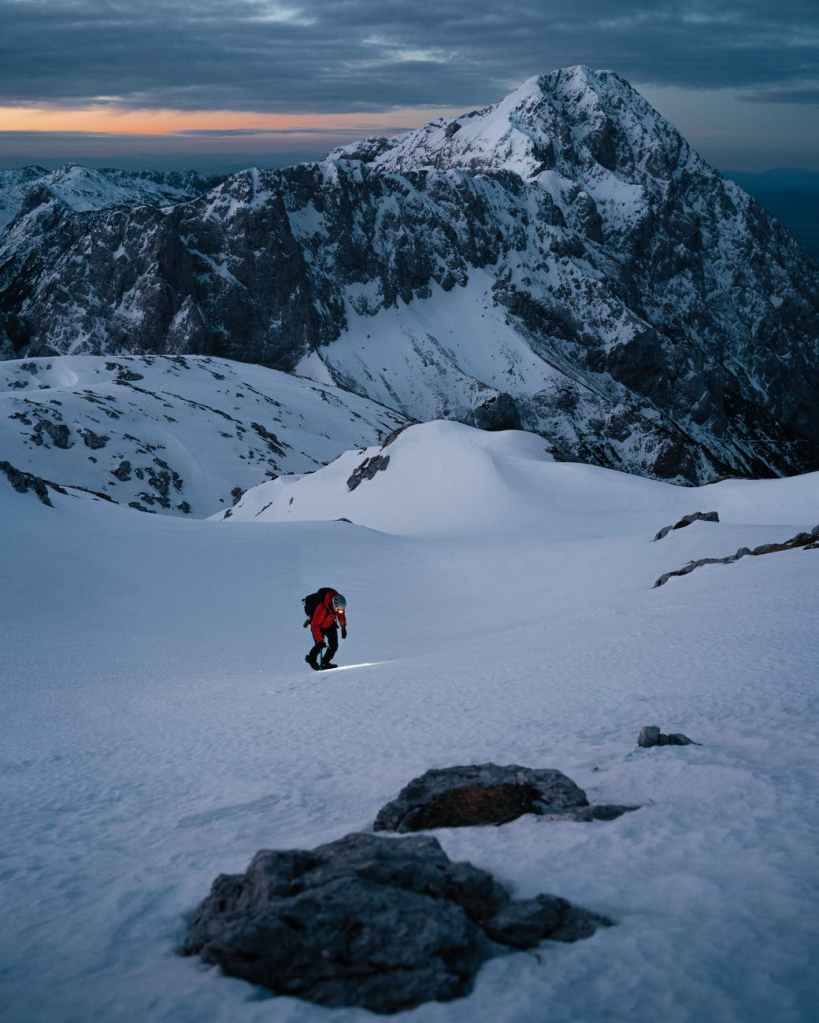
Dyatlenko Pass Followers of urban oddities will recall the strange case of the Dyatlenko Pass incident. Back in 1959, a group of young, experienced Soviet Hikers went rambling in the Urals, only for their bodies to be found in the snow, apparently half eaten by something. It has been the subject of numerous films, books and programmes, all featuring their tragic last diaries and snapshots. Fans of cryptozoology have no problem with an explanation ; “Yeti got ’em!”. Other explanations included dirty dealings by the security forces, dodgy defence experiments, and alienated local residents. Now Robin George Andrews of National Geographic reports on the real answer- a terrible combination of winds and avalanche drove the unfortunate victims from their tents to die of hypothermia. We love the way that the advanced simulation techniques from movies and science have been brought together on this one.

Has science solved the Dyatlov Pass incident, one of history’s greatest adventure mysteries? (nationalgeographic.com)

Is there life on Venus? Old hands on the LSS blog will recall how we covered the flurry of excitement caused by the discovery of phosphine on Venus. It was a hint of life on our nearest planetary neighbour, said some. But as so often, the passage of time is pouring tons of cold water on this burning question. Here’s Nature‘s take:

Two papers have dealt a fresh blow to the idea that Venus’s atmosphere might contain phosphine gas — a potential sign of life. In one study, researchers analysed data from one of the telescopes used to make the phosphine claim and could not detect the gas’s spectral signature. In the other, they calculated how gases would behave in Venus’s atmosphere and concluded that what the original team thought was phosphine is actually sulfur dioxide, a gas that is common on Venus and is not a sign of possible life. Still, the case isn’t closed yet. The new studies argue against the presence of phosphine, but can’t entirely rule it out.Nature | 5 min read
Reference: arXiv preprint 1 & arXiv preprint 2 (Both papers have been accepted for publication in Astrophysical Journal Letters)

Do 10 000 steps every day! So they have been telling us for years. Of course walking is good-and enjoyable. But does it really have to be 10 000 paces every day? Here’s Lindsay Bottoms in the Conversation:

Do we really need to walk 10,000 steps a day? (theconversation.com)

Something to think about: What is still lying about in the ground? Who dropped it, and why? Here’s a fascinating from Isobella Nikolic of the Daily Mail, about how Charles I dropped a jewel depicting Henry VI which actually belonged to Henry VIII. It is worth £2million and lay under a tree in Northamptonshire for over 300 years until it was found by a metal detectorist named Kevin Duckett.

Metal detectorist finds £2million centrepiece jewel of Henry VIII’s lost crown buried under a tree | Daily Mail Online

#dyatlovpass #avalanche #yeti #venus #phosphine #exobiology #health #bodymass #treasure #metaldetector

Friday Night Cocktails: Grenadine

Today we’re featuring one of the best known and most versatile cocktail syrups: Grenadine. Old hands will know it as a vital ingredient in refreshments as diverse as Luigi, Tar, Skipper, Club, Sweet, Down Under, Hawaiian Vodka, Honolulu ,Cherry Julep, Clear Skies Ahead, Port Antonio, Alice Springs, St Vincent and Morning. Don’t try them all in one night!

For centuries,etymologists and linguistic purists have debated fiercely about the origins of grenadine in cocktail bars from the Kerguelen Islands to Nuuk. LSS is happy to set the record straight for all humankind for all time. Grenadine is made from water, sugar and pomegranate juice. Hence the name, derived from the French grenade, meaning “pomegranate”. Which in turn was derived from Latin Granatum. Spanish speakers have a problem. Their noun granada does indeed derive from Latin for pomegranate and means the same thing. But the ancient and venerable City of Granada takes its name from the Arabic garnatah. It was after this town that the Grenadine Islands were named. Sorted.

Of course there isn’t time to list the recipes for all the wonderful drinks that we name-checked above. We’ll just do two, one long and one short, both the from The Ultimate Cocktail Book by Hamlyn.

Alice Springs: In a shaker, put 4-5 ice cubes. Add 1 measure of fresh lemon juice, and the same of orange juice. Add 1/2 teaspoon of grenadine, 3 measures of gin and three drops of angostura bitters. Close off and shake ’til they rattle. Pour into something in the general region of a hurricane glass and top up with cold soda water. Decorate with slices of orange, lemon or cocktail cherries

Luigi: In a fresh shaker add 4-5 ice cubes, 1 measure of fresh orange juice, 1 measure of dry vermouth, 1/2 measure of Cointreau and 2 measures of gin. Shake a pour without cubes to a proper cocktail glass, Decorate with a slice of blood orange.

#luigi #alicesprings #grenadine #cocktails

Speculation: time to stop the game?

Most readers will have been following the frantic speculation in the price of GameStop shares. It’s all very exciting, even for those of us without a dog in the fight, as small investors use the new found power of the internet to ambush the bigger boys who are apparently trying to short out the company. We’ve got two Guardian stories for you today, but it’s well covered in all the media. And one day it will all go into the “do you remember….?” file along with Lehman Brothers, Enron and 1987.

The point for the Ordinary Joe is “does it matter?” Shouldn’t people be doing better things with their time and money? It has always been a criticism from the the Left that speculative bubbles distort investment. Writ small it means sexy bubble share companies draw funds away from those concerned in the real economy who do dull things like making pharmaceuticals and producing food. Writ large, a financialised economy produces massive inequalities in wealth and power, corrupting information and education, and undermining the very markets that created them. Like all good criticism, much of it is valid; but it suffers from one very real drawback.

No alternative to alternative to capitalism has ever been able to get around the audit power of a price mechanism, which measures close to people’s real needs, not what they say that they want. The old style civil service was a classic example of a market- free institution. It had its virtues. But all too often whole departments could be captured by a few toxic individuals. They were then able to divert the resources to their own ends, awarding themselves perks and pay rises, while the stated purpose of the department was at best secondary. With no competitors and a guaranteed supply of taxpayers’ money, the situation could persist for years. So if you have free trading, the buying and selling of resources according to price, you well get some odd behaviours, like speculation, shorting, arbitraging-and they are just the legal ones. Until someone comes up with a better idea, we believe that they are inefficiencies of the lesser sort

GameStop’s dizzying share price rise is game over for the short-sellers | Games | The Guardian

How GameStop found itself at the center of a groundbreaking battle between Wall Street and small investors | Stock markets | The Guardian

#gamestop #shorttrades #wallstreet #freemarkets #socialism #civilservice #speculator #hedgefund