Could a flu pandemic follow Covid-19?

So why aren’t we doing round up of the week?

Because something rather big has come up which we think our informed and discerning readers might want to know about

Which is?

That this Covid-19 pandemic , which you may well have noticed, could be followed by a flu pandemic of equally awesome proportions

Heavens-where did you get that from?

Well according to Manuel Ansede of El Pais, there’s a nasty little flu virus called H5N8 which has just learned to jump the species barrier from birds to humans, and so could be heading our way quite soon

How does he know this?

Because he’s been reading the Journal Science, which is to the world of Learning what Dom Perignon Champagne is to the world of drinking. Quite near the top,in other words.

And what do they say?

Two Chinese scientists from the same team that first identified Sars-Cov-2 back in 2019 have warned that H5N8 has the potential to do the same sort of thing

But isn’t that just in birds?

Quite a lot of birds, actually. Up to now it has caused outbreaks in birds in 46 countries. But, so far birds only, sort of.

Sort of?

Well, a new variation of H5N8 jumped the barrier and infected 7 humans in Astrakhan. Ok, no one seemed to have symptoms, so far. But what worries George Fu Gao and Weifeng Shi is the trend of the mutation pattern which they think might make a species jump increasingly likely

But surely it’ll just be a bad cold?

Well.. there was the little matter of Spanish Flu in 1918 which killed 50 million people, which more than the First World War times over. Thjen there was the Hong Kong outbreak of 1968, which…

OK, I get the picture What should the average citizen do?

Well, learn Spanish, Because the article below is written in that language. Or get a translator app. And after that-follow the story. Stay alert. Cuidarte.

Dos expertos chinos que identificaron el coronavirus alertan del peligro del virus de la gripe H5N8 | Ciencia | EL PAÍS (elpais.com)

#h5n8 #sars-cov-2 covid-19 influenza #pandemic
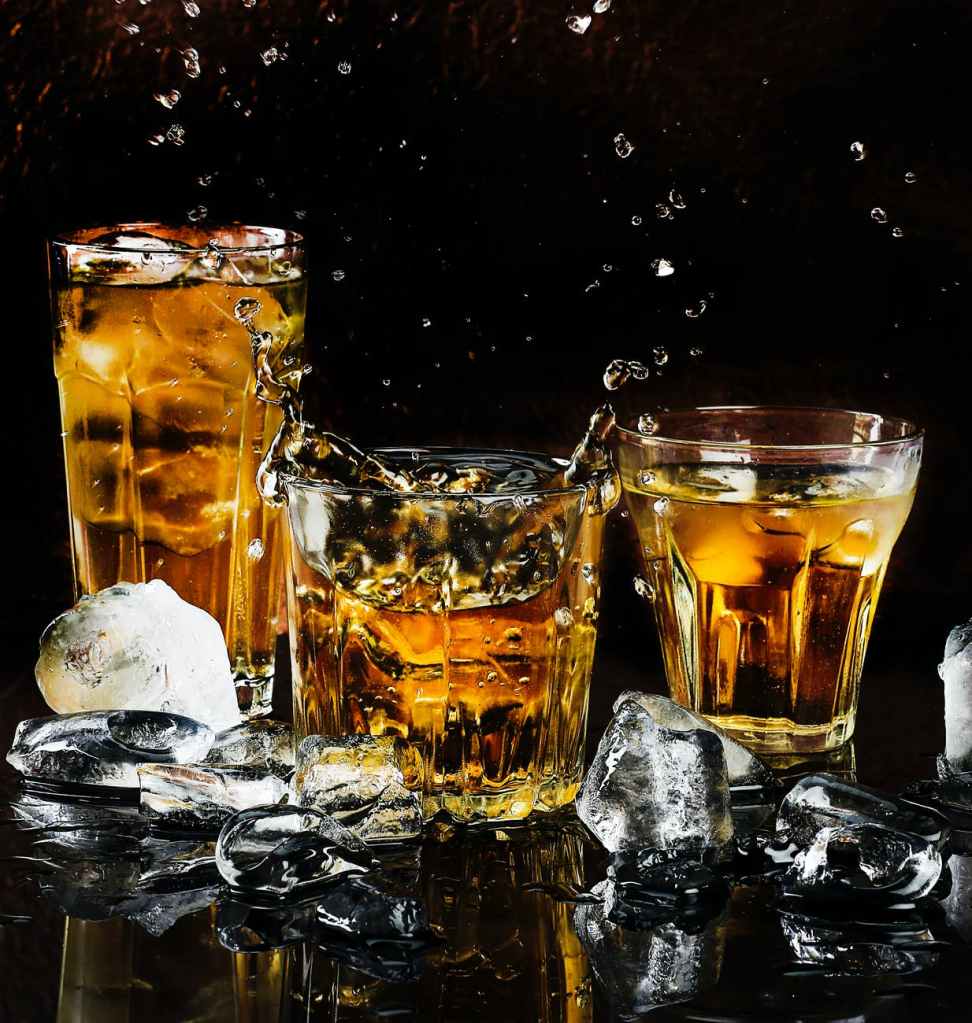
Friday Night for Sophisticates-Cinnamon Maple Whiskey Sour

Every so often, fans of cocktail night will demand something a little more sophisticated, a little more outre, if you will. At LSS, we’ve been over the classic recipes more times than you’ve fallen off of a bar stool. Now one reader, Mr Peter Seymour of Hertfordshire, has demanded that we try to spice things up. Literally.

Real cognescenti will be aware of the basic ingredients of the Whisky Sour. It’a bourbon (or scotch) lemon juice and sugar syrup. The Cinnamon Maple Whisky Sour starts there and takes the idea further. We have found a bright breezy website called Cookie and Kate who explain the whole thing in detail, and we earnestly implore you to click below. But the essential trick is to add maple syrup and a certain measure of cinnamon. This, we are told, adds depth and interest, and keeps the merry drinker happy all the way to the bottom of the glass. And, once you get there, why not order another?

We’d love to learn your reactions to this somewhat startling, not to say radical departure from our normal path. Mr Seymour does not disparage the whisky sour, far from it. He is simply imitating the genius of Sir Isaac Newton, who once famously remarked “If I see a little further, it is because I stand on the shoulders of giants.” What more appropriate sentiment for a cocktail column?

Cinnamon Maple Whiskey Sour Recipe – Cookie and Kate

#whiskey #bourbon #cocktails #newtonianphysics

Ever heard of Lady Katherine Jones? Well, you should have

Bet you’ve heard of Robert Boyle,(1627-1691),pioneering chemist, scientist, philosopher and uber-doyen of the Royal Society. According to a new biography, his sister Katherine, Jones by marriage, Lady Ranelagh by title, (1615-1691) was his support, mentor, collaborator and patron all rolled into one. And as so happens with women in science , she has been effectively airbrushed from history-until now.

Her story is well summarised in the Nature article attached. Born in comfortable circumstances, she married a member of the Irish Peerage, by whom she had four children. He being a gambler and boor, like so many men, she escaped to an intellectual life in London, participating fully in discussion circles whose raison d’etre was to discern:

“useful knowledge revealed through experimental science”

When little brother Johnny came along, she was soon bankrolling his laboratory, collaborating, experimenting herself and generally taking charge of the epistemological side of the business. But alas! The nascent Royal Society was not due to admit women until 1945, and her brother became the focus of attention, both then and for centuries afterwards.

A new biography Lady Ranelagh: The incomparable life of Robert Boyle’s Sister by Michelle di Meo (UCP 2021) is reviewed by Georgina Ferry for Nature. We show the summary below, but earnestly entreat you to click to the link, because it’s a gripping review.

Katherine Jones, Lady Ranelagh, worked at the heart of seventeenth-century scientific, political and philosophical debates. But, because she obeyed the convention that women should not put their thoughts into print, she is remembered chiefly — if at all — as the sister of chemist and Royal Society co-founder Robert Boyle. A scrupulously researched history of Ranelagh’s contributions to the tumultuous seventeenth century gives us a second chance to meet the woman known as “the Incomparable”.Nature | 5 min read

We can’t go back in time to correct the many injustices done to women in previous centuries. We can learn from our mistakes. And agree that bias, conscious or otherwise, is one of the single biggest brakes on human progress.

Welcome to the Royal Society | Royal Society

#enlightenment #science #robertboyle #chemistry #london #womeninscience

Neanderthals within neanderthals-this is going to be a big one

A radical new breakthrough, which could solve dozens of unanswered questions on human evolution has been announced by the Max Planck Institute. Scientists can now take dust from the floor of old caves, find DNA and sequence it to see who was living there. Potentially this is as big for Paleoanthropology as LCN techniques were for Forensic Scientists a generation ago.

To realise how important this is, let’s put it into context. Our current data sets for human evolution (fossils, tools, a little DNA from a few fortuitously preserved bones) have left enormous gaps in understanding. The key questions: Who was living there? What were they doing? Who were they related to? are frustratingly unanswered. Site one has tool but no bones. Site two has bones but you can’t get DNA from them. Site three has tiny scraps of bone with good DNA, but almost nothing else. And so it goes.

Already the new technique is coming up with startling findings. Researchers at the Galeria de las Estatuas cave site in Spain:

found that, about 100,000 years ago, the population who had been living in the cave for millennia were replaced by a completely different group of Neanderthal people……It was as if a modern human population of Europeans had been replaced by East Asians,” (from Robin McKie, Guardian 17 5 21 *)

In other words you can’t say “the Neanderthals” as if they were a single homogenous group any more. Who else is that true for? As Robin wonders, can we at last find out more about Denisovans, Homo floresiensis, the Red Deer Cave, Homo naledi and a host of other recent enigmas in our family tree?

It won’t solve everything; we doubt that the techniques will work for three million year old australopithecus fossils frozen in old sandstones for example. But for the movements of recent populations,including even the Neolithic and Iron Age, it could be stunning. Once again a big thank you to the Max Planck Institute *for another contribution to human learning.

Tiny traces of DNA found in cave dust may unlock secret life of Neanderthals | Archaeology | The Guardian

Nuclear DNA from sediments helps unlock ancient human history: Max Planck Institute for Evolutionary Anthropology (mpg.de)

#dna #paleoanthropolgy #neanderthals #humanevolution #fossil #denisovan #neolithic #bronzeage

Weekly round up: Brain size, global cooling,and a little political controversy

The usual round up of items which are not merely good news stories, but where we think that the author is on to something significant.

What’s going on in Britain? Every so often a writer comes along and says something we’ve been struggling to say ourselves, and says it with real clarity and insight. So it is with Mary Dejevsky of the Spectator on the massive cultural and ethnic re-alignment of British politics.

Meet 5000 of my closest friends We have followed evolutionist Robin Dunbar for years, and on the whole like his theories about group size and brain size in primates and other animals. Tiny worry: once, while explaining the theory to a very clever Forensic Scientist, he observed “if brain size is related to group size-why do ants have small brains?”

https://theconversation.com/dunbars-number-why-my-theory-that-humans-can-only-maintain-150-friendships-has-

Brain IT interface We have long been fascinated by the idea of boosting your brainpower with artificial implants. Imagine going to a clinic, having a quick op, and you walk out able to sing like Bryn Terfel or play tennis like Roger Federer (what if they got it the other way round?-ed) A piece from Nature shows that things are coming along nicely:

A brain–computer interface for typing could eventually let people with paralysis communicate at the speed of their thoughts. The device was able to decode, in real time, signals from electrodes implanted in the brain of a 65-year-old man with full-body paralysis as he imagined writing. (Scientific American | 5 min read — or watch the 2 minute Nature video)

Cooling Nature’s way-Everyone agrees that the need to cool down the atmosphere and hit our targets is becoming acute. Here’s a heartwarming piece about using natural ecological solutions like wetlands and forest as our carbon sinks. And didn’t we read somewhere how more parks and open spaces are good for our psychological health?

Analyses of nature-based solutions often focus on how much carbon they can remove from the atmosphere. A new analysis explores how these solutions will affect global temperatures — a crucial metric as humanity attempts to limit global warming. It suggests that a nature-based strategy could reduce peak warming by an additional 0.3 °C under a scenario consistent with a 2 °C overall temperature rise by 2085. Climate-change policy analyst Cécile Girardin and seven colleagues explain how projects that manage, protect and restore ecosystems could offer climate, biodiversity and socio-economic benefits — if done properly, and soon.Nature | 12 min read

All this fascinating thought and research was done by people who have better things to do than indulge their taste for interethnic and religious violence. Compare that, gentle readers, with our Arab and Israeli neighbours, of whom it might fairly be said, to paraphrase the old Sister Sledge song:

We’re lost in hatred/Caught in a trap/No turning back/We’re lost in hatred

(With compliments to the original by Nile Rodgers and Bernard Edwards)

Can you imagine the current combatants ever coming up with anything to better even their own lives, let alone anyone else’s? Be glad you have nothing to do with them, and enjoy a peaceful weekend

#kinship #evolution #brainsize #labour #democrats #conservatives #republicans #artificialintelligence #globalwarming #ecology #arabisraeli #palestine #gaza

An Italian Job for world cocktail day

As most readers will be aware, yesterday 13th May 2021 was World Cocktail Day. And to celebrate, gentle readers, we’re going to present one with a truly international flavour, the Italian Twinkle. A little background: this has been brought to our attention by a regular contibutor who discovered it on the menu at a branch of the Ask Italian chain of restaurants, somewhere in Southern England. As you will see, it is simple, refreshing and perfect for the opening out of the warm summer days to come. And not just for Ladies who Lunch.

The recipe: Sadly the recipe at Ask Italian is a closely guarded commercial secret. But here is our stab at things, and on the whole we think it’s rather fair.

Firstly, everything must be cold, all your bottles, glasses, even the lemons; for there is no ice to speak of in this.

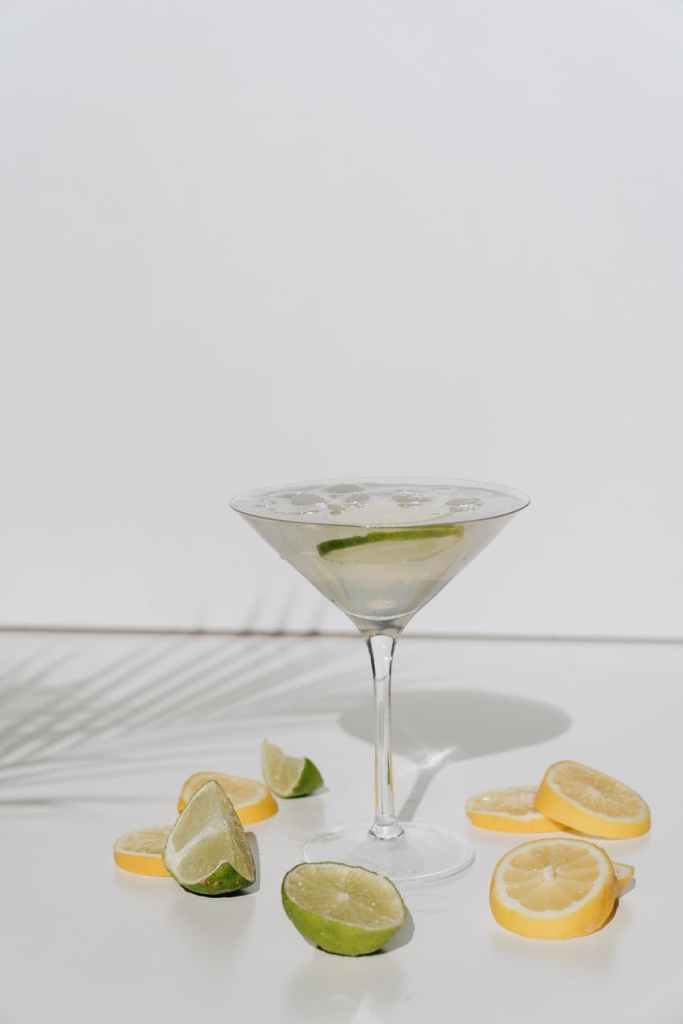
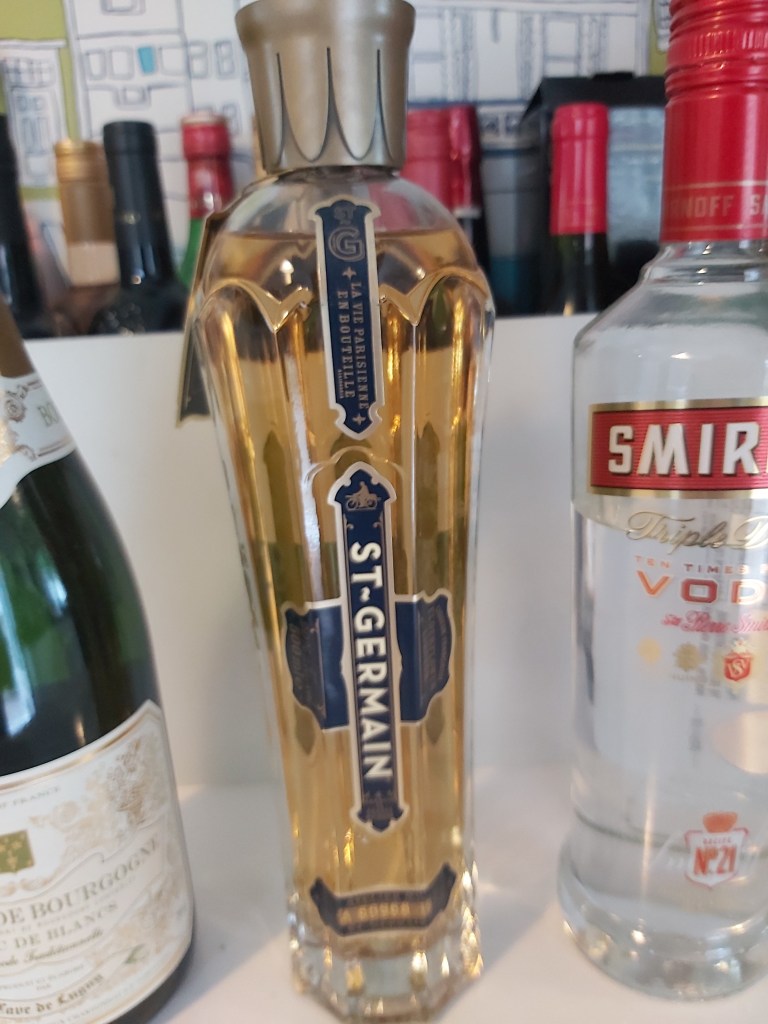
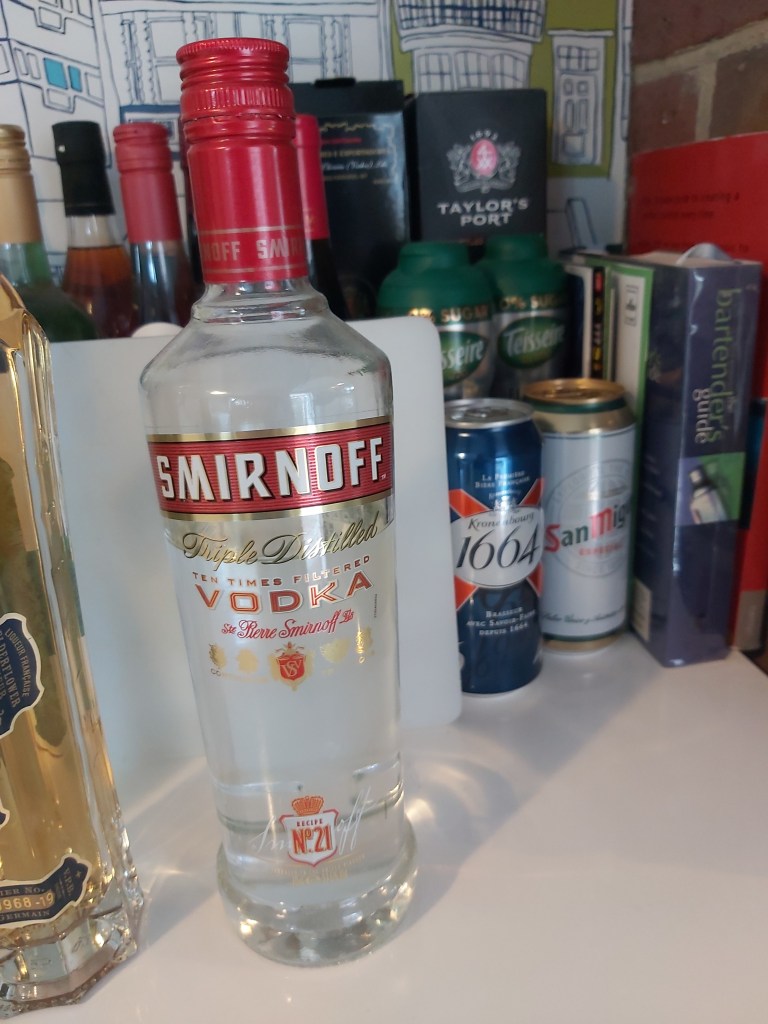
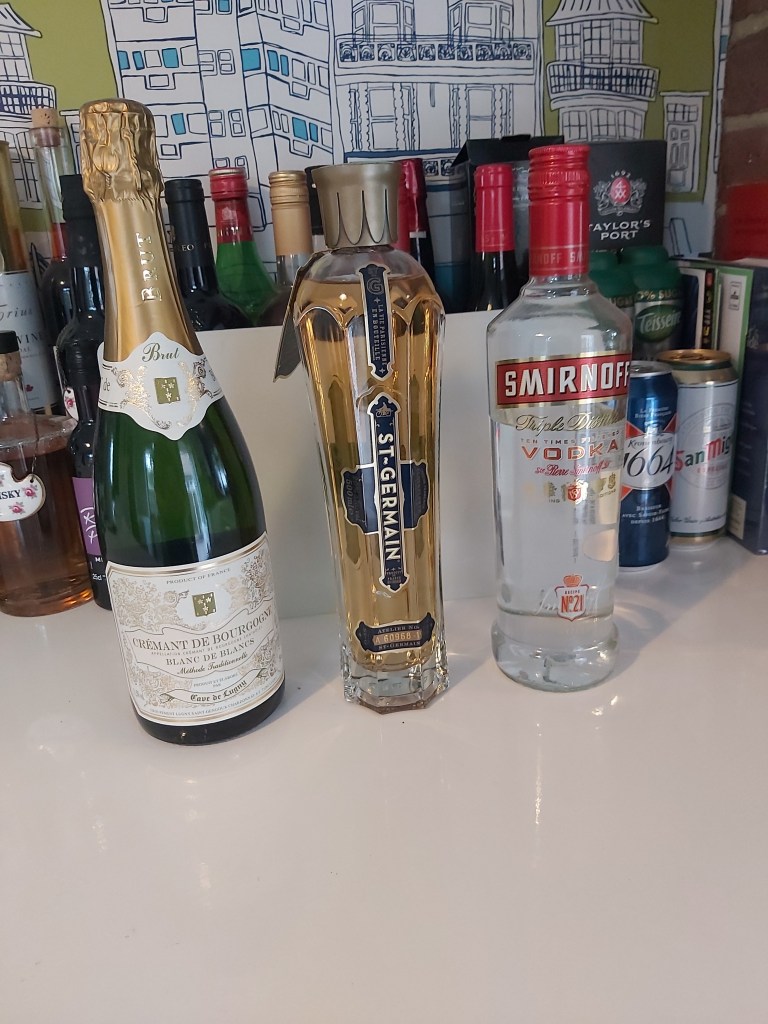
Take a flute glass and add one measure of good cold vodka. Add 1/2 measure of elderflower cocktail-St Germain is a prime exemplar, but as our old friend Ms. RS of Southend would have it: “Iceland have probably got the same, on’y less poncey and ‘alf the price!” Next add a good twist of lemon peel. Now top up with Prosecco, or if you can’t get hold of some, Cremont or Champagne may be acceptable substitutes.

You are now ready to sip and enjoy. And remembe this-keeping the bottles at close hand will facilitate easy refills for you, your family and friends.

Why do we never see this in Montalbano? Was this Rafael’s secret tipple throughout the Renaissance? Because we think it’s a fine one, and should be enjoyed more world-wide!

#italy #elderflower #vodka #cocktails #montalbano #camilleri

Are Israelis and Palestinians missing a point?

News that trouble is flaring yet again in the 3000 year old dispute between Israelis and Palestininans should be enough to cause any of us in the rational community to slump in despair. But first, where do we get 3000 years from? Well, look at the etymologies of words like Philistine, Palestine and Israel-you don’t have to be an expert in the Bronze Age to get the connection, do you? It’s like one of those ancient feuds between families in backward agricultural communities, so old that no one can remember how it started-but they’ll die to keep it going. Are such people chronically stupid-or just missing a vital point?

Elsewhere two other stories caught our eye today. Anthony Cuthbertson in the Independent reports on a really significant advance in battery technology which could transform electric car technology. Elsewhere James Gallager for the BBC reports on the results of a major project to research the epidemiology of ovarian cancer. OK, it hasn’t “worked” quite the way its founders hoped. But we feel sure that the data and techniques evolved will one day help someone to come to grips with this terrible disease. Honest people, working at the limit, to make life better for us all.

And this is what the Israelis and Palestinians miss. What you can achieve when you don’t waste all your time and energy on frivolous disputes.No, they are not stupid-there are clever people on both sides. But as they sink deeper and deeper into grievance, mutual recrimination and uncontrolled anger, they have allowed their emotions to overcome their reason. Israelis and Palestinians are actually all too human. All of us can fall into the traps of hatred, from which it is then very difficult to climb out. They are an object lesson in futility to us all.

Ovarian cancer: Setback as major screening trial fails to save lives – BBC News

https://www.msn.com/en-gb/news/world/holy-grail-battery-breakthrough-sees-scientists-solve-40-year-problem/ar-B

#israel #palestine #middleeast #reason #rational #cancer #globalwarming #electriccars #batteries

Thomas Cavalier-Smith: this is what intelligence looks like

The obcure origins of the larger groups of animals and plants-vertebrates, arthropods, that sort of thing, are a bit like marmite and cricket. Enthusiasts love them, outsiders don’t. Fair enough, we’re not asking you to drop everything and read the works of Thomas Cavalier-Smith, a biologist of formidable power and intellect. We’ll let Nature tell that story in the link below, should you feel so inclined.

No, gentle reader, our purpose is different. For we think this man’s approach to science, and to life so illuminates that all of us could learn from it, if we could rustle up the necessary humility. Look at these quotes from Thomas Richardson’s article (our bold type)

He gave the infant field of evolutionary cell biology a common language and a set of ideas to either work with or to disprove.

Cavalier-Smith’s ideas were indeed challenged and subject to extensive revision. Nobody championed these revisions more than he ………. The idea that a scientist (indeed any intellectual adventurer) could not completely restructure their understanding, or even destroy their own previous synthesis in response to new data, was anathema to him.

The great plague of the world is people who get hold of an idea and then cling on to it, come hell or high water. Everyone does it, even scientists. Perhaps the best research we could now do would be in psychology, to find out why.Then we might get a few more people like Cavalier Smith and JM Keynes and few less of the religious and political fanatics who currently waste so much time and resources with their trivial little disputes.

Evolutionary biologist Thomas Cavalier-Smith, who helped to shape our understanding of the tree of life, has died, aged 78. “His ideas were based on the thesis that we cannot grasp evolutionary history without understanding how all dimensions of a cellular system — function, structure, biochemistry, economy and spatial organization — arose,” writes his former student Thomas Richards. Cavalier-Smith’s hypotheses were challenged and subject to extensive revision — often by himself, says Richards. “The idea that a scientist (indeed any intellectual adventurer) could not completely restructure their understanding, or even destroy their own previous synthesis in response to new data, was anathema to him.”Nature | 4 min read

#evolutionarybiology #metazoa #middleeast #northernireland #afghanistan #thenarcissismofsmall differences

Henry Purcell, an English genius

Fans of The Wolf of Wall Street will recall the moment when a drugged up Donny Azov takes his eureka moment from pills and booze and yells “Steve Madden! STEVE MADDEN!” The rest, as they say, is history for Stratton Oakmont. But can you name the music that Scorsese threw on his soundtrack * as Donny floats past Jordan Belfort and into financial immortality, and many indictments?

If you said Henry Purcell What Power Art Thou?*, then you are spot on, dear reader. Purcell still remains England’s greatest composer and a brief acqaintance with his work will soon show you how and why. We at LSS are no musicologists. We’ll simply say you’ll see how his style bridges the seventeenth and eighteenth century, and leave you to the Wikipedia article* linked below. We want to hit another note, if you will pardon a little pun.

Purcell,who died young, lived his life at the moment when England probably became the most advanced nation in the world. He was born in the last year of the Republic, and lived through the Glorious Revolution and into the proper consolidation of a Parliamentary system. His contemporaries included Newton, Hooke, Wren and Boyle. It was an age of gathering belief in learning, reason and trade. When Shakespeare died in 1621 England was a monarchical tyranny (for those who don’t know, a monarch is a Dictator in funny clothes) When Purcell died in 1695 there was a free press, parliamentary votes, a sophisticated banking system and the beginnings of a consumer society. The new stock jobbers and gutter street journalists would have recognised Jordan, Donny and their crew as kindred spirits; amoral, restless, showy and money grabbing. The South Sea Bubble was just around the corner. If you want the sound of the Whig ascendancy and the start of the Enlightenment, Purcell is the perfect place to begin.

There’s another,deeper point. We at LSS are Whig fans ourselves. In our opinion national greatness comes from making the right reforms, encouraging science and the arts, and successful business. The French carried on with Royal dictatorship, court ceremony and long term decline, ending in a fearful revolution. But at some point, the God of History seems to single out one nation to carry forward progress. From 1689 England was that choice.

Henry Purcell – Wikipedia

#wolfofwallstreet #henrypurcell #baroquemusic #enlightenment #parliament #gloriousrevolution

Starting with a round up

We’re sorry that last week’s round up was delayed due to technical problems

Antimatter Stars It’s a kind of truism that in theory there should be a particle of antimatter for every one of matter. Except there isn’t-so where did all the antimatter go? Science News has a possible answer

Stars made of antimatter could lurk in the Milky Way

We thank Mr Gary Herbert for this article

The cost of ignoring science The lesson of the Enlightenment was clear- facts and reasons should trump emotion and belief. Countries which devalue science pay a terrible price. Here’s a link to a Nature editorial

By sidelining their scientists, the governments of Brazil and India have missed out on a crucial opportunity to reduce the loss of life, argues a Nature editorial.Nature | 4 min read

Are we heading for a crash? A week is a long time in politics as Harold Wilson once famously remarked. But in modern markets, another day can sometimes feel like another world. So will the recent dizzy highs last? This is from Forbes:

Is The Stock Market Going To Crash? (forbes.com)

Ten most expensive restaurants While that portfolio of yours is going up, you may want to spend a little of your wealth. Here’s wealthy gorilla with a few ideas for a good, if costly night out with a few friends

The 10 Most Expensive Restaurants in the World (2021) | Wealthy Gorilla

#astronomy #antimatter #stockmarkets #restaurants #covid-19 #pandemic