The Nobel prize for chemistry: Vindication of the Rights of Women

Dna, Genetic Material, Helix, Proteins, Biology
Image courtesy of pixabay

If you had sat down to dinner with a leading biotechnology entrepreneur around about 2008 0r 2010, the chances are he would have waxed lyrical about stem cell research. And rightly so. It has allowed tremendous advances in medicine-for example, in the treatment of damaged nerves and other tissues. Yet waiting in the wings, or bubbling under as they used to say in the old radio Hit Parade shows, was a new idea so revolutionary that it will transform life itself. We refer of course to the CRISPR “genetic scissors” discovered by Emmanuele Charpentier and Jennifer Doudna for which they have been jointly awarded a Nobel Prize. Quite right too, we say.

The story of what they did, mucking around with a new molecule called tracrRNA in an obscure bacterium called Streptococcus pyogenes is best read in the piece from The Conversation from Kalpana Surendranath of the highly prestigious University Of Westminster.( Plug: their languages department is pretty hot, too) For us at LSS the moral is deeper.

According to statistical research which we have done, women represent approximately 50% of the human population. If you systematically deny this half the right to education, and chain it to the kitchen, that’s half of your human potential lost at a stroke. No more CRISPR. No more epigenetics. Of course there are many societies and cultures that delight in the oppression of women, on the grounds that it makes for better social harmony, or the God has told them to do it. They should remember this: over time, they will be out competed by those groups that systematically cultivate their full human potential, which means the education of women above all.

As a coda we include a link to Wikipedia* to Mary Woolstonecraft’s pioneering Vindication of the Rights of Women. How proud she would be today of Charpentier and Doudna!

https://theconversation.com/nobel-prize-two-women-share-chemistry-prize-for-the-first-time-for-work-on-genetic-scissors-147721

https://en.wikipedia.org/wiki/A_Vindication_of_the_Rights_of_Woman#:~:text=%20%20%20%20v%20t%20e%20Mary,%20Fanny%20Imlay%20%28daughter%29%20Mary%20Wollstonecra%20…%20

https://www.kqed.org/futureofyou/435064/why-crispr-gene-editing-is-so-precise#:~:text=What%20makes%20CRISPR%E2%80%90Cas9%20truly%20revolutionary%20is%20how%20much,treat%20sickle%20cell%20anemia%20in%20a%20French%20teenager.

#nobelprize #crispr #epigenetics #womensrights #universityof westminster

Are bilingual people cleverer?

Language teachers and learned institutes of language are always pushing the benefits of learning another language. Well, it’s their job, innit? Stands to reason, mate. And so the argument rages back and forth-are bilingual people cleverer? Do their endless mental gymnastics looking for the right word in two languages make them more adept? Or do they just get to see a bigger variety of newspapers and TV shows?

Here’s a couple of pieces which discuss this question. Vincent de Luca* of Birmingham University (The Conversation) gives a very concise summary of the psychological and neurological factors at play. We’ve thrown in Neel Burton of Psychology Today for those with time for a second opinion.

We’ve looked at more: and for us at LSS, the answer is a firm and resounding “Don’t Know“. We don’t often take a personal note here or on Facebook. We know persons who can speak two, four and even six languages, and they are pretty smart cookies. But we also know many monolinguals who are far, far cleverer than the writer of these words. And have always remained so, despite our many years of effort in Spanish. What counts is success in life, and that depends on many factors.

https://theconversation.com/how-does-being-bilingual-affect-your-brain-it-depends-on-how-you-use-language-1462

https://www.psychologytoday.com/us/blog/hide-and-seek/201807/beyond-words-the-benefits-being-bilingual

#academicintelligence #emotionalintelligence #bilingual #monolingual #translators #interpreters #linguistics

Nobel Prize for Medicine. All that’s best in the way we think

For thousands of years humanity was in the grip of terrible diseases. Polio. Tuberculosis. Measles. Bubonic plague. Cancer. And the only apparent remedies we had lay in the hands of shamans, faith healers, magicians, holy men and witches. People who, whatever their theological qualifications, knew nothing about biology, chemistry or reasoning. Instead of vaccines, spells. Instead of antibiotics, charms. Instead of surgery, chants. The victims died-horribly. Reality always trumps belief.

Slowly some began to learn the tools of reason. Of accumulating facts, and checking them. Realising that any theory had to obey two essential rules. 1 Does it fit with all observable facts? 2 Is it internally consistent?

Sometimes, this way of opinion prevailed. So it is heartening to report a rare success for our side. Today Nature reports on the marvellous discovery of hepatitis c, a terrible illness that ruined lives and often killed its victims. Here’s the report and a link for a short but enjoyable read.

A trio of scientists who identified and characterized hepatitis C — the virus that is responsible for many cases of hepatitis and liver disease — are the recipients of the 2020 Nobel Prize in Physiology of Medicine. Harvey Alter, Michael Houghton and Charles Rice share the award. “It stands out as an emblem of great science,” says Ellie Barnes, who studies liver medicine and immunology. “We’ve got to a point where we can cure most people who are infected.”

Houghton has turned down high-profile awards because they didn’t acknowledge his collaborators, George Quo and Qui-Lim Choo. “It’s all based on the Nobel prize,” explained Houghton in 2013. “In his will, Dr. Nobel says there can be no more than three. All of the other major awards tend to copy that and limit it to three. It’s antiquated.”Nature | 5 min read & National Post | 5 min read (from 2013)

The other side are back in the ascendant. They have many advantages. The emotional luxury of wallowing in grievance, anger and cheap beer. The lazy luxury of not having to think. Of being backed by well funded media machines. By contrast, our side delivers tangible results. They can’t do without us forever.

#nobelprize #hepatitis #evidencebased #medicine #unreason

Could Covid-19 drag a major debt crisis in its wake?

According to Larry Elliott* of the Guardian, the answer is “yes-it could”. Stalling economic growth, collapsing exports, and fewer to remittances by migrants to poor countries all suggest and economic time bomb which could blow at any time. According to Elliott, the canary in the mine is Zambia, but there are many other countries who will find it incredibly hard to pay their sovereign debts. Ellliot’s article is well hyperlinked, but if you really want to lift up the hood and look at the engine, the one linking to Kristalina Georgieva, Managing Director of the IMF, is a good place to start.*

Debt crises are always agonising for the countries that live through them. But they are for everyone else too. Bondholders, both private and state, have to take a haircut; a lot of good investment capital is always tied up or lost altogether when these things blow up. Poor people anywhere means less demand for goods and services. Think Greece and Argentina, both well within recent memory. But above all it means political instability, extremism, and migration. To put it brutally, we at LSS always see immigration as an objective economic phenomenon rather than a political or moral one. Migrants behave like ions in an electric field. They move from negative (hunger, political repression) to positive (money). A new wave of migrants crossing the Sahara and Mediterranean could bring problems indeed to the richer countries of the north.

https://www.theguardian.com/business/2020/oct/04/creditors-must-wake-up-fast-to-threat-of-emerging-market-debt-crisis

#debtcrisis #imf #zambia #immigation #migration #restructuring

Covid 19: Is Africa coping better than the USA?

As the American death toll passes 200 000 and even the President and his team are ravaged by the Sars-Cov-2 virus, spare a thought for Africa, where they’re coping quite well, actually. Everyone remembers all those predictions in the Dog and Duck just before the pandemic. “Oh it’ll destroy Africa, their countries will collapse, blah blah.”

Not so. Liberia, population 5 million, has had only 82 deaths. Senegal, population 16 million, only has 302 deaths. Karen Attah for the Washington Post, surveys the story in the round. It should change your assumptions about this and many other things. (Spoiler alert: we sometimes get opening and paywall issues with the Washington Post. But it is a fine publication, and well worth the effort. so here are two links to try!)

We thank Dr S P Day of Norfolk for this story

read://https_www.washingtonpost.com/?url=https%3A%2F%2Fwww.washingtonpost.com%2Fopinions%2F2020%2F09%2F22%2Fafrica-has-defied-covid-19-nightmare-scenarios-we-shouldnt-be-surprised%2F%3Futm_source%3Dpocket-newtab-global-en-GB

read://https_www.washingtonpost.com/?url=https%3A%2F%2Fwww.washingtonpost.com%2Fopinions%2F2020%2F0

#africa #covid19 #sars-cov-2 #donaldtrump #coronavirus #pandemic #usa

What the readers saw- our weekly round up of stories from near and far

We hope you all enjoyed your cocktail night. There’s a wealth of stories for all you intelligent educated people to consider this week, so here goes- we are just going to line ’em up.

Doing it all wrong

Why the baffling differences in the way Coronavirus behaves in different places around the world? Here’s a high death rate in city A, while there’s none over in city B. Country C is poised for disaster, they said back in March-except of course, it hasn’t happened. According to Zeynep Tufecki in the Atlantic, we have been concentrating too much on the famous R rate in our modelling, and not enough on a factor called k which measures its dispersal potential. The article is written in lucid, intelligent Atlantic style. It’s a journal we recommend to anyone. Correction. Everyone

https://www.theatlantic.com/health/archive/2020/09/k-overlooked-variable-driving-pandemic/616548/

Why is being a chief executive like a man in a bookshop?

Imagine you are standing in a bookshop, and you can only afford one book. But as you look along the shelves, there are hundreds of quite good ones. History, Science, business, psychology, novels………All screaming “I’m good, buy me!” It’s the same for a Chief Executive. All your underlings are trying to get their ideas noticed, as are salesmen from outside the company, who are trying to sell you things like IT apps and water coolers. According to Warren Buffet the secret of success is to say “No!” to just about everything. Here Marcel Schwantes of Pocket explains why.

https://getpocket.com/explore/item/warren-buffett-says-this-1-simple-habit-separates-successful-people-from-everyone-else?utm_source=pocket-newtab-global-en-GB

Go to the ant, O sluggard. Consider her ways and be wise (Prov 6, 6)

How do complex animal societies like ants of bees manage to work together? Apparently by a few simple rules, which are observed by all. Kevin Hartnett for pocket looks at how simple algorithms hold ant societies together. “She prepares her bread in summer, and gathers her food in harvest.” !!

we thank Mr Peter Seymour of Hertfordshire for the above stories

Nature is another publication that we rate highly. Here’s a fantastic story about using AI to diagnose Covid 19 just from your voice. There’s a link to the main story as well

Alexa, do I have Covid -19?

Researchers are exploring ways to use people’s voices to diagnose everything from coronavirus infection to depression. They are using artificial intelligence to recognize when a condition is disturbing the delicate dance of the brain, nervous system and vocal anatomy. Even the words you use can be a sign: for example, a shrinking vocabulary might indicate a neurodegenerative disease. Researchers emphasize that the technology would be only a part of a clinician’s diagnostic arsenal, and there are serious privacy concerns — but the advantages of such a light-touch tool are clear. “This is not invasive, it’s not a drug, we’re not changing anything,” says Tal Wenderow of the voice-analysis company Vocalis. “All you need to do is speak.”Nature | 12 min read

We hope you shall be restful today, gentle readers, as befits a good weekend. We at LSS are going to be rather occupied with some good people who want us all to survive global warming. We may well come back to you, so watch this space.

#covid-19 #sars-cov-2 #coronavirus #warrenbuffet #k dispersal #artificialintelligence #algorithms #diagnosis

Friday Night Cocktails for Stormy weather

Don’t know why/ain’t no sun up in the sky, Stormy Weather..….

Sang Ella Fitzgerald and many others who covered the old Harold Arlen/Ted Koehler classic Stormy Weather. The point is, what with all the warm holiday resorts closed due to Covid 19, all the cruise ships tied up, and a storm battering southern England, what is the thirsty pleasure seeker to do?

Despair not, gentle reader, for the answer may be here. Here indeed is a list of storm- themed cocktails to get you through the howling winds and battering rains, until once again the sun shines down on us all. Our recipes this week come from the Wikipedia list of cocktails, and that old stalwart The Ultimate Cocktail Book, published by Hamlyn.

Stormy Weather

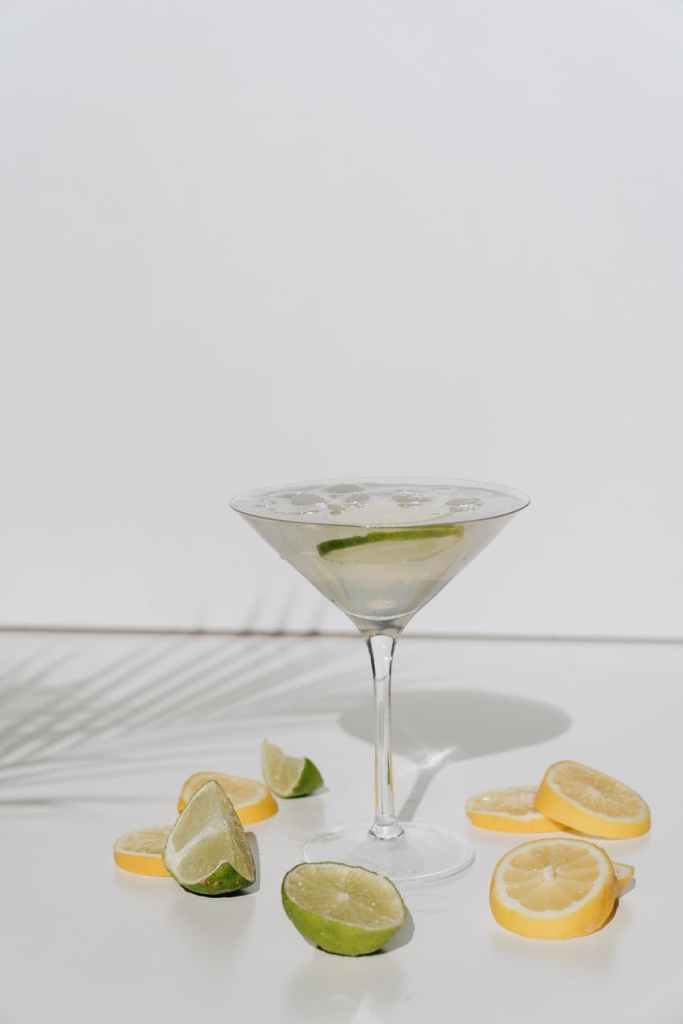
One for a a classic cocktail glass. Put three cracked cubes of ice in your best shaker and add 1.25 measures dry white gin. 0.25 measure Mandarine Napoleon. 0.25 dry vermouth.0,25 sweet vermouth. Shake and pour into a chilled cocktail glass. Decorate with lemon or orange peel spiral. Got Napoleon through many a stormy night on St Helena, no doubt.

Hurricane

Originated in New Orleans, where they know a thing or two about ’em. And yes, it really will need a hurricane glass. Here’s what wiki say:

served“On the rocks”; poured over ice
Standard drinkwarehurricane lamp–shaped glass
Commonly used ingredientsOne part dark rumOne part white rumHalf part over proofed rumPassion fruit syrupLemon juice
PreparationShake ingredients with ice, then pour into the glass and serve over ice.

When we think of New Orleans, we often think of President George W Bush and Hurricane Katrina. Some say that his decision to invade Iraq in 2003 was the start of the decline and fall of the American Empire. Well, it’s a talking point for you as you sip your delicious cocktail.

Damn the Weather

This is what Wiki states:

like many prohibition-era cocktails, the Damn the Weather was conceived as a way to hide the scent and flavor of poor quality homemade spirits, in this case bathtub gin

and here’s their recipe

servedStraight up; without ice
Standard garnishSlice of orange
Standard drinkwareCocktail glass
Commonly used ingredients1 measure gin1/2 measure sweet vermouth1/2 measure orange juice1/4 measure orange curacao or triple sec
PreparationShake with ice and strain into a chilled large cocktail glass

The whole point of this one, it does what it says on the tin.

Clear Skies Ahead

Well, it has to blow over some time! We chose this because the umbrella is compulsory. Put 4-5 ice cubes in your shaker. Add 0.5 teaspoon sugar syrup, juice of half a lemon. 0.5 teaspoon grenadine. 1 egg white, two measures of whisky- a nice standard like Famous Grouse or Johnny Walker will do.

Help Wikipedia

We’ve been using wikipedia extensively for this and many other purposes for years. It really is an attempt to provide free, impartial information for all of humankind. Please help by at least considering their donation site, which we append herewith

https://en.wikipedia.org/wiki/List_of_cocktails

Here’s the great Lena Horne‘s version of the song

#cocktails #storm #hurricane #lenahorne #americandecline #grenadine #gin #rum

The Careworn faces of past leaders

People who think that Trump and Biden are looking old, or that Boris Johnson tired, should compare their problems to those of Roman Emperors. Especially those from the troubled years of the third century. If you want to see the toll it took, you could do worse than visit the marvellous series of reconstructions by Daniel Voshart on Artbreeder.

The superb excellence of Imperial Portrait Sculpture has long been well-known. Trouble was, they were all in dead white stone. Something was lacking. Now Voshart has used both ancient sources and advanced AI to bring them to stunning, coloured 3D life. If television viewers claim to see character in the faces of our modern leaders, here it is at last for another age. We’ve posted two links below.**

If you want to see what stress does to the human face, look particularly at the haunted features of the Emperor Decius (249-251). He knew he was up against it before he took the job. Since 165, the once marvellous Roman system had been torn apart by plagues and civil wars. Since 235, they had got a lot more frequent. Decius’ first act was to rise in rebellion against his mentor, the Emperor Phillip, who was killed. Nothing odd in that; every third century Emperor expected to go quickly, either to the knife or military rebellion. But it couldn’t have helped with a good night’s sleep. Decius’s use of the Balkan armies to seize the throne left those provinces wide open to the Goths, who duly took advantage. Another big one on his to do list-no wonder those lines are etched so deep! Meanwhile he launched the first empire wide persecution of Christians, in an attempt to boost general morale. It failed on both counts. So, turning back to those pesky Goths, he marched back up to the Balkans, only to lead his army into a swamp and be overwhelmed. He was the first Emperor to be defeated and killed, which showed that suddenly the Romans had lost their mojo. At least he didn’t have to worry about hiring a stress counsellor any more.

To make it easy we’ve linked a WIKIPEDIA article* on the third century crisis below. Read it as you leaf through Voshart’s gallery. To any aspiring politician we say “Be careful what you wish for.” How about journalism or property development as an alternative career?

https://www.livescience.com/ai-roman-emperor-portraits.html

https://www.voshart.com/ROMAN-EMPEROR-PROJECT

https://en.wikipedia.org/wiki/Crisis_of_the_Third_Century

#voshart #romanemperors #stress #donaldtrump #joebiden #borisjohnson #crisisthirdcentury #AI #facialreconstruction

Avoiding foolish opinions

The internet is awash with foolish opinions and fake facts. A troll through facebook will deliver you thousands of opinions on Covid 19 from people with no scientific or medical training. It will deliver you screams of rage and hate on matters of politics and public administration from people who have never run for, let alone held, any office in their lives. They are fools; but we don’t all have to be like them

The philosopher Bertrand Russell (1872-1970) was not just that; was a pretty good psychologist. He knew no-one is free from error: but you can take some simple easy steps to avoid making a fool of yourself. We are going to look at a few of his thoughts below. But first a thank you to the website FS, which we link below, wherein you can read the whole thing for yourself. Go on, try it.

1 If the matter is one that can be settled by observation, make the observation yourself.

The world is full of people with dogmatic beliefs about things that someone else told them. Check your facts, and check the biases of the people who are telling you. Have they left something out?

2 If an opinion contrary to your own makes you angry, that is a subconsciously aware of having no good reason for thinking as you do

Remember what we said about cognitive dissonance? This is why persecution is not used in arithmetic, but is in theology. In arithmetic, there are only facts. Theology is opinion.

3 Make yourself aware of opinions other than your own

We thought that this was crucial:

 seek out people with whom you disagree, and read a newspaper belonging to a party that is not yours. If the people and the newspaper seem mad, perverse, and wicked, remind yourself that you seem so to them. In this opinion both parties may be right, but they cannot both be wrong. This reflection should generate a certain caution.

If you find yourself disagreeing with something written in the Daily Mail, take time to prove why it is wrong. It’s just as good for mental exercise as a computer game!

4 Be wary of opinions that flatter your self esteem

Both men and women, nine times out of ten, are firmly convinced of the superior excellence of their own sex. There is abundant evidence on both sides. If you are a man, you can point out that most poets and men of science are male; if you are a woman, you can retort that so are most criminals. The question is inherently insoluble, but self esteem conceals this from most people. 

Gentle readers, Russell is one of those few philosophers whose writings really do bring moments of calm reflection. God knows we need them. We invite you to try, starting with the link below.

read://https_fs.blog/?url=https%3A%2F%2Ffs.blog%2F2009%2F09%2Fbertrand-russell-on-avoiding-foolish-opinions%

#bertrandrussell #fakenews #culturewars #seeingbothsides

The Conversation-what a web site!

If the world is going to divide into hostile ethnic and religious tribes (see the works of Amy Chua and Eric Kaufman), then why not start a tribe for the educated and intelligent? We have a right to survive as well. We had even hoped that LSS might play a small part in this. Now thanks to our indefatigable interlocutor, Mr Peter Seymour of Hertfordshire, we have been guided to a site that so exactly fulfils the role that we wonder why we are writing this.

https://theconversation.com/uk

“Academic rigour, journalistic flair” is their mission statement. And they cover everything. science, medicine, practical everyday psychology, business, arts. All written in lively, sparkling prose-but all by experts in their fields, with more letters after their names than the post office.

Mr Seymour himself wants you to read this piece om procrastination. Most of us have worked for at least one boss who does that, and here’s why they do it.

https://getpocket.com/explore/item/the-psychological-origins-of-procrastination-and-how-we-can-stop-putting-things-off?

To tax or not to tax? And how much? It has bedevilled the whole discourse since at least 1910. Here Professor Vanhuysse has a new insight

//https_theconversation.com/?url=https%3A%2F%2Ftheconversation.com%2Fhow-high-should-taxes-be-new-study-shows-voters-back-lower-rates-only-for-income-earned-on-merit-145202

Well, that’s just two examples. My lords, ladies and gentlemen, educated intelligent people everywhere, the Conversation is a new Renaissance. Read it-and learn.

#theconversation #psychology #taxes