
Weekly Round Up: Feminism, Bird Flu, and 365 days of War

stories that caught our attention this week

She’s a woman  Good news for the feminist cause. The UK is about to get its first female Chief Scientific Officer. Just in time for the next pandemic, which could be the ultra dangerous H5N1 flu strain, which is starting to find its way into humans, as we explain below. Meanwhile, here’s Nature

Angela McLean, a mathematical biologist who helped to steer the country’s response to COVID-19, has been appointed as the UK government’s next chief scientific adviser. She will take over from clinical pharmacologist Patrick Vallance, who gained a high profile for his unflappable appearances in frequent televised pandemic briefings. McLean will need to “step back from the immediate aftermath of that crisis and look afresh at how well our system is working”, says research-policy analyst James Wilsdon.Nature | 3 min read

Sorry, what were you just talking about? Appalling animal husbandry and a feckless desire to put profit over science has nurtured appallingly dangerous strains of influenza. You haven’t heard the last of this story, gentle readers, but here’s the latest, today from the Independent

https://www.independent.co.uk/asia/southeast-asia/cambodia-girl-bird-flu-dead-b2288808.html

One Year of War It’s been 365 days since Russian Dictator Vladimir Putin launched his invasion. Today we present a series of expert views on how we got here and what might happen next

Jonathan Este looks at how things have gone in the actual fighting, which hasn’t been nearly as one sided as Putin daydreamed it would be

https://t https://theconversation.com/ukraine-war-how-have-vladimir-putins-narratives-survived-a-year-of-reality-checks-199907?utm_medium=email&utm_campaign=Latest%20fromheconversation.com/ukraine-recap-how-the-conflict-stands-after-12-months-of-bitter-fighting-200611?utm_medium=email&utm_campaign=Latest%20from%20The%

Why has Russia done so badly? Putin rose from a gangster background and  presides over a gangster regime. The result? Corruption and graft are rife, but spare at least a thought for the poor Russian recruits who are forced to fight for the regime. Here’s Frank Lewidge

Lie machine Of course it helps if you are holding a gun to the population’s head, but Putin lies like a horse coper as .well, to get them to go along with this war. Precious Chatterjee Doody makes clear

And China? Their actions in the next few days could shape human history for decades, if not centuries to come. If there is to be any human history, that is. Here’s Ian Williams for the Mail

If China supplies weapons to Russia our whole world will change FOR EVER, writes author IAN WILLIAMS | Daily Mail Online

America has its idiots too   Yes, Putin miscalculated. But don’t forget George W Bush, whose Iraq blunder arguably broke the world order and gave dictators everywhere the green light to invade who they wanted, when they wanted

https://www.msnbc.com/opinion/msnbc-opinion/george-w-bush-was-worse-remember-rcna71216

thanks to P Seymour

And our view? Western countries are not entirely angels, and we can see why some people in other lands are suspicious or even want to cheer on Putin as “the underdog”. But for us there is a line of right and wrong here. In 1994 Russia took control of all Ukraine’s Nuclear weapons, guaranteed its frontiers and agreed to refrain form aggression against it. The UK and the USA signed up to the Budapest Memorandum too; at the time, it was seen as an important step to prevent nuclear proliferation. By his action on 24th February 2022 Vladimir Putin tore up that treaty, and has unleashed a terrifying peril. He would not have done so if Ukraine had retained those weapons. The message is clear: if you want to be safe, get nuclear weapons as soon as possible. That is why his action was not just evil, but irresponsible at an almost adolescent level. He must be stopped.

#avian flu #ukraine #vladimir putin #russia #china #aggression #NATO
Who had the first bows and arrows?

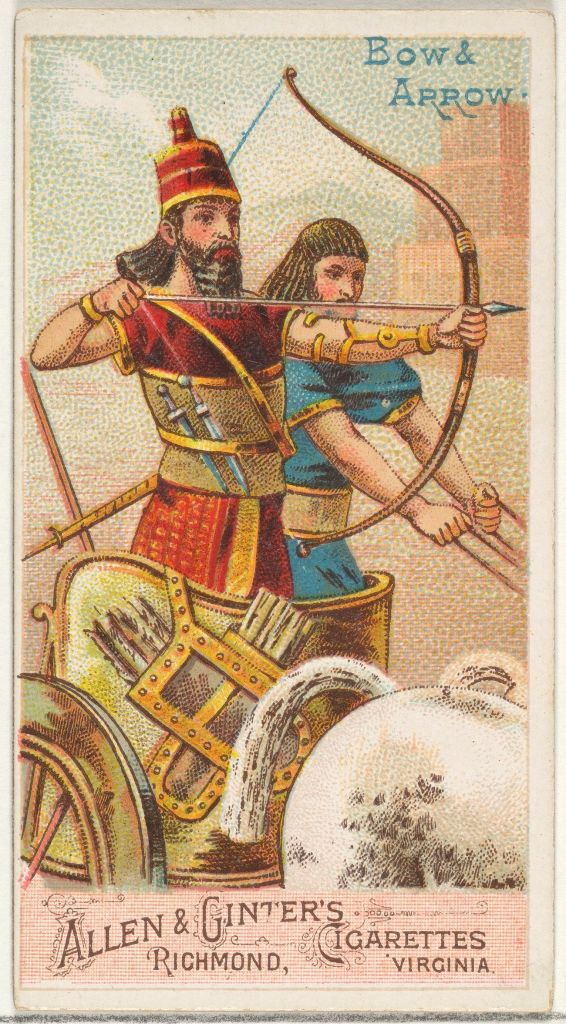
Going up against a wild animal must have been incredibly dangerous. Especially if you just had stone knives or spears, making your kill close and personal. So if you could find a way of doing it at a distance it would have been an incredible evolutionary advantage to your group. That’s why it’s important to find out who first invented and deployed bows and arrows, and a team in France think they have the answer.[1] according to Nature Briefings:

The first Homo sapiens to arrive in Europe might have hunted with bows and arrows, around 10,000 years earlier than was thought. In a 54,000-year-old-cave in southern France, alongside a H. sapienstooth and tools, researchers found hundreds of stone points resembling arrowheads — the smallest of which were so tiny that they would have had enough force to kill an animal only if they were shot with a bow. The technology could have been unique to humans: Neanderthals might have inhabited the area at the same time, but there is no evidence that they also took up archery.Nature | 4 min read
Reference: Science Advances paper

The report raises some intriguing questions. There are Neanderthal remains below and above the Homo sapiens remains at the site. How big are the gaps in time between the occupations, and did they ever meet? Secondly, this is an aberrant and isolated appearance of Homo sapiens, way beyond the range of their species at that time. Why were they there? Had some sudden change of climate, perhaps, given them a shor- lived advantage? And what is the evidence for archery in other populations of H. sapiens at this time, especially in their African homelands?

This is intriguing research, but like all the best discoveries it raises more questions than it answers. Perhaps that is a good thing. One of the more intelligent people we know usually proceeds by asking questions rather than making statements. And that has to be the only safe way to proceed in a contested field like human paleontology. And maybe many others.

#human paleontology #neanderthal #homo sapiens #archery

Nature Portfolios: the go-to must for real antibiotics professionals

We set up LSS as antibiotics blog. Because we think that the growing shortage of antibiotics presents a clear and present danger to us all, at least equal to nuclear weapons or global warming. And to create a site to showcase the latest stories, ideas, other therapies, trends and so on. If we cover other things, like climate change or womens’ rights, it’s because we think all progressive causes are  intertwined, and progress in any one of them should help our own idée fixe, antibiotic resistance. Plus no one wants to read about the same thing all the time. But it’s still an antibiotics blog.

Most of our themes come from the media. Those indefatigable journalists slaving away at institutions as diverse as the BBC, the Daily Mail, El País and a host of others who make the whole thing interesting and give us hope.  Our aim is simple:  relay their efforts, to keep the general reader up to speed.

But there’s another community who come across us: students and researchers in the field who want real time information on the latest published papers, pre prints and raw data. And, by George, Higgins, we think we have found it: Nature Portfolio [1]  A marvellous clearing house of everything you need to know which should be a jumping-off point for every serious practitioner in the field. And clearly written and edited by top-gun professionals and journalists, making their stuff about as reliable as you’ll find anywhere.( Declaration: No, we don’t get any money, credit or anything- we don’t even know these people. Disinterest is our middle name, as our most loyal readers will know)

So if you’re a pro in the field and have stumbled across us by chance, Nature Portfolio should make a profitable next port of call. And good luck with everything.

[1] Antibiotics – Latest research and news | Nature

#antibiotic resistance #antibiotics #mucrobes #medicine #research #Nature

Are designer proteins the biggest thing since stone tools?

Could designed proteins be the biggest game changer of all time, right up there with stone tools and the Industrial Revolution? According to American scientist David Baker it might be, at least according to this interview with Nuño Domínguez of El País.

Last year Google’s Alphafold programme made an astonishing breakthrough, as long-standing readers of our little blog will recall. Suddenly it can predict the structure of all proteins as they emerge from the DNA coding template. A task that had hitherto eluded the best minds on the planet for nigh on fifty years.

David and his team will take the next step. Using their RoseTTAFold algorithm they hope to design proteins for specific jobs. Want to block your nasal receptors from attacks by the flu virus? Want to cure Crohns disease? Theoretically, they design the protein. Then back calculate to the necessary DNA sequence, which they run up and splice into a handy bacteria. After which mass production is a cinch. Baker likens it to the change in stone tool technology from random bashing to specifically designed stone tools, with all the  possibilities  which that opened up. Quite a claim!

Our thoughts? Read it for yourself. (warning, you’ll need your translator software if you don’t speak Spanish. We are always cautious about big claims, but, yeah, this one has real potential to improve our lives. If only we spent more money on things like this instead of invading each others’ countries.

https://elpais.com/ciencia/2023-02-19/david-baker-bioquimico-hemos-creado-una-tecnologia-que-nos-lleva-mas-alla-de-las-posibilidades-de-la-biologia.html

#alphafold #protein #dna #rna #medicine #biotechnology

Cancer: The threat from floating DNA

Have you ever heard someone say “I thought my cancer was in remission, but now it has come back”? It’s one of the saddest things you’ll hear. Or heard how suddenly someone’s cancer has suddenly become resistant? And why do tumours spread so quickly, and so suddenly, sometimes-and other times not? The answer may be Extrachromosomal DNA or ecDNA as it’s called in the business.

According to Robin McKie of the Guardian [1] ecDNA can be thought of as free floating lumps of DNA which can dodge in and out of the main chromosomes almost at whim. And they can carry oncogenes, which seem to be the key factors in cancer genesis. And get this from Robin’s key paragraph:

 “………We have now discovered that, in some of the most aggressive forms of cancer, the oncogenes aren’t where we thought they were. They are actually on extrachromosomal DNA,” said Mischel.“The vulnerable gene had quickly disappeared when threatened by cancer drugs and was hidden in ecDNA. Then it reappeared once it was safe for it to start causing damage again.

Who Mischel is, and why he said it is down to you to discover, gentle reader, by reading the article. You should: Robin’s an excellent science writer.

Our thoughts? Well for what it may be worth, these ecDNA johnnies sound little bit like viruses, the way they can jump in and out of genomes and all that.(spoiler alert: we are not microbiologists) And what has all this to do with satellite regions, non coding areas, epigenetics and multiple gene copies, and that whole mish mash of stuff where microbiology meets information theory? But these researchers are definitely on to something. We hope.

https://www.theguardian.com/science/2023/feb/18/bond-villain-dna-could-transform-cancer-treatment-scientists-say

#cancer #tumour #ecDNA #oncology

Weekly Round Up: Life Expectancy, Hittites, India, Harry Kane,Diabetes and much more

this week’s interesting points

Falling Life Expectancy We’ve taken a rising life expectancy for granted for a long time. For too long? Despite all the many advances in things like medicine and nutrition, there’s evidence that it may have started to fall again. Why? Dunno. You tell us why-but is this like the story of the canary in the mine? with thanks to P Seymour

https://www.popularmechanics.com/science/health/a42940614/global-life-expectancy-decline-mega-event/

Hittites took the hit for Climate Change Old hands on LSS will recall our advocacy of the theories of Professor Harper and how it was climate change (with a few epidemics) that did for the Romans. Well, looks like the Hittites may have gone the same way, according to this:

Why Harry Kane and not the bloke next to him? Why are some people, just a few, so very good at what they do, be it sports, music, painting or whatever? After all we all have pretty much the same brains, nervous system and skeletons. Yet one of us ends up as Bryn Terfel, and the rest of us can’t hit a note in the shower. This article looks at footballer Harry Kane and the psychology of stepping out and performing consistently at the highest levels.

https://theconversation.com/harry-kane-is-tottenhams-top-goal-scorer-sports-scientists-explain-his-brilliance-199838?utm_medium

Will India ever reach the top? Until now most outsiders welcomed the rise of India. What was not to like?A post colonial democracy-of-sorts that will become the most populous nation on earth some time this year between the FA Cup Final and the 5th Test at The Oval. Or are they developing issues already, around things like openness and transparency which could nip this ascendancy in the bud? Judge for yourself:

https://www.theguardian.com/commentisfree/2023/feb/18/narendra-modi-hindu-nationalism-india-gautam-adani

Could vaccines prevent diabetes? Remember all those antivaxxers who marched through London to storm the BBC, only to discover it had moved? Looks like they had it wrong twice, according to this:

https://www.dailymail.co.uk/health/article-11749827/Now-scientists-claim-youre-likely-develop-DIABETES-youre-unvaccinated-against-Covid.html

Don’t throw away that old Car.….reuse it. Our researchers loved this initiative from British firm Lunaz. Their aim is to put electric engines in old frames made for the days of diesel. At the moment they are concentrating on lorries and commercial vehicles, but how long before your prize Cadillac gets a new electric engine, and you still know where to put your coffee cup?

https://www.electrive.com/2021/12/02/lunaz-announces-new-ev-conversion-facility-in-buckinghamshire/

Those we have loved Fifty years ago, an elderly member of our editorial board, then 15 years of age, sneaked into a cinema in Ealing, West London to see A Clockwork Orange “It had an X certificate, meaning only people 18 and above were allowed,” he recalls, “but I put on a suit and tie, affected a breezy confidence I did not feel, and bluffed my way into the afternoon matinee. They probably needed to sell some tickets, so I got away with it” Wendy Carlos (nee Walter) reworked a lot of famous tunes in the electronic mode so in vogue back then. Here’s her take on Purcell’s Music for the funeral of Queen Mary, which of course opened the film

#life expectancy #population #health #excellence #bryn terfel #sports #india #modi #a clockwork orange #electric vehicles

Friday Night: Burgundy

No region, no word is so evocative of European Civilisation than “Burgundy“, that region of East-Central France that is home to some of the finest, and priciest wines on the planet. The region seems to have been home to vineyards since at least the second century AD. The Rhone-Saone corridor was crucial in transmitting all the elements of civilisation from the Mediterranean lands of Italy and Greece up into the dark and woody north, and good food and wines were premier in the Romans’ priorities. The name itself seems to have come from the Burgundians, a tribe who briefly ruled in the area after the collapse of the Western Empire, and who themselves may have originated on the distant Baltic island of Bornholm, a region little known for viticulture.

It was the monasteries of the middle ages, particularly the Cistercians, who took the region by the neck, as t’were, and originated the obsessions with terroir, appellation, grand cru and all the other arcane terminology beloved of the cognoscenti. Wikipedia has a good baseline link here [1] and we include a link also to the Wine Society to act as a point of departure for more serious explorers, as well as some ace pictures [2]

Where to go and what to buy? Well, what follows is largely for UK readers for obvious reasons (we are no longer in any position here to tell the rest of you what to think!) but it shows what can be found in a good supermarket. We’ve largely chosen Waitrose,[3] but any good mid range retailer would do as well.

Entry Level: We thought their Cave de Lugny Chardonnay, Macon-Villages makes a very reasonably priced starting point at £10.99. It’ll get you accustomed to the bottle and the labels without breaking the bank. And at least you can say you’ve tried., Fans of the marvellous old TV show Clochemerle will demand Beaujolais is “let in”-so why not a Morgon la Chanaise at £14.99?

Mid Range Ah, now you’re getting serious At £36.99 a No1 Cote de Beaune is one to lead a special dinner party, and will partner most meats and birds well, especially roast. We have never been big followers of the so called red/ white dichotomy with grub, and usually keep a bottle of both on the table. People seem to drink them just the same, especially if yoyu.ve poured a few cocktails into them before all sat down.

Getting Heavy What, are you a Conservative Party donor or something? In which case a Volnay en Chevret Preier Cru is just for you, though even you may want to drink it slowly at £50.00 a bottle. Or how about a Louis Jadot Chassagne Montrachet Premier Cru at an eye watering £75.00? But these prices are piffle for real Burgundy lovers.

Sparklers We’ve never understood the obsession with Champagne, especially when the Burgundy region is able to produce such a good sparkling wine as Cremant. To get you started try an absolute bottom of the range Louis Bouillot Cremant de Bourgogne from £1400 at Sainsbury’s. And ask yourself-“what would I pay for a Champagne like this?” We only ask

Whatever you are doing this weekend, enjoy

[1]https://en.wikipedia.org/wiki/Burgundy_wine

[2] https://www.thewinesociety.com/discover/explore/regional-guides/burgundy-ultimate-guide

[3] https://www.waitrosecellar.com/burgundy-wine#%2F%2Fwww.waitrosecellar.com%2Fwebapp%2Fwcs%2Fstores%2Fservlet%2FCategoryNavigat

#burgundy #cremant

Is Covid-19 the nail in the coffin for antibiotics?

Antibiotics don’t work against viruses. SARS-Cov-2, which causes Covid 19 is a virus. So why prescribe antibiotics for it? Duh!

Except people in a hurry, scared people, people desperate for closure to their problems will put enormous pressure on doctors to do something. We know of cases where doctors and other health professionals have been threatened, abused, their surgeries damaged, all for trying to avoid prescribing antibiotics to angry, frightened members of the public. The results? Another body blow to medicine as resistance rises, and the diseases which can be treated by antibiotics become ever more deadly.[1] As this piece from the Conversation shows.

Most of the problems of the world are caused by these same angry, ignorant sorts who want a solution. They listen to conspiracy theories of all types. The swarm in the consulting rooms of quack medics, nutritionists and other types. They are grist to the mill of all kinds of politicians and popular newspapers and websites whose stock in trade is angry emotion, not calm reason.  And sometimes the results can actually be measured, whether in medical statistics or  investment and trade figures, as for example in the United Kingdom. Or shooting victims in the USA.

LSS was started to help counter the problem of antimicrobial resistance. But it wasn’t long before we discovered the cause was more widespread, and more damaging. We thank you for continuing with us.

https://theconversation.com/antibiotics-are-being-inappropriately-prescribed-for-covid-increasing-the-threat-of-antimicrobial-resistance-research-199480?ut

#antibiotics #populism

Shrill reactions to Ditchley shows the game is changing

“I can always tell when he knows he’s in the wrong and can’t admit it. He starts getting angry and shouting.” This was one of the ablest women this writer has ever worked for, talking about the manager above her in turn. The case was particular, in a long defunct, far away laboratory. But it was a general lesson(boy, did we need some in emotional intelligence!) and it has lasted with us to this day.

Which brings us to a recent meeting at a place called Ditchley Park in England. It’s a big house used for non secret meetings of people who have had a little experience in life, maybe run a business or a government department, and come together periodically to talk about lots of different topics of interest. A sort of pub night out without the football screens, if you like, and not normally calculated to excite the interest of many of us with better things to do at the weekend. Except, as Martin Kettle[1] reports for the Guardian, this one has excited paroxysms of rage from quarters as diverse as Nigel Farage, The Sun, the Daily Mail, and a host of others who advocated Brexit in 2016.

It is not that we at LSS have any desire to reverse Brexit, and consider any attempt to do so as entirely ill-advised. But any consideration of this country’s economy must consider it as an important factor. Just as in those families where daddy’s drinking must eventually be confronted, however much he shouts and hollers that he has no real problem. As our long-ago boss made clear: he knows, or he wouldn’t shout so. There always was a case for Brexit, but it was never on economic grounds. What its defenders fear is that the slightest, tangential hint that even a particle of their project may be wrong engenders a fear that the whole may be mistaken. And nothing betrays their fears and anxieties more than the hysteria of their reaction. The writing is no longer in the pages of their journals: it’s on the wall.

[1]https://www.theguardian.com/commentisfree/2023/feb/14/ready-to-talk-about-brexit-failure-fix-it

#brexit #ditchley park #economy

A Cure for Autism? No, but a welcome step forward

What is autism? Can we cure it? Should we even try to? All these questions are raised again by some new research into the role of a drug called Lamotrigine,  which was originally developed to treat epilepsy. It’s all so intriguing that we’ve two pieces for you, one from Caitlin Tilley of the Mail [1] and one from Psychreg.[2] In fact, their first paragraph was so good that we consider it to be a masterpiece of science journalism and repeat here as a model, for it sums up the whole thing masterfully:

Behavioural disorders found in autism are linked to various genetic changes. Researchers at Hector Institute for Translational Brain Research (HITBR) discovered a new molecular factor causing this. Normally, the MYT1L transcription factor preserves nerve cells’ molecular identity. But when it’s switched off genetically in human cells or mice, it causes autism symptoms and functional changes. By using a drug that obstructs sodium channels in cell membranes, the consequences of MYT1L failure can be undone and the behavioural and functional issues in mice can be reduced.

All of which raises questions. Firstly, the research: is Autistic Spectrum Disorder(ASD) in mice really the same as it is in humans? Haven’t people been investigating anti epilepsy drugs and ASD for more than twenty years? And isn’t the whole ASD thing a bit complex anyway? Do we really understand as well as we do things like star formation or liver cancer? [3]

Secondly, the ethical problem. Alright, we know how difficult it can be for some families to have a member with ASD.  But what would a “cure” involve, exactly?  The research of Dr Mall and his team is nowhere near that yet, as they would be the first to admit.  But it is one more step into that morass of the unknown, the human brain and its mysterious workings. And that we do welcome, unreservedly.

[1] Scientists ‘CURE autism’ using $3 epilepsy drug in mice – in potential breakthrough  | Daily Mail Online

[2] New Drug Alleviates Autism-Associated Behaviour in Mice | Psychreg

[3] Autism spectrum – Wikipedia

#asd #autism #epilepsy #neurology