
Hiding in Plain Sight? The origin of some dreadful diseases

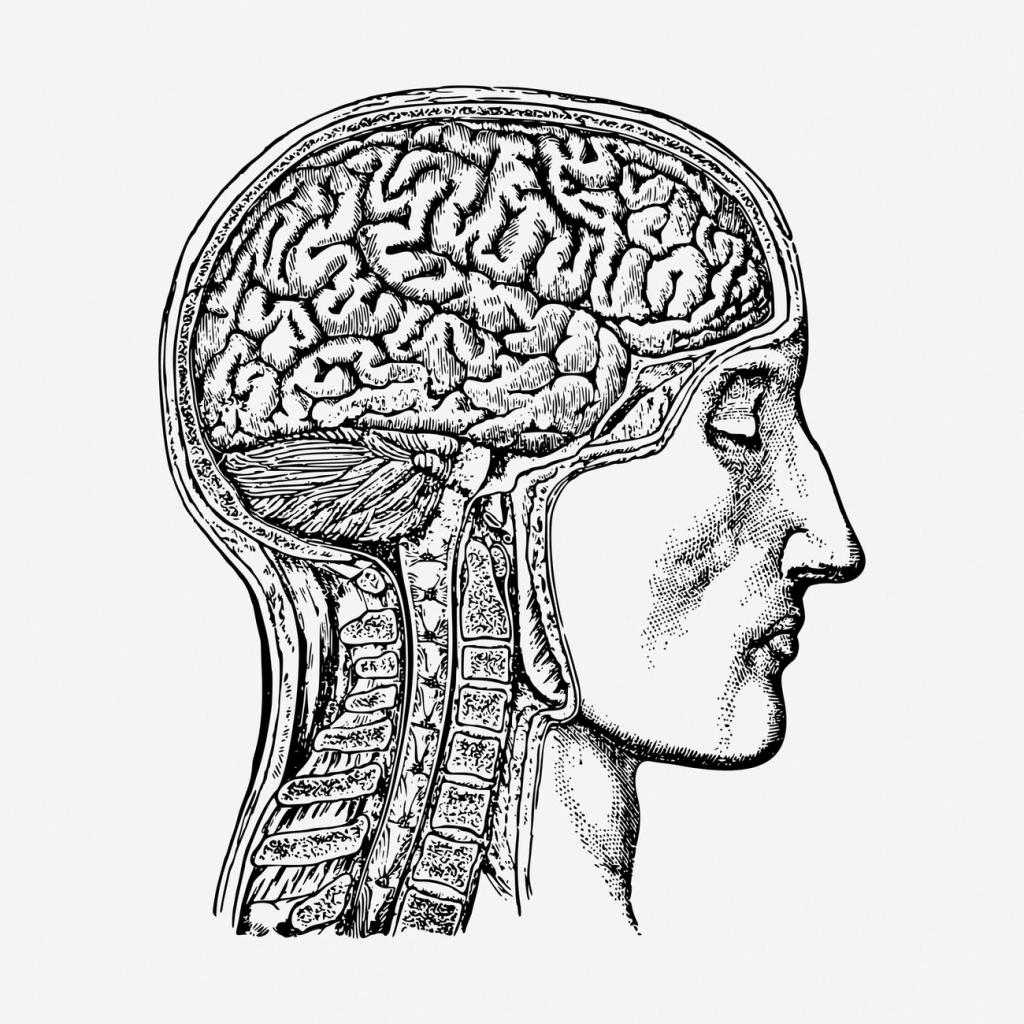
Parkinsons is a dreadful condition, which gradually takes away the mobility and co ordination from 145 000 victims in the UK alone. Robbing them of dignity, happiness and any chance of a decent life. It seems to come in at least three forms, and is associated with the progressive loss of dopamine secretion in the brain. But up to now its cause remains unknown.[1]

However, a new study by scientists at he University of Helsinki suggests a link to a common gut bacterium called Desulfovibrio, which seems to produce a protein called α-synuclein, which may damage nerve cells and lead to the onset of the condition. You can read an excellent story on the whole thing in the Mail here [2] by Hannah Macdonald. It’s early days yet, and the samples are small. But it leads us on to something which has intrigued us for a long time.

One of the pleasures of being a science journalist, as opposed to a scientist, is that it leaves one free to speculate, and make connections where the strict rules of scientific procedure preclude wiser heads from speaking. For some time now, the medical press has been buzzing with intriguing speculation about the origins of diseases and disorders of the digestive tract. To give another digestive example: The Conversation recently carried a piece on the origins of Alzheimers and gum health [3] Again, not conclusive; but pointing somewhere, perhaps? And we could add two other diseases of mysterious origin, which ravage the lives of millions; Motor Neurone Disease and Multiple Sclerosis. Would it be a total waste to gamble a little money on further research into the gut, its microbiomes and general health, in the pursuit of such a good cause?

We at LSS love it when the truth was discovered to be there all along hiding in plain sight. We still recall our delight when it was revealed that dinosaurs had never gone extinct, but were floating around on the Round Pond in Kensington Gardens, calling loudly for supplies of bread. Could it be that our gut instinct is right?

[1]https://www.parkinsons.org.uk/information-and-support/what-parkinsons

[2] https://www.dailymail.co.uk/health/article-12062739/Parkinsons-caused-common-bug-gut-researchers-say.html#comments

[3]https://theconversation.com/alzheimers-is-linked-to-gum-disease-but-bad-oral-health-is-not-the-only-culprit-110649#:~:text=There%20is%20an%20increasing%2

#parkinsons #dopamine #hannah macdonald #gingivalis #alzheimers #dinosaurs #MS #MND

Why Prince Andrew should have listened to the Talking Heads

Take it from us, we feel sorry for Prince Andrew, the disgraced member of the British Royal Family who used to be HRH Duke of York, colonel of regiments, darling of the popular rags and mags, and many other things. Perhaps he still is some of them. However, it doesn’t really matter. Because he has fallen so very far, so very completely, from such a position of grace, that it would be inhuman not to feel some sympathy. And above all to ask why. Because if it can happen to him, it can happen to any one of us.

“Prince Andrew has no hinterland” explains Royal Correspondent Valentine Low. [1] Why should he? Unlike his more cerebral elder brother, this Prince passed straight from hyperprivileged upbringing to posh school to immediate commission in the Royal Navy. (an admirable institution in many ways but not one in which qualities such as reflection and contemplation are strongly encouraged) From then on, the young man’s dream: war hero, celebrity, and unrivalled access to young females in breeding condition, as the zoologists say. It must have seemed great-why waste time to stop and think?

“The unexamined life is not worth living” asserted Socrates. No one would dream of asking Prince Andrew to study Socrates, or any other philosopher. It would be unnecessarily cruel, and futile. But there was someone else around, in his youth, who said the same thing more accessibly. That someone was David Byrne and his popular musical singing group the Talking Heads. who famously observed:

And you may find yourself in a beautiful house, with a beautiful wife
And you may ask yourself, “Well, how did I get here?
” [2]

Andrew never seemed to stop to muse upon the fragility of the human condition. How provisional good fortune can be. Many like him, who have fallen, find comfort in intellectual or religious beliefs developed when the good times still seemed to roll. Did he not hear this song once, while entering a nightclub in all his pomp? While navigating his expensive motor car along the well-manicured lanes of Surrey? And if not, how does he cope now, when all is stripped away? Look on this Prince, this hero-and feel pity.

[1] https://www.theguardian.com/tv-and-radio/2023/may/01/andrew-the-problem-prince-review-a-deliciously-vicious-reminder-of-the-dire-state-of-the-monarchy

[2] extract courtesy https://www.bing.com/search?q=talking+heads+once+in+a+lifetime+lyrics&form=ANNTH1&refig=fe29d298bbd64d648428aa500e91de36&

#price andrew #socrates #talking heads #fate

and if you’re interested, here’s the song in full

Microbiome Studies show why it’s good to be cautious with antibiotics

Pets are good for you. Playing in the garden mud is good for you. Being poor is good for you. Antibiotics are bad for you.  If you want to avoid Inflammatory bowel disease, that this. What! Have we gone completely mad? Have we overthrown the whole raison d’etre of LSS at a stroke? Should someone ring down to security and have the entire editorial board ejected into George Street, stripped of their security passes, and admonished never to return again?

The truth, as in so many cases is more subtle and nuanced. That’s why you’ve come to this site and not places like Fox News, where concepts like nuance, subtlety complexity and interpretation seem, shall we say, less prized. Allow us to explain.

There exists, in the University of Newcastle in Australia, a very clever lady called Nisha Thacker. And she has carried out one of those very thorough Metastudies which look at the connections between Inflammatory Bowel Disease (IBD) and early life experiences in children.  To summarise:

Children and adolescents face greater risk of inflammatory bowel disease (IBD) when exposed to antibiotics or a Western diet at early ages, or when their family has higher socioeconomic status, according to a study being presented today at Digestive Disease Week (DDW) 2023.

The full story can be found here [1] in the Medical Express. Our researchers also found her speaking on the BBC  (PM programme 8 May 2023; look at 45 minute marker)[2]

One particularly intriguing finding was that, after a course of antibiotics, children in less developed countries recover their gut biota much more rapidly than their over sanitised peers in richer regions It’s one of several factors which might affect the development of IBS-but read for yourself.

So, does all this mean antibiotics are bad, and we should all go pout in the garden and get filthy dirty? Of course not, and that’s not what Nisha is saying. What she does imply is a cautious, balanced approach to antibiotic prescription, much more sensible diets, and of course no smoking. Wise advice all round, in fact.

[1] Pediatric IBD risk linked to antibiotics, Western diet and higher family income (medicalxpress.com)

[2] BBC iPlayer – Home

#health #medicine #antibiotic resistance #microbiome #gut #superbug

We won’t beat Computers. So why not join them?

“If you can’t beat them, join them” was our weary response to the current buzz around AI, Chat GPT and Quantum Computing. Wherever we have been in the last week-round these offices, along the streets of Croydon, mingling with the crowd in the Porter’s Arms-we hear the same worries and fears. ” blimey-these ‘ere computers, guvnor-they’re cleverer than us! They can write better’ n wot we can, play chess better-they’ll be running the country next thing you know, innit!”

On that last one, we wish.

It’s like standing with a bunch of Homo erectus the day after Homo sapiens have moved into the valley. The former may survive for a bit, but their days of being number one are already over. There’s nothing you can do when basically, your brain just can’t think fast enough for the next level in the game. Except one maybe.

We must look now to fuse our beings with the cyber entities which stand ready to replace us. One of the reasons they look so scary is that they run on electricity, whereas we and every other living thing there has ever been on this planet run on flesh and blood. Good old DNA is our data base, none of your nasty silicon and gallium arsenide, thank you very much. Yet DNA is a fantastic medium for the collection and storage of data, as this entry from Wikipedia makes abundantly clear. [1] Theoretically at least it should now be possible to engineer human-computer hybrids of immense intelligence and longevity, ready for the challenges ahead, such as the exploration of space. True, these creatures will not be exactly like us. They will require a new species name at the very least. But it has happened before. As Arthur C Clarke presciently observed, the very invention of tools led to new selection pressures on the users which modified them out of all recognition. But the human line survived, and prospered. At least until now.

There’s an old saying in the East. “When a King nears the end of his reign, he should give less thought to how he might extend his dominions, and more to who might with honour replace him.” Time to start thinking, gentle readers.

[1]https://en.wikipedia.org/wiki/DNA_digital_data_storage

#ai #quantum computers #chatgpt #evolution #humanity

Weekly Round Up: Jewellery, Pornography and 7 reasons to be optimistic about cancer

things we liked this week

Jewel of the past An ancient ornament has been uneathedd from the famous Denisova cave in Siberia. It was made by humans, or at lest worn by them. But the power of DNA analysis to reach back 20 000 years to answer this question is awesome, as Nature Briefings explains

A woman who held a deer-tooth pendant some 20,000 years ago left her genetic calling card on the ancient treasure. Scientists unearthed the pendant in Denisova Cave in Siberia, Russia, which was once home to several ancient human species, including the Denisovans. To glean details about who made or wore the pendant, researchers coaxed DNA from inside pores of the tooth — without damaging the priceless item — then compared the genetic sequences with other sets of ancient DNA. The woman was a member of our own species, Homo sapiens, and had north Eurasian ancestry. “It’s almost like you open a time travel machine,” says study co-author Elena Essel.Nature | 3 min read
Read an in-depth analysis of the research

Reference: Nature paper or try the very readable Research Briefing summary by co-author Marie Soressi (Nature | 6 min read, Nature paywall)

Porn to be wild The rational argument against pornography is the way it distorts and tells half truths about the complexities of human sexual and social relationships. The damage this can cause is eloquently described by Alessia Tranchese of the Conversation

https://theconversation.com/why-we-need-to-talk-about-porn-when-we-talk-about-andrew-tate-20105

Some like it hot But not if you live in parts of Spain and other regions of Southern Europe. Statistically, this catastrophe has to be caused by climate change. What have you got to say to that, Donald Trump?

https://www.theguardian.com/environment/2023/may/05/april-mediterranean-heatwave-almost-impossible-without-climate-crisis

Seven Reasons why cancer won’t win The World Economic Forum has been sneered at as another talking shop where the great and the good meet up for cocktails and never do anything. But every caricature hides a truth. Here is their very nice summary of the very latest lines in research and why there’s still a great deal to be optimistic about

https://www.weforum.org/agenda/2022/05/cancer-treatment-and-diagnosis-breakthroughs/#:~:text=1%20Cancer%20is%20one%20of%20the%20world%E2%80%99

Another Green World Fans of the old Arena programme on BBC TV will recall the tranquil, elegiac music of Brian Eno which opened it. It sums up memories of warm nights on London’s South Bank in the 1980s as your evening was over and one downed a last G and T before heading off to Waterloo and the long haul to the suburbs. Here’s a sampler

#human evolution #dna #jewels #pornography #misogyny#climat change #donald trump #global warming #WEF #cancer #oncology #brian eno

Friday Night: Homage to Alice Lascelles of the Financial Times

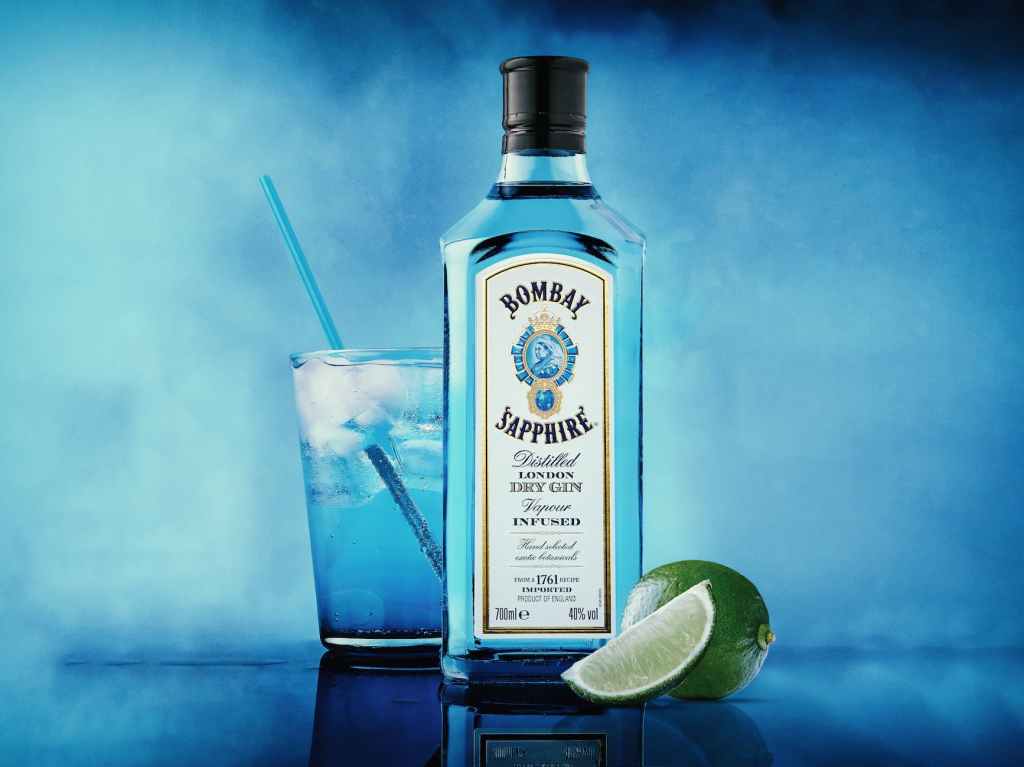
No, we’ve never met Alice Lascelles. Bit out of our league professionally, and, we suspect, intellectually. After all she works for the Financial Times, goddammit. Even the readers of that are bit nifty with the old grey matter, so what must the writers be like? But we do recognise a kindred spirit when we encounter one. Someone who can kick over the traces a bit on a Friday night. And end their week with a stylish sophisticated cocktail.

And she clearly knows something about her brief. This week, Alice regales us with her encyclopaedic knowledge of the blue cocktail family. Which according to her, are the in thing. All the rage. Cool. It, darling. Which makes it imperative that we hand over to her as soon as possible, which you can do by clicking on the link below.[1] Read it gentle readers, to discover delights as jigglers, Pow3r Juice, Eyes of Ibad and the Caribbean blue. Stylish venues such as Milady’s in SoHo. The Cabinet in East Village and the Library by the Sea Bar. And luminaries such as Julie Reiner, Milo Occhipinti and John deBary. It all sounds a long way from a pint and a punch up in the Dog and Duck, doesn’t it?

But that’s what you get from the FT, gentle readers. Quality. We’ve waxed lyrical about staffers Simon Kuper and Camilla Cavendish in the past. Now Alice joins the great pantheon of writers from “the pink ‘un“, as its known to insiders, in receiving our full and unqualified endorsement. And remember this: a blue cocktail for a blue day is all we need, to paraphrase the immortal Nick Heyward. Happy Friday!

[1]https://www.ft.com/content/051e0e62-301f-47fd-b66d-eeea91e1fb89?shareType=nongift

#alice lascelles #cocktails #blue curacao

The mental trick that delays action on climate change

“All or nothing at all” sang Frank Sinatra in the course of his popular hit All or Nothing at All. It’s a common enough phrase. But climate change denialists and their media out riders have used the thinking behind it to cast doubt, slow action and potentially destroy millions of lives. How so? This lucid piece by Jeremy Shapiro for The Conversation explains.

One of the fundamental errors of the human mind is black and white thinking, or, to put it another way, the all-or-nothing bias error. Where every new problem is instantly reduced to a stark “either A is true or B is true”. The possibility of subtlety, complexity and nuance is entirely dismissed. Why? As Jeremy puts it:

People are often susceptible to it because in many areas of life, dichotomous thinking does something helpful: It simplifies the world.

Binaries are easy to handle because there are only two possibilities to consider. When people face a spectrum of possibilities and nuance, they have to exert more mental effort. But when that spectrum is polarized into pairs of opposites, choices are clear and dramatic.

The consequences are deadly. He goes on:

Climate change deniers simplify the spectrum of possible scientific consensus into two categories: 100% agreement or no consensus at all. If it’s not one, it’s the other.

A 2021 review of thousands of climate science papers and conference proceedings concluded that over 99% of studies have found that burning fossil fuels warms the planet. That’s not good enough for some skeptics. If they find one contrarian scientist somewhere, they categorize the idea of human-caused global warming as controversial and conclude that there is no basis for action.

Dear readers, you know the rest. Look out of the window if you don’t believe us. If not, try to recall the debates on tobacco and health. Drinking and driving. Seat belts. Remind you of something?

As we see it at LSS the real weakness that has got us into this mess is educational. Far too many people leave school with the mistaken belief that knowledge equals certainty. And certainty equals knowledge. They are not the same things. Knowledge is awareness of the confidence limits which apply to a particular set of observations. Certainty does not exist; it is a delusion of weak minds whose owners are desperate to overcome feelings of insecurity and dread. it is a form of ignorance.

The battle between knowledge and ignorance continues. Will we all survive to see it resolved?

https://theconversation.com/the-thinking-error-that-makes-people-susceptible-to-climate-change-denial-204607?utm_medium=email

#climate change #global warming #cognitive error # denial

Rawls and the New Whigs-5: Who was John Rawls?

Could the ideas and writing of John Rawls (1921-2002) provide a way ahead for progressive thinking?

Rawls was that rare thing- a Harvard Professor and a soldier. His service as the latter in the brutal Pacific theatre of the Second World War privileged him with insights largely unavailable if he had been solely the former. It was in the pitiless environment of the trenches that he first wondered “is there a rational way to construct an environment where things like this can be avoided?” It was the way that he followed up on this speculation that has made him such a crucial figure in western thought ever since.

There is no room here to do more than signpost you to sites which discuss his ideas. [1] [2] These links will afford you some oversight of the man and his works. You may delve deeper if you wish. Yet one central theme stands out. His conviction that any stable society must be based on Justice; curiously, a trope which St Augustine put at the front and centre of his ideas on society. Rawls’ insight was to construct a rational theory of Justice based on something he called the Original Position. Essentially it is this: how would you design a society if you did not know what point you would occupy in its social scale? Most people would want safeguards for the underprivileged, and it is from this that a natural justice flows. [3]

Unlike Marx and the Religionists, Rawls does not claim to provide all of the answers. But he does suggest a way of thinking about what a stable, more peaceful society might look like. And we certainly need more of both of those; very badly.

[1]https://www.theguardian.com/commentisfree/2023/apr/14/labour-policies-philosophy-john-rawls-neoliberalism

[2]https://en.wikipedia.org/wiki/John_Rawls

[3] John Rawls A Theory of Justice Harvard University Press 1971

#john rawls #liberals #progressives #justice #st augustine #original position #liberty #equality

Another thank you to all readers

Once again, a thank you to all readers and contributors this month. We’ve had quite a few new ones in both categories this last few weeks or so, and it’s becoming quite a little community of shared ideas.

We’re still here mainly to promote the cause of more medical research in general, and antibiotics in particular. But people like things varied, or so they tell us. And anyway, aren’t the things that caused the lack of antibiotics in the first place all related? Most of our problems come from short sightedness, greed and lack of education. For example; what might have happened if all the money spent on the Ukraine conflict had been ploughed into cancer research. Dare we hope that is more than a platitude?

So once again, welcome to everyone new, and thanks to our old readers on things like Facebook and and linked in, and we’ll try to stay with you a while longer!

THE EDITOR

THE EDITORIAL BOARD

and a note of thanks to all those funny little people down in research, accounts, HR, transport, production, security, catering and the rest. Sorry once again there is no bonus for anyone except the Board this year. Laws of economics!

Antibiotic Resistance: squeezing the last drops from the teabag

If we are going to survive the crisis of microbial antibiotic resistance, we need to do two things. To develop new methods of destroying resistant microorganisms, such as bacteria. And to make whatever use we can of our few remaining antibiotics. The new UK Antimicrobial Register is an attempt at the second. And a very brave one, in our opinion. Once again the inimitable Ethan Ennals covers the story for the Mail.[1] However, we thought our readers might like a link to the UKAR site for themselves. [2]

Like every country, the UK is facing a crisis. There are now 150 cases of antibiotic resistance presenting every day in out hospitals. Effective drugs are becoming ever rarer, Doctors need to know who is prescribing what, to whom, and how often. The new register does exactly that. It should help us to eke out the effectiveness of existing antibiotics for a few more years. Or maybe just months?

Which still begs the first of the questions which we posed above. Without in anyway disparaging the highly educated people who have developed this ingenious register, we are still waiting the mass production of reliable new antibiotics. We will continue to monitor progress. But sometimes it feels more like hope than expectation.

[1]https://www.dailymail.co.uk/health/article-12029123/British-scientists-plan-sophisticated-computer-program-combat-antibiotic-resistance.html

[2] https://bsac-ukar.org/

#UKAR #antibiotic resistance #health #microbes #bacteria