Today our Guest Columnist is Dr Stephen Day,a Forensic Scientist and University Lecturer
Inspiring teacher: When thinking of how they ended up in the career they have, many people will cite a favourite teacher that inspired them to study science/take up acting/persevere with the violin. I would like to do the same, but in truth there is no academic teacher in particular that I would identify that led me down the scientific route, the chemistry path or into investigative science. These things all happened through decisions made during normal life and were just natural progression. Instead I would say the most influential teacher I had was Mrs Higgins who was in charge of what would now be called the reception class. With her I learnt that learning itself is fun and interacting with other people, albeit small ones, inspires new ideas and teaches co-operation and compromise. I would argue that these formative years are probably the most important in anyone’s life and that habits and attitudes manifested throughout the later years are learnt here. I worry that today’s children, with working mothers, too-busy fathers, deprived households, target-driven education, lack of continuity in childcare and stressful environments may be developing attitudes that will have repercussions down the line that we as a society will regret later. Lockdown has shown some at least that family is more important than extra money and may change attitudes to parenthood. Maybe we should as a nation gravitate towards the Swedish model, where childcare for 1-6 year old is considered vital to the nations well-being. https://www.naeyc.org/ I particularly like the idea of gravitating towards the Swedish Model.
English readers can look away, if you want; you know all this. Foreign readers may be interested to know a little bit more about where this comes from. In England we have three social classes, and all social discourse is based upon the way they monitor each other furiously for signs of dress, speech and where they go to eat. The First is small, moneyed, and privately educated, usually very well, in things like humanities and law. The Second is larger, mainly state educated, often in things like social sciences or IT. They bitterly resent the First class, because they think they, the Seconds, could be running things better. The evidence for this is extremely dubious, as the First Class knows well, and constantly reminds the Second, through the columns of organs such as The Spectator, The Daily Telegraph, and the Daily Mail. The Second seeks comfort for its beliefs in the opinion pages of The Guardian, and even something called the New Statesman, which is very hard to get at on line.
Both hate and despise the Third class, calling them names which are too rude to repeat here. It is fair to say that this third class still carries out most of the essential functions of society. We thank them, but few will be reading here today. Their beliefs (as opposed to opinions) are largely derived from publications such as The Sun and Heat, many foreign owned, and tending on the side of sensation as opposed to analysis.
Everything that happens in England, even the coronavirus, is seen through the lenses of this conflict between Firsts and Seconds. We hope that foreign readers will enjoy our little comparison of how the two sides’ propagandists portray their views of the crisis. Both are well argued, well reasoned and based on fact. We are talking professional journalists here.
For the Firsts, Dr John Lee of the Spectator gives us ten reasons to end the lockdown. (We are grateful to Mr John Read of Henley on Thames for drawing our attention to this article) Dr Lee rightly points out that the health and social costs of this disease are colossal, nowhere more so than in the economic catastrophe it has inflicted on us in this country. And he rightly adduces that that lockdown cannot be sustained for ever. Or even very long at all. Even Keynesians admit that you have to balance the books. Or how about taking the Venezuelan Road to Socialism? Perhaps more controversially, he asseverates that the lockdown is based on flawed models, the disease is little worse than certain other viral infections, and will ameliorate anyway by the laws of natural selection.
Enter Aditya Chakrabortty in the Guardian. His piece too is well reasoned, factual, and from the heart. He points out that the richer you are, the more likely you are to escape the disease, just like in the Spanish Flu of 1918. That the chronic UK diseases of poor health, poor public funding, and social and informational inequality have exacerbated our plight. That any return to work will only return us to that unhappy status quo antes. And above all there can be no normality to return to as the economy is in one big humunguous great mess, which will take us decades to clear. If ever.
And so both sides will clobber away at each other like football supporters on a night out. Both using the weapons of fact, reason, and clear and persuasive writing. Both have been doing so since at least the 1840s. Both with that ineluctable righteousness which seems to be derived from the Protestant Reformation, so long ago. Who says you can’t build a nation on Heritage?
The most successful Prime Ministers have been those who have successfully united these warring tribes in a common cause. Or at least enough of them to give a stable majority. Thatcher and Blair come to mind, but there were brief, fleeting moments under Macmillan and Wilson. The Firsts have the money, the Seconds the brains: together they could still make Britain, or at least England, a first-class nation.
We at LSS are deeply honoured that so many people from so many places around the world have taken the trouble to read, and in some cases, our little blog. To note this is far from saying “look how well we’re doing!” We at LSS regard complacency, self-congratulation and smugness as among the deepest faults of the human psyche. Think of the unfortunate younger Bush administration and its disastrous folly in Iraq, if you want an example.
However there does come a point where numbers have to be acknowledged: and we can no longer thank personally each new follower, however much we value their time. And we do. And so we propose that once a month, we shall thank all readers, including both long-standing and recent, for their time and trouble, and to wish them well in all their enterprises.
#Learning, science and society #keirhartley #catalonia #unitedstates #russia
Most people who think about astronomy and related themes would agree that the American humourist Woody Allen posed the essential question: “Is anybody out there? And do they have ray guns?” The physicist Enrico Fermi (1901-1954) raised this essential paradox: the abundance of planets and star systems in the universe raises a high probability of the existence of intelligent life. And there is no evidence of this intelligent life whatsoever, none. So where have all the Alien Civilisations gone?
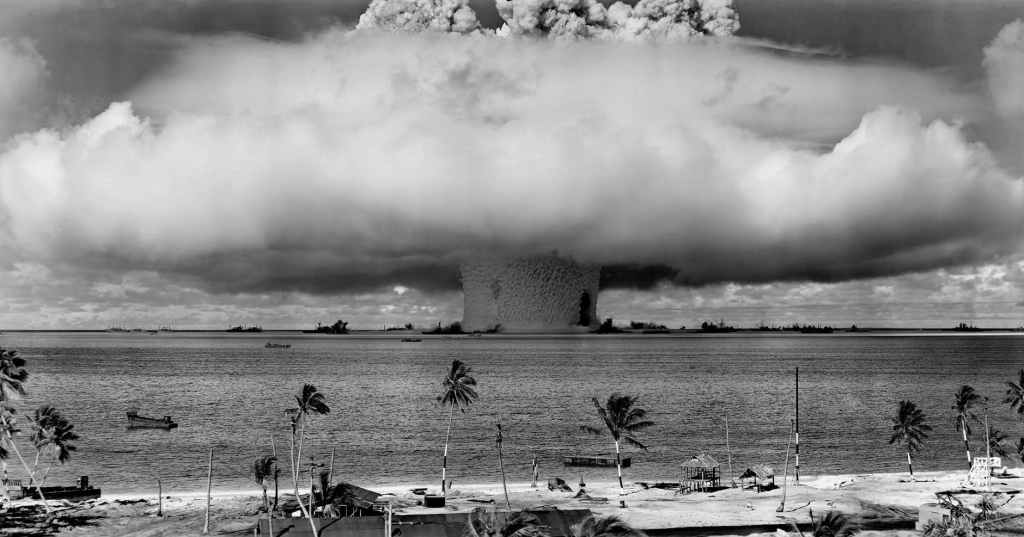
One very plausible scenario is that they have self- destructed, probably with the aid of weapons of mass destruction, such as nuclear bombs or biological agents. The rapid evolution of technology equips evolving societies with these weapons, which their biological impulses of aggression then impel them to use.
There can be little doubt that tribal aggression is deeply wired into our own species. In her masterly book Political Tribes, Amy Chua provides a tour de force summary of the effect of tribalism and the wars of destruction which it has unleashed throughout history. Perhaps her most telling quote is
The great Enlightenment principles of modernity, liberalism, secularism, rationality and equality do not provide the kind of tribal identity that most humans crave.
The Enlightenment may be OK for the elite one per cent of the population. Of what happened when the American part of that elite tried to apply them in Iraq, she is scathing:
(Bush and his advisors believed) that ethnic, tribal and sectarian divisions would dissipate in the face of democracy and market generated wealth…..
Holiday in Iraq, anyone? It’s the mark of a good author that she gathers evidence of more and more cases , explaining the true causes of American failures in Vietnam and Afghanistan. The latter is a key exemplar of how Marxist solutions break down in the face of tribalism, as students of the late Soviet Union will confirm. The recent consequences of this tribalism in western societies is well discussed by Professor Kaufman in Whiteshift.
For those who want good evidence of the psychological and biological roots of tribalism, the literature is vast. To get you started, we shall point to the famous Robbers Cave experiments , which we link below. The essential point here is that researchers were shocked at how easy it was to initiate inter- tribal aggression, and how hard to dissipate it subsequently.
And where might it now express itself at an International Level? Current flashpoints are not hard to find: tensions between Russia and NATO in the Baltic States; Israel and Iran; India and Pakistan- all are areas where hostile tribes confront each other with weapons of unimaginable power. Perhaps the most worrying of all is Asia, where a declining United States seeks to maintain its interests and alliances in the face of a rising China. Anyone who has attended a football match, or the pubs around one, knows how quickly reckless uncontrolled violence can be unleashed by the most trivial slights. Both football supporters and national security councils are made up of humans.
So far, we are still here; and the aliens are not. They must have evolved from the same sorts aggressive biological ancestors that we did. Are we programmed to repeat their fate?
To Mr Lluís Bussé of Catalonia, who is now following us on LSS.
We have particularly happy memories of his homeland, Catalonia. We recommend Tarragona, Barcelona and the beautiful countryside to all visitors-when the lockdown ends! The railway journey from Barcelona to Calafell , as the train winds in and out of tunnels along sandy coves and blue seas, is as exciting as any in Europe.
I have owned two shirts pertaining to FC Barcelona in my time, in order to help with my Iberian and Hispanic studies. Unfortunately one was a fake. Which proves: don’t buy a football shirt from a market, especially when you come out of a bar.
As the man said at the time “ay,senor inglese emborrachada, quieres comprar una camisa del barca, muy barrato? Gracias! I think it may have been a quote from Lope de Vega.
One of our aims at Learning, Science and Society is to advance the cause of women in science and education. The systematic denial of opportunities to them, as a direct result of ignorance and prejudice, has impoverished all humankind. Never forget-any system of prejudice will mean second rate people in first rate jobs at sometime, somewhere. Imagine where the United States of America would be now if Hillary Clinton had won the 2016 presidential election!
We’re going to take opportunities to highlight the progress of women in the fields of Learning, Science, and even Society (how’s that for a plug?) and today we are proud to start with: May 12th, Celebrating Women in Mathematics. There are going to be over 100 world wide events, many online of course, looking at the problems and opportunities for women in mathematics. And is there a problem to solve! Laura Moreno Iraola of El Pais gives us an excellent summary of it for Spain, which is fairly representative of more advanced countries. Get this: only 35% of trained researchers in maths are women, and in the higher reaches, representation is down to 15%. Hmmnn- isn’t the proportion of women in the population nearer 50%, or have we got that wrong? And here’s another little problem, according to Laura: only 5% of citations in science are from women researchers, and a miserable 1% in technology. No wonder girls don’t go into it-they’re invisible!
If we’re going to solve the problems of the world, we need to unlock all that hidden talent-it will make all of us richer in the long run. Progress ids being made in many countries, and we post Laura’s article below: for the few of you who don’t speak Spanish, get your Google Translators on to it. Anyway, she does it much better than we could, so it’s worth a peek.
-Coda: Why May 12th? well it’s been chosen for the birthday of Iranian mathematician Maryam Mirzakhani, the only woman in a hundred years to win the Fields Medal, which is like a Nobel Prize for mathematics. It is sad to record that she died in 2017.
-Coda to the Coda: we, the editorial board of LSS, were hopeless at maths, truly dire & dreadful.
One of our aims at Learning, Science and Society is to advance the cause of women in science and education. The systematic denial of opportunities to them, as a direct result of ignorance and prejudice, has impoverished all humankind. Never forget-any system of prejudice will mean second rate people in first rate jobs at sometime, somewhere. Imagine where the United States of America would be now if Hillary Clinton had won the 2016 presidential election!
We’re going to take opportunities to highlight the progress of women in the fields of Learning, Science, and even Society (how’s that for a plug?) and today we are proud to start with: May 12th, Celebrating Women in Mathematics. There are going to be over 100 world wide events, many online of course, looking at the problems and opportunities for women in mathematics. And is there a problem to solve! Laura Moreno Iraola of El Pais gives us an excellent summary of it for Spain, which is fairly representative of more advanced countries. Get this: only 35% of trained researchers in maths are women, and in the higher reaches, representation is down to 15%. Hmmnn- isn’t the proportion of women in the population nearer 50%, or have we got that wrong? And here’s another little problem, according to Laura: only 5% of citations in science are from women researchers, and a miserable 1% in technology. No wonder girls don’t go into it-they’re invisible!
If we’re going to solve the problems of the world, we need to unlock all that hidden talent-it will make all of us richer in the long run. Progress ids being made in many countries, and we post Laura’s article below: for the few of you who don’t speak Spanish, get your Google Translators on to it. Anyway, she does it much better than we could, so it’s worth a peek.
-Coda: Why May 12th? well it’s been chosen for the birthday of Iranian mathematician Maryam Mirzakhani, the only woman in a hundred years to win the Fields Medal, which is like a Nobel Prize for mathematics. It is sad to record that she died in 2017.
-Coda to the Coda: we, the editorial board of LSS, were hopeless at maths, truly dire & dreadful.
We would like to thank Counselor Brandon for following our little blog. If we have missed other followers, thank you very much, nevertheless. Put our omissions down to our own IT incompetence, which is legendary among family, friends and work colleagues
We link to his website below, and take pleasure in seeing his delightful cats.
We have to applaud the way that the UK Government tries to take questions from its citizens as part of its response to the Covid-19 pandemic. No taxation without consultation, one might say.
The question was “Will the UK Government fund research into Artificial Intelligence algorithms, thereby helping it to predict the next mutation in the SARS-CoV-2 virus?
Alright, they take a lot of questions, and we didn’t make the cut! But for those who missed our last outing on this theme (LSS; 28April; Using AI …..) here is a brief summary of our ideas.
All genomes, that is to say the nucleic acids strands in our cells, have hotspots. These are places where the normal rate of mutation seems to speed up. According to Patricia Frost in Science Daily the mutations are 18 times more likely in DNA sequences where the same chemical letter, such as A, G, C, or T is repeated multiple times. They are 12 times more likely where you find repeated triplets, e.g, TTT or AAA.
Now, we know more astute readers will protest that coronaviruses code in RNA. Yet this is where the fun starts. RNA viruses are more prone to mutation, as they are dependent on certain error-prone enzymes, and have less in built correction mechanisms, than more advanced DNA -based organisms.
In theory, it should be possible to produce a model of the viral genome, and to map its mutation hotspots. More importantly, the possible mutational pathways of the virus should be predictable.
Work to analyse viral mutations is already been undertaken for influenza, though we don’t know what computational techniques the authors used (see link below)
A simple survey of Wikipedia demonstrates the enormous power and range of AI applications, though we could not resist adding a post from fellow blogger Aayushi Johari. Why not now deploy this power on an urgent and pressing problem, instead of designing tired old games, that frankly, everyone has seen before? A success here would be national prestige indeed.
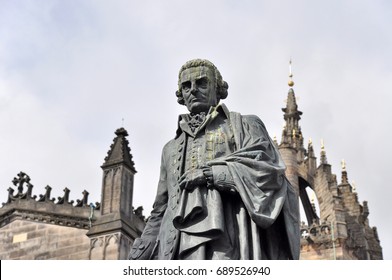
The Wealth of Nations(1776) was the seminal text of Adam Smith, in which he outlined his vision of the best way of ensuring a prosperous economy, and with it, the optimal levels of human happiness.
Its central prescriptions -of free trade, unfettered markets, freedom of information and expression-are too well known to be expurgated again here. On the whole, his notions have stood the test of time better than that of rivals such as Marxism or religious theocracy. As with any creed, the problem came with believers who took it too seriously, whose logic and zeal out runs their reason.
So if taxes are bad, they say, why not abolish them altogether?(at least for rich people) If the state can be a drag, why not get rid of it altogether? Surely any government activity is evil, and should be avoided religiously. It is interesting how the most perfervid expressions of these beliefs come in novels, not works of fact.
Yet in a crisis, the state can create wealth. Does in fact, in ways that a pure free market can neither facilitate nor measure. No one can doubt that a society with antibiotics is infinitely richer than one without. Yet one cannot measure that in the way one can for a cup off latte macchiatto, a mobile phone, or a tube of lipstick.
Below we reference two articles from the website of the charity AntibioticsResearchUK. In which Vicki Joughin describes the partnerships which created Penicillin, the first designer antibiotic. For us, the key quote is:
The story of the mass production of penicillin to help the Allied Forces win World War II is a remarkable one. It was brought about by an unparalleled collaboration between governments, industrial giants and renowned scientific establishments who had a common goal – which was not a financial one.
Advocates of low taxes and weak states must always make an exception for strong armies and police; can biological threats be excluded?









 Learning, Science and Society