Identity and Justice, two competing visions of the future-guess which one will save your life

In our last blog, we discussed how many people are drawn to ethnic tribalism because it offers many substantial rewards to them in the here and now. And that to override and dismiss these feelings can lead to disastrous consequences, as the Labour Party found out. But the phenomenon is not unique to the UK. Parties of the left are failing to engage across the whole world. Where are the mighty French Socialists and German SPD now? Where the powerful Democratic Party and Trades Unions that once stood behind Franklin Roosevelt and Harry Truman? We at LSS believe that tribalism will have fatal long term consequences in a nuclear-armed world. To ask people to abandon it there must be a better offer. We believe that is Justice: but to explain it we must beg your forgiveness for diving into the past; but that was where we were educated.

In his masterly History Of Medieval Europe Professor Davis described how the Romans’ success in uniting the Mediterranean Basin into a single economic unit had produced centuries of peace and prosperity. To do it, they distinguished between Custom, which was local, and Law, which being linked to reason and justice, was universal . Once law was universal, trade and learning could be practiced over larger and larger areas. No one can deny modern examples; the various states of the USA such as Virginia or Rhode Island have prospered far more by pooling their sovereignty than if they had remained independent polities, as have the nations of Europe or the different states of India. The trouble for the Romans came when the barbarian tribes intruded into this empire because of

..the determination of the barbarian invaders to prefer the law of their ancestors to the law of reason, since that preference implied the superiority of one’s own race over loyalty to the civilised world

A contemporary, St Augustine, realised the disastrousness of this (we transcribe Davis’ quotes)

Set aside Justice, and what are kingdoms but great bands of brigands? And what are brigands’ bands but little kingdoms? The underlings are directed by the same commander, they swear a confederacy, and the takings are shared out by law among them.

Augustine cited the case of Alexander the Great, who captured a small time pirate and demanded “why do you plague the seas-how dare you?”

To which the pirate replied ” Because I do it with one little ship, I am called a pirate. But you do it with a whole navy, so they call you Emperor. How dare you?

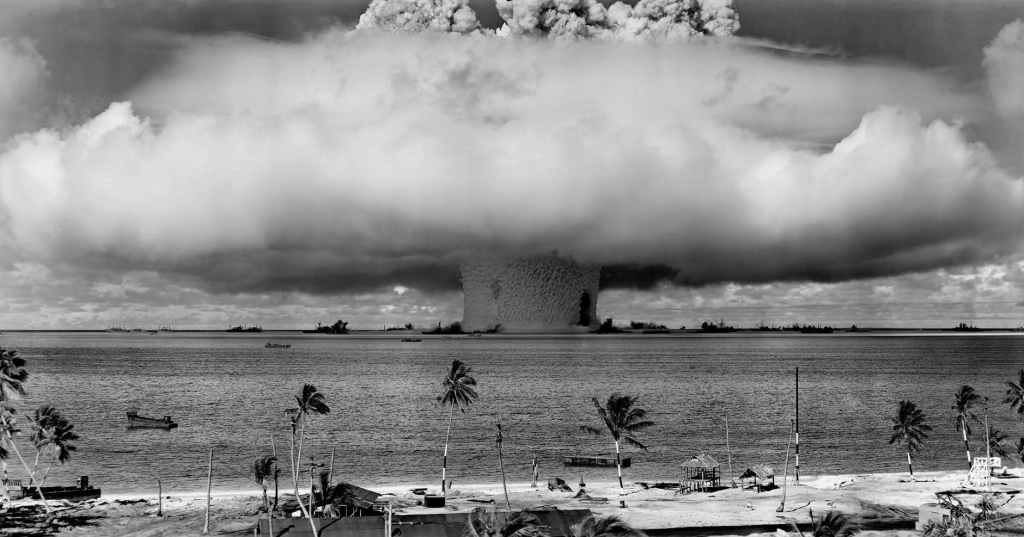
It is clear that states can be based on ethnic tribalism. But they can never be Just. Once Justice is rejected, then corruption and favouritism become endemic. The essential question asked of every new thing is not “Is this Just?”, or “Is this reasonable?”, but rather: “Does this shore up the defences of our society?” The enemies of that society are everywhere, usually in league with Foreign Devils. Universities become an international joke. The arts shrivel into sterile conformity. Scientific research becomes distorted and eventually fails. The list of artists and scientists banned by the Nazis was very long. But the principles of Relativity are not Jewish, as there are no Jews in other Galaxies. Eventually the presence of other gangs and Foreign Devils becomes unendurable, and war breaks out. This time with chemical, biological and nuclear consequences.

If we cite the ancient example of the Romans, it is because their idea worked, for a while. And we have tried to show limited examples of more modern successes. The counter offer to the tribe must be a shared prosperity. That working together alone will solve the common problems such as global warming and antibiotic resistance. And that justice is the reasoned set of rules which will let that happen.

St Augustine’s vision of the future was “The City of God” Perhaps that is a little dated.

But future of radiant, prosperous communities is graspable, perhaps not only on Earth. Think then of Justice as an insurance policy as well; and it will sell.

RH Davis A History of Medieval Europe Longman

#justice #ethnictribalism #staugustine #USA #EU

Identity and Justice-two competing visions of the future (1) the destruction of Labour

The report on the recent defeat of the Labour Party in the recent general election makes melancholy reading for “progressives” in this country.* A whole tradition, centuries old, of people who who have called themselves variously Whigs, Liberals, Socialists, Social Democrats, Methodists, and Trades Unionists has been effectively closed off, perhaps for ever, as the report makes clear. The reasons for the defeat are twofold. Firstly the inept leadership of Jeremy Corbyn and his clique. About whom we find the report’s language to be surprisingly mild and forgiving. It is hard to confine our opinion of this man within the bounds of decent language, so we will conclude by saying that personal feelings of moral righteousness are a poor substitute for thought and reason, and leave it at that.

The truly worrying trend is the way that Labour has ceased to speak to, and for, the mass of older, less educated but essentially decent people who were once its bedrock. It is now a party of the young, the educated and the city dweller. Admirable as they are, they are never going to be enough to win any election, or provide the long support for a government, as for example the Trades Unions did for Clement Attlee.

The Left and progressives have always held that economic causes, and their class concomitants, were the organising principles of society. The Right has always had a different view; that beyond the immediate overwhelming drives of food and sex, it is ethnic tribalism that is the real organising principle of human groups. This view is rigorously explored by Amy Chua in works such as Political Tribes, *and Eric Kaufman in Whiteshift.* If that alone does not make it worthy of serious examination, then its current success in country after country (USA, UK, Hungary, Poland, Russia, India) should at least tell objective thinkers that something is happening that resonates with people.

Societies based on ethnic tribalism are a response to feelings of profound insecurities about fast economic and social change.* The feelings behind them are found in all ethnic groups and races around the world. Societies which take this course can be stable for decades (Northern Ireland, Nationalist South Africa). Often they can only be overthrown by powerful enemies or sustained insurrections (Nazi Germany, Rhodesia). Internally they can provide a fair level of emotional order and even some limited freedoms for the in-group. Northern Ireland and South Africa always had Parliaments and elections, as did the southern states of the USA. It is arguable that the formation of strong stable in groups may have had powerful evolutionary advantages for their members, as a defence against enemies and the spread of contagious disease. Above all it provided a sense of identity. To dismiss any of the above, with a condescending Marxist smear of “false consciousness” would be folly indeed.

And that is essentially what Labour has done. In its rush to accommodate every possible notion of identity in a shifting. cosmopolitan urban population, it disastrously neglected the same feelings among those who lived slower lives in town and field. Immigration is a purely capitalist phenomenon, brokering the supply of labour to demand. For a party that has always been suspicious of unregulated markets, it was an obvious target to call out for strong regulation and control. The principle of universalist solidarity is very admirable. It is also hard to communicate. And the other side controlled the media.

In any cultural war the Right will have many advantages. The Left can only say “vote for us, give up your current privilege, and things should get much, much better for everyone(but we can’t guarantee it)* To which the right can point to symbols of order, continuity and identity which are dear to many hearts. And so it has always been, because groups that do it this way thrive and prosper.

Then would it be better to surrender to the inevitable, to accept that ethnic groups are our destiny, and retreat into flag waving and parades, while awaiting the inevitable, probably final, war? Is there any alternative? In the next piece we hope to show that there may be.

https://en.wikipedia.org/wiki/Racism_by_country

https://www.vox.com/policy-and-politics/2019/3/8/18250087/the-reactionary-mind-trump-conservatism-corey-robin

Ami Chua Political Tribes Bloomsbury

Eric Kaufman Whiteshift Penguin Books

#ethnictribalism #labour #amichua #erickaufman #Left #Right

What the readers saw

Our weekly round up of news that didn’t have time to go in the blog

Our first story comes with thanks to our inimitable Hertfordshire correspondent, Mr Peter Seymour. It is a real tale of moral courage. Older readers will recall the first anti- racist protest at the 1968 Mexico Olympics, when John Carlos and Tommie Smith demonstrated from the winners’ podium. Well, there was a third, white, man who insisted on joining them, Peter Norman of Australia. It was a brave decision, and one that was to cost him dear. Are we really prisoners of our ethnic identities, doomed to hate and fight for all time? Or can the courage of people like Norman change the world? Read below:

https://www.filmsforaction.org/articles/the-white-man-in-that-photo/?fbclid=IwAR10Md8zR8Q0G_Zyf

Perhaps ethnic tribalism once had a selective advantage, but we doubt that it does today, if global warming is to be avoided. Here, a gloomy summary from Nature Briefings looks at how emissions are bouncing back. Never have we needed the old Canned Heat song Let’s work together so badly!

Emissions surge back to bad old days

In early April, the international response to the coronavirus pandemic slashed daily global carbon emissions from fossil fuels by roughly 17%. Now emissions are rebounding, with China almost back to pre-pandemic levels. The European Union is leading the way to a green recovery with a proposed US$826-billion recovery package aimed at expanding renewable-power generation, retrofitting old buildings and investing in cleaner fuels. Experts estimate that 2020’s global emissions will be down around 5% compared with last year’s — the biggest drop since the Second World War, but still not nearly enough.The New York Times | 5 min read
Read more: How the coronavirus pandemic slashed carbon emissions — in five graphs (Nature, from May)
Reference: Nature Climate Change paper & latest update to the supplementary data

All along the Eastern edge of Europe, democracy seems to be fading. which will gladden the heart of a Certain Person a bit further east. Our indefatigable Buckinghamshire correspondent, Mr Gary Herbert cites this example from the excellent Open Democracy Website, about the sinister events in Bulgaria.

https://www.opendemocracy.net/en/can-europe-make-it/how-dismantle-democracy-case-bulgaria/

It is so easy to be misled by numbers. Look at this quote from Nature BriefingsMathematical Pitfall plagues antibody tests”

Even if a screening test is very accurate, if it is not 100% perfect then it will deliver some false positives and some false negatives. And the lower the infection rate, the more likely it is that a positive result is wrong. An imperfect antibody test for COVID-19, for example, could leave a lot of people thinking that they are possibly immune to the disease, when they have never even had it. Scientific American explains, with a very handy graphic, how this mind-bending fact arises.Scientific American | 3 min read
We read it, gentle readers, and it is a tour de force of how to present scientific concepts in an easy to understand way. Science teachers, take note!

And finally…our heartwarming animal story of the week concerns that marvellous organisation the WWF (the animals, not the wrestlers) and their efforts research and protect the beautiful snow leopards of the mountains of Asia. Remember what will happen to us all if those glaciers melt. How many gin and tonics will be needed to catch all that ice?

https://www.wwf.org.uk/learn/wildlife/snow-leopards

#opendemocracy #bulgaria #peternorman #wwf #snowleopard #covid19 #globalwarming

Friday Night is Cocktail night

We at LSS have never been afraid to tackle the crucial social issues of our time. And now another has come up- is it best to use oranges or lemons in a cocktail?

It all started when a letter flooded in from Lady M—–, of Collingwood Gardens South Kensington, and Brinkley Court, Gloucestershire. “Oh Cocktailmeister”, she writes, “Oh cocktailmeister, is it better to use oranges or lemons in a cocktail for one’s guests?” Well, these people are running the country now, so we thought we’d better come up with an answer. And the way to do it is to let you, the people decide. We shall offer a choice for you to try, and make your own minds up. Let’s start with lemon. It can be frightfully sour stuff, so the drinks tend to be short.

Brandy Sour

5 ice cubes; juice of 1 lemon; 3 measures good brandy; (Courvoisier or Remi Martin -none of that Spanish stuff you picked up at Malaga airport) 3 drops angostura; 1/2 measure sugar syrup. Mix in a shaker, hold back the cubes : then pour to a cocktail glass and decorate with lemon peel.

Between the Sheets

As many a teacher used to declaim “We’ve done this before!” But for the benefit of those who weren’t paying attention last time, here we go again:

5 cubes ice; 1.5measures brandy (see above); 1 measure white rum; 0.5 measure Cointrea;. 1 measure lemon juice; 0.75 measure sugar syrup. Mix in a shaker, hold back the cubes; pour to a cocktail glass and decorate with lemon peel.

Now for the orange. As, on the whole, orange juice isn’t so sour, we are able to offer a classic long shot and a shorter classic

Harvey Wallbanger

1 measure vodka; 3 measures fresh orange juice ;1/2 measure Galliano. You shake in your Bond- style shaker, but this time the cubes go in with the mix to a long glass. You can decorate this with slices of orange.

Luigi

Here’s one for a classic cocktail glass. 1 measure dry vermouth;1 measure fresh orange juice; 1/2 measure Cointreau; 1 measure grenadine; 2 measures dry white gin. Once again, shake ’em up in the good ol’ shaker, and pour to your best Dartington crystal glass. Hold back the ice. Peel or slices of orange to decorate

Still can’t decide? Or a fan of compromise and coalition? Then we invite you to try the recipe for the Singapore Gin Sling. There’s your homework.

#harveywallbanger #luigi #betweenthe sheets #brandysour #cocktails

Warning all parents and grandparents-global warming hasn’t gone away

We suppose it’s good news that new use of dexamethasone may alleviate the sufferings of Covid-19 victims. We even think that vaccines and pretty effective tests may be available soon. But if you think that when this passes everything will be fine and dandy, well think again. For a start, a new antibiotic-resistant micro-organism could start a worse pandemic at any time. And then there is our old friend Global warming, which is so deadly that it hasn’t even gone into remission.

It’s true that there has been a blessed fall in the number of aeroplanes, and traffic has not been quite at its normal neurotic levels. However, two reports today (we use the Guardian, but they are all over the media) suggest all is very far from well. In the first, Fiona Miller *describes the awful dangers of a reckless uncontrolled economic bounce back, regardless of its environmental consequences. And just to underline the problem Damian Carrington headlines a new climate study from Siberia*. Fans of coincidence will love the fact that it was in Siberia that the most cataclysmic disaster event of all time originated, the famous Permian-Triassic Mass extinction. Just thought we’d mention it.

But, gentle readers, we could not leave you without hope! The same Damian Carrington, in the same Guardian, has filed another piece in which someone is trying to do something about our plight. Highview Power in Greater Manchester, have come up with new technology which uses green energy to compress air into a liquid. When they want, they just release it to spin a turbine, the world’s biggest in fact, powering many homes. It should go live in 2022.

In the long ago 2000s, opponents of green energy solutions used to love sneering that renewable ideas only worked when the sun was out, the wind blowing, blah etc, blah etc, etc blah. Technologies like Highview’s show that it is easy store power from peak times and release it later, hugely extending the efficiency of new systems. Remember that this is only one such solution. History shows that as new ideas and technologies develop, whole economies can grow and thrive. It’s fossil fuels that need to wither and die.

https://www.theguardian.com/environment/2020/jun/18/world-has-six-months-to-avert-climate-crisis-says-energy-expert

https://www.theguardian.com/environment/2020/jun/17/climate-crisis-alarm-at-record-breaking-heatwave-in-siberia

https://www.theguardian.com/environment/2020/jun/18/worlds-biggest-liquid-air-battery-starts-construction-in-uk

#damiangreen #fionamiller #highvewpower #globalwarming #climatechange

A good read. And a few other things, by Madeleine Mead-Herbert

When we asked Madeleine Mead-Herbert to contribute a piece to our books section, we little expected this tour de force of sheer erudition. You are about to go on a rollercoaster ride from Michaelangelo through to Jack Kerouac, taking in such luminaries as Shakespeare, Kant and TS Eliot on the way. So grab a nice cup of your favourite coffee and enjoy a dose of real learning. We believe that the world will hear from this woman again. So remember- you read her first at Learning, Science and Society.

My Favourite book: On The Road – Jack Kerouac

By Madeleine Mead-Herbert

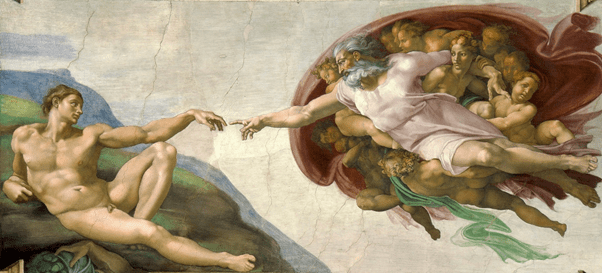
The Creation of Adam painting (Michelangelo, 1512)

This painting depicts the moment at which Adam is given consciousness; the ability humans have to think deeply and critically about life and the world around them. As you can see, the blanket around God is suggestive of the shape of the brain, something that Michelangelo would be aware of given his work in the medical profession. Additionally, on examining the expression of Adam’s face more closely, it could be assumed that before God’s touch, he is in fact rather gormless.

Descartes said the famous words ‘Cogito, ergo sum’ or ‘I think, therefore I am’ (1637). Through literature, there is a common trope where the challenges that come with consciousness lead to the protagonist’s demise. Each human will know the feeling of being unable to sleep because of racing thoughts or having a full body shudder whilst cringing at a memory of something said years before. Shakespeare emphasises the power and burden of consciousness through Macbeth who states ‘I am afraid to think what I have done’. This ability to ruminate and develop deep devouring emotions like shame and guilt are what destroy him. During the Romantic Period, Lord Byron depicted this same problem. His (quite nihilistic and perhaps adolescent) character Manfred states ‘thy heart and brain together’ and once again, it is this capacity for profound thought and reflection that cause so much pain for Manfred which leads ultimately to his untimely (and rather dramatic) demise at the top of the French Alps.

The philosopher Immanuel Kant was concerned about the Secularism and the decline of Christian beliefs and thus this painting provides a symbolic representation and insight into Kant’s summary of the Enlightenment period, quoted as ‘sapere aude’ or ‘dare to be wise’. Kant wanted individuals to think for themselves and not join the ‘great unthinking masses’. This call to celebrate deep thought and individualism was adopted whole-heartedly by American culture and Transcendentalism flourished with poets retreating to the woods to be away from society and be with their own thoughts. I must admit, this has acted as inspiration for what I have tried to replicate amongst the COVID-19 ‘Stay at Home’ and ‘Lock Down’ advice.

Thoreau went to Walden Woods and wrote ‘I went to the woods because I wished to live deliberately, to front only the essential facts of life, and ‘see if I could not learn what it had to teach, and not, when I came to die, discover that I had not lived’.

As a member of the Transcendentalist Movement, Whitman praised the individual who is ‘is complete in himself’ and has a ‘deathless attachment to freedom’.

In 1855, Walt Whitman wrote that the United States was ‘essentially the greatest poem’ and ‘poetical in nature’ due to her complex and contentious history, turbulent political movements and vast range of cultures that made the country was she was (Whitman, 2009: 439).

Jack Kerouac captured the desire to live ‘deathlessly’, think and be free, that Transcendentalists promoted through his masterpiece On the Road. This novel was largely auto-biographical and presented Kerouac’s experiences (as the character Sal) of travelling through America and Mexico with his friend Neal Cassidy (as the character Dean).

The novel starts with Sal expressing how he has been depressed and ‘feeling that everything was dead’. He tells the reader how he had always had plans to travel but had never actually mustered the momentum to go, he states ‘always vaguely planning and never taking off’. Upon meeting Dean, his life is propelled into adventurous travel and exploration.

My favourite quote from the start of the novel and a quote that has always stuck with me is:

I shambled after as I’ve been doing all my life after people who interest me, because the only people for me are the mad ones, the ones who are mad to live, mad to talk, mad to be saved, desirous of everything at the same time, the ones who never yawn or say a commonplace thing, but burn, burn, burn like fabulous yellow roman candles exploding like spiders across the stars and in the middle you see the blue centerlight pop and everybody goes “Awww!”

Sal ‘shamble[s]’ after the people that interests him rather than feeling a part of the excitement, he feels like he is on the peripheral. But by the end of the novel he is driven and passionate in his own right, even finding love.  

In my favourite poem, The Lovesong of J Alfred Prufrock by T.S. Eliot, this feeling of being trapped and apathetic is presented by the speaker:

And indeed there will be time

To wonder, “Do I dare?” and, “Do I dare?”

Time to turn back and descend the stair,

With a bald spot in the middle of my hair —

(They will say: “How his hair is growing thin!”)

My morning coat, my collar mounting firmly to the chin,

My necktie rich and modest, but asserted by a simple pin —

(They will say: “But how his arms and legs are thin!”)

Do I dare

Disturb the universe?

In a minute there is time

For decisions and revisions which a minute will reverse.

For I have known them all already, known them all:

Have known the evenings, mornings, afternoons,

I have measured out my life with coffee spoons;

I know the voices dying with a dying fall

Beneath the music from a farther room.

               So how should I presume?

And I have known the eyes already, known them all—

The eyes that fix you in a formulated phrase,

And when I am formulated, sprawling on a pin,

When I am pinned and wriggling on the wall,

The imagery of the pinned butterfly, the reduction of life to being ‘measured out in coffee spoons’, the refrain of ‘do I dare?’ to an audience who cannot respond to tell him ‘yes, do dare!’ and the mention of his aged persona making the possibility of change feel so finite.

This is what Kerouac manages to capture; action against apathy and his will to change and achieve the dreams that can so easily lay dormant. Sal’s actions are what I wish for Eliot’s Prufrock to do so that he can actually sing his ‘love song’.

Yes, it is true that we think and this is what makes us who we are but this ability to think can so frequently make us inert and unable to change or fulfil our dreams. A modern school of thought amongst sociologists and anthropologists is researching how humans cope with regrets about the past and so often think about ‘what could have been?’.

This novel gives me that sense of longing to travel and see the world. It makes me want to spend more time thinking positively and proactively about my dreams and ambitions for the future and how I will achieve them. This novel also gives me the drive to leave regrets in the past and accept that I can only change what I can, and move forwards, unlike Prufrock who wishes he was a pair of ‘ragged claws’. This synecdoche reflects his self-esteem, he wishes to be only a part of an inferior creature, moving sideways on the ‘floors of silent seas’.

So with all this time to think that lock-down has lent us, I wonder if you have assessed your future ambitions and priorities?

“The air was soft, the stars so fine, the promise of every cobbled alley so great, that I thought I was in a dream”

#jackkerouac #favouritebook #tseliot #existentialism #individualism #freedom

Fake News, lies, conspiracies and how to spot them

with thanks to our old friend Ms Sarah McCabe, whose idea this was

Lies. Screams. Rants. Fake news. Conspiracy. These days, both the internet and the world wide web are both full of them, choking out the truth like weeds in a badly-kept garden. Or is it graffiti on the toilet walls of a low public house in the port area of a run down city? The trouble is that every uneducated jackass can spew out their beery opinions, and in internet terms it’s just the same as finding something from Nature or the Economist. Sad, but true. The disease of our age.

But there is a remedy, gentle readers. Since the time of Plato and Aristotle, through the Medievals like St Thomas Aquinas up to moderns like Bertrand Russell, the cleverest people in history have been developing a concept called fallacies in reasoning. It is a list of logical errors that we all make without thinking. And we have some sites here which you can go to find out what they are. You too will have a kit which will let you detect the errors in the confused ramblings which clutter up our beautiful internet. Links below, but here’s a couple of examples:

Straw man argument. You select someone you hate (the straw man), put some words into their mouth, then attack them on that basis

Of course, if someone had toppled the statue of Winston Churchill, the Guardian the BBC and all the liberal media would say it was good, because they want a Revolution and bring in communism

Spotted the error(s)? You may not like the Guardian, maybe with good reason. But you don’t know what they would say because they haven’t said it yet. Then you attribute communist motives which they may not have. By the way-how do you know that Revolution is their preferred political method?

False cause and effect

This is where can believe in something you want to be true by using bits of “evidence”, without considering other explanations

Example If there was a large hairy caveman living in the Himalayas, we would find its tracks in the snow, We would hear strange calls. There would be reports and sightings from locals and mountaineers

There are many examples of tracks in the snow, strange calls. and odd reports and sightings from locals and mountaineers in the Himalayas. Therefore, the Abominable Snowman is real.

Is it? What about bears? Snow leopards? Did the locals and mountaineers, brave men no doubt, make honest mistakes? Was someone else up there less honest, faking things?

Once upon a time, logic and reasoning were central to the curriculum. The tragedy of our times is that schools don’t teach them. They are hypersensitised to pushing their pupils through examinations. But there is a wide gap between examinations and thinking. So, gentle reader, it’s down to you. Find something on the internet, then read the words very carefully. Then check those words against the lists of errors below. Now you will know how good it is

Psychology today has a nice short list

https://www.psychologytoday.com/us/blog/memory-medic/201410/analytical-thinking-logic-errors-101

for a longer course, there’s good old Wikipedia. Please donate to them when they appeal this autumn

https://en.wikipedia.org/wiki/List_of_fallacies

and here we found a free online university course (spoiler alert: we haven’t tried it but were so amazed by its very existence, we had to give them a plug)

https://www.futurelearn.com/courses/logical-and-critical-thinking

#logicalfallacies #reasoning #bertrandrussell #conspiracies #fakenews

Pub economics, cheap food- and no antibiotics ?

Most people are aware how truly dreadful a world without antibiotics is going to be. Because if you go into hospital, you’ll die. No routing hip and hernia operations. Live with it, pal. No cancer operations. Live with it pal, as long as you can. As for childbirth-feminist historians will tell you what puerperal fever was. And what will be the effect of leprosy on the fashion- conscious, now that it is making an antibiotic resistant comeback?

One of the principal causes of burgeoning antibiotic resistance is their over-use in agriculture. In countries like the USA, for example, antibiotics are poured into farm animals of all kinds in intensive factory farms. It protects from infection, increases growth and allows a cruel density of stock raising currently unknown in the UK. And of course, it allows for cheap food. But what happens when the antibiotic resistance is so high, that these levels of farming cannot continue? And what’s the point of cheap food anyway, if you have cancer, and they can’t operate because of the risk of infection?

That excellent scientist and campaigner Professor Colin Garner is concerned that the current agriculture bill may open up the UK to this joint danger. In the link below he discusses the dangers of the bill from an antibiotic point of view. There are some excellent links.

Our view at LSS: The slogan “a trade deal with the USA means cheap food” is so over-simplistic that it’s just pub economics. Of course we want cheap food. But unless the views of thoughtful people like Professor Garner are heeded, the price of cheap food could be very high indeed.

part link

://www.antibioticresearch.org.uk/will-antibiotic-standards-in-farming-be-negatively-impacted-by-the-agriculture-bill/

whole link (hope this comes out!)

some background on antibiotics in farming

https://www.ncbi.nlm.nih.gov/pmc/articles/PMC6017557/

#usuktradedeal #antibioticresistance #antibioticresearchuk

What the readers saw

Our weekly roundup of things our readers saw, or we haven’t had time to cover.

Earlier this week we blogged an intriguing tale of green shoots from Amsterdam, at the behest of the well-known broadcaster and entrepreneur Mr Lindsay Charlton, of Kent. But he thinks this is so important that he wants you to know more. Read how Amsterdam’s doughnut shaped economy could pull all of us out of the current quagmire.

https://www.weforum.org/agenda/2020/05/doughnut-model-amsterdam-coronavirus-recovery/

much of the thinking behind all this comes from an academic called Kate Raworth. Here’s her link

Nuclear fusion is the energy source of the future-and always will be. So runs the sardonic joke of the last 65 years. Yep, it’s a holy grail-endless cheap green energy. Trouble is, we haven’t been clever enough to make it work. Now Abigail Beall of the New Scientist thinks that Artificial Intelligence may be coming to our rescue. If this one has legs, it will transform all of our lives for the better

https://www.newscientist.com/article/mg24632861-200-why-cracking-nuclear-fusion-will-depend-on-artificial-intelligence/

Mr Peter Seymour of Hertfordshire reminds us that human ingenuity finds surprising expressions. Here’s a piece from The Conversation which shows how analysis of sewage will help us track the progress of Covid 19. Old Forensic Scientists will love the way tiny traces provide marvellous results, if you try hard enough-and of course the presence of our old friend, PCR!

https://theconversation.com/coronavirus-wastewater-can-tell-us-where-the-next-outbreak-will-be-139917

While we spend our time on statues and coronavirus, nemesis is approaching fast. It looks like we have underestimated the effect of greenhouse gases by a lot. Here’s Jonathan Watts in the Guardian

https://www.theguardian.com/environment/2020/jun/13/climate-worst-case-scenarios-clouds-scientists-global-heating

And finally….astute readers will have noticed that when corporations or other organisations are in trouble, they change their name. It is usually a vanity and a delusion, because the old faults are still there. Should humanity do the same? When the first real humans appeared they were called Homo ergaster. In Latin, it means “work man”. A simple no-nonsense name that suggests a species that got on with making the tools, chopping the meat, and had all the plain unpretentious values that go with it.

About half a million years ago, the name was changed to Homo sapiens, which means “wise man”. Have you ever heard of anything so vainly self-deluding? “Oh we’re so clever and cool, we can do anything we like!” we told ourselves. Try telling that to a coronavirus or an antibiotic-resistant bacteria. It’s pride and hubris that lead to nemesis, and it looks like we’re the next victim.

Don’t say you weren’t warned.

#doughnuteconomy #covid19 #nuclearfusion #globalwarming #homoergaster

Friday Night Cocktails. The Answers

We once again thank Paul and Lindsay for providing us with these answers to our quiz.

1 When is it generally agreed that “cocktails” were first created? 

The first reference to a cocktail was in 1806. In that year, an American  gentleman’s magazine called strangely enough The Balance and Columbian Repository described “a stimulating  drink composed of any kind of sugar, alcohol and bitters” – as “a cocktail”

2 One of the earliest cocktails was called an “Old Fashioned”. What is its main ingredient?

 Rye Whisky

3 Bringing things up to date – what was the world’s best- selling cocktail in 2019?

An Old Fashioned!

4 What goes into a White Russian?

Vodka, Kahlua (or coffee liqueur) and cream

5 What is the “pink” in a pink lady?

Grenadine

6 Which Cuban classic consists of white rum, lime juice, sugar, soda water, and crushed mint?

Mojito

7 Who claims to have invented the daiquiri and which bar did he make famous in Havana?

 Ernest Hemingway-Floridita

8  Who sung Making Your Mind Up? Clue– it was the song which won Eurovision for the UK in 1981?

Bucks Fizz

9 The Eagles named a song after a cocktail. What was is called?

Tequila Sunrise

10 James Bond is famous for asking that his martinis are ‘shaken but not stirred’. In which novel did he first use this phrase?

Dr No – 1958

#cocktails #paullarsmon #lindsaycharlton #quiz