Is Economics a Science, and Art, a Humanity-or what?

It’s still Nobel season, when the brightest brains in humanity get their awards. For readers of LSS, it’s like the Oscars, the Grammys and BBC Sports Personality of the year all rolled into one. So far, we’ve seen lots of biologists and chemists. Now It’s time for the Nobel Prize for Economic Sciences. Past winner include Paul Krugman, FA Hayek and Milton Friedman, so the winners have to be quite bright. This year it’s Robert Wilson and Paul Milgrom of Stanford University, for their work on Auction Theory.

The following piece by Philip Ball of Nature is pretty complimentary

while Robin Mason in the Conversation thinks that Wilson and Milgrom’s insights could even drive down carbon emissions.

However… Hats off to Caroline Benack, a PhD student at Duke University, also in the Conversation who holds a dissenting view. Caroline asseverates that economists aren’t like “real” scientists at all. You can read her view below. We find her a little hard to follow, but judge for yourself.

https://theconversation.com/economists-are-more-like-storytellers-than-scientists-dont-let-the-nobel-for-economic-s

We at LSS applaud hard thought and hard work anywhere and everywhere. Heavens, they even give a Nobel Prize for Peace-and you can’t measure that. Let human curiosity flourish, provided it is accompanied by thinking, rigorous definition and a search for evidence.

#nobelprizeforeconomicsciences #wilsonamdmilgrom #nature #theconversation

.

Climate Change: seeing both sides

We at LSS are determined that all sides of arguments shall be represented. Even if we cannot agree, we will at least signpost you to the other side. It’s what Bertrand Russell would have wanted, as we have explained ad nauseam.

So here, via The Conversation, is a piece by Paul Braterman about the work of the Reverend John MacArthur of the Grace Community Church in Sun Valley, California. The Reverend MacArthur is a keen denier of the reality of climate change. Here his scientific views are assessed by Braterman. Meanwhile attentive readers will have enough information to get to the Reverend MacArthur’s sites if they wish.

It is not that we at LSS are enemies of people of faith. We may wonder why, if faith is a guide on scientific matters, so many Christians are divided on them. We welcome the honest opinions and comments of people of faith on all matters, even scientific ones like global warming. Our doubts begin when they begin to question the integrity of the scientific process itself. A literal reading of Bible scripture is all very well. But it could become vulnerable in time to questions of authorship, translation and consistency. And if those questions are asked of scientists, they have every right to ask them in turn.

read://https_theconversation.com/?url=https%3A%2F%2Ftheconversation.com%2Fgod-intended-it-as-a-disposable-planet-meet-the-us-pastor-preaching-climate-change-denial-147712%3F

#climatechange #climatechangedenial #globalwarming #biblicalstudies

Misinformation and mischief are like pollution dumped into an ecosystem

The Unites States of America has four percent of the world’s population; but has suffered 22% of world deaths. That’s quite a policy failure for a nation that used to boast that it was “the Shining City on the Hill” and was the website host of “The American Dream”. What has gone wrong?

According to political scientists Amir Bhaghurpour and Ali Nouri, writing in Scientific American. the USA has suffered badly from misinformation being dumped into the internet with the same effect on public health as toxins dumped into a river. Just as in the nineteenth century, when governments finally had to stir to counter the worst effects of industrial pollution, now they must act against the most toxic consequences of information pollution. And the authors set out ways that it can be done. We won’t spoil their piece, which we link via Nature Briefings. Essentially the problem is that officials and scientists are bound by the laws of reason and evidence. so it takes tome to put together a rational argument. The other side have long since made their shout, influenced minds and gone on to the next falsehood. It’s a technique perfected by Dr Goebbels of Nazi Germany fame long ago

The rational community has to find ways of engaging in real time. And this is not just about Covid 19. There are arguments to be had on extinction, global warming, social justice and vaccination which are every bit as important, and must be won. Survival depends on it.

Here’s Nature Briefings. You have to subscribe to them-amazing, and run by nice people!

Countering the “misinformation infodemic” surrounding COVID-19 is key to stopping the virus’s rampant progress through the United States, write molecular biologist Ali Nouri and political scientist Amir Bagherpour of the Federation of American Scientists. They offer recommendations including a coordinated campaign of social-media influencers and more spontaneous two-way chat between public-health officials and the people they need to reach.Scientific American | 5 min read

#misinformation #pollution #evidence #covid19 #coronavirus

Read A Spanish Press article without speaking a word(it’s that good)

Language teachers have always known: make it visual, make it useful, and they’ll want to learn.

So, gentle readers do you want to know how progress is going on Covid-19 vaccines? What are the types of vaccine? How they work? And how far they have got? It’s all in the attached article by Artur Galocha in El Pais.

We think that the graphics and visuals are so good that most people will understand what’s happening. You could use your translator. But here’s a bit of fun. Try this glossary and see if you can work out a bit of what he’s saying for yourself. Are all the words really that different? Try looking for words you know in English, especially nouns. Maybe you’re better at languages than you thought you were!

SpanishEnglish
Enin
quéWhich, what
fasephase
estáIs
cadaEach
vacunaVaccine
TiempoTime
2222
Eficazefficiency

https://elpais.com/ciencia/2020-10-10/en-que-fase-esta-cada-vacuna.html

#covid19 #vaccine #trials #phase3 #sars-cov-2 #coronavirus

CANZUK fans beware-someone may be stealing your clothes

Recent discussions of Britain’s future after Brexit have sometimes included a CANZUK trope. The idea is to revive part of the old British Empire by uniting Canada, Australia, the United Kingdom and New Zealand in a single customs union, trading and political block. There seems to be little enthusiasm for including other formal imperial countries such as Nigeria, India, Pakistan and Kenya.

However, it may be hard to keep such countries out. In a recent article in Pocketworthy, Brian Gallagher looks at how Indian billionaire Gautam Adani used his vast resources to” capture the hearts and minds of Queenslanders” so that his companies could exploit its coal reserves. Gallagher goes on to show how the manipulative techniques of the very rich can be understood in terms of game theory, and how inequality itself distorts the whole political and economic process away from optimal outcomes.

We at LSS understand how CANZUK might appeal to many people, particularly those of an Imperialist or nostalgist bent. It was an idea sometimes floated in the Empire’s heyday. The historian Corelli Barnett dissected the idea rather thoroughly in The Collapse of British Power. The main problem then was strategic: if you create a valuable trading bloc, you have to be prepared to defend it. The strategic problems of defending such a scattered group were difficult enough in the nineteen twenties, when the Royal Navy was powerful and Britain still had a manufacturing base. How much more difficult will they be in the twenties of our century?

We thank Mr Peter Seymour of Hertfordshire for the idea for this piece

https://getpocket.com/explore/item/how-inequality-imperils-cooperation?utm_source=pocket-newtab-global-en-GB

Barnett, Corelli The Collapse of British Power Alan Sutton 1984 see especially pp 166-173 et seq

#CANZUK #Brexit #inequality #queensland #maxplanckinstitute #gametheory

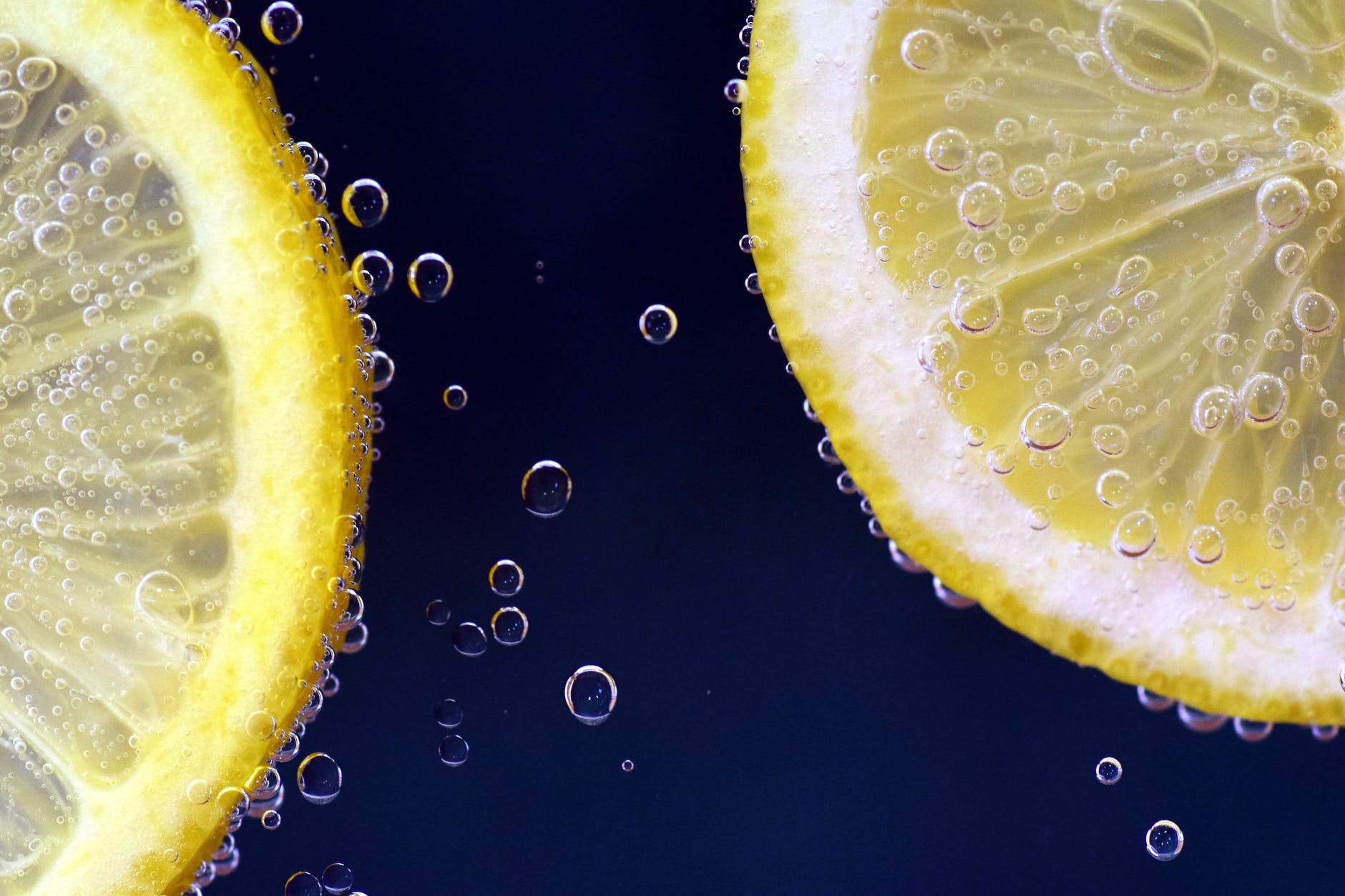
Lemons for Cocktail Night

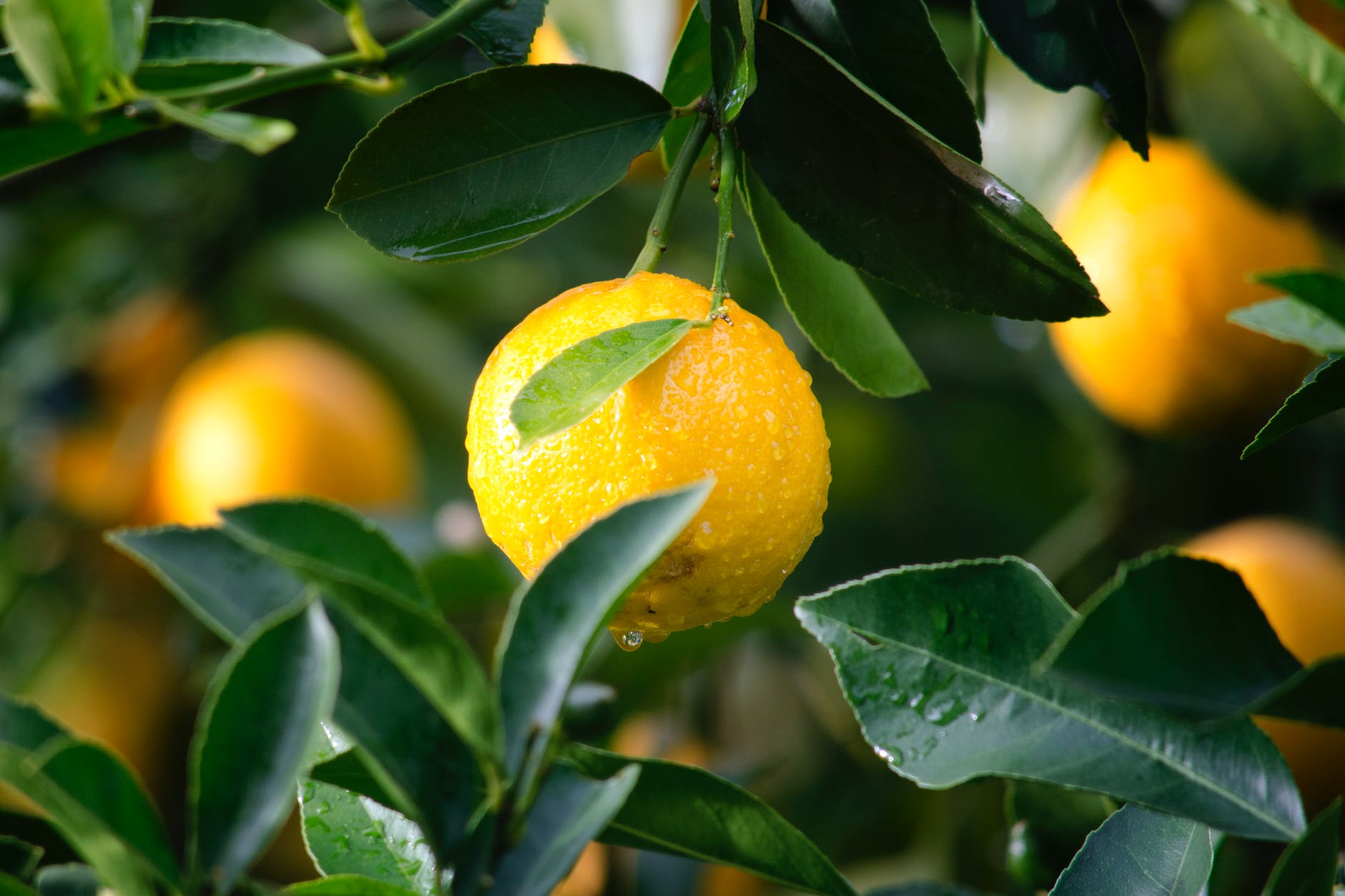
Citrus lemon, an evergreen of the family Rutaceae, was first introduced to Europe in the 2nd Century AD, from its native Assam. Sadly, Europeans left is cultivation to the Arabs and Persians, only resuming its mass production in the mid fifteenth century.* From Genoa it spread to the New World colonies. Its beautiful shape and aroma have made it a staple of every kitchen ever since. Except, sadly, you can’t drink it, however much you crave its vitamin C.

Unless of course you mix it with something else. And our extensive scientific research for this blog (aka The Ultimate Cocktail Book, Hamlyn) revealed a lengthy list whose glorious and evocative names include:

Brandy Sour, Between the Sheets, White Lady, Mike Collins, Walters, Brandy Sidecar, St James, Zombie, Mississippi Punch, French 75, Brooklyn Bomber, Singapore Gin Sling, Honolulu, Alice Springs, Rum Cristophe, Tobago Fizz and many, many more.

Well, there isn’t time to review them all in one night, let alone sample them. But here for the cognoscenti are three delicious lemon-based cocktails we think you might like.

Short and tangy=the Brandy Sour

Put 4-5 ice cubes in your shaker. add three drops of angostura bitters, juice of 1 lemon, 3 measures of good French brandy and one teaspoon of sugar syrup. (without the latter, even the most sophisticated tippler will have gut rot all night long) Shake and por to a medium glass, chilled, and decorate with a slice from your lemon

Long and satisfying=the Singapore Gin Sling

Here the whole point is to partner your lemon with a number of other ingredients to produce blend of flavours. Chill a nice hurricane glass. To your shaker we add no less than eight chunky ice cubes, juice of 0.5 lemon juice of 0.5 orange, 1 measure cherry brandy, 3 measures of good white gin, 3 drops of angostura bitters. Shake good and hard. Pour, with cubes into your hurricane. (the glass, not the aeroplane). Top up with iced fizzy mineral water. Decorate with lemon, orange and a cocktail cherry. Best drunk with straws, which now we hope are recyclable!

Big Night Out=the Brooklyn Bomber

Bit of a trick one to prepare, so pay attention. Take six ice cubes. Put three in your shaker and three in your chilled long glass. The shaker should now take 0.5 measure tequila, 0.5 measure curacao,0.5 measure cherry brandy, 0.5 measure galliano, 1 measure lemon juice. Shake enough to crack the cubes a bit. Now pour over your cubes in the long glass. Slice of orange and two cocktail cherries to decorate.

Here’s wishing all members of the learned and scholastic community a happy Friday night.

https://en.wikipedia.org/wiki/Lemon

#fridaynight #cocktails #lemon

The Golden Age and how we lost it. Well, some of us

Commentators of the right often exhibit a profound nostalgia for the nineteen fifties, which they see as an age of order and stability. Their followers, in places like the Dog and Duck go back further to the nineteen forties. At this point we often long for a time machine (perhaps shaped like a Spitfire) to transport them back to their Golden Age, for we wonder what they would find.

Taxes were much, much higher- marginal rates in the US and UK were around 95% for high earners. State spending, paid for by borrowing, was on the rise. Trade Unions were a vital part of the national process, seen more as partners than enemies. Abroad, things like exchange controls and Bretton Woods regulated the world economy and made life hard for would be entrepreneurs, hedge funds and other adventurers on the wilder shores of capitalism. The results, contrary to all economic theory, were massive increases in prosperity. property ownership and general well being that are hard for anyone under fifty to now recall, except as old man’s tales.

Jonathan Hopkin of LSE writing in Aeon is another chronicler of our Decline and Fall. Following in the well-trod path of Will Hutton and Thomas Piketty, he sees the problem as the essential breakdown of the relationship between capital and democracy, starting with the oil crisis of 1973 as the root of our current angst. Older readers who remember that terrible winter, and gloomy spring which followed it, will recall that sense of something irretrievably broken and gone for good. Here in Thirty Glorious Years he charts the breakdown and speculates if anything better will ever come-unless there is another war.

Our only regret is that he pays little attention to the role of the media in shaping the Zeitgist. History is written by the winners. If you can pay the most journalists, create the best news stations and pump out the most messages, you will have written it before it has happened. Money can do all those things. Progressives take note.

https://aeon.co/essays/postwar-prosperity-depended-on-a-truce-between-capitalism-and-democracy?utm_source=pocket-newtab-global-en-GB

Will Hutton The State We’re in Vintage 1996

Thomas Piketty Capital in the Twenty First Century Harvard University Press 2013

#keynes #friedman #thatcher #postwarsettlement #monetarism #goldenage

The Nobel prize for chemistry: Vindication of the Rights of Women

Dna, Genetic Material, Helix, Proteins, Biology
Image courtesy of pixabay

If you had sat down to dinner with a leading biotechnology entrepreneur around about 2008 0r 2010, the chances are he would have waxed lyrical about stem cell research. And rightly so. It has allowed tremendous advances in medicine-for example, in the treatment of damaged nerves and other tissues. Yet waiting in the wings, or bubbling under as they used to say in the old radio Hit Parade shows, was a new idea so revolutionary that it will transform life itself. We refer of course to the CRISPR “genetic scissors” discovered by Emmanuele Charpentier and Jennifer Doudna for which they have been jointly awarded a Nobel Prize. Quite right too, we say.

The story of what they did, mucking around with a new molecule called tracrRNA in an obscure bacterium called Streptococcus pyogenes is best read in the piece from The Conversation from Kalpana Surendranath of the highly prestigious University Of Westminster.( Plug: their languages department is pretty hot, too) For us at LSS the moral is deeper.

According to statistical research which we have done, women represent approximately 50% of the human population. If you systematically deny this half the right to education, and chain it to the kitchen, that’s half of your human potential lost at a stroke. No more CRISPR. No more epigenetics. Of course there are many societies and cultures that delight in the oppression of women, on the grounds that it makes for better social harmony, or the God has told them to do it. They should remember this: over time, they will be out competed by those groups that systematically cultivate their full human potential, which means the education of women above all.

As a coda we include a link to Wikipedia* to Mary Woolstonecraft’s pioneering Vindication of the Rights of Women. How proud she would be today of Charpentier and Doudna!

https://theconversation.com/nobel-prize-two-women-share-chemistry-prize-for-the-first-time-for-work-on-genetic-scissors-147721

https://en.wikipedia.org/wiki/A_Vindication_of_the_Rights_of_Woman#:~:text=%20%20%20%20v%20t%20e%20Mary,%20Fanny%20Imlay%20%28daughter%29%20Mary%20Wollstonecra%20…%20

https://www.kqed.org/futureofyou/435064/why-crispr-gene-editing-is-so-precise#:~:text=What%20makes%20CRISPR%E2%80%90Cas9%20truly%20revolutionary%20is%20how%20much,treat%20sickle%20cell%20anemia%20in%20a%20French%20teenager.

#nobelprize #crispr #epigenetics #womensrights #universityof westminster

Are bilingual people cleverer?

Language teachers and learned institutes of language are always pushing the benefits of learning another language. Well, it’s their job, innit? Stands to reason, mate. And so the argument rages back and forth-are bilingual people cleverer? Do their endless mental gymnastics looking for the right word in two languages make them more adept? Or do they just get to see a bigger variety of newspapers and TV shows?

Here’s a couple of pieces which discuss this question. Vincent de Luca* of Birmingham University (The Conversation) gives a very concise summary of the psychological and neurological factors at play. We’ve thrown in Neel Burton of Psychology Today for those with time for a second opinion.

We’ve looked at more: and for us at LSS, the answer is a firm and resounding “Don’t Know“. We don’t often take a personal note here or on Facebook. We know persons who can speak two, four and even six languages, and they are pretty smart cookies. But we also know many monolinguals who are far, far cleverer than the writer of these words. And have always remained so, despite our many years of effort in Spanish. What counts is success in life, and that depends on many factors.

https://theconversation.com/how-does-being-bilingual-affect-your-brain-it-depends-on-how-you-use-language-1462

https://www.psychologytoday.com/us/blog/hide-and-seek/201807/beyond-words-the-benefits-being-bilingual

#academicintelligence #emotionalintelligence #bilingual #monolingual #translators #interpreters #linguistics

Nobel Prize for Medicine. All that’s best in the way we think

For thousands of years humanity was in the grip of terrible diseases. Polio. Tuberculosis. Measles. Bubonic plague. Cancer. And the only apparent remedies we had lay in the hands of shamans, faith healers, magicians, holy men and witches. People who, whatever their theological qualifications, knew nothing about biology, chemistry or reasoning. Instead of vaccines, spells. Instead of antibiotics, charms. Instead of surgery, chants. The victims died-horribly. Reality always trumps belief.

Slowly some began to learn the tools of reason. Of accumulating facts, and checking them. Realising that any theory had to obey two essential rules. 1 Does it fit with all observable facts? 2 Is it internally consistent?

Sometimes, this way of opinion prevailed. So it is heartening to report a rare success for our side. Today Nature reports on the marvellous discovery of hepatitis c, a terrible illness that ruined lives and often killed its victims. Here’s the report and a link for a short but enjoyable read.

A trio of scientists who identified and characterized hepatitis C — the virus that is responsible for many cases of hepatitis and liver disease — are the recipients of the 2020 Nobel Prize in Physiology of Medicine. Harvey Alter, Michael Houghton and Charles Rice share the award. “It stands out as an emblem of great science,” says Ellie Barnes, who studies liver medicine and immunology. “We’ve got to a point where we can cure most people who are infected.”

Houghton has turned down high-profile awards because they didn’t acknowledge his collaborators, George Quo and Qui-Lim Choo. “It’s all based on the Nobel prize,” explained Houghton in 2013. “In his will, Dr. Nobel says there can be no more than three. All of the other major awards tend to copy that and limit it to three. It’s antiquated.”Nature | 5 min read National Post | 5 min read (from 2013)

The other side are back in the ascendant. They have many advantages. The emotional luxury of wallowing in grievance, anger and cheap beer. The lazy luxury of not having to think. Of being backed by well funded media machines. By contrast, our side delivers tangible results. They can’t do without us forever.

#nobelprize #hepatitis #evidencebased #medicine #unreason