Stop the week and start reading-with some help from our readers

A genial greeting to you all, gentle readers. Our opportunity, as your most humble and obedient servant, to pick some things you may have missed which we nevertheless think the well educated man or woman about town ought to know about.

Five great reads from Nature

Here’s five, (count ’em, five!) great science books as recommended by Nature. For us the critical read is the one on book burning. When you start attacking knowledge, you are so insecure that you’ll soon move on to people.

Andrew Robinson’s pick of the top five science books to read this week includes book-burning through the ages, the Arctic laid bare, and capitalism under scrutiny.

Nature | 3 min read

Brexit….can Britain make it?

Talking of Capitalism, what will be the economic future of the UK in after Brexit? One view is from Sarah Butler of the Guardian, who predicts quite a revival of old style manufactures including textiles, foodstuffs and DIY hardwares. We would observe: that’s OK as far as it goes- but surely the whole point of both The British Empire and the EU was to give businesses large markets to benefit from economy of scale?

We thank Mr Gary Herbert of Buckinghamshire for this story

Covid and Brexit could see UK manufacturers bringing it all back home | Manufacturing sector | The Guardian

Why our people are morally superior to terrorists like Usman Khan

If you want to read a story about decent people and their response to the awful terrorist attack at London’s Fishmongers Hall try this piece from The Conversation by Katharina Karcher. Contrast the essential humanity and learned responses of our people with the blind fanaticism of the terrorist. How fitting that in free society, a woman is able to write his dreadful epitaph!

‘Narwhal tusk hero’ still backs rehabilitation, a year on from London Bridge attacks (theconversation.com)

Does Life have Agency?

Anyone who had any sort of Biological education back in the nineteen seventies was taught “everything living beings do is all the result of chemical laws acting on genes and molecules”. ” They have no independent, goal seeking concept.” Uber-reductionism in other words. It was convenient to believe that the question was settled-but is it? Here’s a rather profound piece from Philip Ball in Aeon which looks at the matter from the point of view of information physics. If you like to see the apple cart upset, here’s the one for you.

We thank Mr Peter Seymour of Hertfordshire for this one

The biological research putting purpose back into life | Aeon Essays

Luck is one of the best things you can have

Yep, some of the best medical discoveries ever were like a flutter on the horses. Here’s Adam Taylor in The Conversation

Five serendipitous medical discoveries – starting with the Oxford vaccine dose (theconversation.com)

Quote of the week

It comes from our indefatigable correspondent Mr Peter Seymour of Hertfordshire, in a comment about Mr Donald Trump and his supporters.

If there is such a thing as the Human Soul, then the Republicans seem to have about three mortgages out on theirs”

See you Monday

#capitalism #brexit #bookburning #manufacturing #europeanunion #donaldjtrump #biologicalagency #terrorism #georgia #pennsylvania #biology #livingthings

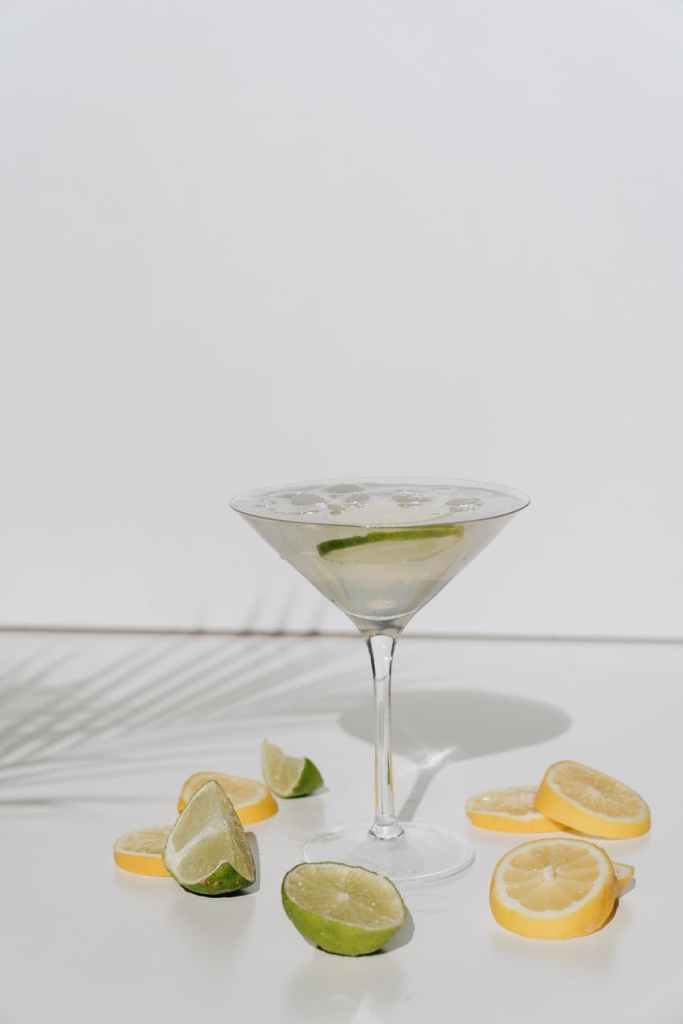
Friday Night Cocktails-Long Island Iced Tea

We wish to thank our old friend and ever-reliable colleague Sarah McCabe for tonight’s idea

The origins of the Long Island Iced Tea have always been disputed. Was it as a cover for all that funny hooch during Prohibition? Or was it more recent? For the record, this is Wikipedia‘s take:

Robert “Rosebud” Butt claims to have invented the Long Island iced tea as an entry in a contest to create a new mixed drink with triple sec in 1972 while he worked at the Oak Beach Inn on Long Island, New York.

A slightly different drink is claimed to have been invented in the 1920s during Prohibition in the United States by an “Old Man Bishop” in a local community named Long Island in Kingsport, Tennessee. The drink was then perfected by Ransom Bishop, Old Man Bishop’s son. This drink included whiskey and maple syrup, and varied quantities of the five liquors, rather than the modern one with cola and five equal portions of the five liquors.

We post their link below. But, be warned, gentle readers: this is a really strong one! Do not attempt to drive, operate heavy machinery or give legal evidence anytime soon after this lot:

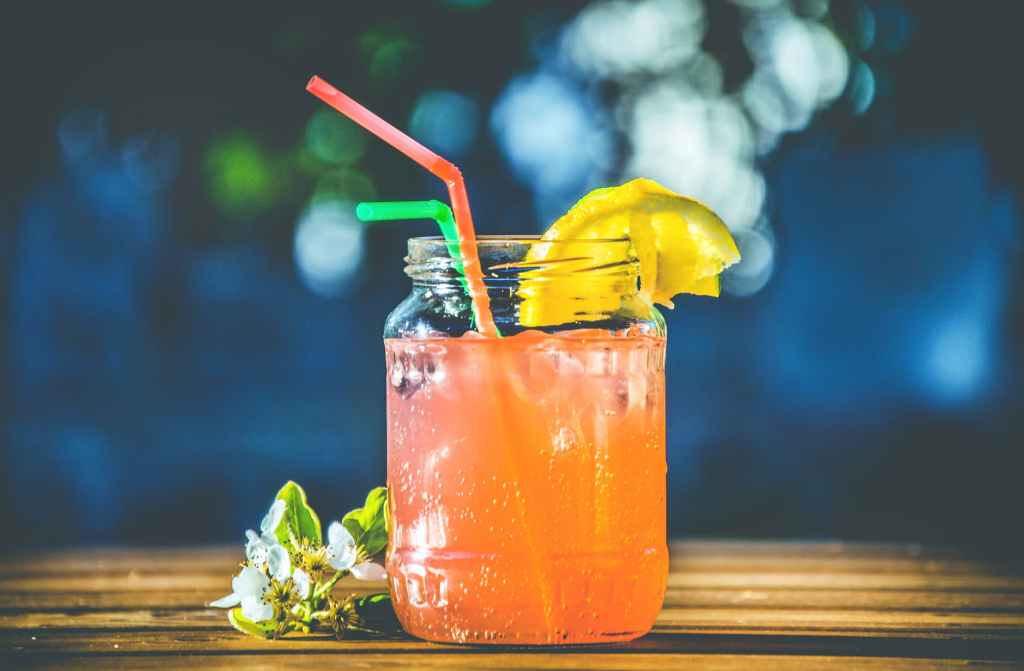
Put six ice cubes into a tall mixing glass. Add HALF measures of each of the following: gin, vodka, white rum, tequila, Cointreau. ONE measure fresh lemon juice. Half teaspoon sugar syrup. Stir and pour into a tall glass, with more cubes. Top up with nice cold Coca cola or Pepsi. (If you choose one, don’t tell the other lot you’ve done it) Decorate with a slice of lemon. Straws if you want.

We take our recipe from Hamlyn’s The Ultimate Cocktail Book. Note that today’s choice does give you the chance to drawl “Stirred, not shaken” in your best James Bond accent. Happy Friday, secret agents everywhere.

Long Island iced tea – Wikipedia

The Ultimate Cocktail Book Hamlyn 2003

#longislandicedtea #cocktails #hamlyn #jamesbond

Fractals. How this year’s pathology is next year’s microphone

Remember the old, old days before the internet, before Wikipedia, when the most advanced learning tool in the house was Microsoft Encarta. Back in ’95 we used to wonder-how do they cram so many words and beautiful images on one little compact disc?

The answer of course is fractals, that amazing branch of learning where geometry and graphic arts meet, and which gives us such insights into nature. Their discovery crept up on us slowly-and they weren’t always welcome. In 1861 fractals pioneer Karl Weierstrass produced the first true fractal, a graph made of zig zags with no straight bits whatsoever. His fellow mathematicians labelled it “pathological”. Fractals didn’t really come into their own until Benoit Mandelbrot harnessed the power of the first really big IBMs in the 1960s -and the rest, as they say, is history.

We’ve got a couple of articles for you to dive into today. Michael Rose in The Conversation has a lovely salesman like piece, breaking them down into properties and possibilities. If you want to dip your toe into the mathematical waters , Craig Haggit over at How Stuff Works has a kindly sampler. For a nice light guide, including how you can never ever measure the coast of Brittany, you might like Fractals for Dummies by Bruno Marion. Wikipedia has some great graphics-enjoy them.

It was fractal technology that makes the mouthpiece in your mobile work. It lets you understand things in nature like ferns and lightning. If you read even one of our links you will never think about dimensions in the same way again-promise. Fractals, Biotechnology and AI are the great triad of the future. However hard you try, the world will never be like it was before they came along.

Explainer: what are fractals? (theconversation.com)

How Fractals Work | HowStuffWorks

Fractals for Dummies – Bruno Marion

Fractal – Wikipedia

#fractal #mandelbrotset #recursion #selfsimilarity

Two cheers for Covid 19 vaccines, not three

If there’s one thing that distinguishes the readers of LSS from other people, it’s that we think. We think that truth is subtle, nuanced and requires a lot of examination before you pronounce on it. We don’t take one story from the media and yell to the heavens that it proves everything we have ever thought about is eternally true.

We are not without feeling-we genuinely believe the achievements of the scientific teams who evolved the COVID- 19 vaccines are among the greatest of mankind. But we do think that even these truly awesome accomplishments may be hedged around with caveats, which the clever people at Nature and The Conversation have for us today.

What happens when your placebo people take the vaccine?

They are heroes too. They deserve a real dose. But what happens to your long term data? This is what Nature says about a dilemma posed by early vaccine approvals.

Scientists are concerned that the early deployment of promising COVID-19 vaccines could compromise ongoing clinical trials that seek to show conclusively how well they work. Following the release of early data from phase III trials on 9 November, vaccine makers Pfizer and BioNTech have sought regulatory permission to deploy their vaccine under emergency-use rules. The developer of another leading vaccine, Moderna, is expected to do the same within weeks. Once a vaccine is granted emergency approval, trial participants who received a placebo will be understandably keen to get the real thing. But if too many people cross over to the vaccine group, the companies might not have enough data to establish the long-term effects of the vaccines, including safety, how long protection lasts and whether the jab prevents infection or just the disease.
Nature | 6 min read

How to get the vaccine out there

What about all the people who won’t take a vaccine? LSS readers may have their own opinions here-but we urge a thoughtful approach. How do you get people to realise their obligations to others, whatever their own feelings? Here’s Tim Solomon in The Conversation:

Oxford vaccine results are in: here’s how to ensure it is used (theconversation.com)

#vaccine #Sars-Cov-2 #covid-19 #coronavirus #placebo

Message for nostalgists-no one in the past had CRISPR

Before you go off to wallow in nostalgia for some lost Golden Age, think what it was like to have cancer back then. Or many other diseases. In a nutshell, think of a world before CRISPR, because here’s what it can do.

Israeli scientists at the University of Tel Aviv have started using the technique to successfully cure cancer, so far its only in mice, but the implications are enormous We won’t spoil the story from Charlotte Mitchell for the Mail online, but here’s a taster:

[Professor Dan] Peer said that his team plan to develop the treatment for all cancers and that the technique could be ready to use on humans within two years.

We frankly confess that CRISPR can be a bit hard to understand for us. We’ve posted a link to Wikipedia if you want to dig deeper. Spoiler alert; it’s not like a thriller novel that you take on the beach for your holidays!

Good news always puts a song in our heart at LSS. WE are reminded of the word of Fleetwood Mac, a popular musical singing group, from their 1977 Album Rumours:

Don’t stop thinking about tomorrow//Don’t stop. It’ll soon be here//It’ll be better than before//Yesterday’s gone, yesterday’s gone

writer: C McVie

Israeli scientists kill cancer cells with ground-breaking DNA-altering treatment CRISPR | Daily Mail Online

CRISPR – Wikipedia

#CRISPR #cancer #fleetwoodmac #geneedit #cas9 #diagnostics

Weekly round up of facts from near and far

Going green won’t cost the earth

We at LSS strongly support UK Prime Minister Boris Johnson‘s initiative on renewable infrastructure. Of course sensible people will ask how it might be paid for. Jim Armitage of the London Evening Standard suggests the answer lies in the enormous pension pots held in the City. We’ll let Jim speak for himself, but he concludes there is a potential sum of £100 billion waiting to completely transform the economy:

Here’s a simple way Boris Johnson could get the City to put billions into his green revolution | Evening Standard

We thank Mr Peter Seymour of Hertfordshire for the lead to this story

Let’s see all the bones

Fans of human evolution will recall the exciting 2002 find called Toumei. It was over six million years old and if it walked erect, as its discovers claimed, it was a major candidate for the original human ancestor. Problem is, according to Dan Avery of the Mail, they paid too much attention to the skull, and not enough to the post cranial material- things like leg bones etc. In a box alongside Toumai’s head was a femur which may or may not have belonged to the creature-and which told a different story. Then suddenly it seemed to vanish after some other researchers had studied it. All very mysterious, and all centred on the University of Poitiers in France. Read on!

Humanoid that lived 6 million years ago walked on all fours and may be closer to chimps than humans | Daily Mail Online

Education for girls will help us all

Nothing so holds back humanity as the systematic oppression and blind prejudice which denies education to girls in third world countries. We’ve linked to a charity called Care who have made it their business to tackle this societal atrocity head on. Here’s just one little cherrypick from their site:

Nearly two-thirds of the 77 million children not attending school worldwide are girls.

Need we say more?

Educating girls | CARE (careinternational.org.uk)

Fake News, Hoaxes and the clash of belief and reason

Earlier this week, we moaned that one of the curses of our age is ability of people to dump fake news into the internet in sufficient quantities to change people’s beliefs about what is “real”. According to The Conversation, hoaxes have been round for a very long time. Here’s a well-written piece by Keith Williams about the Great Moon Hoax of the nineteenth century, and how it depended on what people wanted to be true. There’s a lesson in there, somewhere.

Batmen and unicorns: inside the original moon hoax (theconversation.com)

That’s enough reading for this week for us all-enjoy your Saturday night,and we hope that your team was one of the successful ones.

#greatmoonhoax #Care #fakenews #womensrights #sahelanthropus #greeneconomy #borisjohnson #pensionfunds #paleontology

Friday Night Cocktails-A classic Brandy Alexander

This week our guest is Mrs Margaret Foster of Dorset. We know from personal experience that she is a fine cook too-but that might be for another week.

What is your favourite cocktail?Brandy Alexander
IngredientsVodka, brandy, crème de cacao, cream, grated nutmeg
MethodPut three ice cubes in a shaker. Add one measure brandy, one of vodka and one measure of crème de cacao. Shake hard and pour to a classic cocktail glass without the ice. Sprinkle the grated nutmeg to decorate
Where do you drink it?At home-the best place to be
Who are you with?My husband, Foss and as many cats as we can cram in. They get any left-over cream!
Why is this cocktail good?Cream, chocolate, brandy – what’s not to like!
What is going on around you?Log fire and Scandinavian contemporary jazz
Who else likes this one?Foss, my husband
Anything else?Don’t drink more than four-there could be unfortunate consequences.

#brandyalexander #scandinavianjazz #scandinaviandetectives #cremedecacao #brandy

If Jeremy Clarkson hadn’t been on TV he might have been the greatest teacher ever

Image courtesy pixabay

The first principle of teaching is to get them to enjoy it. Once people are having fun, they’ll want to learn. No one understands this principle better than Jeremy Clarkson, who uses wit and sparkle to convey really rather complex messages in things like science, history and engineering. (spoiler alert-yes, we know he has his faults. So did Beethoven.)

That’s why revisiting some of his earlier ouvres can still make for joys unexpected. Take Who Killed the British Motor Industry? (2000). The way a nation makes designs and runs a huge industry is a sure indicator of how educated, modern and skilful it is. The sorry history of British Leyland is certain evidence of just how deficient Great Britain PLC had become. Who did kill it? Bad managers? Bloody-minded unions? Dreamy Governments? Clarkson certainly hands out the blame. But he also finds a deeper, more worrying flaw.

British Leyland were a portmanteau company, a series of forced mergers between such disparate foes as Austin, Morris, Triumph and many others. All of them deeply proud of their plants and their identities. All predisposed not to co-operate. None of them big enough to stand on their own any longer. So when Triumph came up with a half decent idea like the Stag, they were never, ever going to use a Rover engine, even though it was from the same company. In every town, Austin, Morris and Triumph dealers cut each others’ throats for a few pence-because they were the enemy. Identity to a time and place can be a source of pride and strength. It can also hand victory to the fiendmachten (sorry-that’s enemy in German). Shaken by defeats in war, European and Japanese manufacturers learned to sink their petty differences and soon cleaned out the squabbling Brits.

But don’t take our word for it. Watch the link below and enjoy a master story teller at his fun best. It applies to many other things twenty years on

https://www.bing.com/videos/search?q=jeremy+clarkson+the+car+years&&view=

#britishleyland #austin #morris #triumphstag #jeremyclarkson #nineteenseventies #thecaryears

Reasons to be Cheerful-parts five and six

The dual news of vaccines coming over the horizon from Moderna and Pfizer-BioNTech give reasons to be cheerful, as Ian Dury would have it. But it will take months to work up the manufacturing and dosage capacity. In the meantime there’s a lot of sick people out there who need treatment. So we are pleased to offer two small rays of hope to get on with.

Mouthwash- a surprise kill

Aisha Zaid of Sky News has an intriguing story about how cetylpyridinium chloride (that’s CVC to the ordinary Joe) can wreak terrible mortality on the SARS-CoV-2 virus. Where to find CPC ? In your humble bottle of mouthwash. The sort of news to cheer Donald Trump at one of his press conferences-there’s plenty of mouth to wash.

https://news.sky.com/story/covid-19-mouthwash-can-kill-coronavirus-within-30-seconds-study-finds-12134289

We thank Mr Peter Seymour of Hertfordshire for this lead

Don’t inflame the situation

As very schoolchild will tell you, one of the terrible problems for Covid-19 sufferers is the “inflammation storm” as the body tries to react to the presence of the SARS-CoV-2 virus in its midst. We understand this to be in part due to the complement system of the blood, part of the body’s natural defences. Bryan Paul Morgan of the Conversation discusses a drug which blocks the C5 protein of this system, bringing new hope to sufferers everywhere. It’s called ravulizumab. The downside is that it costs $6400 a dose. So make sure your country has a good health service, or you’ll soon be putting your house up to mortgage again!

https://theconversation.com/coronavirus-treatments-keep-your-eye-on-anti-complement-drugs-they-look-promising-149775?

We thank Mr Gary Herbert of Buckinghamshire for technical advice with this blog

#ravulizumab #cvc #Sars-coV 2 #covid-19 #coronavirus #donaldjtrump #nhs #cytokinines

It’s hard to waste money on science research-here’s why

The advent of supercomputers, artificial intelligence and and real stress tested algorithms gives us opportunities to understand the world in ways that our grandparents could never have dreamed of. Already they are proving their worth in things like weather forecasting and epidemiology, turning in great results in influenza and Ebola mapping. With Covid-19 the situation is problematic, partly because there’s so much emotional and economic baggage riding on every decision.

Today we are going to offer two pieces for your perusal. Both are critiques of the models used to understand the pandemic. We would like to stress that both the writers and the scientists who created the models are intelligent honest individuals of the highest integrity, driven by facts and a search for the truth. Unlike some of the sneering critics, who seem to have very different agendas. They’re good articles, but for us the real point is different.

Nature* points out the enormous potential for crossover, by using techniques developed in meteorology to help epidemiologists. Adam Kucharski in the Guardian* points out that bringing several different models together has enormous benefits, as the work of one group complements each of the others. In other words if you put effort into developing some good honest research, or a clever piece of technology, someone somewhere will also get the benefit. It’s facile to state how Kepler benefitted from the solid research of Tycho Brahe, or Watson and Crick from the advances in crystallography made by others. A society that values science for its own sake will eventually grow rich. A society that does none at all, because of tax cuts, is going in a different way.

Nature: Forecasters can learn from climate models

Epidemiologists predicting the spread of COVID-19 should adopt climate-modelling methods to make forecasts more reliable, say computer scientists. The researchers have spent months using a powerful supercomputer and techniques that are used to stress-test climate models to audit CovidSim, one of the most influential models of the pandemic, which helped convince British and US politicians to introduce lockdowns to prevent projected deaths. The analysis shows that, because researchers didn’t appreciate how sensitive CovidSim was to small changes in its inputs, their results overestimated the extent to which a lockdown was likely to reduce deaths. But the model correctly showed that “doing nothing at all would have disastrous consequences”, says chemist and computer scientist Peter Coveney.
Nature | 6 min read
Reference: Research Square preprint

The guardian:here’s why we need covid models,evenif they’re controversial

https://www.theguardian.com/commentisfree/2020/nov/11/covid-data-imperfect-scientists-projections

https://en.wikipedia.org/wiki/CovidSim

#covidsim #neilferguson epidemiology #covid-19 #computermodels